
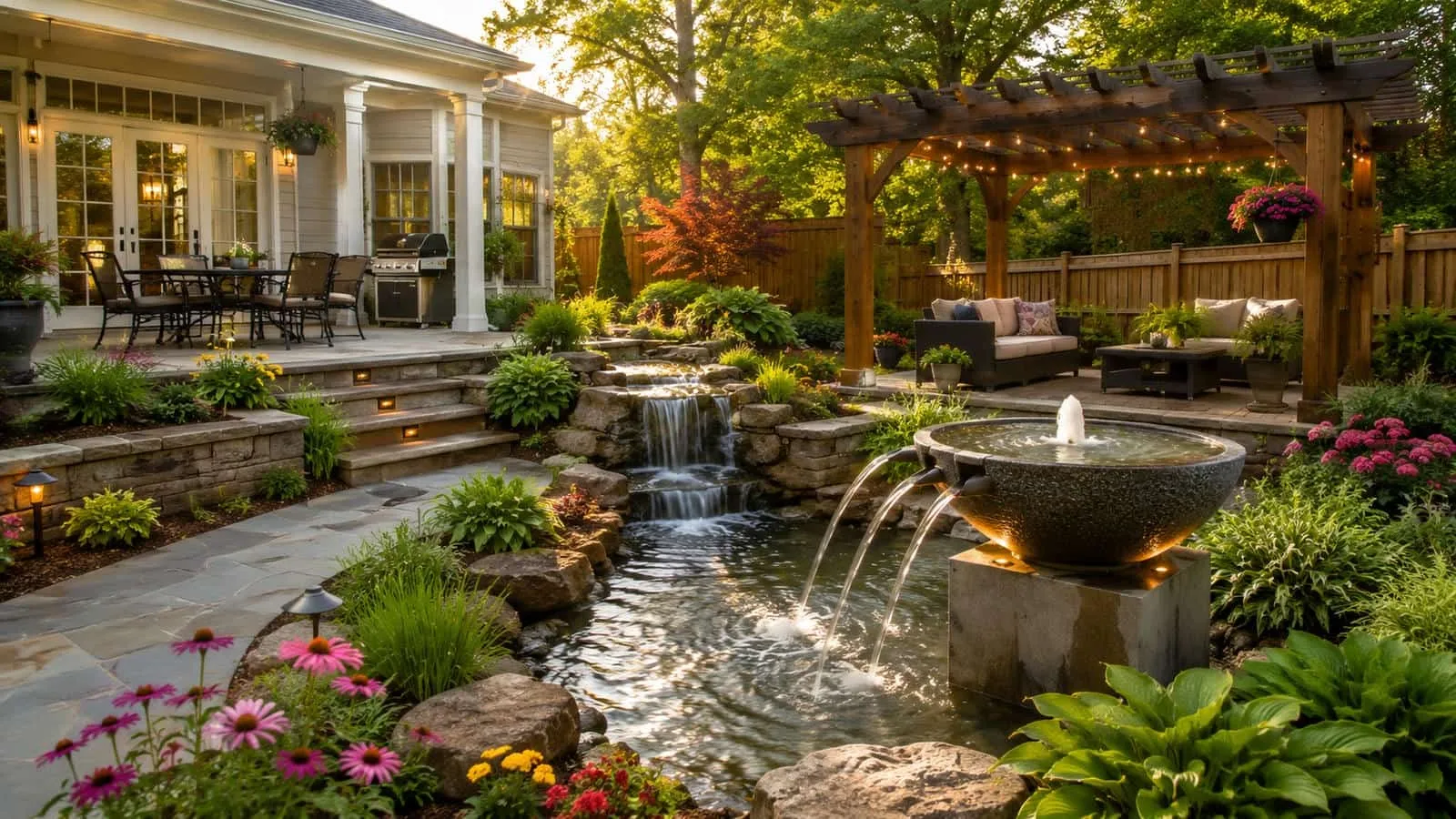
🌊⛲ From peaceful garden retreats to elegant patio gathering spaces, water fountains create movement, sound, and visual interest that turn ordinary outdoor areas into memorable destinations. The location you choose influences how water sounds travel, how wildlife interacts with the fountain, how easy maintenance becomes, and how naturally the fountain fits your landscape design. Explore the inspiration gallery below to discover placement strategies for gardens, patios, pergolas, walkways, wildlife habitats, meditation spaces, and outdoor living environments.
Explore real world water fountain placement ideas showing how sound projection, sunlight, shade patterns, wildlife activity, seating areas, Feng Shui principles and landscape design influence the perfect location for outdoor fountains and water features. Select any image below to explore that section of the guide.


🌿 The examples above show how water fountain placement affects sound quality, natural sightlines, maintenance access, wildlife activity, and outdoor comfort. Whether you prefer a bubbling rock fountain beside a garden path, a tiered fountain as a backyard focal point, a solar fountain in full sun, or a relaxing water feature near patio seating, proper placement creates a more enjoyable and harmonious outdoor environment. In the sections below, explore placement strategies, design principles, environmental considerations, Feng Shui recommendations, and common mistakes that can strongly influence fountain performance and long term satisfaction.
Water fountain placement is one of the most important decisions you can make when designing a garden, patio, courtyard, backyard retreat, or outdoor living space. While many homeowners focus on fountain size or style, the location often determines whether it becomes a true focal point or simply another decorative feature. The best water fountain placement improves visibility, supports comfortable water acoustics, encourages wildlife activity and helps the fountain connect naturally with nearby seating areas, pathways and landscape features.

A successful outdoor water fountain placement requires more than simply finding an open space. Prevailing winds can carry fine spray beyond the basin, afternoon sun can accelerate evaporation, and nearby trees may contribute leaves, pollen, seed pods, and organic debris that affect water quality and maintenance requirements. Viewing angles, seating distance, drainage conditions, surrounding vegetation, seasonal weather patterns, and future plant growth all influence how a fountain performs throughout the year. While these factors are essential outdoors, indoor water fountain placement and room design considerations focus more on furniture layout, room acoustics, electrical access, floor protection and creating a comfortable indoor environment. A bubbling fountain placed six to ten feet from a seating area often provides comfortable water acoustics without overpowering conversation, while an exposed location may increase splash drift, water loss, and cleaning demands during hot summer weather.
Water feature placement also affects maintenance. Easy access to electrical connections, pump systems, cleaning areas, and refill points can significantly reduce long term upkeep. A fountain tucked behind dense shrubs may look attractive initially but can make pump servicing and basin cleaning far more difficult. While these considerations are especially important outdoors, smaller decorative fountains have their own placement challenges inside the home. Explore our tabletop water fountain placement ideas for every room to learn how furniture selection, viewing comfort, water sound, room layout and surface protection influence everyday enjoyment. Strategic placement helps preserve both the beauty of the fountain and the simplicity of routine maintenance.
Fountain location can also influence how efficiently the pump moves water through the system. Longer tubing runs, greater vertical lift and restrictive plumbing can reduce delivered flow even when the pump has a strong maximum GPH rating. When placement changes the distance or height between the reservoir and fountain outlet, use our fountain pump lift and flow sizing guide to compare GPH, head height, tubing resistance and real operating flow before final installation.
A well planned water fountain placement brings together sound, appearance, maintenance, wildlife activity and everyday enjoyment. The right location helps a fountain become a natural focal point while fitting comfortably into patios, gardens, courtyards, walkways and outdoor living spaces. If you are still deciding which fountain style best suits your space, explore our complete types of water fountains guide. Throughout this guide, you will discover practical placement strategies for different fountain styles, landscape layouts and homeowner goals so you can choose a location that remains beautiful, functional and easy to maintain throughout the year.
💧🏡 Planning a fountain location that balances sound, visibility, maintenance access and long term performance? Explore durable outdoor water fountains for landscapes that provide relaxing water movement, strong visual appeal and dependable year round enjoyment. 🌿✨
A great water fountain location does more than hold a water feature. The right placement balances visibility, water acoustics, safety, maintenance access, seasonal performance, and everyday enjoyment. Whether the fountain sits beside a patio, garden pathway, pergola, courtyard, or backyard gathering space, it should remain easy to see, hear, access, clean, and enjoy throughout changing weather conditions and growing seasons.
Before installing a garden fountain, patio fountain, pondless fountain, wall fountain, solar fountain, bird bath fountain, bubbling rock fountain, tiered fountain, or large landscape water feature, it helps to compare the best water fountains for gardens, patios, backyards and indoor spaces so you can choose a fountain that matches your space, lifestyle and maintenance expectations. Then evaluate the real conditions surrounding the installation area. Study sunlight patterns, afternoon shade, prevailing winds, drainage, splash zones, viewing angles, electrical access, hose access, maintenance routes, nighttime visibility, seating distance and nearby planting areas. Consider how the fountain will interact with landscape design, hardscape features, outdoor furniture, pollinator gardens, songbirds, butterflies and other wildlife that may benefit from a dependable water source. These practical details help determine where to place a water fountain for the best visual impact, relaxing water sound, long term durability, energy efficiency and overall outdoor living comfort.
The best water fountain placement starts with a careful balance of beauty, calming water acoustics, accessibility, maintenance, safety, and everyday outdoor enjoyment. Whether you are planning a backyard fountain, patio fountain, courtyard water feature, pondless fountain, solar fountain, or meditation garden focal point, the right location improves landscape design, outdoor ambience, wildlife activity, Feng Shui alignment, and long term fountain performance. Understanding viewing angles, acoustic projection, drainage, viewing corridor, and daily use helps transform a simple water feature into a peaceful backyard retreat that supports relaxation, emotional wellness, and year round enjoyment.
| 💧 Placement Factor | 🌿 Why It Matters | ⚠️ Common Placement Mistake | 🏡 Best Use and Buyer Intent |
|---|---|---|---|
| 👁️ Visual Impact and Garden Focal Point Design | A strong fountain location creates clear sightlines, improves spatial organization, and helps the water feature become a natural focal point that attracts attention from patios, windows, pathways, pergolas, courtyards, and outdoor seating areas. | Placing the fountain where shrubs, fences, furniture, decorative screens, or seasonal plant growth block important viewing angles and reduce visual impact. | Ideal for homeowners looking for water fountain placement ideas that create a beautiful backyard centerpiece and improve the appearance of outdoor living spaces. |
| 🎵 Sound Quality and Relaxing Water Flow | The right location improves acoustic projection, soft bubbling, gentle splashing, harmonic water movement, and outdoor ambience so relaxing water sounds can be enjoyed without overpowering nearby conversation. | Installing the fountain too far from seating areas or too close to hard reflective surfaces that make water sounds feel sharp, uneven, or distracting. | Often chosen by buyers who want a garden fountain near a patio, pergola, deck, or meditation space where calming water sounds support stress relief and relaxation. |
| 🚶 Accessibility and Everyday Outdoor Living | A practical location supports easy viewing, comfortable walking access, electrical access, hose access, fountain pump care, and regular enjoyment during outdoor gatherings and quiet daily routines. | Choosing a hidden location that appears attractive on a landscape plan but is rarely seen, heard, reached, or enjoyed in everyday life. | Perfect for people asking where to place a water fountain so it remains visible, practical and closely connected to the spaces used most often throughout the landscape. |
| 🛠️ Maintenance Access and Fountain Longevity | Good placement simplifies basin cleaning, algae control, pump servicing, leaf removal, water refilling, and seasonal care while supporting reliable long term fountain performance. | Positioning the fountain behind dense vegetation, beneath messy trees, or inside cramped garden corners that make maintenance difficult throughout the year. | Commonly researched by homeowners comparing outdoor fountains that are easy to clean, simple to maintain, and practical for long term backyard enjoyment. |
| 🛡️ Safety, Splash Control and Walkway Protection | Safe placement reduces slipping hazards, runoff concerns, unstable foundations, extension cord risks, poor nighttime visibility, and unwanted water spray near hardscape surfaces. | Allowing water splash to reach stairs, patio edges, smooth stone pathways, play areas, seating zones, or nearby electrical connections. | Helpful for families choosing a backyard fountain location that feels relaxing while protecting children, guests, pets, walkways, and outdoor furniture. |
| 🦋 Wildlife Attraction, Feng Shui and Garden Harmony | A thoughtfully positioned fountain can support pollinator activity, songbirds, butterflies, beneficial wildlife, Feng Shui energy flow, and a stronger sense of balance throughout the landscape. | Placing the fountain where wildlife cannot safely access water or where the feature feels disconnected from pathways, seating areas, planting beds, and overall garden design. | Ideal for people seeking a peaceful backyard water feature that encourages wildlife visits, symbolic flow, emotional wellness, and Feng Shui garden harmony. |
| 💧 The best water fountain placement combines visibility, acoustic comfort, accessibility, easy maintenance, safety and practical landscape integration into one highly functional location. When a fountain is positioned near patios, pathways, seating areas, and natural viewing angles, it becomes a lasting landscape focal point that enhances outdoor living, wildlife activity, Feng Shui balance, and everyday enjoyment throughout the year. | |||

Visual impact plays a major role in successful water fountain placement because it shapes how the fountain interacts with landscape design, outdoor living spaces, and everyday viewing patterns. A well positioned water fountain draws attention from patios, garden pathways, pergola seating areas, courtyards, and backyard retreats while using reflective water, movement, texture, and carefully planned sightlines to strengthen landscape cohesion, curb appeal, and outdoor ambience.
The following fountain placement tips help improve visibility, landscape harmony, seasonal interest, and long term visual appeal across a wide range of garden styles and outdoor living environments.
Whether you choose a solar fountain, bubbling rock fountain, bird bath fountain, courtyard fountain, or tiered water feature, visual placement should always support landscape harmony and daily enjoyment. When fountain size, viewing angles, seasonal sightlines, and outdoor gathering areas work together, The result is a tranquil garden destination that feels balanced, welcoming, and naturally connected to the surrounding landscape.
🏡💧 Designing a fountain focal point that stays visible from patios, pathways and outdoor gathering spaces? Browse decorative outdoor water fountains for gardens that enhance sightlines, moving water views and year round landscape appeal. 🌿✨
The best place to put a water fountain is where it can be seen, heard, reached, and maintained easily. Strong locations include patio seating areas, garden pathways, courtyards, meditation gardens, front yard focal points, and backyard retreat zones with good drainage, safe electrical access, and enough space for cleaning.
A fountain placed about six to ten feet from a patio seating area often provides calming water sounds without overpowering conversation. Smaller bubbling fountains can sit closer, while larger tiered fountains may need more distance because their sound projection and splash radius are stronger.

Sound quality is one of the most important factors in water fountain placement because it affects relaxation, outdoor ambience, sound masking, and everyday enjoyment. Different fountain types create unique sound patterns based on water flow, basin depth, splash behavior, acoustic projection, nearby surfaces, seating distance, and airflow corridors. Whether you are creating a meditation garden, masking traffic noise near a patio or improving a frequently used gathering space, the right fountain location helps manage sound projection, wildlife activity, conversation comfort and overall landscape enjoyment throughout the year.
| 💧 Fountain Type | 🎵 Sound Character and Environmental Behavior | 🏡 Best Placement Use and Outdoor Experience |
|---|---|---|
| Bubbling Rock Fountain | Soft bubbling water creates gentle acoustic projection with low splash exposure and a steady natural rhythm that blends comfortably into quiet outdoor settings. | Perfect for homeowners seeking calm water sounds near meditation gardens, reading spaces, flower beds, and peaceful patio retreats. |
| Tiered Fountain | Layered cascading water produces stronger sound projection, visual movement, and harmonic sustain that remains noticeable across larger outdoor living areas. | Often chosen by homeowners who want relaxing water sounds near patio seating, courtyards, backyard gathering areas, and landscape focal points. |
| Wall Fountain | Directed water flow interacts with nearby vertical surfaces to create focused sound reflection and consistent acoustic presence within compact spaces. | Ideal for people looking to enhance courtyards, covered patios, entry gardens, and narrow outdoor rooms with soothing water movement. |
| Bird Bath Fountain | Light trickling water provides subtle sound character while encouraging songbirds, butterflies, and pollinator activity throughout the surrounding garden. | Frequently used in wildlife gardens, flower beds, pollinator landscapes, and visible garden edges where gentle movement supports nature watching. |
| Pondless Fountain | Stream style water movement produces grounded natural sound with low splash exposure and realistic water flow that integrates well with natural landscapes. | Commonly researched by homeowners creating backyard retreats, pathway destinations, meditation gardens, and low maintenance landscape designs. |
| 🔊 The best fountain sound depends on how the space is used and how water interacts with surrounding surfaces, seating areas, landscape features, and airflow conditions. Soft bubbling fountains support quiet reflection, while stronger cascading fountains help mask background noise and create a more immersive outdoor living experience with relaxing water sounds throughout the garden. | ||
🎯 Pro Tip: Before installing a water fountain permanently, place a chair where you normally relax and listen from that location. Stone walls, fences, covered patios, ornamental grasses, and nearby planting beds can all change how water sounds travel through the landscape. A fountain that sounds perfect beside the basin may create a completely different listening experience from a patio, pergola seating area, or outdoor dining space.

Accessibility is one of the most overlooked factors in water fountain placement because it determines how often the fountain is actually seen, heard, maintained, and enjoyed. The best water fountain location should support natural movement through the landscape while remaining easy to reach from patios, pergola seating areas, garden pathways, courtyards, and outdoor living spaces. A fountain that fits everyday routines often creates a more satisfying experience than one hidden away from normal walking patterns, gathering areas, and relaxing outdoor destinations.
Accessibility also affects how often homeowners monitor water levels, notice pump issues and perform routine maintenance. A fountain positioned along frequently used routes is more likely to receive regular attention than one placed in an isolated corner that is rarely visited during normal outdoor activities. Choosing the right construction material can make maintenance even easier, so it is worth comparing our water fountain material guide for maintenance, durability and outdoor performance before selecting a permanent location.
These accessibility tips help improve daily enjoyment, maintenance access, fountain visibility, and practical outdoor use throughout the year.
Good accessibility supports both enjoyment and long term fountain performance. Whether installing a solar fountain, pondless fountain, bird bath fountain, or tiered water feature, people should be able to comfortably view the fountain, reach key components, and enjoy water movement without navigating obstacles. The most successful water fountain placement often aligns with real outdoor habits, helping the fountain become a natural part of everyday outdoor experiences rather than a feature that is only noticed occasionally.
🔌💦 Looking for a fountain that is easy to install, refill and maintain near patios and garden walkways? Discover easy maintenance outdoor water fountains for patios that simplify seasonal upkeep while providing reliable water movement and everyday enjoyment. 🌿🧽
Maintenance access is an important part of water fountain placement because it affects long term enjoyment, water quality, fountain performance, and overall upkeep. A fountain may look beautiful on installation day, but environmental conditions such as falling leaves, afternoon sun, wind exposure, drainage patterns, and seasonal weather can significantly influence cleaning frequency, algae growth, water evaporation, and pump maintenance. The best water fountain location balances visual appeal with practical access so routine care remains simple throughout the year.
Maintenance requirements are often determined more by location than fountain style. A fountain positioned beneath mature trees may collect leaves, pollen and seed pods throughout the growing season, while a similar fountain located outside heavy debris zones can remain cleaner for longer periods with fewer interruptions to water circulation. Learning how placement affects long term fountain maintenance can help you reduce algae, protect the pump, minimize hard water buildup and build a simpler maintenance routine throughout the year.
| 🛠️ Maintenance Factor | 🌿 Why It Improves Long Term Performance | ⚠️ Common Placement Challenge | 🏡 Practical Outdoor Benefit |
|---|---|---|---|
| Pump Accessibility | Easy access to the pump simplifies routine cleaning, seasonal inspection, and long term water circulation performance. | Dense shrubs, decorative walls, and large planters can make pump access difficult during routine maintenance. | Ideal for homeowners who want dependable fountain operation without dismantling landscape features during service visits. |
| Cleaning Clearance | Open working space around the basin supports easier debris removal, algae control, water changes, and surface cleaning. | Tight garden corners often limit movement and make regular fountain cleaning feel more time consuming. | Perfect for outdoor living spaces where convenient maintenance encourages consistent care throughout the season. |
| Water Refill Access | Practical hose access helps maintain proper water levels during summer evaporation, splash loss, and warm weather conditions. | Long distances from a water source can make frequent refilling frustrating during dry periods. | Commonly chosen in gardens where fountain water levels need simple monitoring and quick seasonal adjustment. |
| Sunlight and Algae Management | Partial shade can help reduce algae growth, slow evaporation, and support clearer water during hot summer months. | Full afternoon sun may increase water temperature and create more frequent maintenance requirements. | Frequently used in landscapes where homeowners want cleaner water and lower upkeep without sacrificing visual appeal. |
| Seasonal Access and Winter Care | Clear access routes support draining, covering, storage preparation, and seasonal inspections in colder climates. | Large fountains located behind narrow gates, retaining walls, or steps can become difficult to protect before winter. | Helpful for homeowners seeking easier seasonal fountain care while protecting nearby plants, patios, and landscape features. |
| 🧽 The best water fountain placement supports both beauty and long term serviceability. Easy pump access, practical cleaning clearance, convenient water refilling, controlled sun exposure, and seasonal access routes help reduce maintenance challenges while protecting fountain performance, water quality, and overall outdoor enjoyment throughout the year. | |||

Safe water fountain placement helps protect walkways, seating areas, garden pathways, and outdoor gathering spaces while preserving the sensory comfort created by moving water. Splash radius, drainage flow, electrical access, fountain stability, and nighttime visibility all influence how comfortably people move through the landscape. The following fountain safety tips focus on real world placement conditions, environmental behavior, and long term outdoor enjoyment.
These practical fountain placement tips help reduce common safety concerns before installation.
Thoughtful fountain safety planning supports both sensory comfort and long term fountain performance. Whether placing a tiered fountain beside a patio, a bird bath fountain near a pollinator garden, or a pondless fountain along a pathway, safe positioning helps maintain a smooth outdoor experience while protecting walkways, landscape features, and everyday backyard enjoyment.
💡 Pro Tip: Before final installation, walk through the garden during both daylight and evening hours. Water movement, splash patterns, visibility, drainage, and traffic flow often look very different after the fountain begins operating in real outdoor conditions.
Section Summary Snapshot: Choosing the best water fountain location involves balancing visual impact, calming water acoustics, accessibility, maintenance access, safety, and overall landscape cohesion. A well positioned fountain becomes a natural focal point that supports outdoor leisure spaces, wildlife activity, and everyday enjoyment while remaining easy to maintain throughout the seasons. By considering sightlines, sound quality, drainage, sunlight, movement patterns, and practical access, homeowners can create a peaceful backyard retreat that feels both beautiful and functional.

Every outdoor space presents different fountain placement challenges and opportunities. The best water fountain location depends on factors such as patio layout, garden design, wildlife activity, sunlight exposure, prevailing winds, drainage conditions, seating distance, sound projection and maintenance access. Once those location conditions are understood, our guide to outdoor fountain choices for real property conditions helps compare fountain size, water movement, sound, power, materials, installation and climate before making the final selection. Explore the scenarios below to find the fountain placement strategy that best matches your landscape, outdoor living space and long term goals.
Open each water fountain placement scenario to match your actual outdoor conditions with the best fountain location. Each guide considers sound projection, splash control, sunlight exposure, prevailing winds, drainage patterns, maintenance access, wildlife activity and everyday household use so the fountain performs well throughout changing seasons and daily routines.
Best choice compact bubbling fountain placed near a patio edge, pathway corner or visible garden focal point
Small backyards need water fountain placement that feels intentional without crowding outdoor movement. In compact spaces the fountain is often visible from the patio table, kitchen window and main walkway at the same time, making placement more important than fountain size. A compact bubbling fountain, bird bath fountain or small solar fountain works best where it can be seen from seating areas, heard softly from nearby chairs and reached easily for cleaning. Avoid hiding the fountain behind dense plants because limited spaces need clear sightlines, open maintenance access and careful splash control.
Choose this scenario when you need water fountain placement ideas for a small backyard, townhouse garden, compact patio or narrow outdoor retreat.
Micro Recommendation: Place a small fountain near a patio corner where it creates a clear focal point without blocking chairs, walkways or garden maintenance access.
Best choice patio fountain placed close enough for sound but far enough for comfort
Patio fountain placement should balance soothing water sounds with comfortable conversation. Many homeowners use fountain sound to soften nearby traffic, air conditioner noise or neighboring activity without forcing guests to raise their voices. A fountain placed about six to ten feet from patio seating often creates calming water acoustics without feeling too loud during morning coffee, outdoor meals, or relaxed summer evenings with family and friends. Bubbling rock fountains and stone basin fountains work well near quiet seating areas, while larger tiered fountains may need more distance because their cascading water carries farther across hardscape surfaces.
Choose this scenario when you want the best fountain placement near patio seating, outdoor dining areas, pergola chairs or backyard lounge spaces.
Micro Recommendation: Test the sound from your normal chair before permanent installation because walls, fences, pergolas and patio surfaces can change how water sounds travel.
Best choice garden fountain placed where people naturally pause, turn or enter a new landscape zone
Water fountain placement near garden pathways works best when the fountain becomes a reason to slow down and enjoy the landscape. A bird bath fountain, pedestal fountain, bubbling rock fountain or small tiered fountain can create a strong visual destination along curved paths, flower beds and garden transitions. The key is keeping the fountain close enough to notice while protecting walkway safety from splash, runoff and uneven ground.
Choose this scenario when you want fountain placement near walkways, garden paths, flower beds, stepping stones or landscape transitions.
Micro Recommendation: Place the fountain beside the path rather than directly in the traffic line so it feels inviting without creating a movement obstacle.
Best choice fountain placed outside heavy leaf drop zones with open cleaning access
A water fountain under trees can look peaceful, but it often creates extra maintenance. Falling leaves, pollen, seeds and shade patterns can affect water clarity, pump performance, algae growth and basin cleaning. Partial shade can help reduce evaporation, but heavy canopy cover may clog the fountain and hide the feature during peak growing seasons. The best placement keeps natural garden beauty while protecting pump access and water circulation.
Choose this scenario when you are considering fountain placement near trees, shrubs, hedges, ornamental grasses or dense planting beds.
Micro Recommendation: Place the fountain near planting beds rather than inside dense growth so the water feature stays visible, reachable and easier to maintain.
Best choice fountain placed where morning sun supports beauty but afternoon heat is reduced
Full sun fountain placement can create bright water sparkle, strong visual impact and better solar fountain performance, but it can also increase water evaporation, warmer basin temperatures and algae growth. The best location often receives morning sun with some afternoon shade from a pergola, nearby tree canopy, wall or taller planting. This keeps the fountain attractive while reducing maintenance pressure during hot summer weather.
Choose this scenario when you need fountain placement guidance for sunny gardens, solar fountains, open patios or hot backyard spaces.
Micro Recommendation: For solar fountains, separate sunlight needs from seating comfort by placing the panel in sun while keeping the fountain basin visually balanced and easy to reach.
Best choice low splash fountain placed in a sheltered but visible garden zone
Windy backyard fountain placement needs extra attention because prevailing winds can push water beyond the basin, increase evaporation, wet nearby walkways and make the fountain harder to maintain. Low profile bubbling fountains, pondless fountains and wide basin designs often perform better than tall spray fountains in exposed spaces. A sheltered location near planting, a wall, a pergola edge or a protected patio corner can reduce splash drift while keeping the water feature visible.
Choose this scenario when your backyard has strong wind, open exposure, splash drift, fast evaporation or unstable water movement.
Micro Recommendation: Choose a sheltered placement with low splash movement so the fountain keeps its calming sound without wasting water or creating slippery surfaces.
Best choice shallow bird bath fountain or gentle water feature placed near safe garden cover
Wildlife friendly fountain placement works best when birds, butterflies, bees and beneficial insects can access moving water safely. A shallow bird bath fountain or gentle bubbling fountain near flower beds, pollinator plants and light shelter can support garden life without placing wildlife too close to busy patios or pets. The fountain should remain visible for nature watching, but it also needs easy cleaning access to keep water fresh.
Choose this scenario when you want water fountain placement for wildlife gardens, pollinator gardens, bird activity and peaceful nature watching.
Micro Recommendation: Place wildlife fountains near planting beds but away from heavy foot traffic so birds and pollinators can visit with less stress.
Best choice soft bubbling fountain placed near a bench, stone path or calm reflection space
Meditation garden fountain placement should feel quiet, grounded and easy to enjoy without distraction. Soft bubbling water, stone basin fountains, pondless fountains and small Zen style water features work well near benches, stepping stones, shaded corners and peaceful garden rooms. The goal is gentle sound, steady movement, comfortable seating distance and a clear visual connection that supports mindful relaxation.
Choose this scenario when you want fountain placement for meditation gardens, quiet reflection, emotional calm, stress relief or peaceful backyard retreats.
Micro Recommendation: Place the fountain slightly off center from the seating area so the water draws the eye naturally without feeling forced.
Best choice wall fountain or compact tiered fountain placed where sound reflection feels balanced
Courtyard fountain placement can create beautiful sound, but enclosed spaces often amplify water movement. Wall fountains, pedestal fountains and compact tiered fountains work well when the sound feels soothing rather than sharp. Stone walls, brick surfaces, privacy fences and covered patios can reflect sound back into the space, so placement should consider seating distance, echo, splash control and walking access. If you're comparing vertical fountain designs for these spaces, explore our complete wall water fountains guide to learn about installation methods, mounting surfaces, materials, water flow, maintenance and the best locations for both indoor and outdoor feature walls.
Choose this scenario when you need fountain placement for courtyards, covered patios, entry gardens, narrow outdoor rooms or wall fountain locations.
Micro Recommendation: Test water sound before final placement because enclosed courtyards can make a small fountain sound stronger than expected.
Best choice water fountain placed where moving water supports Chi flow, entry energy and outdoor harmony
Feng Shui fountain placement focuses on how moving water guides energy through the garden, patio, entryway or outdoor living space. A fountain can support abundance, calm, career energy and peaceful flow when it feels balanced, clean, visible and welcoming. Avoid neglected corners, blocked pathways, poor drainage and chaotic splash because stagnant or poorly placed water can weaken the feeling of harmony.
Choose this scenario when you want Feng Shui water fountain placement for the wealth corner, career area, entry garden, patio energy or peaceful Chi flow.
Micro Recommendation: For Feng Shui fountain placement, prioritize clean water, smooth circulation, open access and a location that feels naturally inviting from the main viewing area.
Best choice visible front yard fountain placed near the entry path, garden bed or welcoming focal point
Front yard fountain placement should improve curb appeal while staying safe, practical and easy to maintain. A pedestal fountain, bird bath fountain, tiered fountain or small landscape fountain can create a welcoming first impression near walkways, porch views and front garden beds. For deeper planning around entrance scale, house architecture, driveway relationships, landscaping and street-facing design, explore our complete front yard water fountain guide . The best placement supports visual balance from the street, clear pathway access, safe splash control and simple maintenance without crowding the main entry.
Choose this scenario when you want fountain placement for front yard landscaping, entry gardens, curb appeal, walkway beauty or welcoming home energy.
Micro Recommendation: Place a front yard fountain slightly beside the main walkway so it feels welcoming while keeping the entry route open and safe.
Best choice fountain placed where seasonal draining, covering and winter care remain easy
Cold climate fountain placement should consider freezing temperatures, seasonal access, drainage, storage routes and fountain material durability. Heavy fountains placed behind narrow gates, steps or dense planting can become difficult to protect before winter. A practical location allows easy draining, pump removal, covering and inspection while still creating strong visual impact during spring, summer and fall.
Choose this scenario when you need water fountain placement for cold climates, winter storage, seasonal weather, freezing temperatures or long term fountain protection.
Micro Recommendation: In cold climates, choose a beautiful location that still allows easy winter preparation because difficult access often leads to skipped seasonal care.
💡 Scenario Engine Pro Tip: The best water fountain placement is not based on beauty alone. Match the fountain location to the real behavior of the space, including sunlight, shade, wind, drainage, splash radius, seating distance, viewing angles, pump access, wildlife movement and seasonal maintenance. When those details work together, the fountain becomes a peaceful focal point that feels natural, useful and enjoyable throughout the year.
Garden style plays a major role in choosing the best water fountain placement because every landscape uses moving water differently. A cottage garden often benefits from a fountain tucked beside flowering borders, curved pathways and comfortable seating areas, while a formal garden may rely on symmetrical fountain placement along a central axis or courtyard view. A Zen garden typically uses gentle bubbling water to support mindful relaxation and quiet reflection, while wildlife and pollinator gardens often position bird bath fountains or shallow water features where birds, butterflies and beneficial insects can safely gather. Factors such as mature plant growth, viewing angles, shade patterns, prevailing winds and seasonal garden changes all influence how a fountain looks, sounds and performs over time.
Matching fountain placement to garden type helps improve visual balance, soothing water sounds, wildlife attraction, Feng Shui harmony, maintenance access and everyday outdoor living comfort. Whether installing a solar fountain, tiered fountain, bubbling rock fountain, wall fountain, bird bath fountain, pondless fountain or natural stone water feature, the surrounding landscape should help determine the best location. A well positioned fountain feels naturally connected to flower beds, patios, pergolas, gazebos, garden pathways and outdoor retreat areas while creating a peaceful focal point that supports relaxation, sensory comfort, backyard serenity and year round landscape enjoyment.
Different garden styles benefit from different fountain designs, placement strategies and water sounds. This comparison table helps match the right water fountain to cottage gardens, formal landscapes, Zen retreats, wildlife habitats and memorial spaces while supporting visual balance, relaxing outdoor ambience, Feng Shui harmony and long term enjoyment.
| 🌱 Garden Type | 💧 Best Fountain Style | 📍 Placement Priority | 🏡 Best For Homeowners Seeking |
|---|---|---|---|
| 🌸 Cottage Garden | A tiered fountain, bird bath fountain or small stone fountain works well with layered flowers, curved edges and romantic garden texture. | Place the fountain near winding pathways, cottage flower beds and seating views where soft water movement can blend with garden pathway resonance. | Ideal for homeowners looking for a charming backyard water feature that adds gentle sound, pollinator friendly beauty and a cozy garden focal point. |
| 🏛️ Formal Garden | A pedestal fountain, tiered fountain or classical courtyard fountain gives the space visual rhythm, clean structure and elegant water movement. | Center the fountain on a walkway, entry view, garden axis or symmetrical planting layout to strengthen balance and formal landscape order. | Often chosen by buyers who want a refined outdoor fountain that makes the garden feel organized, graceful and visually polished from the first view. |
| 🌴 Tropical Garden | A cascading fountain, pondless fountain or large stone water feature adds bold texture, cooling sound and lush resort style energy. | Position the fountain near broad leaf plants, shaded retreat areas and dense planting zones where acoustic projection feels full but not harsh. | Perfect for those seeking a relaxing backyard retreat with moving water, rich foliage and a vacation inspired outdoor living atmosphere. |
| 🪨 Zen Garden | A bubbling rock fountain, bamboo fountain or low stone basin fountain supports quiet sound, simple form and mindful material resonance. | Place the fountain in a calm reflection zone with gravel, stone, moss or minimal planting where water movement feels slow and intentional. | Frequently used in meditation gardens where homeowners want peaceful water sound, emotional stillness and a soft focal point for daily calm. |
| 🦋 Pollinator Garden | A bird bath fountain, shallow basin fountain or solar fountain gives butterflies, bees and songbirds gentle access to safe moving water. | Set the fountain near nectar rich flowers with clear landing edges, shallow water flow and enough open space for wildlife friendly movement. | Commonly researched by people comparing garden fountains that support pollinators, natural activity and eco harmony without overpowering the planting design. |
| 🐦 Wildlife Garden | A naturalistic fountain, bird bath fountain or pondless water feature blends well with native plants, shrubs and habitat style landscaping. | Place the fountain near habitat edges, quiet viewing areas and protective planting where birds can approach safely and water remains easy to maintain. | Ideal for homeowners who want a wildlife garden water feature that encourages bird watching, natural movement and a stronger connection to the backyard ecosystem. |
| 🕊️ Memorial Garden | A stone fountain, angel fountain, tiered fountain or quiet bubbling fountain creates symbolic flow, gentle sound and emotional comfort. | Position the fountain beside reflection benches, remembrance plants, curved pathways or peaceful corners where harmonic sustain can feel personal and soothing. | Often chosen by families seeking a meaningful memorial garden fountain that supports remembrance, quiet reflection and a peaceful place to sit with love. |
| 💧 The best water fountain placement by garden type comes from matching fountain style, sound level, viewing angle, garden purpose and maintenance access. When moving water fits the landscape design, it becomes a stronger focal point that supports relaxing outdoor ambience, Feng Shui balance, wildlife activity, emotional comfort and long term backyard enjoyment. | |||

Before choosing a final water fountain location, study how the garden already functions throughout the day. Notice where people walk, relax and gather, where sunlight and shade shift, where birds visit and where the strongest views appear from patios, pathways and windows. These simple observations help determine whether the fountain should become a focal point, a soothing background feature, a wildlife water source or a peaceful reflection space.
Use these water fountain placement tips to match sound, visibility and garden purpose before installation.
Successful water fountain placement involves more than appearance alone. Sound projection, visibility, wildlife activity, maintenance access, airflow patterns, sunlight exposure, drainage conditions and overall garden purpose all influence how a fountain performs over time. Understanding these environmental and design factors helps create a water feature that feels naturally integrated into the landscape while improving relaxation, visual balance, wildlife support and long term outdoor enjoyment.
💡 Pro Tip: The best water fountain placement begins with understanding how the garden is used each day. Whether the goal is relaxation, outdoor entertaining, wildlife watching, meditation or remembrance, placing the fountain where moving water naturally supports that purpose creates stronger landscape harmony, better viewing experiences and greater long term enjoyment.
Choosing water fountain placement by garden style helps create a landscape that feels balanced, useful and naturally connected to its surroundings. Cottage gardens, formal gardens, tropical retreats, Zen spaces, pollinator habitats, wildlife gardens and memorial landscapes each use moving water differently to support beauty, relaxation, biodiversity, reflection and outdoor enjoyment. The guides below show how fountain style, viewing angles, planting design, wildlife activity, sound behavior and maintenance access work together to create stronger focal points and more meaningful outdoor living spaces.

Cottage garden fountain placement should feel informal, layered and naturally woven into the landscape rather than centered with rigid symmetry. Inspired by traditional English cottage gardens, the most successful locations are often beside curved pathways, perennial flower borders, climbing roses, lavender, hollyhocks, arbors and cozy garden seating where visitors discover the fountain gradually as they move through the space. This approach strengthens cottagecore garden character while creating a romantic focal point that feels connected to the surrounding flowers and garden textures.
A cottage garden water fountain works best when gentle sound, visual rhythm, fragrance and layered planting textures support one another. Small tiered fountains, bird bath fountains, bubbling stone basins and solar fountain bowls create soft water movement that complements pollinator friendly flowers while attracting songbirds and butterflies. The goal is a peaceful garden retreat filled with old world charm, sensory comfort and relaxing outdoor ambience rather than strong water volume.
These cottage garden fountain placement ideas help match gentle water sound, flower border views, winding pathways and cozy seating areas without making the space feel crowded or overdesigned.
Cottage gardens usually need fountain styles that feel aged, soft and naturally placed. Weathered stone, ceramic, aged metal, shallow basins and small solar fountain bowls work better than oversized modern fountains because they support texture contrast without overpowering the planting design. Gentle bubbling sound also fits the romantic cottage garden mood better than strong splash or heavy cascade.
Problem A cottage garden fountain can look forced when it is too large, too loud or placed away from the flower border rhythm.
Why it happens Informal gardens rely on curved movement, layered planting and soft sightlines, so rigid placement can interrupt the natural cottage style.
Solution Choose a smaller fountain and place it near pathways, flowers or seating where gentle sound supports romantic garden flow.
Let perennial cottage flowers frame the fountain without hiding the moving water. Roses, lavender, hydrangeas, daisies and sweet peas create layered planting texture that supports pollinator friendly beauty, cottagecore charm and a romantic garden focal point.
Cottage garden fountains look strongest when the material feels timeless, textured and softly aged. Weathered stone, glazed ceramic, aged metal or a simple bird bath fountain can support English cottage garden charm, old world character, gentle material resonance and relaxed outdoor beauty.
Choose a soft bubbling fountain instead of a strong cascade when the water feature sits near seating, windows or narrow pathways. Gentle water sound supports sensory comfort, peaceful garden retreat energy and relaxing outdoor ambience without overpowering the romantic cottage garden mood.
Keep enough open space around the fountain for cleaning, pump access, pruning and seasonal plant growth. Cottage gardens fill in quickly, so practical water fountain maintenance helps preserve clear water, healthy planting flow and long term garden enjoyment.

Formal garden fountain placement should reinforce symmetry, viewing corridor and architectural order throughout the landscape. Many formal garden layouts draw inspiration from European estate gardens, French parterre design and classical courtyard architecture where water features serve as central organizing elements. The most successful locations are often positioned along a central garden axis, within geometric planting beds, beside clipped boxwood hedges or at the intersection of major walkways where the fountain becomes a defining focal point. This structured approach creates a sense of elegance, proportion and timeless garden design.
A formal garden water fountain works best when scale, symmetry and surrounding architecture support one another. Classical pedestal fountains, tiered fountains, courtyard fountains and reflecting water features help strengthen the landscape framework while creating graceful movement and refined outdoor ambience. The goal is visual harmony, sophisticated design and stately garden character rather than casual placement.
These formal garden fountain placement ideas help maximize symmetry, sightlines, visual balance and architectural harmony while creating a refined focal point within the landscape.
Formal gardens typically benefit from fountain styles that emphasize proportion, symmetry and timeless craftsmanship. Pedestal fountains, tiered fountains, reflecting pools, sculptural fountains and classical water features help organize space while strengthening visual rhythm. Refined water movement often complements formal landscapes better than highly energetic splash patterns because it supports elegance without distracting from the garden structure.
Problem A formal garden fountain can feel out of place when it is positioned off center or ignores the landscape's primary sightlines.
Why it happens Formal gardens rely on symmetry, geometric balance and architectural organization, so inconsistent placement disrupts the intended visual structure.
Solution Align the fountain with pathways, garden axes, planting beds and focal views where it naturally strengthens balance and formal landscape design.
Frame the fountain with matching planting beds, clipped boxwood hedges, topiary forms or geometric borders. Symmetrical planting strengthens visual anchor and helps the fountain feel integrated into the overall formal garden layout.
Formal landscapes often benefit from pedestal fountains, tiered fountains, sculptural fountains and traditional stone designs. These timeless styles support European garden influence, architectural elegance and long term visual appeal.
Choose water flow that feels graceful and controlled rather than overly dramatic. Refined movement supports visual rhythm, sophisticated outdoor ambience and the calm elegance expected in formal garden design.
Keep pathways, hedges and planting edges neatly maintained around the fountain. Clear sightlines help preserve symmetry, strengthen focal point visibility and support long term formal garden beauty.

Tropical garden fountain placement should feel immersive, layered and naturally connected to the surrounding foliage. The most successful locations are often tucked among palms, elephant ears, bird of paradise plants, banana trees, ornamental grasses and dense tropical borders where moving water feels like part of a rainforest inspired landscape. This approach strengthens tropical garden character while creating a relaxing focal point surrounded by vibrant texture and greenery.
A tropical garden water fountain works best when cooling sound, dense foliage and layered planting work together to create a backyard escape. Cascading fountains, pondless waterfalls, rock waterfalls and natural stone water features add movement that complements tropical plants while encouraging a peaceful resort style atmosphere. The goal is a lush outdoor sanctuary filled with exotic beauty, sensory comfort and tranquil water sound.
These tropical garden fountain placement ideas help combine lush planting, cooling water sound, shaded seating and exotic landscape beauty without overwhelming the surrounding space.
Tropical gardens typically benefit from fountain styles that emphasize natural movement, organic materials and immersive surroundings. Rock waterfalls, pondless fountains, cascading bowls, stone basins and waterfall inspired water features work especially well because they complement lush planting rather than competing with it. Gentle cascading sound often feels more authentic in tropical settings than highly formal water displays.
Problem A tropical garden fountain can feel disconnected when it sits in open space without enough surrounding foliage or landscape layering.
Why it happens Tropical gardens depend on dense planting, visual depth and immersive surroundings, so isolated fountain placement can weaken the overall atmosphere.
Solution Surround the fountain with palms, tropical foliage and layered planting where moving water becomes part of the landscape experience.
Use palms, elephant ears, banana plants, bird of paradise and ornamental grasses to frame the fountain naturally. Dense foliage creates depth, softens hard edges and strengthens the tropical garden atmosphere.
Tropical gardens often benefit from rock waterfalls, natural stone basins and pondless water features that mimic natural environments. These materials create organic texture and reinforce exotic landscape character.
Gentle cascading water creates a soothing soundtrack that complements warm climates and shaded garden retreats. The sound helps establish a peaceful outdoor sanctuary while enhancing sensory comfort.
Tropical plants can grow rapidly throughout the season, so leave room for pruning, cleaning and pump maintenance. Practical access helps preserve healthy water flow, lush planting balance and long term fountain performance.

Zen garden fountain placement should feel intentional, uncluttered and naturally balanced within the landscape. Influenced by Japanese Zen garden traditions, the most successful locations are often positioned beside raked gravel, moss gardens, stepping stones, bamboo accents and meditation seating where the sound of moving water becomes part of the overall sensory experience. This approach strengthens Zen garden principles while creating a peaceful focal point that encourages mindfulness and quiet reflection.
A Zen garden water fountain works best when simplicity, natural materials and gentle sound support one another. Bubbling rock fountains, bamboo fountains, stone basins and Japanese water fountains for Zen gardens create soft movement that complements minimalist garden design without becoming visually dominant. The goal is emotional balance, mental clarity, stress reduction and a peaceful outdoor sanctuary rather than dramatic visual impact.
These Zen garden fountain placement ideas help combine mindfulness, visual balance, natural materials and soothing water sound without disrupting the calm simplicity of the landscape.
Zen gardens typically benefit from fountain styles that emphasize simplicity, natural materials and subtle movement. Bubbling rock fountains, stone basins, bamboo fountains and traditional Japanese inspired water features help strengthen the landscape without competing for attention. Soft water sound often supports mindfulness more effectively than dramatic cascading fountains because it encourages calm awareness and steady focus.
Problem A Zen garden fountain can feel distracting when it becomes too large, visually complex or acoustically dominant.
Why it happens Zen landscapes rely on simplicity, restraint and balanced design, so excessive movement or decoration can interrupt the intended atmosphere.
Solution Choose a simple fountain and position it where gentle water movement supports mindfulness, reflection and natural landscape harmony.
Choose fountains with clean lines, natural stone textures and understated design. Simplicity helps the fountain blend into the landscape while supporting Zen principles of balance, restraint and harmony.
Bamboo fountains, bamboo accents and organic materials reinforce traditional Japanese garden influences while creating warmth, texture and visual calm throughout the landscape.
Gentle bubbling water creates a soothing rhythm that supports meditation, stress relief and emotional balance. Consistent sound often feels more calming than louder cascading water features.
Maintain clear water, clean stone surfaces and uncluttered surroundings around the fountain. Consistent care helps preserve the peaceful atmosphere and long term beauty of the Zen garden.

Pollinator garden fountain placement should support biodiversity, habitat health and easy access to water for beneficial insects and birds. The most successful locations are often surrounded by native flowers, coneflowers, black eyed Susans, bee balm, milkweed, lavender, asters and other nectar rich plants where butterflies, including Monarch butterflies, bees and hummingbirds naturally gather. This approach strengthens the ecological value of the garden while creating a vibrant focal point filled with movement and life.
A pollinator garden water fountain works best when shallow moving water, flowering plants and wildlife habitat work together as a complete ecosystem. Bird bath fountains, shallow basin fountains, solar fountains and wildlife friendly water features provide hydration while attracting butterflies, honeybees, native bees, hummingbirds and songbirds. The goal is a thriving pollinator sanctuary that supports biodiversity, healthy habitats and natural garden balance rather than purely decorative landscaping.
These pollinator garden fountain placement ideas help combine wildlife support, native plants, water access and habitat diversity while creating a beautiful and functional landscape.
Pollinator gardens usually benefit from fountain styles that emphasize accessibility, safety and natural function. Shallow basin fountains, bird bath fountains, solar fountains and low profile water features provide reliable water sources while remaining easy for insects and birds to use. Gentle movement helps keep water fresh while attracting more wildlife than stagnant water sources.
Problem A pollinator garden fountain may attract fewer beneficial insects when water is too deep, too steep or difficult to access.
Why it happens Butterflies, bees and other pollinators need shallow water sources with safe landing areas to drink without risk.
Solution Choose shallow fountains with gentle water movement and position them near native flowers where pollinators already gather naturally.
Use coneflowers, bee balm, milkweed, asters, black eyed Susans and other native plants to frame the fountain naturally. Native flowers support pollinator diversity while creating a colorful and ecologically valuable landscape.
Add shallow edges, smooth stones or gently sloped fountain areas where butterflies and bees can safely access water. Easy access helps increase pollinator use and supports habitat health.
Soft water movement helps keep water fresh while remaining comfortable for butterflies, bees and small birds. Gentle flow creates a wildlife friendly environment that encourages regular visits.
Regular cleaning helps prevent algae buildup and keeps the fountain attractive to pollinators and birds. Healthy water conditions support long term biodiversity and a thriving garden ecosystem.

Wildlife garden fountain placement should support habitat diversity, natural behavior and safe access to water throughout the landscape. Often incorporated into native habitat restoration projects, the most successful locations are positioned near native shrubs, wildflowers, habitat edges, berry producing plants, nesting areas and protective cover where birds and beneficial wildlife already feel secure. This approach strengthens the ecological value of the garden while creating a living focal point filled with movement, sound and seasonal activity.
A wildlife garden water fountain works best when moving water, native habitat and ecological balance support one another. Natural stone fountains, bird bath fountains, pondless water features and shallow wildlife friendly water sources help attract songbirds, chickadees, finches, robins, beneficial insects and small backyard wildlife. The goal is a thriving backyard habitat that supports biodiversity, wildlife conservation and year round ecosystem health rather than purely ornamental landscaping.
These wildlife garden fountain placement ideas help combine safe water access, habitat protection, biodiversity support and natural landscape beauty without disrupting wildlife movement.
Wildlife gardens typically benefit from fountain styles that emphasize natural function, accessibility and habitat value. Bird bath fountains, shallow basin fountains, natural stone water features and pondless fountains provide reliable water access while blending into wildlife habitat. Gentle movement helps attract birds and beneficial wildlife while keeping water cleaner than stagnant sources.
Problem A wildlife garden fountain may receive fewer visitors when it is placed in exposed areas without nearby habitat or protective cover.
Why it happens Birds and wildlife naturally seek water sources located near shelter, nesting habitat and safe escape routes from potential threats.
Solution Position fountains near native shrubs, habitat edges and wildlife friendly plantings where animals feel protected while accessing water.
Use native shrubs, wildflowers, grasses and berry producing plants to create natural habitat around the fountain. Diverse planting supports wildlife shelter, food sources and year round ecological value.
Natural stone fountains, pondless waterfalls and wildlife friendly basins blend more effectively into habitat gardens than highly ornamental designs. Organic materials help preserve a natural ecosystem appearance.
Soft water movement attracts birds and beneficial wildlife while helping maintain cleaner water conditions. Gentle flow creates a natural water source that feels safe and accessible to many species.
Regular cleaning helps prevent algae buildup and keeps water safe for birds and wildlife. Consistent maintenance supports long term habitat health, biodiversity and reliable wildlife activity.

Memorial garden fountain placement should feel peaceful, personal and emotionally supportive. Thoughtful remembrance garden design often places water features beside remembrance benches, memorial plaques, tribute trees, flowering remembrance plants, angel garden accents and quiet pathways where visitors naturally pause and reflect. This approach transforms moving water into a symbolic element that supports healing, remembrance and lasting emotional connection.
A memorial garden water fountain works best when gentle sound, meaningful symbolism and peaceful surroundings support one another. Stone fountains, angel fountains, tiered fountains, bubbling rock fountains and memorial water features create soothing movement that complements memory gardens while encouraging moments of reflection and emotional renewal. The goal is a comforting outdoor sanctuary where remembrance, gratitude and healing can unfold naturally through every season while creating a lasting place to honor meaningful memories, family traditions and personal reflection.
These memorial garden fountain placement ideas help combine reflection, remembrance, symbolic meaning and emotional comfort while creating a peaceful and lasting tribute space.
Memorial gardens typically benefit from fountain styles that emphasize calm movement, symbolic meaning and emotional comfort. Angel fountains, tiered fountains, stone basins, bubbling rock fountains and memorial water features help create a peaceful atmosphere without overwhelming the surrounding landscape. Soft water sound often feels more supportive in remembrance gardens than dramatic water displays because it encourages reflection, mindfulness and quiet healing.
Problem A memorial garden fountain may feel disconnected when it is placed in a highly visible or heavily trafficked area.
Why it happens Remembrance gardens are intended to support reflection, emotional comfort and quiet moments, so excessive activity can diminish the intended atmosphere.
Solution Position the fountain within peaceful garden spaces where gentle water sound, seating and meaningful landscape elements encourage reflection and healing.
Use memorial roses, flowering perennials, tribute trees and remembrance plants to frame the fountain naturally. Symbolic plantings help create emotional connection while strengthening the garden's purpose and beauty.
Stone fountains, natural rock basins and classic memorial water features often provide a sense of permanence and dignity. Timeless materials support remembrance while blending gracefully into healing garden spaces.
Gentle bubbling water creates a soothing atmosphere that supports reflection, emotional healing and quiet contemplation. Soft sound often feels more appropriate for remembrance gardens than louder cascading fountains.
Regular maintenance helps keep the fountain clean, peaceful and welcoming throughout the seasons. Consistent care honors the purpose of the memorial garden while preserving its beauty and emotional value.
💡 Final Placement Insight: The best water fountain placement is rarely determined by the fountain alone. Successful locations combine sound, visibility, wildlife activity, maintenance access and garden purpose so moving water feels naturally connected to the landscape. When placement supports how the space is used every day, the fountain becomes more than a decorative feature and develops into a lasting focal point for relaxation, beauty and outdoor enjoyment.
Section Summary Snapshot: Choosing the best water fountain placement by garden type helps create stronger landscape harmony, relaxing water sound and a more natural outdoor living experience. Whether designing a cottage garden, formal garden, tropical retreat, Zen space, pollinator habitat, wildlife garden or memorial garden, matching fountain style, viewing angles, garden purpose and maintenance access creates a balanced focal point that supports beauty, biodiversity, Feng Shui flow, sensory comfort and year round backyard enjoyment.
Patio water fountain placement works best when the fountain supports how the outdoor space is used every day. A bubbling fountain near a lounge chair can create soft water sound for morning coffee, while a low splash basin fountain near an outdoor dining area can add ambience without interrupting conversation. Covered patios, open patios, small patios and large patios each create different challenges for water fountain placement. Shade patterns, wind exposure, seating distance, drainage conditions, electrical access, sightlines and patio furniture layout all influence how the fountain looks, sounds and functions throughout the day.
Before choosing a patio fountain location, study the real movement patterns of the space. Notice where guests walk, where chairs are pulled back, where sunlight lands in the afternoon, where wind pushes spray, where extension cords would be unsafe and where the fountain can be enjoyed from doors, windows and favorite seating views. The best patio fountain placement creates a landscape focal point that fits naturally into daily routines. A well positioned fountain can soften distant traffic noise during morning coffee, add gentle ambience during outdoor meals and remain enjoyable from favorite chairs, windows and gathering areas throughout the day.

Choosing the best patio water fountain placement means matching fountain style, seating distance, sound level, splash control and daily outdoor living habits. A bubbling fountain near lounge chairs may support soft acoustic projection and morning relaxation, while a wall fountain near covered patios can add calm outdoor ambience without taking up floor space. If you are planning an entire outdoor retreat rather than simply deciding where to position a fountain, explore our patio water fountain ideas for decks, pergolas and outdoor living spaces for complete design inspiration, layout ideas, fountain styles and comfortable seating arrangements. This table compares patio fountain ideas for seating areas, outdoor dining, covered patios, open patios, small patios and large patios so the water feature feels useful, beautiful and easy to maintain.
| 🏡 Patio Area | 💧 Best Fountain Style | 📍 Placement Priority | 🌿 Best For Homeowners Seeking |
|---|---|---|---|
| 🪑 Seating Areas | A bubbling fountain, stone basin fountain or small patio fountain works well near lounge chairs, outdoor sofas and shaded reading spots where soft water sound supports comfort. | Place the fountain close enough for gentle acoustic projection but far enough to protect conversation, cushions, walking space and relaxed seating flow. | Ideal for homeowners looking for a relaxing patio fountain near seating where morning coffee, evening rest and quiet backyard comfort feel more peaceful. |
| 🍽️ Outdoor Dining | A low splash basin fountain, wall fountain or compact bubbling fountain adds soft ambience near outdoor dining areas without crowding tables or chair movement. | Position the fountain within the dining view but away from plates, serving space, grill traffic and tight chair zones where splash could disrupt meals. | Perfect for those seeking a patio water feature that improves outdoor meals, guest comfort and soft evening atmosphere without overpowering conversation. |
| 🏠 Covered Patios | A wall fountain, tabletop fountain, narrow basin fountain or protected patio fountain fits well beneath rooflines, pergolas and shaded outdoor rooms. | Keep the fountain where water sound can echo softly through the covered space without creating damp walls, slippery floors or blocked access. | Often chosen by buyers who want a covered patio fountain for shaded relaxation, soft water sound and protected year round outdoor comfort. |
| ☀️ Open Patios | A tiered fountain, pondless fountain or larger stone water feature can create stronger visibility, water movement and landscape presence in open patio spaces. | Consider sun exposure, prevailing wind, splash radius, water evaporation and sightlines from patio doors before choosing the final location. | Helpful for homeowners creating a bold backyard focal point with open sky views, stronger sound projection and a more finished outdoor living design. |
| 🌿 Small Patios | A compact fountain, solar fountain bowl, wall fountain or corner bubbling fountain provides soothing sound without making a small patio feel crowded. | Use corners, wall edges or planter zones while preserving clear walking paths, door swing space, seating comfort and easy maintenance access. | Commonly researched by people comparing small patio fountain ideas for townhomes, balconies, compact seating areas and peaceful backyard retreats. |
| 🏡 Large Patios | A large patio fountain, multi level fountain, pondless water feature or sculptural fountain can match the scale of wider outdoor living spaces. | Anchor the fountain along a main sightline, outdoor seating zone or transition point between dining, lounge and garden pathway areas. | Ideal for homeowners who want a larger outdoor water feature with strong visibility, balanced sound projection and resort style patio ambience. |
| 💧 The best patio water fountain placement balances sound, seating comfort, splash control, sightlines, patio size, airflow, sun exposure and maintenance access. When the fountain location matches how people relax, dine and gather outdoors, moving water becomes a stronger patio focal point that supports backyard beauty, Feng Shui harmony, outdoor entertaining and long term patio enjoyment. | |||

The best patio water fountain placement combines soothing water sound, comfortable seating, safe movement and strong natural sightlines throughout the outdoor living space. These patio fountain placement tips help homeowners improve acoustic comfort, airflow awareness, sightlines, splash control and everyday backyard enjoyment while creating a relaxing focal point that feels naturally connected to patios, pergolas, seating areas and outdoor dining zones.
Use these practical patio fountain placement tips to improve comfort, visibility and long term outdoor enjoyment.
🪑💧 Creating a relaxing patio retreat with comfortable water sound and attractive outdoor views? Shop relaxing patio water fountains for outdoor living that enhance seating areas, support conversation comfort and create a welcoming backyard atmosphere. 🌿✨
Place a water fountain on a patio where it can be seen, heard and maintained without blocking chairs, walkways or dining space. Strong patio fountain locations include seating corners, wall edges, planter zones, pergola views and transition areas between lounge and dining spaces.
A patio fountain often works best when placed close enough to hear gentle water sound but far enough to protect conversation, cushions and foot traffic. Smaller bubbling fountains may sit closer to seating, while larger tiered fountains or cascading fountains usually need more distance because they create stronger sound projection and splash movement.
💡 Pro Tip: The best patio fountain placement is usually found by sitting where you normally relax and listening before installation. If the water sound feels pleasant from your main chair, stays clear of dining movement and remains easy to clean, the fountain is more likely to become part of everyday outdoor living instead of just a decorative feature.

Patio water fountain placement requires more than simply choosing a beautiful fountain. Wide outdoor living spaces benefit from carefully planned fountain placement that balances scale, sightlines, relaxing water sound, seating zones, outdoor dining areas, landscape design and backyard focal point placement. Whether you are positioning a large stone fountain, pondless water feature, tiered fountain or sculptural centerpiece, the right location helps create resort style ambience, stronger visual harmony, improved outdoor comfort, Feng Shui balance and a more inviting patio environment for everyday relaxation and entertaining.

Patio seating water fountain placement should support relaxation without taking over the outdoor living space. The most successful locations are often beside lounge chairs, outdoor sofas, pergola seating, shaded patio corners or quiet reading spots where gentle water movement can be heard clearly without overpowering conversation. This creates a calm seating zone where morning coffee, evening rest and backyard conversations feel more peaceful.
A patio seating fountain works best when sound projection, splash control, airflow and chair movement are considered together. Bubbling fountains, stone basin fountains, compact water features and low splash patio fountains create soft acoustic comfort when placed near the main seating view. The goal is a relaxing outdoor retreat where water sound feels smooth, steady and connected to daily patio living.
These patio seating fountain placement ideas help balance soothing water sound, clear views, safe movement and comfortable relaxation without crowding chairs or walkways.
Patio seating areas usually benefit from fountains that create soft sound, low splash and steady visual movement. Compact bubbling fountains, stone basin fountains, tabletop fountains and small patio water features often work better than loud cascading designs because they support relaxation without crowding the seating zone. Placement should also allow easy cleaning, safe power access and enough open space for chairs to move naturally.
Problem A patio seating fountain can feel distracting when it is too loud, too close or placed where splash reaches cushions and walking areas.
Why it happens Seating areas depend on conversation comfort, safe movement and soft ambience, so poor fountain placement can interrupt the way people relax.
Solution Place the fountain near the main seating view with gentle sound, low splash, clear walking space and easy maintenance access.
Choose a fountain size that matches how far it sits from lounge chairs or outdoor sofas. A compact bubbling fountain can sit closer, while stronger water movement needs more space for comfort.
Soft bubbling water works well near patio seating because it supports relaxation without competing with conversation. Gentle sound creates a smoother outdoor atmosphere for reading, resting and gathering.
Watch airflow before choosing the final fountain location near cushions, rugs and side tables. Good splash control keeps the seating area clean, dry and comfortable during regular outdoor use.
Keep open space around the fountain for cleaning, refilling and pump access. Practical maintenance space helps the patio fountain stay beautiful through summer heat, leaf drop and daily use.

Patio outdoor dining water fountain placement should support meals, conversation and guest movement without crowding the table area. The most successful locations are often near dining views, wall edges, planter borders, pergola posts or patio kitchen transitions where gentle water movement can be seen and heard without reaching plates, cushions or serving surfaces. This creates a calm dining zone where outdoor meals, family dinners and evening gatherings feel more inviting.
A patio dining fountain works best when sound projection, splash radius, chair clearance, airflow and lighting are considered together. Low splash basin fountains, wall fountains, compact bubbling fountains and narrow water features create soft acoustic comfort when placed outside the main dining path. The goal is a relaxing outdoor dining space where water sound feels smooth, warm and supportive rather than distracting during meals.
These patio dining fountain placement ideas help balance soft water sound, clear table movement, splash control and outdoor entertaining ambience without disrupting meals.
Patio outdoor dining areas usually benefit from fountains that create low splash, soft sound and attractive background movement. Wall fountains, compact bubbling fountains, narrow basin fountains and tabletop water features often work better than tall spray fountains because they support dinner conversation without crowding the table. Placement should also protect serving routes, allow easy cleaning and keep power access safe around outdoor dining furniture.
Problem A patio dining fountain can become uncomfortable when it is too close to food, chairs, serving paths or soft patio furniture.
Why it happens Outdoor dining areas need clear movement, dry surfaces and comfortable conversation, so poor fountain placement can interrupt meals and guest flow.
Solution Place the fountain near the dining view with low splash, soft sound, safe power access and enough room for chairs to move naturally.
Choose a fountain location that adds ambience without placing water movement beside plates, serving trays or food preparation areas. This keeps outdoor meals more comfortable, clean and enjoyable.
Low splash fountains work best near patio dining because they provide gentle sound without wetting chairs, rugs or table surfaces. Soft water movement supports comfort during everyday meals and larger gatherings.
Place the fountain where nearby lighting can highlight flowing water after sunset. Soft reflections create a warm dining atmosphere for summer dinners, weekend guests and quiet evening meals.
Keep open space around the fountain for refilling, basin cleaning and pump access. Practical care helps the patio dining area stay fresh, beautiful and ready for outdoor entertaining.

Covered patio water fountain placement should support relaxation while respecting rooflines, wall surfaces, seating paths and shaded floor areas. The most successful locations are often near patio walls, pergola posts, covered seating corners, outdoor room edges or protected planter zones where gentle water sound can echo softly without creating damp surfaces or crowded movement. This creates a calm sheltered space for morning coffee, quiet reading and evening conversation.
A covered patio fountain works best when acoustic reflection, splash control, drainage, electrical access and airflow are considered together. Wall fountains, narrow basin fountains, tabletop fountains and compact bubbling fountains create soft sound in shaded outdoor spaces without taking over the floor plan. The goal is a protected patio retreat where water movement feels smooth, peaceful and useful during daily outdoor living.
These covered patio fountain placement ideas help balance soft water sound, shaded comfort, splash control and clear movement without crowding the outdoor room.
Covered patios usually benefit from fountains that create soft acoustic presence, low splash and compact visual appeal. Wall fountains, tabletop fountains, narrow basin fountains and small bubbling water features often work better than tall cascading fountains because covered spaces can amplify sound and trap moisture near surfaces. Placement should also leave room for cleaning, refilling, floor drying and safe movement between seating and doors.
Problem A covered patio fountain can feel uncomfortable when sound echoes too sharply or water collects near walls, flooring and seating areas.
Why it happens Covered patios have rooflines, walls and shaded surfaces that can reflect sound, hold moisture and reduce airflow around the fountain.
Solution Choose a low splash fountain and place it near a wall edge, planter zone or protected corner with safe power and clear walking space.
Wall fountains work well on covered patios because they save floor space and create gentle vertical water movement. Choose a wall location that stays visible from seating without blocking doors or walkways.
Low splash water movement is important in covered patios because shaded floors may dry more slowly. Controlled flow helps protect cushions, flooring and nearby outdoor furniture.
Covered spaces can make water sound feel louder when fountains sit near hard walls or corners. Use softer bubbling flow and nearby plants to create smoother acoustic comfort.
Keep enough space around the fountain for cleaning, refilling and wiping nearby surfaces. Easy floor care helps the covered patio stay safe, dry and welcoming through regular use.

Open patio water fountain placement should account for sunlight, airflow, exposed paving, outdoor furniture and long sightlines. The most successful locations are often near planter edges, patio corners, landscape borders or transition points between seating and garden views where moving water can be seen clearly without sitting directly in high traffic zones. This gives the patio visual structure while helping large open spaces feel balanced, connected and easier to enjoy.
An open patio fountain works best when sun exposure, prevailing wind, splash radius, water evaporation and seating distance are planned together. Tiered fountains, pondless water features, large stone basins and sculptural fountains can add presence to open spaces, but they need enough clearance to prevent overspray on cushions, rugs and smooth pavers. The goal is a balanced patio retreat where water movement feels cooling, steady and visually connected to everyday outdoor living.
These open patio fountain placement ideas help balance sun exposure, wind control, seating views, splash protection and strong landscape impact.
Open patios usually benefit from fountains that provide enough scale, sound and movement to hold attention across a wider space. Larger stone fountains, pondless fountains, tiered fountains and sculptural water features can work well when they are placed with clear sightlines, stable footing and enough distance from seating. Because open patios are more exposed to sun and wind, placement should also support water level control, splash management, safe power access and easy refilling during hot weather.
Problem An open patio fountain can lose water quickly or splash nearby furniture when it is placed in full wind and harsh afternoon sun.
Why it happens Open patios have fewer walls, rooflines and shade structures, so water is more exposed to airflow, heat and evaporation.
Solution Place the fountain near wind softening edges, morning sun, clear sightlines and easy refill access so it stays beautiful and practical.
Morning sun can make moving water sparkle without creating as much heat stress as afternoon exposure. Choose a location that feels bright, visible and easier to maintain during summer weather.
Open patios need careful splash control because wind can push water toward furniture, rugs and walking areas. Use planter borders, low walls or landscape edges to soften airflow.
Larger patio fountains need level, stable support so water flows evenly and the basin stays secure. Reinforced pavers or compact gravel help create safer long term placement.
Open patios may lose more water during hot, sunny and windy weather. Keep hose access practical so refilling remains simple during summer afternoons and regular outdoor use.

Small patio water fountain placement should make the outdoor area feel calmer without reducing usable space. The most successful locations are often in corners, along wall edges, beside planter groups, near compact seating or close to balcony style borders where gentle water movement can be enjoyed without blocking chairs, doors or narrow walking paths. This creates a cozy patio retreat where soft sound, visual balance and practical movement work together.
A small patio fountain works best when footprint, splash radius, sound level, airflow, seating distance and maintenance access are planned together. Compact fountains, tabletop fountains, solar fountain bowls, wall fountains and corner bubbling fountains add relaxing water sound without overwhelming the layout. The goal is a space saving outdoor water feature that feels peaceful, useful and naturally connected to everyday patio living.
These small patio fountain placement ideas help balance compact layout, Relaxing Sound, splash control and easy access without making the space feel crowded.
Small patios usually benefit from fountains that provide soft sound, compact scale and low splash movement. Tabletop fountains, wall fountains, solar fountain bowls, narrow basin fountains and small bubbling water features often work better than large tiered fountains because they preserve floor space and keep the layout flexible. Placement should also allow easy cleaning, safe power access and enough room for chairs, doors and planters to function naturally.
Problem A small patio fountain can make the space feel cramped when it blocks chairs, doors, walkways or maintenance access.
Why it happens Compact patios have limited floor space, so every fountain location affects seating comfort, movement and daily outdoor use.
Solution Use corners, wall edges or planter zones with low splash movement, clear paths and enough room for cleaning and refilling.
Small patios work best with compact fountains that add sound without spreading into the walking area. Narrow basins, tabletop designs and wall fountains help preserve useful outdoor space.
Corners and wall edges give small patio fountains a natural home without interrupting seating flow. This placement keeps the space open while creating a clear visual anchor.
Gentle bubbling water works better than loud cascading sound in compact patios because people sit closer to the fountain. Soft sound keeps the space peaceful and comfortable.
Leave enough space to refill, clean and reach the pump without moving chairs every time. Practical access helps the fountain stay simple, clean and enjoyable.

Large patio water fountain placement should help organize the outdoor space instead of making the patio feel empty or scattered. In wide patios a fountain often serves as a visual anchor between seating areas, dining zones, pathways and landscape beds that might otherwise feel disconnected.The most successful locations are often near main sightlines, lounge areas, outdoor dining transitions, planter borders, garden pathway connections or open patio centers where moving water can anchor the layout. This creates a stronger backyard focal point for entertaining guests, relaxing after work and enjoying peaceful evening gatherings.
A large patio fountain works best when visual scale, acoustic projection, splash radius, seating distance and traffic flow are considered together. Well positioned water features can also strengthen curb appeal, outdoor entertaining value and the overall perception of a finished backyard design. Multi level fountains, pondless water features, large stone basins and sculptural fountains can create resort style ambience when they match the size of the patio and the rhythm of nearby furniture. The goal is a balanced outdoor living space where water movement feels elegant, steady and naturally connected to daily backyard use.
These large patio fountain placement ideas help balance scale, sound projection, sightlines, seating zones and outdoor entertaining without disrupting movement.
Large patios usually benefit from fountains that provide enough size, sound and visual weight to match the open layout. Sculptural fountains, large stone water features, multi level fountains and pondless water features often work better than very small tabletop fountains because they can hold attention across wider sightlines. Placement should also allow safe power access, strong foundation support, splash control, easy refilling and enough open space for furniture zones to function naturally.
Problem A large patio fountain can feel misplaced when it is too small, too hidden or located away from seating, dining and main viewing lines.
Why it happens Large patios need stronger visual anchors because wide spaces can feel disconnected when furniture, pathways and water features do not relate to each other.
Solution Place the fountain where scale, sightlines, seating zones and sound projection work together to create a balanced outdoor living focal point.
Large patios usually need a fountain with enough visual presence to feel intentional from seating, dining and garden views. A properly scaled water feature helps the whole layout feel grounded.
Choose placement that lets water sound travel softly across lounge areas without overpowering meals or conversation. Balanced sound projection helps wide patios feel calm and connected.
Larger fountains need stable pavers, reinforced pads or compact base material to support weight and steady water movement. Solid footing helps protect long term performance and safety.
Keep enough space around the fountain for cleaning, pump care, refilling and seasonal maintenance. Large patio fountains are easier to enjoy when care routes stay open and practical.
Section Summary Snapshot: Patio water fountain placement works best when sound, splash control, seating comfort, dining flow, sightlines and maintenance access all work together. From covered patios and open patios to small patio corners and large patio focal points, the right fountain location helps moving water feel calm, useful and beautiful. Gentle water sound, clear pathways, safe power access and balanced outdoor living design create a more peaceful backyard retreat.
Backyard water fountain placement works best when the fountain supports how people actually move, relax, gather and maintain the space. A fountain near a favorite patio chair can soften neighborhood noise during morning coffee, while a larger tiered fountain near a central garden view can create a strong visual anchor from windows, walkways and outdoor seating. The best backyard fountain location considers sound projection, patio viewing angles, mowing routes, dog traffic, family play zones, outdoor dining comfort, pump access and safe splash control before the fountain is installed.
A backyard fountain should feel connected to the landscape instead of placed randomly in an empty corner. Study afternoon sun, shade patterns, prevailing winds, drainage flow, nearby trees, electrical access, hose access, seating distance and seasonal leaf drop. These details affect evaporation, algae growth, water circulation, basin cleaning, sound masking and long term seasonal performance. When the fountain fits real backyard routines, it becomes easier to enjoy, easier to maintain and more valuable as part of functional landscape design.
Homeowners often discover that the most attractive fountain location is not always the most practical location once lawn care, seasonal cleanup, pet movement, outdoor entertaining and pump maintenance are considered. The ideal backyard fountain location balances comfortable viewing distance, soft water sounds, easy service access, reliable water circulation and landscape integration. If you are planning a multi level landscape centerpiece, explore our tiered water fountain placement ideas for patios, courtyards and backyard focal points to compare two tier, three tier and four tier designs, viewing distance, cascading water sound, landscape proportion, foundation preparation and long term maintenance. Whether installing a solar fountain, pondless fountain, bubbling rock fountain or tiered water feature, practical placement decisions frequently create better long term results than choosing a decorative location that becomes difficult to maintain.
Choosing the best backyard water fountain placement involves more than appearance alone. The ideal fountain location should support acoustic comfort, visual anchoring, practical maintenance, water circulation and everyday backyard use. Whether creating a landscape focal point, a quiet outdoor retreat, an entertainment area or a family friendly gathering space, fountain placement affects sound projection, viewing corridors, drainage performance, outdoor ambience and long term enjoyment throughout the landscape.
| 🏡 Backyard Area | 💧 Ideal Fountain Placement Strategy | 🎵 Primary Benefit | 🌿 Best Use Scenario |
|---|---|---|---|
| 🏡 Backyard Focal Point | Position the fountain along major backyard sightlines where it remains visible from patios, kitchen windows, garden pathways and outdoor seating areas to strengthen visual anchoring and landscape integration. | Creates a destination feature that improves visual flow, strengthens landscape cohesion and highlights water movement throughout the garden. | Ideal for homeowners looking to create a memorable backyard centerpiece that remains attractive from multiple viewing angles throughout the year. |
| 🧘 Backyard Retreat Area | Place a bubbling rock fountain, pondless fountain or small basin fountain near shaded seating areas where soft water sounds can support acoustic comfort and sensory relaxation. | Encourages quiet reflection, gentle sound masking and a calmer outdoor retreat experience while maintaining practical accessibility. | Frequently chosen by people creating meditation corners, reading spaces or peaceful garden escapes where comfort matters more than fountain size. |
| 🍽️ Entertainment Zone | Locate the fountain near gathering areas while keeping clear pathways between outdoor dining spaces, grilling stations and lounge furniture. | Improves conversation comfort by helping soften neighborhood noise and supporting a more inviting outdoor atmosphere. | Perfect for families who entertain regularly and want water features that complement outdoor meals, social gatherings and evening relaxation. |
| 👨👩👧👦 Family Space | Choose a visible location near activity areas while keeping deeper basins away from active play routes, pet traffic and high movement zones. | Supports safe everyday usability while adding wildlife interest, gentle water movement and year round backyard enjoyment. | Commonly researched by homeowners seeking family friendly fountain placement that balances safety, maintenance access and outdoor enjoyment. |
| 🏡 The best backyard water fountain placement balances sound quality, visual anchoring, maintenance access and everyday lifestyle needs. By matching fountain location to viewing corridors, outdoor routines, drainage conditions and landscape function, homeowners can create a water feature that remains beautiful, practical and enjoyable throughout every season. | |||

Backyard fountain placement changes depending on how the outdoor space is used each day. A fountain that works as a visual focal point needs strong sightlines and garden structure, while a retreat fountain depends more on acoustic comfort, shade, seating distance and sensory calm. Entertainment zones need sound masking, splash control and clear guest movement, while family spaces need safe footing, pet awareness, play area protection and easy supervision. These backyard water fountain placement ideas help homeowners match fountain type, location, sound behavior, maintenance access and landscape flow to real outdoor routines.

A backyard focal point fountain should guide the eye naturally from the house, patio, walkway or favorite seating area. This type of placement is less about filling an empty space and more about creating visual anchoring that makes the whole backyard feel intentional. A stone fountain near a curved garden path, a tiered fountain at the end of a lawn view or a bubbling rock fountain beside a flower bed can help connect hardscape, planting areas, outdoor furniture and open lawn into one stronger landscape design.
The best focal point location also considers seasonal growth, afternoon sun, window views, viewing corridors and maintenance access. A fountain may look perfect in spring, then become hidden by shrubs, tall perennials or ornamental grasses by midsummer. Keep the basin, pump access and main water movement visible from important views so the fountain continues to support landscape cohesion, visual flow, garden integration and everyday enjoyment throughout the season. The strongest focal point fountains often remain visible from patios, kitchen windows, garden pathways and indoor living spaces throughout the year.
These backyard focal point fountain placement ideas help improve visibility, landscape structure, water movement, garden integration and long term outdoor appeal.
A well placed backyard focal point fountain improves more than appearance. It can organize seating views, soften open lawn spaces, guide foot traffic and create a stronger sense of destination in the landscape. When sunlight, plant height, viewing distance, sound projection and service access are considered together, the fountain becomes a reliable design feature rather than a decorative object that only looks good from one angle.
Problem A backyard fountain can feel disconnected when it is placed too far from seating, pathways or main window views.
Why it happens Empty corners often seem convenient, but they may not support sightlines, sound comfort, maintenance access or daily enjoyment.
Solution Place the fountain where visual anchoring, garden flow, water movement and practical access work together.
Keep the fountain visible from the areas people use most, such as patios, kitchen windows, lounge chairs and garden paths. Strong sightlines help the fountain support backyard flow.
Leave enough space around the basin so shrubs, perennials and ornamental grasses do not hide the fountain during peak growth. This protects visibility and maintenance access.
Choose water flow that can be noticed from the main viewing distance. Gentle bubbling works well close to seating, while cascading water works better across larger backyard views.
Leave enough room to clean the basin, reach the pump, refill water and remove debris. A focal point should still be practical to maintain throughout the year.

A backyard retreat area should feel calm, useful and easy to enjoy during real daily routines. This may be a shaded chair for reading, a small meditation corner, a private garden bench, a covered patio edge or a quiet space where someone relaxes after work. In these locations, fountain placement should focus on acoustic comfort, gentle water movement, airflow, shade patterns and the way the sound feels from the actual seat.
Placement too close to the chair can make splashing feel distracting, while placement too far away can let traffic noise, air conditioner hum or neighboring activity overpower the water sound. A partially shaded location beside soft planting, stone edging or a quiet pathway often creates better sensory comfort. It can also reduce evaporation, slow algae pressure and keep refilling easier during hot summer weather.
These backyard retreat fountain placement ideas help support quiet sound, emotional comfort, maintenance access and natural garden integration.
A well placed retreat fountain creates a small outdoor destination that feels personal and grounded. The right location can help soften background noise, support slower breathing, improve sensory comfort and make a shaded corner feel more useful. This type of backyard fountain does not need to dominate the landscape. It needs to work well from the chair, bench or patio edge where the homeowner actually spends time. Reading gardens, meditation spaces, wellness retreats and quiet backyard seating areas often benefit more from gentle water acoustics and comfortable viewing distance than dramatic fountain size.
Problem A retreat fountain can feel too loud, too hidden or too hard to care for when placement is chosen only for appearance.
Why it happens Quiet spaces depend on seating distance, shade, sound reflection, refilling access and personal routines more than fountain size.
Solution Choose a location that supports acoustic comfort, sensory comfort, easy care and natural garden flow from the actual sitting area.
Choose the seating spot first, then place the fountain based on what can be heard and seen from that position. This creates a more useful retreat.
Hard fences, walls and smooth stone can make water sound sharper. Use plants, gravel or softer edges to create a gentler acoustic experience.
Shade improves comfort, but heavy tree cover can increase debris. Choose filtered shade that protects the space without making maintenance difficult.
Retreat fountains are easier to enjoy when hose access is nearby. This matters during summer heat, windy afternoons and dry weather.
A backyard entertainment fountain should support the way people gather, eat, talk and move through the space. During weekend barbecues, outdoor meals, birthday visits or evening patio gatherings, water sound can soften street noise, neighboring activity and mechanical hum from air conditioners. The goal is sound masking and outdoor atmosphere, not a fountain that forces guests to speak louder.
Placement becomes especially important near dining tables, grills, lounge furniture and serving routes. A fountain placed too close to chairs may create splash on cushions or rugs. A fountain placed too close to a grill may interfere with cooking movement, smoke patterns or serving traffic. The best location is usually slightly beside the main gathering zone where water movement feels present, but guests can still move naturally between the house, table, patio and lawn.
These entertainment zone fountain placement ideas help balance sound masking, patio use, guest movement, splash control and evening outdoor comfort.
A well placed entertainment fountain helps the backyard feel more finished without making the layout harder to use. The fountain should support natural movement between seating areas, dining zones, lawn areas and garden paths. When sound projection, splash radius, lighting, furniture spacing and electrical access are considered together, the water feature becomes part of the hosting experience rather than an obstacle. Outdoor kitchens, barbecue stations, patio dining areas and backyard gathering spaces often benefit from fountain placement that improves conversation comfort while helping soften nearby traffic and neighborhood noise.
Problem A fountain can make entertainment areas feel crowded when it blocks chairs, serving paths or normal guest movement.
Why it happens Backyard gatherings need space for dining, grilling, walking, carrying plates, pet movement and casual conversations.
Solution Place the fountain slightly outside the busiest traffic line where it supports sound masking, outdoor atmosphere and practical enjoyment.
Leave enough room for chairs to pull back from the table without touching the fountain, basin edge or surrounding planters.
Test the fountain while people are talking at the table. The sound should soften background noise without becoming the loudest feature.
Smooth pavers, tile and sealed concrete can become slippery when wet. Keep the splash radius away from main walking and dining surfaces.
Low lighting near the fountain improves visibility and creates a more finished outdoor atmosphere during dinner, parties and late evening visits.
Family backyard fountain placement needs to work with real household movement. Children may run between the patio and lawn, pets may follow the same path every day, guests may walk from the house to the dining table, and older family members may need clear stable footing. A fountain can still add beauty, wildlife interest and gentle water movement, but it should not sit in the middle of active play routes or narrow walking areas.
The best family fountain location is often visible from a patio chair, kitchen window or outdoor dining area. This makes the fountain easier to enjoy and easier to supervise. Good placement also considers dog traffic, mowing routes, wet pavers, drainage flow, pump cords, basin depth, nighttime visibility and seasonal care. When these details are planned early, the fountain becomes part of everyday backyard usability instead of a safety or maintenance concern.
These family backyard fountain placement ideas help balance safety, supervision, pet movement, lawn play, drainage and everyday outdoor usability.
A well placed family fountain can introduce gentle water movement, bird activity and outdoor atmosphere without making the backyard harder to use. Pondless fountains and shallow bubbling features are often better for active family areas because they reduce deep open water concerns. The location should allow safe electrical access, simple pump care, easy refilling, algae control and clear movement around the basin throughout the season. Family friendly fountain placement should also consider pets, lawn games, children's play areas, nighttime visibility and everyday backyard routines that influence long term safety and usability.
Problem A family backyard fountain can create stress when it sits near play routes, pet paths, slippery surfaces or poor drainage areas.
Why it happens Family spaces have more movement, more supervision needs and more daily wear than quiet garden corners.
Solution Place the fountain where it is visible, stable, easy to supervise and safely outside the busiest movement zones.
Place the fountain where adults can see it from common seating or indoor views. Visibility helps the fountain feel safer and more connected to family routines.
Watch where pets walk, rest and drink before choosing the fountain location. This helps reduce mess, tipping risk and unwanted splash around the basin.
Pondless fountains can provide moving water without a deep open basin. This often works better in active family spaces with children, pets and guests.
Leave clear access for cleaning, refilling, pump care and seasonal upkeep. Family spaces stay more enjoyable when the fountain is simple to maintain.
💡 Backyard Placement Tip: Before installing a backyard fountain permanently, place a chair where people actually sit and watch how the space moves for a full day. Notice afternoon sun, wind direction, dog traffic, mowing routes, dining chair movement, splash drift, shade patterns and the sound level from nearby streets or neighbors.
Section Summary Snapshot: Backyard water fountain placement works best when the fountain supports real outdoor routines, clear viewing angles, acoustic comfort, safe movement and easy care. Focal point fountains need strong visibility, retreat fountains need soft sound, entertainment fountains need splash control and family spaces need safe access. By studying wind, sunlight, drainage, seating distance, pet movement and maintenance routes, homeowners can create a backyard fountain location that feels beautiful, practical and naturally connected.
Pergolas and gazebos are among the best locations for outdoor water fountain placement because they naturally serve as gathering spaces within the landscape. Homeowners use these areas for morning coffee, outdoor dining, reading, entertaining and everyday relaxation. When a fountain is positioned nearby, moving water, shade, garden views and outdoor furniture work together to create a more inviting outdoor atmosphere. Ceramic urn fountains are especially effective in these settings because their upright vessel shape creates visible height without requiring a broad footprint, while bubbling or overflowing water can provide gentle movement near seating and pathways. For a deeper look at matching vessel size, water flow, sound, splash, pumps and reservoir access to the location, explore our urn water fountain placement and sizing guide. Unlike fountains hidden in distant corners of the yard, fountains near pergolas and gazebos become part of daily outdoor routines where their sound, movement and visual appeal can be enjoyed more often.
Successful fountain placement depends on more than appearance alone. Sound behavior, wind exposure, splash control, viewing angles, drainage and maintenance access all influence long term performance. A bubbling rock fountain may provide gentle sound masking near a pergola seating area, while a tiered fountain can create a stronger focal point beside a gazebo gathering space. Homeowners should also consider seasonal factors such as evaporation, winterization access and freeze thaw conditions so the fountain remains practical, attractive and easy to maintain throughout the year.
This pergola and gazebo fountain placement guide compares the strongest outdoor water fountain locations by sound performance, sightlines, guest comfort and everyday use. It helps homeowners choose where a fountain should sit near seating areas, garden borders, pathways or outdoor gathering spaces so the water feature feels practical, beautiful and easy to enjoy.
| 📍 Placement Location | 🎵 Sound Performance | 👁️ Visual Impact | 🏡 Best Use Scenario |
|---|---|---|---|
| Beside Pergola Seating Area | Provides close range acoustic comfort with gentle water movement near lounge chairs. | Creates strong visibility from pergola furniture, patio views and nearby garden beds. | Best for homeowners who want a fountain near reading spaces, morning coffee spots and quiet outdoor seating. |
| Near Gazebo Gathering Space | Offers soft sound projection that supports conversation, outdoor dining and entertaining. | Creates a welcoming focal point for social spaces, family meals and shaded gathering areas. | Ideal for families who use gazebos for weekend meals, celebrations and relaxed guest comfort. |
| Garden Border Adjacent to Structure | Blends moderate water acoustics with birdsong, planting movement and natural garden sound. | Supports stronger landscape integration with flower beds, pollinator plants and cottage garden edges. | Helpful for homeowners building wildlife friendly gardens, butterfly spaces or nature inspired outdoor retreats. |
| Pathway Approach to Pergola or Gazebo | Allows water sound to build gently as visitors move closer through the garden. | Creates a clear visual destination at the end of a walkway, patio route or garden path. | Best for formal gardens, resort style backyards and entry views that need a stronger arrival moment. |
| Visible From Multiple Seating Areas | Provides balanced sound coverage across larger outdoor rooms and connected patio spaces. | Improves viewing angles from decks, windows, patios and nearby outdoor living areas. | Ideal for larger landscapes where one fountain needs to serve several seating zones without feeling hidden. |
| 💧 Strong water fountain placement around pergolas and gazebos balances gentle sound, clear sightlines, seating comfort, garden movement and maintenance access so the fountain supports outdoor living without blocking pathways or overwhelming the space. | |||

The accordion sections below explore the most important water fountain placement strategies around pergolas and gazebos, including seating comfort, gathering spaces, focal point design, fountain type selection, shade, wind and seasonal performance. Each section focuses on a different placement need so homeowners can match the fountain location to sound, views, outdoor use, maintenance access and backyard design.

Pergola seating areas are often one of the most valuable locations for an outdoor water fountain because they support the activities homeowners enjoy most. Morning coffee, reading, quiet conversation, evening relaxation and casual entertaining all tend to occur beneath the shelter of a pergola. A nearby fountain introduces gentle water movement, soft acoustic comfort and visual interest that can make the seating area feel more inviting throughout the day. Many homeowners discover they spend more time outdoors when the sound of moving water becomes part of their favorite seating space rather than a feature located across the yard. A well positioned fountain also helps connect pergola structures with nearby flower beds, garden pathways, decorative containers and surrounding landscape features.
The best pergola fountain placement usually sits close to the seating area but not directly in the walking path. In many backyards, placing the fountain about six to ten feet from the main chairs creates enough bubbling sound to soften traffic noise, neighboring activity and hardscape reflection while still keeping conversation comfortable. This distance also helps reduce splash concerns around cushions, rugs, tables and narrow patio walkways.
Pergola water fountain placement works best when seating distance, gentle acoustic projection, splash control, shade patterns and easy maintenance all support the way people actually use the space. A fountain near lounge chairs, reading corners or conversation seating should create soft outdoor ambience without crowding furniture, sending spray into walkways or making pump access difficult. This guide compares the most important placement details so homeowners can choose a pergola fountain layout that feels calm, practical and visually connected to the surrounding garden.
| 🌿 Placement Detail | 💧 Best Approach | 🎵 Comfort Benefit | 🏡 Buyer and Voice Search Insight |
|---|---|---|---|
| Seating Distance | Place the fountain about six to ten feet from primary pergola chairs so water movement feels close without crowding the seating area. | This supports gentle acoustic projection while keeping conversation zones comfortable for morning coffee, reading and quiet evening use. | Ideal for homeowners looking for a pergola fountain layout that feels relaxing, easy to hear and practical around outdoor chairs. |
| Sound Level | Choose bubbling water, a low splash basin or a small tiered fountain with steady water circulation near the pergola seating zone. | Soft water movement creates calm sound masking that can reduce traffic noise, hardscape reflection and nearby household activity. | Often chosen by buyers who want a backyard fountain near seating that improves calm without making outdoor conversations harder. |
| Viewing Angle | Keep the basin visible from lounge chairs, outdoor sofas, side tables and nearby patio views so the fountain remains part of daily use. | Clear sightlines create visual anchoring and help the pergola feel connected to garden beds, pathways and surrounding landscape design. | Perfect for those seeking a water feature that becomes a natural focal point from both the pergola and nearby outdoor living areas. |
| Splash Control | Avoid windy corners where spray can reach cushions, rugs, dining chairs or narrow walkways during breezy afternoon conditions. | Better splash control protects outdoor furniture, improves walkway safety and keeps the pergola seating area dry during everyday use. | Commonly researched by people comparing fountain placement ideas that reduce mess while keeping the water feature close enough to enjoy. |
| Shade and Sun Exposure | Use partial pergola shade where possible while keeping enough natural light on the fountain for clear visibility and inviting water movement. | Seasonal shade patterns can reduce evaporation, slow algae growth and improve summer performance around stone, resin, concrete and ceramic fountains. | Frequently used in gardens where homeowners want a low maintenance fountain location that stays cooler and easier to manage in warm weather. |
| Maintenance Access | Leave open space near the basin, pump, refill route and electrical connection so cleaning and seasonal care stay simple. | Easy access supports pump maintenance, debris removal, drainage checks, water refilling and winterization before freezing weather arrives. | Helpful for buyers who want an outdoor fountain that looks beautiful near a pergola but still remains simple to clean and maintain. |
| 💧 Strong pergola seating water fountain placement blends comfortable chair distance, gentle sound masking, clear sightlines, splash control, seasonal shade and easy pump access so the fountain supports outdoor relaxation, landscape cohesion and everyday backyard enjoyment. | |||
These pergola fountain placement tips help improve sound comfort, furniture layout, water movement and everyday outdoor enjoyment while keeping the seating area practical and easy to maintain.
Together, these pergola fountain placement ideas help balance sound behavior, seating comfort, maintenance access and visual appeal. Whether the pergola serves as a reading nook, outdoor gathering space or shaded retreat, thoughtful fountain placement can improve movement through the landscape and create a more relaxing outdoor atmosphere throughout the season.
Problem Pergola fountains can feel too loud, too wet or visually crowded when they sit too close to seating.
Why it happens Water sound, splash drift, furniture spacing and airflow corridors all affect comfort in shaded outdoor rooms.
Solution Place the fountain slightly off center, keep clear walking space and choose gentle water movement for balanced sound and comfort.
A fountain placed slightly off center from the main pergola seating area often creates better viewing angles and smoother sound distribution. This layout lets people enjoy the water feature and surrounding garden views without forcing the fountain to dominate the entire conversation zone.
Pergola seating areas usually need soft bubbling water rather than strong cascading sound. Gentle water acoustics support calm conversation, quiet reading and outdoor meals while still providing enough sound masking to soften background noise.
Fountain spray can become a problem when prevailing winds push water toward cushions, outdoor rugs or stone walkways. Good placement keeps splash away from seating surfaces while preserving the smooth movement and visual comfort of the water feature.
A pergola fountain should remain easy to clean, refill and winterize. Leave enough room around the basin, pump and electrical access so seasonal upkeep stays simple, especially in colder climates where freezing weather requires careful shutdown.
💡 Pro Tip: The strongest pergola fountain layout usually places the fountain where it can be seen from the main chairs, heard at a soft level and reached easily for care. This creates better sound masking, stronger landscape cohesion and a more comfortable outdoor retreat than placing the fountain directly in front of the seating arrangement.

Gazebo gathering spaces often serve as the social center of a backyard, especially when families use them for outdoor dining, birthday meals, summer evenings, holiday visits or casual weekend entertaining. A water fountain placed near a gazebo can make the space feel more complete by adding gentle movement, soft acoustic projection, occasional bird activity and a clear garden focal point. The goal is not to crowd the gazebo, but to let the fountain support conversation comfort, guest movement and a warm outdoor atmosphere.
Homeowners who entertain frequently should pay special attention to chair movement, serving space and guest circulation around the fountain. During larger gatherings, people naturally shift seating, carry food and move between dining areas, garden paths and adjacent patios. Leaving additional clearance around the fountain often improves comfort and prevents the water feature from becoming an obstacle during social events.
Gazebo water fountain placement works best when the fountain supports outdoor meals, family gatherings, guest comfort, sound behavior and easy care without disrupting movement around the structure. A fountain near a gazebo should create soft water acoustics, clear sightlines and practical access to the basin, pump and refill route. This guide compares the most important placement details so homeowners can choose a gazebo fountain layout that feels inviting, functional and connected to the surrounding landscape.
| 🌿 Placement Detail | 💧 Best Approach | 🎵 Comfort Benefit | 🏡 Buyer and Voice Search Insight |
|---|---|---|---|
| Guest Movement | Place the fountain near the gazebo edge so guests can move between chairs, steps and garden paths without crowding. | This keeps traffic flow smooth while allowing gentle water movement to shape a calm gathering space. | Ideal for homeowners looking for a gazebo fountain layout that supports entertaining without blocking outdoor dining access. |
| Dining Comfort | Position the fountain close enough to hear from the table but far enough to avoid splash near plates, cushions and serving areas. | Soft water acoustics add a pleasant outdoor atmosphere while keeping meals, drinks and conversations comfortable. | Often chosen by buyers who want a backyard water feature near a gazebo dining area that feels elegant and practical. |
| Sound Projection | Use a bubbling basin, small tiered fountain or pondless fountain with steady water circulation near the gathering zone. | Balanced sound projection helps soften traffic noise, neighboring activity and hardscape reflection during family events. | Perfect for those seeking a gazebo fountain that improves background sound without overpowering guests during celebrations. |
| Visual Anchoring | Keep the fountain visible from gazebo seating, patio doors, garden paths and nearby window views. | Clear sightlines create visual anchoring and help connect the gazebo with flower beds, lawns and surrounding landscape design. | Commonly researched by people comparing fountain placement ideas that create a strong backyard focal point from several viewing angles. |
| Weather Exposure | Use partial shade and wind protected placement where possible while keeping the fountain open enough for clear views. | Seasonal shade patterns can reduce evaporation, limit algae growth and improve comfort around stone, concrete, resin and ceramic fountains. | Frequently used in gardens where homeowners want a gazebo water fountain that stays cooler, cleaner and easier to manage in summer. |
| Maintenance Access | Leave clear space for pump care, debris removal, water refilling, drainage checks and seasonal shutdown. | Easy access supports long term fountain performance and keeps the gathering space attractive before guests arrive. | Helpful for buyers who want an outdoor fountain near a gazebo that looks beautiful but remains simple to clean and maintain. |
| 💧 Strong gazebo gathering water fountain placement blends smooth guest movement, outdoor dining comfort, gentle sound projection, clear sightlines, weather awareness and easy pump access so the fountain supports family meals, celebrations, landscape cohesion and everyday backyard enjoyment. | |||
These gazebo fountain placement tips help improve guest movement, dining comfort, sound behavior and outdoor atmosphere while keeping the gathering space safe, open and easy to maintain.
Together, these gazebo fountain placement ideas help balance entertaining, sound behavior, seating comfort, maintenance access and visual appeal. Whether the gazebo is used for family dinners, summer parties or quiet evening visits, thoughtful fountain placement can improve backyard flow and create a more welcoming outdoor atmosphere throughout the season.
Problem Gazebo fountains can block movement, interrupt meals or create splash problems when they sit too close to gathering areas.
Why it happens Dining chairs, guest traffic, wind direction and hardscape surfaces all affect comfort around gazebo gathering spaces.
Solution Place the fountain near the gazebo edge, protect walking routes and choose gentle water movement for balanced sound and guest comfort.
A fountain placed near the gazebo edge keeps the center open for dining chairs, serving tables and guest movement. This layout lets people enjoy the water feature without forcing the fountain into the main traffic path.
Gazebo dining areas need a fountain location that feels close but not damp. Keeping the basin away from plates, table linens, chair cushions and serving surfaces protects comfort while preserving gentle water sound.
Gazebo gathering spaces usually need soft bubbling water rather than strong cascading sound. Gentle water acoustics support family meals, warm conversation and outdoor celebrations while still adding helpful sound masking.
A gazebo fountain should remain easy to clean, refill and inspect before gatherings. Clear access to the basin, pump and electrical connection helps keep water fresh, movement smooth and the gathering space ready for guests.
💡 Pro Tip: The best gazebo fountain layout usually places the water feature near a side opening or garden edge where guests can see and hear it without walking around it. This creates better sound masking, safer movement, stronger landscape cohesion and a more welcoming outdoor gathering space.

Pergolas and gazebos already create strong visual destinations in a backyard, so a fountain should support that structure rather than fight for attention. The best focal point placement uses a stone fountain, bubbling basin, pondless fountain or small tiered fountain to guide the eye from patios, indoor window views, garden paths and seating areas. When the fountain is aligned with the main viewing angle, it becomes a calm centerpiece that adds movement, sound and depth to the outdoor design.
A water fountain focal point works best when it connects several outdoor zones at once. It may sit between a pergola and a flower bed, beside a gazebo approach, near a curved pathway or at the end of a patio view. Homeowners should consider sightlines, furniture placement, drainage, sunlight, shade and surrounding hardscape before choosing the final location. A beautiful fountain loses impact if it is hidden by shrubs, blocked by chairs or placed where splash drift affects walkways. Large backyards often benefit from a fountain that can be seen from multiple outdoor rooms, while smaller landscapes may achieve stronger results when the fountain serves as a single destination feature rather than competing with several decorative elements.
Pergola and gazebo water fountain focal point placement works best when the fountain improves sightlines, visual rhythm, outdoor room design and everyday usability. A well placed fountain should feel like a natural backyard centerpiece while still allowing safe movement, comfortable seating and easy maintenance access. This guide compares the most important focal point details so homeowners can create a water feature that feels balanced, useful and visually connected to the full landscape.
| 🌿 Focal Point Detail | 💧 Best Approach | 👁️ Design Benefit | 🏡 Buyer and Voice Search Insight |
|---|---|---|---|
| Main Sightline | Place the fountain where it can be seen from pergola seating, gazebo entries, patio doors or main garden paths. | This creates a visual destination and helps the water feature guide the eye through the backyard while strengthening connections between pergolas, gazebos, pathways and surrounding landscape features. | Ideal for homeowners looking for a garden fountain focal point that improves views from outdoor seating and indoor windows. |
| Outdoor Room Connection | Use the fountain to link patios, pergolas, gazebos, flower beds and walkways into one smooth layout. | This creates stronger landscape cohesion and helps separate outdoor zones feel naturally connected. | Often chosen by buyers who want a backyard water feature that ties outdoor living spaces together beautifully. |
| Scale and Proportion | Choose a fountain size that feels balanced with the pergola, gazebo, furniture, hardscape and surrounding planting beds. | Good proportion creates spatial harmony and prevents the fountain from feeling too small, too heavy or visually crowded. | Perfect for those comparing outdoor fountain sizes for a backyard centerpiece near pergolas and gazebos. |
| Material Presence | Use stone, concrete, ceramic or resin fountains that match the style of nearby structures and garden features. | Material texture adds visual rhythm and helps the fountain feel grounded within the larger landscape design. | Commonly researched by people choosing a water fountain style that blends with patios, garden paths and shaded structures. |
| Competing Features | Keep enough visual space between the fountain, fire pit, sculpture, dining table or large planter groups. | Reducing competition helps the fountain remain a calm focal point instead of one of many crowded design elements. | Helpful for homeowners who want a clean backyard layout where the water feature feels intentional and easy to enjoy. |
| 💧 Strong pergola and gazebo fountain focal point placement blends clear sightlines, balanced scale, material texture, outdoor room connection and uncluttered design so moving water creates a calm backyard centerpiece with lasting landscape cohesion. | |||
These fountain focal point placement tips help improve sightlines, garden flow, outdoor structure alignment and visual comfort while keeping the backyard layout natural and easy to use.
Together, these pergola and gazebo fountain focal point ideas help shape stronger outdoor views, better garden flow and a more intentional backyard layout. Whether the space is used for quiet reading, outdoor dining or family gatherings, thoughtful fountain placement can create a soft visual center that supports beauty, movement and everyday comfort.
Problem A fountain can lose focal point value when it is hidden, crowded or competing with too many nearby features.
Why it happens Poor sightlines, oversized furniture, dense shrubs and competing hardscape features can interrupt the visual path.
Solution Align the fountain with main views, leave visual space and choose a scale that supports the pergola or gazebo.
A fountain works best as a focal point when it is visible from the places people use most. Align it with pergola seating, gazebo openings, patio doors or garden paths so moving water naturally draws the eye.
Use fountain placement to visually connect separate outdoor rooms, such as a patio, pergola, gazebo and flower bed. This creates smoother garden flow and helps the landscape feel more planned.
A fountain can become the main backyard centerpiece when it has enough space around it. Keep pathways open, seating balanced and nearby plants low enough so the water feature stays visible.
Fire pits, sculptures, dining tables and large planters can compete with a fountain if they sit too close together. Give each feature space so the water fountain keeps its calm visual purpose.
💡 Pro Tip: The strongest pergola and gazebo fountain focal points are usually placed where people notice them before they sit down. This creates a natural destination, improves garden flow and helps the water feature feel like part of the full outdoor design instead of a separate decoration.

Choosing the best fountain type for a pergola or gazebo involves more than appearance alone. Sound characteristics, fountain scale, material texture, maintenance requirements and everyday outdoor use all influence which design performs best. A bubbling rock fountain may complement a shaded seating area, while a tiered fountain can provide stronger visual presence near a larger gazebo used for entertaining and outdoor gatherings.
The right outdoor fountain should match the way the structure is used. Pergola seating areas often need soft water acoustics, low splash and easy pump access. Gazebo dining spaces usually need clean guest flow, safe edges and gentle water circulation that does not interrupt meals. Sunlight, shade, wind exposure, basin depth, fountain weight and winter storage should also influence the final choice.
This fountain type guide compares the most practical outdoor water features for pergolas and gazebos by sound, maintenance, material style and best use. It helps homeowners decide whether a bubbling rock fountain, pondless fountain, tiered fountain, wall fountain, basin fountain or solar fountain fits their backyard structure, seating layout, climate conditions and long term care needs.
| 💧 Fountain Type | 🌿 Best Structure Fit | 🎵 Sound and Style Benefit | 🏡 Buyer and Voice Search Insight |
|---|---|---|---|
| Bubbling Rock Fountain | Works well near pergola seating, shaded reading corners and small patio lounges. | Soft bubbling water creates calm sound masking with a natural stone look and low splash movement. | Ideal for homeowners looking for a quiet pergola fountain that feels natural, compact and easy to enjoy beside outdoor chairs. |
| Pondless Fountain | Fits larger pergola gardens, gazebo edges, family yards and landscape border areas. | Hidden reservoir design supports natural water circulation with less open water and a clean garden flow. | Often chosen by buyers who want a low maintenance backyard water feature near outdoor structures and busy family spaces. |
| Tiered Fountain | Works best near gazebos, formal patios, wide garden approaches and larger outdoor gathering zones. | Cascading water adds stronger sound projection, visual height and classic stone or concrete garden character. | Perfect for those comparing larger outdoor fountains for gazebo focal points, entertaining areas and elegant backyard design. |
| Wall Fountain | Fits covered pergola walls, privacy screens, fence backdrops and small courtyard style layouts. | Directed water movement creates smooth sound near vertical surfaces while saving floor space around seating. | Commonly researched by people who want a space saving fountain for compact patios, pergolas or narrow garden corners. |
| Basin Fountain | Works well near gazebo dining areas, outdoor lounge zones and simple backyard gathering spaces. | Low water movement creates gentle outdoor ambience without strong splash near chairs, tables or walkways. | Helpful for buyers who want a simple fountain near outdoor dining that feels calm, clean and easy to maintain. |
| Solar Fountain | Fits sunny pergola edges, open gazebo gardens, planter zones and bright backyard locations. | Solar systems support energy friendly water movement, but performance depends on direct sunlight and panel placement. | Frequently used by homeowners seeking a solar fountain for pergolas or gazebos without complicated wiring or high power use. |
| Spillway Bowl Fountain | Works well with contemporary pergolas, modern patios and structured landscape designs. | Smooth sheet style water movement creates elegant visual texture with controlled sound and minimal splash. | Popular among homeowners seeking a modern outdoor fountain that delivers strong visual impact without overwhelming nearby seating areas. |
| 💧 The best fountain type for pergolas and gazebos depends on sound comfort, fountain size, material style, sunlight exposure, maintenance access and daily outdoor use. Matching the water feature to the structure helps create better backyard flow, easier care and a more enjoyable outdoor retreat. | |||
These fountain type tips help match sound level, material style, water movement and maintenance needs to pergola seating areas, gazebo gatherings and outdoor living spaces.
Together, these pergola and gazebo fountain type ideas help homeowners choose a water feature that fits the space instead of forcing the space to fit the fountain. Whether the goal is quiet seating, outdoor dining, guest comfort or a stronger garden centerpiece, the right fountain style improves sound behavior, visual texture and long term satisfaction.
Problem A fountain can look attractive but still feel wrong if the sound, size, splash level or maintenance needs do not match the pergola or gazebo.
Why it happens Homeowners often choose fountain style before considering seating distance, structure size, sunlight, wind exposure and pump access.
Solution Match the fountain type to the structure, outdoor use, sound level, material style and seasonal care needs before choosing the final model.
Bubbling rock fountains work well near pergola seating because they create soft water movement without heavy splash. Their natural stone texture blends with garden beds, pathways and shaded seating areas while keeping sound calm enough for reading and conversation.
Pondless fountains are useful near pergolas and gazebos because the water reservoir stays hidden below the surface. This can reduce open water concerns, simplify some cleaning tasks and create a natural stream style effect in family friendly landscapes.
Tiered fountains can work beautifully near gazebos when the space needs height, symmetry and a stronger focal point. They often suit formal gardens, wide pathways and larger gathering areas where cascading sound will not overpower guests.
Solar fountains can be a smart choice near open pergolas and sunny gazebo gardens when the panel receives steady light. They reduce wiring needs, but shade from beams, trees or rooflines can lower water flow during parts of the day.
💡 Pro Tip: Choose the fountain type before choosing the exact final position. A bubbling rock fountain, pondless fountain, tiered fountain, wall fountain or solar fountain will each need different space, sound clearance, sunlight, pump access and maintenance planning around pergolas and gazebos.

Shade, wind and weather exposure can significantly influence fountain performance around pergolas and gazebos. A fountain that works beautifully during spring may experience increased evaporation during summer heat, collect seasonal debris in autumn or require easier access before winter shutdown. Pergola beams, gazebo roofs, fences, trees and nearby structures influence shade patterns, airflow movement, splash behavior and drainage conditions, making environmental observation an important part of long term fountain success.
The best environmental fountain placement balances comfort with practical care. Partial shade can help reduce evaporation and slow algae growth, while too much shade may keep stone, concrete, ceramic or resin surfaces damp after rain. Wind protected placement helps preserve smooth water circulation and keeps spray away from cushions, dining areas and walkways. In colder climates, homeowners should also plan for pump removal, basin draining, snow accumulation and safe winter shutdown access.
Shade and wind fountain placement works best when the location protects water movement, supports seasonal performance and keeps maintenance simple. A pergola or gazebo can provide helpful shelter, but the surrounding microclimate still matters. This guide compares the most important environmental details so homeowners can choose an outdoor fountain location that feels calm, practical and durable through heat, rain, wind, leaf drop and winter weather.
| 🌿 Environmental Factor | 💧 Best Placement Approach | 🌤️ Performance Benefit | 🏡 Buyer and Voice Search Insight |
|---|---|---|---|
| Partial Shade | Place the fountain where pergola beams, gazebo roofs or nearby trees provide light afternoon shade without hiding the basin. | Balanced shade can reduce evaporation, slow algae growth and keep water movement more comfortable during hot weather. | Ideal for homeowners looking for an outdoor fountain location that stays cooler and easier to manage in summer. |
| Wind Exposure | Avoid open corners where prevailing winds push spray toward seating, cushions, dining areas or stone walkways. | Wind protected placement improves splash control and helps water circulation stay steady during breezy afternoons. | Often chosen by buyers who want a pergola or gazebo fountain that feels calm without creating wet furniture or slippery paths. |
| Sunlight and Heat | Keep fountains out of harsh full day sun when possible, especially shallow basins and small solar water features. | Reducing extreme sun exposure helps limit water loss, pump strain and warm water conditions that encourage algae. | Perfect for those comparing fountain placement ideas for hot patios, sunny gardens and exposed backyard structures. |
| Rain and Drainage | Set the fountain on a stable base where rainfall, runoff and overflow can drain away from foot traffic and seating. | Good drainage protects hardscape surfaces, reduces pooling water and keeps the outdoor gathering area easier to use after storms. | Commonly researched by homeowners who want a backyard water feature that stays attractive after rain and changing weather. |
| Seasonal Debris | Keep the fountain away from heavy leaf drop, seed pods and dense shrubs that can quickly fill the basin. | Cleaner placement reduces debris removal, improves pump protection and supports smoother fountain performance through fall. | Helpful for buyers who want a low maintenance fountain near pergolas, gazebos and garden beds without constant cleaning. |
| Winter Access | Choose a location where the pump, basin and power connection remain easy to reach before freezing weather. | Clear winterization access supports safer draining, pump removal, covering and seasonal storage in cold climates. | Frequently used by homeowners in colder regions who need a fountain layout that supports winter shutdown and spring restart. |
| 💧 Strong shade and wind fountain placement blends partial shelter, splash control, drainage, sunlight awareness, debris reduction and winter access so pergola and gazebo water features stay calmer, cleaner and easier to enjoy through changing seasons. | |||
These shade and wind fountain placement tips help protect water movement, reduce maintenance stress and improve seasonal comfort around pergolas and gazebos.
Together, these shade and wind fountain placement ideas help improve seasonal performance, acoustic comfort and everyday usability. Whether the fountain sits near a shaded pergola lounge, a gazebo dining space or a garden pathway, environmental planning helps the water feature stay beautiful, practical and easier to maintain.
Problem A fountain can lose water, grow algae or spray furniture when shade, wind and drainage are ignored.
Why it happens Sun exposure, airflow corridors, rainfall, leaf drop and winter freezing all change how a fountain performs.
Solution Choose a sheltered but visible location with partial shade, clear drainage, wind protection and easy seasonal access.
Partial shade helps reduce evaporation and algae growth, but the fountain should still remain visible from seating areas and pathways. A good location feels cool, clear and easy to enjoy.
Fences, walls, pergola posts and house corners can create airflow corridors that push fountain spray sideways. Test windy areas before choosing the final location so water does not drift toward furniture or walkways.
A fountain should not sit where runoff pools after storms. Good drainage helps protect patios, gazebo steps, garden paths and nearby planting areas while keeping the water feature easier to maintain.
In colder climates such as Calgary, fountains need easy access for draining, pump removal and winter covering before freeze thaw cycles and snow accumulation arrive. A sheltered but reachable location makes seasonal shutdown safer and spring setup much easier.
💡 Pro Tip: Before placing a fountain near a pergola or gazebo, watch the space during afternoon sun, breezy weather and after rainfall. The best location is usually the one that stays visible, drains well, avoids strong spray and remains easy to reach for cleaning and winter care.
Section Summary Snapshot: Successful water fountain placement around pergolas and gazebos combines gentle water sound, comfortable seating views, strong focal point design, environmental awareness and practical maintenance access. By matching fountain type, placement location, shade patterns, wind exposure and outdoor use, homeowners can create better landscape cohesion, relaxing outdoor comfort and long term seasonal performance. Thoughtful fountain placement helps transform pergolas, gazebos and surrounding garden spaces into more inviting backyard retreats.

Water fountain placement near walkways and garden paths should guide the eye without interrupting safe movement through the landscape. A fountain beside a curved path, garden entrance, path bend or seating nook can create a visual anchor that encourages visitors to slow down, listen and enjoy the garden. The goal is not to crowd the walkway. The goal is to place moving water where it feels like a natural destination within the path design.
Pathway fountains need stronger practical planning than distant garden focal points because people walk near them every day. Splash radius, stone paver texture, drainage, nighttime visibility, plant growth, basin height, electrical access and hose access all matter. A fountain that sends water onto smooth stone, narrow steps or shaded pavers can create slipping concerns, while a fountain set slightly off the path can provide sound, movement and visual interest without disrupting everyday usability.
Walkway and garden path fountain placement should balance safe movement, clear sightlines, gentle water acoustics and practical maintenance access. The best path fountain locations create visual anchoring beside stone walkways, curved garden paths, seating nooks and landscape junctions while keeping splash drift, drainage, plant growth and pump access under control. This table compares pathway fountain placement ideas by location so homeowners can choose a water feature that supports garden flow, acoustic comfort, outdoor ambience and everyday usability without blocking the walking route.
| 🪨 Path Location | 🌿 Placement Benefit | ⚠️ Real World Watch Point | 💧 Best Fountain Style and Search Intent |
|---|---|---|---|
| 🌿 Path Entrance | Creates an immediate focal point that welcomes guests and helps define the garden route before they move deeper into the landscape. | Keep the fountain basin outside the main walking line so it does not narrow access for wheelbarrows, strollers, pets or daily garden movement. | Compact basin fountains, urn fountains and low bubbling fountains work well for homeowners looking for a welcoming garden entrance water feature that adds movement without crowding access. |
| 🌙 Curved Path Bend | Builds visual discovery as moving water slowly appears along the curve, creating a stronger sense of garden flow and outdoor retreat experience. | Watch seasonal plant growth, leaf drop and shrub spread because a fountain that is visible in spring may become hidden by midsummer foliage. | Bubbling rock fountains, ceramic fountains and small tiered fountains are often chosen by people who want a pathway fountain that feels natural, scenic and softly dramatic. |
| 🌳 Garden Path Junction | Anchors multiple walkway directions and gives the landscape a clear decision point where sightlines, stone paths and planting beds meet. | Maintain open clearance around each side so guests can move comfortably without stepping around splash zones, cords or narrow hardscape edges. | Pedestal fountains, stone basin fountains and sculptural water features are ideal for homeowners comparing focal point fountains for larger garden path intersections. |
| 🪑 Seating Nook Along a Path | Adds acoustic comfort for reading, morning coffee, quiet reflection and short garden breaks where gentle water sound supports sensory comfort. | Check splash radius near cushions, chairs, pavers and nearby furniture because wind exposure can push spray farther than expected. | Soft bubbling fountains, pondless fountains and small wall fountains fit buyers seeking a quiet pathway water feature for relaxed seating, conversation comfort and daily outdoor enjoyment. |
| 🌺 End of Garden Path | Creates a visual reward that turns the walkway into a purposeful garden journey with stronger destination value and landscape cohesion. | Make sure the fountain still has pump access, refill access, stable drainage and enough working space for seasonal cleaning. | Tiered fountains, urn fountains, pondless fountains and larger landscape fountains work well for people wanting a dramatic end of path water feature with lasting backyard impact. |
| 🪨 The best water fountain placement near walkways creates safe clearance, pathway visibility, gentle sound projection and practical maintenance access. When the fountain style matches the path entrance, curve, junction, seating nook or end point, the water feature supports garden movement, landscape integration, acoustic comfort and long term outdoor enjoyment. | |||

🌿🚶 Enhancing a garden pathway with relaxing water movement and a welcoming focal point? Browse decorative walkway water fountains for garden paths that maintain safe pedestrian clearance while improving landscape flow, visibility and outdoor ambiance. 💧✨
Water fountain placement near walkways and garden paths should improve garden flow, visual anchoring and gentle water acoustics without interfering with everyday movement. The following pathway fountain placement tips help create acoustic comfort, safe access, natural movement and stronger landscape cohesion while supporting stone walkways, flowering beds, seating areas and outdoor living spaces.
These practical garden path fountain placement ideas help improve safety, visibility, maintenance access and long term outdoor enjoyment.
Thoughtful water fountain placement along walkways and garden paths improves visibility, sound projection, maintenance access and landscape integration. Whether the path leads to a patio, pergola, flower garden or quiet seating area, proper placement helps create a welcoming outdoor retreat with lasting visual interest and everyday usability. If you are looking for inspiration beyond placement, explore our complete guide to choosing the best garden water fountains for every landscape style, flower bed and outdoor living space.
A water fountain should be close enough to be seen and heard from the garden path, but far enough to keep the walking surface dry and open. In most landscapes, placing the basin just off the walkway works better than placing it directly in the walking route.
Yes, a fountain can be safely placed beside a walkway when splash, drainage, electrical routing, lighting and walking clearance are planned carefully. Low splash fountains, stable bases, textured path surfaces and good nighttime visibility help make pathway fountain placement safer and more practical.
💡 Pathway Placement Pro Tip: A fountain that gradually appears along a curved garden path often creates a stronger outdoor retreat experience than one placed directly at the first entrance. This creates anticipation, improves garden flow and turns moving water into a destination rather than a simple decoration.
Section Summary Snapshot: Water fountain placement near walkways and garden paths works best when safe clearance, visual flow and gentle water movement support everyday garden use. Thoughtful placement beside curved paths, seating nooks and landscape junctions improves acoustic comfort, pathway visibility and outdoor atmosphere while maintaining practical maintenance access. When fountains complement garden circulation, flowering beds and pedestrian movement, they create a relaxing destination that strengthens landscape cohesion, backyard enjoyment and long term usability.
Fountain placement for sound and relaxation is about how moving water is experienced within the landscape. A bubbling rock fountain beside a quiet reading chair creates a very different sound experience from a tiered fountain near a stone garden wall, a wall fountain inside a courtyard or a pondless fountain winding through a garden path. Water volume, splash intensity, seating distance and prevailing wind patterns all influence how water sounds travel through an outdoor living space. Nearby walls, pergolas, shrubs and landscape features can strengthen, redirect or soften sound, changing the listening experience from one area of the garden to another. For a deeper explanation of how water movement, pump flow, drop height and listener position change acoustic strength, use our water fountain sound, flow and listening distance guide.
A thoughtfully positioned water fountain can create gentle white noise that softens neighborhood distractions, masks distant traffic and improves the sense of privacy within a patio seating area, meditation garden or backyard retreat. A bubbling fountain near a stone wall may sound fuller because reflected sound travels back toward nearby seating, while the same fountain placed in an open lawn often sounds softer as the sound disperses across a larger area. When placement is carefully planned, the result is a balanced outdoor soundscape that feels natural, restorative and connected to the way people gather, relax, dine and enjoy the landscape every day.
The best fountain placement for sound and relaxation depends on how water movement interacts with seating areas, landscape structures, acoustic projection, environmental conditions and everyday outdoor living patterns. A carefully positioned patio fountain, bubbling rock fountain, wall fountain or pondless fountain can create a calming outdoor soundscape filled with gentle white noise, sensory comfort and restorative ambience. Sound reflection, sound masking, seating distance, airflow corridors, surrounding vegetation and nearby structures all influence how relaxing water sounds travel through a backyard retreat, meditation garden, courtyard or outdoor living space.
| 💧 Placement Situation | 🎵 Acoustic Experience | 🌿 Environmental Effect | 🏡 Best Use Scenario |
|---|---|---|---|
| 🪑 Near Patio Seating Areas | Produces clear relaxing water sounds, balanced acoustic projection and gentle white noise that remains enjoyable during conversation, reading, outdoor dining and everyday relaxation. | Seating distance helps maintain tone stability while reducing splash concerns around furniture, walkways and outdoor gathering spaces. | Ideal for homeowners looking for a water fountain placement that creates a peaceful outdoor living environment without overwhelming conversation or social gatherings. |
| 🧱 Near Stone Walls, Fences or Courtyard Boundaries | Sound reflection increases acoustic presence and helps moving water feel fuller, richer and more immersive within enclosed outdoor environments. | Hardscape surfaces strengthen sound projection and can extend the listening range throughout courtyards, garden rooms and private seating areas. | Often chosen by buyers who want a wall fountain or courtyard fountain that delivers stronger sound without requiring a larger water feature. |
| 🚗 Near Traffic Noise or Busy Outdoor Areas | Creates effective sound masking that softens vehicle noise, neighboring activity, air conditioning equipment and other background distractions. | Consistent water movement blends competing sounds into a more comfortable outdoor soundscape while improving acoustic comfort and perceived privacy. | Perfect for those seeking a backyard fountain placement that helps create a quieter outdoor retreat in suburban neighborhoods or urban gardens. |
| 🧘 Inside Meditation Gardens and Quiet Retreat Spaces | Gentle bubbling and soft splashing create a restorative atmosphere that supports mindfulness, quiet reflection, emotional calm and sensory comfort. | Surrounding shrubs, ornamental grasses and layered plantings naturally diffuse sound while reducing harsh acoustic reflections. | Frequently used in meditation gardens, memorial gardens and personal retreat spaces where peaceful relaxation is the primary objective. |
| 🌿 Along Garden Paths and Transition Areas | Creates subtle acoustic cues that guide movement through the landscape while introducing soothing water sounds as visitors approach the fountain. | Garden pathway resonance helps connect visual rhythm, water movement and outdoor ambience into a more immersive landscape experience. | Commonly researched by people comparing fountain placement ideas that enhance garden pathways, entry experiences and landscape focal points. |
| 🏡 Within Open Lawns and Large Backyard Spaces | Sound travels more freely but experiences less reflection, creating a softer and more natural listening experience across wider areas. | Open landscapes allow acoustic projection to disperse gradually while maintaining a comfortable relationship between sound, distance and outdoor scale. | Ideal for homeowners looking for large outdoor fountain placement ideas that support backyard serenity, visual impact and long term outdoor enjoyment. |
| 🔊 The best fountain placement for sound and relaxation balances acoustic projection, sound reflection, sound masking, seating distance, environmental conditions and human comfort. When moving water is positioned where people naturally gather, read, dine and relax, a fountain becomes more than a landscape feature. It creates a restorative outdoor soundscape filled with gentle white noise, sensory comfort, peaceful outdoor living and year round backyard enjoyment. | |||
🔊🏡 Need stronger water sound for patios, courtyards or quieter backyard retreats? Compare relaxing outdoor fountains for sound masking that soften background noise while improving privacy, comfort and everyday outdoor relaxation. 🌿💧

The best fountain placement for sound and relaxation depends on more than fountain design alone. Sound projection, sound reflection, sound masking, white noise benefits, seating distance and landscape acoustics all influence how relaxing water sounds move through patios, pergolas, courtyards, garden paths and backyard retreats. Understanding how water movement interacts with nearby structures, plantings and listening areas helps create greater acoustic comfort, outdoor ambience and peaceful outdoor living. The following placement strategies explain how fountain location shapes relaxation, privacy, sensory comfort and the overall outdoor soundscape.
Sound projection in fountain placement is how relaxing water sounds travel from the basin toward patios, pergolas, garden paths and outdoor seating areas. The best fountain placement for sound keeps moving water close enough to create acoustic comfort, gentle white noise and peaceful outdoor living without overpowering conversation, dining or quiet relaxation.
Sound projection matters because it controls how clearly water movement reaches the people using the space. A bubbling rock fountain near a reading chair, a patio fountain beside outdoor dining or a pondless fountain along a garden path should project sound toward the listener without feeling sharp, loud or distracting. Seating distance, basin depth, water flow, splash pattern and nearby landscape edges all influence whether the outdoor fountain sound feels steady, natural and comfortable.
In real backyard settings, fountain sound changes with distance, direction and breeze movement. A water feature placed just outside the main seating area can create soothing background sound for morning coffee, evening relaxation and quiet conversation, while the same fountain placed too far across an open lawn may become mostly visual. Nearby pergolas, low garden walls, shrubs and patio edges can help guide sound back toward outdoor living spaces when the fountain is placed where people naturally sit, gather, read and relax. Small adjustments in fountain angle or seating position can noticeably change how clearly water sounds travel through the landscape.
🔊 Sound Projection Tip: Before choosing the final fountain location, sit where people will actually relax. If the water sound feels too faint, move the fountain closer or angle it toward seating. If it feels too strong, increase the distance or let plantings soften the sound.
Sound reflection happens when fountain water sounds bounce off stone walls, brick surfaces, fences, courtyard boundaries or nearby structures. In water fountain placement, reflected sound can make a small fountain feel fuller, richer and easier to hear, especially in patios, courtyards, pergola corners and enclosed outdoor living spaces.
Sound reflection can make fountain placement more powerful when it is used carefully. A wall fountain inside a courtyard, a tiered fountain near a brick garden wall or a small patio fountain beside a fence may sound louder and fuller because nearby surfaces send part of the water sound back toward the listener. This can improve acoustic presence, outdoor ambience and relaxing water sound without needing a larger fountain or stronger pump.
Reflection becomes a problem when the fountain is too close to hard surfaces or when water flow is too sharp for the space. Smooth stone, tile, concrete and brick can make splashing sound brighter, while wood fencing, vines, shrubs and soft planting layers can reduce harshness. The best fountain placement for sound reflection balances structure, seating distance and water flow so the sound feels present, warm and calm instead of echoing or busy.
🪨 Sound Reflection Tip: Test a fountain near the wall first, then listen from the seating area. If the sound feels rich and calm, the reflection is helping. If it feels sharp or echoing, add planting texture or increase the distance.
Sound masking uses steady fountain water movement to soften traffic noise, neighbor activity, pool equipment, air conditioning units and other background distractions. The best fountain placement for sound masking puts relaxing water sounds close enough to the listener to improve patio privacy, acoustic comfort and peaceful outdoor living.
Sound masking is one of the most practical reasons to plan water fountain placement carefully. A fountain cannot erase traffic noise or neighborhood activity, but steady water movement can make those sounds feel less noticeable by adding a softer, more pleasant acoustic layer. A bubbling rock fountain near a patio chair, a wall fountain beside a courtyard or a pondless fountain near a garden retreat can help reduce the feeling of distraction while supporting a calmer outdoor soundscape.
The most effective fountain placement for sound masking usually sits closer to the listener than to the noise source. If a nearby road, air conditioning unit or pool pump is the problem, placing the fountain near the seating area often works better than placing it at the property edge. The water sound reaches the ear first, creating gentle white noise that supports conversation, reading, outdoor dining and evening relaxation without needing the fountain to become overly loud.
🌿 Sound Masking Tip: For traffic or neighbor noise, test the fountain from the chair, bench or dining space where people will sit most often. If the water sound blends into the background and makes the space feel calmer, the placement is working.
White noise benefits from fountain placement come from steady water movement that creates a soothing background sound. A well placed water fountain can support relaxation, patio privacy, quiet reflection, meditation garden comfort and emotional calm by making outdoor spaces feel softer, more private and easier to enjoy.
Fountain white noise works best when the sound is steady, gentle and close enough to become part of the outdoor experience. Soft bubbling beside a reading nook, light splashing near a pergola chair or the gentle movement of birdbath water fountains can help create a calming environment without taking attention away from conversation or quiet thought while also attracting backyard songbirds. This is why fountain placement for relaxation should focus on comfort, not loudness.
In everyday outdoor living, white noise can make a patio feel more settled during morning coffee, after work relaxation, meditation or quiet evening time. The water sound gives the mind a gentle place to rest while softening small distractions around the yard. When the fountain is placed near the spaces people naturally use, the result feels restorative, personal and connected to daily routines.
🎧 White Noise Tip: Choose a fountain location by listening from the place you want to feel calmer. If the water sound helps the space feel private and peaceful without pulling attention away, the placement is right.
The best distance from seating for fountain sound is usually close enough to hear moving water clearly but far enough to protect conversation, cushions, walkways and dining comfort. Many patio fountains work well several feet from seating, while louder tiered fountains and stronger cascades often need more distance for balanced acoustic comfort.
Distance from seating is one of the most important decisions in fountain placement for sound and relaxation. A small bubbling fountain can often sit near a reading chair or patio corner because its water sound is soft, close and gentle. A larger tiered fountain, wall fountain or cascading water feature may need more space because stronger water flow projects farther and can make conversation feel harder if the fountain is too close.
The right distance depends on how the outdoor space is used. A fountain near a dining table should support conversation and outdoor ambience without splashing onto chairs or table surfaces. A fountain near a meditation garden or private bench can sit closer if the goal is quiet reflection and sensory comfort. In an open backyard, a fountain may need to be positioned closer to the main seating area so the sound does not disappear across the lawn.
Wind direction, basin height and splash pattern also change the ideal distance. A fountain that feels balanced on a calm day may send mist or stronger sound toward seating during afternoon breezes. Testing the sound from the actual chair, bench or patio sofa helps match fountain placement to real human comfort instead of guessing from a landscape plan.
📏 Seating Distance Tip: Place a chair where you expect people to sit, then listen for several minutes. The best fountain placement feels easy to hear but easy to ignore when people begin talking, reading or eating.
Landscape materials affect fountain acoustics by reflecting, absorbing, softening or dispersing water sound. Stone walls, brick patios and courtyard surfaces can strengthen sound reflection, while shrubs, hedges, ornamental grasses and open lawns can diffuse or soften fountain sound for a more natural outdoor listening experience.
Landscape materials shape how fountain sound behaves after water leaves the basin. A fountain near stone, brick, concrete or tile often sounds brighter and more present because hard surfaces reflect sound back into the space. This can help a small wall fountain or courtyard fountain feel richer, but it can also make splashing feel sharp if the water flow is too strong or the seating is too close.
Softer landscape elements usually create a calmer sound experience. Shrubs, hedges, vines and ornamental grasses can diffuse and absorb some of the fountain sound, which helps reduce harsh reflection around patios, pergolas and meditation gardens. A bubbling rock fountain surrounded by planting often feels more natural than the same fountain placed on a bare hardscape surface because the sound blends with the landscape instead of bouncing across it.
Open lawns and large backyard spaces create another effect. Without nearby walls or dense planting, sound spreads out and becomes softer with distance. This can feel peaceful in a large garden, but it may also make the fountain too quiet from the main seating area. Matching fountain placement to the surrounding materials helps create the right balance of sound projection, acoustic comfort, visual rhythm and peaceful outdoor living.
🏡 Landscape Acoustics Tip: Listen to the fountain from the main seating area before adding final plants or furniture. If the sound feels too bright, add soft planting nearby. If it feels too faint, use a wall, fence or courtyard edge to help reflect sound back.

These fountain placement tips help improve relaxing water sounds, acoustic comfort and peaceful outdoor living by matching water movement to real listening areas. Understanding how a bubbling rock fountain interacts with seating distance, sound projection and surrounding landscape features can create a calmer outdoor soundscape and a more restorative backyard retreat.
Use these practical placement strategies to improve fountain sound quality, outdoor relaxation and everyday listening comfort.
Thoughtful fountain placement for relaxation is less about making water louder and more about improving how people experience sound within the landscape. When seating distance, sound reflection, sound masking and landscape acoustics work together, a fountain can create gentle sensory comfort, support outdoor privacy and provide a peaceful outdoor living experience for daily enjoyment.
🔊🌿 Looking to create soothing water sounds that enhance privacy and everyday outdoor relaxation? Explore bubbling rock fountains for peaceful backyards that provide gentle sound masking, acoustic comfort and a more relaxing outdoor living experience. 🧘💧
The best distance between a fountain and a seating area depends on the fountain size, water flow, splash pattern and how the space is used. Small bubbling rock fountains and gentle patio fountains can often sit relatively close to reading chairs, meditation gardens and backyard seating areas because their sound remains soft and comfortable. Larger tiered fountains and stronger cascading water features usually need more distance so conversation, outdoor dining and everyday relaxation remain enjoyable. The goal is to create relaxing water sounds that are easy to hear without allowing splash, mist or excessive sound intensity to dominate the space.
Both locations can work well, but they create different acoustic experiences. A fountain near a stone wall, brick wall, fence or courtyard boundary often sounds fuller because sound reflection sends water movement back toward the listener. This can improve acoustic projection and make a smaller fountain feel more noticeable. A fountain placed in an open lawn or large backyard usually creates a softer and more natural soundscape because sound disperses across a larger area. The best fountain placement for sound depends on whether the goal is stronger sound presence, gentle white noise, sound masking or a quieter outdoor relaxation experience.
🔊 Fountain Sound Placement Tip: Test fountain sound from the chair, bench, dining area or pergola seat where people will spend the most time. The best location should create relaxing water sounds, soft white noise and acoustic comfort while still allowing easy conversation, quiet reflection and natural outdoor living.
Section Summary Snapshot: Best fountain placement for sound and relaxation brings water movement close to real seating areas while balancing sound projection, sound reflection, sound masking, white noise benefits and seating distance. With nearby walls, plantings, wind patterns and landscape materials shaping the outdoor soundscape, a well placed fountain can create acoustic comfort, sensory calm, patio privacy and peaceful outdoor living.

Sunlight, shade and weather conditions influence how a water fountain looks, sounds, performs and ages throughout the year. Changes in temperature, wind exposure, evaporation and seasonal moisture can affect water movement, viewing comfort and long term fountain reliability. Direct sun can warm the basin, increase evaporation and make water levels drop faster during hot afternoons. Partial shade often gives the best balance because it allows reflective shimmer and outdoor beauty while helping reduce water loss, heat buildup and algae pressure. Full shade can keep water cooler, but nearby trees, dense canopy and damp corners may add leaves, debris and slower drying conditions.
Weather exposure also affects comfort, durability and daily fountain use. Wind can push mist, splash drift and soft water movement away from the intended basin area, especially on open patios, exposed lawns and unsheltered courtyards. Winter exposure can create freeze risk, ice expansion and seasonal stress on bowls, pumps and fountain surfaces. A thoughtful fountain placement guide should consider microclimate, breeze direction, winter protection, evaporation control and sheltered placement so the fountain stays easier to enjoy, refill and care for across changing seasons.
The best outdoor water fountain placement depends on more than appearance alone. Sunlight, shade, wind exposure, winter weather and evaporation all influence water movement, basin conditions, fountain performance and long term durability. This comparison table shows how different weather conditions affect outdoor fountain placement, helping create lower water loss, better seasonal protection, easier maintenance and a more comfortable backyard retreat throughout the year.
| ☀️ Weather Condition | 💧 How It Affects the Fountain | ⚠️ Common Placement Problem | 🏡 Best Placement Strategy |
|---|---|---|---|
| ☀️ Direct Sun Exposure | Direct sun warms the basin, increases evaporation and can make outdoor fountain water levels drop faster during hot summer afternoons. | Placing a small basin fountain in all day sun can create frequent refilling, pump stress and stronger algae pressure. | Ideal for homeowners seeking bright garden focal points and solar fountain placement where regular water level checks are part of normal outdoor routines. |
| 🌤️ Partial Shade Placement | Partial shade creates a balanced microclimate by reducing heat buildup while still allowing light, reflective shimmer and comfortable outdoor viewing. | Ignoring afternoon sun can make a fountain feel protected in the morning but hot, exposed and harder to maintain later in the day. | Often chosen for patio fountains, backyard retreats and pergola seating areas where cooler water, lower evaporation and everyday comfort are priorities. |
| 🌳 Full Shade Locations | Full shade keeps water cooler and may reduce evaporation, but tree canopy, damp corners and dense plantings can add leaves and debris. | Placing a fountain under heavy branches can create more cleaning work and make the water feature feel hidden from normal viewing areas. | Perfect for those creating peaceful garden retreats where cooler water conditions matter more than maximum sunlight exposure. |
| ❄️ Winter Exposure | Winter weather can expose the fountain to freezing temperatures, ice expansion, snow accumulation and freeze thaw stress. | Leaving a basin fountain in an exposed location without seasonal protection can increase the risk of cracking or pump damage. | Frequently used by homeowners comparing fountain placement options that remain easier to access, protect and manage through changing seasons. |
| 🌬️ Wind Exposure | Wind exposure can move mist, redirect soft splashing, increase splash drift and cause faster water loss from the basin. | Placing a fountain in an open wind corridor can leave nearby seating damp and make the water sound less consistent. | Commonly selected for courtyards, sheltered patios and backyard seating spaces where water retention and outdoor comfort are important concerns. |
| 💧 Evaporation and Water Loss | Evaporation increases when direct sun, heat, wind and shallow basin depth work together during dry summer weather. | Choosing a small exposed fountain with limited water volume can lead to low water levels and reduced pump performance. | Ideal for homeowners looking to reduce summer water loss while maintaining steady fountain performance and long term outdoor enjoyment. |
| ☀️ Successful water fountain placement depends on understanding how sunlight, shade, wind exposure, winter weather and evaporation interact throughout the year. Direct sun can increase water loss, partial shade often improves balance, sheltered locations help reduce splash drift and winter conditions influence long term durability. Matching fountain placement to local microclimates, seasonal weather patterns and daily outdoor use creates better performance, lower maintenance demands and a more enjoyable outdoor living experience. | |||
☀️🌬️ Choosing a fountain that can handle sun, wind, evaporation and seasonal exposure? Shop weather resistant outdoor water fountains that support easier maintenance, better water retention and dependable year round garden enjoyment. 💧🌿

Sunlight, shade, wind exposure, winter conditions and evaporation all influence outdoor fountain performance. Understanding how weather interacts with water movement, basin conditions and fountain placement helps create better durability, lower water loss, greater outdoor comfort and a more enjoyable water feature throughout changing seasons.
Direct sun exposure can make outdoor fountains look bright and beautiful, but it also warms the basin, increases evaporation and can make water levels drop faster. The best water fountain placement in full sun uses enough water volume, easy refill access and regular water level checks to protect pump performance and long term enjoyment.
Direct sun can create reflective shimmer, stronger visual impact and a warm garden focal point, especially on open patios, sunny courtyards and bright backyard spaces. A solar fountain often benefits from more sun because consistent light supports stronger daily operation, but increased exposure can also accelerate evaporation and warm shallow basins. Small basin fountains may also lose water faster during hot afternoons, especially during periods of intense summer heat. Sun exposure changes water temperature, evaporation rate and algae pressure, so placement should be planned around both beauty and performance.
In real outdoor spaces, all day sun can make a fountain feel lively and refreshing in the morning but harder to manage during summer heat. Water may evaporate faster, the pump may work harder when levels drop and nearby seating can feel warmer if the fountain sits on heat holding stone, concrete or brick. A fountain in direct sun works best when the basin is easy to see, easy to refill and not tucked so far away that water checks become inconvenient.
Surface materials around a fountain can influence performance almost as much as direct sunlight. Dark stone, brick patios, decorative gravel and concrete surfaces absorb heat throughout the day and slowly release it into the surrounding area. A fountain positioned near these heat holding materials may experience warmer water temperatures, faster evaporation and greater refill needs than a similar fountain placed near lawn areas, groundcover or shaded planting beds.
The best direct sun fountain placement usually combines open visibility with practical refill access. Place a sunny garden fountain where it can serve as a bright focal point without being exposed to the harshest reflected heat all day. If afternoon sun is intense, a location with morning light and light late day protection often creates better outdoor fountain performance, lower water loss and a more comfortable viewing experience.
☀️ Direct Sun Tip: If a fountain must sit in full sun, choose a location with easy hose access and visible water levels. Bright placement can look beautiful, but the fountain should never be so exposed that evaporation and low water levels create stress on the pump.
Partial shade is often the best water fountain placement for balanced outdoor performance. It gives the fountain enough light for beauty and reflective movement while helping reduce evaporation, water temperature, algae pressure and heat stress. Morning sun with afternoon shade often creates the most comfortable fountain location for patios, gardens and backyard retreats.
Partial shade gives many outdoor fountains the most balanced placement because it protects the water from harsh heat without hiding the feature. A fountain near a pergola edge, small tree canopy, courtyard wall or east facing patio may receive soft morning sun and gentler afternoon shade. This helps preserve reflective shimmer, visual beauty and gentle water movement while reducing water loss during the hottest part of the day.
In everyday use, partial shade often makes a fountain more comfortable to sit near, easier to maintain and more enjoyable through changing weather. Water tends to stay cooler, the basin may need fewer refills and surrounding seating areas can feel calmer during afternoon relaxation. This type of placement works well for patio fountains, bubbling rock fountains, wall fountains and garden fountains that need both visibility and environmental protection.
The best partial shade fountain placement depends on how shade moves throughout the day. A location that looks shaded in the morning may become hot and exposed by mid afternoon, while a pergola or fence line may create a more stable microclimate. Watch the area during different times of day before choosing the final location so the fountain supports outdoor comfort, water retention and long term performance.
🌤️ Partial Shade Tip: Before placing the fountain, check the area in the morning, afternoon and early evening. The best partial shade location gives enough light for beauty while protecting the basin from the strongest heat of the day.
Full shade can help keep fountain water cooler and reduce evaporation, but it can also create more debris, damp surfaces and hidden placement problems. The best full shade water fountain placement keeps the fountain visible, easy to clean and away from heavy leaf drop so the space feels calm, practical and inviting.
Full shade can create a quiet, protected fountain setting in woodland gardens, covered courtyards, north facing patios and sheltered backyard corners. Cooler water can reduce heat stress and slow evaporation, which may help the fountain feel more stable during warm weather. A shaded fountain can also support a calm visual mood, especially near a reading bench, meditation corner or peaceful garden retreat.
The challenge with full shade is that it often comes from trees, rooflines, dense shrubs or tight garden edges. These areas may collect leaves, pollen, seed pods, damp soil and surface debris that fall into the basin. A fountain hidden beneath a heavy tree canopy may look charming at first but require more cleaning if the water catches seasonal litter or if the pump intake becomes blocked.
The best full shade fountain placement keeps the cooling benefits while avoiding the worst debris zones. Place the fountain where shade protects the basin but still allows clear access for cleaning, refilling and viewing. A shaded courtyard fountain, wall fountain or small garden fountain works best when it feels intentionally placed, not forgotten in a dark corner behind plants or furniture.
🌳 Full Shade Tip: Choose full shade only when the location stays visible and easy to reach. A cooler basin is helpful, but heavy leaf drop, damp corners and poor access can make the fountain harder to enjoy.
Winter exposure matters because freezing water can expand inside fountain bowls, basins, tubing and pump areas. The best water fountain placement for winter conditions uses sheltered locations, stable surfaces and easy seasonal access so the fountain can be drained, covered or stored before freezing temperatures create damage.
Winter exposure is one of the most important weather considerations for outdoor fountain placement, especially in cold climates. Freezing temperatures can create ice expansion inside basins, bowls, seams, tubing and pump areas. A fountain placed in an open, exposed yard may face stronger wind, deeper snow buildup and more freeze thaw stress than one placed near a sheltered wall, covered patio edge or protected courtyard.
Placement also affects how easy winter care becomes. A fountain that is hard to reach during late fall may be ignored until cold weather arrives, which can increase the risk of trapped water freezing inside the feature. Easy access matters because many outdoor fountains need draining, covering, pump removal or seasonal storage before winter. This is not just maintenance. It is a placement decision that affects long term durability.
Fountain materials respond differently to winter weather. Cast stone, concrete, ceramic and resin fountains can all be affected by trapped water that freezes and expands inside small openings or decorative features. Choosing a location with good drainage and easy seasonal access helps reduce stress on both the fountain structure and its operating components.
The best winter fountain placement gives the water feature a practical seasonal exit plan. Place the fountain where it sits on a stable base, drains well and can be reached before snow, ice or frozen ground make care difficult. Sheltered placement near a wall, patio or storage route can help protect the fountain while keeping the surrounding landscape clean, safe and ready for spring use.
❄️ Winter Exposure Tip: Think about winter before choosing the final fountain location. If the fountain cannot be reached easily for draining, covering or pump removal, the location may create avoidable seasonal stress.
Wind exposure affects water fountain placement by pushing mist, splash drift and soft water movement away from the basin. A fountain placed in a strong wind corridor may lose water faster, dampen nearby seating and sound less consistent. Sheltered placement helps protect water flow, comfort and outdoor fountain performance.
Wind exposure can change a fountain more than many homeowners expect. A fountain that looks balanced on a calm day may send mist across a patio, push soft splashing onto nearby chairs or lose water faster during afternoon breezes. Prevailing winds, open lawns, corner gaps, side yards, fence openings and long patio corridors can all affect how water moves through the space. Even a narrow passage between a house wall and privacy fence can create a wind tunnel effect that increases splash drift and water loss.
Wind also changes how the fountain feels to people using the space because moving air can alter sound projection, splash patterns and overall outdoor comfort. A gentle patio fountain can become distracting if breeze carries splash toward a dining table, walkway or lounge chair. A tiered fountain in an exposed yard may lose water quickly as small droplets drift beyond the basin. Even the sound experience can change because moving air can redirect soft water noise away from the main seating area.
The best wind exposure fountain placement uses shelter without hiding the fountain. Fences, courtyard walls, pergola posts, hedges and ornamental grasses can slow strong air movement while keeping the water feature visible and easy to enjoy. Before final placement, observe the space during breezy conditions and test whether splash, mist or water loss affects the areas where people walk, sit or gather.
🌬️ Wind Exposure Tip: Test the fountain location on a breezy day, not only when the yard feels calm. If mist reaches seating or walkways, shift the fountain toward a sheltered edge before making the placement permanent.
Outdoor fountain evaporation increases when direct sun, heat, wind, shallow basin depth and low water volume work together. The best water fountain placement for evaporation control uses partial shade, sheltered positioning, deeper basins and easy refill access so the fountain stays reliable during warm weather and daily outdoor use.
Evaporation is a normal part of outdoor fountain use, but placement can make water loss much faster or much easier to manage. A small fountain in direct sun, on a hot patio, in a windy corner or inside a shallow basin may need frequent refilling during summer. When water levels drop too low, pump performance can suffer and the fountain may stop creating steady water movement.
Evaporation is strongest when several conditions overlap. Afternoon sun warms the basin, wind lifts fine droplets from the splash pattern and shallow water volume leaves less reserve for dry weather. A fountain surrounded by heat holding stone or concrete can lose water faster than one placed near partial shade, planting buffers or a cooler garden edge. These details matter because they affect how often the fountain must be checked.
The best fountain placement for evaporation control keeps the water feature visible, shaded enough and easy to refill. Partial shade, nearby hose access, deeper basin design and sheltered placement all help create a more reliable fountain experience. The goal is not to stop evaporation completely, but to place the fountain where water loss stays manageable and daily enjoyment remains simple.
💧 Evaporation Tip: If a fountain needs refilling too often, look at placement before blaming the fountain. Strong sun, wind exposure, shallow water volume and reflected heat often explain why water disappears faster than expected.

These weather smart water fountain placement tips help protect outdoor fountain performance by matching sunlight, shade, wind exposure and water movement to real garden conditions. A well placed patio fountain, garden fountain or backyard fountain can feel cooler, calmer and easier to enjoy through changing seasonal weather.
Use these quick placement checks to reduce water loss, protect comfort and improve everyday fountain performance.
Smart fountain placement for sunlight, shade and weather is about creating reliable outdoor performance, not just finding a pretty location. These same conditions also determine how well a solar-powered fountain performs throughout the year because consistent sunlight, seasonal shade patterns and panel positioning directly affect water circulation and battery charging. If you are considering a solar model, explore our complete solar water fountains guide with panel placement, battery backup and year-round performance tips before choosing the final location. When direct sun, partial shade, wind exposure, winter access and evaporation control work together, a water feature can support peaceful patio seating, smoother care and a more refreshing backyard retreat.
A water fountain can be placed in sun or shade, but partial shade is often the best balance for outdoor fountain placement. Direct sun creates bright sparkle and supports solar fountains, but it can increase evaporation, heat buildup and refill needs. Full shade can keep water cooler, but tree canopy and dense plantings may add leaves, pollen and debris. The best location gives the fountain enough light to stay visible while protecting the basin from harsh afternoon heat.
To reduce evaporation in an outdoor fountain, choose placement with partial shade, wind protection, practical refill access and enough basin depth for steady water volume. Direct sun, hot patios, shallow basins and strong breeze can make water disappear faster. A sheltered fountain near light shade, planting buffers or a courtyard edge usually holds water better while still creating a refreshing outdoor focal point.
☀️ Weather Placement Tip: Check the fountain location at different times of day before final placement. Morning sun, afternoon heat, moving shade, prevailing wind and evening cool down can all change evaporation, splash drift, viewing comfort and long term fountain performance.
Small backyard microclimates can create surprisingly different fountain conditions within the same landscape. A fountain placed beside a south facing wall may experience higher temperatures and faster evaporation than another fountain located only a short distance away beneath partial shade or protected by surrounding vegetation.
Section Summary Snapshot: Sunlight, shade and weather shape outdoor water fountain placement by changing evaporation, water temperature, splash drift, winter durability and daily comfort. Direct sun can increase water loss, partial shade often creates balance, full shade needs debris control and wind exposure can move mist away from the basin. The best fountain location supports steady water movement, easier care and peaceful seasonal enjoyment.
Wildlife friendly water fountain placement should answer one practical question: where can the fountain sit so garden visitors can use the water safely while the homeowner can still clean, refill and enjoy it? A bird bath fountain, shallow basin fountain, bubbling rock fountain, solar fountain or pondless water feature works best when it connects to nearby flower beds, pollinator plants, shrubs, habitat edges and quiet viewing areas without blocking walkways or splashing patio surfaces.
The strongest wildlife fountain locations usually combine shallow moving water, nearby cover, open visibility, partial shade, clean access and a stable basin. Birds need safe approach routes, nearby escape cover and enough open visibility to detect cats, hawks and other potential predators while using the water source. Butterflies and bees need landing stones, damp edges or shallow water zones. Pollinators and beneficial insects need nearby nectar rich plants, native flowers and shelter. Placement should support wildlife attraction without creating mosquito problems, algae buildup, unsafe runoff or hard to reach maintenance areas.

Wildlife friendly water fountain placement depends on matching shallow water access, plant cover, open visibility, partial shade and maintenance access to the needs of different garden visitors. Birds, butterflies, bees, pollinators and beneficial insects each use moving water differently, so the best fountain placement should support safe wildlife activity while keeping the backyard water feature clean, reachable and connected to the surrounding garden habitat.
| 🐦 Wildlife Visitor | 🌿 Best Fountain Placement | 💧 Wildlife Benefit | ⚠️ Placement Mistake to Avoid | 🏡 Best Used When |
|---|---|---|---|---|
| 🐦 Birds and Songbirds | Near shrubs, small trees, habitat edges, bird friendly planting zones and quiet garden viewing areas. | Birds prefer moving water that combines escape cover with open visibility so they can detect predators while drinking and bathing. | Placing the fountain in a fully exposed lawn, too close to busy foot traffic or hidden inside dense shrubs where visibility is poor. | Ideal for homeowners creating a bird friendly backyard water feature with natural cover, safe approach routes and peaceful viewing from patios or windows. |
| 🦋 Butterflies | Near nectar rich flowers, pollinator gardens, warm landing stones, damp soil edges and sunny garden borders. | Butterflies use gentle moisture more safely when shallow water access sits near blooms, warmth and flat landing surfaces. | Using deep basins, strong spray or fast water movement without stones, gravel or safe resting areas near the water. | Often chosen for pollinator gardens where a shallow water feature supports butterfly activity beside colorful seasonal flower beds. |
| 🐝 Bees and Native Bees | Near flowering herbs, lavender, bee balm, salvia, native blooms and shallow landing zones. | Bees need reliable moisture near active feeding areas, but they also need stones, gravel or textured edges for safe access. | Providing open water with no landing support or placing the fountain beside narrow paths where bee activity may bother guests. | Helpful for herb gardens and pollinator landscapes where reliable water supports healthy foraging without crowding outdoor seating areas. |
| 🌼 Pollinators | Beside native flower beds, layered habitat plantings, seasonal bloom corridors and wildlife garden borders. | Pollinators respond best when water, nectar plants, shelter and natural travel routes are connected within the same garden zone. | Separating the fountain from the pollinator garden or placing it on bare hardscape where insects rarely travel. | Works well in native plant gardens designed to support seasonal wildlife activity and a more active backyard habitat. |
| 🐞 Beneficial Insects | Near mixed plantings, mulch edges, groundcover, protected moisture zones and diverse habitat pockets. | Helpful insects use small moisture areas, shelter and plant cover while moving through garden beds and natural planting layers. | Overexposing the fountain to hot sun, bare concrete, poor drainage or strong spray that creates soggy soil and maintenance issues. | Frequently used in naturalistic landscapes where biodiversity, plant health and ecological balance are part of the garden design goal. |
| 🐦 Successful wildlife water fountain placement combines moving water, native plants, habitat cover, shallow access, partial shade and practical maintenance access. When fountains are positioned near pollinator gardens, wildlife corridors and diverse planting zones, they support birds, butterflies, bees, beneficial insects and year round backyard habitat activity while remaining easy to enjoy, clean and maintain. | ||||
🐦🌼 Building a backyard habitat that attracts birds, butterflies, bees and other pollinators? Discover wildlife friendly bird bath fountain designs that provide safe water access while supporting biodiversity, pollinator activity and year round garden enjoyment. 🦋💧
Wildlife friendly water fountain placement is not a one size fits all decision. Birds, butterflies, bees, pollinators and beneficial insects each use moving water differently, which means the best fountain placement often changes based on the wildlife you want to attract. Habitat cover, open visibility, shallow water access, nectar rich plantings, moisture zones and maintenance access all influence how wildlife interacts with a backyard water feature. The placement guides below explain how specific wildlife needs can help determine the best location for a bird bath fountain, solar fountain, bubbling rock fountain or garden water feature.
Bird friendly water fountain placement works best near shrubs, small trees, habitat edges and quiet garden views where birds can approach water safely. The best bird bath fountain location combines shallow moving water, escape cover, open visibility, easy cleaning access and enough distance from heavy foot traffic, loud dining areas and exposed lawn spaces.
Problem Birds may ignore a fountain when it is too exposed, too deep, too close to busy pathways or hidden in dense planting where they cannot watch for movement.
Why it happens Birds need safe approach routes, nearby escape cover and open sightlines so they can detect cats, hawks and other potential predators while drinking or bathing.
Solution Place a shallow bird bath fountain or gently bubbling basin near shrubs, small trees, fence line plantings or habitat edges where water remains visible, reachable and easy to clean.
Bird friendly water fountain placement should balance protection with visibility. A fountain placed near shrubs, small trees, layered garden borders or fence line plantings gives birds a safer place to land, drink, bathe and retreat. At the same time, the water feature should not be buried in dense vegetation because birds still need open sightlines around the basin. This makes the fountain feel safer for wildlife while keeping the location useful for backyard bird watching from a patio, window or quiet seating area.
A shallow bird bath fountain, bubbling basin or low garden fountain is usually better for birds than a deep decorative fountain with steep sides. Place the fountain where the basin is easy to refill, clean and inspect so bird activity does not lead to algae buildup, leaf debris, poor water quality or mosquito concerns. The best placement keeps moving water close to habitat cover but away from slippery walkways, outdoor dining zones, loud gathering areas and fully exposed lawn centers where birds may feel vulnerable.
🐦 Bird Placement Tip: Watch where birds already perch in the garden. A fountain placed near those natural routes often works better than a fountain placed only for decoration.
Butterfly water fountain placement works best near nectar rich flowers, sunny garden borders, warm landing stones and shallow damp edges. Butterflies need gentle moisture access more than deep open water, so the best fountain location connects soft water movement with pollinator plants, protected resting areas and safe landing surfaces.
Problem Butterflies may avoid a fountain when the basin is too deep, the water flow is too strong or there are no safe landing surfaces near the moisture.
Why it happens Butterflies usually use damp soil, shallow edges, warm stones and nearby nectar plants rather than standing beside deep water or heavy spray.
Solution Place the fountain beside pollinator flowers, sunny borders, flat stones and shallow water zones where butterflies can rest, warm their wings and reach moisture safely.
Butterfly water fountain placement should focus on gentle access, warmth and nearby blooms. A fountain placed near coneflowers, milkweed, bee balm, asters, lavender, black eyed Susans or other nectar rich flowers is more likely to support butterfly activity because the water feature sits inside an existing travel path. Butterflies often move through sunny garden borders, pollinator beds and flowering edges, so the fountain should connect to those routes instead of sitting alone on bare patio stone or open lawn.
A shallow basin, small solar fountain or bubbling rock fountain with flat landing stones can create safer butterfly water access than a tall tiered fountain with strong falling water. Avoid placing the fountain where heavy wind exposure, fast spray or deep water overwhelms delicate insects. A sunny or lightly shaded edge usually works well because it offers warmth, flower access, soft moisture and enough visibility for homeowners to enjoy butterfly movement without blocking pathways or creating splash on hardscape surfaces.
🦋 Butterfly Placement Tip: Place the fountain where flowers, warmth and shallow moisture meet. Butterflies usually respond better to a soft garden edge than a dramatic fountain in an open space.
Bee friendly water fountain placement works best near flowering herbs, native blooms, pollinator beds and shallow landing zones. Bees need reliable moisture close to active foraging areas, but the fountain should include stones, gravel, floating cork or textured basin edges so bees can drink safely without falling into deep open water.
Problem Bees may struggle to use a fountain when the water is too deep, the sides are too smooth or the feature is placed too close to busy seating areas.
Why it happens Bees need safe standing surfaces near moisture and usually search for water close to flowering herbs, pollinator plants and active feeding zones.
Solution Place the fountain near lavender, salvia, bee balm, thyme, mint or native blooms, then add shallow landing support so bees can access water safely.
Bee friendly water fountain placement should keep moisture close to the flowers bees already visit. A small fountain beside lavender, salvia, bee balm, thyme, mint, flowering vegetables or native pollinator plants can support active foraging without forcing bees across the entire yard. The location should feel connected to the garden, but it should not sit directly beside main seating areas, children’s play spaces, narrow walkways or outdoor dining areas where regular bee activity may make people uncomfortable.
The safest bee water feature has shallow access and stable landing surfaces. Stones, gravel, floating cork, textured edges or a very shallow basin help bees reach moisture without deep open water. A gently bubbling solar fountain, small bowl fountain or low water feature can work well when the flow is soft and the basin is easy to clean. Good placement supports pollinator health while protecting outdoor living comfort, clear walking routes and simple maintenance access.
🐝 Bee Placement Tip: If bees already gather around flowering herbs, place the fountain nearby but slightly to the side. This supports pollinators without turning the main seating area into their water stop.
Pollinator garden water fountain placement works best when moving water connects with native flowers, layered planting beds, bloom corridors and habitat edges. The best location places the fountain inside the pollinator garden system so butterflies, bees, hummingbirds, songbirds and beneficial insects can find water near food, shelter and natural travel routes.
Problem A pollinator fountain may look decorative but attract little wildlife when it is isolated on bare hardscape, open lawn or a patio edge away from flowering plants.
Why it happens Pollinators move through connected habitat zones where nectar plants, shelter, water, sunlight and seasonal bloom patterns work together.
Solution Place the fountain beside native flower beds, layered planting areas, ornamental grasses, groundcover and bloom corridors where pollinators already travel.
Pollinator garden water fountain placement should make the fountain part of a larger habitat system. Instead of setting the water feature alone on patio stone or in the center of a plain lawn, position it beside native flowers, layered planting beds, ornamental grasses, groundcover, shrubs and seasonal bloom corridors. This helps the fountain support pollinator movement while still acting as a garden focal point that adds soft water movement, visual rhythm and wildlife friendly outdoor ambience.
A pollinator friendly fountain should be easy to clean, refill and inspect because wildlife water features still need regular care. Moving water supports circulation, but the basin can still collect pollen, leaves, soil, algae and small debris. The best placement gives the fountain practical maintenance access while keeping it close to nectar plants, shelter and natural travel routes. This creates a healthier backyard habitat without causing clogged pumps, mosquito concerns, oversaturated soil or awkward walking routes through the garden.
🌼 Pollinator Placement Tip: Walk the garden and notice where flowers bloom in sequence. A fountain placed along that bloom corridor often supports more pollinator activity than one placed only for decoration.
Beneficial insect water fountain placement works best near mixed plantings, mulch edges, groundcover, flowering plants and protected moisture zones. Helpful insects use small habitat pockets and mild moisture while moving through garden beds, so the best fountain location supports plant health, controlled drainage and biodiversity without creating soggy soil or maintenance problems.
Problem A fountain can harm beneficial insect habitat when it creates strong spray, soggy planting beds, poor drainage or hot exposed hardscape around the water source.
Why it happens Ladybugs, lacewings and other helpful garden insects need shelter, plant cover and mild moisture, not unstable runoff or constantly wet soil.
Solution Place the fountain near mixed planting layers, mulch edges, groundcover and protected moisture zones where water supports habitat without oversaturating the garden bed.
Beneficial insect water fountain placement should support small scale habitat conditions rather than broad wet areas. Ladybugs, lacewings and other helpful garden insects often move through flowering plants, leafy cover, mulch edges, groundcover and protected planting pockets. A fountain placed near mixed plantings can support garden life better than one isolated on hot concrete, bare gravel or an exposed patio corner where there is little shelter, food or moisture control.
The key is controlled moisture, not soggy soil. Place the fountain where runoff drains properly, splash stays inside the basin area and nearby plants do not remain constantly wet. This protects roots, reduces slippery surfaces, limits mosquito risk and keeps maintenance practical. A low bubbling fountain, small pondless water feature or shallow basin can support beneficial garden visitors when it is placed near habitat cover with enough open space for cleaning, pruning and seasonal care.
🐞 Beneficial Insect Placement Tip: Choose a fountain location where water supports the planting bed but does not dominate it. Healthy soil, plant cover and controlled moisture matter more than a large fountain.

These wildlife water fountain placement tips highlight the most important factors for attracting birds, butterflies, bees, pollinators and beneficial insects while maintaining gentle water movement, healthy habitat conditions and practical backyard maintenance.
Successful wildlife water fountain placement combines habitat cover, shallow water access, pollinator friendly planting and practical maintenance planning. Whether the goal is attracting songbirds, supporting butterflies, helping native bees or encouraging beneficial insects, thoughtful fountain placement creates a more active backyard habitat while keeping the water feature easy to enjoy, maintain and observe throughout the season.
Place a bird friendly water fountain near shrubs, small trees, habitat edges or quiet garden areas where birds have nearby cover and open visibility. A shallow bird bath fountain with gentle moving water is often more attractive than a deep basin because birds can drink, bathe and watch for predators while feeling safe and comfortable.
A wildlife friendly water fountain should provide shallow water access, gentle movement, nearby plant cover and easy access to flowers or habitat areas. Adding landing stones, placing the fountain near native plants and keeping the water clean can help support birds, butterflies, bees, pollinators and beneficial insects throughout the growing season.
Pro Tip: For wildlife fountain placement, think in layers. The best locations combine shallow water access, nearby plants, partial shade, protective cover, open visibility, drainage control and easy maintenance access. When these habitat layers work together, birds, butterflies, bees and pollinators are more likely to use the fountain regularly. If one layer is missing, the fountain may still look attractive to people, but wildlife activity is often lower because water, shelter and habitat needs are no longer working together.
Section Summary Snapshot: Wildlife water fountain placement works best when moving water connects with habitat cover, shallow access, native plants and practical maintenance access. Birds need visibility and nearby shelter, while butterflies, bees, pollinators and beneficial insects benefit from flowers, landing surfaces and controlled moisture. Thoughtful fountain placement supports a healthier backyard habitat, encourages regular wildlife activity and helps keep the water feature clean, safe and easy to maintain.
Feng Shui water fountain placement adds a symbolic layer to outdoor fountain design because moving water represents flow, renewal, opportunity and energy circulation. In a garden, patio, front entry, courtyard or backyard retreat, the fountain location should support positive Chi without ignoring real placement needs such as drainage, splash control, electrical access, clean water circulation, open sightlines and easy maintenance. A fountain placed in a favorable Feng Shui area but hidden behind overgrown shrubs, filled with stagnant water or difficult to clean will not support the same sense of harmony as a well maintained water feature placed where movement, visibility and daily enjoyment feel natural.
The best Feng Shui fountain placement usually combines symbolic layout with practical outdoor living. Wealth area placement may support prosperity energy, career area placement may support opportunity and direction, and entryway placement may help welcome fresh energy into the home and garden. However, each location still needs stable ground, safe walking clearance, proper pump access, balanced water movement and enough surrounding space for the fountain to feel intentional rather than crowded.
Feng Shui water fountain placement uses moving water, energy flow, visibility and landscape balance to help determine where a fountain may have the greatest symbolic and practical impact. The comparison below explains how wealth areas, career areas, entryway locations and garden retreat spaces influence Chi circulation, daily enjoyment, maintenance access and overall outdoor harmony. Use this guide to compare the most common Feng Shui fountain placement options while balancing symbolic meaning with real world fountain performance.
| 💧 Feng Shui Placement Area | 🌿 Symbolic Energy Meaning | 🏡 Best Fountain Placement Goal | ⚠️ Common Placement Mistake |
|---|---|---|---|
| 💰 Wealth Area Fountain Placement | The wealth area is often connected with prosperity, abundance energy, growth and steady Chi flow when using the Bagua map for Feng Shui fountain placement. | Place the fountain where moving water stays clean, visible, active and supported by healthy plants, open sightlines and easy maintenance access. | Placing a fountain in the wealth area but allowing dirty water, blocked views, dead plants, clutter or poor circulation to weaken prosperity energy. |
| 🧭 Career Area Fountain Placement | The career area is tied to Water Element energy, life direction, opportunity, movement, personal progress and a steady sense of flow within traditional Feng Shui placement principles. | Use a fountain location near a walkway, garden path, office view, front garden or daily movement route where water flow feels purposeful. | Tucking the fountain into an unused corner where it is rarely seen, heard, cleaned or connected to the homeowner’s normal outdoor routine. |
| 🚪 Entryway Fountain Placement | Entryway fountain placement can welcome positive Chi, shape the arrival experience and help the front garden feel calm and inviting. | Position the fountain near the front path, porch approach or entry garden where water movement guides attention inward without blocking access. | Placing the fountain where water appears to flow away from the home, creates slippery surfaces, blocks the path or crowds the doorway. |
| 🌿 Garden Retreat and Meditation Fountain Placement | A garden retreat fountain can support emotional calm, quiet reflection, mindful relaxation, meditation garden design and balanced outdoor energy when moving water feels settled and naturally integrated into the landscape. | Choose a sheltered but visible location near seating areas, garden paths or contemplative outdoor spaces with clean basin access, stable ground, comfortable water acoustics and unobstructed sightlines. | Using dense planting, oversized decor, poor drainage, excessive shade or difficult maintenance access in a way that makes the fountain feel hidden, neglected or disconnected from everyday outdoor enjoyment. |
| ⚠️ Common Feng Shui Placement Mistakes | Feng Shui placement can lose strength when the fountain looks stagnant, crowded, broken, difficult to reach or disconnected from the garden layout. | Keep water moving, clean the basin, preserve sightlines, protect walking areas, maintain surrounding plants and balance symbolism with practical use. | Choosing a location based only on Feng Shui direction while ignoring pump access, splash radius, electrical safety, drainage and daily enjoyment. |
| 💧 Successful Feng Shui water fountain placement blends symbolic energy with practical outdoor design. Whether supporting wealth area prosperity, career area movement, welcoming entryway flow or a peaceful garden retreat, the most effective fountain locations combine clean moving water, open visibility, healthy circulation, simple maintenance access, Water Element balance and a natural connection to everyday outdoor living. | |||
💧🧭 Looking to enhance prosperity, balance and positive energy flow in your outdoor space? Find durable Feng Shui water fountains for gardens that support harmonious Chi circulation, welcoming entryways and peaceful outdoor living. 🌿✨

Successful Feng Shui water fountain placement combines symbolic energy with practical outdoor design. Whether the fountain sits in a wealth area, career area, entryway garden or backyard retreat, the strongest locations support clean water circulation, open visibility, simple maintenance, safe access and balanced landscape flow. A fountain that remains visible, well maintained and naturally connected to everyday outdoor living often creates a stronger sense of harmony than a water feature placed by direction alone. Seasonal winter shutdown, freeze cycles and pump protection should also influence final fountain placement decisions in colder climates.
Wealth area fountain placement uses moving water, clean circulation and open visibility to support prosperity energy in Feng Shui garden design. The best wealth corner fountain placement keeps the water feature active, easy to see, simple to maintain and naturally connected to healthy plants, outdoor living areas and balanced landscape flow.
The wealth area is one of the most searched Feng Shui fountain placement zones because moving water is often connected with prosperity, abundance energy, opportunity and steady growth. In many Bagua map layouts, the southeast area is associated with wealth energy, but the exact outdoor placement still needs to feel natural, visible and practical. A garden fountain, tiered fountain, bubbling rock fountain or patio water feature should not be placed in the wealth area only because the direction seems correct. It should also support clear sightlines, safe access, strong water circulation and simple maintenance.
A fountain hidden behind dense shrubs may technically sit in the Feng Shui wealth area, but it can lose much of its visual presence and daily value because the water movement is rarely seen, enjoyed or maintained. The strongest prosperity area fountain placement keeps moving water clean, open and connected to the surrounding landscape. Healthy plants, balanced stone borders, a clear walking route and enough space for basin cleaning all help the fountain feel intentional instead of forgotten.
In real backyard settings, the wealth corner can change in usefulness depending on plant growth, shade patterns, drainage and nearby structures. If the southeast area is cramped, muddy, overgrown or too far from normal outdoor living patterns, a nearby visible placement may work better than forcing the fountain into a weak location. Feng Shui fountain placement should support energy flow, but it should also support everyday homeowner use.
💰 Wealth Area Placement Tip: A wealth area fountain works best when symbolic placement and real world performance work together. Clean moving water, open visibility, healthy plants and easy access usually create a stronger prosperity feeling than a hidden fountain placed only by direction.
Career area fountain placement uses the water element, steady movement and clear visibility to support direction, opportunity and personal progress in Feng Shui design. The best career area fountain location connects moving water with daily walking routes, office views, garden paths or outdoor spaces that feel active, useful and easy to maintain.
The career area is connected with water element energy, direction, movement and opportunity. For outdoor Feng Shui fountain placement, this makes the north Bagua area a natural place to consider a fountain, especially when the location also supports real use. A career area fountain should feel steady and purposeful, not hidden, crowded or difficult to reach. The goal is to place moving water where it supports flow through the landscape and fits the homeowner’s daily rhythm.
In many homes, the strongest career area fountain placement is near a garden path, front walkway, home office view, side yard route or backyard space used during work breaks. A fountain that is seen often and maintained regularly usually creates a stronger sense of connection than a water feature tucked into an unused corner. This is especially helpful for people who work from home and want a garden view that feels calm, focused and active without feeling distracting.
Real placement conditions still matter. A north area with poor drainage, heavy shade, slippery paving or difficult electrical access may not be the best fountain location. Water element placement should still consider pump access, splash radius, walking clearance, winter care and safe cord routing. A balanced career area fountain feels useful, clean and visible while supporting the natural movement of people through the outdoor space.
🧭 Career Area Placement Tip: A career area fountain should feel connected to movement and purpose. If the north Bagua area is hidden, unsafe or hard to maintain, choose the closest practical location that still supports clean water flow, visibility and daily use.
Entryway fountain placement in Feng Shui uses moving water near the front path, porch approach or entry garden to welcome positive Chi into the home. The best front entrance water fountain placement supports clean water flow, safe walking access, open visibility and a calm arrival experience without splashing doors, steps or walkways.
Entryway fountain placement is one of the most important Feng Shui fountain topics because the front entrance shapes the first impression of the home. A front yard fountain, courtyard fountain, wall fountain or small bubbling water feature can help guide attention, soften the arrival experience and create a stronger sense of welcome. The location should feel open, cared for and easy to approach rather than cramped, hidden or forced into a narrow walkway.
A good entryway fountain should support positive Chi flow while still solving real placement needs. The fountain should not block the front path, crowd the porch, create slippery surfaces or spray water toward the doorway. If wind pushes mist across the walkway, guests may avoid the area and the fountain may become more frustrating than calming. Proper setback distance, stable footing, clear lighting and easy cleaning access are just as important as symbolic direction.
The strongest front entrance water fountain placement usually works with the natural viewing corridor from the street, driveway or garden path. Visitors should notice the moving water without having to step around it. Homeowners should also be able to refill, clean and inspect the fountain quickly. When entryway placement balances welcome, safety, water direction and maintenance, the fountain feels like part of the home’s arrival rhythm.
🚪 Entryway Placement Tip: A front entrance fountain should welcome attention without creating an obstacle. If the fountain improves the arrival view, keeps water safely contained and stays easy to clean, it supports both Feng Shui flow and practical curb appeal.
Common Feng Shui fountain placement mistakes include dry water basins, poor circulation, hidden locations, blocked Chi flow, cluttered surroundings, unsafe splash zones and difficult maintenance access. The best Feng Shui water fountain placement keeps water clean, moving, visible and easy to care for while supporting practical outdoor use.
Feng Shui fountain placement should not rely only on direction. A fountain may sit in a favorable Bagua area, but if the basin is dry, the pump is broken, the water is dirty or the feature is hidden behind clutter, the placement loses strength. In a real garden, visible care matters. Clean moving water, open space, healthy plants and simple access often create a stronger feeling of balance than a fountain placed by direction but ignored in daily life.
One of the most common mistakes is placing a fountain where it is too difficult to maintain. Dense shrubs, narrow corners, poor hose access, awkward electrical routing and messy tree cover can make regular cleaning harder. Over time, this can lead to leaves in the basin, algae growth, low water levels and poor water circulation. A neglected fountain does not support the calm, fresh and flowing feeling most homeowners want from Feng Shui garden design.
Another mistake is ignoring safety and environmental behavior. A fountain placed too close to a front step, shaded walkway or smooth patio surface can create damp areas that feel unsafe. Strong wind can push spray toward doors, outdoor furniture or electrical connections. Good Feng Shui fountain placement should feel balanced, but it should also work with drainage, splash control, stable ground, seasonal weather and everyday movement through the space.
⚠️ Feng Shui Mistake Tip: The best Feng Shui fountain location is not always the most exact symbolic spot. A clean, visible and well maintained fountain in a practical location often supports better energy flow than a neglected fountain placed in the perfect direction.

Feng Shui Fountain Placement Summary: The best Feng Shui water fountain placement blends symbolic meaning with practical outdoor use. Clean moving water, open sightlines, healthy plants, safe access and easy maintenance help wealth areas, career areas, entryway gardens and backyard retreats feel more balanced, useful and connected to everyday outdoor living.
A water fountain is often placed in a Feng Shui wealth area, career area, entryway garden or outdoor space where moving water can support positive Chi flow. The best location also needs clean circulation, safe access, open visibility, good drainage and simple maintenance so the fountain feels calm, useful and balanced.
The wealth corner can be a strong Feng Shui fountain placement, but it is not automatically the best location for every yard. If the wealth area is hidden, cramped, poorly drained or hard to maintain, a cleaner and more visible fountain location may create better water movement, stronger daily enjoyment and a more balanced outdoor setting.
💡 Feng Shui Placement Pro Tip: The most effective Feng Shui fountain placement combines symbolic location with practical usability. A fountain placed in a favorable Bagua area but hidden, difficult to maintain or rarely seen often provides less benefit than a clean, visible water feature positioned where movement, access and daily enjoyment naturally support the space.
Section Summary Snapshot: Feng Shui water fountain placement works best when symbolic energy and practical outdoor design support each other. Whether placing a fountain in a wealth area, career area, entryway garden or peaceful retreat, clean moving water, open sightlines, healthy landscaping and easy maintenance help create better Chi flow and daily enjoyment. A visible, well maintained fountain often provides stronger balance, harmony and long term value than placement based on direction alone.

Fountain type changes placement because each design handles water movement, sound, splash, sunlight, visibility and maintenance differently. A solar fountain depends on direct sun and open sky exposure, while a wall fountain depends on a strong vertical surface, safe mounting height and nearby viewing angle. A tiered fountain often needs more open space because its cascading water creates a wider sound field, stronger visual anchor and larger splash zone.
Before choosing a fountain location, match the fountain style to how the space is actually used. A bird bath fountain should sit where birds can approach safely and homeowners can refill it easily. A bubbling rock fountain may work better near a garden path, meditation area or low seating space where gentle bubbling can be heard without blocking movement. Pondless fountains need thoughtful drainage, pump access and rock layout so water circulation stays hidden, safe and easy to maintain.
A fountain that matches the way the space is used often performs better and feels more successful than one chosen only for appearance. A tiered fountain may become the centerpiece of an entertaining area, while a bubbling rock fountain often works better beside a reading bench, garden path or quiet meditation corner where subtle water movement can be enjoyed at close range.
This fountain type placement table compares how solar fountains, wall fountains, tiered fountains, bird bath fountains, pondless fountains and bubbling rock fountains perform in real gardens, patios, courtyards, walkways and backyard retreat spaces. Use it to match each water feature with the right sunlight exposure, structural support, basin depth, sound projection, splash control, drainage planning, wildlife access and pump maintenance before choosing the best outdoor fountain placement for long term comfort and everyday enjoyment.
| ⛲ Fountain Type | 🌿 Best Placement | 🎵 Sound and Water Behavior | 🛠️ Placement Watchout and Buyer Fit |
|---|---|---|---|
| ☀️ Solar Fountains | Place solar fountains in open sun where the solar panel receives steady light, open sky exposure and limited shade interruption from trees, fences, pergolas or rooflines. | Water movement and sound may rise and fall as clouds, seasonal shade and sun angle change pump strength throughout the day. | Best for homeowners who want an energy efficient garden fountain without complicated electrical routing, as long as the location has enough direct sunlight for reliable water flow. |
| 🧱 Wall Fountains | Place wall fountains against a stable wall, courtyard surface, fence backdrop or patio structure where the basin stays visible and the support can safely hold the fountain. | Falling water often sounds more focused because the vertical surface reflects acoustic projection toward nearby seating, dining areas or courtyard gathering spaces. | Ideal for people comparing patio water fountains or courtyard fountains where floor space is limited but wall support, splash clearance and easy pump access still matter. |
| ⛲ Tiered Fountains | Place tiered fountains in open garden areas, patio edges, courtyards or lawn borders where the full height, bowl shape and cascading water remain easy to see. | Cascading water creates stronger sound projection, wider splash movement and a more noticeable garden presence than many smaller outdoor fountains. | Often chosen by buyers who want a classic backyard centerpiece, but the location needs stable ground, wind protection and enough setback from walkways and seating. |
| 🐦 Bird Bath Fountains | Place bird bath fountains near shrubs, flowers, habitat edges and open sightlines where birds can approach safely while homeowners can refill and clean the basin easily. | Shallow moving water creates soft sound, visible ripples and steady wildlife activity without needing a large fountain basin or dramatic water drop. | Perfect for wildlife friendly gardens where homeowners want birds to drink and bathe safely while keeping the fountain visible from a window, patio or garden path. |
| 🪨 Pondless Fountains | Place pondless fountains where drainage, rock layout, hidden reservoir access and natural garden flow can work together near paths, slopes or planted borders. | Recirculating water often creates a streamlike sound that feels natural near stone, gravel, planting beds and informal backyard retreat areas. | Best for homeowners who want a safer water feature with less open water, but the buried pump, reservoir and drainage area must remain serviceable. |
| 🌿 Bubbling Rock Fountains | Place bubbling rock fountains near garden paths, reading benches, meditation corners, small patios or planting beds where close range water movement can be enjoyed. | Gentle bubbling creates soft sensory comfort, grounded texture and subtle sound that works best when people sit, walk or pause nearby. | Great for homeowners seeking a natural stone water feature in a small garden, but the base must stay stable and the pump area must be protected from mulch and debris. |
| ⛲ The best fountain placement by type depends on how each design handles sunlight, structure, splash radius, water depth, sound projection, wildlife access, drainage and pump maintenance. Matching the fountain style to the real conditions of the garden, patio or backyard creates better performance, easier care and a more enjoyable outdoor water feature. | |||
⛲🌿 Comparing fountain styles to find the best match for your garden, patio or backyard layout? Browse top rated garden water fountains for landscapes that balance sound, maintenance, wildlife appeal and long term outdoor performance. 💧🏡

Every fountain style has different placement requirements because water movement, sound projection, sunlight exposure, splash control, maintenance access and landscape integration vary from one design to another. Use the fountain placement guides below to compare solar fountains, wall fountains, tiered fountains, bird bath fountains, pondless fountains and bubbling rock fountains so you can choose a location that supports long term performance, easier maintenance and a more enjoyable outdoor experience.
Solar fountain placement works best in open sun where the solar panel receives steady light, clear sky exposure and limited shade interruption. The best solar water fountain location supports reliable pump flow, visible water movement, easy refilling, simple cleaning access and comfortable garden enjoyment without needing long electrical cords or complicated outdoor wiring.
Solar fountain placement should start with sunlight, not decoration. A solar water fountain depends on direct sun and open sky exposure so the panel can power the pump during the brightest part of the day. The best location is often a sunny patio edge, open garden bed, courtyard opening, bird friendly planting area or front yard space where nearby trees, pergolas, fences, rooflines and tall shrubs do not block the panel too early.
Solar fountains work well for homeowners who want energy efficient water movement without running electrical cords across patios, lawns or garden paths. The tradeoff is that sound, flow and spray pattern may change with cloud cover, seasonal shade and late afternoon sun angles. If the best fountain location has limited sunlight but convenient outdoor power, use our solar versus electric fountain placement guide to compare shade tolerance, outlet access, pump performance and evening operation before choosing the final location. A fountain that bubbles strongly at noon may slow down near evening if the panel loses light, so placement should consider daily sun patterns as much as visual appeal.
Practical access still matters. Solar fountains placed in hot open areas may need more frequent refilling because sun, wind and shallow basins can increase water loss. Choose a location where the basin can be reached for water checks, algae control, pump cleaning and seasonal care. In real gardens, the best solar fountain location balances strong sunlight with simple maintenance and comfortable viewing from patios, windows, walkways or outdoor seating areas.
A solar fountain works well along a sunny patio edge where the panel receives direct light and the water remains visible from seating areas. This placement gives homeowners gentle movement, bright sparkle and easy access for refilling during warm weather.
Dense tree canopy can reduce solar charging, slow water circulation and add leaves, pollen and seed debris to the basin. Choose a more open location if steady pump performance and simple maintenance are important.
☀️ Solar Fountain Placement Tip: Watch the sun pattern before choosing the final spot. A location that looks bright in the morning may lose power later if afternoon shade covers the solar panel.
Wall fountain placement works best against a stable vertical surface with clear viewing angles, safe splash clearance and easy pump access. The best wall fountain location uses a courtyard wall, masonry backdrop, garden fence or patio structure to support the fountain while reflecting gentle water sound toward nearby seating, dining areas or entry views.
Wall fountain placement depends first on structure. A wall fountain needs a stable masonry wall, privacy wall, fence backdrop, courtyard surface or patio structure that can hold the fountain safely and keep the basin level. Because the water falls close to a vertical surface, sound often reflects forward into the surrounding space. This can make a small patio, courtyard or outdoor dining area feel more alive without using much floor space.
The best wall fountain location should be easy to view from seating areas, windows, pathways and entry points without blocking walking space. A wall fountain can create a strong visual anchor in narrow courtyards, side yards and compact patios because it uses vertical space instead of taking over the floor. It also works well behind outdoor furniture when the basin has enough clearance for splash control and routine cleaning.
Avoid placing a wall fountain where steady spray touches painted siding, delicate stucco, smooth tile, narrow walkways or outdoor cushions. Homeowners should also plan for electrical access, pump reach, basin cleaning, winter shutdown and safe cord routing before mounting the fountain permanently. A good wall fountain should feel secure, visible and easy to care for during everyday outdoor use.
Courtyard walls often provide strong support while helping water sound reflect toward nearby seating. This works especially well where floor space is limited but homeowners still want movement, texture and acoustic comfort.
Wall fountains should not crowd daily walking routes or create splash on tight paving. Leave enough clearance for guests, pets, cleaning access and safe movement around the basin.
🧱 Wall Fountain Placement Tip: Treat a wall fountain like both a water feature and a mounted structure. If the wall is weak, hard to access or easily stained by spray, choose a safer location with better support, visibility and maintenance clearance.
Tiered fountain placement works best in open areas where the full shape, cascading water, sound projection and splash radius can perform safely. The best tiered fountain location needs a level base, clear sightlines, stable ground, refill access and enough space around patios, walkways, lawns or courtyards for comfortable viewing and maintenance.
Tiered fountain placement should give the fountain enough room to be seen, heard and maintained. Because water moves from one level to another, tiered fountains usually create more sound, more movement and more visual presence than small bubbling fountains. They work well as a garden centerpiece, patio edge feature, courtyard anchor, formal landscape accent or backyard focal point where open sightlines let the full shape stand out.
A tiered fountain needs a level base, stable surface and enough setback from walkways, seating cushions, outdoor dining tables and delicate plants. Wind can carry fine spray beyond the basin, especially with taller fountains and wider bowls. In real backyard use, this means placement should consider prevailing winds, mowing routes, pet traffic, guest movement, nighttime visibility and refill access during hot weather.
Larger tiered fountains often perform best where they can be viewed from more than one angle, such as from a patio, kitchen window, pergola seating area or garden path. If the fountain is too close to a wall, hedge or fence, the shape may feel cramped and the splash pattern may become harder to manage. A good placement gives the fountain presence without turning it into an obstacle.
Tiered fountains usually perform best where the full height and cascading water can be seen from patios, garden paths or indoor windows. This placement creates a strong landscape centerpiece without relying only on size.
Taller tiered fountains can send fine spray beyond the basin during windy weather. Use sheltered placement, wider setbacks and stable ground to reduce overspray near seating or walkways.
⛲ Tiered Fountain Placement Tip: A tiered fountain needs breathing room. If the location feels cramped, windy or difficult to walk around, the fountain may look impressive but become harder to enjoy and maintain.
Bird bath fountain placement works best near shrubs, small trees, habitat edges and open garden views where birds can drink and bathe safely. The best bird bath fountain location combines shallow moving water, escape cover, clean sightlines, easy refilling and enough distance from heavy foot traffic, loud dining areas and exposed lawn centers.
Problem Birds may ignore a fountain when it is too exposed, too deep, too close to busy paths or hidden in dense planting.
Why it happens Birds need safe approach routes, nearby cover and open sightlines so they can watch for pets, hawks and sudden movement.
Solution Place a shallow bird bath fountain near shrubs, small trees or habitat edges where water stays visible, reachable and easy to clean.
Bird bath fountain placement should balance protection with visibility. A fountain placed near shrubs, small trees, layered garden borders or fence line plantings gives birds a safer place to land, drink, bathe and retreat. At the same time, the water feature should not be buried in dense vegetation because birds still need open sightlines around the basin. This makes the fountain feel safer for wildlife while keeping the location useful for backyard bird watching from a patio, window or quiet seating area.
A shallow bird bath fountain, bubbling basin or low garden fountain is usually better for birds than a deep decorative fountain with steep sides. Place the fountain where the basin is easy to refill, clean and inspect so bird activity does not lead to algae buildup, leaf debris, poor water quality or mosquito concerns. The best placement keeps moving water close to habitat cover but away from slippery walkways, outdoor dining zones, loud gathering areas and fully exposed lawn centers where birds may feel vulnerable.
Human use still matters. A bird bath fountain placed where homeowners can see it from a kitchen window, breakfast patio, garden bench or shaded sitting area can turn simple water movement into a daily wildlife moment. If the fountain is too hidden, it may still help birds, but it loses much of its everyday enjoyment and may be checked less often for cleaning and fresh water.
Birds like nearby cover, but dense planting can make the basin hard to see and clean. Place the fountain near shrubs or habitat edges while keeping open space around the water.
Shallow moving water is safer for drinking and bathing than deep bowls with steep sides. Easy refill access helps keep the bird bath fountain clean during hot weather.
🐦 Bird Bath Fountain Placement Tip: Watch where birds already perch in the garden. A fountain placed near natural landing routes often works better than one placed only for decoration.
Pondless fountain placement works best where drainage, rock layout, hidden basin access and natural water movement can work together safely. The best pondless fountain location supports streamlike sound, pump maintenance, runoff control, stable stone placement and comfortable garden flow without leaving large open water areas exposed.
Pondless fountain placement works best where water can recirculate safely through rock, gravel and a hidden basin without creating standing water or muddy edges. These fountains are useful for homeowners who want a natural stream effect, lower open water exposure and strong landscape integration near garden paths, slopes, planting beds or backyard retreat areas. The placement should support drainage, pump access and visible water movement.
A pondless fountain should not be placed only for appearance. The hidden reservoir needs access for pump service, debris removal and seasonal maintenance. Rock layout, slope, splash direction and surrounding soil conditions all affect how the water sounds and performs. In windy or shaded areas, wet stones can stay slick longer, so walkway distance and stepping routes should be planned before installation.
Pondless fountains are especially useful in yards where homeowners want water movement without a deep visible basin. They can soften a garden path, add natural movement near a slope or create a streamlike sound near a seating area. The best location should feel integrated into the hardscape and planting design while still allowing the pump, reservoir and surrounding gravel to be reached when cleaning is needed. For deeper planning beyond location alone, explore our pondless water feature placement and reservoir planning guide for waterfalls, streams, hidden water storage, circulation, landscaping and long-term care.
Pondless fountains work well near garden paths when rock edges, pump access and splash direction are planned carefully. This creates natural movement without placing open water directly in the walking route.
The hidden pump and reservoir still need maintenance. Avoid placing heavy stone, dense shrubs or permanent decor where they block access to the water circulation system.
🪨 Pondless Fountain Placement Tip: A pondless fountain should look natural, but it should not be impossible to service. Keep the hidden basin reachable so the fountain stays beautiful, safe and easy to maintain.
Bubbling rock fountain placement works best near paths, seating areas, meditation corners, small patios and planting beds where gentle water movement can be enjoyed up close. The best bubbling rock fountain location needs stable ground, contained splash, pump access, debris control and enough visibility to create a calm, grounded garden feature.
Bubbling rock fountain placement is best where people can enjoy subtle water movement at close range. These fountains often produce gentle bubbling instead of a loud cascade, so they work well beside garden paths, meditation corners, small patios, entry gardens, pollinator beds and quiet seating areas. Their low profile makes them feel natural in stone, gravel, groundcover and planted borders.
The most important placement details are stable ground, pump access, basin protection and debris control. A bubbling rock fountain placed too far from seating may disappear acoustically, while one placed too close to mulch can pull organic material into the water. For better long term performance, use a level base, keep the pump reachable and place the rock where splash stays inside the surrounding gravel or basin area.
Bubbling rock fountains can be especially strong in small gardens because they create texture, movement and sensory comfort without dominating the layout. They fit naturally beside a reading bench, flagstone path, courtyard edge, native flower bed or quiet morning coffee spot. The best placement keeps the sound close, the rock stable and the maintenance simple. For a complete look at natural boulders, bubbling stones, hidden reservoirs, water flow, landscaping and installation, explore our bubbling rock water fountain ideas and designs.
Bubbling rock fountains work best near benches, small patios or quiet chairs where the soft sound can be heard. Too much distance can make the fountain feel visually pleasant but acoustically weak.
Mulch, leaves and loose soil can wash into the basin and affect water circulation. Use gravel, stone edging or groundcover to help keep the water cleaner.
🌿 Bubbling Rock Fountain Placement Tip: Place a bubbling rock fountain where people naturally pause. Its quiet sound works best near close seating, garden paths and calm corners rather than far across the yard.
Use this quick fountain placement checklist to match each fountain style with the outdoor conditions it needs most. By considering sunlight exposure, water movement, sound behavior, drainage, wildlife activity and maintenance access, it becomes easier to choose a water fountain location that feels comfortable, performs reliably and fits naturally within the surrounding landscape.
These quick reference points highlight the most important placement factors for each fountain type.
The best fountain placement depends on more than appearance alone. Matching fountain type, environmental conditions, maintenance needs and daily use patterns creates better water movement, easier upkeep, improved sound performance and a more enjoyable outdoor experience for homeowners, guests and wildlife throughout the season.
These frequently asked questions help compare fountain types based on placement requirements, maintenance needs, sound characteristics and overall outdoor performance.
The best fountain type depends on sunlight exposure, available space, drainage conditions, maintenance access, desired sound level and how the area is used. Matching the fountain style to the environment usually creates better water movement, easier upkeep and a more enjoyable outdoor experience than choosing based on appearance alone.
Bubbling rock fountains and many pondless fountains are often considered lower maintenance because they have fewer exposed water surfaces and blend naturally into the landscape. Proper placement, easy pump access and regular debris removal help reduce long term maintenance regardless of fountain style.
Tiered fountains typically create the most noticeable water sound because water flows through multiple levels before returning to the basin. Their cascading design produces stronger sound projection than many smaller fountain styles, making them popular focal points for patios, courtyards and backyard gathering spaces.
💡 Pro Tip: The best fountain placement is not determined by fountain style alone. Match the fountain type to the environmental conditions, viewing angles, sound goals, maintenance access and daily use patterns of the space. A fountain that fits the location naturally will usually perform better, require less maintenance and provide a more enjoyable outdoor experience than a larger or more expensive fountain placed in the wrong area.
Section Summary Snapshot: The best fountain placement by fountain type depends on sunlight exposure, structural support, water movement, sound projection, drainage, wildlife access and maintenance needs. Solar fountains perform best in steady sun, wall fountains need secure support, tiered fountains need open visibility, bird bath fountains benefit from safe wildlife access, pondless fountains require thoughtful drainage and bubbling rock fountains work best where gentle water movement can be enjoyed nearby.

Fountain placement mistakes usually happen when a water feature is chosen for appearance before the real outdoor conditions are studied. A fountain may look beautiful on the first day, but nearby tree debris, weak sound reach, poor drainage, strong afternoon sun, awkward pump access or blocked sightlines can quickly reduce performance. The best water fountain placement avoids these problems before the fountain becomes difficult to enjoy, clean or maintain.
This section works as a practical placement check before choosing a final fountain location. Instead of repeating every garden, patio, weather, wildlife, Feng Shui and fountain type detail, it focuses on the most common mistakes that cause regret after installation. Use it to test whether the location supports clean water movement, safe footing, comfortable seating distance, visible placement, simple refilling and reliable long term care.
This comparison table explains how common fountain placement mistakes affect sound quality, water cleanliness, drainage, sunlight exposure, maintenance access and everyday enjoyment. Use it as a quick reference before installing a garden fountain, patio fountain, bird bath fountain, tiered fountain, wall fountain, solar fountain, pondless fountain or bubbling rock fountain.
| ⚠️ Placement Mistake | 🌿 What Can Go Wrong | ✅ Better Placement Strategy |
|---|---|---|
| 🌳 Too Close to Trees | Leaves, pollen, seed pods, sap and bird droppings can collect in the basin, clog the pump, increase algae and make cleaning more frequent. | Place the fountain near planting for softness, but outside heavy tree drop zones and dense canopy areas. |
| 🪑 Too Far From Seating | The fountain may look attractive but lose daily value because water sound becomes too faint to enjoy from patios, benches or outdoor dining areas. | Place the fountain close enough to hear gentle water movement while keeping splash away from cushions, food, rugs and walking routes. |
| 💧 Poor Drainage | Low spots, compacted soil and poorly draining beds can create muddy edges, standing water, unstable bases and slippery nearby surfaces. | Choose stable ground with controlled runoff, prepared base material, safe splash clearance and access to the pump or reservoir. |
| ☀️ Excessive Sun | Constant sun can increase evaporation, heat the basin, encourage algae, fade materials and require more frequent refilling. | Use partial shade where possible, while still keeping solar fountains in strong enough light for pump performance. |
| 🛠️ Difficult Access | A fountain tucked behind shrubs, furniture or tight corners can become hard to refill, clean, winterize and service. | Leave open maintenance clearance around the basin, pump, cord route, hose approach and cleaning side of the fountain. |
| 👁️ Poor Visibility | A hidden fountain may be rarely noticed, rarely cleaned and disconnected from the main garden, patio or backyard experience. | Place the fountain along a natural viewing corridor from seating, windows, walkways, entry points or outdoor living areas. |
| ✅ The best fountain placement avoids locations that create debris buildup, weak sound, muddy drainage, high evaporation, poor maintenance access or hidden views. A good location should be easy to see, hear, reach, clean and enjoy during normal outdoor use. | ||

Even a beautiful water fountain can become difficult to enjoy when placement decisions ignore real outdoor conditions. Common fountain placement mistakes can lead to clogged pumps, algae growth, weak sound projection, muddy soil, excessive water loss, blocked sightlines and frustrating maintenance routines. Understanding these problems before installation helps create a fountain location that supports better water quality, easier care, stronger visibility and more enjoyable everyday use.
Placing a water fountain too close to trees can cause leaf debris, pollen buildup, seed pods, algae growth, clogged pumps and harder basin cleaning. A better outdoor fountain location keeps nearby planting for shade and garden softness while moving the basin away from heavy canopy drop, messy branches, root pressure and blocked maintenance access.
Problem Leaves, pollen, seeds, blossoms and sap fall into the fountain basin and make the water dirty faster.
Why it happens The fountain sits directly under a tree canopy, near messy branches or inside a dense planting zone where debris collects.
Solution Place the fountain near garden beds for natural beauty, but keep open air above the basin and leave clear room for pump cleaning.
Trees can make a garden fountain look settled into the landscape, but they can also create one of the most common outdoor fountain placement problems. A fountain placed under a large maple, pine, cottonwood, flowering tree or fruit tree may collect leaves, needles, pollen, seed pods, petals, sap and bird droppings throughout the season. That debris can reduce water circulation, stain the basin and make the pump work harder.
The goal is not to remove every plant around the fountain. The stronger placement strategy is to use planting beside the fountain instead of directly above it. Shrubs, flowers, groundcover and small ornamental plants can frame the water feature while keeping the basin open for airflow, cleaning access, water checks and visual clarity.
This matters most during spring pollen, summer storms and autumn leaf drop. A spot that looks clean in early spring may become a maintenance problem once the canopy fills out. Before placing a garden fountain near trees, check what falls from the branches, how much shade reaches the water and whether you can still reach the pump without stepping into wet soil or dense planting.
A fountain placed under messy trees may need frequent cleaning because leaves and seeds can settle in the basin and block pump intake. Move the fountain beyond the heaviest drop zone while keeping nearby plants for shade, texture and garden depth.
Large roots can create uneven ground near the fountain base. Choose a stable, level location where root pressure, soft soil and seasonal moisture changes will not shift the basin or make water flow unevenly.
🌳 Tree Placement Tip: Look up before placing the fountain. If branches hang directly over the basin, the location may look beautiful but become harder to clean during pollen season, storms and autumn leaf drop.
A fountain placed too far from seating can lose its sound, movement and daily value. The best water fountain placement near seating keeps gentle water sound noticeable without overpowering conversation, protects cushions from splash and keeps the fountain visible from patios, benches, dining areas, pergolas, windows or backyard gathering spaces.
Problem The fountain looks attractive in the yard but cannot be heard or enjoyed from the places people actually sit.
Why it happens The fountain is placed for distant visual appeal instead of seating distance, sound projection and daily outdoor routines.
Solution Place the fountain close enough to seating for gentle sound and movement while keeping splash away from cushions, rugs and dining areas.
One of the easiest fountain placement mistakes is choosing a location that looks good from across the yard but feels disconnected from daily life. A small bubbling fountain, bird bath fountain or low garden fountain may disappear acoustically when placed too far from the patio, pergola, deck or garden bench. The water still moves, but the sound may not reach the people who want to enjoy it.
Seating distance should match fountain type. A tiered fountain with stronger cascading water can sit farther from a gathering space, while a bubbling rock fountain usually works better near a bench, quiet chair, meditation corner or small patio. The placement should let people notice the sound without forcing it into every conversation.
The best location connects the fountain to a real viewing and listening pattern. Check the fountain from the patio sofa, outdoor dining table, kitchen window, shaded bench and walkway approach. A good placement gives the water feature a reason to be noticed, heard and maintained during everyday outdoor use.
A fountain placed too far from seating may look pretty but provide little acoustic comfort. Move soft bubbling fountains closer to benches or patios so the sound can be heard without becoming distracting.
A fountain should feel connected to the outdoor living space. If it is hidden at the far edge of the yard, it may not support patio relaxation, dining views or everyday backyard enjoyment.
🪑 Seating Placement Tip: Sit in your normal patio chair before choosing the final fountain spot. If you cannot hear or see the water from that seat, the fountain may be too far away for daily enjoyment.
Poor drainage is a serious water fountain placement mistake because it can create muddy soil, uneven settling, unstable bases, slippery surfaces and splash problems. The best outdoor fountain location uses level support, controlled runoff, safe splash clearance and accessible pump areas so water stays contained and the fountain remains stable.
Problem Water collects around the fountain base, creating mud, uneven ground, slippery paths or unstable fountain support.
Why it happens The fountain is placed in a low spot, compacted soil, poor runoff area or splash zone without proper base preparation.
Solution Choose level ground with controlled drainage, stable foundation support, safe splash clearance and clear maintenance access.
A fountain needs more than a visually pleasing open spot. If rainwater collects around the base, irrigation runoff flows toward the fountain or soil stays soft after storms, the location may cause long term performance problems. Over time, the fountain can shift, lean, splash unevenly or settle into muddy ground.
Drainage problems are especially important for larger tiered fountains, bubbling rock fountains and pondless fountains because their water flow depends on stable support. If the base is not level, water may spill more heavily on one side, splash beyond the intended area or collect near walkways and patio edges.
A better fountain location uses prepared ground, pavers, compacted base material, gravel, stone edging or proper drainage planning. The goal is to keep water movement controlled, walking routes dry and the pump or hidden reservoir easy to reach for cleaning and repair.
Heavy fountains need firm, level support. Soft soil, uneven pavers or settling ground can shift the fountain and change how water flows through bowls, basins or rock channels.
Splash or runoff near smooth stone, shaded concrete or narrow paths can leave damp surfaces. Better placement keeps spray away from walking routes and gives water a controlled drainage path.
💧 Drainage Placement Tip: Check the area after rain before installing the fountain. If water pools there naturally, the location may need base preparation, gravel, drainage correction or a different placement.
Excessive sun can make fountain placement harder by increasing evaporation, warming the basin, encouraging algae growth and raising refill needs. The best water fountain location balances sunlight, partial shade, viewing comfort and cleaning access, while solar fountains still need enough direct sun for reliable pump performance.
Problem The fountain loses water quickly, heats up, grows algae faster or becomes harder to maintain in hot exposed areas.
Why it happens The basin receives strong direct sun for too many hours, especially during hot afternoon conditions or exposed patio heat.
Solution Use controlled sunlight, partial shade and easy refill access, while keeping solar panels in enough direct light when needed.
Sunlight can make water sparkle and help a garden fountain stand out, but excessive sun can create real maintenance problems. Shallow basins, dark fountain materials and exposed patios can heat up quickly during summer. When warm water, sunlight, nutrients and organic debris combine, algae may appear faster and the fountain may need more frequent refilling.
Afternoon sun is usually the biggest issue because it often arrives when outdoor surfaces are already warm. A fountain near a brick wall, stone patio, concrete slab or reflective surface may feel hotter than one placed in a more balanced garden microclimate. That heat can increase water loss and make daily care more demanding.
A better placement uses sunlight with control. Partial shade from a pergola, open tree edge, fence line or nearby structure can reduce water temperature while keeping the fountain visible and enjoyable. Solar fountains are different because the panel needs steady light, but the basin should still remain easy to refill, clean and monitor during hot weather.
Fountains in full sun may lose water faster, especially with shallow basins, wind exposure or wide splash patterns. Choose a location where refilling is simple and water levels can be checked often.
Warm water and bright light can encourage algae when nutrients or organic debris are present. Partial shade, cleaner placement and easy basin access help keep the fountain easier to maintain.
☀️ Sun Placement Tip: Check the fountain spot during the hottest part of the afternoon, not only in the morning. A location that feels balanced early in the day may become too hot for easy fountain care later.
Difficult access is a common water fountain placement mistake because every outdoor fountain needs refilling, cleaning, pump care and seasonal maintenance. The best fountain location leaves room for hose access, electrical access, basin cleaning, pump removal, debris control and winter shutdown without forcing awkward reach or unsafe movement.
Problem The fountain becomes hard to refill, clean, service or winterize because the basin and pump are difficult to reach.
Why it happens The fountain is tucked behind shrubs, furniture, narrow paths, tight corners or heavy decor without maintenance clearance.
Solution Leave clear access for a hose, pump removal, basin cleaning, cord routing, debris control and seasonal care.
A fountain can look beautiful in a deep garden corner, but if it is hard to reach, it often becomes harder to maintain. Homeowners may delay cleaning, skip water checks or avoid pump service when the location requires stepping through wet soil, leaning over shrubs or moving furniture every time the basin needs care.
Access should be part of the placement plan before installation. Outdoor fountains need refilling during hot weather, debris removal after storms, algae control, pump inspection, cord safety, winter shutdown and sometimes full basin cleaning. If those tasks are uncomfortable, the fountain may stop feeling relaxing and start feeling like extra work.
The best fountain placement gives the water feature enough breathing room. Keep one side open for cleaning, make sure a hose can reach without crushing plants and avoid cord routes across walkways, lawns, steps or wet areas. A practical location often stays beautiful longer because the fountain is easier to care for.
If refilling the fountain requires moving furniture or stepping through planted beds, maintenance may get skipped. A better location keeps a clear approach for water checks, cleaning and debris removal.
Cord routing and pump access should be planned before placement. Keep power connections protected, avoid wet walking routes and leave room to lift or service the pump when needed.
🛠️ Access Placement Tip: Before deciding on the final location, imagine cleaning the basin on a hot day. If the task feels awkward before the fountain is installed, the placement will likely become frustrating later.
Poor visibility weakens water fountain placement because the fountain may be rarely seen, heard or enjoyed. The best fountain location uses clear sightlines from patios, windows, garden paths, entryways or seating areas so water movement becomes part of daily outdoor living instead of disappearing behind shrubs, furniture or seasonal growth.
Problem The fountain is hidden from main views, so it loses visual impact and may be forgotten during normal outdoor use.
Why it happens Tall plants, furniture, fences, corners, seasonal growth or poor sightline planning block the water feature.
Solution Place the fountain along a clear viewing corridor from patios, windows, paths, entryways, courtyards or garden seating.
A hidden fountain can still function, but it often loses much of its value. If the water feature is blocked by tall grasses, patio furniture, fence corners, outdoor screens or mature shrubs, homeowners may stop noticing it. Poor visibility can also reduce maintenance because hidden fountains are easier to forget when water levels drop or debris collects.
Strong water fountain placement uses sightline planning. That means checking how the fountain looks from a patio chair, kitchen window, garden gate, walkway bend, pergola seat or outdoor dining area. The fountain does not need to dominate the entire yard, but it should be visible enough to reward daily attention.
Seasonal growth matters too. A fountain that looks perfectly framed in spring may disappear behind summer shrubs, tall flowers or ornamental grasses. Better placement leaves open space around the water movement so the fountain remains part of the landscape composition through the growing season.
Dense shrubs, ornamental grasses and tall flowers can hide the fountain as the season grows. Use planting to frame the water feature, not block the basin or moving water.
A fountain can add more value when it is visible from a kitchen window, patio seat, garden gate or walkway curve. Place it where people naturally look during the day.
👁️ Visibility Placement Tip: Stand in the places you use most before choosing the final fountain location. If the fountain disappears from those views, it may not add enough daily value to the space.
Before choosing a final water fountain location, use this quick placement checklist to evaluate drainage, sunlight, seating distance, maintenance access, visibility and surrounding landscape conditions. These practical checks help identify common fountain placement mistakes before installation so the water feature remains easier to enjoy, clean, refill and maintain throughout the year.
Use these quick fountain placement checks to identify common mistakes before installation and improve long term outdoor performance.
Most water fountain placement mistakes are easier to prevent than correct after installation. Taking a few minutes to evaluate drainage, visibility, sound reach, maintenance access and environmental conditions can help create a smoother, more enjoyable fountain experience whether the water feature sits beside a patio, garden path, courtyard or backyard seating area.
🛠️💧 Ready to choose a fountain that fits your space, maintenance routine and outdoor lifestyle? Explore easy maintenance outdoor water fountain designs that simplify cleaning, support reliable performance and provide lasting backyard enjoyment. 🌿🏡
💡 Pro Tip: Before installing a water fountain, stand in the proposed location and look for potential problems instead of benefits. Check for falling leaves, poor drainage, excessive afternoon sun, blocked views, difficult cleaning access and seating distance. Finding a placement mistake before installation is usually much easier than correcting one after the fountain is already in place.
Section Summary Snapshot: Common water fountain placement mistakes usually come from overlooking real outdoor conditions. Fountains placed beneath heavy leaf drop, beyond normal seating distance, in poorly drained soil, in intense afternoon sun or in difficult maintenance locations often require more cleaning and provide less enjoyment. Better placement keeps the fountain visible, accessible, easier to maintain and naturally integrated into everyday outdoor use.

Seasonal water fountain placement is different from basic fountain placement because the outdoor location changes throughout the year. A place that works well in spring may become too hot in summer, too messy in fall or too exposed in winter. Sun angles, shade patterns, rainfall, wind direction, tree debris, freezing temperatures and daily use all affect how the fountain looks, sounds and performs.
This section helps test a fountain location through all four seasons instead of judging it only on one perfect day. Use it to check whether the fountain can handle spring runoff, summer evaporation, fall leaf drop and winter shutdown while still staying close to seating, easy to clean, safe to access and visible from patios, pathways, windows or garden gathering areas.
This seasonal water fountain placement table shows how changing weather affects drainage, sound projection, water movement, evaporation, algae control, maintenance access, splash behavior and winter protection. Use it to compare seasonal fountain placement challenges before installing a garden fountain, patio fountain, bird bath fountain, solar fountain, wall fountain, pondless fountain or bubbling rock fountain.
| 🍃 Season | 🌿 Main Placement Concern | 💧 What Can Go Wrong | ✅ Better Seasonal Placement Strategy |
|---|---|---|---|
| 🌸 Spring | Rainfall, runoff, soft soil, new plant growth and early season debris. | A fountain placed in a wet low spot can shift, splash unevenly, collect mud or become hard to reach after rain. | Choose stable ground with good drainage, clear pump access and enough room for spring cleanup around beds, shrubs and pathways. |
| ☀️ Summer | Heat, evaporation, algae growth, strong afternoon sun, dry winds and outdoor seating comfort. | A fountain in full afternoon sun may lose water quickly, warm the basin and need more frequent cleaning or refilling. | Use partial shade where possible, keep hose access close and place the fountain where gentle sound can be enjoyed during outdoor use. |
| 🍂 Fall | Leaf drop, seed pods, windblown debris, cooling temperatures and seasonal cleanup. | A fountain under trees can collect leaves and organic debris that clog pumps, stain basins and reduce water circulation. | Keep the fountain outside heavy drop zones, leave room for cleaning and check how fall wind moves leaves through the yard. |
| ❄️ Winter | Freezing temperatures, ice, snow load, winter drainage, power safety and storage access. | Water left in bowls, pumps or lines can freeze, expand and damage fountain materials during cold weather. | Place fountains where draining, covering, unplugging or winter storage can be handled safely before freezing weather arrives. |
| ✅ The best seasonal water fountain placement keeps the fountain stable during spring runoff, cooler through summer heat, cleaner during fall leaf drop and protected during winter freezing conditions. A strong location supports drainage, shade, sound projection, maintenance access, water quality and year round outdoor enjoyment. | |||
🍃💧 Looking for a fountain that stays attractive and dependable through changing seasons? Browse weather resistant garden water fountains for outdoors that support easier seasonal maintenance, reliable water flow and year round landscape enjoyment. ☀️❄️

Seasonal water fountain placement changes throughout the year as rainfall, heat, leaf drop and freezing weather affect drainage, water levels, maintenance access and overall fountain performance. These seasonal fountain placement guides help homeowners choose better locations for spring setup, summer comfort, fall cleanup and winter protection while keeping outdoor fountains easier to enjoy, maintain and protect in gardens, patios and backyard living spaces.
Spring water fountain placement should focus on drainage, stable ground, runoff control, pump access and early garden cleanup. The best spring fountain location avoids muddy low spots, heavy runoff paths and cramped planting areas while keeping the basin visible, easy to refill and ready for gentle water movement as outdoor living begins.
Problem Spring rain and soft soil can make a fountain location muddy, unstable or difficult to access.
Why it happens The fountain sits in a low spot, near runoff paths or in soil that has not firmed up after winter moisture.
Solution Choose level ground with good drainage, prepared support, clear walking access and enough room for pump inspection.
Spring is the season when a water fountain starts working again after cold weather, storage or quiet winter use. The location should be checked before the fountain becomes part of daily garden life. Rainfall, thawing soil, runoff from beds and early plant growth can reveal problems that were not obvious during dry weather.
A fountain placed in a low garden pocket may look peaceful, but spring water can collect around the base and soften the ground. This can affect fountain stability, splash control and walking safety. Before setting the fountain in place, check whether rainwater moves toward the basin, across a path or under patio furniture.
Spring placement also affects cleaning and setup. Leaves, old mulch, winter grit and early pollen can collect around the basin before the season fully begins. A better spring fountain location leaves room to clean, inspect the pump, refill the basin and watch how new plants will grow around the water feature.
Spring rain can expose low areas that stay wet. Place the fountain where runoff drains away from the base, paths and seating areas instead of collecting near the basin.
Spring plants may be small during setup but larger by early summer. Leave enough space so growing stems, flowers and shrubs do not block sightlines or cleaning access.
🌸 Spring Placement Tip: Wait until after a good rain before finalizing spring fountain placement. Wet soil, runoff paths and muddy edges are easier to spot after the ground has been tested naturally.
Summer water fountain placement should balance sun exposure, shade, evaporation, algae control, seating comfort and easy refilling. The best summer fountain location avoids intense afternoon heat when possible, keeps hose access nearby and places gentle water movement close enough to patios, benches or outdoor dining areas for cooling sensory comfort.
Problem Summer heat can warm the basin, increase evaporation, encourage algae and make refilling more frequent.
Why it happens The fountain sits in strong afternoon sun, exposed wind or heat reflected from stone, brick, concrete or patio surfaces.
Solution Use partial shade, nearby hose access, controlled splash and seating distance that supports gentle sound without extra maintenance.
Summer is when a fountain often gets the most attention, but it is also when placement problems show up quickly. Strong sun, warm paving, dry wind and longer outdoor use can increase evaporation and cleaning needs. A fountain that felt simple in spring may need more water checks once hot weather arrives.
Afternoon sun is especially important because the basin, patio and surrounding stone may already be warm by that time of day. A fountain near a brick wall, open concrete slab or unshaded dining area can heat faster than one placed in filtered shade. This may affect water quality, algae growth and comfort around seating areas.
A strong summer fountain location uses shade without hiding the water feature. Pergolas, light tree edges, nearby structures and taller planting can soften heat while keeping the fountain visible. Solar fountains still need panel exposure, but the basin should remain easy to refill, clean and monitor during warm weather.
Wide basins, full sun and dry wind can lower water levels quickly. A summer fountain location should make refilling simple and keep the pump from running low.
Partial shade can improve summer comfort, but dense shade may hide the fountain or increase debris. Use filtered shade where the water stays visible and easy to reach.
☀️ Summer Placement Tip: Stand near the fountain during late afternoon heat. If the area feels harsh, dry or hard to enjoy, the fountain may need more shade or easier refill access.
Fall water fountain placement should focus on leaf drop, seed pods, windblown debris, cooler nights, pump protection and easy cleaning access. The best fall fountain location avoids heavy tree drop zones, keeps the basin reachable and reduces organic buildup that can clog pumps, stain water and weaken circulation.
Problem Fall leaves and debris can fill the basin, clog the pump and make water quality harder to manage.
Why it happens The fountain sits beneath tree canopy, beside messy shrubs or in a wind path where leaves collect.
Solution Keep the fountain outside heavy drop zones and leave open access for quick debris removal before winter shutdown.
Fall is one of the most important seasons for fountain placement because tree debris becomes much more active. Leaves, needles, seed pods, berries and small twigs can fall directly into the basin or blow across patios and paths. If the fountain sits where debris naturally collects, cleaning may become a weekly or even daily task.
Wind direction matters more in fall than many homeowners expect. A fountain may not sit under a tree, yet still collect leaves because nearby fences, walls, shrubs or garden corners trap moving debris. Watch how leaves travel during windy days before deciding whether a fountain location is truly low maintenance.
Fall placement should also prepare for winter. The fountain needs enough clearance for draining, pump removal, basin cleaning and covering. A location that is easy to reach in September may become frustrating in late fall if wet leaves, cold mornings or slippery paths make access harder.
Fall leaves can settle quickly in fountain bowls and reservoirs. A better location keeps the basin outside heavy drop zones and easy to clean after storms.
Leaves often gather in corners, along fences and beside patio edges. Watch these natural collection points before placing a fountain in fall.
🍂 Fall Placement Tip: Look at the yard after a windy fall day. Wherever leaves gather naturally is usually not the best place for a low maintenance fountain.
Winter water fountain placement should consider freezing temperatures, ice, snow load, drainage, power safety, cover access and storage routes. The best winter fountain location makes it easier to drain bowls, remove pumps, protect materials, unplug power safely and prevent frozen water from damaging basins, lines or decorative fountain parts.
Problem Freezing water can expand inside bowls, pumps or lines and damage the fountain during winter.
Why it happens The fountain remains exposed, filled with water or hard to access when cold weather arrives.
Solution Choose a location where draining, covering, unplugging and winter storage can be handled safely and easily.
Winter placement is less about daily sound and more about protection. In freezing climates, water left inside bowls, pumps, tubing or small cracks can expand and damage the fountain. A good winter friendly location makes seasonal shutdown easier before ice, snow or frozen ground creates access problems.
The fountain should be placed where the homeowner can safely drain the basin, remove the pump, disconnect power and cover the structure. If the fountain is tucked behind shrubs, placed on a slippery path or set far from storage access, winter care becomes more difficult than it needs to be.
Snow and ice also affect visibility and safety. A fountain near a main walkway should not create frozen splash areas or hidden obstacles. If the fountain remains outdoors through winter, the location should allow drainage away from paths, safe cover placement and easy inspection after storms or thaw cycles.
Water can expand when it freezes and damage bowls, tubing, pumps or small cracks. Winter placement should make draining and inspection simple before freezing weather begins.
A fountain that needs covering or storage should be easy to reach. Avoid winter locations where shrubs, snow piles or icy paths make seasonal care unsafe.
❄️ Winter Placement Tip: Before cold weather arrives, walk the exact path you would use to drain, cover or store the fountain. If access feels awkward in fall, it will feel worse in winter.
Use this seasonal fountain placement checklist to test the location before committing to year round use. These quick checks help identify drainage problems, summer heat exposure, fall debris paths and winter access issues while keeping the fountain easier to enjoy, clean and maintain.
Seasonal water fountain placement is about choosing a location that performs well beyond one warm afternoon. A fountain that handles spring rain, summer heat, fall debris and winter protection will feel smoother, safer and more enjoyable beside a patio, courtyard, garden path or backyard seating area.
💡 Pro Tip: Before choosing a final water fountain location, test it through seasonal thinking. Ask how the spot handles spring rain, summer heat, fall leaves and winter freezing. A location that stays stable, visible, reachable and easy to clean through all four seasons is usually the strongest long term placement.
Section Summary Snapshot: Seasonal water fountain placement helps homeowners choose outdoor fountain locations that stay stable, visible and easy to maintain through changing weather. Spring planning supports drainage and setup, summer placement manages heat and evaporation, fall care reduces leaf drop and pump debris and winter protection helps prevent freeze damage. A well planned fountain location keeps water movement calm, clean and enjoyable year round.
Water fountain placement is the key decision that determines how well a fountain looks, sounds, performs and fits into everyday outdoor living. The perfect water fountain location should balance visibility, sound projection, seating comfort, drainage, sunlight, shade, wind exposure, wildlife activity, Feng Shui energy, maintenance access and long term seasonal care. A beautiful fountain becomes more useful when it is placed where people can see it, hear it, reach it, clean it and enjoy it naturally.

⛲🏡 Ready to choose a fountain that fits your garden layout, sound goals and outdoor lifestyle? Shop outdoor water fountains for backyard retreats that bring gentle movement, visual beauty and lasting everyday enjoyment. 🌿💧
Throughout this water fountain placement guide, we explored how gardens, patios, backyards, pergolas, gazebos, walkways, small spaces and seasonal weather influence fountain performance. The best fountain location balances visibility, sound quality, splash behavior, drainage performance, wildlife access, seasonal maintenance and the way people actually move through and use the outdoor space on a daily basis. Whether choosing a solar fountain, bird bath fountain, wall fountain, tiered fountain, pondless fountain or bubbling rock fountain, placement decisions have a direct impact on long term enjoyment and reliability.
A successful outdoor fountain location is built around real world conditions rather than appearance alone. Sun exposure, shade patterns, leaf drop, wind, splash control, seasonal weather and viewing angles all shape how a fountain functions throughout the year. Once you have chosen the ideal location, the next step is planning how the fountain fits into the surrounding landscape. Explore our complete backyard water fountain planning guide for outdoor living spaces to learn how patios, pergolas, pools, fire pits, walkways, planting beds, seating areas and property layout can work together to create a cohesive backyard retreat. When a water fountain is placed where it is easy to see, hear, reach and maintain, it becomes a natural part of the garden, patio or backyard and delivers lasting beauty, gentle movement and everyday outdoor enjoyment.
Yes, a water fountain can be placed near a house if the location has safe drainage, splash control, stable ground and easy maintenance access. Keep the basin far enough from walls, siding, doors and windows so water spray, algae, soil moisture and leaf debris do not create long term problems.
A water fountain should usually sit several feet away from a house foundation, especially if it has a wide splash pattern, strong water movement or nearby runoff. The best distance depends on basin size, drainage slope, soil type, wall material and how often the fountain is refilled or cleaned.
Yes, placing a water fountain where it can be seen from windows, patio doors or indoor sitting areas can make the feature more enjoyable every day. A visible fountain adds gentle movement, calm outdoor interest and stronger garden connection even when you are not sitting outside.
A water fountain can be placed near a tree, but it is usually better to avoid placing it directly under heavy branches. Leaves, pollen, sap, seed pods and bird droppings can collect in the basin, clog the pump, increase algae growth and make cleaning more frequent.
A solar water fountain should be placed where the solar panel receives strong light while the basin remains easy to clean, refill and enjoy. The best solar fountain placement balances sunlight for pump performance with partial shade, splash control, stable ground and clear garden visibility.
Yes, a water fountain can help soften traffic noise when placed close enough to seating areas and outdoor living spaces. Bubbling, spilling or cascading water creates gentle sound masking, which can make patios, garden benches and backyard retreats feel calmer without needing a large fountain.
Yes, a fountain can work beautifully near outdoor furniture if the splash zone, walking route and seating distance are planned well. The fountain should be close enough for soft water sound, but far enough to keep cushions, rugs, dining surfaces and patio traffic dry and comfortable.
Leave enough space around a water fountain for walking, cleaning, refilling, pump access and safe viewing. Small fountains may need only a modest clearance area, while large tiered fountains, pondless fountains or wall fountains need more room for splash control, maintenance tools and seasonal care.
The biggest mistake is choosing a water fountain location only because it looks attractive at first glance. A good fountain placement also needs clear sightlines, comfortable sound, stable drainage, safe splash control, easy cleaning access, seasonal protection and a location people actually use.