
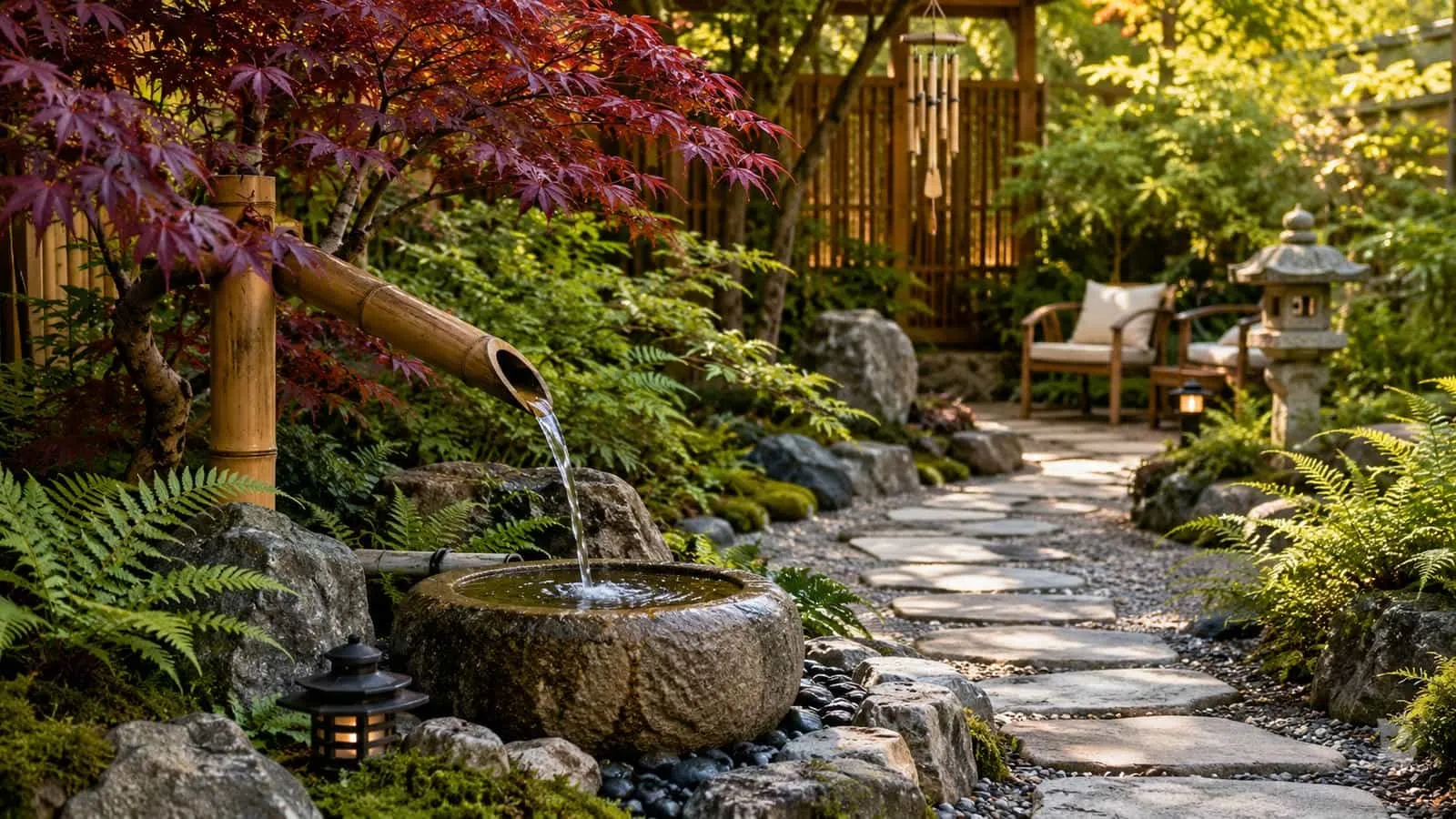
🎋💧 A Japanese water fountain works best when the fountain, water sound and surrounding landscape are planned as one connected composition. A bamboo spout may create a light trickle, a shishi odoshi adds movement and a distinct tapping sound, while a natural stone basin provides a quieter and more grounded appearance. Use this guide to compare fountain types, placement, gravel, pathways, plants, scale, materials, pumps, water flow, maintenance and climate before creating a Japanese inspired garden that feels balanced rather than overly themed.
📌 Japanese Water Fountain Ideas for Bamboo, Stone, Shishi Odoshi, Tsukubai and Backyard Gardens
Explore Japanese water fountain ideas for backyards, courtyards, pathways, seating areas and peaceful garden spaces. Compare bamboo fountains, shishi odoshi, tsukubai stone basins, water sound, placement, common mistakes and buying decisions to find a fountain that fits your landscape. Select any image below to explore that exact Japanese fountain topic.


🏆 Best Japanese Water Fountains for Gardens, Courtyards and Peaceful Outdoor Spaces
A Japanese water fountain should be chosen as part of the landscape rather than as a separate ornament. Fountain shape, stone or bamboo material, water movement, sound, viewing angle and surrounding open space all affect whether the design feels natural. The strongest choice is usually the fountain that fits the property quietly instead of demanding attention from every part of the yard.
Start with the setting. A narrow bamboo spout can add visible movement to a compact garden without requiring a large reservoir. A low stone basin works well beside stepping stones or a shaded pathway. A bubbling rock can suit homeowners who prefer quiet circulation and limited splash, while a clean rectangular fountain may fit a modern Japanese courtyard or contemporary patio.
Decide how you want the water to move. Bamboo pouring into stone creates a light trickle. A shishi odoshi repeatedly fills, tips and returns, producing both movement and a noticeable tapping sound. A low bubbler produces a softer surface sound, while a small cascade may mask nearby traffic but can also create more splash and water loss.
Placement should support the intended viewing experience. A fountain beside a pathway becomes part of the journey through the garden, while one near seating should have a sound level that remains comfortable during conversation. Consider shade, wind, fallen leaves, drainage, electrical access and pump maintenance before installation. Our water fountain placement and location guide expands on these practical placement factors.
Materials should match the climate and the amount of care you are prepared to provide. Bamboo is lightweight and visually distinctive, but it changes colour and may split or deteriorate outdoors. Natural stone and granite create a durable grounded appearance but require a stable base. Cast stone and resin can reproduce Japanese inspired forms at lower weight or cost, although their finishes vary in realism.
Keep surrounding landscaping restrained. Gravel, river rock, ferns, ornamental grasses, evergreen shrubs, Japanese maples and stepping stones can frame the fountain without becoming separate competing features. Leave enough open space around the basin for clear viewing, water movement and maintenance access, and explore our garden water fountain landscaping ideas for broader guidance on integrating fountains with planting beds, pathways and outdoor garden design.
Compare bamboo spout fountains, stone basins, shishi odoshi, bubbling rocks and modern Japanese water features.
Choose the right sound, scale, material, water movement and maintenance level for your garden.
🛒 Shop Japanese Water Fountains on Amazon
🎋 What Makes a Japanese Water Fountain Work Well?
A successful Japanese water fountain uses controlled water movement, natural looking materials and intentional placement. It should create a clear focal point without relying on excessive bamboo, lanterns, statues or other decorative symbols.
Use these practical design principles to choose a fountain that feels balanced, remains manageable and fits a real residential garden.
- 💧 Choose the Water Movement First: Decide whether you want a quiet trickle, bamboo pour, rhythmic tipping action, gentle bubbling or small cascade. The water movement determines the sound, splash, pump requirement and best viewing distance.
- 🎋 Use Bamboo with Realistic Expectations: Bamboo fountains create a strong Japanese inspired appearance in small spaces, but outdoor bamboo naturally weathers. Inspect joints, supports and water channels regularly and expect occasional sealing, repair or replacement.
- 🪨 Use Stone for Visual Weight: Natural stone, granite and weathered stone basins create a grounded appearance that works well beside gravel, paths and restrained planting. Confirm that the base can support the complete filled weight.
- 🔔 Understand Shishi Odoshi Sound: A shishi odoshi does not produce only a gentle trickle. Its tipping bamboo tube creates a repeating knock when it returns to position. Test the sound before placing it near bedrooms, neighbours or quiet conversation areas.
- 🏺 Distinguish Tsukubai from Decorative Basins: A traditional tsukubai is a stone water basin connected with Japanese tea garden practices. Many residential products are better described as tsukubai inspired recirculating fountains rather than authentic traditional installations.
- 📏 Match the Fountain to the Space: A small courtyard usually benefits from a low basin, compact bubbling stone or narrow bamboo spout. Larger landscapes can support wider stone groupings, stronger visual weight and more distance around the fountain.
- 🎧 Control Flow and Sound: Use an adjustable pump whenever possible. Lower flow reduces splash and creates a softer sound, while higher flow increases movement and may help mask traffic. The best setting depends on basin shape, drop height and seating distance.
- 📍 Plan the Main Viewing Angle: Position the fountain where the water movement can be seen from a pathway, window, patio or seating area. Avoid hiding the most interesting side behind dense plants or placing it where equipment dominates the view.
- 🌿 Keep the Landscaping Restrained: Use a limited group of stones, gravel, ferns, grasses, evergreen plants or one Japanese maple to frame the fountain. Too many themed decorations can make the setting look artificial rather than calm and natural.
- ⚙️ Preserve Pump Access: Hide pumps, tubing and reservoirs without sealing them behind heavy stones or dense roots. You should be able to adjust flow, remove debris and clean the pump without dismantling the landscape.
- ☀️ Balance Sunlight and Shade: Partial shade can reduce algae, evaporation and hot water, but solar fountain panels need dependable sun. A separate solar panel can allow the fountain to remain shaded while the panel receives stronger light.
- 🍂 Account for Falling Debris: Japanese maples, evergreens and nearby shrubs can frame a fountain beautifully, but leaves, needles and seeds may block small pumps and bamboo channels. Leave enough open space for inspection and cleaning.
- 🧱 Build a Stable Foundation: Stone fountains and filled basins can be extremely heavy. Prepare a level, compacted base that resists settling, runoff and seasonal ground movement so water flows evenly and the structure remains secure.
- ❄️ Plan for Freezing Weather: Drain pumps, tubing, bamboo channels and basins before sustained freezing unless the fountain is specifically designed for winter operation. Trapped water can split bamboo, damage pumps and create cracks in some stone or cast materials.
- 🧘 Use Restraint Instead of Decoration: A convincing Japanese inspired fountain garden depends more on proportion, natural texture, asymmetry and open space than on adding many obvious Japanese themed objects.
When water movement, materials, sound, placement, scale and surrounding landscape are planned together, a Japanese fountain becomes part of the garden rather than an object placed on top of it. The result feels quieter, more believable and easier to maintain.

✅ Best For: Japanese water fountains work especially well in small backyards, shaded side gardens, courtyard gardens, meditation corners, gravel landscapes, pathway gardens, patio edges, townhouse yards, modern outdoor spaces and quiet seating areas where controlled water movement can add sound and visual focus without overwhelming the property.
Best Japanese Water Fountains Summary
The best Japanese water fountain matches the available space, preferred water movement, sound level, material, climate and maintenance routine. Bamboo spouts suit compact landscapes, stone basins provide natural weight, shishi odoshi adds rhythmic movement and modern fountains fit simple courtyards. Strong placement and restraint matter more than adding many themed decorations.
Compare bamboo, stone, bubbling and modern Japanese water fountains for backyards, patios and courtyards.
Choose adjustable flow, realistic materials, practical pump access and suitable seasonal care.
🛒 Browse Japanese Garden Fountains on Amazon
🔎 Japanese Water Fountain Scenario Engine: Find the Right Fountain for Your Garden, Space and Lifestyle
Every property has a different combination of space, pathways, seating, sunlight, shade, wind, planting, power access and homeowner expectations. A bamboo fountain that fits a narrow side garden may not suit a modern courtyard, quiet meditation area or low maintenance landscape. If the goal is broader than Japanese inspired design alone, our guide to outdoor fountain options for peaceful landscapes compares fountain forms, size, sound, water movement, power, materials, installation, weather exposure and long term ownership across different residential settings. Open each scenario to find the strongest fountain type for your setting.
Open each scenario to compare Japanese fountain types, size, materials, water movement, sound, placement, landscaping, pumps, maintenance and climate needs. Each recommendation focuses on creating a believable residential garden rather than filling the space with unrelated Japanese themed decorations.
🏡 Small Backyard Japanese Garden
Best choice: Compact stone basin or narrow bamboo spout fountain with gentle recirculating water
A small backyard needs a fountain that creates movement without taking over the landscape. A low stone basin, compact bubbling rock or narrow bamboo spout can fit beside a pathway, fence corner or small planting bed while leaving enough open space for seating and circulation.
Keep the water movement simple and controlled. A light bamboo pour or low bubbling surface provides sound without throwing water beyond the basin. Use gravel, one or two larger stones, ferns and a small Japanese maple to frame the fountain without making the garden feel crowded.
Choose this when you want a Japanese inspired focal point in a compact residential backyard.
- 💧 Best fountain: Compact stone basin, bubbling rock or bamboo spout
- 📏 Ideal size: Low profile with a narrow footprint
- 🪨 Best material: Natural stone, granite, cast stone or sealed bamboo
- 🌊 Water movement: Gentle trickle or low bubbling surface
- 🎧 Sound level: Soft enough for nearby seating and neighbours
- 📍 Placement: Garden corner, pathway edge or fence planting bed
- 🌿 Landscape: Gravel, ferns, one feature tree and open space
Micro Recommendations: View the fountain from the house before fixing its final position. A low basin may be easier to see when placed slightly off centre rather than directly against a fence.
⚠️ Common Mistake: Adding a large fountain, multiple lanterns and dense planting can make a small Japanese garden look cramped and heavily themed.
🧘 Quiet Meditation Corner with Gentle Water Sound
Best choice: Low stone basin or bubbling stone fountain with adjustable flow and minimal splash
A meditation corner benefits from steady sound rather than dramatic movement. Water entering a stone basin, rising through a low bubbling rock or slipping from a short bamboo spout can create a quiet focal point without interrupting reading, breathing exercises or conversation.
Place the fountain near enough to hear clearly but not so close that pump noise, splashing or repeated tapping becomes distracting. A shishi odoshi may be too rhythmic for someone who wants continuous soft water sound, although others may enjoy its repeating movement.
Choose this when gentle sound, reflection and a calm seating experience are more important than strong visual movement.
- 💧 Best fountain: Bubbling stone, low basin or short bamboo spout
- 📏 Ideal size: Small to medium with a wide stable reservoir
- 🪨 Best material: Granite, natural stone or weathered cast stone
- 🌊 Water movement: Continuous bubbling or short controlled pour
- 🎧 Sound level: Soft, steady and adjustable
- 📍 Placement: Beside a bench, reading chair or quiet patio edge
- 🌿 Landscape: Ferns, moss, gravel, evergreens and open ground
Micro Recommendations: Test the pump at several flow settings while seated in the intended viewing area. The best sound is often lower than the strongest available pump setting.
⚠️ Common Mistake: Choosing a tall drop or powerful pump can turn a quiet meditation fountain into a constant splashing distraction.
🎋 Traditional Inspired Japanese Landscape
Best choice: Tsukubai inspired stone basin or restrained bamboo water spout beside a pathway
A traditional inspired Japanese landscape should rely on proportion, natural materials and careful placement rather than a large collection of decorative symbols. A low stone basin beside stepping stones or a bamboo spout entering weathered stone can create a convincing focal point when the surrounding landscape remains simple.
Traditional elements should be described accurately. A modern recirculating basin may be tsukubai inspired without serving the original function of a tsukubai in a tea garden. The residential design can still draw from the form while clearly remaining a modern adaptation.
Choose this when you want a landscape influenced by Japanese garden forms without pretending the installation is historically exact.
- 💧 Best fountain: Tsukubai inspired basin or bamboo spout fountain
- 📏 Ideal size: Low and grounded rather than tall or monumental
- 🪨 Best material: Natural stone, granite and authentic bamboo
- 🌊 Water movement: Slow pour into a stone basin
- 🎧 Sound level: Light trickle with limited splash
- 📍 Placement: Beside stepping stones, an entrance path or garden turn
- 🌿 Landscape: Gravel, moss, ferns, rocks and restrained evergreen planting
Micro Recommendations: Use one strong traditional inspired fountain element and allow the pathway, stones and planting to support it. The fountain should not compete with several other focal points.
⚠️ Common Mistake: Presenting every stone basin or bamboo fountain as an authentic ancient design can reduce cultural accuracy and credibility.
🏙️ Modern Minimalist Japanese Courtyard
Best choice: Rectangular stone, concrete or dark composite fountain with a concealed reservoir and controlled flow
A modern Japanese courtyard usually benefits from clean lines, a limited material palette and carefully preserved open space. A rectangular basin, narrow wall of water or simple bubbling stone can add movement without introducing rustic bamboo or decorative elements that conflict with contemporary architecture.
Keep the fountain shape aligned with paving, walls and seating. Dark stone, smooth concrete, granite and matte composite finishes can work well when the water remains calm and the equipment stays hidden. One small tree or sculptural evergreen may provide enough planting.
Choose this when the home has modern architecture and the outdoor space depends on clean geometry and uncluttered surfaces.
- 💧 Best fountain: Rectangular basin, linear spillway or bubbling monolith
- 📏 Ideal size: Proportional to the courtyard wall and seating area
- 🧱 Best material: Granite, concrete, dark stone or matte composite
- 🌊 Water movement: Smooth sheet, low bubbling or controlled overflow
- 🎧 Sound level: Quiet to moderate with limited echo
- 📍 Placement: Courtyard wall, paving edge or centred viewing axis
- 🌿 Landscape: Gravel, one sculptural tree and minimal planting
Micro Recommendations: Listen for sound reflection between courtyard walls. A gentle flow may sound much louder in an enclosed space than it does in an open garden.
⚠️ Common Mistake: Adding rustic bamboo, bright ornaments and several plant styles can weaken the clean modern Japanese design.
🎍 Bamboo Focused Japanese Garden
Best choice: Japanese bamboo water fountain or shishi odoshi with a stone basin and adjustable recirculating pump
A bamboo focused garden can use a simple pouring spout for continuous water sound or a shishi odoshi for visible tipping movement and a repeating knock. These two fountains create different experiences, so the decision should begin with sound rather than appearance alone.
Bamboo naturally changes outdoors. Sun, moisture, freezing weather and repeated contact with water can fade the surface, loosen joints and cause splitting. Place the pump and tubing where they can be reached easily and expect the bamboo components to need more attention than a solid stone fountain.
Choose this when bamboo is the main visual material and you are comfortable with natural weathering and occasional replacement.
- 💧 Best fountain: Bamboo spout or shishi odoshi tipping fountain
- 📏 Ideal size: Compact to medium with a stable stone basin
- 🎋 Best material: Treated bamboo with natural stone support
- 🌊 Water movement: Continuous pour or repeating fill and tip action
- 🎧 Sound level: Soft trickle or noticeable rhythmic knock
- 📍 Placement: Side garden, pathway turn or bamboo planting edge
- 🌿 Landscape: Stone, gravel, ferns and limited bamboo screening
Micro Recommendations: Choose a standard bamboo spout when continuous soft sound matters most. Choose a shishi odoshi only when you genuinely want its repeating movement and tapping sound.
⚠️ Common Mistake: Buying a shishi odoshi for its appearance without considering the repeated knocking sound can make the final placement uncomfortable.
🪨 Natural Stone Japanese Garden
Best choice: Granite basin, weathered stone bowl or bubbling rock fountain with concealed circulation
Natural stone works well when the goal is to make the fountain appear connected to the land. Granite basins, carved stone bowls and bubbling rocks provide visual weight and age naturally, especially when surrounded by gravel, larger rocks, ferns and low evergreen planting.
Stone fountains require careful foundation planning because the filled structure may be extremely heavy. The reservoir, tubing and pump should remain accessible even when nearby rocks are used to hide equipment. In freezing climates, confirm whether the stone can tolerate repeated freeze and thaw exposure.
Choose this when durability, natural texture and a grounded appearance matter more than easy relocation.
- 💧 Best fountain: Granite basin, stone bowl or bubbling rock
- 📏 Ideal size: Medium scale with visible space around the stone
- 🪨 Best material: Granite, dense natural stone or weathered cast stone
- 🌊 Water movement: Bubbling, short pour or gentle basin overflow
- 🎧 Sound level: Low to moderate depending on drop height
- 📍 Placement: Gravel bed, pathway junction or natural garden slope
- 🌿 Landscape: Ferns, moss, evergreen shrubs and grouped rocks
Micro Recommendations: Leave open gravel or groundcover around the main stone. Crowding the fountain with many smaller rocks can weaken its visual weight and make cleaning harder.
⚠️ Common Mistake: Installing a heavy stone basin on loose soil can lead to settling, uneven water flow and structural instability.
🪑 Patio or Compact Outdoor Living Space
Best choice: Compact stone bowl, ceramic basin or modern recirculating fountain with low splash
A patio fountain should add sound and visual interest without wetting furniture, blocking walking routes or creating constant pump noise. A compact bowl, narrow bamboo spout or small modern fountain can fit beside seating when the water remains inside the basin.
Confirm that the patio can support the full weight of the fountain and water. Use a quiet pump, short drop and broad catch basin. Place electrical cords and solar panel cables away from doors, chair legs and high traffic areas.
Choose this when the Japanese fountain will be part of an outdoor seating or dining area with limited room.
- 💧 Best fountain: Compact basin, short bamboo spout or modern bubbler
- 📏 Ideal size: Small footprint with enough basin width to catch splash
- 🧱 Best material: Resin, ceramic, lightweight concrete or small stone
- 🌊 Water movement: Low bubbling or short controlled pour
- 🎧 Sound level: Soft enough for conversation
- 📍 Placement: Patio corner, seating edge or beside a privacy screen
- 🌿 Landscape: Containers, gravel tray and one restrained plant grouping
Micro Recommendations: Run the fountain during a normal conversation before final placement. Move it farther away when the water or pump sound competes with voices.
⚠️ Common Mistake: Placing the fountain beside cushions, doorways or narrow paths can create splash stains and daily inconvenience.
🧽 Low Maintenance Japanese Inspired Landscape
Best choice: Simple bubbling stone or open cast stone basin with a removable pump and limited planting
A low maintenance Japanese inspired fountain should have an open water path, accessible pump and simple surrounding landscape. Bubbling stones and open basins are generally easier to clean than narrow bamboo channels, shishi odoshi mechanisms or fountains hidden beneath many decorative rocks.
Place the fountain away from heavy leaf drop, lawn clippings and irrigation overspray. Use gravel, a few larger stones and slow growing evergreen plants rather than dense planting that blocks access. No fountain is maintenance free, but simple construction can reduce cleaning time.
Choose this when you want Japanese inspired character without a demanding fountain or landscape care routine.
- 💧 Best fountain: Bubbling rock or open recirculating stone basin
- 📏 Ideal size: Small to medium with exposed cleaning access
- 🧱 Best material: Dense stone, cast stone or durable resin
- 🌊 Water movement: Simple bubbling with adjustable flow
- 🎧 Sound level: Quiet and steady
- 📍 Placement: Away from trees, mowing debris and sprinklers
- 🌿 Landscape: Gravel, larger stones and slow growing evergreens
Micro Recommendations: Choose the fountain that can be opened, drained and cleaned easily rather than the design with the most hidden channels and decorative parts.
⚠️ Common Mistake: Assuming a recirculating fountain will remain clean without water replacement, pump cleaning and seasonal inspection can lead to algae and blocked flow.
✅ How to Choose Between These Japanese Fountain Scenarios
Begin with the real garden setting, then compare fountain size, water movement, sound, materials, placement, power and maintenance. After those needs are clear, review the broader outdoor water fountain types and styles and choose the Japanese inspired form that fits without competing with the landscape.
- 📏 Choose for Space First: Compact gardens need low fountains and open ground, while larger landscapes can support heavier stone and wider surrounding compositions.
- 🌊 Choose the Water Movement: Bamboo pouring, shishi odoshi tipping, stone bubbling and modern overflow designs create different sound, splash and maintenance needs.
- 🎧 Match Sound to the Setting: Use quiet bubbling near seating and stronger flow only when masking traffic or creating a more noticeable focal point.
- 🪨 Match Material to Maintenance: Bamboo needs more weathering care, while heavy stone needs a stronger foundation and may be harder to move.
- 📍 Plan the Viewing Angle: Position the fountain where the water movement can be seen from a pathway, window, patio or garden seat.
- ❄️ Plan for the Climate: Drain pumps, tubing and basins before freezing when the fountain is not designed for winter operation.
The strongest choice is not always the largest or most decorative fountain. It is the Japanese water fountain that fits the real scale of the garden, creates the right sound, remains accessible for maintenance and looks connected to the surrounding landscape.
✅ Scenario Engine Recommendation: When two scenarios match your property, combine their practical requirements. A small shaded meditation garden, for example, may need the compact scale of the small backyard scenario and the controlled sound recommended for a quiet meditation corner.
📊 Japanese Water Fountain Comparison by Style, Water Movement, Sound, Space and Maintenance
| ⛲ Fountain Type | 🏡 Visual Style | 💧 Water Movement and Sound | 📏 Space and Maintenance | Buyer Guidance and Best Setting |
|---|---|---|---|---|
| 🎋 Bamboo Spout Fountain | Narrow, natural and strongly Japanese inspired without requiring a large stone structure. | Produces a continuous pour or trickle into a bowl or stone basin. Sound depends on drop height, flow and the receiving surface. | Works in small gardens and side yards. Bamboo needs inspection for fading, splitting, loose joints and weather damage. | Best for compact landscapes where visible water movement matters. Choose this over shishi odoshi when you want steady sound without a repeating knock. |
| 🔔 Shishi Odoshi Fountain | Distinctive tipping bamboo mechanism with strong visual movement and traditional Japanese garden associations. | Fills, tips, empties and returns to position. Produces flowing water followed by a rhythmic tapping or knocking sound. | Needs enough space for the bamboo arm and stable support. Moving parts and bamboo require more attention than a simple basin. | Best for homeowners who want movement and rhythm. Avoid placing it near bedrooms, neighbours or quiet seating unless the sound is tested first. |
| 🪨 Stone Basin Fountain | Low, grounded and natural. Works with gravel, ferns, stepping stones, moss and restrained evergreen planting. | A bamboo or stone spout pours into the basin, creating a gentle trickle, soft splash or calm surface movement. | Requires a level foundation because stone can be heavy. Open basins are usually easier to inspect and clean. | A strong general choice for traditional inspired gardens, pathways and quiet seating areas where natural texture matters. |
| 🏺 Tsukubai Inspired Fountain | Low stone basin surrounded by carefully placed rocks, stepping stones and simple planting. | Usually uses a slow bamboo or stone spout with controlled flow and limited splash. | Needs pathway space, pump access and room around the basin. Debris can collect between surrounding stones. | Best for homeowners who want a tea garden influenced composition. Describe modern recirculating versions as tsukubai inspired rather than authentic traditional installations. |
| 💦 Bubbling Stone Fountain | Naturalistic and understated. The water appears to rise through a rock or stone surface. | Produces low bubbling, ripples and soft surface sound with less splash than taller fountain designs. | Fits small and medium gardens. A hidden reservoir reduces visible water but must remain accessible for pump cleaning. | Best for low maintenance Japanese inspired landscapes, meditation corners and homeowners who prefer quiet movement over strong cultural styling. |
| ▭ Modern Japanese Fountain | Clean rectangular, linear or monolithic form suited to contemporary architecture and minimalist courtyards. | Uses bubbling, smooth overflow or a narrow water sheet. Enclosed courtyards can make even gentle flow sound louder. | Works well in patios and courtyards. Smooth surfaces may show mineral marks and require regular wiping. | Best for modern homes where bamboo and rustic stone would conflict with the architecture. Keep planting and materials simple. |
| Japanese fountain comparison summary: Choose a bamboo spout for compact spaces and steady trickling sound, shishi odoshi for tipping movement and rhythmic tapping, a stone basin for natural weight, a tsukubai inspired fountain for pathway based design, a bubbling rock for simple maintenance, or a modern fountain for clean courtyard architecture. | ||||
Compare bamboo spouts, shishi odoshi fountains, stone basins, bubbling rocks and modern Japanese water features.
Choose the right style, water sound, material, size and maintenance level for your outdoor space.
🛒 Compare Japanese Water Fountains on Amazon
Advantages and Disadvantages of Japanese Water Fountains
Japanese water fountains can add controlled movement, natural texture and purposeful sound to a garden. They can also require pump access, water level checks, bamboo care, stone support and winter protection. Comparing the benefits and limitations helps determine whether the fountain fits the property, climate and maintenance routine.
| Benefits of Japanese Water Fountains | Limitations and Practical Tradeoffs |
|---|---|
|
|
| Japanese Fountain Tip: Choose the fountain according to space, sound, maintenance and climate before focusing on decorative appearance. A simple fountain that fits the landscape will usually look more convincing than a larger design surrounded by too many themed objects. | |
💡 Comparison Tip: Listen to the fountain style before making the final decision. Bamboo pouring, shishi odoshi tapping, stone bubbling and modern overflow designs produce very different sounds, even when the fountains are similar in size.
Section Summary Snapshot: Compare Japanese water fountains by water movement, sound, material, space and maintenance rather than appearance alone. Bamboo spouts suit compact gardens, shishi odoshi adds rhythmic movement, stone basins create natural weight, tsukubai inspired fountains strengthen pathways, bubbling rocks simplify care, and modern fountains fit clean courtyards.
💧 Types of Japanese Water Fountains with Bamboo, Stone, Shishi Odoshi, Tsukubai and Modern Designs

🎋 Bamboo Japanese Water Fountains for Small Gardens and Natural Water Movement
🎋 Bamboo Japanese Water Fountains for Backyards, Side Gardens and Compact Outdoor Spaces
Bamboo Japanese water fountains use one or more bamboo channels to pour water into a bowl, stone basin or hidden reservoir. Their narrow form works well in small gardens, pathway corners and patios where homeowners want visible water movement without installing a large fountain.
Problem A bamboo fountain may fade, split or loosen after repeated exposure to water, sunlight and freezing weather.
Why it happens Bamboo is an organic material that naturally changes outdoors and can deteriorate faster when water remains trapped inside it.
Solution Choose treated bamboo, inspect joints regularly and drain the fountain before sustained freezing.
🎋 Best Bamboo Japanese Water Fountain Ideas
A simple bamboo spout can pour into a weathered stone bowl beside gravel, ferns and a small Japanese maple. This design creates clear movement and gentle sound while using less space than a large stone fountain.
Bamboo fountains work best when the pump and tubing remain accessible. Avoid burying the complete water system beneath heavy stones or dense roots because routine cleaning and flow adjustment will become difficult.
- 📏 Use Bamboo in Small Spaces A narrow spout can create a visible water feature without taking over a compact garden.
- 💧 Control the Water Drop A short pour creates softer sound and less splash than a high bamboo channel.
- 🎋 Expect Natural Weathering Outdoor bamboo changes colour and may eventually need repair or replacement.
- ⚙️ Keep the Pump Accessible Hide tubing carefully without blocking maintenance access.
🎋 Bamboo Fountain Tip: Choose a continuous bamboo spout when you want steady trickling sound. A shishi odoshi creates a very different experience because it tips and produces a repeating knock.
🔔 Shishi Odoshi Bamboo Fountains with Tipping Movement and Rhythmic Sound
🔔 Shishi Odoshi Japanese Fountains for Tipping Bamboo Movement, Sound and Garden Character
A shishi odoshi uses a pivoting bamboo tube that fills with water, tips forward, empties and returns to its starting position. The returning bamboo creates a repeated tapping sound. Modern residential versions usually recirculate water with a small pump and stone basin.
Problem The repeated tapping sound may be louder or more frequent than expected.
Why it happens Pump flow, tube size, pivot balance and the striking surface control how often and how loudly the bamboo returns.
Solution Test the completed fountain from nearby seating, windows and property boundaries before fixing the final flow rate.
🔔 Best Shishi Odoshi Fountain Ideas
A shishi odoshi can become a strong focal point beside a garden pathway or natural stone grouping. The tipping motion is more noticeable than a standard bamboo pour, making it useful where movement is part of the design goal.
The fountain needs a stable pivot, balanced bamboo tube and dependable water flow. Too little flow may stop the tipping action, while excessive flow can make the movement and sound happen too often.
- 🔔 Understand the Sound Shishi odoshi creates a repeated knock, not only a gentle water trickle.
- ⚖️ Balance the Bamboo Tube Correct pivot placement allows the tube to fill, tip and return smoothly.
- 🌊 Adjust the Pump Flow Flow rate controls how often the tipping action repeats.
- 📍 Choose Placement Carefully Keep repeated tapping away from bedrooms and close neighbours when possible.
🔔 Shishi Odoshi Tip: Do not choose this fountain only because it looks Japanese. Choose it because you also enjoy the repeating movement and sound it creates.
🪨 Japanese Stone Basin Fountains for Natural Gardens, Pathways and Quiet Seating Areas
🪨 Japanese Stone Basin Water Fountains for Natural Texture, Gentle Sound and Grounded Garden Design
Japanese stone basin fountains use granite, natural stone, carved rock or cast stone to create a low grounded water feature. A bamboo or stone spout usually pours into the basin, producing a light trickle, soft splash or gentle surface movement.
Problem A heavy stone basin may settle unevenly or become difficult to reposition after installation.
Why it happens Natural stone and filled basins place considerable weight on the foundation.
Solution Build a level compacted base and confirm the final viewing angle before filling the fountain.
🪨 Best Japanese Stone Basin Fountain Ideas
A low granite basin beside stepping stones can strengthen a pathway without blocking the view. Add a short bamboo spout, gravel, ferns and one larger feature stone to keep the composition simple.
Natural stone develops colour changes, mineral marks and weathering over time. Some homeowners appreciate this aged appearance, while others may prefer cast stone or sealed surfaces that are easier to clean.
- 🪨 Use Stone for Visual Weight A low stone basin makes the fountain feel connected to the ground.
- 🧱 Prepare a Strong Base Heavy stone requires level support that resists settling and frost movement.
- 💧 Use a Short Water Drop A low spout creates controlled sound and reduces splash.
- 🍂 Keep the Basin Open Avoid surrounding the entire basin with debris trapping rocks and dense plants.
🪨 Stone Basin Tip: Leave open space around the main basin. Too many surrounding rocks can weaken the focal point and make pump access difficult.
🏺 Tsukubai Inspired Water Features for Tea Garden Style and Pathway Design
🏺 Tsukubai Inspired Japanese Fountains with Stone Basins, Bamboo Spouts and Stepping Stones
A tsukubai inspired fountain uses a low stone basin, restrained water spout and carefully arranged pathway stones to reference the form of a traditional tsukubai. Most residential versions are modern recirculating fountains rather than traditional tea garden purification basins.
Problem Modern decorative basins are sometimes presented as authentic traditional tsukubai installations.
Why it happens Commercial fountain descriptions often use Japanese terms loosely for marketing.
Solution Describe residential recirculating designs as tsukubai inspired unless they accurately follow the traditional purpose and setting.
🏺 Best Tsukubai Inspired Fountain Ideas
Place a low stone basin beside stepping stones where the fountain can be discovered gradually from a pathway. A short bamboo spout, gravel, moss and ferns can support the setting without crowding the basin.
The strongest design depends on relationship rather than ornament. Basin height, surrounding stones, pathway direction and water sound should work together as one composition.
- 🏺 Use a Low Basin Tsukubai inspired designs should feel grounded rather than tall and ornamental.
- 🚶 Connect the Fountain to a Path Stepping stones help the basin feel intentionally placed.
- 🎋 Use a Restrained Water Spout A short bamboo or stone spout supports the low composition.
- 🌿 Keep Planting Simple Moss, ferns and low evergreens should frame the basin without covering it.
🏺 Tsukubai Inspired Fountain Tip: Avoid turning the setting into a collection of unrelated Japanese decorations. The basin, pathway and surrounding stones should remain the main visual story.
💦 Natural Rock and Bubbling Stone Fountains for Simple Japanese Inspired Gardens
💦 Bubbling Rock Japanese Water Fountains for Quiet Movement, Natural Texture and Easy Care
Bubbling rock fountains push water through a stone surface and return it to a hidden reservoir. They create gentle movement, low sound and a natural appearance without requiring bamboo, a large visible basin or a complex tipping mechanism. For more ways to use natural stone, hidden reservoirs and gentle bubbling water throughout the landscape, explore our bubbling rock water fountain ideas for gardens.
Problem Hidden reservoirs can become difficult to clean when buried beneath heavy rocks and dense planting.
Why it happens Homeowners often hide every part of the fountain to make the installation look more natural.
Solution Conceal the reservoir while preserving a removable access panel for the pump and water chamber.
💦 Best Bubbling Stone Fountain Ideas
A single weathered stone rising from gravel can create a restrained fountain for a meditation corner, patio edge or small backyard. Water should bubble gently across the stone instead of spraying high above it.
Bubbling rocks work well for low maintenance landscapes because the water path is simple. They still require water level checks, pump cleaning and winter drainage when the system is not designed for freezing conditions.
- 💦 Use Low Bubbling Water Gentle surface movement creates sound without excessive splash.
- 🪨 Choose One Strong Feature Stone One larger rock often looks more natural than many small competing stones.
- ⚙️ Preserve Reservoir Access Keep the pump reachable beneath the decorative gravel or cover.
- 🌿 Use Restrained Planting Ferns, grasses and low evergreens can frame the rock without hiding it.
💦 Bubbling Rock Tip: This is one of the strongest choices for homeowners who want Japanese inspired naturalism without the maintenance and sound of bamboo mechanisms.
◻️ Modern Japanese Water Fountains for Courtyards, Patios and Contemporary Homes
◻️ Modern Japanese Water Fountains with Clean Lines, Controlled Flow and Minimalist Landscaping
Modern Japanese water fountains use rectangular basins, smooth stone, concrete, dark composite and simple water movement to suit contemporary homes and courtyards. They rely on proportion, clean geometry and restrained planting rather than rustic bamboo or heavy decorative styling.
Problem A modern courtyard fountain may sound louder than expected because nearby walls reflect the water and pump noise.
Why it happens Enclosed paving and hard architectural surfaces amplify sound.
Solution Use adjustable flow, a short water drop and a broad basin that reduces splash and echo.
◻️ Best Modern Japanese Fountain Ideas
A low charcoal basin or narrow granite spillway can complement modern paving, black outdoor furniture and structured planting. The fountain should repeat materials or colours already present in the architecture.
Use one small tree, ornamental grass grouping or evergreen form rather than many plant varieties. Keep tubing, cords and pump components hidden from the main view.
- ◻️ Use Clean Fountain Shapes Rectangles, low squares and simple vertical forms suit modern architecture.
- ⚫ Choose a Limited Material Palette Granite, concrete and dark composite support a restrained design.
- 💧 Control Courtyard Sound Adjustable flow helps reduce echo between hard walls.
- 🌾 Use Structured Planting Repeat a small number of grasses, shrubs or groundcovers.
◻️ Modern Japanese Fountain Tip: Do not add bamboo or traditional ornaments simply to make the fountain look more Japanese. Clean proportion and restrained materials may create a stronger result.
Section Summary Snapshot: Japanese water fountain types should be chosen by movement, sound, space, material and maintenance. Bamboo spouts create steady pouring, shishi odoshi adds rhythmic tipping, stone basins provide natural weight, tsukubai inspired fountains strengthen pathways, bubbling rocks simplify care, and modern fountains suit clean courtyards and contemporary homes.
Compare bamboo spout fountains, shishi odoshi, stone basins, tsukubai inspired designs, bubbling rocks and modern Japanese water features.
Choose the fountain type that matches your space, sound preference, materials and maintenance routine.
🛒 Explore Japanese Water Fountain Types on Amazon
🎋 Shishi Odoshi and Traditional Bamboo Water Features for Japanese Inspired Gardens
A shishi odoshi creates a different experience from a standard Japanese bamboo fountain. A fixed bamboo spout pours continuously, while a shishi odoshi uses a hollow pivoting tube that collects water until the heavier end tips downward. The tube empties, returns to its resting position and often strikes a stone or bamboo support.
The repeated movement makes the fountain visually engaging, but the tapping sound is equally important. Pump flow, bamboo length, pivot balance and the striking surface determine how often the cycle repeats and how strong the sound becomes. A faster pump may produce frequent knocking, while a slower flow creates longer pauses.
Modern residential shishi odoshi fountains usually recirculate water from a stone basin or hidden reservoir. A small submersible pump sends water through tubing to an upper bamboo spout, which fills the pivoting tube. This system avoids the need for a permanent flowing water supply, but the pump, tubing and reservoir still need regular access.
Bamboo naturally weathers outdoors. Sunlight, moisture, mineral deposits, repeated wetting and freezing temperatures can change its colour, loosen joints or cause splitting. Homeowners should expect more inspection and occasional replacement than they would with a solid granite or cast stone fountain.
Use the guidance below to decide whether the movement, sound, placement and maintenance of a shishi odoshi fit your garden. It can be a strong feature beside a pathway, side garden or natural stone setting, but it should not be treated as the automatic choice for every Japanese inspired landscape.
Compare tipping bamboo fountains, fixed bamboo spouts, stone basins, pumps and recirculating water feature kits.
Choose the right bamboo size, water flow, sound level and maintenance access for your garden.
🛒 Compare Shishi Odoshi Fountains on Amazon
💧 How Does a Shishi Odoshi Bamboo Fountain Work?
A shishi odoshi works through weight, balance and water flow. The bamboo tube rests at an upward angle until water collects inside the open end. When the water becomes heavy enough, the tube rotates around its pivot, empties and returns to its original position.
| 🎋 Fountain Component | 💧 Main Function | 🎧 Effect on Movement or Sound | 🔧 Homeowner Planning Guidance |
|---|---|---|---|
| Pivoting Bamboo Tube | Collects water, tips forward and empties before returning. | Tube length and internal capacity affect how long each cycle takes. | Choose straight bamboo without severe cracks and confirm that it moves freely around the pivot. |
| Bamboo Water Spout | Delivers water into the open end of the pivoting tube. | Faster flow shortens the time between tipping cycles and can increase splash. | Use an adjustable pump so the rhythm can be slowed or increased after installation. |
| Pivot Support | Holds the moving tube and allows controlled rotation. | Poor balance may cause sticking, uneven tipping or incomplete return. | Check the support for level, strength and enough clearance around the bamboo. |
| Striking Surface | Receives the returning bamboo after the water empties. | Stone creates a sharper knock, while wood or bamboo may soften the sound. | Test different contact surfaces when the original sound is too strong for the setting. |
| Stone Basin or Reservoir | Collects the discharged water and stores water for recirculation. | Basin width and water depth affect splash and the sound of falling water. | Keep enough water above the pump and leave an open route for cleaning and refilling. |
| Recirculating Pump and Tubing | Moves water from the reservoir to the upper bamboo spout. | Pump strength controls fill speed, cycle timing and overall sound. | Choose an outdoor rated adjustable pump and keep the intake clear of gravel and leaves. |
| 💧 A shishi odoshi works properly when the bamboo tube, pivot, pump flow, water spout and striking surface are balanced together. Changing one part can alter the cycle speed, water movement, splash and tapping sound. | |||
💧 Mechanism Tip: Start with a low pump setting and increase the flow gradually. This makes it easier to find a natural tipping rhythm without creating excessive splash or a rapid repeated knock.
🏡 Traditional Context and Modern Residential Shishi Odoshi Fountains
The term shishi odoshi is associated with Japanese garden devices that used movement and sound to discourage animals from entering cultivated areas. Modern decorative fountains borrow the tipping bamboo mechanism, but most residential products are recirculating garden features rather than working agricultural devices.
It is more accurate to describe these as traditional inspired or modern residential shishi odoshi fountains. They may use electric pumps, solar panels, plastic tubing, manufactured basins or decorative stands that differ from older gravity fed installations.
| 🎋 Design Aspect | Traditional Context | Modern Residential Adaptation |
|---|---|---|
| Water Supply | May use a natural or gravity fed water source. | Usually uses a recirculating electric or solar pump. |
| Main Purpose | Movement and sound could discourage animals from garden areas. | Primarily used for visual interest, water sound and Japanese inspired garden design. |
| Basin | May drain into natural ground, a channel or simple stone arrangement. | Often empties into a manufactured stone bowl, pond liner or hidden reservoir. |
| Materials | Bamboo, wood, stone and site available natural materials. | Bamboo may be combined with resin, plastic tubing, concrete or prefabricated supports. |
| Maintenance | Relies on inspection of natural materials and water flow. | Includes pump cleaning, tubing inspection, water level checks and seasonal shutdown. |
| 🎋 Modern shishi odoshi fountains preserve the tipping bamboo movement while adapting the water supply, reservoir, pump and materials for residential gardens. They should not be presented as exact copies of every traditional installation. | ||
🏡 Cultural Accuracy Tip: Do not describe every shishi odoshi as a Zen fountain or assign unsupported spiritual meanings to the tapping sound. Explain the actual mechanism and traditional context, then describe how the design is adapted for modern gardens.
🎧 Shishi Odoshi Sound, Flow Rate and Garden Placement
Sound should guide the final placement. A shishi odoshi creates two sound layers, flowing water entering the bamboo tube and a knock when the tube returns. The tapping may feel pleasant in a distant pathway garden but repetitive beside a bedroom window or neighbour’s patio.
| 📍 Garden Location | 🎧 Sound and Viewing Effect | 🎯 Placement Guidance |
|---|---|---|
| Pathway Turn | The movement is discovered gradually and the sound draws attention through the garden. | Keep the bamboo clear of passing feet and leave access behind the basin for pump service. |
| Side Garden | Adds activity to a narrow overlooked area beside the home. | Check sound reflection between walls and confirm that the path remains wide enough. |
| Near Seating | Allows visitors to watch the tipping action closely. | Use slower flow and a softer striking surface so the repeated knock does not interrupt conversation. |
| Meditation Garden | Creates clear rhythm and pauses rather than continuous background sound. | Choose this only when the repeating tap supports the intended experience. |
| Near a Window | Makes the fountain visible from indoors throughout the year. | Test the sound from inside the home before completing the installation. |
| Property Boundary | The tapping may carry into neighbouring spaces. | Move the fountain inward or reduce the sound before fixing the final location. |
| 🎧 The best shishi odoshi location provides a clear view of the tipping bamboo while keeping the repeated sound comfortable for homeowners and neighbours. Always test the rhythm from seating, windows and nearby property boundaries. | ||

🌿 Long Term Shishi Odoshi Planning, Bamboo Care and Seasonal Maintenance
A shishi odoshi should remain easy to inspect after surrounding plants mature and weather changes the bamboo. Pump access, pivot movement, tubing, water level, mineral buildup and freeze protection all affect long term performance.
Use these planning principles to keep the fountain working without rebuilding the surrounding landscape every time maintenance is needed.
- 🎋 Inspect Bamboo Regularly Watch for fading, splitting, soft areas, loose joints and blocked water channels.
- ⚖️ Check the Pivot Balance Remove debris and confirm that the tube fills, tips and returns without sticking.
- 🌊 Use Adjustable Pump Flow Seasonal water levels and pump wear may change how quickly the tipping cycle repeats.
- ⚙️ Preserve Pump Access Use a removable cover instead of sealing the reservoir beneath permanent stones.
- 🚰 Maintain the Water Level Low water can expose the pump, weaken flow and interrupt the tipping action.
- 🧽 Remove Mineral Deposits Clean the bamboo opening and upper spout when buildup redirects or slows the water.
- 🍂 Control Falling Debris Keep the fountain beyond the heaviest leaf, seed and needle drop when possible.
- 🌿 Limit Dense Plant Growth Trim ferns, grasses and shrubs before they block the moving bamboo or maintenance route.
- 🧱 Maintain Stable Supports Check that the frame and basin remain level after rain, soil settling or frost movement.
- 🎧 Recheck the Sound Weathered bamboo and shifting contact points can make the tapping louder over time.
- ☀️ Protect Bamboo from Extreme Exposure Partial shade can reduce drying and surface damage, although wet bamboo still needs airflow.
- ❄️ Drain Before Freezing Remove water from the bamboo, pump, basin and tubing before sustained freezing unless the system is rated for winter use.
Long term shishi odoshi planning brings the tipping mechanism, water system and landscape together. When the bamboo, pivot, pump, reservoir and maintenance route remain accessible, the fountain can continue creating dependable movement and sound without becoming a difficult garden repair project.
Section Summary Snapshot: A shishi odoshi uses a balanced bamboo tube that fills, tips, empties and returns with a repeated tapping sound. Modern residential versions usually rely on a recirculating pump and stone basin. Choose one only when you want both rhythmic movement and sound, then plan for bamboo weathering, pump access, seasonal drainage and careful placement.
Compare bamboo tipping fountains, stone basins, adjustable pumps and recirculating water feature kits.
Plan dependable movement, comfortable sound, maintenance access and seasonal bamboo protection.
🛒 Shop Shishi Odoshi Fountain Kits on Amazon
🪨 Tsukubai and Japanese Stone Basin Fountains for Pathways, Tea Garden Style and Natural Landscapes
A traditional tsukubai is more than a decorative stone bowl. It is a low water basin connected with Japanese tea garden practices, where guests traditionally used water for symbolic purification before entering a tea gathering. The low height required a person to bend toward the basin, which helped shape both its physical form and its relationship with the pathway.
Most products sold today as tsukubai fountains are modern residential interpretations. They commonly use a carved stone or cast stone basin, bamboo water spout, submersible pump and recirculating reservoir. These designs borrow the appearance of a tsukubai but usually function as decorative Japanese garden fountains.
The strongest residential design keeps the basin low and connected to the route through the garden. Stepping stones, gravel and one or two larger rocks can guide attention toward the water without surrounding it with excessive ornament. Ferns, moss, evergreen groundcovers and a Japanese maple may frame the setting when they do not block the basin or maintenance route.
Water movement should remain controlled. A short bamboo or stone spout can create a light pour into the basin, while a low pump setting limits splash and keeps the sound comfortable near pathways or seating. The basin, pump and surrounding stones should remain accessible for cleaning, water level checks and seasonal drainage.
🏺 What Is a Tsukubai and How Is It Used?
A tsukubai is a low stone water basin traditionally associated with Japanese tea gardens. Its original use and setting are different from a standard decorative fountain. Modern homeowners often adapt the basin form into a recirculating water feature while keeping the low profile, pathway relationship and restrained stone composition.
| 🏺 Design Element | Traditional Tsukubai Context | Modern Residential Fountain Adaptation | Homeowner Planning Guidance |
|---|---|---|---|
| Main Purpose | Used for purification within the approach to a tea gathering. | Used mainly for water movement, sound and Japanese inspired landscape design. | Describe decorative versions as tsukubai inspired unless the traditional use and setting are accurately represented. |
| Basin Height | Low enough that a visitor bends toward the water. | Usually low, although some products raise the basin for easier viewing. | Keep the basin visually grounded instead of placing it on a tall pedestal. |
| Water Supply | May receive water from a simple natural or gravity fed source. | Commonly uses a recirculating electric or solar pump. | Use adjustable flow and preserve access to the pump, tubing and reservoir. |
| Pathway Relationship | Positioned as part of the approach through a tea garden. | Often placed beside residential stepping stones, gravel paths or garden entrances. | Connect the basin to a route through the garden rather than placing it alone in open lawn. |
| Surrounding Stones | Carefully arranged stones may support use and define the basin setting. | Decorative rocks are often added to hide equipment and strengthen the visual composition. | Use a limited number of purposeful stones and avoid blocking cleaning access. |
| Planting | Planting supports the larger tea garden setting. | Moss, ferns, Japanese maples and evergreens commonly frame residential designs. | Keep plants low near the basin and account for mature spread, roots and fallen debris. |
| 🏺 Traditional tsukubai and modern tsukubai inspired fountains share a low stone basin and pathway relationship, but their purpose and water systems differ. Modern versions usually adapt the form for recirculating residential garden use. | |||
🏺 Cultural Accuracy Tip: Do not call every low stone bowl a traditional tsukubai. A modern fountain can be described as tsukubai inspired when it borrows the low basin form without serving the original tea garden function.
🪨 Choosing a Stone Basin, Water Spout and Recirculating System
The basin should look substantial without overwhelming the pathway. Natural granite provides weight, texture and long term durability, while carved stone, cast stone and concrete can create similar forms at different prices and weights. Resin versions are easier to move but may look less convincing when the finish is too smooth or uniform.
| 🪨 Basin or Spout Choice | 🏡 Visual Character | 💧 Water and Sound Effect | 🔧 Maintenance and Climate Guidance |
|---|---|---|---|
| Natural Granite Basin | Dense, grounded and naturally varied. | Produces a firm water sound when a short spout enters the basin. | Requires a strong level base and careful winter planning where water can freeze. |
| Weathered Natural Stone | Irregular texture blends easily with gravel, moss and pathway stones. | Uneven surfaces create softer and less predictable water movement. | Inspect natural cracks and avoid allowing water to remain trapped during freezing weather. |
| Cast Stone or Concrete Basin | Offers a shaped stone appearance at a lower cost than many carved stone basins. | Supports steady pouring or gentle bubbling. | Porous materials may need sealing and protection from repeated freeze and thaw cycles. |
| Bamboo Water Spout | Adds a clear Japanese inspired element and natural contrast with stone. | A short drop creates a light trickle, while a higher spout increases splash and sound. | Expect fading, mineral buildup and eventual bamboo replacement. |
| Stone or Metal Spout | Creates a more permanent or contemporary appearance. | Produces a controlled stream that may sound sharper against stone. | Clean mineral deposits and confirm that the finish suits the rest of the garden. |
| Hidden Recirculating Reservoir | Keeps the equipment and stored water out of the main view. | Allows continuous circulation without connecting to a natural water source. | Use a removable access panel so the pump can be cleaned and replaced. |
| 🪨 Natural stone provides the most grounded appearance, while cast stone, concrete and resin offer different tradeoffs in cost, weight and durability. A short bamboo spout creates classic visual contrast, but all recirculating systems need accessible pumps and reservoirs. | |||

🌿 Landscaping Around a Tsukubai Inspired Stone Basin
Landscaping should strengthen the fountain without turning the section into a general Japanese plant guide. Begin with the basin and pathway, then add only the stones, gravel and plants needed to connect the fountain to the setting.
Use stepping stones to create a visual approach toward the basin. Irregular spacing can feel more natural than a perfectly straight path, but each stone should remain stable and safe to walk on. Leave enough room beside the route for maintenance without forcing people to step over tubing or decorative rocks.
Gravel can create a clean transition between the pathway and basin while making fallen leaves easier to see and remove. River rock may be used near the water, but too many small stones can trap organic debris and make pump access difficult.
Moss and ferns work well in shaded areas with suitable moisture, while ornamental grasses and low evergreen shrubs may suit sunnier residential gardens. A Japanese maple can frame the basin from behind, but it should not hang directly over the water where leaves and seeds repeatedly block the pump.
Negative space is important. Keep at least one side of the basin visually open so the stone form and water movement remain clear. A crowded ring of plants, lanterns and small ornaments can make the fountain look staged instead of naturally integrated.
🏺 Integrating a Tsukubai Inspired Fountain with a Residential Garden
Use these principles to connect the stone basin with the pathway and surrounding landscape while preserving water quality and maintenance access.
- 🚶 Connect the Basin to a Pathway Position the fountain where it feels discovered along the garden route instead of isolated in open lawn.
- 🪨 Use a Limited Stone Group Choose one main basin and a few supporting rocks rather than surrounding it with many competing stones.
- 🎋 Keep the Water Spout Low A short bamboo or stone spout creates controlled sound and reduces splash.
- 🌿 Frame the Basin with Low Plants Ferns, moss and groundcovers should soften the setting without hiding the water.
- 🍁 Place Feature Trees Behind the Fountain A Japanese maple can provide colour and scale while keeping its roots and falling leaves away from the basin.
- ⚙️ Preserve Pump and Reservoir Access Hide equipment with removable gravel trays or covers instead of permanent stones.
- 💧 Use Adjustable Water Flow Lower the pump speed when splash, water loss or sound becomes too strong.
- 🍂 Control Organic Debris Remove leaves, moss fragments and seeds before they enter the pump intake.
- 🧱 Prepare a Level Foundation Heavy stone basins require compacted support that resists settling and seasonal ground movement.
- ❄️ Plan for Winter Drainage Empty the basin, pump and tubing before freezing when the fountain is not designed for winter operation.
A strong tsukubai inspired fountain depends on proportion, pathway placement and natural material relationships. When the basin remains low, the water flow stays controlled and the landscape avoids unnecessary decoration, the fountain can feel grounded, useful and believable within a residential Japanese inspired garden.
Section Summary Snapshot: A traditional tsukubai is a low stone basin connected with Japanese tea garden purification, while most backyard versions are modern recirculating adaptations. Use a grounded stone basin, short water spout, stepping stones, restrained planting and accessible pump system. Cultural accuracy, stable support and simple landscape integration matter more than adding many Japanese themed decorations.
Compare natural stone basins, bamboo spouts, cast stone fountains, pumps and recirculating water feature kits.
Create a low Japanese inspired fountain with controlled flow, pathway placement and practical maintenance access.
🛒 Explore Tsukubai Inspired Fountains on Amazon
📍 Where to Place a Japanese Water Fountain for Pathways, Courtyards, Seating Areas and Small Gardens
Japanese fountain placement should feel intentional rather than convenient. The fountain should connect with a pathway, courtyard, seating area, entrance or garden transition instead of filling an unused patch of ground. When that Japanese inspired water feature becomes part of the home's street-facing landscape, explore our front yard fountain ideas for peaceful entrances for broader guidance on house scale, walkway relationships, curb appeal, landscaping, sound and front entrance placement. Its location determines how clearly the water can be seen, how the sound travels and whether the surrounding landscape feels balanced.
Begin with the main viewing direction. Decide whether the fountain should be enjoyed from a kitchen window, patio, bench, pathway or garden entrance. Bamboo pouring, shishi odoshi tipping and low bubbling stone movement are easier to appreciate when the most active side faces the primary viewpoint.
Sound should also be tested from the place where people will sit or walk. A short bamboo pour may create a quiet trickle, while a shishi odoshi produces a repeating tap. Courtyard walls and house foundations can reflect water sound, making a modest fountain seem much louder than it would in an open backyard.
Practical conditions matter as much as appearance. Check sunlight, shade, wind, splash, drainage, electrical access, pump access and falling debris before preparing the base. A visually perfect location may become frustrating when leaves block the pump, cords cross the path or water repeatedly blows onto seating.
🏡 Best Locations for Japanese Water Fountains in Residential Gardens
| 📍 Garden Location | ⛲ Best Japanese Fountain Choice | 👁️ Viewing and Sound Experience | 🌿 Placement and Maintenance Guidance |
|---|---|---|---|
| Garden Entrance | Low stone basin, short bamboo spout or simple bubbling stone. | Introduces moving water near the beginning of the garden without revealing the complete landscape at once. | Keep the fountain outside delivery routes, gates and narrow walking areas. Preserve enough space for visitors to stop without blocking the entrance. |
| Along a Garden Pathway | Tsukubai inspired stone basin, bamboo spout or shishi odoshi. | The fountain can be discovered gradually while the water sound draws attention around a turn. | Keep moving bamboo and electrical cords outside the walking route. Leave stable access behind the fountain for pump service. |
| Near a Seating Area | Bubbling rock, low stone bowl or quiet bamboo pouring fountain. | Provides visible water movement and background sound during reading, conversation or morning coffee. | Test the fountain from the actual seat. Avoid strong splash, loud pumps and repeated tapping that competes with conversation. |
| Meditation Corner | Low bubbling stone, calm basin fountain or short bamboo spout. | Creates steady movement and sound without demanding attention from the entire garden. | Use adjustable flow and simple planting. Choose shishi odoshi only when its repeating rhythm supports the intended experience. |
| Modern Courtyard | Rectangular stone basin, linear spillway or simple bubbling monolith. | Clean fountain geometry strengthens paving, walls and contemporary architecture. | Account for sound reflection between walls. Use low flow and a broad catch basin to control echo and splash. |
| Patio Edge | Compact stone bowl, ceramic basin or modern recirculating fountain. | Adds water movement near outdoor living areas without taking over valuable seating space. | Keep water away from cushions, doors and dining areas. Confirm the patio can support the filled fountain weight. |
| Small Backyard | Narrow bamboo spout, low stone basin or compact bubbling rock. | Creates a focal point without reducing the yard to one oversized feature. | Leave negative space around the fountain and avoid surrounding it with too many rocks, lanterns or dense plants. |
| Side Garden | Bamboo fountain, wall aligned stone basin or compact shishi odoshi. | Adds interest to a narrow passage that may be viewed from windows or used as a garden route. | Check wall echo, pathway width, drainage and access to utilities before installing the fountain. |
| Natural Garden Backdrop | Granite basin, weathered stone bowl or bubbling rock fountain. | Natural materials appear connected to ferns, evergreens, gravel and feature stones. | Avoid placing the fountain beneath the heaviest leaf or seed drop. Keep roots and spreading plants away from the reservoir. |
| 📍 The strongest Japanese fountain location connects water movement with a pathway, entrance, courtyard, seating area or garden view. The final position should also provide comfortable sound, controlled splash, stable support, dependable power and direct access for cleaning. | |||
👁️ Choosing the Main Viewing Angle for a Japanese Fountain
The main viewing angle should show the fountain’s water movement rather than only the back of the basin or visible equipment. A bamboo spout should usually face partly toward the viewer, while a shishi odoshi should reveal the tipping tube and the surface it returns against.
View the proposed location from the home, patio, pathway and seating area before preparing the foundation. A fountain that looks centred from one direction may appear hidden behind a shrub or visually crowded from another.
Consider how the view changes as plants mature. Japanese maples widen, ornamental grasses lean and evergreen shrubs become denser. Leave enough open space that the water remains visible without constant pruning.
👁️ Viewing Angle Tip: Place a temporary container or garden ornament where the fountain will sit, then view it from every important window, path and chair before preparing the permanent base.
🎧 Planning Japanese Fountain Sound and Seating Distance
Water sound changes with pump flow, drop height, basin material, surrounding walls and listening distance. A short stream entering deep water may sound soft, while the same stream striking shallow stone can create a sharper sound. Shishi odoshi adds a separate tapping rhythm that may carry farther than the water itself.
| 💧 Water Movement | 🎧 Typical Sound Character | 🪑 Best Placement Relationship | ⚙️ Adjustment Guidance |
|---|---|---|---|
| Gentle Bubbling | Soft surface movement with limited splash. | Works near benches, patios, reading areas and meditation corners. | Lower the pump when bubbling becomes irregular or throws water beyond the stone. |
| Short Bamboo Pour | Light continuous trickle with a clear water stream. | Suitable beside pathways or seating where steady background sound is wanted. | Shorten the drop or reduce flow when splash and sound become too strong. |
| Shishi Odoshi | Flowing water followed by a repeated tap or knock. | Better beside a pathway or garden feature than immediately beside bedrooms or neighbours. | Slow the pump or soften the striking surface to increase the pause and reduce the sound. |
| Water Entering Stone Basin | Defined trickle or splash shaped by the basin depth and stone surface. | Works near garden entrances, stepping stones and quiet seating. | Adjust the water level and spout position before changing the pump. |
| Modern Overflow | Smooth continuous sound that may reflect from courtyard walls. | Best in modern patios and courtyards with enough space around the basin. | Test low flow first because enclosed hard surfaces amplify sound. |
| 🎧 Japanese fountain sound should be tested from the intended seating area and inside nearby rooms. Adjustable pump flow, water level, drop height and contact surfaces can often correct excessive sound without relocating the complete fountain. | |||

☀️ Sunlight, Shade, Wind and Water Loss Around Japanese Fountains
Partial shade can slow evaporation, reduce hot water and limit some algae growth. It may also protect bamboo from extreme drying. Deep shade, however, can increase falling debris and make direct solar pumps unreliable.
Solar Japanese fountains need dependable light on the panel, but the basin itself does not always need full sun. A separate panel allows the fountain to remain in a shaded garden while the panel is positioned where sunlight is stronger. Broader solar planning is covered in our solar water fountains for outdoor gardens.
Wind affects narrow water streams, small cascades and exposed basins. A fountain that works well during calm conditions may lose water quickly when the stream is blown beyond the basin. Test the location on a breezy day before completing the surrounding landscape.
💨 Wind and Splash Tip: Run the fountain at its intended flow during a windy afternoon. Check nearby pathways, walls, plants and seating for overspray before fixing the final pump setting.
🚶 Pathways, Drainage, Power and Maintenance Access
A clear path should lead to the basin, pump and reservoir without forcing the homeowner to step across moss, loose stone or delicate planting. Gravel, stepping stones and compacted surfaces can provide stable access while allowing normal drainage.
Keep power cords and solar cables outside walking routes. Outdoor electrical connections should remain protected from standing water, irrigation and garden tools. Do not hide cords so completely that damage cannot be inspected.
Leave enough working room to remove the pump, drain the basin, clean mineral deposits and reach the tubing. A fountain surrounded by permanent rocks may look finished, but it becomes difficult to maintain when the equipment cannot be reached.
Consider where drained water will travel. Runoff should move away from house foundations, wooden structures and areas where repeated moisture could make stepping stones slippery.
👣 Maintenance Route Test: Carry a bucket, brush and watering can to the proposed site. The fountain location is too difficult to maintain when this simple trip requires stepping across plants or moving furniture.
👁️ Check the Main View: Confirm that the bamboo spout, tipping mechanism or stone basin faces the direction from which it will be seen most often.
🎧 Listen from Indoors and Outdoors: Test the water and pump sound from seating, bedrooms, windows and nearby property boundaries.
💨 Observe Wind and Splash: Make sure moving water stays inside the basin during normal breezy conditions.
⚙️ Test Equipment Access: Confirm that the pump, tubing, reservoir, solar panel or power connection can be reached without dismantling the landscape.
🍂 Watch for Falling Debris: Avoid locations beneath heavy leaf, flower, seed or needle drop whenever possible.
🧱 Confirm Foundation Stability: Match the base to the full weight of the fountain, basin water and surrounding stone.
Section Summary Snapshot: Japanese water fountain placement should connect the fountain with a pathway, entrance, courtyard, seating area or garden view. Test water sound, sightlines, wind and splash before installation. The final location should also provide stable support, drainage, dependable power and direct maintenance access without crowding the fountain with excessive planting or decoration.
Compare bamboo spouts, stone basins, bubbling rocks and modern Japanese water features for different garden locations.
Choose a fountain with controlled sound, suitable scale, adjustable flow and practical pump access.
🛒 Browse Japanese Outdoor Fountains on Amazon
🎧 Japanese Water Fountain Sound, Water Movement, Flow Rate and Backyard Comfort
Japanese fountain sound begins where moving water meets bamboo, stone or the basin surface. A bubbling rock produces low surface sound, a bamboo spout creates a steady pour, a shishi odoshi adds a repeated tap and a small cascade produces fuller sound with more splash. Pump strength alone does not determine the final result.
Drop height, water depth and contact material are equally important. A short stream entering deeper water usually sounds softer than the same stream striking shallow stone. Granite and glazed ceramic create clearer notes, while rough natural stone divides water into smaller channels that produce a less uniform sound. To understand how these same acoustic variables affect bubbling, trickling, cascading and falling water across different fountain designs, explore our water fountain acoustics, drop height and flow guide.
The surrounding garden changes what homeowners hear. Courtyard walls, concrete paving and house siding reflect water and pump noise. Gravel, lawns, shrubs, ferns and ornamental grasses reduce part of that reflection. A small Japanese courtyard fountain may sound stronger than a larger fountain placed in an open backyard.
Judge the fountain from the places where people spend time. Listen from the patio, bench, kitchen window and nearby rooms. The best setting should provide clear water movement without making reading, conversation or sleep uncomfortable.
📊 Japanese Fountain Sound Comparison by Water Movement, Placement and Garden Goal
Japanese water fountains can create a gentle trickle, steady bamboo pour, rhythmic tapping, natural bubbling or stronger cascade. Comparing each type by sound, splash, placement and homeowner goal makes it easier to choose a fountain that fits the garden instead of becoming too loud or difficult to manage.
| 💧 Water Movement | 🎧 Sound and Splash Character | 🏡 Best Placement | 👤 Best Homeowner Fit | ⚙️ Main Adjustment |
|---|---|---|---|---|
| Gentle Bubbling Stone | Low close range bubbling with small ripples and limited splash. | Meditation corners, patios, small gardens and seating areas. | Homeowners who want quiet movement and simple maintenance. | Lower the pump until water spreads across the stone without spraying. |
| Short Bamboo Pour | Continuous trickling sound with a visible narrow stream. | Pathway edges, side gardens, stone basins and quiet backyard corners. | Homeowners who want clear Japanese inspired character without repeated tapping. | Change the drop height, water level or bamboo angle to control impact sound. |
| Shishi Odoshi Tipping | Flowing water followed by a rhythmic tap when the bamboo returns. | Garden pathways and viewing areas away from bedrooms or close neighbours. | Homeowners who enjoy repeated movement, pauses and noticeable sound. | Reduce flow or soften the striking surface when the tapping is too frequent or sharp. |
| Water Entering Stone Basin | Defined trickle or splash shaped by basin depth and stone texture. | Tsukubai inspired gardens, entrances, stepping stone paths and quiet seating. | Homeowners who prefer natural stone and a grounded garden focal point. | Raise the water level or shorten the stream when impact sound is too strong. |
| Small Stone Cascade | Fuller layered water sound with greater splash and evaporation. | Medium backyards, privacy gardens and areas affected by traffic noise. | Homeowners who want stronger sound masking and visible water movement. | Reduce the number of drops or lower the pump when water escapes the catch basin. |
| Modern Linear Overflow | Smooth continuous sound that may echo between walls. | Modern patios, courtyards and contemporary Japanese inspired landscapes. | Homeowners who prefer clean lines and steady controlled movement. | Begin with low flow because enclosed hard surfaces amplify sound. |
| Solar Japanese Fountain | Sound changes with sunlight and may slow or stop under cloud cover. | Sunny gardens, patios and areas without nearby electrical access. | Homeowners who accept changing flow in exchange for flexible placement. | Use a separate panel or battery assisted system for steadier circulation. |
| 🎧 Gentle bubbling and short bamboo pours work best near seating, while shishi odoshi creates a stronger repeating rhythm. Stone basins produce clear impact sounds, small cascades can mask traffic and modern overflow fountains may echo inside courtyards. | ||||
Compare bamboo spouts, bubbling stone fountains, shishi odoshi and modern Japanese water features.
Choose adjustable pump flow, controlled drop height, suitable basin depth and practical maintenance access.
🛒 Explore Japanese Fountains with Adjustable Flow on Amazon

🌿 How Walls, Paving, Gravel and Plants Change Japanese Fountain Sound
Hard surfaces reflect fountain sound. Concrete patios, brick walls, stone paving, stucco and enclosed courtyards can make dripping, bubbling and pump noise more noticeable. A compact Japanese fountain may sound surprisingly strong when several hard surfaces surround it.
Plants and textured materials reduce part of that reflection. Gravel, lawns, shrubs, ferns, moss and ornamental grasses can soften sharp sound while keeping the water visible. They do not eliminate noise, but they can make the sound feel less direct.
Fountain material also changes the tone. Glazed ceramic and metal create brighter notes. Granite and smooth stone produce clear impact sounds, while rough stone divides water into smaller channels that create softer and less even sound.
Mineral buildup changes both sound and water direction. Deposits inside a bamboo spout or along a basin edge may divide one smooth stream into several narrow drips. Cleaning restores more predictable movement and reduces unwanted splash.
Wind can separate falling water and move the impact point outside the basin. Exposed patios and side yards often need lower flow than protected garden corners.
⚙️ How to Adjust Japanese Fountain Sound and Water Movement
Japanese fountain sound can often be corrected through small changes to pump flow, water level, drop height, spout position and pump support. Start with the easiest adjustment before moving the fountain or replacing major parts.
- 💧 Lower the Pump Flow Reduce the setting when the fountain sounds sharp, splashes beyond the basin or loses water quickly.
- 🚰 Maintain the Correct Water Level Low water increases impact sound, exposes the pump and may create sputtering.
- ↕️ Reduce the Water Drop Lowering a bamboo spout or stream softens the sound and limits splash.
- 🪨 Change the Contact Surface Allow water to enter deeper water or flow across textured stone instead of striking a hard dry surface.
- 🎋 Clean Bamboo Channels Mineral deposits and algae can redirect a smooth stream into several uneven drips.
- 📐 Level the Basin An uneven basin changes water depth and may send overflow toward one edge.
- 🔧 Control Pump Vibration Keep the pump from pressing against the basin wall or reservoir cover.
- 🧵 Secure Loose Tubing Tubing that touches stone, bamboo or plastic panels can create clicking and rattling.
- 🔔 Soften Shishi Odoshi Contact Change the striking surface when the repeated tapping is louder than expected.
- 💨 Reduce Flow During Wind Lower the pump when breezes carry water outside the basin.
- 🍂 Clear the Pump Intake Leaves, moss, gravel and algae can restrict circulation and create uneven sound.
Judge each adjustment from the seating area, pathway and nearest indoor room. A fountain that sounds balanced from beside the basin may still be too loud when reflected by a wall or heard through an open bedroom window.

🔊 Common Causes of Unwanted Japanese Fountain Noise
Not every Japanese fountain sound comes from water. Humming, rattling, clicking, sputtering and buzzing may point to low water, restricted circulation, pump vibration, loose tubing or changing solar power.
A humming pump may be drawing air, touching the basin wall or operating with a blocked intake. The vibration becomes more noticeable when the fountain rests on concrete, stone or a hollow reservoir cover.
Rattling often develops when tubing touches the basin, loose bamboo pieces move against their supports or decorative gravel rests against the pump housing.
Sputtering usually indicates low water, trapped air, debris or a blocked bamboo opening. Refill and clean the system before increasing pump power.
Uneven splashing can result from excessive flow, an unlevel basin, wind or mineral deposits that redirect water toward one side.
Solar fountains may click or buzz when changing sunlight repeatedly starts and stops the pump. A battery assisted solar system may create steadier circulation.
🌊 Can a Japanese Water Fountain Mask Traffic and Neighbourhood Noise?
A Japanese water fountain can soften awareness of nearby traffic, conversations and mechanical noise when the fountain creates a steady sound near the listening area. Small cascades, broad stone flows and stronger basin pours provide more sound masking than quiet bubbling or occasional dripping.
The fountain should sit between the listener and the unwanted noise when possible. A fountain placed directly beside seating may sound louder, but one positioned too far away may not provide enough coverage.
Sound masking does not require maximum pump power. Layered water movement often works better than one tall stream. Two short stone drops may create a fuller sound while keeping splash lower than one high fall.
Walls and fences can reflect both the fountain and unwanted noise. Test the fountain in the intended location before completing permanent stonework or electrical installation.
🎵 Japanese Fountain Sound Tip: Choose the water movement for the actual garden goal. Use gentle bubbling near quiet seating, bamboo pouring for steady background sound, shishi odoshi for rhythm and small cascades when stronger sound masking is needed.
Section Summary Snapshot: Japanese fountain sound is controlled by water movement, pump flow, drop height, basin depth, material, wind and surrounding surfaces. Gentle bubbling and bamboo pouring suit quiet gardens, shishi odoshi adds rhythmic tapping and small cascades provide stronger sound masking. Correct water level, clean channels, stable pumps and adjustable flow help prevent excessive splash and unwanted noise.
📏 Japanese Water Fountain Size and Scale for Courtyards, Patios, Garden Corners and Backyards

Japanese fountain size should be judged by how the complete feature fits the garden, not by product height alone. A low granite basin can have more visual weight than a taller lightweight bamboo fountain, while a narrow modern water wall may appear larger because it occupies more vertical space.
Start with the available footprint. Measure the fountain itself, then add space for the catch basin, surrounding stones, splash zone, walking route and maintenance access. A fountain that technically fits may still feel oversized when it leaves no room for gravel, planting or visual breathing space.
Viewing distance matters. Small fountains work best where people pass or sit nearby, while larger stone fountains need more distance to appreciate the full shape. A large feature viewed from only a few feet away may dominate a compact yard.
Surrounding plants also affect scale. A low stone basin can disappear behind mature ornamental grasses or shrubs, while a tall fountain may look awkward beside very low groundcovers. Plan for mature plant size rather than the landscape on installation day.
Use these Japanese fountain sizing principles to balance fountain height, basin width, pathways, seating, plants, visual proportion and long term maintenance.
- 📐 Measure the Complete Footprint Include the basin, support, reservoir, surrounding stone and space needed to reach the pump.
- 👁️ Match Size to Viewing Distance Small fountains work well close to patios and paths, while larger features need more distance to look balanced.
- 🚶 Preserve Path Clearance Keep enough room for normal walking without forcing people around bamboo, stone or electrical cords.
- 🪑 Check Seating Distance Fountain height and water sound should feel comfortable from the chair or bench where people will spend time.
- 🌿 Plan for Mature Plant Height Shrubs, ferns and grasses should frame the fountain without hiding it.
- 🪨 Give Stone Fountains Visual Space Heavy granite and natural stone look stronger when surrounded by some open gravel or groundcover.
- 🎋 Keep Bamboo Proportional A tall bamboo structure can overpower a small courtyard even when its base is narrow.
- 💧 Match Basin Width to Water Movement Stronger pouring or cascading water needs a wider catch area than gentle bubbling.
- ⚖️ Check Filled Weight Water, stone, pumps and decorative material can add substantial load to the foundation.
- 🧽 Preserve Working Space Leave enough room to drain, clean and service the fountain without moving major landscape elements.
📊 Japanese Fountain Size Comparison by Garden Space and Viewing Distance
The right Japanese fountain size depends on the relationship between the feature and the surrounding space. Small fountains create detail in close viewing areas, medium fountains suit most residential gardens and larger fountains need broader planting beds, pathways or lawns to avoid overwhelming the property. For broader ideas on matching water features with lawns, planting beds, patios and outdoor living areas, explore our backyard water fountain landscaping ideas.
| 📐 Fountain Scale | 🏡 Best Garden Setting | ⛲ Suitable Fountain Forms | 👁️ Viewing and Placement Guidance |
|---|---|---|---|
| Small Japanese Fountain | Small courtyard, townhouse yard, patio, side garden or compact meditation corner | Bamboo spout, small stone bowl, bubbling rock or compact modern fountain | Best viewed from nearby seating or pathways. Preserve enough open ground so the fountain does not crowd the space. |
| Medium Japanese Fountain | Typical suburban backyard, entry garden, pathway junction or larger patio | Granite basin, tsukubai inspired fountain, medium bubbling stone or shishi odoshi | Works well from several viewpoints and provides enough presence without dominating most residential gardens. |
| Large Japanese Fountain | Broad backyard, large courtyard, deep planting bed or expansive landscape | Large granite basin, grouped stone fountain, broad cascade or architectural modern water feature | Needs longer viewing distance, stronger foundation support and enough negative space to prevent visual crowding. |
| 📏 Small Japanese fountains work best in close viewing areas, medium fountains suit most residential backyards and larger water features need more open landscape and viewing distance. Scale should be judged by the entire composition, not fountain height alone. | |||
🏡 Choosing Japanese Fountain Size for Courtyards, Patios and Backyards
| 🏡 Location | 📏 Best Scale | 💧 Water Movement | 🌿 Design Guidance |
|---|---|---|---|
| Small Courtyard | Compact and low | Gentle bubbling, short bamboo pour or low overflow | Preserve open paving and avoid tall fountains that make the courtyard feel smaller. |
| Patio | Small to medium | Low splash bubbling or short controlled stream | Leave space around chairs, doors and dining areas and verify the patio can support the filled weight. |
| Garden Corner | Small to medium | Bamboo pour, bubbling stone or low basin | Use the fountain as a focal point while preserving enough open space for surrounding plants to mature. |
| Medium Backyard | Medium | Stone basin, shishi odoshi, bubbling rock or short cascade | Match the fountain to nearby planting beds, pathways and seating so it remains visible from several areas. |
| Large Landscape | Medium to large | Larger stone grouping, broader basin or layered cascade | Increase visual weight rather than simply increasing height. Broad stone and wider water movement often work better than one tall narrow fountain. |
| 🏡 Japanese fountain scale should increase with available viewing distance and landscape size. Compact spaces benefit from low controlled features, while broader landscapes can support wider stone forms and stronger water movement. | |||
↔️ Fountain Height, Basin Width and Visual Proportion
Fountain height and basin width should be considered together. A tall narrow bamboo fountain creates strong vertical emphasis, while a wide stone basin creates more horizontal weight. Neither is automatically larger from a visual standpoint.
Low stone fountains usually need enough open space around them to remain visible. Gravel, moss or short groundcovers can preserve the horizontal outline, while tall grasses or dense shrubs may hide the basin.
Taller bamboo and modern vertical fountains work best when there is a simple backdrop such as a fence, wall or evergreen planting. Avoid placing them beneath low branches or beside narrow walkways where the height feels cramped.
Basin width should also match the water movement. A narrow stream can enter a small bowl, while a stronger cascade or multiple water drops need a wider catch area to control splash.
📐 Japanese Fountain Proportion Tip: Look at the fountain from the farthest normal viewing point. If it disappears into the garden, the scale may be too small. If it dominates every nearby plant and pathway, it may be too large.
📐 How to Measure a Garden Before Buying a Japanese Water Fountain
Measure the open garden area after accounting for pathways, seating, plant beds, doors and normal household movement. The remaining area is the realistic fountain zone.
Mark the fountain footprint with a garden hose, rope or cardboard template. Include the basin, reservoir, surrounding stone and the space needed to access the pump.
View the outline from the house, patio, path and main seating area. Confirm that the fountain will remain visible without blocking movement or crowding nearby plants.
Check how mature shrubs and ornamental grasses may change the available space. A fountain that fits beside young plants may become hidden after several growing seasons.
Test the expected splash area and water direction. Wider clearance may be needed for bamboo pouring, shishi odoshi and small cascades than for a low bubbling stone.
Confirm the base requirement before buying natural stone or concrete. Large fountains may need compacted gravel, paving or another stable foundation that can support the filled weight.
📏 Garden Measuring Tip: Leave the marked fountain footprint in place for a day or two. Walk around it, sit nearby and view it from indoors before committing to the final size.
⚖️ Japanese Fountain Weight, Stability and Foundation Planning
Fountain weight affects stability, installation and long term settlement. Bamboo and resin designs are easier to move, while granite, concrete and natural stone may require several people or equipment to position safely.
The final load includes the fountain, water, pump, reservoir and decorative stone. A broad basin can become much heavier after filling, even when the empty product weight appears manageable.
Heavy fountains should rest on a level surface that drains well and resists settling. An uneven foundation can tilt the basin, change water flow and increase splash on one side.
Lightweight fountains still need stability. Tall bamboo features and narrow modern fountains may shift in strong wind when the base is too small or poorly anchored.
Freezing climates require additional planning. Water trapped inside a heavy basin or hidden reservoir can expand and damage some materials. Confirm that the complete system can be drained before winter.
Section Summary Snapshot: Japanese fountain size should match garden space, viewing distance, pathway width, seating, plant height and water movement. Compact fountains suit patios and courtyards, medium stone basins fit most backyards and larger features need more open landscape. Measure the full footprint, preserve negative space and confirm the foundation can support the complete filled weight.
Compare compact bamboo fountains, medium stone basins, bubbling rocks and larger Japanese garden water features.
Choose the right fountain height, basin width, visual scale and foundation for your outdoor space.
🛒 Compare Japanese Fountain Sizes on Amazon
🧱 Best Materials for Japanese Water Fountains: Bamboo, Stone, Granite, Concrete, Ceramic and Resin

Japanese fountain material affects much more than appearance. It changes fountain weight, water sound, weathering, foundation requirements, winter care and how naturally the water feature fits the landscape. Bamboo creates a lighter organic character, while granite and natural stone make the fountain feel more permanent and connected to gravel, pathways and surrounding rock.
| 🧱 Fountain Material | ✅ Main Strengths | ⚠️ Main Tradeoffs | 🏡 Best Japanese Fountain Setting |
|---|---|---|---|
| 🎋 Bamboo | Creates a distinctive Japanese inspired appearance, works well for narrow water spouts and shishi odoshi, and adds natural contrast beside stone and gravel. | Outdoor bamboo fades, develops surface checking and may eventually split or deteriorate after repeated moisture, sunlight and freezing exposure. | Small Japanese gardens, side yards, pathway fountains, stone basins and traditional inspired landscapes where the bamboo can remain accessible for replacement. |
| 🪨 Granite | Dense, durable and visually substantial. Granite works especially well for carved basins, tsukubai inspired fountains and permanent Japanese stone water features. | Very heavy and difficult to reposition. Installation may require a prepared foundation and more than one person or lifting equipment. | Permanent garden pathways, natural stone landscapes, larger courtyards and homeowners who want long term visual weight. |
| 🌿 Natural Stone | Provides irregular colour, texture and weathering that can make the fountain feel naturally connected to the surrounding landscape. | Durability varies by stone type. Porous or fractured stone may stain, absorb water or suffer damage during repeated freeze and thaw cycles. | Naturalistic Japanese gardens, bubbling rock fountains, shaded landscapes, gravel gardens and low stone basin designs. |
| 🏺 Cast Stone | Reproduces carved stone shapes at a lower cost than many solid stone fountains and works well for traditional inspired basin forms. | Still heavy, and porous mixtures may absorb water. Surface coatings and colour can vary in realism between manufacturers. | Residential Japanese garden fountains where stone appearance matters but carved granite is too expensive or difficult to install. |
| ◻️ Concrete | Stable, versatile and suitable for simple modern basins, rectangular forms and custom Japanese inspired courtyard fountains. | Can crack when water enters small defects and freezes. Unfinished concrete may also show mineral staining and algae more clearly. | Modern Japanese courtyards, minimalist patios and larger permanent fountain installations. |
| 🏺 Ceramic | Adds smooth colour, glaze and smaller scale options for patios, courtyard corners and contemporary Japanese inspired fountains. | More vulnerable to impact and freezing. Bright colours or highly decorative patterns can conflict with a restrained Japanese garden. | Sheltered patios and compact courtyards where a simple neutral or earth toned ceramic basin fits the surrounding design. |
| 🪶 Resin and Composite | Lightweight, easier to move and available in finishes that imitate stone, concrete and metal without the same foundation requirements. | Lower quality finishes may look artificial, fade in ultraviolet light or lack the visual weight of real stone. | Patios, townhouse gardens, seasonal installations and homeowners who need portability or easier winter storage. |
| 🟤 Copper | Develops a changing patina and can create a refined accent in carefully designed contemporary fountains. | Strong metallic colour can dominate a natural Japanese landscape, and bright new copper may feel less connected to traditional materials. | Use selectively in modern Japanese courtyards or custom water spouts where the metal complements the architecture rather than becoming the main theme. |
| 🧱 Bamboo provides strong Japanese inspired character, granite offers durability and visual weight, natural stone creates realistic aging, cast stone and concrete offer practical alternatives, ceramic works best in sheltered settings, and resin improves portability. Material choice should match the fountain style, climate, foundation and maintenance routine. | |||
🎋 Bamboo Versus Stone Japanese Water Fountains
Bamboo and stone create two of the strongest material identities in Japanese fountain design, but they behave very differently outdoors. Bamboo appears lighter, warmer and more delicate, while stone creates a heavier and more permanent focal point.
Bamboo works well when the water feature needs visible pouring movement without a large basin or foundation. It is especially useful for narrow gardens and when a bamboo spout is paired with an existing stone bowl.
Stone makes more sense when durability, weathered texture and long term placement are priorities. Granite basins and bubbling rocks can remain visually convincing even as nearby gravel, moss and plants mature.
Maintenance is the main tradeoff. Bamboo may need periodic sealing, inspection or replacement, while stone needs less structural attention but can be difficult to move and may collect mineral deposits or algae.
🎋 Bamboo Versus Stone Tip: Choose bamboo when you want light vertical structure and visible pouring water. Choose stone when the fountain should feel grounded, permanent and visually connected to the surrounding landscape.
🌦️ How Japanese Fountain Materials Weather Outdoors
Weathering is not always a disadvantage in a Japanese inspired fountain. Slight colour variation, stone aging and bamboo fading can help natural materials look less new and manufactured. The goal is controlled aging rather than structural deterioration.
| 🧱 Material | 🌦️ How It Changes Outdoors | 🧽 Maintenance Need | 💡 Long Term Planning |
|---|---|---|---|
| Bamboo | Fades from fresh yellow or green tones toward tan and grey, with possible checking or splitting. | Inspect joints, open water channels and supports regularly. | Design the fountain so bamboo components can be replaced without dismantling the stonework. |
| Granite | Develops mineral marks, algae and subtle surface colour changes. | Brush and rinse as needed while avoiding harsh methods that damage the desired finish. | Allow natural aging when it supports the landscape, but keep water channels and pump areas clear. |
| Natural Stone | Weathering varies by mineral composition, porosity and existing fractures. | Remove organic buildup and monitor cracks in freezing climates. | Confirm that the specific stone is suitable for repeated outdoor water exposure. |
| Cast Stone and Concrete | May develop mineral deposits, staining, small surface cracks and colour variation. | Keep drainage clear and inspect damaged surfaces before winter. | Drain fully where freezing water could remain inside cracks or hollow areas. |
| Ceramic | Glaze can retain its colour for years but may chip or develop fine cracks after impact or freezing. | Clean mineral film and inspect the glaze before seasonal storage. | Use in sheltered areas and move vulnerable pieces indoors before severe freezing. |
| Resin | May slowly fade or lose surface realism after long ultraviolet exposure. | Wash gently and inspect for cracks or coating failure. | Choose ultraviolet resistant finishes and store lightweight fountains when practical. |
| 🌦️ Natural aging can improve the character of bamboo and stone Japanese fountains, but structural damage should not be confused with attractive weathering. Choose materials that can age safely in the actual climate and remain repairable. | |||
❄️ Choosing Japanese Water Fountain Materials for Climate
| 🌦️ Climate Condition | 🧱 Practical Material Choices | ⚠️ Main Risk | 💡 Seasonal Guidance |
|---|---|---|---|
| Freezing Winter Climate | Dense granite, appropriate outdoor stone, durable resin or properly protected concrete | Water trapped in bamboo, porous stone, cracks, pumps and reservoirs can freeze and expand. | Drain the fountain thoroughly and remove vulnerable pump and bamboo components unless rated for winter use. |
| Hot Sunny Garden | Natural stone, pale concrete, granite or ultraviolet resistant resin | Strong sun increases evaporation, algae and bamboo surface drying. | Use partial afternoon shade where possible and maintain the correct water level. |
| Windy Exposed Location | Granite, concrete, cast stone or securely anchored materials | Lightweight resin or tall bamboo structures may shift, while narrow water streams can leave the basin. | Use a broad stable base and lower fountain flow during windy conditions. |
| Humid or Shaded Garden | Granite, natural stone, concrete or durable resin | Algae, moss and organic staining can increase on constantly damp surfaces. | Keep the pump intake open and clean surfaces when buildup changes water flow. |
| Seasonal Fountain Garden | Resin, ceramic or smaller bamboo and stone combinations | Storage damage and repeated assembly may become the main concern. | Choose components that can be drained, disconnected and moved without disturbing the complete landscape. |
| ❄️ Dense stone works well for permanent installations, while resin and smaller components are easier to move before winter. Bamboo needs the most weathering attention. Every Japanese fountain should be chosen according to its real sun, wind, moisture and freezing exposure. | |||
🪨 Natural Materials Versus Imitation Japanese Fountain Finishes
Japanese inspired fountain design does not require every component to be natural. Manufactured materials can work well when their texture, colour and shape remain restrained. Problems begin when imitation finishes become the most noticeable part of the landscape.
High quality resin stone can be useful on patios and townhouse gardens where solid granite would be too heavy. A realistic matte finish generally blends better than a glossy surface with exaggerated artificial rock texture.
Bamboo look plastic may reduce maintenance, but highly uniform colour and molded joints can appear artificial beside real gravel and natural stone. Where practical, one real bamboo spout paired with a durable basin can create a more convincing result.
Natural stone should also be used with restraint. Filling the garden with many different stone colours and textures can create more visual clutter than using one or two related materials repeatedly.
🪨 Material Authenticity Tip: A Japanese inspired garden does not need the most expensive natural material everywhere. Use authentic texture where it matters visually, then choose durable practical materials for hidden reservoirs, tubing and structural parts.
This section focuses on materials specifically for Japanese fountain design. For broader comparisons involving durability, weather resistance and general fountain construction, visit the water fountain materials and construction guide.
Section Summary Snapshot: The best Japanese fountain material depends on appearance, climate, weight and maintenance. Bamboo creates distinctive movement but weathers faster, granite offers permanent visual weight, natural stone ages attractively, cast stone and concrete balance cost with durability, ceramic suits sheltered settings and resin improves portability. Choose materials that fit the garden naturally and can survive the actual outdoor conditions.
Compare bamboo fountains, granite basins, natural stone water features, cast stone and realistic resin Japanese fountains.
Choose the material that fits your garden style, climate, foundation and maintenance needs.
🛒 Compare Japanese Fountain Materials on Amazon
⚙️ Japanese Water Fountain Pumps, Solar Power, Electric Power and Recirculating Water Systems

Most residential Japanese water fountains do not need permanent plumbing. Water is stored in a stone basin, decorative bowl or concealed reservoir, then a small submersible pump sends it through tubing to a bamboo spout, stone outlet, bubbling rock or modern spillway. The water returns to the reservoir and repeats the cycle.
This simple recirculating system works especially well for Japanese bamboo fountains and tsukubai inspired water features because the visible design can remain restrained while the mechanical parts stay out of sight. The important exception is maintenance access. Pumps and tubing should be concealed, not permanently buried behind heavy stone.
Pump flow affects more than water volume. It changes sound, splash, shishi odoshi timing and the appearance of the stream. A powerful pump can make a small bamboo fountain look unnatural, while insufficient flow may prevent a tipping bamboo mechanism from cycling correctly.
Water level must remain high enough to keep the pump submerged. Evaporation, wind and splash gradually reduce reservoir volume. A pump that draws air may become noisy, lose circulation or suffer damage if it continues operating without enough water.
💧 How Does a Recirculating Japanese Water Fountain Work?
A recirculating Japanese fountain moves the same stored water through a closed loop. The pump sits beneath the water, tubing carries water upward and the fountain spout or stone outlet returns it to the basin. This allows a Japanese garden fountain to operate without continuously using fresh household water.
| ⚙️ Component | 💧 Main Function | 🏡 Japanese Fountain Application | 🔧 Planning Guidance |
|---|---|---|---|
| Submersible Pump | Moves water from the reservoir back toward the fountain outlet. | Bamboo spouts, stone basins, shishi odoshi, bubbling rocks and modern Japanese fountains. | Choose an adjustable pump when possible and keep it easy to remove for cleaning or replacement. |
| Hidden Reservoir | Stores recirculating water below decorative stone, gravel or the fountain structure. | Bubbling rocks, pondless Japanese water features and fountains where visible standing water is not desired. | Provide enough capacity for normal evaporation and use a removable cover for pump access. |
| Visible Stone Basin | Collects water while remaining part of the fountain design. | Tsukubai inspired fountains, bamboo spout fountains and low Japanese stone basins. | Maintain enough water depth for the pump while keeping the basin visually proportional. |
| Flexible Tubing | Carries pressurized water from the pump to the outlet. | Usually hidden inside bamboo supports, beneath gravel or behind stone. | Avoid sharp bends and leave enough slack to remove the pump without disconnecting the complete landscape. |
| Flow Control | Reduces or increases the amount of water reaching the outlet. | Important for bamboo pours, shishi odoshi timing, bubbling rocks and courtyard fountains. | Keep the adjustment reachable after installation. |
| Water Outlet | Shapes the final water movement and sound. | Bamboo spout, stone channel, bubbler outlet or modern spillway. | Match pump flow to the outlet instead of forcing excessive water through a narrow opening. |
| 💧 A Japanese fountain recirculation system depends on a balanced relationship between the reservoir, pump, tubing, flow control and outlet. The best systems hide equipment without making routine pump access difficult. | |||
💧 Recirculating Fountain Tip: Before surrounding the reservoir with gravel and stone, confirm that the pump can be removed with one hand and without lifting the fountain itself.
⚙️ Choosing a Pump for Bamboo, Stone and Shishi Odoshi Fountains
Pump selection should match the water movement rather than the visual size of the fountain. A narrow bamboo stream may need modest flow, while a shishi odoshi requires enough water to fill the tipping tube at a useful rhythm. Bubbling rocks need enough pressure to lift water through the stone without creating an unwanted spray. For deeper pump selection based on actual lift, resistance and delivered water at the outlet, use our Japanese fountain pump circulation and output guide to compare GPH, head height, tubing resistance, adjustable flow and real operating performance.
| ⛲ Japanese Fountain Type | 🌊 Desired Water Movement | ⚙️ Pump Priority | ⚠️ Common Problem |
|---|---|---|---|
| Bamboo Spout Fountain | Continuous narrow pour | Low to moderate adjustable flow | Excessive flow makes the bamboo stream splash outside a small stone basin. |
| Shishi Odoshi | Steady filling followed by periodic tipping | Adjustable flow that allows the tipping rhythm to be tuned | Too much flow causes rapid repetitive tapping, while too little may stop the cycle. |
| Stone Basin Fountain | Gentle pour or controlled surface movement | Quiet operation and easy flow adjustment | Oversized pumps create unnecessary splash and harsh water sound. |
| Bubbling Rock | Water rising gently through the stone | Enough head pressure to reach the rock outlet | Weak pumps may produce uneven trickling instead of a consistent bubbling surface. |
| Modern Japanese Fountain | Smooth overflow or narrow spillway | Stable continuous flow | Uneven flow becomes visually obvious across straight architectural edges. |
| ⚙️ Japanese fountain pumps should be sized for the required lift and water movement, then adjusted for sound and splash. More pump power is not automatically better, especially with small bamboo spouts and stone basins. | |||

☀️ Solar Versus Electric Japanese Water Fountains
Solar and electric pumps can both operate Japanese water fountains, but they create different placement and performance tradeoffs. Solar works best where sunlight is dependable, while electric pumps provide steadier circulation for shaded gardens, courtyards and fountains that need consistent shishi odoshi timing.
| 🔌 Power Option | ✅ Main Advantage | ⚠️ Main Limitation | 🏡 Best Japanese Fountain Use |
|---|---|---|---|
| Direct Solar Pump | No nearby electrical outlet is needed. | Flow changes with clouds, shade and seasonal sun angle. | Small bamboo fountains and bubbling stones in sunny gardens where changing flow is acceptable. |
| Separate Solar Panel | The fountain can remain in partial shade while the panel sits in stronger sun. | The connecting cable still needs careful routing and protection. | Japanese maple gardens, shaded stone basins and side yards where the best fountain location receives limited sun. |
| Battery Assisted Solar | Stores some energy and can provide steadier flow during passing clouds or later in the day. | Battery capacity, lifespan and operating time vary considerably by system. | Homeowners who want solar placement flexibility with more dependable circulation. |
| Plug In Electric Pump | Provides consistent adjustable flow regardless of sunlight. | Requires safe outdoor power and careful cord placement. | Shishi odoshi, shaded fountains, modern courtyards and permanent Japanese garden installations. |
| ☀️ Solar Japanese fountains provide flexible installation where sunlight is available, while electric pumps offer more consistent water movement. A separate solar panel can solve many shade problems without forcing the fountain into full sun. | |||
☀️ Solar Japanese Fountain Tip: Do not move a Japanese fountain into an inferior landscape location just to reach full sun. A fountain with a separate solar panel may let you keep the water feature in the better garden setting.
🌊 Adjusting Water Flow in Bamboo, Stone and Shishi Odoshi Fountains
Adjustable water flow is especially valuable in Japanese fountain design because small changes can alter appearance, sound and splash without replacing the pump.
- 🎋 Bamboo Spouts: Use enough flow to create one clean stream without flooding the channel or throwing water beyond the basin.
- 🔔 Shishi Odoshi: Reduce flow when the tipping cycle becomes too fast or the repeated tapping feels intrusive.
- 🪨 Stone Basins: Lower the pump when the water strikes the basin too hard or creates excessive splash.
- 💦 Bubbling Stones: Increase flow only until water spreads naturally across the stone surface.
- ◻️ Modern Spillways: Keep enough flow to maintain an even sheet of water without overflowing the catch basin.
- 💨 Windy Conditions: Reduce narrow streams when wind repeatedly carries water outside the fountain.
- 🎧 Nearby Seating: Adjust flow from the listening position, not only while standing beside the pump.
🔧 Hidden Reservoirs, Tubing, Water Level and Pump Access
Hidden equipment should remain serviceable. Decorative gravel, river rock and planting can conceal a reservoir, but the pump should sit beneath a removable panel or lightweight cover rather than several permanent stones.
Tubing should follow a simple route with as few sharp bends as possible. Long runs, tight turns and clogged bamboo outlets reduce water flow and may make an adequate pump appear too weak.
Maintain the normal operating water level. Evaporation can be surprisingly fast in shallow stone basins, sunny courtyards and exposed bamboo fountains. Low water may expose the pump or cause it to draw air.
Pumps should never be intentionally operated dry unless the specific equipment is designed for that purpose. Some systems include low water protection, but homeowners should still check the reservoir during hot and windy weather.
Make the access point visually quiet instead of impossible to find. A matching gravel tray, flat removable stone or concealed hatch can preserve the Japanese inspired appearance while allowing routine service.
🔧 Pump Access Tip: If replacing the pump would require removing the stone basin, bamboo structure or surrounding landscape, redesign the access point before finishing the installation.
Section Summary Snapshot: Most Japanese water fountains use a recirculating submersible pump, basin or hidden reservoir and concealed tubing. Adjustable electric pumps provide consistent flow, while solar systems offer flexible placement in sunny gardens. Match pump output to the bamboo spout, shishi odoshi, stone basin or bubbler, maintain the water level and always preserve direct equipment access.
Compare adjustable submersible pumps, solar fountain kits and recirculating systems for bamboo spouts, stone basins and bubbling rocks.
Choose dependable flow, easy pump access and a power system that fits the fountain location.
🛒 Compare Japanese Fountain Pumps on Amazon
🍂 Japanese Water Fountain Maintenance, Cleaning, Bamboo Care and Seasonal Protection

Japanese water fountains are usually simple mechanical systems, but the visible materials create different care needs. A bamboo fountain may need its channels and joints inspected, while a granite basin may need mineral deposits brushed from the waterline. Shishi odoshi adds a moving pivot that must remain clean and balanced.
Most problems begin with water loss, debris or restricted circulation. Falling leaves, pollen, algae and mineral deposits can reduce pump flow or redirect a bamboo stream. Keeping the normal water level and clearing debris early is easier than restoring a neglected fountain after circulation becomes weak.
Maintenance should also change through the year. Summer increases evaporation and algae pressure, autumn adds leaves and seeds, and winter can damage pumps, bamboo, tubing and some stone or concrete materials when trapped water freezes.
Keep the care routine proportional to the fountain. A small open stone bowl may need only simple water changes and pump cleaning, while a shishi odoshi with hidden tubing, bamboo supports and a concealed reservoir needs more inspection.
📊 Japanese Fountain Maintenance by Fountain Type and Material
| ⛲ Japanese Fountain Type | 🧽 Main Maintenance Needs | ⚠️ Common Problems | ✅ Practical Care Approach |
|---|---|---|---|
| 🎋 Bamboo Spout Fountain | Clean the water channel, inspect joints, check tubing and watch for splitting or surface deterioration. | Mineral buildup, blocked openings, fading, loose joints and bamboo cracking. | Keep replacement possible and avoid permanently building the bamboo into heavy stonework. |
| 🔔 Shishi Odoshi | Clean the bamboo tube, inspect the pivot, maintain pump flow and confirm the tipping mechanism moves freely. | Slow tipping, sticking, rapid tapping, blocked water flow and changing contact sound. | Adjust flow after cleaning and keep the pivot accessible for inspection. |
| 🪨 Natural Stone or Granite Basin | Remove algae, leaves and mineral deposits while keeping the pump intake clear. | Waterline staining, algae, sediment and trapped winter moisture. | Use material appropriate cleaning and drain vulnerable basins before freezing. |
| 💦 Bubbling Rock Fountain | Maintain reservoir level, clean the pump and remove debris from the bubbling outlet. | Hidden reservoir running low, weak bubbling and pump blockage. | Preserve a removable reservoir cover rather than burying access beneath permanent stones. |
| 🏺 Small Stone or Ceramic Basin | Replace dirty water, wipe the basin and inspect the small pump regularly. | Rapid evaporation, mineral rings and algae in warm sunny locations. | Simple open basins are generally easiest to drain, clean and refill. |
| ◻️ Modern Japanese Fountain | Clean smooth surfaces, maintain even overflow and remove mineral marks from visible edges. | Uneven water sheets, visible deposits and pump vibration against hard surfaces. | Keep spillway edges clean and maintain consistent water depth and flow. |
| 🧽 Bamboo and shishi odoshi require the most component inspection, while open stone basins are usually simpler to maintain. Hidden reservoirs reduce visible equipment but should always remain accessible for water checks and pump cleaning. | |||
Compare bamboo fountains, stone basins, bubbling rocks and Japanese garden fountains with accessible pumps and adjustable flow.
Choose simple circulation, removable components and fountain materials suited to your climate.
🛒 Browse Japanese Water Fountains on Amazon
💧 Japanese Fountain Water Quality, Cleaning and Material Care
Routine fountain care should protect water circulation without damaging bamboo, stone, ceramic or manufactured finishes. The guides below address the problems most likely to change fountain appearance and performance.
💧 Algae, Mineral Deposits and Water Quality
💧 How to Control Algae and Mineral Deposits in Japanese Water Fountains
Control algae and mineral buildup by maintaining circulation, removing organic debris, refreshing dirty water and cleaning deposits before they harden. Sunlight, warm water and leaves can increase algae, while hard water commonly leaves pale deposits on dark stone, bamboo outlets, ceramic basins and modern fountain edges.
Algae develops more quickly when sunlight, warm water and decaying leaves occur together. Partial shade may slow growth, but deep shade beneath trees can create more leaf and seed debris.
Hard water deposits often form around the normal waterline and wherever moving water dries repeatedly. They may also narrow a bamboo opening or alter a smooth spillway.
- 🍂 Remove Organic Debris Early: Clear leaves, seeds and flowers before they break down in the basin.
- 🔄 Maintain Water Circulation: Clean the pump intake when flow becomes weaker or uneven.
- 🚰 Refresh Dirty Water: Replace water when it becomes cloudy or develops heavy organic buildup.
- 🧽 Clean Deposits Before They Harden: Light regular cleaning is easier than removing a thick mineral crust.
💧 Water Care Tip: Before using any cleaner, check that it is appropriate for the fountain material and rinse the fountain thoroughly before restarting circulation.
🎋 Bamboo Fountain Weathering and Care
🎋 How to Maintain a Japanese Bamboo Water Fountain
Maintain a Japanese bamboo fountain by keeping water channels open, inspecting joints and supports, watching for splitting and draining the bamboo before freezing weather. Outdoor bamboo naturally fades and changes with age, so fountain designs should allow worn bamboo pieces to be repaired or replaced.
Bamboo is an organic material, so some colour change is normal. Fading toward tan or grey does not automatically mean the fountain has failed.
Structural splitting, loose supports and blocked channels matter more than cosmetic aging. Inspect areas that stay wet and any point where screws, tubing or pivots pass through the bamboo.
- 🎋 Inspect for Splitting: Check bamboo near joints, fasteners and constantly wet areas.
- 💧 Keep Channels Open: Remove mineral deposits and algae when the water stream changes direction.
- ⚖️ Check Shishi Odoshi Pivots: Confirm that moving bamboo tips and returns without rubbing or sticking.
- ❄️ Drain Before Freezing: Do not leave water trapped inside bamboo tubes during sustained freezing conditions.
🎋 Bamboo Care Tip: Treat bamboo as a replaceable natural fountain component. A design that allows one weathered bamboo section to be changed is much easier to own long term.
🪨 Natural Stone, Granite and Basin Care
🪨 Japanese Stone Fountain Cleaning, Aging and Freeze Protection
Japanese stone fountains generally need debris removal, algae cleaning, mineral care and seasonal drainage. Granite is dense and durable, while more porous natural stone, cast stone and concrete may absorb water. Freezing water inside cracks or hidden cavities can create damage in cold climates.
Some natural aging can improve the appearance of a Japanese stone fountain. Slight colour changes, moss at the surrounding edge and weathered texture can help stone feel established in the garden.
Keep the actual water channel and pump area clear. Attractive weathering should not be allowed to block circulation or hide developing cracks.
- 🪨 Brush Away Loose Buildup: Remove algae and sediment without damaging the desired stone texture.
- 🚰 Watch the Waterline: Clean mineral rings before they become thick and difficult to remove.
- 🔍 Inspect Existing Cracks: Check stone before winter when water could enter and freeze.
- ❄️ Empty Vulnerable Basins: Prevent standing water from remaining in porous stone or concrete through freeze and thaw cycles.
🪨 Stone Fountain Tip: Do not try to make natural stone look permanently new. Focus cleaning on water flow, heavy deposits, slippery algae and material protection rather than removing every sign of outdoor aging.
🌦️ Japanese Water Fountain Care Through Spring, Summer, Autumn and Winter
Seasonal care changes because temperature, sunlight, wind, falling debris and freezing conditions affect water level, pump circulation, bamboo and stone differently throughout the year.
| 🌦️ Season | ⚠️ Main Fountain Concerns | 🧽 Priority Maintenance | ✅ Japanese Fountain Care Guidance |
|---|---|---|---|
| 🌷 Spring | Winter debris, damaged tubing, shifted stone, dirty pumps and bamboo deterioration. | Clean the basin, inspect the pump, reconnect tubing and check fountain level. | Restart at low flow and watch the complete water path before surrounding plants become dense. |
| ☀️ Summer | Faster evaporation, algae, warm water, wind loss and stronger sunlight on bamboo. | Check water frequently, clear algae and monitor pump submersion. | Lower flow during windy weather and use partial shade when it suits the fountain and power system. |
| 🍁 Autumn | Falling leaves, seeds, needles, sediment and cooler nights. | Remove floating debris before it sinks and clean the pump intake more often. | Complete a thorough cleaning before winter shutdown rather than leaving organic material inside the basin. |
| ❄️ Winter | Frozen pumps, split bamboo, cracked porous materials and trapped water in tubing or reservoirs. | Drain vulnerable components and remove or protect the pump as required. | Do not assume a fountain cover protects water left inside the system from freezing. |
| 🌦️ Japanese fountain care follows a simple seasonal pattern. Restart and inspect in spring, monitor water and algae during summer, control leaves in autumn and remove trapped water before freezing weather. | |||

❄️ How to Winterize a Japanese Water Fountain
Japanese fountain winter care depends on material, pump design and climate. In areas with sustained freezing temperatures, the safest approach for many decorative fountains is to stop circulation, drain the system and prevent water from collecting inside vulnerable components.
Remove water from bamboo tubes, shishi odoshi mechanisms, pumps, flexible tubing, visible basins and hidden reservoirs where practical. Water left in narrow spaces can freeze, expand and damage joints or materials.
Pumps should be removed or stored according to the manufacturer instructions. Do not allow an unplugged pump to sit inside a basin that may freeze solid.
Large granite fountains may remain outdoors, but that does not mean the water system should remain full. Cast stone, concrete, ceramic and some natural stones may be more vulnerable to trapped moisture.
Covers can reduce leaves and snow buildup, but a cover does not replace drainage. Melting snow or rain should not be allowed to refill a basin that was prepared for winter.
❄️ Winter Fountain Tip: The most important winter question is not whether the outside of the fountain can tolerate cold. Check whether water can remain trapped inside bamboo, pumps, tubing, cracks, hollow sections or the reservoir.
✅ Japanese Water Fountain Maintenance and Seasonal Care Checklist
Use these checks to keep Japanese bamboo fountains, stone basins, shishi odoshi and recirculating water features working reliably through changing weather.
- 💧 Maintain the Normal Water Level: Refill before the pump begins drawing air or the water movement changes.
- 🍂 Remove Leaves and Debris: Clear floating material before it sinks into the reservoir or blocks the pump.
- ⚙️ Clean the Pump Intake: Inspect the pump when circulation becomes weak or uneven.
- 🎋 Inspect Bamboo Components: Watch for blocked channels, loose supports, splitting and deteriorating joints.
- 🔔 Check Shishi Odoshi Movement: Make sure the bamboo tube fills, tips and returns without sticking.
- 🪨 Inspect Stone and Concrete: Monitor cracks, mineral buildup and areas where water may collect.
- ☀️ Monitor Summer Evaporation: Hot sun and wind may require more frequent water checks.
- 🦟 Avoid Stagnant Water Pockets: Keep normal circulation working and empty disconnected pockets of standing water.
- 🍁 Increase Cleaning During Fall: Trees above the fountain can quickly fill small basins with leaves and seeds.
- ❄️ Drain Before Sustained Freezing: Remove trapped water from vulnerable fountain components before winter.
A consistent maintenance routine is usually easier than repairing a neglected Japanese fountain. Keeping water moving, debris controlled and natural materials accessible protects both the fountain mechanism and the restrained appearance that makes the feature work within the garden.
This section focuses on maintenance issues specific to Japanese fountains. For broader cleaning schedules, algae control, mineral removal and general pump troubleshooting, visit the water fountain maintenance and cleaning guide.
Section Summary Snapshot: Japanese fountain maintenance changes with the fountain type and season. Bamboo needs inspection for splitting and blocked channels, stone needs algae and mineral care, shishi odoshi requires free pivot movement and every pump needs adequate water. Clean in spring, monitor evaporation in summer, remove fall debris and drain vulnerable components before freezing weather.
Compare bamboo, stone and recirculating Japanese fountains with accessible pumps and practical seasonal care.
Choose durable materials, adjustable water flow and fountain designs that remain easy to clean and winterize.
🛒 Explore Japanese Garden Fountains on Amazon
⚠️ Common Japanese Water Fountain Mistakes with Design, Sound, Placement, Bamboo, Pumps and Landscaping
Japanese water fountains usually look strongest when the fountain, water movement and surrounding landscape feel connected. Problems often begin when homeowners try to make the garden look more Japanese by adding too many obvious symbols instead of improving proportion, stone placement, water flow and open space.
Practical mistakes can be just as damaging. A pump that is too powerful may send water beyond the basin, a shishi odoshi may become irritating when placed beside a bedroom and a beautiful stone fountain may become difficult to own when the pump is buried beneath permanent rocks.
The better approach is restraint. Choose one fountain that fits the space, use a limited material palette and preserve enough open ground for viewing and maintenance. Japanese inspired garden design usually becomes more convincing when unnecessary elements are removed rather than added.
Compare bamboo fountains, stone basins, bubbling rocks and modern Japanese water features for realistic residential gardens.
Choose appropriate scale, adjustable flow, durable materials and accessible pumps before completing the landscape.
🛒 Compare Japanese Garden Fountains on Amazon
| ⚠️ Common Japanese Fountain Mistake | ❌ Why It Creates Problems | ✅ Better Japanese Garden Decision |
|---|---|---|
| Adding Too Many Japanese Themed Decorations | Combining lanterns, statues, bridges, bamboo screens and several fountain styles can make a residential garden look staged instead of naturally composed. | Let one Japanese water fountain become the main feature, then support it with stone, gravel, planting and open space. |
| Choosing the Wrong Fountain Scale | A large stone feature can overwhelm a small courtyard, while a tiny bamboo fountain may disappear in a broad backyard. | Match fountain height, basin width and visual weight with the available space and normal viewing distance. |
| Making the Fountain Too Loud | Tall drops, hard stone surfaces and shishi odoshi tapping can become distracting near seating, windows or neighbouring properties. | Test the fountain from the listening area and adjust flow, drop height or the striking surface before final installation. |
| Using an Oversized Pump | Excessive flow creates splash, rapid water loss and unnatural movement through narrow bamboo spouts or small basins. | Use an adjustable pump sized for the outlet and begin with a lower flow setting. |
| Blocking Pump and Reservoir Access | Permanent rocks, dense plants and fixed landscape materials can make routine pump cleaning or replacement unnecessarily difficult. | Hide mechanical parts beneath removable covers, gravel trays or accessible stone panels. |
| Overplanting Around the Fountain | Dense plants hide the basin, drop debris into the water and reduce maintenance access as they mature. | Frame the fountain with a limited plant group and preserve visible negative space around the water feature. |
| Mixing Too Many Materials | Unrelated stone colours, bright ceramic, artificial bamboo, metal and several gravel types can create visual clutter. | Repeat a small material palette such as bamboo, granite, gravel and restrained planting. |
| Ignoring Bamboo Weathering | Bamboo naturally fades, checks and may eventually split after repeated sunlight, moisture and freezing exposure. | Treat bamboo as a maintainable natural component and design the fountain so individual pieces can be replaced. |
| Installing Heavy Stone on a Weak Base | Settling can tilt a granite or cast stone basin, changing the water level and causing uneven overflow. | Prepare a level stable foundation before positioning and filling a heavy Japanese stone fountain. |
| Ignoring Winter Exposure | Water trapped inside bamboo, pumps, tubing, porous stone or concrete can freeze and damage fountain components. | Plan drainage and winter access before installation instead of waiting until freezing weather arrives. |
| ⚠️ Most Japanese fountain mistakes come from adding too much, choosing the wrong scale or ignoring practical ownership. Use restrained materials, controlled water movement, accessible equipment, stable foundations and realistic seasonal planning. | ||
🔎 Japanese Water Fountain Mistakes, Causes and Better Design Decisions
The mistakes below focus on decisions that can change how convincing, comfortable and practical a Japanese garden fountain feels after installation.
🏮 Using Too Many Japanese Themed Decorations
🏮 Avoid Overdecorating a Japanese Fountain Garden
A Japanese inspired fountain garden can look artificial when lanterns, statues, bridges, bamboo panels and several decorative symbols compete with the water feature. Use the fountain as the main focal point, repeat a small group of natural materials and preserve open space around the composition.
The goal is not to prove that the garden is Japanese with as many recognizable objects as possible. Stone placement, asymmetry, texture, water movement and restraint can communicate the design more effectively.
Start with the water feature, then add only the gravel, stones, pathway and planting needed to connect it naturally to the property.
- ⛲ Choose One Main Fountain: Avoid placing several competing water features in the same small garden.
- 🪨 Repeat Materials: Use related stone and gravel instead of many unrelated colours and textures.
- 🌿 Preserve Negative Space: Allow open ground around the fountain instead of filling every gap.
- 🏮 Limit Decorative Symbols: Add a lantern or other accent only when it has a clear role in the composition.
🏡 Design Tip: When removing one decorative object makes the fountain easier to see, the simpler version is usually stronger.
📏 Choosing the Wrong Scale or Placement
📏 Japanese Fountain Size, Pathway and Viewing Mistakes
A Japanese water fountain should match the scale of the garden and remain visible from the intended viewing area. Oversized fountains dominate small courtyards, while undersized features disappear in larger landscapes. Poor placement can also block pathways, create awkward sightlines and reduce maintenance access.
Evaluate the fountain as part of the complete landscape. Basin width, vertical height, surrounding stone and planting all contribute to visual size.
Mark the proposed footprint with a hose or cardboard and view it from the patio, pathway and nearby windows before preparing the foundation.
- 📐 Measure the Full Footprint: Include the reservoir, surrounding stone and maintenance space.
- 🚶 Protect Walking Routes: Keep bamboo, cords and basin edges outside normal foot traffic.
- 👁️ Check the Main View: Face the most interesting water movement toward the primary viewing area.
- 🌿 Allow Plants to Mature: Leave enough space so future growth does not hide the fountain.
📏 Scale Tip: A Japanese fountain should have enough presence to be noticed without becoming the only thing visible in the garden.
🎧 Using Too Much Water Flow or Fountain Sound
🎧 Japanese Fountain Pump Flow, Splash and Sound Mistakes
Japanese fountains often work better with controlled water movement than maximum pump output. Excessive flow can create harsh sound, splash and rapid water loss. Shishi odoshi can also become distracting when its tapping cycle is too fast or the striking surface is too hard.
Stronger water is not automatically more relaxing. The correct flow depends on fountain type, drop height, basin material and listening distance.
Start at a lower pump setting and increase only until the bamboo stream, bubbling stone or spillway produces the intended movement.
- 🎚️ Use Adjustable Flow: Fine tune the pump after the fountain is in its real location.
- ↕️ Reduce Drop Height: Shorter water drops usually reduce impact sound and splash.
- 🔔 Test Shishi Odoshi Rhythm: Slow the flow when the repeated tapping becomes too frequent.
- 🪑 Listen from Seating: Judge comfort from where people actually spend time.
🎧 Sound Tip: The best fountain sound should support the garden without forcing people to speak louder over it.
🌿 Overplanting and Mixing Too Many Materials
🌿 Japanese Fountain Landscaping, Material and Visual Clutter Mistakes
Japanese fountain landscaping becomes visually cluttered when dense planting and too many materials compete with the water. Use a limited combination of stone, gravel, ferns, ornamental grasses, evergreen shrubs or a Japanese maple to frame the fountain while keeping the basin and water movement visible.
Plants should connect the fountain to the garden rather than hide it. Remember that small nursery plants can become much wider after several growing seasons.
One dominant stone, one gravel type and a restrained planting group often create more unity than several decorative materials.
- 🌱 Keep the Basin Visible: Use lower plants near the water and taller plants farther behind it.
- 🍁 Watch Falling Debris: Do not place a feature tree directly above the pump intake.
- 🪨 Limit Stone Varieties: Repeat similar textures instead of mixing many unrelated rock colours.
- ⚙️ Protect Maintenance Access: Keep plant roots and permanent stones away from the pump opening.
🌿 Landscaping Tip: Stop adding plants when the fountain already feels visually connected to the garden.
🎋 Ignoring Bamboo Weathering and Replacement
🎋 Japanese Bamboo Fountain Weathering and Maintenance Mistakes
Japanese bamboo fountains need realistic expectations because outdoor bamboo naturally changes colour and may eventually split or deteriorate. Permanent installations become difficult to repair when bamboo pieces cannot be removed. Keep joints, channels and supports accessible and plan for eventual component replacement.
Surface fading is normal. The larger concern is structural damage that changes water flow, weakens supports or prevents a shishi odoshi from moving correctly.
A removable bamboo spout is easier to own than one trapped beneath permanent stone and landscape construction.
- 🔍 Inspect Cracks and Joints: Check areas that remain wet or hold fasteners.
- 💧 Keep Water Channels Clear: Mineral buildup can redirect the stream and increase splash.
- 🔔 Inspect Moving Bamboo: Shishi odoshi pivots should move without rubbing or sticking.
- ❄️ Remove Trapped Water: Drain bamboo before sustained freezing weather.
🎋 Bamboo Tip: Weathered bamboo can still look appropriate in a Japanese inspired garden. Replace it when deterioration affects structure or water movement, not simply because the colour has aged.
❄️ Ignoring the Foundation, Climate and Winter Exposure
❄️ Japanese Fountain Foundation, Freeze and Winter Protection Mistakes
Japanese stone fountains need stable level foundations, while freezing climates require water to be removed from vulnerable basins, pumps, tubing and bamboo. Poor support can tilt a fountain and change water flow, while trapped water can expand during freezing and damage fountain materials or equipment.
Natural stone, cast stone, concrete, ceramic and bamboo respond differently to cold weather. Winter planning should begin when choosing the fountain rather than after the first freeze warning.
A level compacted foundation protects basin alignment, water flow and long term stability.
- ⚖️ Calculate Filled Weight: Include water and decorative stone when planning the foundation.
- 📐 Keep the Basin Level: Uneven settling can cause overflow and visible leaning.
- 💧 Drain Hidden Water: Check pumps, tubing, reservoirs and bamboo channels before winter.
- ❄️ Protect Vulnerable Materials: Follow material and manufacturer guidance for freezing climates.
❄️ Winter Tip: A cover can reduce snow and debris, but it cannot protect water left trapped inside a fountain from freezing.
✅ Prevent Japanese Water Fountain Mistakes Before Installation
Mark the proposed fountain footprint before buying or installing anything permanent. View it from the house, patio and pathway, then check sunlight, wind, mature plant size, water sound, splash direction, electrical access and the route needed to reach the pump.
If the fountain still fits comfortably after those checks, build the landscape around it gradually. This usually produces a stronger Japanese inspired garden than buying several decorative elements first and trying to make them work together afterward.
⚠️ Most Important Japanese Fountain Mistake: Do not confuse more Japanese themed objects with stronger Japanese garden design. A well scaled bamboo or stone fountain with controlled water, natural materials, open space and thoughtful placement usually creates a more convincing result.
Section Summary Snapshot: Common Japanese water fountain mistakes include overdecorating, poor scale, excessive sound, oversized pumps, blocked maintenance access, overplanting, mixed materials, neglected bamboo, weak foundations and poor winter preparation. Most problems can be prevented before installation by choosing one well proportioned fountain and planning water movement, materials, access and landscape restraint around it.
Compare bamboo fountains, stone basins, bubbling rocks and modern Japanese water features with practical pump access and adjustable flow.
Choose a fountain that fits the garden scale, climate, materials and long term maintenance needs.
🛒 Explore Japanese Outdoor Fountains on Amazon
✅ Japanese Water Fountain Buying Checklist for Bamboo, Stone, Sound, Placement, Climate and Garden Design
A Japanese water fountain should be purchased as part of the garden rather than as an isolated decoration. Decide where the fountain will go, how it will be viewed and what kind of water movement you want before choosing the exact product.
The material is another major decision. Bamboo creates light vertical structure and a clear Japanese inspired appearance, while granite and natural stone provide more weight and permanence. Modern concrete or composite fountains may fit contemporary courtyards where rustic bamboo would feel out of place.
Complete the checklist before ordering. It can reveal problems such as an oversized fountain, unreliable solar exposure, excessive water sound, weak foundation support or a reservoir that would become difficult to reach after landscaping.
For broader fountain comparisons beyond Japanese inspired designs, our best water fountains for outdoor spaces compares additional outdoor fountain styles, materials and ownership factors.
| ✅ Buying Decision | 🔎 What to Confirm | 🎋 Best Japanese Fountain Approach |
|---|---|---|
| Available Garden Space | Measure the fountain footprint, reservoir, surrounding stone, path clearance and maintenance area. | Use compact bamboo, basin or bubbling fountains in small gardens and heavier stone features where more open space is available. |
| Fountain Style | Decide whether the setting is traditional inspired, naturalistic, Zen inspired, rustic bamboo, modern minimalist or contemporary Japanese. | Choose the fountain style that matches the home and landscape rather than adding Japanese elements that conflict with the property. |
| Bamboo Versus Stone | Compare weathering, weight, visual character, maintenance and replacement needs. | Choose bamboo for lighter structure and visible pouring water, or stone for permanence, texture and stronger visual weight. |
| Fountain Dimensions | Check height, basin width, water drop, overall footprint and normal viewing distance. | Match fountain scale with the courtyard, patio, garden corner or backyard instead of choosing the largest model that fits. |
| Water Movement | Decide between bubbling, trickling, bamboo pouring, shishi odoshi tipping, stone basin flow or a small cascade. | Choose movement according to the intended garden experience and amount of splash you can manage. |
| Fountain Sound | Listen for water impact, pump noise, shishi odoshi tapping and sound reflection from nearby walls. | Use gentle bubbling or a short pour near seating and stronger flow only where more sound is wanted. |
| Pump Size and Flow | Confirm the pump can lift water to the outlet and offers enough control over the final flow. | Adjustable pumps provide more flexibility than oversized fixed flow pumps. |
| Solar or Electric Power | Compare sunlight, shade, outlet location, cable routing and desired operating consistency. | Use solar in dependable sun and electric power where shade or consistent circulation makes direct solar less practical. |
| Reservoir Design | Check water capacity, refilling access, pump removal and whether decorative stone covers the reservoir. | Hidden reservoirs should remain easy to open even after the surrounding landscape is finished. |
| Foundation | Include the fountain, water, reservoir and decorative stone when considering total weight. | Use a stable level base for granite, concrete and other heavy Japanese fountain designs. |
| Sun and Shade | Observe morning sun, afternoon heat, tree shade and changing seasonal exposure. | Partial shade can reduce evaporation and algae, while solar panels still need dependable light. |
| Wind and Splash | Check whether normal wind pushes water beyond the basin or toward seating and pathways. | Use lower flow, shorter drops and wider catch areas in exposed gardens. |
| Viewing Location | Check the fountain from the patio, pathway, seating area and main indoor windows. | Position the most interesting side of the bamboo, stone basin or moving water toward the primary view. |
| Surrounding Landscape | Review gravel, pathways, stones, mature plant size, roots and seasonal leaf drop. | Use simple plant and stone groups that frame the fountain without hiding it. |
| Maintenance Access | Confirm how the pump, tubing, bamboo channel, basin and reservoir will be cleaned. | Choose removable covers and accessible parts instead of permanently burying equipment beneath heavy stone. |
| Bamboo Replacement Parts | Determine whether weathered spouts, supports or shishi odoshi components can be replaced individually. | Avoid designs where replacing one bamboo piece requires dismantling the complete fountain. |
| Climate | Consider summer heat, wind, hard water, heavy rain, frost and repeated freeze and thaw exposure. | Match the material and water system with the actual climate rather than assuming every outdoor fountain can remain filled year round. |
| Winter Storage or Shutdown | Check whether the pump, bamboo, ceramic or lightweight fountain parts need seasonal storage. | Choose a fountain that can be drained and protected without rebuilding the surrounding landscape each autumn. |
| Maintenance Commitment | Be realistic about refilling, algae, mineral deposits, bamboo inspection, pump cleaning and seasonal shutdown. | Choose a bubbling stone or simple basin when low maintenance matters more than complex bamboo movement. |
| Complete Project Budget | Include the fountain, pump, reservoir, delivery, foundation, power, landscaping, replacement parts and winter care. | Compare complete installation and ownership cost instead of judging the project only by the fountain purchase price. |
| ✅ The strongest Japanese water fountain purchase balances garden space, fountain style, material, water movement, sound, pump, power, foundation, placement, climate and maintenance. Choose the complete fountain system that fits the property rather than selecting a decorative feature first and trying to solve practical problems later. | ||
📐 Test the Japanese Fountain Location Before Buying
Mark the proposed fountain footprint with a garden hose, cardboard or temporary container. View it from the house, patio, pathway and seating area. Observe sun, shade, wind, falling leaves and normal household movement before ordering the fountain.
Then test the practical route. Make sure you could carry water to the fountain, reach the pump, remove a reservoir cover and work around the basin without stepping through plants. This simple test can prevent many placement and maintenance problems.
✅ Final Buying Check: Do not buy the fountain until you know where it will go, how the water should move, how much sound you want, where the power comes from and how the pump, basin and bamboo or stone components will be maintained.
🏆 Strong Japanese Water Fountain Types to Consider Before Buying
There is no single Japanese fountain type that fits every garden. Two useful buying categories cover a large share of residential situations without turning this guide into a product roundup.
🎋 Best Bamboo and Stone Japanese Water Fountains for Natural Garden Design
Bamboo spout and stone basin fountains provide one of the strongest combinations for Japanese inspired residential gardens. Bamboo creates visible water movement, while granite or natural stone gives the feature enough visual weight to connect with gravel, stepping stones, ferns and restrained planting.
- ✔ Best For: Japanese inspired backyards, pathways, meditation corners, side gardens and natural stone landscapes.
- 👍 Pros: Strong Japanese character • Natural materials • Adjustable sound • Works in small or medium gardens.
- ⚠ Cons: Bamboo weathers • Stone can be heavy • Pump access still matters • Winter drainage may be required.
☀️ Best Solar Japanese Water Fountains for Flexible Garden Placement
Solar Japanese fountains work well where running an electrical cord would weaken the garden design or limit placement. A separate solar panel is especially useful because the bamboo fountain or stone basin can remain in partial shade while the panel receives stronger sunlight nearby.
- ✔ Best For: Sunny backyards, townhouse gardens, remote garden corners and locations without nearby electrical outlets.
- 👍 Pros: Flexible placement • No nearby outlet • Simple installation • Works with bamboo and bubbling fountains.
- ⚠ Cons: Sun dependent • Direct solar flow can vary • Panels require placement • Small pumps need cleaning.
Section Summary Snapshot: Choose a Japanese water fountain only after confirming the garden space, style, material, water movement, sound, pump, power, reservoir, foundation and climate. Bamboo and stone combinations provide strong natural character, while solar fountains improve placement flexibility. The best fountain should look appropriate from the main viewing area and remain practical to clean, repair and protect through changing seasons.
❓ Japanese Water Fountain Questions and Answers
There is no single Japanese name for every water fountain. Japanese gardens can include different water features, including tsukubai stone basins and shishi odoshi bamboo mechanisms. Products sold as Japanese water fountains may also be modern designs inspired by Japanese gardens rather than traditional Japanese fountain types.
- 🏺 A tsukubai is a low stone water basin traditionally associated with tea garden purification.
- 🎋 A shishi odoshi uses a pivoting bamboo tube that fills, tips and returns.
- 💧 Modern Japanese garden fountains may use bamboo spouts, bubbling stone or recirculating basins.
A shishi odoshi is a Japanese bamboo water device with a pivoting tube that slowly fills with water. When the filled end becomes heavy enough, the tube tips and empties. It then returns to its original position and often strikes a hard surface, creating its characteristic tapping sound.
- 🎋 The bamboo tube depends on balance around a pivot.
- 💧 Water flow controls how quickly the tube fills and tips.
- 🔔 Modern garden versions commonly use a recirculating pump.
A tsukubai is a low stone water basin traditionally connected with Japanese tea gardens and ritual purification before a tea gathering. Modern homeowners often use tsukubai inspired fountains that combine a low stone basin, bamboo water spout and recirculating pump for residential garden use.
- 🪨 Traditional tsukubai are low and visually grounded.
- 🚶 They are closely associated with the approach through a tea garden.
- ⚙️ Modern fountain versions often add pumps, tubing and hidden reservoirs.
A shishi odoshi is a moving bamboo mechanism that fills, tips and produces a repeated sound. A tsukubai is a low stone water basin with a different traditional purpose and garden context. Modern residential fountains sometimes combine bamboo movement or water spouts with stone basin forms, but the two terms are not interchangeable.
- 🔔 Shishi odoshi is defined mainly by tipping bamboo movement.
- 🏺 Tsukubai is defined by the low stone basin and its traditional context.
- 🌿 Modern garden fountains may borrow features from either design.
A water fountain can be used in a Zen inspired residential garden when the design remains restrained and fits the surrounding stone, gravel, planting and architecture. However, not every Japanese fountain is traditionally a Zen Buddhist feature, so it is better to describe many backyard designs as Zen inspired rather than historically traditional Zen fountains.
- 🪨 Keep materials simple and visually related.
- 💧 Use controlled water movement rather than oversized decorative spray.
- 🌿 Preserve open space around the fountain instead of filling every area with ornament.
Japanese bamboo fountains usually require more material care than simple stone fountains because bamboo naturally weathers outdoors. Keep the water channel open, inspect joints and supports, watch for splitting and make sure individual bamboo parts can be removed. A simple bamboo spout is easier to maintain than a complex shishi odoshi mechanism.
- 🎋 Expect bamboo colour to change naturally outdoors.
- 🧽 Remove mineral buildup when it changes the water stream.
- ❄️ Drain bamboo channels before freezing weather.
There is no universal lifespan for an outdoor bamboo fountain. Longevity depends on bamboo quality, construction, sunlight, moisture, freezing exposure and maintenance. Bamboo is a natural material, so weathering and eventual replacement should be expected. The strongest design allows the bamboo pieces to be changed without replacing the complete fountain.
- ☀️ Strong sunlight can dry and fade exposed bamboo.
- 💧 Constant moisture can accelerate deterioration around joints.
- 🔧 Replace structural bamboo when splitting affects support or water movement.
Granite and natural stone are strong choices when durability and a grounded Japanese garden appearance matter most. Bamboo works well for water spouts and shishi odoshi but needs more weathering care. Cast stone, concrete and high quality resin can also work when their appearance fits the garden and the material suits the local climate.
- 🪨 Choose granite for visual weight and long term outdoor use.
- 🎋 Choose bamboo for lighter structure and distinctive water movement.
- 🪶 Choose quality resin when lower weight and seasonal movement matter.
Place a Japanese water fountain where it connects naturally with a pathway, garden entrance, seating area, courtyard or quiet garden corner. The best location should provide a clear viewing angle, comfortable water sound, controlled splash, stable support, practical power and direct access to the pump and reservoir.
- 👁️ Face the strongest water movement toward the main viewing area.
- 🎧 Test sound from nearby seating and indoor rooms.
- 🍂 Avoid unnecessary exposure to heavy leaf and seed drop.
Japanese water fountains can use solar power when the panel receives enough sunlight for the required pump flow. Direct solar systems may slow under clouds, while battery assisted systems can provide steadier operation. A separate panel is useful when the fountain belongs in partial shade but sunlight is available nearby.
- ☀️ Direct solar works best where changing flow is acceptable.
- 🔋 Battery assisted solar can provide more consistent circulation.
- 🎋 Shishi odoshi may work better with steadier power when consistent tipping rhythm matters.
A Japanese water fountain should be as quiet or noticeable as the setting requires. Gentle bubbling and short bamboo pours work well near seating, while small cascades can create stronger sound masking. Shishi odoshi adds a repeated tapping sound that should be tested carefully near bedrooms and neighbouring properties.
- 🎧 Use softer flow near conversation and meditation areas.
- 🌊 Use stronger layered water where traffic noise needs masking.
- 🎚️ Adjustable pump flow makes sound easier to tune after installation.
Winterize a Japanese fountain by draining water from vulnerable basins, pumps, tubing, bamboo channels and hidden reservoirs before sustained freezing. Remove or store the pump according to its instructions. Large stone components may remain outdoors when suitable for the climate, but trapped water can still create freeze damage.
- 💧 Drain standing water from the complete circulation system.
- 🎋 Empty bamboo spouts and shishi odoshi tubes.
- ❄️ Do not rely on a fountain cover as a substitute for drainage.
Japanese water fountains can work very well in small gardens when the fountain remains proportional to the space. Compact bamboo spouts, low stone bowls and bubbling rocks provide visible water movement without requiring a large pond or heavy fountain structure. Leave some open ground around the feature so the small garden does not feel crowded.
- 🎋 Narrow bamboo fountains work well in side gardens and small corners.
- 🪨 Low stone basins provide strong character without excessive height.
- 🌿 Use a limited plant and stone palette to preserve visual space.
Japanese Water Fountains Final Summary
The best Japanese water fountain is the one that fits the real garden rather than the one with the most decoration. Start with available space and decide whether bamboo, stone, shishi odoshi, a tsukubai inspired basin, bubbling rock or modern Japanese fountain best matches the property.
Then consider how the water should move and sound. Gentle bubbling and short bamboo pours suit quiet seating areas, while stronger stone flow can provide more sound masking. Shishi odoshi adds a distinct tipping movement and repeated tapping sound, so it should be chosen for that experience rather than appearance alone.
Materials, placement and maintenance complete the decision. Bamboo needs realistic weathering expectations, heavy stone needs stable support and every recirculating fountain needs pump access. Sunlight, wind, leaves, evaporation and freezing temperatures should be considered before the surrounding landscape is finished.
A convincing Japanese inspired fountain garden usually depends on restraint. One well chosen fountain, a limited group of natural materials, thoughtful placement, controlled water movement and enough open space can create a stronger result than filling the yard with many Japanese themed decorations.