
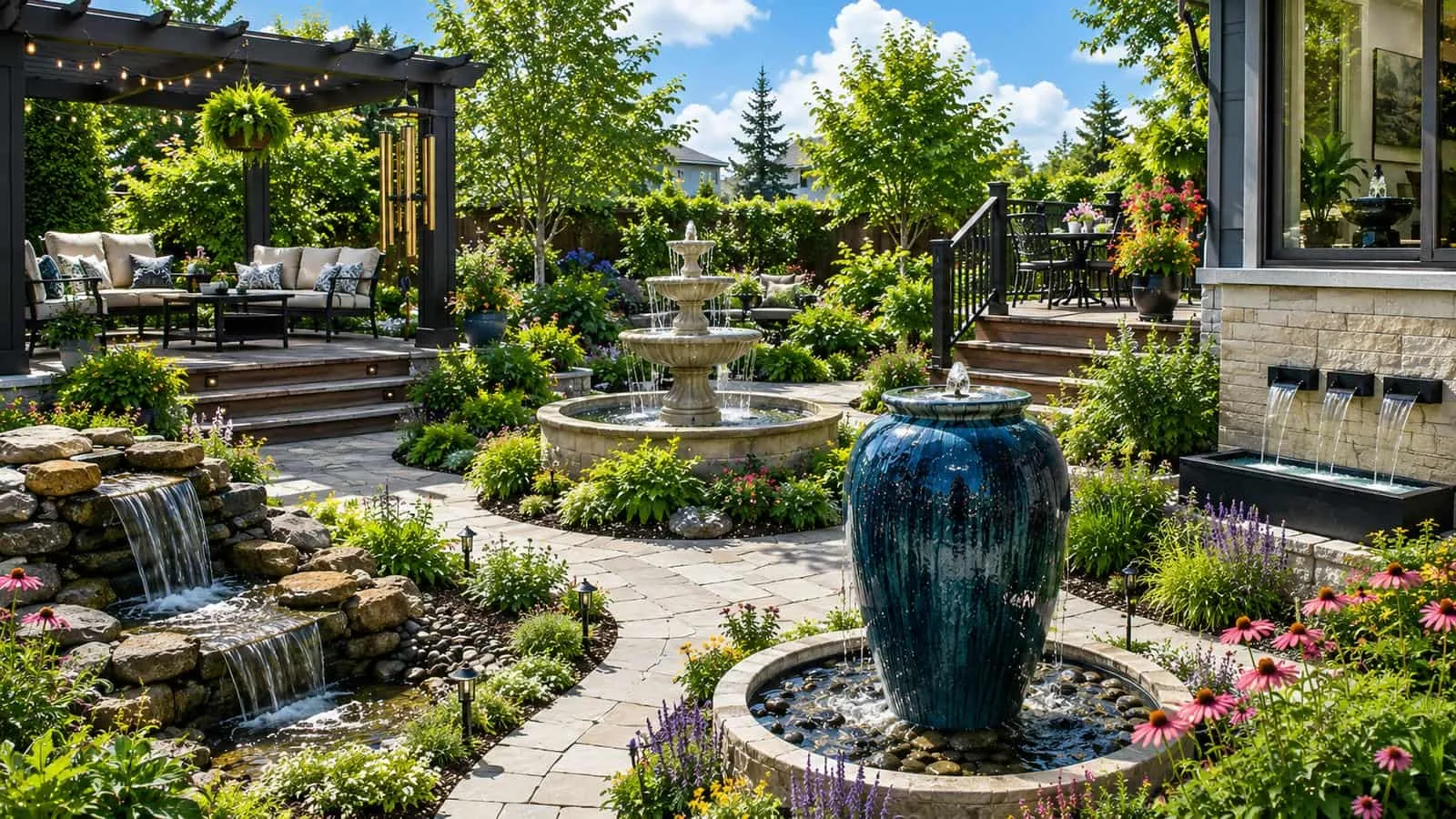
🌊⛲ Choosing the best water fountain starts with how the space will actually be used. A quiet tabletop fountain may be best for an office or bedroom, while a bubbling rock fountain, wall fountain, tiered garden fountain or solar birdbath fountain may work better for patios, backyards, walkways, courtyards or relaxing outdoor retreats. Use the ideas below to compare fountain choices by location, purpose, water sound, size, material, maintenance, style and long term comfort before deciding what belongs in your home or garden.
Explore the best water fountain ideas for real home spaces, including patios, decks, gardens, backyards, balconies, small courtyards, wildlife friendly landscapes and peaceful outdoor retreats. These featured fountain ideas help compare placement, sound, size, style, climate, wildlife value and everyday outdoor living comfort. Select any image below to explore that section of the guide.


🌿 The best water fountains are not chosen by looks alone. A good fountain should match the way the space is seen, heard, cleaned and enjoyed. In the sections below, compare fountain choices by location, purpose, sound, size, budget, material, style, maintenance, wildlife value and common buying mistakes so you can choose a water feature that supports the full design of your home, garden, patio or indoor retreat.
There is no single best water fountain for every homeowner because every outdoor space works differently. A bubbling rock fountain that creates gentle white noise beside a quiet reading patio may be a better choice than a large tiered fountain that produces louder cascading water. If you are considering a traditional landscape centerpiece, explore our complete tiered water fountain guide for gardens, courtyards and landscape focal points to compare two tier, three tier and four tier designs, cascading water sound, placement, materials, foundation planning and long term maintenance before deciding which size fits your property. Likewise, a compact tabletop fountain may be ideal for a balcony, courtyard or indoor office, while a spacious backyard can comfortably showcase a larger statement fountain that becomes a natural focal point within the landscape. Choosing the right fountain begins with understanding how you want the space to look, sound and feel every day.

The best water fountain should complement its surroundings instead of competing with them. Garden size, viewing distance, nearby seating, sunlight, wind exposure, electrical access, maintenance requirements and surrounding hardscape materials all influence how a fountain performs long after installation. Natural stone, ceramic, concrete and resin fountains each create unique visual textures, while basin depth, water movement and flow rate shape everything from gentle bubbling to layered cascading sounds. A fountain that performs beautifully in a sunny backyard may not be the best choice for a shaded courtyard, windy patio or compact balcony where splash, maintenance and available space become more important than overall size.
This guide helps you make confident buying decisions by comparing water fountains through the practical experiences and priorities of real homeowners rather than simply explaining different fountain types. If you want to better understand how each fountain style differs before comparing recommendations, explore our complete water fountain types guide for every home and landscape. You'll discover which fountains work best for patios, gardens, backyards, balconies, wildlife gardens, meditation spaces and indoor rooms while comparing water sounds, maintenance, durable materials, decorating styles, long term value and the environments where each fountain performs best. Every recommendation explains not only where a fountain excels, but also when another style may better match your space, lifestyle and budget.
By the end of this guide you'll understand how to match a water fountain to your available space, preferred water sound, maintenance expectations, landscape style and overall budget. whether you're considering a relaxing bubbling rock fountain, a dramatic tiered centerpiece, a low maintenance patio water fountain ideas, a wildlife friendly garden fountain or a compact indoor water feature, you'll be able to narrow your choices with confidence and choose a fountain that naturally complements your home, landscape and everyday lifestyle.

Choosing the best water fountain starts before you compare styles, prices or materials. A fountain that looks beautiful in a product photo may sound too loud beside a dining patio, overwhelm a small balcony or require more maintenance than expected beneath mature trees. Before making a final decision, learn where to place a water fountain for the best sound, comfort and long term enjoyment so your fountain fits naturally into the space. The best choice begins with understanding how your area is actually used, including sunlight, wind, viewing distance, electrical access, splash control, seasonal weather and how much time you want to spend maintaining the fountain.
A good water fountain should support the way you already use your home, garden or outdoor living area. A quiet reading corner may need soft bubbling water, while a larger backyard gathering space may benefit from fuller cascading sound that can be heard from seating areas and garden paths. Indoor rooms, courtyards, decks, pergolas and patios all change how water sounds travel, how much splash matters and how visible the fountain feels during everyday use. If your goal is creating a peaceful interior retreat, explore our how to create a peaceful indoor water fountain display at home to compare quiet designs, room placement ideas and homeowner buying advice.
The best water fountain is rarely the one that looks the most impressive by itself. The best choice is the fountain that fits the space, creates the water sound you enjoy, remains practical to maintain and naturally becomes part of everyday life throughout every season. If your plans include a desk, bookshelf, console table, bedroom or home office, explore our complete tabletop water fountain guide for indoor living to compare fountain styles, furniture placement, water sound, size, materials and everyday maintenance before making your final decision.
Choosing the best water fountain means looking beyond appearance to how it will perform in everyday outdoor living. Location, water sound, splash control, maintenance, sunlight, airflow and seasonal weather all influence long term enjoyment, outdoor ambience and overall ownership experience. This buying framework helps you compare garden fountains, patio fountains, backyard water features and indoor fountains using the real world conditions that determine whether a fountain feels beautiful, practical and easy to enjoy for years.
| 💧 Decision Factor | 🌿 Why It Matters | 🏡 What to Look For | 🔎 Best Buyer Fit |
|---|---|---|---|
| 🏡 Location and Daily Visibility | The best water fountain location changes viewing distance, walking access, water sound, airflow and how naturally the fountain becomes part of everyday outdoor living. A well placed fountain feels inviting from patios, garden paths, windows and outdoor seating instead of becoming overlooked. | Choose a location with comfortable sightlines, safe walking space, nearby seating and enough room for cleaning, refilling and seasonal maintenance without disrupting the surrounding landscape. | Ideal for homeowners looking for a backyard water fountain that naturally becomes part of everyday life while creating a relaxing focal point that is both seen and enjoyed throughout the seasons. |
| 🌿 Indoor or Outdoor Fountain Use | Indoor and outdoor fountains experience different moisture levels, airflow, sunlight, weather exposure and maintenance demands that directly affect splash control, pump performance and long term material durability. | Choose compact low splash fountains for indoor rooms and weather resistant ceramic, concrete, resin or stone fountains for patios, gardens, courtyards and backyard landscapes. | Perfect for buyers deciding whether a tabletop fountain, wall fountain, urn fountain or outdoor water feature will better match the way they plan to enjoy their home. |
| 🎵 Water Sound and Acoustic Comfort | Water sound changes how a space feels because bubbling, trickling and cascading water each create different acoustic projection, sound reflection and listening comfort depending on nearby walls, planting beds, pergolas and open landscape. | Choose soft bubbling fountains for peaceful patios, gentle trickling water for quiet garden corners and fuller cascading fountains where larger outdoor spaces benefit from stronger background sound. | Best for homeowners who want relaxing water sounds that encourage conversation, reading, meditation and comfortable outdoor living without becoming distracting. |
| 💦 Splash Control and Safety | Splash control protects surrounding furniture, walkways, plants, pets and gathering areas while helping the fountain remain comfortable to enjoy through changing weather and everyday family use. | Look for deeper basins, controlled water flow, stable water return and enough distance from stairs, seating, doors and high traffic walkways to minimize unwanted moisture. | Frequently chosen by homeowners creating family friendly patios and backyard living spaces where comfort, safety and long term enjoyment are more important than dramatic water displays. |
| 🛠️ Maintenance and Pump Access | Easy maintenance keeps a fountain enjoyable because cleaning, algae removal, seasonal draining, pump inspection and water refilling become part of normal ownership instead of frustrating chores. | Choose fountains with open basins, accessible pumps and simple designs that are easy to wipe clean, refill, inspect and prepare for seasonal weather. | Commonly researched by homeowners looking for a low maintenance water fountain that continues looking beautiful without requiring constant attention throughout the year. |
| ☀️ Power, Sunlight and Climate | Power source, sunlight and local climate influence water evaporation, solar efficiency, freeze protection, algae growth and long term material performance throughout changing seasons. | Choose electric fountains near protected outdoor outlets, solar fountains in sunny open areas and durable materials that match the weather conditions where the fountain will remain installed. | Helpful for homeowners comparing electric and solar water fountains while planning for hot summers, cold winters, windy patios and year round outdoor performance. |
| 💧 The best water fountain is rarely the biggest or most decorative. The right choice comes from balancing location, water sound, splash control, maintenance, sunlight, power source and seasonal climate so the fountain fits the way your home and outdoor living space are actually used. When those elements work together, the fountain becomes easier to maintain, more enjoyable to hear and a lasting focal point throughout every season. | |||
💧 Quick Buying Tip: Many homeowners choose a fountain style first, but the better decision is usually to choose the location, sound level, maintenance comfort and available space first. Once those details are clear, the best fountain type becomes much easier to narrow down.

Before comparing specific water fountain styles, take a few minutes to think through the four decisions that have the biggest impact on long term satisfaction. These practical buying tips help you match the right fountain to your space, desired water sound, maintenance expectations and everyday lifestyle while avoiding common mistakes that can affect comfort, appearance and long term enjoyment.
The first decision is where the water fountain will actually live. A patio fountain needs different spacing than a backyard fountain, balcony fountain, courtyard fountain or indoor tabletop fountain. Look at available room, viewing distance, nearby seating, foot traffic, sunlight, wind direction, splash movement and electrical access before choosing the style.
A fountain placed near a favorite chair, garden path or outdoor dining area is usually enjoyed more often than one hidden in a far corner. Hard surfaces like stone patios, walls and fences can make water sound feel louder, while open lawns and planting beds soften the sound. A sunny location may create beautiful sparkle on moving water, but it can also increase evaporation and refill needs.
Problem A fountain can look beautiful but feel wrong if it is too large, too loud or too difficult to reach.
Why it happens Homeowners often choose the fountain style before studying the real space, sightlines, airflow, sunlight and walking paths.
Solution Choose the location first, then match the fountain size, sound and material to the way the space actually works.
💧 Key Takeaway: Start with the space before falling in love with a fountain style. The right location makes sound, visibility, safety and maintenance much easier to control.
Water sound is one of the biggest reasons people buy a fountain, but not every sound fits every space. Soft bubbling water works well near reading chairs, meditation corners, balconies and quiet patios. Trickling water feels gentle and decorative, while cascading water can create stronger white noise for larger backyards or outdoor gathering spaces.
The same fountain can sound different depending on its surroundings. A wall, fence or covered pergola may reflect sound back toward the seating area, while shrubs, grass and open planting beds can soften the water noise. If the fountain is too close to conversation areas, even a beautiful cascade can start to feel distracting during meals or evening visits.
Problem A fountain can become annoying when the sound is too sharp, too loud or too close to seating.
Why it happens Water sound changes when it reflects off patios, walls, fences, pergolas and hard garden surfaces.
Solution Match the sound level to the purpose of the space before choosing the fountain style.
💧 Key Takeaway: Choose the water sound for the way the space is used. The best fountain should calm the area, not compete with conversation, reading or rest.
A water fountain should be beautiful on the first day and still enjoyable after months of refilling, cleaning and pump care. Maintenance depends on basin shape, water depth, pump access, nearby trees, sunlight, algae growth, winter weather and how easy it is to reach the fountain with water. A simple bowl fountain or urn fountain may be easier to live with than a large multi level fountain with narrow channels.
Outdoor fountains in full sun may need more frequent refilling, while fountains under trees may collect leaves, pollen and seed pods. Cold climates need extra planning because freezing water can damage some materials. If the pump is hard to reach or the basin is awkward to clean, the fountain may become frustrating even if it looks beautiful. If you want to understand what routine care different fountains require throughout the year, explore our complete water fountain maintenance guide for cleaning, pump care and seasonal upkeep.
Problem Some fountains look impressive at first but become difficult to clean, refill or protect.
Why it happens The buyer focuses on appearance and forgets about pump access, basin shape, leaves, sunlight and winter weather.
Solution Choose a fountain that matches the amount of care you are willing to manage through every season.
💧 Key Takeaway: The best fountain is not only the one that looks good. It is the one you can realistically clean, refill, protect and enjoy over time.
The best water fountain should match your daily routine, family needs and decorating style. A family backyard with children and pets may need a stable low splash fountain placed away from busy play areas. A quiet patio used for coffee, reading or evening conversation may need gentle flowing sound. A wildlife garden may benefit from shallow moving water that birds and pollinators can approach safely.
Lifestyle also affects budget and material choice. A lightweight resin fountain may be practical for a deck or balcony, while natural stone, concrete, ceramic or glazed urn fountains can create stronger visual presence in a garden or courtyard. If you entertain often, choose a fountain that adds atmosphere without blocking movement, seating or conversation.
Problem A fountain may match the landscape style but fail to match the people, pets and routines using the space.
Why it happens Buyers sometimes choose a fountain for appearance instead of thinking about daily habits, safety, wildlife, entertaining and long term enjoyment.
Solution Match the fountain to the way the space is used, not just the way it looks in a product photo.
💧 Key Takeaway: A fountain should fit the way you actually live. The right choice supports your family, habits, outdoor routines and long term enjoyment.
🌿 Best Choice Insight: The best water fountain is rarely the biggest or most decorative option. The strongest choice is the fountain that fits your real space, creates the sound you enjoy, stays simple enough to maintain and keeps feeling natural in your home or garden after the first season.
🌊 Section Summary: Choosing the best water fountain starts with space, sound, ownership and lifestyle. Before comparing fountain types, decide where the fountain will go, how loud it should be, how much maintenance you want and how the space is used by family, guests, pets or wildlife.
The best water fountain location is not only about where the fountain fits physically. It is about how the space is used, how water sound travels, how much splash matters and how easily the fountain can be cleaned, refilled and enjoyed. A patio may need a quiet bowl fountain, while a larger backyard may support a tiered fountain, waterfall fountain or pondless water feature with stronger visual presence. If you are planning an entire outdoor living space instead of simply choosing a fountain, explore our complete backyard water fountain planning guide for detailed advice on property layout, seating areas, pools, fire pits, landscaping, privacy and long-term placement.
Location also changes the best material, size and power source. A deck may need a lighter resin fountain, a courtyard may benefit from a wall fountain, a garden may suit a bird bath fountain and an indoor room may need a compact tabletop fountain with low splash and quiet pump sound. Understanding how different materials affect durability, maintenance, weather resistance and water sound makes choosing much easier, so it helps to compare the best water fountain materials for every climate and outdoor space before making a final decision. When the fountain fits the location, it feels intentional instead of simply decorative.
Use this water fountain location guide to quickly compare which fountain style usually works best in each space. The goal is to match sound, scale, splash control, material durability and maintenance access to the way the area is used every day.
| 🏡 Location | 💧 Best Fountain Choice | 🌿 Why It Works | 🔎 Buyer Fit |
|---|---|---|---|
| 🪑 Patios | Low splash bowl fountain, urn fountain or compact wall fountain | Patios need relaxing sound near seating without soaking cushions, blocking chairs or overpowering conversation. | Best for homeowners who want a patio water fountain for outdoor meals, morning coffee and calm evening seating. |
| 🌿 Decks | Lightweight resin fountain, tabletop fountain or compact solar fountain | Decks need lighter materials, stable bases, safe cords and controlled water movement because weight and splash matter more. | Ideal for buyers who want a deck water fountain that adds ambience without adding too much weight or maintenance. |
| 🌤️ Pergolas and Gazebos | Urn fountain, bowl fountain or small tiered fountain | Shade structures frame the fountain beautifully while giving the water sound a comfortable gathering space. | Best for people creating a relaxing outdoor room with soft water sound, seating comfort and visual harmony. |
| 🏛️ Courtyards | Wall fountain, pedestal fountain or ceramic basin fountain | Courtyards often reflect sound, so compact fountains with controlled flow usually feel more balanced than loud cascades. | Perfect for homeowners comparing courtyard fountains for enclosed patios, entry gardens and intimate outdoor spaces. |
| 🌳 Backyards | Tiered fountain, bubbling rock fountain or pondless water feature | Backyards can handle larger scale, stronger sound and a more visible focal point from patios, windows and garden paths. | Often chosen by buyers who want a backyard water fountain that feels like a true landscape centerpiece. |
| 🌸 Gardens | Bird bath fountain, stone basin fountain or natural bubbling fountain | Gardens need a fountain that blends with flowers, shrubs, pathways, wildlife and seasonal planting texture. | Best for people wanting a garden fountain that supports beauty, gentle sound, pollinator interest and natural movement. |
| 🏢 Balconies and Apartments | Tabletop fountain, small bowl fountain or compact indoor outdoor fountain | Small spaces need low splash, quiet pump sound, light weight and easy refilling without crowding the walking area. | Ideal for apartment renters and balcony gardeners who want water sound without a large outdoor installation. |
| 🚪 Entryways | Small urn fountain, wall fountain or pedestal fountain | Entryways need a welcoming focal point with safe walking clearance, clean water movement and simple maintenance access. | Best for homeowners who want curb appeal, front door beauty and a calm first impression near the home entrance. |
| 💧 The best water fountain location is the one that naturally fits the space instead of competing with it. Matching fountain size, water sound, material, splash control and maintenance needs to the way each area is used creates better outdoor ambience, safer movement, easier ownership and a landscape that feels balanced throughout every season. | |||
💧 Location Buying Tip: Choose the fountain location first, then choose the fountain style. A fountain that fits the space, sound level, walkway clearance and maintenance routine will usually feel better long term than one chosen only because it looks impressive.

Every location changes how a water fountain looks, sounds and performs over time. Choosing a fountain that fits the available space, surrounding landscape, viewing distance and daily lifestyle usually creates better water sound, easier maintenance, stronger visual balance and a more enjoyable outdoor living experience throughout every season.
These location based water fountain recommendations help you narrow the best fountain for the way each space is actually used. Each guide focuses on the best fit, the real tradeoff and the type of homeowner most likely to enjoy that fountain long term.
A patio water fountain should support the way the space is used every day instead of becoming the center of attention. Morning coffee, outdoor dining, quiet reading and evening conversations all benefit from subtle water movement that creates relaxing background sound without competing with the people nearby. Ceramic bowl fountains, glazed urn fountains and compact wall fountains often provide the best balance of appearance, water sound and easy maintenance for outdoor living spaces.
Patio size, furniture placement, nearby walls, pergolas and prevailing wind all influence how a fountain performs after installation. Water sound often becomes louder when reflected from nearby walls, while open patios allow the sound to disperse more naturally. If your patio is narrow, very windy or already crowded with furniture, a compact wall fountain or tabletop fountain will usually be a better choice than a larger bowl or tiered fountain.
Best choice Ceramic bowl fountains, glazed urn fountains and compact wall fountains create relaxing patio sound while keeping splash, maintenance and everyday ownership easy to manage.
Consider another option Choose a tabletop fountain for very small patios, balconies or limited outdoor spaces, or select a larger landscape fountain if your seating area opens into a spacious backyard.
Ideal homeowner Homeowners who want comfortable conversation, attractive outdoor ambience, quiet flowing water and a beautiful patio focal point that remains practical through the season.
A deck water fountain has to work with weight, movement and safety more carefully than a garden fountain. Resin, fiberglass and smaller ceramic fountains are often easier to manage than heavy concrete, stone or large tiered fountains, especially on raised decks, narrow platforms or smaller outdoor seating areas.
Deck size, railing position, furniture layout, wind exposure and outlet access all affect the best fountain choice. If your deck is small, exposed or used often for meals and movement, a tabletop fountain or compact bowl fountain will usually be better than a large cascading fountain. Larger deck spaces may handle a wider basin fountain if the structure, splash radius and maintenance access all work together.
Best choice Lightweight resin fountains, tabletop fountains, compact bowl fountains and small solar fountains create relaxing deck ambience while keeping weight, splash and maintenance easier to manage.
Consider another option Choose a garden fountain or patio fountain instead if your deck cannot safely support extra weight, water volume or a stable base for long term use.
Ideal homeowner Homeowners who want soft bubbling water on a deck, balcony style sitting area or raised outdoor space without adding a large installation.
A pergola can make a water fountain feel naturally connected to daily outdoor living because the structure already defines the seating area. A glazed urn fountain, ceramic bowl fountain or compact wall fountain works well near pergola chairs when the water sound supports conversation, reading and rest.
Shade, overhead beams, nearby furniture and airflow all change how the fountain performs. If the pergola is narrow, windy or filled with cushions and dining furniture, a lower fountain with steady water movement will usually be better than a tall spray fountain. If the pergola opens into a larger garden, a small tiered fountain can create stronger visual interest without overwhelming the shaded space.
Best choice Ceramic urn fountains, bowl fountains, compact wall fountains and small tiered fountains create shade friendly water sound with strong outdoor room appeal.
Consider another option Choose a solar garden fountain only if the panel can sit in stronger sunlight, because pergola shade can reduce pump performance.
Ideal homeowner Homeowners creating a shaded patio retreat, quiet reading space, outdoor dining area or pergola seating zone with relaxing water movement.
A gazebo fountain works best when it supports the view from the seating area instead of sitting directly in the way. A small tiered fountain placed nearby can create a peaceful focal point while keeping the gazebo open, comfortable and easy to enter.
Gazebo shape, railings, steps, surrounding plantings and sound reflection all affect the best fountain choice. If the gazebo is enclosed, choose softer water movement because covered or screened spaces can make fountain sound feel louder. If the gazebo is open to a garden, fuller water movement can travel nicely through flowers, paths and nearby seating.
Best choice Small tiered fountains, pedestal fountains, urn fountains and nearby basin fountains create peaceful garden sound without crowding gazebo access.
Consider another option Choose a farther garden fountain if the gazebo has narrow steps, limited floor space or seating that already fills the structure.
Ideal homeowner Garden lovers who want a soft focal point near shaded seating, outdoor conversation and peaceful backyard views.
Courtyards are excellent spaces for water fountains because walls, stone floors, brick surfaces and planting pockets can make moving water feel intimate and refined. A wall fountain saves floor space, while a pedestal fountain or ceramic basin fountain can create a graceful focal point.
Sound behaves differently in enclosed outdoor rooms. Hard surfaces can reflect water noise back toward seating, which makes a small fountain feel stronger than expected. If your courtyard is narrow, echo prone or used for dining, gentle trickling or bubbling water will usually work better than a strong waterfall or tall cascade.
Best choice Wall water fountains for indoor and outdoor feature walls, pedestal fountains and ceramic basin fountains create refined courtyard style with controlled water sound and strong visual rhythm. They work especially well where patios, privacy walls and enclosed outdoor rooms benefit from a vertical water feature without sacrificing valuable floor space.
Consider another option Choose a quieter basin fountain if the courtyard is narrow, enclosed or used often for meals, conversation and evening sitting.
Ideal homeowner Homeowners who want an elegant courtyard water feature for enclosed patios, entry gardens, wall spaces and intimate outdoor rooms.
A front yard fountain should feel visible, clean and intentional from the street, sidewalk, porch and main entry view. Pedestal fountains and small tiered fountains can create a polished focal point, while bird bath fountains add charm, quiet water movement and wildlife interest near front garden beds.
Front yard fountains need more presentation control than hidden backyard fountains. If splash reaches sidewalks, steps or porch surfaces, the fountain can become a safety and maintenance problem. If the entry path is narrow, a smaller urn fountain or wall fountain may create a better first impression without blocking daily access.
Best choice Pedestal fountains, bird bath fountains, small tiered fountains and urn fountains create curb appeal while keeping entry areas attractive and welcoming.
Consider another option Choose a wall fountain or compact urn fountain if your front walkway is narrow, close to steps or exposed to frequent foot traffic.
Ideal homeowner Buyers who want curb appeal, front door beauty, welcoming energy and a polished garden focal point near the home entrance.
A backyard fountain can become the visual center of the landscape when it connects to seating areas, garden paths, window views and outdoor gathering spaces. Larger yards can often handle a tiered fountain, bubbling rock fountain or pondless water feature because there is more room for sound, splash, planting balance and viewing distance.
Backyard size still matters. A small backyard may need a compact basin fountain or bubbling rock fountain that leaves room for movement, pets, children and maintenance access. A larger property may benefit from a tiered fountain or waterfall feature that anchors the view and creates more noticeable water sound across the landscape.
Best choice Tiered fountains, bubbling rock fountains, pondless water features, waterfall fountains and large basin fountains can create a true backyard focal point.
Consider another option Choose a compact basin fountain or smaller bubbling fountain if your backyard has limited walking space, heavy furniture or frequent family activity.
Ideal homeowner Homeowners who want a backyard water fountain that feels like a peaceful landscape retreat and a lasting outdoor living centerpiece.
Garden fountains work best when they feel connected to planting texture, pathway movement and the natural rhythm of the landscape. A bird bath fountain can support wildlife, a stone basin fountain adds grounded beauty and a small tiered fountain can become a graceful focal point among flowers, shrubs and ornamental grasses.
Garden density changes the best fountain choice. If the planting is full, layered or fast growing, avoid hiding the fountain too deeply inside flowers and shrubs. A garden fountain should feel natural, but it still needs open sightlines, cleaning access and enough room for seasonal growth around the basin.
Best choice Bird bath fountains, stone basin fountains, bubbling fountains, small tiered fountains and solar fountains support plant harmony, wildlife interest and garden beauty.
Consider another option Choose a cleaner patio fountain or courtyard fountain if your garden drops heavy leaves, pollen or seed pods directly into the basin.
Ideal homeowner Gardeners who want a water feature that blends with flowers, pathways, pollinators, songbirds and peaceful outdoor views.
A balcony or apartment fountain should create calm without taking away usable space. Tabletop fountains, small bowl fountains and compact wall fountains are often the easiest choices because they can sit near chairs, planters or small side tables without blocking movement.
Small space fountains need extra attention to pump sound, water level, splash and building rules. If the balcony is narrow, shared or exposed to wind, choose a compact fountain with gentle flow instead of a taller fountain that may splash, tip or need frequent refilling. Indoor apartment fountains should be especially quiet and easy to clean.
Best choice Tabletop fountains, small bowl fountains, compact wall fountains and lightweight indoor outdoor fountains work best for balconies and apartments.
Consider another option Choose an indoor tabletop fountain if your balcony has strong wind, strict building rules, limited drainage or very little walking space.
Ideal homeowner Renters, apartment dwellers and small space gardeners who want peaceful water sound without a large installation or heavy maintenance.
An entryway fountain should make the home feel more inviting without becoming an obstacle. A small urn fountain beside a porch, a wall fountain near a courtyard entry or a pedestal fountain near a front garden bed can add movement, charm and a peaceful first impression. Urn fountains are especially useful when you want strong vertical form without a wide fountain footprint, and they can range from gentle bubbling vessels to overflowing garden focal points. For a complete comparison of size, water movement, materials, pumps, hidden reservoirs and placement, explore our best urn water fountains for outdoor spaces.
Entryways need practical control because people pass through them often. If the fountain sits too close to doors, steps or narrow paths, splash and crowding can become frustrating. A compact fountain with steady water movement usually works better than a dramatic fountain that competes with daily entry, packages, guests and walkway safety.
Best choice Small urn fountains, wall fountains, pedestal fountains and compact bowl fountains create welcoming entry style with controlled splash and strong curb appeal.
Consider another option Choose a front yard fountain instead if your entryway is too narrow, too close to steps or too exposed to daily traffic.
Ideal homeowner Homeowners who want front door beauty, calm entry energy, polished curb appeal and a graceful water feature that stays practical.
🌿 Best Location Insight: The right fountain location should make the water feature easier to enjoy, not harder to live with. If a fountain looks beautiful but blocks movement, sounds too loud, splashes nearby furniture or becomes difficult to clean, it is probably not the best fountain for that space.
🏡 Section Summary: The best water fountain by location depends on space, scale, water sound, splash control, material weight and daily use. Patios need comfort, decks need lighter designs, gardens need natural flow, backyards need proper scale and balconies or indoor rooms need quiet low splash fountains.
Choosing a garden water fountain by purpose is different from choosing one by type. A fountain used for meditation should feel quiet, centered and easy to hear from close range, while a fountain used for entertaining should support conversation, patio movement and evening ambience without becoming too loud. A wildlife fountain needs shallow access and clean moving water, while a curb appeal fountain needs strong visibility, tidy presentation and safe walking clearance. Choosing the right purpose first helps create a landscape that feels balanced, welcoming and enjoyable throughout every season.
Purpose changes the best sound, size, basin depth, material and placement. Soft bubbling water can calm a reading corner, a shallow bird bath fountain can support songbirds and other beneficial wildlife, and a small wall fountain can improve a front entry without taking up valuable walkway space. Matching the fountain to the surrounding garden layout, planting style and everyday use often creates a more natural and attractive outdoor living space. When the fountain matches the reason you want it, the result feels more natural, useful and enjoyable over time.
Choosing the best water fountain starts with understanding how you want the space to feel every day. Whether your goal is quiet relaxation, outdoor entertaining, peaceful meditation, stronger curb appeal or a wildlife friendly garden, the right fountain should match the way people experience the space through water sound, visual rhythm, placement, material character and everyday use. This comparison helps match each purpose to the fountain style that creates the most natural balance, long term enjoyment and confident buying decision.
| 🎯 Purpose | 💧 Recommended Fountain | 🌿 Why It Creates the Best Experience | 🔎 Ideal Homeowner |
|---|---|---|---|
| 🌿 Relaxation | Bubbling rock fountain, ceramic bowl fountain or low flow urn fountain | Soft bubbling water creates gentle acoustic projection and calming outdoor ambience without overpowering nearby seating, helping patios and gardens feel peaceful throughout the day. | Ideal for homeowners looking to create a relaxing backyard retreat where gentle water sound supports reading, quiet mornings and everyday stress relief. |
| 🧘 Meditation | Zen basin fountain, smooth stone fountain or tabletop water fountain | Simple materials, steady water movement and clean visual rhythm encourage focus while reducing visual distractions in meditation gardens, yoga rooms and reflective spaces. | Perfect for people seeking a calming water fountain that supports mindfulness, quiet reflection and balanced outdoor or indoor environments. |
| 🍽️ Entertaining | Patio urn fountain, compact wall fountain or small tiered fountain | Balanced water movement provides pleasant background sound while allowing conversation, outdoor dining and guest interaction to remain comfortable throughout the gathering. | Often chosen by homeowners designing patios, pergolas and outdoor living spaces where relaxing atmosphere matters more than dramatic water volume. |
| 🚪 Curb Appeal | Formal pedestal fountain, decorative entry fountain or architectural wall fountain | Visible flowing water creates strong visual rhythm and naturally draws attention toward entryways, landscape beds and front walkways without overwhelming the home's architecture. | Frequently selected by homeowners improving front yard landscaping, welcoming entrances and lasting first impressions for guests and visitors. |
| 🐦 Wildlife | Bird bath fountain, shallow basin fountain or gentle bubbling garden fountain | Slow moving clean water encourages birds, butterflies and pollinators while creating a healthy wildlife habitat with easy access and natural landscape integration. | Best for gardeners creating wildlife friendly landscapes where birds, beneficial insects and peaceful nature watching become part of everyday outdoor living. |
| 🪑 Conversation Areas | Low splash ceramic bowl fountain, compact wall fountain or glazed urn fountain | Gentle water sound provides soft background ambience with controlled acoustic sustain so conversations remain easy even in smaller patios and pergola seating areas. | Commonly researched by homeowners who want beautiful outdoor water features that complement family gatherings without becoming the loudest feature in the space. |
| 💧 The best water fountain is the one that supports the purpose of the space before it supports the landscape. Matching water sound, visual balance, fountain style, placement and everyday lifestyle creates a more comfortable patio, a more peaceful garden, a more welcoming entryway and a water feature that continues to feel natural season after season. | |||
🎯 Purpose Buying Tip: Decide what you want the fountain to do before choosing the style. A fountain meant for birds, meditation, entertaining or curb appeal should be judged by how well it serves that purpose, not only by how decorative it looks.

These purpose based recommendations help you match the right water fountain to the way you actually use your outdoor space. Each guide explains where a fountain works best, the real tradeoffs to consider, how the surrounding environment affects comfort and sound, and the type of homeowner most likely to enjoy that choice for years to come.
A relaxation fountain should lower the energy of the space instead of becoming the main attraction. Soft bubbling water, gentle surface ripples, stable basin design and natural garden texture help create a peaceful setting for morning coffee, evening rest, quiet conversation and everyday stress relief. Homeowners who prefer this softer style can explore bubbling rock fountains for relaxing outdoor spaces to compare natural stone designs, gentle water flow, garden placement, sound, landscaping and everyday maintenance.
Listening distance matters more than fountain size. A fountain placed too far across the yard may disappear into wind, birds and neighborhood noise, while a fountain placed too close to a chair can make even gentle water feel repetitive. The best relaxation fountain should be close enough to hear clearly but soft enough to blend into the background.
Relaxing fountains also need low splash control. A shallow bowl, bubbling stone or low flow urn usually feels calmer than a tall cascade because the water movement stays contained, easy to watch and easier to enjoy for long periods.
Best choice Bubbling rock fountains, ceramic bowl fountains and low flow urn fountains create soft water movement with calm outdoor ambience.
Common mistake Choosing a dramatic fountain that looks beautiful online but sounds too busy when placed beside a quiet seating area.
Consider another option Choose a larger cascading fountain if you need stronger sound masking for traffic, neighbors or a wide backyard.
Ideal homeowner Someone who wants a peaceful water fountain for daily stress relief, quiet sitting, garden comfort and gentle outdoor sound.
A meditation fountain works best when the design stays visually quiet. Smooth stone, ceramic bowls, simple basins, bamboo inspired shapes and steady trickling water give the mind one gentle point of focus without adding clutter or visual noise.
The sound should be predictable rather than dramatic. A sharp splash, bright LED glow or complex multi level water pattern can pull attention away from stillness. Meditation spaces usually benefit from a low, even rhythm that feels steady during breathing, stretching, journaling or prayer.
Placement should also feel intentional. A small fountain near a yoga mat, meditation cushion, bedroom corner or garden stone bench should sit where it can be seen without dominating the room or path. The goal is quiet focus, not decoration alone.
Best choice Zen basin fountains, tabletop fountains, smooth stone fountains and quiet wall fountains support calm focus and gentle water rhythm.
Common mistake Choosing a fountain with too much movement, bright lighting or decorative detail for a space meant to feel still and centered.
Consider another option Choose a relaxation fountain instead if you want a decorative outdoor feature for casual seating rather than quiet meditation.
Ideal homeowner Someone creating a meditation garden, yoga space, prayer corner, bedroom retreat or peaceful indoor fountain area.
A fountain used for entertaining should support the social mood of the space. It should add movement, sparkle and relaxing background sound while keeping dining chairs, serving areas, grill zones, walkway edges and conversation groups comfortable.
Large waterfalls or loud cascades can feel impressive when the patio is empty, but they may become too strong when guests are eating, talking or moving around the space. Wall fountains and urn fountains often give better control because the water sound feels present without taking over the gathering.
Entertaining fountains also need practical placement. They should not splash near food, crowd a walkway, block a serving path or sit where guests have to step around electrical cords, wet stone or narrow edges.
Best choice Wall fountains, patio urn fountains and compact tiered fountains create social ambience while keeping splash and sound controlled.
Common mistake Placing a fountain too close to the dining table, outdoor kitchen or main walking path where splash, sound and movement become annoying.
Consider another option Choose a larger backyard fountain if the entertaining area is far from seating and needs more noticeable sound.
Ideal homeowner Homeowners who host outdoor dinners, patio visits, weekend gatherings or evening conversations near the garden.
A curb appeal fountain should improve the approach to the home before someone reaches the front door. Moving water, clean stone edges, tidy planting, walkway lighting and visible placement can make the entrance feel more cared for, more welcoming and more complete.
The fountain should frame the entry rather than compete with it. In a front yard, visitors naturally follow the walkway and look toward the door, so the fountain usually works best slightly to the side of the path, near a planting bed, porch edge or entry wall. For deeper planning around house scale, fountain style, walkway clearance, landscaping, sound, lighting and street-facing design, explore our front yard fountain ideas for welcoming curb appeal .
Front entry fountains need extra control because they are passed by every day. If the fountain splashes the walkway, crowds the porch, collects leaves near the door or blocks the house number, it can weaken the polished look it was meant to create.
Best choice Pedestal fountains, entry wall fountains, compact urn fountains and small tiered fountains create visible front yard beauty.
Common mistake Choosing a fountain that is too large for the front walk or placing it where it narrows the entrance instead of improving the arrival experience.
Consider another option Choose a backyard or garden fountain if the front entry is narrow, shaded, windy or difficult to maintain.
Ideal homeowner Buyers who want front yard fountain ideas, better curb appeal, entryway beauty and a welcoming first impression.
A wildlife fountain is less about one animal and more about creating a small habitat zone. The best designs combine clean moving water, layered shrubs, nearby flowers, open sightlines and enough shelter for birds, butterflies and beneficial insects to approach safely.
Wildlife needs balance. Dense planting gives cover, but too much overgrowth can hide the basin, drop leaves into the water and make small animals feel trapped. Open space near the fountain helps birds watch for danger, while shrubs and small trees nearby give them a place to retreat.
Shallow movement usually works better than dramatic spray. Deep basins, steep sides and fast water may look decorative, but they are harder for wildlife to use. A low bubbling basin or shallow stone bowl feels more natural in a wildlife friendly garden.
Best choice Shallow bird bath fountains, bubbling basins, low stone bowls and solar garden fountains support wildlife friendly water access.
Common mistake Placing the fountain in a bare open lawn or hiding it too deeply in plants, which can make wildlife feel exposed or trapped.
Consider another option Choose a decorative garden fountain if you care more about visual drama than birds, pollinators or habitat value.
Ideal homeowner Gardeners who want birds, butterflies, pollinator activity and a more natural backyard water feature.
Hummingbirds are attracted to tiny movement and sparkle. A fine mist, soft bubbler or shallow trickle near salvia, bee balm, trumpet vine, fuchsia, honeysuckle or other nectar rich flowers can make the water easier for them to notice during quick garden visits.
This type of fountain should feel light and active without being forceful. Heavy waterfalls, deep bowls and strong spray are usually less useful because hummingbirds are small, quick and more likely to hover near fine droplets than land in a deep basin.
Nearby perches matter. A small branch, trellis, shrub or flowering stem gives hummingbirds a place to pause, watch and return. The best hummingbird fountain works as part of a flower garden, not as a large standalone water feature.
Best choice Gentle misters, shallow bubbling fountains, small solar fountains and low basin fountains near nectar flowers work best for hummingbirds.
Common mistake Choosing a deep bird bath or strong waterfall and expecting hummingbirds to use it the same way larger songbirds do.
Consider another option Choose a bird bath fountain if your goal is to attract larger songbirds instead of hummingbirds.
Ideal homeowner Gardeners who want hummingbirds, bright flowers, gentle water sparkle and a lively pollinator friendly garden.
Birds often prefer shallow water where they can perch, drink and bathe without feeling trapped. A bird bath fountain, pedestal basin or low stone bowl near shrubs, small trees or pollinator beds can support daily bird activity while adding gentle water sound.
Safe landing matters. Songbirds need stable edges, shallow water and enough open space to see cats, hawks or sudden movement. A basin that is too deep, too slippery or too hidden may look attractive but may not become a dependable bird fountain.
Cleaning access is also part of the design. Birds return to fountains that stay fresh, visible and easy to use. A simple shallow basin is often better than a detailed decorative fountain with narrow grooves that collect debris.
Best choice Bird bath fountains, pedestal bird fountains, low stone basins and gentle bubbling fountains encourage safe bird activity.
Common mistake Buying a decorative fountain with deep water, slick edges or hard to clean surfaces instead of choosing a basin birds can actually use.
Consider another option Choose a decorative patio fountain if bird activity is not a priority and you want stronger visual design.
Ideal homeowner Gardeners who want songbirds, soft water movement, natural garden activity and a wildlife friendly backyard.
Pollinators need safe moisture more than deep water. Butterflies, bees and beneficial insects are more likely to use damp stones, pebble edges, shallow ledges and low moving water near nectar plants than a tall fountain with heavy flow.
A pollinator fountain should function almost like a small moisture station inside the planting bed. Pebbles, flat stones and shallow wet surfaces give insects a place to land without drowning, while flowers and herbs nearby help connect the fountain to the natural feeding path.
Strong spray, deep bowls and slippery sides can make a fountain less useful for pollinators. The best setup feels low, reachable and easy to maintain, with water movement that stays gentle enough for small insects.
Best choice Shallow basin fountains, pebble filled bowls, low stone water features and gentle solar fountains support pollinator access.
Common mistake Using a deep open basin with no stones or landing edges, which creates water but not safe access for bees and butterflies.
Consider another option Choose a bird fountain if your main goal is songbirds rather than bees, butterflies and small pollinators.
Ideal homeowner Gardeners who want a pollinator friendly water fountain near flowers, herbs, butterflies and beneficial garden life.
A conversation area fountain should support people first. The sound should feel pleasant between pauses in conversation, not loud enough to compete with voices during dinner, family visits or evening seating.
Hard surfaces can change everything. Nearby walls, fences, covered patios, pergolas, glass doors and stone floors can reflect fountain sound and make a small water feature feel louder than expected. This is why a fountain that sounds gentle in an open garden may feel too sharp beside a covered seating area.
Seating orientation also matters. If every chair faces the fountain, the sound and movement become a focal point. If the fountain sits slightly to the side, it can create ambience without pulling attention away from the people in the space.
Best choice Compact wall fountains, quiet urn fountains and low splash bowl fountains create conversation friendly outdoor sound.
Common mistake Choosing a fountain for sound masking when the space actually needs speech clarity, comfort and softer background movement.
Consider another option Choose a stronger backyard fountain if you want sound masking rather than quiet conversation support.
Ideal homeowner Homeowners who use patios, pergolas, decks or outdoor rooms for meals, guests and relaxed conversation.
A reading corner fountain should create a soft layer of sound that makes one seat feel separate from the rest of the yard. Gentle bubbling water can soften distant traffic, nearby activity and light neighborhood noise while keeping the area peaceful enough for focus.
The best reading fountain is often smaller than people expect. A compact fountain near a bench, side table, shaded chair or small patio nook can feel more personal and useful than a larger feature placed across the garden.
Shade, comfort and sightline all matter. A fountain that sits just outside the reader's direct view can create sound without constant visual distraction. This is useful for people who want the fountain to support quiet focus instead of becoming the thing they keep looking at.
Best choice Small bubbling fountains, tabletop fountains, ceramic bowl fountains and quiet stone basins create peaceful reading corner sound.
Common mistake Placing the fountain too far away because it looks better in the landscape, then losing the gentle sound where the reading chair actually sits.
Consider another option Choose a relaxation fountain for larger seating areas or a conversation fountain if guests often use the same space.
Ideal homeowner Readers, gardeners and homeowners who want a quiet patio nook, shaded bench or peaceful personal retreat with gentle water sound.

Choosing the best water fountain begins with understanding how you want the space to function every day, not simply which fountain looks the most attractive. Water sound, visual movement, viewing distance, placement, maintenance and everyday lifestyle all influence whether a ceramic bowl fountain, bubbling rock fountain, wall fountain or bird bath fountain feels comfortable over time. Matching the fountain to its purpose first creates a backyard that is more relaxing, more practical and more enjoyable season after season.
Use these quick purpose clues before exploring the detailed recommendations below for each type of outdoor living space.
Every outdoor space has a different purpose, and the best water fountain should support that purpose before anything else. Matching water sound, placement, movement and everyday use creates a more relaxing patio, welcoming entryway, wildlife friendly garden or peaceful reading corner while helping you choose a fountain that continues to feel right through every season.
🌿 Best Purpose Insight: A water fountain should be chosen for the job it needs to do. If the goal is calm, choose soft sound. If the goal is wildlife, choose shallow moving water. If the goal is entertaining, choose comfort and conversation before dramatic flow.
🎯 Section Summary: The best water fountain by purpose depends on whether you want relaxation, meditation, entertaining, curb appeal, wildlife, hummingbirds, birds, pollinators, conversation comfort or a quiet reading corner. Matching the fountain to its purpose creates better sound, better use, easier ownership and a more satisfying water feature.
Water fountain sound changes how a space feels long before anyone notices the fountain style. A quiet tabletop fountain can make a bedroom or office feel calmer, while a bubbling rock fountain can soften patio noise without taking over conversation. Stronger waterfall sound may work beautifully in a wide backyard, but the same sound can feel too loud in a small courtyard or covered pergola.
The best fountain sound depends on listening distance, basin shape, water height, surface material, nearby walls, seating layout, wind and daily use. Hard stone patios, brick walls and covered pergolas often reflect water sound back toward nearby seating, making the fountain seem louder than expected. In contrast, lawns, planting beds and shrubs absorb part of the sound, allowing the same fountain to feel softer and more natural. Many homeowners only notice these differences after spending several evenings outdoors or moving their seating area, which is why choosing a fountain by sound is just as important as choosing it by appearance.
Use this water fountain sound comparison to choose the best fountain for the way your space is heard, used and enjoyed every day. Quiet flow, trickling water, bubbling movement, waterfall sound, layered water and steady white noise each create a different acoustic projection, outdoor ambience and listening experience depending on seating distance, basin shape, water height, material resonance, nearby walls, garden pathways and patio placement.
| 🎵 Sound Style | 💧 Best Fountain Match | 🌿 Real World Sound Benefit | 🔎 Best Buyer Fit |
|---|---|---|---|
| 🤫 Quiet Water Sound | Tabletop fountain, small bowl fountain or low flow wall fountain | Quiet flow creates soft water movement with gentle tone stability, making the fountain easy to enjoy during reading, sleep, office work, meditation or close conversation. | Ideal for homeowners looking for a peaceful indoor fountain or small patio water feature that adds calm sound without pulling attention away from the room. |
| 💧 Trickling Water Sound | Wall fountain, ceramic basin fountain or narrow stream fountain | Trickling water produces a light, steady sound that feels clean and graceful while adding subtle acoustic sustain near walls, courtyards and entry gardens. | Often chosen by buyers who want a relaxing courtyard fountain, entryway water feature or meditation garden fountain with gentle movement and low splash. |
| 🫧 Bubbling Water Sound | Bubbling rock fountain, urn fountain or ceramic bowl fountain | Bubbling sound creates rounded water texture with natural harmonic overtones that feel warm, friendly and comfortable near patios, pergolas and garden seating. | Perfect for those seeking a backyard fountain for everyday relaxation, family outdoor living, reading corners or patio seating where comfort matters more than drama. |
| 🌊 Cascading Waterfall Sound | Waterfall fountain, pondless water feature or larger cascading fountain | Waterfall sound creates stronger acoustic projection and fuller movement, helping soften traffic noise, neighbor sound and open backyard quiet without relying on one small basin. | Commonly researched by people comparing outdoor fountains for privacy, sound masking and larger garden spaces where stronger water movement has room to spread. |
| 🎶 Layered Water Sound | Tiered fountain, multi level bowl fountain or cascading urn fountain | Layered water combines several small drops, ripples and surface changes, creating visual rhythm and richer sound depth without the sharp impact of one heavy fall. | Frequently used in patios, courtyards, front yards and outdoor rooms where buyers want a decorative fountain that feels elegant, noticeable and balanced. |
| 🎧 White Noise Water Sound | Bubbling rock fountain, pondless fountain or steady waterfall fountain | White noise fountains create consistent background sound that can soften traffic, air conditioners, nearby voices and neighborhood activity when placed between seating and the noise source. | Best for homeowners who want a peaceful patio, private backyard retreat or garden water feature that improves comfort without making conversation harder. |
| 🎧 The best water fountain sound depends on listening distance, placement, water movement and how the space is used every day. Quiet flow supports focus, trickling water brings calm, bubbling sound adds relaxed patio comfort, waterfall sound improves privacy, layered water creates richer ambience and white noise helps soften unwanted background sound in gardens, patios and backyard living areas. | |||
🎵 Sound Buying Tip: Choose the fountain sound before choosing the fountain size. A small bubbling fountain placed close to a chair can feel more relaxing than a large waterfall fountain placed too near a dining table or conversation area.
These sound based recommendations help you choose a water fountain by how it will feel to hear every day. Each guide explains the best sound fit, the real tradeoff, the surrounding conditions that change water volume and the type of homeowner most likely to enjoy that sound over time.
A quiet fountain should feel present but not demanding. The goal is a soft water note that helps the room or patio feel calmer while still allowing reading, conversation, sleep, work or meditation to happen naturally.
Pump sound matters more in quiet fountains than in larger outdoor fountains. A fountain with gentle water flow but a loud pump can feel more annoying than relaxing, especially in bedrooms, offices or enclosed rooms where mechanical hum is easier to notice.
Quiet fountains also need good water level control. When the basin gets too low, water return can become sharper and the pump may sound louder. A simple, easy to refill design is usually better than a complex fountain with hidden channels.
Best choice Tabletop fountains, small bowl fountains and low flow wall fountains create soft water sound for peaceful indoor and small outdoor spaces.
Common mistake Choosing a fountain because the water sounds quiet in a store or video, then noticing pump hum once it sits in a silent room.
Consider another option Choose a bubbling fountain if you want more outdoor presence or gentle sound masking near patio seating.
Ideal homeowner Someone who wants a calming water fountain for sleep, work, reading, meditation or a quiet corner that needs subtle sound.
Trickling water has a lighter sound than bubbling or cascading water. It feels clean, steady and calming, which makes it useful in spaces where you want movement without a strong splash note.
Trickling fountains work especially well against walls, in courtyards or near entry gardens because the water movement adds elegance without needing a large footprint. The sound can feel peaceful from close range, but it may disappear if the fountain sits too far from seating or near heavy street noise.
Surface texture changes the tone. Water moving down stone may sound softer and more natural, while water moving over smooth ceramic or metal can sound brighter. That small difference matters in spaces used for meditation, reading or quiet conversation.
Best choice Wall fountains, ceramic basin fountains and narrow stream fountains create clean trickling sound with strong visual calm.
Common mistake Choosing a trickling fountain for a noisy backyard where the sound may be too light to hear from the main seating area.
Consider another option Choose a bubbling or waterfall fountain if you need stronger sound masking or more outdoor presence.
Ideal homeowner Someone who wants gentle water movement for a courtyard, entryway, meditation corner or peaceful patio space.
Bubbling water is one of the easiest fountain sounds to live with because it feels soft without disappearing. It adds a gentle acoustic texture that can make patios, garden paths and outdoor seating areas feel calmer without overpowering nearby voices.
Bubbling fountains are also forgiving in normal backyards. A bubbling rock fountain can blend into planting beds, while a ceramic bowl or urn fountain can feel more decorative near a patio or pergola. The sound often feels warmer than sharp trickling water and softer than a waterfall.
Placement still matters because bubbling fountains are meant to become part of everyday outdoor living rather than something you only admire from a distance. Many homeowners discover they enjoy a bubbling fountain most when it sits just beyond the edge of a patio, beside a curved garden path or near a favorite bench where the sound blends naturally with birds, light wind and conversation. If the fountain is tucked into the far corner of the yard, it often becomes something you look at instead of something you experience.
Best choice Bubbling rock fountains, ceramic bowl fountains, urn fountains and low stone basins create soft sound for relaxing outdoor living.
Common mistake Placing a bubbling fountain where it looks nice from the window but cannot be heard from the patio, bench or pergola seating.
Consider another option Choose a trickling fountain for a lighter sound or a waterfall fountain for stronger sound masking.
Ideal homeowner Someone who wants a relaxing backyard fountain sound for patios, garden paths, reading corners and casual outdoor seating.
Waterfall sound brings more energy than quiet, trickling or bubbling water. It can make a large backyard feel alive, help soften traffic noise and create a stronger focal point from patios, windows and garden paths.
The tradeoff is long term listening comfort. A waterfall fountain that sounds dramatic during a short demonstration can become tiring if it runs beside a dining table, outdoor office or favorite reading chair for several hours at a time. Larger waterfalls usually perform best when there is enough distance for the sound to spread naturally before reaching the main seating area. Homeowners who enjoy stronger water movement often appreciate that extra space far more than extra water volume.
Waterfall sounds work best when there is enough space for the sound to spread. Planting beds, lawn areas and wider patios can soften the effect, while hard walls and fences can reflect the sound back and make it feel louder.
Best choice Pondless waterfalls, rock waterfall features and larger cascading fountains create stronger sound for privacy and backyard energy.
Common mistake Choosing waterfall sound for a small patio when the real goal is soft relaxation or easy conversation.
Consider another option Choose bubbling or trickling water if the fountain will sit near dining, reading or close conversation areas.
Ideal homeowner Someone with a larger backyard who wants stronger water sound, sound masking, privacy and a more dramatic outdoor focal point.
Layered water sound feels fuller because it combines several small drops, ripples and surface changes. Instead of one strong splash, the fountain creates a rhythm that can feel elegant, decorative and more noticeable than a simple bubbler.
This sound can work beautifully in courtyards and front yards because it gives the fountain presence from more than one angle. It also suits outdoor rooms where a fountain is meant to become part of the design, not just background noise.
Layered fountains do need more maintenance awareness. More bowls, tiers and channels mean more places for leaves, mineral buildup and algae to collect. If easy care matters most, a simple bubbling bowl may be the better choice.
Best choice Tiered fountains, multi bowl fountains and cascading urn fountains create richer sound with decorative movement.
Common mistake Choosing layered sound for the atmosphere while forgetting that more water paths often mean more cleaning surfaces.
Consider another option Choose a bubbling fountain if you want a simpler sound and easier maintenance.
Ideal homeowner Someone who wants a decorative fountain sound for patios, courtyards, front yards or outdoor rooms with stronger visual presence.
A white noise fountain should create steady background sound rather than sharp splashing. The goal is to soften unwanted noise without making the fountain itself feel stressful or too loud.
White noise works best when the fountain sits between the listener and the unwanted sound source instead of somewhere that simply looks attractive. A bubbling rock fountain placed near the edge of a patio facing the street will often soften traffic noise more effectively than the same fountain hidden deep in the garden behind the seating area. Even moving the fountain a few feet closer to the unwanted noise can noticeably improve sound masking because the water reaches your ears before the traffic, neighboring voices or mechanical equipment.
Stronger is not always better. If the fountain is too loud, people may raise their voices or stop using the space for conversation. The best white noise fountain should create privacy while still letting the patio feel comfortable.
Best choice Bubbling rock fountains, pondless waterfalls and steady cascading fountains create useful background sound for privacy.
Common mistake Buying the loudest fountain possible, then making the patio less comfortable for conversation, reading or evening use.
Consider another option Choose a quiet or trickling fountain if you want calm ambience more than sound masking.
Ideal homeowner Someone who wants to soften traffic, neighbor noise, air conditioners or nearby voices while creating a more peaceful backyard.

Choosing the best water fountain sound begins with how close you sit, how quiet the space already is and what kind of mood you want the fountain to create. A soft tabletop fountain may be enough for a bedroom, a bubbling rock fountain may be ideal for a patio and a waterfall fountain may be better for a larger backyard where privacy and sound masking matter. Before making the final choice, compare the best water fountain sound for real spaces by flow strength, water drop, listening distance, background noise and everyday seating comfort.
The best water fountain sound should match the purpose of the space. Quiet sound helps with focus, trickling water supports calm, bubbling water encourages relaxation, waterfall sound adds energy and white noise creates privacy when the fountain is placed carefully.
🎧 Best Sound Insight: Listen from the place where you actually sit, not from beside the fountain. A sound that feels soft up close may disappear across the yard, while a sound that feels exciting for a few seconds may become too strong during dinner, reading or conversation.
🎧 Section Summary: The best water fountain by sound depends on whether you want quiet flow, trickling water, bubbling sound, waterfall movement, layered ambience or white noise. Matching fountain sound to listening distance, seating layout, walls, wind, privacy needs and daily use creates a fountain that feels comfortable and enjoyable over time.
Fountain size changes more than appearance. It affects water sound, splash reach, refill frequency, cleaning effort, viewing distance, safety, installation difficulty and how naturally the water feature fits the space after the first season. A fountain that looks perfect in a product photo may feel too small across a wide lawn or too large beside a narrow patio walkway.
The best water fountain size is usually the one that feels natural after the furniture, plants and everyday routines are in place. A small tabletop fountain can create a peaceful reading corner, a medium bowl fountain can comfortably anchor a patio without interrupting movement, and a large tiered fountain can become a striking landscape focal point when there is enough room for its sound, splash and visual presence to settle naturally.
Use this water fountain size comparison to choose the best fountain for your available space, viewing distance, outdoor lifestyle and long term enjoyment. Fountain size influences visual balance, water sound, splash control, maintenance access, placement flexibility and overall outdoor ambience. A fountain that fits the scale of the landscape usually feels more comfortable to live with than one chosen simply because it looks larger or more impressive in a product photo.
| 📐 Fountain Size | 💧 Recommended Fountain Styles | 🌿 Real World Advantages | 🔎 Best Fit For |
|---|---|---|---|
| 🪴 Small Water Fountains | Tabletop fountain, compact bowl fountain, small wall fountain or solar birdbath fountain | Small fountains fit comfortably into tighter spaces while producing gentle water movement, lower splash and easier maintenance. Their compact scale makes them simple to reposition as patios, balconies or indoor rooms evolve. | Ideal for homeowners looking for a relaxing fountain that fits naturally into apartments, balconies, bedrooms, offices or smaller patios where quiet enjoyment matters more than dramatic size. |
| 🏡 Medium Water Fountains | Ceramic bowl fountain, urn fountain, bubbling rock fountain, medium wall fountain or compact tiered fountain | Medium fountains provide one of the best balances between visual presence, comfortable sound, maintenance effort and placement flexibility. They often become the easiest size to enjoy throughout everyday outdoor living. | Often chosen by homeowners who want a fountain for patios, pergolas, garden paths or backyard seating areas where attractive water movement and comfortable listening are equally important. |
| 🌳 Large Water Fountains | Large tiered fountain, pondless waterfall, statement wall fountain or oversized stone basin fountain | Large fountains create strong visual rhythm, fuller water sound and impressive landscape presence, but they also require more planning for maintenance, splash control, viewing distance and seasonal care. | Perfect for homeowners creating spacious backyard landscapes, estate gardens or large courtyards where the fountain is intended to become a permanent focal point rather than a decorative accent. |
| 📏 Choosing the right water fountain size is about creating long term comfort rather than simply choosing the largest feature. Small fountains bring quiet charm to intimate spaces, medium fountains provide the best balance for most patios and gardens, and large fountains become striking focal points when the landscape has enough room for their sound, scale, maintenance needs and visual presence to feel completely natural. | |||
📏 Size Buying Tip: Choose fountain size from the main viewing and sitting distance, not from the store photo. A fountain that looks impressive up close may dominate a small patio, while a fountain that looks modest online may disappear across a wide backyard.

These size based recommendations help you choose a water fountain by how it will fit, sound, clean and feel after daily use. Each guide explains the best fit, real tradeoffs, common mistakes and the type of homeowner most likely to enjoy that fountain size over time.
Small water fountains are best when the space needs control. They can add gentle movement to a balcony, apartment, bedroom, office, courtyard or small patio without taking over the floor plan. Their lighter weight also makes them easier to move, clean, refill and adjust when the room or patio layout changes.
The tradeoff is reach. A small fountain may feel peaceful from a few feet away, but it can disappear across a large backyard or noisy patio. Many homeowners only notice this after placing a small fountain outdoors and realizing the sound is pleasant up close but too soft from the main seating area.
Small fountains are also sensitive to water level. A shallow basin can sound sharper when water drops, and a compact pump may become easier to hear in a quiet room. Choose a small fountain with easy refill access, low splash flow and a stable base if it will sit near furniture, flooring, pets or children.
Best choice Tabletop fountains, small bowl fountains and compact wall fountains work well for bedrooms, offices, balconies, apartments and small patios.
Common mistake Choosing a small fountain for a large backyard where the sound and visual presence become too weak from normal seating distance.
Consider another option Choose a medium fountain if you want stronger patio presence, fuller sound and better visibility from several angles.
Ideal homeowner Someone who wants gentle water movement, easy maintenance, low splash and a compact fountain for a close range space.
Medium water fountains are usually the safest choice for real home landscapes because they are large enough to be noticed but not so large that they dominate the space. They can sit beside a patio, near a pergola, along a garden path or near an entryway while still leaving room for chairs, planters, walking routes and cleaning access.
The biggest strength of a medium fountain is balance. A ceramic bowl fountain, urn fountain or bubbling rock fountain can create enough water sound for outdoor comfort without the stronger volume of a large waterfall. In many backyards, this size feels more livable after a full season because it supports daily use instead of demanding constant attention.
The tradeoff is that medium fountains still need planning. They may require a stable base, nearby power, regular refilling and enough clearance around the basin. If the patio is narrow or the seating area is already crowded, even a medium fountain can feel oversized once furniture, planters and foot traffic are added.
Best choice Ceramic bowl fountains, urn fountains, bubbling rock fountains and compact tiered fountains work well for patios, gardens, pergolas and entryways.
Common mistake Placing a medium fountain where it blocks a walkway, crowds a chair or makes refilling harder than expected.
Consider another option Choose a small fountain for tight balconies or a large fountain for open landscapes that need a stronger focal point.
Ideal homeowner Someone who wants the best balance of relaxing sound, easy visibility, manageable care and attractive outdoor presence.
Large water fountains create strong visual weight. They can anchor a wide backyard, formal garden, courtyard, front entry or open landscape where a small fountain would feel lost. When there is enough space around them, large fountains can create movement, sound and structure that make the whole garden feel more intentional.
The tradeoff is ownership reality. Large fountains usually need more water, stronger support, better drainage, more cleaning time and more seasonal planning than small or medium designs. After the first year, many homeowners notice that the size they loved visually also affects how often they refill, clean, winterize and inspect the pump.
Large fountains also need listening distance. A tall tiered fountain or pondless waterfall can sound beautiful from across a yard, but it may feel too strong beside a dining table, enclosed pergola or small seating corner. The best large fountain should have room for sound and splash to settle before reaching the places where people sit.
Best choice Large tiered fountains, pondless waterfalls, statement wall fountains and large stone basin fountains work well in spacious landscapes.
Common mistake Choosing a large fountain for drama without planning for weight, splash, water use, cleaning access and winter protection.
Consider another option Choose a medium fountain if you want strong visual appeal with easier maintenance and better patio comfort.
Ideal homeowner Someone with a larger backyard or garden who wants a statement focal point and is comfortable with extra care.
Choosing the right water fountain size is about much more than appearance. Fountain scale influences water sound, walking space, splash control, maintenance access and how comfortable the feature feels after months of everyday use. Many size related buying mistakes happen because homeowners focus on product photos instead of viewing distance, patio layout, garden pathways and the way people naturally move through the landscape.
These common buying mistakes can help you choose a fountain that continues to feel balanced, practical and enjoyable long after installation.
The best water fountain size should feel natural after the furniture, plants and everyday routines become part of the space. Choosing the right scale creates a landscape that looks balanced, sounds comfortable and remains easy to enjoy whether you are relaxing on the patio, reading in the garden or entertaining family and friends.
📏 Best Size Insight: If you are unsure between two sizes, choose based on use, not ego. Smaller is better when the space is tight, quieter and easier to manage. Larger is better when the fountain has room to breathe, enough distance for sound and a clear role as a landscape focal point.
📏 Section Summary: The best water fountain size depends on space, sound, viewing distance, splash control, maintenance and long term comfort. Small fountains suit close range rooms and balconies, medium fountains offer the best balance for patios and gardens, and large fountains work best in spacious landscapes where visual scale, water sound and maintenance access can all fit naturally.

Fountain budget affects more than price. It changes material quality, pump performance, basin size, water sound, finish detail, weather resistance, cleaning access and how long the fountain is likely to feel satisfying after daily use. A cheap fountain may work beautifully in a small indoor corner, while a mid range or premium fountain may be a better choice for a patio, garden path or backyard seating area that people use every week.
The best budget is the one that matches the role of the fountain. If the fountain is a small decorative accent, an affordable option may be enough. If it will anchor a patio, soften outdoor noise or become a focal point in the landscape, spending more can improve sound, durability, scale and long term ownership comfort.
Use this water fountain budget comparison to understand what each price level usually gives you before choosing a patio fountain, garden fountain, indoor fountain or backyard water feature. Budget affects visual scale, material durability, water sound, pump quality, maintenance access, outdoor ambience and long term ownership comfort, so the best choice should match both your space and the role the fountain will play every day.
| 💵 Budget Level | 💧 Recommended Fountain Styles | 🌿 What Your Money Buys | 🔎 Best Fit For |
|---|---|---|---|
| 💲 Under $100 | Tabletop fountain, small bowl fountain, compact indoor fountain or simple solar birdbath insert | This budget usually buys gentle water movement, smaller scale, lighter materials and simple placement for close range spaces. It works best when quiet charm and easy setup matter more than strong outdoor sound or long term weathering resistance. | Ideal for homeowners looking for an affordable water fountain for a bedroom, office, apartment balcony or small patio where a peaceful accent is enough. |
| 💵 $100 to $300 | Ceramic bowl fountain, urn fountain, bubbling rock fountain, patio fountain or compact wall fountain | This range often buys the best balance of size, sound, finish quality, stability and everyday usability. Many homeowners get a more satisfying outdoor fountain without moving into heavy installation or luxury pricing. | Often chosen by buyers who want the best value water fountain for patios, pergolas, garden paths or backyard seating areas where comfort and visual presence both matter. |
| ✨ $300 to $700 | Premium stone fountain, larger wall fountain, multi level bowl fountain, concrete fountain or high quality cascading fountain | Premium fountains usually buy stronger materials, fuller water sound, better visual weight and more durable finishes. This range makes sense when material texture and long term appearance are part of the main landscape design. | Perfect for homeowners comparing premium garden fountains for outdoor living spaces where sound, durability, material quality and year round appearance matter. |
| 🏛️ Luxury Budget | Large tiered fountain, custom stone fountain, statement courtyard fountain or large pondless waterfall | Luxury fountains buy dramatic scale, richer water movement, stronger craftsmanship and permanent landscape impact. They also need more planning, space, maintenance access and seasonal care before they feel truly worth the cost. | Best for homeowners designing spacious backyards, formal gardens, estate entries or courtyards where the fountain is meant to become a lasting focal point. |
| 💰 The best water fountain budget depends on how important the fountain is to the space. Affordable fountains work well as small accents, mid range fountains often provide the strongest everyday value, premium fountains improve material quality and outdoor presence, and luxury fountains are best when scale, craftsmanship, sound and long term landscape impact justify the higher cost. | |||
💰 Budget Buying Tip: Spending more does not always mean the fountain will be better for your space. The smartest budget usually matches the fountain's role, whether it is a small indoor accent, a patio focal point, a wildlife garden feature or a permanent backyard centerpiece.

These budget based recommendations help you understand what each price range is best suited for, what tradeoffs to expect and when spending more genuinely improves the fountain experience. The goal is not to buy the cheapest or most expensive option, but to choose the water fountain that gives the best long term value for your space.
Affordable water fountains are best when the fountain is meant to be a small accent rather than the main feature. They can add gentle sound to an office, bedroom, apartment balcony, reading corner or compact patio without requiring heavy lifting, permanent installation or a large outdoor budget.
The tradeoff is usually size, material weight and long term durability. Many fountains under $100 use lighter materials, smaller pumps and shallow basins, which can make them easier to move but less effective in windy patios, open backyards or areas with strong outdoor noise.
After living with an affordable fountain for a season, homeowners often notice that placement matters more than price. A small fountain close to a chair or desk may feel peaceful every day, while the same fountain placed across a patio may become too quiet to enjoy.
Best choice Tabletop fountains, compact indoor fountains, small bowl fountains and solar birdbath inserts work well for small spaces.
Common mistake Expecting an affordable fountain to provide the sound, size and durability of a larger outdoor water feature.
Consider another option Choose a mid range fountain if you want stronger patio presence, better outdoor performance and longer lasting materials.
Best if You want an affordable, easy to place fountain for a bedroom, office, balcony or small patio corner.
The $100 to $300 range is often the best budget for most homeowners because it can provide a noticeable fountain without moving into expensive installation or luxury scale. These fountains are usually large enough to be seen and heard on a patio, beside a pergola or along a garden path while still being manageable to clean and refill.
A ceramic bowl fountain, urn fountain or bubbling rock fountain in this range can feel much more permanent than a small tabletop design. The water sound is often fuller, the basin usually feels more stable and the fountain can become part of the outdoor living area instead of sitting as a small accent.
The tradeoff is that value fountains still need smart placement. They may need a stable base, nearby outlet, splash clearance and regular maintenance. After the first season, many homeowners appreciate this price range because it offers enough beauty and usefulness without making ownership feel too demanding.
Best choice Ceramic bowl fountains, urn fountains, bubbling rock fountains and compact wall fountains often give the strongest value.
Common mistake Choosing the cheapest option first, then replacing it later because the sound, size or finish feels too limited.
Consider another option Choose a premium fountain if the feature will become the main focal point in a larger garden or backyard.
Best if You want a reliable patio or garden fountain with good sound, manageable care and strong everyday value.
Luxury fountains are best when the water feature is meant to define the space. They can transform a large backyard, formal garden, front entry, courtyard or estate style landscape by adding strong sound, movement, structure and visual drama.
The tradeoff is commitment. Luxury fountains often require professional delivery, stable foundations, stronger water management, electrical planning, winter protection and more cleaning time. They are harder to move, harder to ignore and much less forgiving if the scale or location is wrong.
Homeowners who are happiest with luxury fountains usually want a permanent landscape feature, not a simple decorative accent. If the space is small, temporary or rarely used, a premium or mid range fountain may create a better balance of beauty, cost and everyday enjoyment.
Best choice Large tiered fountains, custom stone fountains, courtyard fountains and pondless waterfalls fit spacious landscape designs.
Common mistake Choosing luxury for appearance without planning long term care, placement, access, winter weather and water management.
Consider another option Choose a premium or mid range fountain if you want beauty without permanent landscape level commitment.
Best if You want a statement water feature that anchors a large backyard, courtyard, entry garden or formal outdoor space.
Spending more on a water fountain is worth it when better materials, smoother water sound, stronger placement value and long term durability improve how the space feels every day. A higher budget can make sense when a stone fountain, ceramic basin or larger garden water feature becomes part of the patio, backyard or landscape design instead of a small decorative accent.
Use these buying clues to decide when a higher fountain budget creates real long term value.
Spending more is not necessary for every home. A small water fountain can be perfect for a balcony, office or quiet corner, while a mid range fountain may offer the best balance for most patios and gardens. Higher budgets make the most sense when the fountain has a clear purpose, strong visibility, gentle sound and enough space to deliver lasting outdoor value.
Budget mistakes happen when buyers focus only on the purchase price instead of the complete ownership experience. The true cost of a water fountain includes material quality, pump reliability, water movement, cleaning time, seasonal care and whether the fountain still feels enjoyable after months of everyday use in the patio, garden or backyard.
These common budget mistakes can help you decide when spending more adds real value and when a simpler fountain is the smarter long term choice.
Consider these common buying mistakes before choosing a water fountain for your home or landscape.
The best water fountain budget should match the space, listening distance, maintenance comfort and the role the fountain plays in everyday outdoor living. A thoughtful budget creates quiet confidence because the fountain continues to feel beautiful, practical and worth owning long after the excitement of buying it has passed.
💰 Best Budget Insight: Many homeowners get the biggest improvement by moving from very small budget fountains into the mid range. That is where sound, scale, stability and outdoor presence usually improve the most without requiring the cost or commitment of a luxury fountain.
💰 Section Summary: The best water fountain by budget depends on the role the fountain plays in your home, patio or garden. Affordable fountains are best for small accents, mid range fountains often offer the strongest value, premium fountains improve materials and presence, and luxury fountains work best when the landscape has enough space, visibility and maintenance access to support a permanent focal point.
Fountain style affects how naturally the water feature belongs in the space. A modern fountain can sharpen a clean patio, a rustic fountain can soften a planted garden, a Japanese water feature can support quiet reflection and a Mediterranean fountain can add warm texture near stucco, stone, tile or flowering containers. The best style should match the home materials, garden shape, furniture, lighting and the way people use the area.
Style also changes how water is experienced throughout the day. Smooth modern surfaces make water movement appear crisp, rough natural stone softens the flow, and tiered traditional fountains create stronger visual presence from a distance. After a season of everyday use, many homeowners notice that the most satisfying fountain is the one that feels naturally connected to nearby seating, planting, pathways and the home's architecture.
Use this water fountain style comparison to choose a fountain that fits your home design, garden setting, patio layout and long term outdoor mood. Style affects material texture, water movement, sound character, curb appeal, placement comfort and how naturally the fountain becomes part of everyday outdoor living.
| 🎨 Fountain Style | 💧 Recommended Fountain Look | 🌿 Why It Works | 🔎 Best Fit For |
|---|---|---|---|
| 🏙️ Modern Water Fountains | Smooth wall fountain, geometric basin fountain, black stone fountain or sleek metal water feature | Modern fountains create clean lines, controlled water movement and crisp visual rhythm for patios with straight furniture, smooth paving and uncluttered planting. | Ideal for homeowners looking for a modern patio fountain that feels calm, polished and easy to pair with outdoor sofas, pergolas and contemporary landscaping. |
| 🌿 Rustic Water Fountains | Weathered stone fountain, wood look fountain, bubbling rock fountain or natural basin fountain | Rustic fountains blend with plant beds, gravel paths, river rock and informal gardens because rough texture makes water movement feel softer, warmer and more natural. | Often chosen by buyers who want a relaxed garden fountain for cottage gardens, backyard retreats, woodland edges or natural landscaping with warm outdoor character. |
| 🎍 Japanese Water Fountains | Bamboo fountain, stone basin fountain, low bowl fountain or Zen garden water feature | Japanese inspired fountains support quiet movement, low sound and simple water element balance, helping the space feel calm, reflective and intentional. | Perfect for homeowners seeking a peaceful meditation garden fountain, Zen patio water feature or quiet backyard corner for mindfulness and reflection. |
| 🏛️ Traditional Water Fountains | Tiered fountain, pedestal fountain, classic garden fountain or formal courtyard fountain | Traditional fountains bring structure, symmetry and familiar garden presence, making them useful for front yards, entries, courtyards and formal planting layouts. | Best for homeowners comparing classic garden fountains for curb appeal, front entrance design, courtyard seating or timeless backyard focal points. |
| ☀️ Mediterranean Water Fountains | Terra cotta fountain, tiled wall fountain, stone courtyard fountain or warm ceramic basin fountain | Mediterranean fountains use warm color, texture contrast and gentle water flow to pair well with stucco walls, clay pots, herbs, tile and sunny patios. | Frequently used by homeowners who want a warm patio fountain for courtyards, outdoor dining areas, container gardens and relaxed backyard entertaining. |
| ⚪ Minimalist Water Fountains | Simple bowl fountain, narrow wall fountain, low profile basin or clean tabletop fountain | Minimalist fountains reduce visual clutter while keeping water movement soft, steady and easy to place in smaller outdoor or indoor spaces. | Ideal for people wanting a simple water fountain for balconies, offices, modern rooms, small patios or calm spaces where quiet design matters. |
| ✨ Contemporary Water Fountains | Mixed material fountain, sculptural fountain, modern ceramic fountain or updated patio water feature | Contemporary fountains blend clean shapes with warmer materials, giving homeowners more flexibility than strict modern or traditional styles. | Often chosen by buyers who want an updated outdoor water fountain that works with changing patio decor, mixed furniture and flexible backyard design. |
| 🎨 The best water fountain style should match the home, garden setting and everyday use of the space. Modern fountains feel clean, rustic fountains feel natural, Japanese fountains support calm, traditional fountains add classic structure, Mediterranean fountains bring warmth, minimalist fountains reduce clutter and contemporary fountains offer flexible design balance. | |||
🎨 Style Buying Tip: Choose a fountain style by looking at the materials already around it. Patio stone, siding color, pergola shape, furniture style, plant texture and walkway design often reveal which fountain will feel natural after the first season.

These style based recommendations help you choose a water fountain by the look, mood, materials and outdoor setting that fit your home best. Each guide explains the best style fit, real tradeoffs, common mistakes and the type of homeowner most likely to enjoy that design over time.
Modern fountains are best when the surrounding space already has clean lines. They suit patios with simple furniture, straight walkways, dark accents, smooth planters and restrained landscaping. The water movement should feel controlled rather than wild, with a calm flow that supports the design without creating visual clutter.
The tradeoff is warmth. A modern fountain can look too cold if the space has no plants, wood, cushions or soft outdoor details nearby. Many homeowners get the best result by pairing a sleek fountain with ornamental grasses, warm lighting, textured cushions or a few natural stone accents.
After living with a modern fountain for a season, homeowners often notice that the surrounding details become just as important as the fountain itself. Hidden electrical cords, discreet hose access, uncluttered furniture layouts and carefully placed planters help preserve the clean appearance that makes modern outdoor spaces feel calm and intentional.
Best choice Smooth wall fountains, geometric basins and black stone fountains work well for modern patios and clean outdoor rooms.
Common mistake Choosing a sleek fountain for a cluttered space where the surrounding furniture and garden details fight the design.
Consider another option Choose rustic or contemporary if you want more texture, warmth and planting flexibility.
Best if You want a polished water fountain that feels calm, simple and visually clean beside modern outdoor living areas.
Rustic fountains are best when the garden feels layered, planted and relaxed. Rough stone, river rock, aged ceramic, wood tones and weathered finishes can make flowing water feel more natural. These fountains often look strongest beside ornamental grasses, hostas, flowering perennials, mulch paths and informal seating.
The tradeoff is that rustic style can look messy if the surrounding garden is not maintained. A weathered fountain can feel charming in a healthy flower bed, but it may look neglected if weeds, algae, dead leaves or uneven stones collect around it.
After a year, many homeowners notice that rustic fountains age more gracefully when they are cleaned lightly instead of polished too much. Gentle weathering can add character, while basic care keeps the water movement fresh and inviting.
Best choice Bubbling rock fountains, weathered stone basins and natural garden fountains suit informal planted landscapes.
Common mistake Choosing rustic style without planning for leaves, moss, algae and plant growth around the fountain.
Consider another option Choose modern or minimalist if you want a cleaner look with fewer natural textures.
Best if You want a warm, grounded fountain that blends into cottage gardens, backyard retreats and natural landscape beds.
Japanese fountains are best when the space is simple, quiet and intentional. A low basin, bamboo accent, smooth stone, mossy planting or gravel garden can make the water element feel calm without needing a large feature. Explore our traditional Japanese garden water feature designs for a deeper look at bamboo fountains, stone basins, tsukubai, shishi odoshi, Zen inspired layouts, placement and quiet water movement. The design should invite slower attention rather than dramatic display.
The tradeoff is restraint. Japanese inspired fountains can lose their calm feeling if the area becomes crowded with too many decorations, bright colors or unrelated garden pieces. A quiet fountain works better when the surrounding space has breathing room.
After living with this style, many homeowners notice how much the surrounding sound matters. A gentle water note can feel peaceful in a protected corner but may disappear near loud traffic, air conditioners or busy outdoor rooms.
Best choice Bamboo fountains, stone basins and Zen water features work well in quiet gardens and reflection corners.
Common mistake Adding too many decorations around a Japanese fountain and losing the simple balance that makes it peaceful.
Consider another option Choose traditional or Mediterranean if you want stronger color, scale or decorative presence.
Best if You want a calm water element for meditation, mindfulness, shaded gardens or peaceful backyard retreat spaces.
Traditional fountains are best when the space has order. They work well near front entrances, courtyard centers, formal paths, symmetrical garden beds and classic patios. Their familiar shapes help create a clear focal point without needing an unusual or experimental design.
The tradeoff is scale. A traditional tiered fountain can look beautiful in a courtyard or front yard, but it may feel too formal for a casual backyard or too large for a narrow patio. The surrounding paths and planting beds should give the fountain enough room to feel balanced.
After a season of use, many homeowners notice that traditional fountains depend on clear sightlines from walkways, patios and front entrances. Regular pruning, comfortable viewing distance and simple access for seasonal cleaning help the fountain remain an elegant focal point throughout the year.
Best choice Tiered fountains, pedestal fountains and formal garden fountains fit front yards, courtyards and classic landscapes.
Common mistake Choosing a traditional fountain that feels too formal or too large for a relaxed patio setting.
Consider another option Choose rustic or contemporary if your backyard has looser planting, mixed furniture or casual outdoor use.
Best if You want a timeless fountain that adds structure, curb appeal and a strong garden focal point.
Mediterranean fountains are best when the space already has warmth. Stucco walls, terra cotta planters, lavender, rosemary, tile, natural stone and sunlit seating can make the fountain feel relaxed and inviting. The water movement should feel gentle, bright and welcoming rather than severe.
The tradeoff is climate and color balance. Warm Mediterranean finishes may look beautiful in sunlight but feel out of place beside cool gray siding, dark modern furniture or shaded woodland planting. This style usually needs warmth around it to feel natural.
After living with a Mediterranean fountain, homeowners often notice how evening light changes the mood. Warm stone, clay and tile can glow near outdoor dining areas, making the fountain feel more connected to gathering and hospitality.
Best choice Terra cotta fountains, tiled wall fountains and stone courtyard fountains fit sunny patios and outdoor dining spaces.
Common mistake Choosing Mediterranean style for a cool shaded space where the warm colors feel disconnected.
Consider another option Choose modern, minimalist or contemporary if your patio uses cooler colors and cleaner lines.
Best if You want a warm, welcoming fountain for courtyards, herb gardens, patios and outdoor entertaining areas.
Minimalist fountains are best when the space needs calm without extra visual weight. They suit small patios, balconies, offices, bedrooms, modern rooms and quiet corners where water movement should feel soft and controlled. Their simple shapes make them easier to blend with many decorating styles.
The tradeoff is presence. A minimalist fountain can feel elegant close up but may look too plain in a large garden or heavily planted backyard. If the space needs a strong focal point, a traditional, rustic or contemporary fountain may work better.
After daily use, many homeowners appreciate that minimalist fountains are easier to live around. There are fewer decorative edges to clean, fewer details competing for attention and less risk of the fountain making a small area feel crowded.
Best choice Simple bowl fountains, narrow wall fountains and low profile basins fit small patios, balconies and indoor corners.
Common mistake Choosing a minimalist fountain for a large garden that needs more visual weight and stronger presence.
Consider another option Choose traditional, rustic or Mediterranean if you want more texture, color or decorative detail.
Best if You want a calm fountain that feels simple, easy to place and comfortable in smaller spaces.
Contemporary fountains are best when the space does not fit one strict style. They can bridge modern furniture, natural planters, warm wood, smooth stone and updated patio decor. This makes them useful for homeowners who refresh outdoor spaces over time instead of keeping one permanent design style.
The tradeoff is focus. A contemporary fountain can look confusing if it mixes too many shapes, colors or materials at once. The strongest designs usually repeat at least one element from the space, such as black metal furniture, pale stone paving, ceramic planters or warm wood accents.
After a season, many homeowners appreciate contemporary fountains because they can adapt as the patio changes. New cushions, planters, lighting or garden furniture can still work when the fountain has a flexible design language.
Best choice Sculptural fountains, mixed material fountains and updated ceramic fountains work well in flexible patio designs.
Common mistake Choosing a contemporary fountain that introduces too many new colors or shapes without repeating nearby materials.
Consider another option Choose modern if you want stricter clean lines or traditional if you want a more classic focal point.
Best if You want a stylish fountain that can adapt to changing patio furniture, planters and backyard decor.

Water fountain style mistakes happen when homeowners choose a design that looks beautiful by itself instead of considering how it will fit the house, patio, garden, outdoor furniture and everyday routines. The best water fountain style should create a calm visual flow, support comfortable movement through the space and still feel natural after years of changing plants, seasonal decorating and outdoor living.
These practical style decisions help homeowners choose a fountain that continues to feel balanced long after installation.
The best water fountain style should still feel welcoming after a full year of everyday use. When the fountain fits the home's character, planting design, seating areas and outdoor routines, it becomes part of the landscape instead of feeling like a decorative object placed beside it.
🎨 Best Style Insight: The safest fountain style is usually the one that repeats something already present in the space. Match the fountain to stone, wood, ceramic, metal, tile, plant texture or furniture color, and the water feature will usually feel more natural from the first day.
🎨 Section Summary: The best water fountain style depends on the home, patio, garden setting, outdoor materials and mood of the space. Modern fountains suit clean patios, rustic fountains blend with natural planting, Japanese fountains support calm reflection, traditional fountains add structure, Mediterranean fountains bring warmth, minimalist fountains keep small spaces simple and contemporary fountains offer flexible design for changing outdoor living areas.
Climate changes how a water fountain behaves long after the first beautiful week is over. A fountain that works perfectly on a calm, shaded patio may lose water quickly in hot sun, splash onto nearby seating in a windy backyard, collect leaves and mulch during rainy weather or suffer freeze damage during cold winters if trapped water expands inside bowls, basins, pumps or tubing. Choosing the best water fountain for your climate means understanding how water evaporates, freezes, splashes, drains and responds to changing weather throughout the year, not simply choosing the style that looks best.
The most reliable water fountain is one that matches both your landscape and your climate. Stone, resin, ceramic, concrete, fiberglass and metal fountains all respond differently to heat, cold, moisture, sunlight and seasonal weather. A fountain with easy pump access, adjustable water flow, simple drainage and a visible water level is usually much easier to refill, clean, protect and enjoy through changing seasons, making everyday ownership simpler no matter where you live.
Use this water fountain climate comparison guide to choose an outdoor fountain that matches the weather where you live. Comparing freeze protection, evaporation, splash control, drainage, pump care and seasonal maintenance makes it easier to find a fountain that delivers relaxing water sound, dependable performance and long term enjoyment in every outdoor living space, whether you experience cold winters, hot summers, windy patios, rainy gardens or dry climates.
| 🌦️ Climate | 💧 Best Fountain Choice | 🏡 Why It Works | ⚠️ Watch For |
|---|---|---|---|
| ❄️ Cold Winter Climates | Resin, fiberglass, drainable basin, removable tabletop and pondless water fountains with easy pump access. | These designs are easier to drain, move, cover or shut down before freeze and thaw cycles put pressure on bowls, tubing, basins and pumps. | Watch for trapped water, frozen tubing, cracked ceramic, heavy concrete that cannot be moved and basins that are hard to fully drain before winter. |
| ☀️ Hot Sunny Climates | Deeper basin, ceramic bowl, shaded patio, bubbling rock and adjustable flow water fountains. | Deeper water, partial shade and adjustable flow help reduce fast evaporation, hot pump strain and frequent refilling during long summer afternoons. | Watch for shallow bowls, full day sun, algae growth, warm water, dry pump damage and dark fountain surfaces that become hot to touch. |
| 🌬️ Windy Locations | Low bubbling, heavier stone style, deep basin, pondless and sheltered courtyard water fountains. | Lower water movement, deeper basins and sheltered placement help keep water inside the fountain while reducing splash, evaporation and wind driven spray. | Watch for tall tiered fountains, narrow falling streams, exposed decks, shallow bowls and fountains placed too close to seating without splash room. |
| 🌧️ Rainy and Humid Climates | Simple basin, pondless, easy clean garden and well drained hardscape water fountains. | Good drainage, open pump access and stable hardscape placement help manage overflow, algae, storm debris and standing water after heavy rain. | Watch for poor drainage, standing water near foundations, heavy tree cover, slippery paths and basins that catch mulch, pollen or runoff. |
| 🏜️ Dry and Arid Climates | Recirculating, shaded urn, deeper bowl, low splash and water saving bubbling rock fountains. | Controlled recirculating flow, deeper basins and partial shade reduce evaporation while maintaining relaxing water movement and protecting the pump during prolonged dry weather. | Watch for high evaporation, dust buildup, mineral deposits, dry pump damage and exposed fountains that need constant refilling during hot dry spells. |
| 🌦️ The best outdoor water fountain is the one that matches both your climate and your lifestyle. Choosing for freeze protection, evaporation control, splash management, drainage, pump access and seasonal maintenance helps create a relaxing water feature that is easier to own, lasts longer and provides dependable beauty through every season. | |||
💧 Climate Buying Tip: Before buying a water fountain, imagine the worst normal week of weather where you live. Think about freezing nights, hot afternoons, strong wind, heavy rain or dry spells. If the fountain still seems easy to refill, clean, drain and protect during that week, it is probably a much better long term choice.

Choosing the best water fountain for your climate is different from choosing one based only on style. Style affects appearance, but climate affects everyday ownership, including how often you refill the fountain, how much debris collects inside it, whether water splashes out, how hard the pump works and whether the fountain needs to be covered, drained or moved during seasonal weather changes.
Cold winter climates are hard on water fountains because water expands when it freezes. Even a small amount of trapped water inside a bowl, tube, pump chamber or decorative groove can create pressure as temperatures drop. Over time, that pressure can crack ceramic, weaken concrete, split tubing or damage pump parts that were left full of water.
The best cold climate water fountain should be easy to drain completely. A simple basin fountain, resin fountain, fiberglass fountain, removable tabletop fountain or pondless fountain is often more practical than a heavy multi tier fountain that cannot be moved or emptied easily. If the fountain sits outdoors through winter, it should have a cover, stable base, protected pump access and no hidden pockets where water can freeze.
Problem A beautiful outdoor fountain cracks after winter because water stayed inside the basin, tubing or pump area.
Cause Freeze and thaw cycles expanded trapped water inside places that were not fully drained.
Better Choice Choose a fountain with simple drainage, removable pump access and a design that can be covered or stored during freezing months.
❄️ Cold Weather Tip: If you live where winter freezing is normal, do not judge a fountain only by summer beauty. Ask yourself how you will empty it, where the pump will go, how the basin will dry and whether snow or ice can sit inside the shape.
Hot sunny climates change fountain ownership because water disappears faster than many homeowners expect. A shallow bowl fountain in full afternoon sun may need frequent refilling, especially near concrete, brick, gravel or stone patios that reflect heat back toward the basin. When the water level drops, the pump can run louder, pull air, overheat or stop moving water properly.
The best hot climate fountain should hold enough water to stay stable through warm afternoons. Deeper basin fountains, shaded patio fountains, ceramic bowl fountains, bubbling rock fountains and adjustable flow fountains usually perform better than very shallow decorative fountains. Partial shade is especially helpful because it keeps water cooler, slows evaporation and reduces algae growth without hiding the fountain from view.
Problem A patio fountain looks beautiful but needs constant refilling during hot summer weeks.
Cause Full sun, shallow water, reflected patio heat and steady airflow increase evaporation.
Better Choice Choose a deeper basin fountain with partial shade, adjustable flow and easy refill access near the patio or garden hose.
☀️ Hot Weather Tip: In hot climates, place the fountain where you can check the water level without moving furniture or stepping through planting beds. If refilling feels easy, you are more likely to keep the pump protected.
Wind changes a fountain more than most product photos suggest. A gentle falling stream can look controlled on a calm day, then blow sideways during afternoon gusts. On an exposed deck, open patio or prairie style backyard, wind can carry spray onto cushions, walkways, siding or nearby plants. It can also lower the water level faster because moving air increases evaporation from the basin surface.
The best fountain for a windy location should keep water low, contained and easy to manage. Bubbling rock fountains, low bowl fountains, deeper basin fountains, pondless water features and heavier stone style fountains usually work well. Tall tiered fountains, narrow falling streams and shallow birdbath style fountains may still work, but they need more shelter from fences, shrubs, walls, pergolas or planting beds.
Problem A fountain wets the patio even though the water flow looks normal.
Cause Wind pushes falling water or fine spray outside the basin before it can return.
Better Choice Choose a lower bubbling fountain, deeper basin or sheltered placement where gusts cannot carry water into seating areas.
🌬️ Wind Tip: Watch the space for a few days before placing the fountain. Notice where leaves collect, where cushions get dusty and where wind moves through the patio. Those same paths can carry fountain spray.
Rainy climates create a different kind of fountain maintenance. Instead of worrying mostly about refilling, homeowners often need to think about overflow, wet soil, debris, algae and slippery surfaces. A fountain placed under trees may collect leaves, pollen and small twigs after storms. A fountain near mulch or loose soil may catch muddy splash when heavy rain hits the surrounding beds.
The best rainy climate fountain should sit where water can drain away from the house, patio edge and walking paths. Simple basin fountains, pondless fountains, bubbling rock fountains and fountains placed on gravel, stone or well drained hardscape are often easier to manage. Open access matters because humid weather can encourage algae, and storm debris needs to be removed before it reaches the pump.
Problem A garden fountain becomes dirty after every storm and the pump clogs quickly.
Cause Rain carries mulch, soil, leaves and pollen from nearby planting beds into the open basin.
Better Choice Place the fountain on a cleaner drained surface and choose a simple basin or pondless design with easy pump access.
🌧️ Rainy Climate Tip: After a hard rain, look at where soil, mulch and leaves naturally collect in your yard. Avoid placing an open basin fountain in those collection zones because the pump will usually need more cleaning.
Dry and arid climates make water feel more valuable in the landscape. A fountain can still be a beautiful choice, but the design should avoid wasteful spray, shallow exposed water and hard to reach refill areas. Dry air, sun and wind can lower the water level quickly, while dust can collect on the water surface and mineral deposits may appear along edges where water evaporates.
The best dry climate fountain should use controlled recirculating water, gentle movement and a basin deep enough to protect the pump between refills. Bubbling rock fountains, shaded urn fountains, low splash ceramic bowls and pondless fountains can work well because they create sound and movement without throwing water into the air. Placement near partial shade, wind shelter and a convenient water source makes ownership much easier.
Problem A fountain in a dry yard loses water quickly and starts making a louder pump sound.
Cause Low humidity, sun, wind and shallow water volume reduce the basin level faster than expected.
Better Choice Choose a deeper recirculating fountain with low splash flow, partial shade and easy access for quick refilling.
🏜️ Dry Climate Tip: In dry regions, a fountain should feel easy to check during normal routines. If you can glance at the water level while walking to the patio, garden hose or seating area, you are much less likely to let the pump run low.
💧 Planning Tip: Once you know which fountain works best for your climate, the next decision is choosing the right size for your available space. A fountain that fits both your weather and your patio, balcony, courtyard or garden is usually quieter, easier to maintain and more enjoyable to live with throughout the year.
🌦️ Best Water Fountains by Climate Summary: The best water fountain for your climate is the one that handles the weather you actually live with. Cold winters need drainable and protectable fountains, hot climates need deeper basins and easy refilling, windy locations need low splash control, rainy climates need drainage and debris management, and dry climates need water saving recirculating designs. When climate is part of the buying decision, the fountain is easier to maintain, safer to protect and more enjoyable through the seasons.
Small spaces can still support beautiful water fountains, but the fountain has to respect the room around it. A water feature that feels peaceful in a garden may feel too loud, too wet or too bulky on a balcony, narrow patio or apartment courtyard. The best small space fountain should add gentle water sound, soft movement and a calming focal point without blocking chairs, doors, planters, walkways or cleaning access.
Choosing a water fountain for a small patio, balcony, tiny garden or courtyard means thinking about scale, splash, pump noise, refill access, nearby electrical outlets, surface protection and how close people will sit to the water. Compact tabletop fountains, small ceramic bowl fountains, wall fountains, bubbling urn fountains and low splash recirculating fountains usually work best because they give the space a relaxing water feature without turning everyday use into a maintenance problem.
Use this small space water fountain comparison to choose a compact outdoor fountain or indoor water feature that fits the way your space is actually used. Small patios, apartment balconies, tiny gardens, courtyards and indoor corners need fountains with gentle water sound, low splash movement, easy pump access, safe placement and a footprint that supports calm outdoor ambience without crowding seating, walkways, container plants or daily routines.
| 🪴 Small Space | 💧 Best Fountain Choice | 🏡 Why It Works | 🔎 Best Buyer Fit |
|---|---|---|---|
| Small Patios | Compact bowl fountains, bubbling urn fountains and low tier patio fountains with controlled water movement. | These fountains create a relaxing patio focal point while keeping water sound close, gentle and comfortable near seating, side tables and outdoor dining areas. | Ideal for homeowners looking for a small patio water fountain that adds peaceful sound and visual charm without crowding furniture, soaking cushions or blocking everyday movement. |
| Apartment Balconies | Tabletop fountains, small ceramic fountains and lightweight recirculating fountains with quiet pump operation. | These choices fit balcony corners, apartment seating areas and rented outdoor spaces while adding calming water movement that is easier to move, refill and protect. | Perfect for renters or apartment owners who want a balcony water fountain that feels relaxing, compact and manageable while respecting space, weight, drainage and neighbor comfort. |
| Tiny Gardens | Small basin fountains, bubbling rock fountains and low garden bowl fountains surrounded by simple planting. | These designs blend with flowers, stepping stones, container plants and narrow planting beds while creating a peaceful garden focal point with natural texture contrast. | Often chosen by gardeners who want a tiny garden water feature that adds movement, charm and a finished focal point without overwhelming paths, flowers or container planting. |
| Courtyards | Wall fountains, corner fountains, urn fountains and compact statement fountains with adjustable flow. | Courtyards often reflect water sound from walls and hardscape, so controlled flow creates a cozy outdoor retreat without needing a large footprint or loud cascade. | Commonly researched by buyers comparing courtyard fountain ideas where sound reflection, wall placement, safe walking space and intimate outdoor ambience matter more than fountain size. |
| Indoor Corners | Tabletop fountains, small floor fountains and low splash meditation fountains with quiet pumps. | Indoor fountains add soft sound, visual calm and a peaceful decor accent when water movement stays controlled, the pump remains quiet and nearby surfaces stay protected. | Best for people seeking a small indoor water fountain for meditation, stress relief, home office decor or a quiet reading corner where calm sound matters more than dramatic flow. |
| 🪴 The best water fountain for a small space should feel calming, useful and easy to live with. Choose a compact fountain with low splash, gentle sound, safe placement, simple refilling, quiet pump access and enough open room around it so a balcony, patio, courtyard, tiny garden or indoor corner becomes more peaceful, easier to enjoy every day and simpler to maintain instead of feeling crowded or difficult to live with. | |||

💧 Small Space Buying Tip: Before buying a fountain, place a chair, planter or box where the fountain would sit and walk around it for a day. If the space still feels comfortable, easy to pass through and easy to reach for refilling, the fountain size is probably realistic.
Small space fountain buying is about comfort first. A compact water fountain should make a patio, balcony, apartment corner, courtyard, tiny garden or indoor room feel calmer without adding clutter, water mess, pump noise or maintenance stress.
A small patio fountain needs to feel close and comfortable, not oversized. Since patio seating, side tables, planters and walkways are often packed into the same area, the fountain should sit where it can be seen, heard, refilled and cleaned without making the patio harder to use.
Problem A small patio fountain looks beautiful but makes the seating area feel crowded or wet.
Cause The fountain was chosen by style before checking chair movement, splash distance, refill access and walking space.
Better Choice Choose a compact low splash fountain that fits beside seating while leaving clear room for daily patio use.
Balconies need extra care because space, wind, neighbors, railing exposure and building rules can all affect the fountain choice. A quiet tabletop fountain or small bowl fountain can create a peaceful apartment balcony retreat, but it should not drip through flooring, splash in wind or create noise that feels too noticeable in shared living spaces.
Problem A balcony fountain splashes, hums or feels stressful instead of peaceful.
Cause The fountain was too exposed to wind, too close to neighbors or placed without safe refill and power access.
Better Choice Choose a compact recirculating fountain with quiet pump operation, low splash flow and sheltered placement.
Tiny gardens and courtyards often work best with one strong focal point instead of several competing decorations because a single well placed fountain naturally draws the eye while making flowers, pathways and seating feel more connected.
Problem A tiny garden feels cluttered after adding a fountain.
Cause The fountain competes with too many planters, ornaments, chairs or narrow pathway details.
Better Choice Choose one compact fountain as the main focal point and keep the surrounding planting simple enough to support it.
Indoor small space fountains need more control than outdoor fountains because sound, splash and pump noise feel stronger in quiet rooms. A small tabletop fountain can make a home office, bedroom, reading corner or meditation space feel calmer, but it should sit on a protected surface where water level checks, cleaning and refilling are easy.
Problem An indoor fountain feels too loud, too wet or too distracting in a small room.
Cause The fountain has too much water movement, a noticeable pump hum or poor surface protection for close indoor use.
Better Choice Choose a quiet low splash tabletop or meditation fountain with easy refilling, stable placement and safe power access.
🪴 Design Tip: Small spaces often look better when the fountain, plants and seating feel connected. Try pairing a compact water fountain with two or three container plants, a small side table and a clear walking path instead of filling every corner with decor. Leaving a little open space around the fountain also makes the area feel larger, easier to move through and more comfortable to enjoy every day.
🪴 Best Water Fountains for Small Spaces Summary: The best small space water fountain should be compact, quiet, low splash and easy to care for. Small patios need fountains that fit beside seating, balconies need lightweight and controlled designs, tiny gardens need clear focal points, courtyards need careful sound and splash planning, and indoor corners need quiet pumps with safe surface protection. When the fountain matches the scale of the space, it can turn even a small area into a peaceful retreat.
The best water fountains for wildlife are not always the tallest or most dramatic fountains. Birds, butterflies, bees and beneficial insects usually prefer shallow water, gentle movement, safe footing and nearby plant cover. A small bubbling basin, bird bath fountain, low bowl fountain or natural stone water feature can become a dependable backyard water source when it is placed where wildlife can approach, drink, bathe and escape safely.
Wildlife fountain design should balance beauty with real garden behavior. Homeowners planning a dedicated bird habitat often choose birdbath water fountains with shallow moving water because they provide safe bathing areas while still attracting butterflies, bees and other pollinators. Birds need open visibility so they can watch for predators, while butterflies gather on damp stones and bees depend on shallow water with secure footing. Homeowners also benefit from placing the fountain where cleaning, pump checks and refilling are simple, especially during spring nesting season, hot summer weather, autumn leaf drop and periods of heavy garden growth.
Even small backyard fountains can become gathering places for local wildlife when they are surrounded by native plants, flowering perennials and natural stone. Homeowners often notice birds, butterflies, dragonflies and beneficial insects returning regularly once the fountain becomes a dependable source of clean moving water.
Choosing the best wildlife water fountain depends on the birds, butterflies, bees and pollinators you want to attract, along with safe placement, gentle water movement and easy seasonal care. The strongest wildlife friendly water features combine shallow flowing water, natural stone, safe landing areas, native plants and calm outdoor ambience so homeowners can support a healthier backyard habitat while enjoying a peaceful garden setting.
| 🐦 Wildlife Fountain Type | 🌿 Best Wildlife Use | 💧 Ideal Placement | 🏡 Why Homeowners Choose It |
|---|---|---|---|
| Bird Bath Fountain | Best for songbirds, robins, finches and small backyard birds that need shallow bathing water, open visibility and gentle movement. | Place in partial shade near native shrubs, small trees or flower beds where birds can bathe, perch and watch for predators. | Ideal for homeowners who enjoy bird watching and want a peaceful backyard fountain that encourages daily visits from songbirds. |
| Low Bowl Fountain | Best for butterflies, bees and pollinators that need shallow water, safe footing and calm access near nectar flowers. | Add flat stones, pebbles and textured edges beside native plants where pollinators can land safely during warm garden days. | Often chosen for pollinator gardens where butterflies, bees and beneficial insects need a safe water source through the growing season. |
| Bubbling Rock Fountain | Best for natural gardens and wildlife borders where soft water sound, low splash and organic movement feel calm and inviting. | Place among river stones, ornamental grasses and low shrubs where gentle bubbling stays visible and maintenance access remains simple. | Perfect for homeowners who want a natural looking backyard water feature with relaxing sound and quiet wildlife appeal. |
| Small Solar Fountain | Best for sunny pollinator gardens, butterfly gardens and bird friendly flower beds where electrical access is limited. | Place in steady sun with shallow landing stones, nearby plant cover and open flight paths around the basin. | Frequently used by homeowners seeking an easy solar water fountain for wildlife without adding outdoor wiring. |
| Natural Stone Water Feature | Best for cottage gardens, native plant areas and backyard habitat designs that need texture, durability and gentle water flow. | Use textured stone, shallow water pockets and nearby protective planting where birds and pollinators can approach with confidence. | Commonly chosen by people comparing wildlife garden fountains that look natural, age well and blend into planted landscapes. |
| 🐦 The best wildlife water fountains combine shallow moving water, safe landing areas, native plants and thoughtful garden placement to support birds, butterflies, bees and pollinators through the seasons. Bird bath fountains, low bowl fountains, bubbling rocks, small solar fountains and natural stone water features can all create a peaceful backyard habitat when the water stays clean, reachable and gently flowing. | |||
Each wildlife group uses water differently, so the best fountain choice depends on depth, landing access, nearby cover, plant life, sound level and cleaning needs. The sections below explain how to choose and place a fountain for birds, butterflies, bees, pollinators and natural backyard gardens without turning the space into a hard to maintain water feature.
The best water fountains for birds have shallow basins, gentle moving water, open visibility, nearby shrubs and easy cleaning access. Songbirds prefer fountains where they can drink, bathe, watch for predators and quickly fly to garden cover without deep water, loud splashing or slippery edges.
Bird friendly fountain placement should feel safe from the bird’s point of view. A fountain placed in the middle of a wide open lawn may look attractive, but small birds often avoid it if there is no nearby cover. A fountain buried under heavy shrubs can create the opposite problem because birds may not have enough visibility to watch for predators.
The strongest setup is usually a shallow bird bath fountain or low bubbling fountain placed near the edge of a garden bed. This gives birds open viewing space, protective planting and a clear flight path. In warm weather, moving water can attract more bird activity than still water because the sound and light movement make the water easier to find.
Small bubbling fountains may also attract hummingbirds looking for fresh moving water during warm weather. Although hummingbirds receive much of their moisture from nectar, they often visit shallow fountains to drink, cool off and bathe. Keeping the water clean, gently moving and close to flowering plants can encourage more frequent visits throughout the growing season.
🐦 Bird Fountain Tip: Place a bird friendly fountain where you can see it from a window or patio. You will enjoy more bird activity and notice quickly when the basin needs cleaning or refilling.
The best water fountains for butterflies provide shallow moisture, warm stones, gentle water movement and nearby nectar plants. Butterflies usually do not need deep open water. They are more likely to use damp gravel, flat stones, muddy edges and calm fountain areas surrounded by pollinator friendly flowers.
Butterfly fountain placement should focus on moisture access rather than dramatic water spray. A tall fountain with strong splashing may look beautiful, but butterflies usually prefer quiet edges where they can land safely. A low bowl fountain with stones, damp gravel and nearby flowers often works better than a deep decorative basin.
Butterfly gardens also change through the season. Spring blooms, summer heat and fall seed heads can all affect how visible and useful the fountain feels. Keep the fountain close enough to flowering plants to support pollinator activity, but leave enough open space for cleaning, refilling and trimming.
Butterflies often share these garden spaces with dragonflies, which help reduce mosquitoes and become part of a healthy backyard ecosystem. A shallow fountain surrounded by flowering plants, sunny resting areas and gentle water movement creates a welcoming environment for many beneficial insects instead of supporting only one type of wildlife.
🦋 Butterfly Fountain Tip: Add a few smooth stones that sit slightly above the water surface. This creates safe landing points while keeping the fountain attractive and easy to maintain.
The best water fountains for bees and pollinators use very shallow water, pebbles, textured stones, gentle movement and nearby flowering plants. Bees need safe footing because deep water can trap them. A pollinator friendly fountain should feel calm, steady, easy to reach and simple to keep clean.
Bees and pollinators often need water during hot, dry weather, especially near sunny flower beds and vegetable gardens. A fountain can help, but the design must be safe. If the basin has steep sides or deep open water, small insects can fall in and drown. Pebbles, gravel shelves, textured stone and shallow edges solve that problem.
A pollinator water fountain should also be easy for homeowners to manage. Warm garden water can develop algae quickly, and flower debris can collect around the pump. Place the fountain where you can rinse stones, refill the basin and check water movement without stepping into dense planting.
Native flowering plants such as coneflowers, bee balm, black eyed Susans, salvia, asters and ornamental grasses pair naturally with wildlife fountains by providing nectar, shelter and seasonal interest. Together they create a backyard habitat that supports pollinators while giving homeowners a colorful and relaxing garden throughout much of the year.
🐝 Pollinator Fountain Tip: The safest pollinator fountain often looks simple. A shallow bowl with moving water, pebbles and nearby native flowers can support bees better than a tall decorative fountain.
Natural garden water fountains work best when the fountain blends with native plants, stone edges, habitat cover, gentle sound and easy care. The best natural garden fountain supports wildlife activity without looking forced, blocking movement, trapping debris or creating maintenance problems in the surrounding landscape.
A natural garden fountain should feel like it belongs in the planting design. Bubbling rock fountains, low stone bowls and pondless style water features usually blend well with native plants, ornamental grasses, ferns, hostas, shrubs and informal flower beds. The goal is to create a small water source that looks settled, safe and easy for wildlife to discover.
Natural gardens create changing conditions throughout the year. Spring flowers drop pollen, summer brings thirsty wildlife, autumn fills the basin with leaves and winter may require draining the fountain in colder climates. Leave enough open space for cleaning while keeping the water feature close to native plants, habitat cover and comfortable viewing from a patio or garden path.
Wildlife activity changes with every season. Birds rely on dependable water during nesting season, butterflies and bees become more active during summer blooms, and migrating birds often stop to drink during autumn. Planning for these seasonal changes helps create a water feature that remains useful long after the first flowers appear.
🌿 Natural Garden Fountain Tip: Choose gentle water movement and natural stone texture instead of tall spray. This creates a quieter wildlife habitat and usually makes the fountain easier to maintain.

The best water fountain for wildlife supports safe movement, gentle water sound and natural garden placement for birds, butterflies and pollinators. Thoughtful fountain design with shallow basins, smooth stone and nearby native plants creates a peaceful backyard habitat that feels welcoming while making seasonal care easier for homeowners.
Use these wildlife friendly placement tips to create a safer, healthier and more inviting backyard water feature.
These wildlife water fountain placement principles help create a peaceful garden where birds, butterflies and pollinators can safely return throughout the seasons. Small placement choices encourage healthy wildlife activity, support easier maintenance and make every morning or evening in the backyard feel more relaxing.
🐦 Wildlife Fountain Pro Tip: A small bubbling rock fountain or shallow natural stone basin often attracts more birds, butterflies and pollinators than a large decorative fountain. Place it where you can enjoy the wildlife from a patio, deck or kitchen window while keeping the water clean throughout the changing seasons.
Section Summary Snapshot: The best water fountains for wildlife use shallow moving water, safe landing stones, nearby plants, partial shade, open visibility and simple maintenance access. Bird bath fountains, low bowl fountains, bubbling rock fountains, small solar fountains and natural stone water features can support birds, butterflies, bees, pollinators and beneficial insects when the water stays clean, reachable and safe.

Water fountain features matter because they change where the fountain can go and how easy it feels to live with. A solar fountain needs enough sun exposure, an LED fountain needs safe nighttime visibility, an automatic refill fountain needs water access and an easy cleaning fountain needs open maintenance clearance. These details can make the difference between a fountain that looks beautiful for one weekend and a fountain that stays useful through daily outdoor living.
The best fountain features should support the way the space is actually used. A patio fountain near evening seating may benefit from soft LED lighting and remote control. A sunny garden fountain may work well with solar water fountains with battery storage, high-efficiency solar panels and reliable all-day water circulation when the location receives consistent direct sunlight. A family backyard, courtyard or townhouse garden may benefit from pondless design, shallow water access and simple cleaning because those features reduce mess, splash stress and maintenance time.
Use this water fountain feature comparison to choose the best outdoor fountain features for gardens, patios, backyards and small spaces. LED lighting, solar power, automatic refill, variable flow, remote control, easy cleaning and pondless design each affect placement, sound comfort, water movement, evening ambience, maintenance access and long term daily use.
| 💧 Fountain Feature | 🏡 Best Use | 🌿 Placement Benefit | ⚠️ Best Buying Guidance |
|---|---|---|---|
| LED Water Fountain Lighting | Best for patios, entry gardens, courtyard fountains and evening outdoor seating where the water feature should stay visible after sunset. | Improves nighttime visibility, adds soft outdoor ambience and helps the fountain remain a safe visual anchor in low light. | Ideal for homeowners who want a fountain that feels safer, warmer and more visible during evening patio use. |
| Solar Water Fountain Power | Best for sunny gardens, open patios, bird bath fountains and flower beds where electrical outlet access is limited. | Allows flexible outdoor fountain placement without long cord routing, covered outlets or complicated electrical access. | Often chosen by buyers who want outlet free fountain placement in bright garden spaces with steady direct sunlight. |
| Automatic Water Fountain Refill | Best for larger fountains, sunny patios, dry climates and busy homeowners who want steadier water levels. | Helps prevent low water levels, pump strain and dry basin problems during hot weather or frequent evaporation. | Best for homeowners who want easier water level control but still have reliable water access and drainage oversight. |
| Variable Water Fountain Flow | Best for patios, meditation gardens, balconies and seating areas where fountain sound needs to change with the moment. | Lets homeowners adjust water movement from quiet bubbling to stronger flow for better sound comfort and splash control. | Perfect for people comparing fountains for adjustable sound, calmer seating areas and better splash management. |
| Remote Water Fountain Controls | Best for wall fountains, patio fountains, covered seating areas and indoor outdoor spaces where convenience matters. | Makes it easier to adjust lighting, flow or operating time without walking through planting beds or wet surfaces. | Useful for buyers who want simple fountain control from seating areas, dining spaces or covered patios. |
| Easy Cleaning Water Fountain Design | Best for bird friendly fountains, garden fountains, tree covered spaces and fountains used through changing seasons. | Open basins, removable parts and reachable pumps make algae control, debris removal and seasonal care much easier. | Perfect for homeowners who want lower maintenance, cleaner water and easier pump access through seasonal garden changes. |
| Pondless Water Fountain Design | Best for family backyards, front yards, small gardens and homeowners who want moving water with less open water. | Creates the sound and look of flowing water while reducing exposed basin depth, standing water and visible pond care. | Commonly researched by homeowners who want safer moving water, less visible basin depth and a cleaner natural look. |
| 💧 The best water fountain features improve placement, comfort and long term care. LED lighting supports evening visibility, solar power helps with outlet free placement, automatic refill protects water levels, variable flow adjusts sound and splash, remote control adds convenience, easy cleaning reduces maintenance stress and pondless design gives homeowners moving water with fewer open basin concerns. | |||
The best water fountain features do more than make a fountain look nicer. They affect how the fountain works in a real patio, garden, courtyard, balcony, front entry or backyard space. Compare lighting, solar power, automatic refill, variable flow, remote control, easy cleaning and pondless design before choosing a fountain for sound, comfort, safety, maintenance and everyday outdoor living.
LED lighting is best for water fountains near patios, entryways, courtyards, garden paths and evening seating areas. Soft fountain lighting improves nighttime visibility, highlights moving water, adds outdoor ambience and helps the fountain stay noticeable after sunset without using harsh overhead lights.
LED fountain lighting is most useful when the water feature is part of evening outdoor living. A fountain beside a patio chair, dining area, garden path, courtyard wall or front entry can become easier to enjoy when the moving water stays visible after dark. This is especially helpful in small patios and backyard gathering spaces where one feature needs to work as both a water feature and a nighttime visual anchor.
Placement still matters. Lights that shine toward windows, seating areas or smooth wet stone can create glare instead of comfort. A better setup uses soft light inside the basin, behind the water stream or near the base of the fountain so the glow follows the water movement. This gives the fountain a peaceful look without overwhelming the rest of the garden.
💡 Homeowner Highlight: LED lighting works best when it adds a soft glow, not a spotlight effect. For patios, front entries and quiet garden corners, warm low lighting usually feels more natural than bright colored lighting.
Solar water fountain features are best for sunny gardens, open patios, bird bath fountains, pollinator gardens and flower beds where outlet access is difficult. Solar power allows flexible fountain placement, but it needs enough direct sunlight to support steady water movement, pump performance and consistent sound.
Solar fountain placement is one of the most important feature decisions because the fountain depends on sunlight. A solar water fountain placed under a tree canopy, pergola roof, shaded fence or north facing wall may lose water movement during the day. In a sunny flower bed or open garden, the same fountain may create steady bubbling, soft sound and better water circulation.
Solar fountains are especially useful where electrical access would be awkward, expensive or visually distracting. They can work well in pollinator gardens, wildlife gardens, small patios, open backyard beds and sunny bird bath areas. The main tradeoff is consistency. If you want the fountain to run late into the evening, during cloudy weather or through cooler seasons, look for a solar fountain with battery backup or consider a plug in fountain instead.
☀️ Homeowner Highlight: Before buying a solar fountain, watch the sunlight in the exact placement area for one full day. A spot that looks sunny at noon may still lose morning or afternoon power from trees, fences or rooflines.
Automatic refill is helpful for large water fountains, sunny patios, dry climates, courtyard fountains and busy homeowners who want steadier water levels. It can reduce low water problems, protect the pump and make fountain care easier, but it still needs reliable water access, careful setup and regular inspection.
Automatic refill works best when the fountain sits in a location where water access is already practical. Large tiered fountains, courtyard fountains and sunny patio fountains can lose water quickly through evaporation and splash. A refill feature can help keep the basin at a safer level, especially during heat waves or when the fountain runs for long periods.
The main placement challenge is plumbing and oversight. A fountain with automatic refill should be placed where leaks, overflow or water line issues can be noticed quickly. Hidden corners, dense planting and poor drainage can make problems harder to spot. This feature is useful, but it works best when paired with visible placement, easy access and regular fountain checks.
🚰 Homeowner Highlight: Automatic refill is most useful for fountains you can still see and inspect often. It adds convenience, but it should not replace water quality checks, pump checks and routine basin cleaning.
Variable flow lets homeowners adjust fountain sound, water movement and splash intensity. It is helpful for patios, meditation gardens, balconies, courtyards, pergolas and seating areas where the fountain may need quiet bubbling at one time and stronger water movement at another.
Variable flow is one of the most practical water fountain features for real outdoor living. A fountain that sounds perfect during quiet morning coffee may feel too loud during dinner. A setting that looks beautiful in a large garden may create too much splash on a small patio. Adjustable water flow lets the fountain change with the space instead of forcing the space to work around the fountain.
This feature is especially helpful near seating, doors, walkways, pergolas and balconies. Lower flow can reduce splash, soften sound and limit water loss. Higher flow can create more energy, stronger masking sound and a fuller visual effect when the fountain is farther from people. The best placement still leaves enough room for splash control, pump access and comfortable sound distance.
🔊 Homeowner Highlight: If a fountain will sit near people, variable flow is one of the best features to choose. It gives you more control over sound, splash, mood and comfort through different times of day.
Remote control fountain features are useful when the fountain sits near patios, covered seating, wall spaces, courtyards or hard to reach garden areas. A remote can help adjust lighting, flow or operating time without walking through wet stone, dense planting or outdoor furniture.
Remote control is not required for every water fountain, but it can be very useful in outdoor living areas. A patio fountain beside a sectional, wall fountain behind a dining space or courtyard fountain near evening seating may be easier to enjoy when lighting and water flow can be changed without standing up or walking across damp stone.
The feature becomes less useful if the fountain is already easy to reach or if the controls are complicated. It should also never replace good placement planning. Even with a remote, the fountain still needs cleaning access, safe cord routing, pump access and a location where water movement can be seen and enjoyed.
🎛️ Homeowner Highlight: Remote control is most valuable for fountains used in the evening or placed near seating. For a simple garden corner fountain, easy manual access may matter more than extra controls.
Easy cleaning is one of the most important water fountain features because every fountain collects debris, algae, minerals and outdoor dust. The best easy cleaning fountain designs have reachable basins, removable parts, simple pump access and enough surrounding space for rinsing, wiping, refilling and seasonal care.
Easy cleaning should be treated as a buying feature, not an afterthought. A fountain with a beautiful shape can become annoying if the basin is too deep to wipe, the pump is hard to reach or the fountain is placed behind thick planting. Outdoor fountains naturally collect leaves, pollen, dust, algae and mineral buildup, so the design should make routine care simple.
This feature is especially important for wildlife fountains, bird bath fountains, fountains near trees and fountains in sunny spaces where algae can grow faster. A good placement leaves room to reach every side, remove debris, check the pump and refill water without dragging hoses through delicate plants or across outdoor furniture.
🧽 Homeowner Highlight: Before buying a fountain, imagine cleaning it on a hot day after leaves and pollen have collected in the basin. If access looks awkward before you buy it, it will feel worse later.
Pondless fountain features create moving water without a large open pond or deep visible basin. They are useful for family backyards, front yards, small gardens, courtyards and homeowners who want water sound, natural movement and visual interest with fewer open water concerns.
Pondless fountain designs are useful when homeowners want the sound and movement of water but do not want a visible pond. A bubbling rock fountain, disappearing urn fountain or small pondless stream can create a natural water feature with less open water exposure. This can work well near front entries, family spaces, small gardens and relaxed backyard retreats. Homeowners comparing these options can explore our best pondless water feature ideas for homeowners for deeper guidance on waterfalls, streams, hidden reservoirs, water circulation, placement and long-term care.
The main placement issue is hidden maintenance. Because the water reservoir is often below stone or gravel, the pump and basin access need to be planned carefully. A pondless fountain that looks clean on the surface can still become difficult if the pump chamber is buried too deeply or the reservoir is hard to inspect.
🪨 Homeowner Highlight: Pondless designs are strongest when the reservoir is hidden but not unreachable. Always check how the pump, water level, gravel surface and debris will be managed before choosing the final placement.

The best water fountain features should improve both fountain placement and everyday outdoor living. Whether you are comparing LED water fountain lighting, solar water fountain systems, automatic refill, variable water flow, remote controls, easy cleaning designs or pondless water fountains, the right feature should create smoother water movement, quieter sound, easier maintenance and a more enjoyable backyard experience that fits the landscape naturally.
Use these practical buying tips to match water fountain features with your outdoor space, maintenance routine and long term placement goals.
The strongest water fountain features solve real homeowner challenges instead of simply adding technology. Matching fountain features to your garden layout, water sound preferences, maintenance routine and outdoor living style creates a water feature that remains practical, peaceful and enjoyable for many seasons while supporting smarter fountain placement decisions.
💡 Feature Selection Pro Tip: Do not choose fountain features only because they sound premium. Choose LED lighting, solar power, automatic refill, variable flow, remote control, easy cleaning or pondless design because they solve a real problem in your garden, patio, backyard or small outdoor space.
Section Summary Snapshot: The best water fountain features improve how the fountain works in real life. LED lighting helps with evening visibility, solar power supports flexible placement, automatic refill controls water levels, variable flow adjusts sound and splash, remote control adds convenience, easy cleaning reduces maintenance stress and pondless design provides moving water with fewer open basin concerns.

A water fountain can look perfect in a product photo and still feel wrong in a real home setting. The size may overpower a small patio, the water sound may interrupt conversation, the splash may reach cushions or walkways and the pump may be harder to reach than expected. These mistakes are usually not about bad fountains. They happen when a fountain is chosen before checking space, weather, water sound, visibility, splash control and daily care.
The best water fountain buying decision starts with what will happen after the fountain has been used for a full season. Think about where water will splash on windy days, how often the basin will need refilling, whether the fountain can be winterized, whether the sound still feels peaceful at dinner and whether the fountain can be seen from the places where people actually relax.
Use this water fountain buying mistake comparison before choosing a patio fountain, garden fountain, backyard fountain, balcony fountain or indoor water feature. The right fountain should fit the space, sound comfortable, control splash, handle seasonal weather, stay visible from daily living areas and remain practical to clean, refill and enjoy through real outdoor use.
| ⚠️ Buying Mistake | 🏡 What Usually Goes Wrong | 🌿 Smarter Fountain Choice | 💧 Best Buyer Check |
|---|---|---|---|
| Buying Too Large | The fountain overwhelms the patio, blocks movement, crowds seating or feels too heavy for a small garden, courtyard or balcony. | Choose a water fountain that matches viewing distance, walkway clearance, seating layout, plant scale and the visual rhythm of the outdoor space. | Ideal for homeowners comparing patio fountains or garden fountains who want a peaceful focal point without losing comfort, walking space or cleaning access. |
| Ignoring Splash | Water reaches cushions, doors, stone pavers, wood decking, nearby plants or walking areas during normal flow, stronger pump settings or windy weather. | Look for controlled water return, deeper basins, adjustable flow and enough distance from chairs, stairs, doors, deck boards and high traffic paths. | Often chosen by buyers who want a relaxing outdoor water feature that feels beautiful without creating wet seating, slippery walkways or daily splash stress. |
| Forgetting Winter Weather | Freezing temperatures, trapped water, heavy materials or poor storage access can lead to cracked basins, pump damage and difficult seasonal care. | Choose fountain materials, pump access and placement that match your climate, drainage plan, storage options and freeze protection routine. | Perfect for homeowners in cold climates who want an outdoor fountain that can be drained, covered, moved or protected before winter weather arrives. |
| Choosing the Wrong Sound | The fountain sounds too loud near dining areas, too quiet from a distance or too sharp against walls, fences, stone patios and enclosed courtyards. | Match bubbling, trickling or cascading water to seating distance, acoustic projection, background noise, nearby surfaces and the mood of the space. | Commonly researched by people who want a water fountain that supports reading, conversation, meditation, entertaining or soft background sound. |
| Poor Visibility | The fountain is hidden behind furniture, plants, corners or poor sightlines, so it stops feeling like a garden focal point after the first few days. | Place the fountain where moving water can be seen from seating areas, garden paths, kitchen windows, patios, entries or favorite relaxation spots. | Best for homeowners who want a fountain that adds daily beauty, outdoor ambience and visible water movement instead of becoming a forgotten corner feature. |
| Too Much Maintenance | Narrow basins, hidden pumps, tree debris, algae, mineral buildup or awkward refill access make the fountain feel like a chore instead of a relaxing feature. | Choose open basins, reachable pumps, simple water paths, easy hose access and a design that matches your real cleaning and refilling routine. | Frequently used by buyers looking for a low maintenance water fountain that stays cleaner, easier to inspect and more enjoyable through the season. |
| 💧 Most water fountain buying mistakes can be avoided before purchase by checking size, splash control, winter weather, water sound, visibility and cleaning access. A fountain that fits real daily use will usually feel more peaceful, practical and enjoyable than one chosen only for appearance. | |||
These common water fountain buying mistakes focus on the real decision a homeowner makes before purchase. Each mistake helps you compare size, splash, sound, winter care, visibility and maintenance so the fountain fits a patio, garden, backyard, balcony, courtyard or indoor space before it becomes part of everyday life.
Use these size checks before buying so the fountain feels calm, balanced and easy to live with.
This mistake often happens when a fountain looks impressive online but feels oversized in person. A large tiered fountain may look beautiful in a spacious garden, but the same fountain can crowd a small patio, block a pathway or make chairs feel squeezed.
Before buying, compare the fountain footprint with your real seating layout, walking paths, nearby plants and cleaning space. In compact areas, a smaller urn fountain, wall fountain, tabletop fountain or bubbling rock fountain may give better sound, easier movement and a more natural backyard fit.
⚠️ Common Homeowner Problem: A homeowner buys a large fountain because it looks dramatic in the product photo. After setup, the patio feels tight, guests walk around it awkwardly and cleaning the back basin becomes frustrating.
✅ Better Buying Choice: Choose a fountain size that leaves room for chairs, walking space, hose access and pump care. A medium bubbling urn often gives the same peaceful water sound with less stress.
In the image for this section, the buying mistake is about scale and comfort. A fountain should support the patio or garden layout, not take over the entire space or make outdoor living feel harder.
🏡 Homeowner Buying Tip: Before choosing a fountain size, mark the footprint on the patio or garden with a hose, cardboard or garden stakes. If the space feels tight before the fountain arrives, it will feel tighter after water, cords and cleaning access are added.
Use these splash checks before buying so the water movement feels gentle, controlled and safe.
Splash problems usually appear after the fountain runs for a few days. Moving water can bounce off smooth bowls, shallow basins, stacked stones or tier edges, then reach farther during wind or stronger pump settings.
Before buying, look for deeper basins, softer bubbling flow, adjustable pumps and enough distance from furniture. This matters most near outdoor seating, wood decks, balcony floors, stairs and doors where wet surfaces can quickly become uncomfortable.
⚠️ Common Homeowner Problem: A fountain looks peaceful in the store photo, but the water lands on patio cushions and stone pavers. The owner starts turning it off because the splash feels annoying.
✅ Better Buying Choice: Choose adjustable flow, a deeper catch basin or a softer bubbling design near seating. Calm water movement usually works better than dramatic splash for everyday patios.
In the image for this section, splash is the mistake to notice around seating and hard surfaces. A beautiful fountain should create a fresh, flowing sound without making the patio feel wet or slippery.
💦 Homeowner Buying Tip: If the fountain will sit near people, choose adjustable flow, a deeper basin or a softer bubbling design. Dramatic splash can look exciting in a photo, but gentle controlled water is usually easier to live with every day.
Use these winter checks before buying so the fountain stays protected through cold, wet or changing seasons.
Winter care is a buying decision because the fountain must be practical before the season changes. A heavy concrete fountain may be durable but hard to move, while a ceramic fountain may need careful protection in freezing climates.
Before buying, think through drainage, pump removal, cover access and where the fountain will sit during harsh weather. A small resin fountain may be easier to store, while a pondless fountain may need planned access to the pump chamber and reservoir.
⚠️ Common Homeowner Problem: A homeowner buys a beautiful outdoor fountain in summer but forgets about winter. When freezing weather arrives, the basin is hard to drain and the pump is difficult to remove.
✅ Better Buying Choice: Choose a fountain that can be drained, covered, moved or protected before winter. Cold climate buyers should think about storage before they think about style.
In the image for this section, winter exposure is part of the buying mistake. A fountain should match the local climate, not just the warm season garden design.
❄️ Homeowner Buying Tip: Before buying any outdoor fountain, ask where the water will go when it is drained, where the pump will be stored and whether the fountain can be covered or protected without fighting the landscape around it.
Use these sound checks before buying so the fountain supports calm, comfort and everyday use.
Water sound is personal, and this is why the mistake happens so often. Some homeowners want gentle bubbling near a chair, while others want fuller cascading water to help mask traffic, neighbors or pool equipment.
Before buying, think about how close people will sit, what surfaces surround the fountain and how the space is used. A quiet balcony, dining patio, meditation garden and large backyard all need different sound levels.
⚠️ Common Homeowner Problem: A homeowner chooses a fountain because the water looks beautiful, then discovers the sound is too sharp near the dining table. The fountain becomes distracting instead of peaceful.
✅ Better Buying Choice: Choose soft bubbling water for close seating, gentle trickling for small gardens and fuller cascading water for larger areas. Match the sound to the real use.
In the image for this section, sound should be judged by distance and placement. A fountain near seating should feel warm and steady, while a farther fountain can use stronger movement.
🎧 Homeowner Buying Tip: Choose soft bubbling water for close seating, gentle trickling water for small gardens and fuller cascading water for larger spaces where the fountain needs to be heard from farther away.
Use these visibility checks before buying so the fountain becomes a clear, peaceful focal point.
A fountain does not have to sit in the center of a yard to be successful, but it should be noticed. Many buying mistakes happen when the fountain looks good in theory but cannot be seen from chairs, windows, paths or entry areas.
Before buying, decide where the fountain should be viewed from most often. A front entry fountain, patio fountain, balcony fountain and garden path fountain all need different sightline planning to create daily value.
⚠️ Common Homeowner Problem: A homeowner places a fountain behind plants or patio furniture because the corner looks empty. After a few days, the fountain runs but no one really notices it.
✅ Better Buying Choice: Choose a fountain location that can be seen from seating, windows or a garden path. Visible moving water creates a stronger calm focal point.
In the image for this section, visibility is part of the lesson. The fountain should connect with the main living areas, not disappear behind furniture, plants or poor angles.
👁️ Homeowner Buying Tip: Before choosing the final fountain spot, sit where you normally relax and look toward the planned location. If you cannot see the basin or moving water clearly, the fountain may need a better focal point position.
Use these maintenance checks before buying so the fountain stays fresh, simple and enjoyable.
This mistake is easy to overlook because new fountains look clean and simple at first. Over time, outdoor fountains collect leaves, pollen, algae, minerals, dust and insects.
Before buying, imagine cleaning the fountain during summer heat or after a windy week. A fountain with open basins, reachable pump access and simple water paths is much more likely to stay enjoyable because regular care feels manageable.
⚠️ Common Homeowner Problem: A homeowner chooses a detailed fountain with narrow channels and a hidden pump. After leaves, algae and dust collect, cleaning takes longer than expected.
✅ Better Buying Choice: Choose open basins, simple water paths, reachable pumps and easy hose access. A lower maintenance fountain often stays beautiful for more of the season.
In the image for this section, maintenance access is the hidden problem. A fountain may look beautiful from the front, but the real test is whether you can clean, refill and inspect it easily.
🧽 Homeowner Buying Tip: A fountain that is easy to clean is usually a better long term choice than one with more decorative detail but poor access. If you would avoid cleaning it on a hot day, it may not be the right fountain.

Choosing the right water fountain is about more than appearance. Smart water fountain buying tips help you compare size, sound, water movement, placement and maintenance so your patio, garden or stone courtyard feels peaceful, balanced and enjoyable every day instead of becoming another outdoor chore.
Use these practical buying tips to compare important features before choosing a water fountain for your outdoor space.
Smart water fountain buying focuses on how the fountain fits everyday life instead of how it looks in a product photo. When sound, placement, splash control, maintenance and seasonal care match your patio, backyard or garden, the fountain becomes a calm focal point that is easier to enjoy for years.
💡 Water Fountain Mistake Pro Tip: Before buying, imagine the fountain after one full year of use. If you can picture where it splashes, how it sounds, how it drains, how it is cleaned and where it is seen from, you are much more likely to choose the right fountain.
Section Summary Snapshot: Common water fountain buying mistakes usually come from choosing by appearance alone. Avoid buying too large, ignoring splash, forgetting winter weather, choosing the wrong sound, hiding the fountain from view and underestimating maintenance. The best fountain should fit the space, sound comfortable, stay visible, handle the climate and remain easy enough to enjoy every day.
This best water fountain comparison helps buyers quickly match fountain type with real home use, including gentle water sound, cleaning access, installation needs, wildlife value, electricity, winter care and outdoor ambience. Use it as a final decision snapshot before choosing a patio fountain, garden fountain, backyard water feature, indoor tabletop fountain, wall fountain, solar fountain or pondless fountain that feels peaceful, practical and worth owning through every season.
| 💧 Fountain Type | 🎧 Best Everyday Strength | 🛠️ Main Buyer Check | 🏡 Best Fit and Search Intent |
|---|---|---|---|
| Bubbling Rock Fountain | Creates gentle bubbling water, natural stone texture and calm acoustic comfort that works well near patios, garden paths and wildlife friendly planting. | Check pump access, water level visibility, river rock placement and enough open space around the fountain for easy cleaning and seasonal care. | Ideal for homeowners looking for a natural garden fountain that feels peaceful, attracts birds and blends into a relaxed backyard retreat. |
| Tiered Fountain | Adds strong visual rhythm, fuller cascading water and classic outdoor ambience for larger gardens, courtyards and front yard focal points. | Consider weight, splash distance, winter protection, basin cleaning and material longevity before choosing a large tiered outdoor fountain. | Often chosen by buyers who want a dramatic garden centerpiece with noticeable water movement and a more formal landscape presence. |
| Wall Fountain | Saves floor space while adding vertical water movement, steady background sound and elegant texture contrast along patios, courtyards or indoor walls. | Check mounting strength, wall protection, splash control, outlet access and the viewing angle from seating areas before installation. | Perfect for people comparing space saving water fountains for patios, entry walls, covered outdoor rooms or indoor feature walls. |
| Tabletop Fountain | Provides soft indoor water sound, compact placement and quiet relaxation for desks, bedrooms, meditation corners and small apartment spaces. | Watch for pump noise, low water volume, splash control, furniture protection and easy refilling in rooms with daily use. | Commonly researched by people who want a calming indoor fountain for stress relief, office focus, quiet decor or mindful evening routines. |
| Solar Fountain | Supports outlet free placement, sunny garden use and simple moving water in birdbaths, flower beds and open backyard areas. | Confirm direct sunlight, solar panel position, cloudy day performance, pump strength and whether a battery backup is needed. | Frequently chosen by buyers seeking an easy outdoor fountain for sunny gardens where cords, outlets and electrical routing are not convenient. |
| Pondless Fountain | Gives flowing water, natural landscape style and reduced open basin exposure for family yards, front entries and small garden spaces. | Review hidden reservoir access, pump maintenance, water checks, gravel cleaning and winter performance before choosing the final placement. | Ideal for homeowners who want a low profile water feature with peaceful movement, safer open water design and a clean natural look. |
| 💧 The best water fountain comparison should help match sound, maintenance, cost, durability, installation, power source and winter care with the way the space is used every day. Bubbling rock fountains suit natural gardens, tiered fountains create stronger outdoor impact, wall fountains save space, tabletop fountains calm indoor rooms, solar fountains support sunny outlet free placement and pondless fountains offer peaceful moving water with less open basin exposure. | |||
💡 Comparison Tip: Do not choose a water fountain by style alone. Compare the sound, splash, cleaning access, power source, winter care and placement before deciding which fountain will feel easiest to enjoy after one full season of use.
Section Summary Snapshot: This water fountain comparison table helps narrow the final choice by matching fountain type with real use. The best option should fit the space, sound comfortable, stay practical to maintain, match the climate and support the way the patio, garden, backyard or indoor room is used every day.
Choosing the best water fountain is about finding the water feature that fits your real space, not just the one that looks the most impressive in a product photo. The right fountain should balance location, sound, size, splash control, maintenance, material, power source, climate, budget, wildlife value and everyday comfort. A beautiful fountain becomes more meaningful when it sounds peaceful, stays easy to care for and feels natural in the garden, patio, backyard, balcony or indoor room where it will be enjoyed.

Throughout this guide, we've compared the best water fountains by location, sound, size, style, maintenance, climate, budget and everyday use. The right choice is the one that fits your space, creates the water sound you enjoy and remains practical to maintain through every season.
A beautiful fountain should do more than decorate a landscape. Whether you choose a bubbling rock fountain, tiered fountain, wall fountain, tabletop fountain, solar fountain or pondless fountain, it should feel natural in the space, support your lifestyle and bring lasting comfort every time you see and hear it.
The best water fountain is the one you'll continue to enjoy years from now. When location, sound, maintenance, durability and design all work together, your fountain becomes a peaceful focal point that adds beauty, relaxation and everyday enjoyment to your home and garden.
The best water fountain overall is the one that fits your space, sound preference, maintenance comfort, power source, climate and decorating style. For many homes, bubbling rock fountains, compact tiered fountains, wall fountains, tabletop fountains and solar fountains offer the best mix of beauty, relaxing sound and everyday use.
The best patio water fountains are usually compact tiered fountains, urn fountains, wall fountains, bubbling rock fountains and small solar fountains. A patio fountain should add gentle water sound and visual interest without crowding chairs, dining areas, walkways, doors or cleaning access.
The quietest water fountains are usually tabletop fountains, small bowl fountains, gentle bubbling fountains and low flow wall fountains. These fountains create soft water movement without strong splash, sharp falling water or loud cascading sound, which makes them better for bedrooms, offices, balconies and close seating areas.
The lowest maintenance water fountains usually have open basins, simple water paths, reachable pumps and fewer narrow channels. Tabletop fountains, small basin fountains, bubbling rock fountains and some pondless fountains can be easier to clean, refill and inspect than large multi tier fountains with hidden pump access.
Solar water fountains are worth buying when the placement area receives strong direct sunlight and outlet access is difficult. They work well for sunny gardens, birdbath fountains and open patios, but electric fountains are usually better for shade, evening use, stronger flow and steady water movement.
Birdbath fountains, shallow bubbling fountains, solar birdbath fountains and small garden fountains often attract birds and wildlife. The best wildlife water fountain has shallow moving water, safe landing edges, nearby plants, good visibility and easy cleaning access so the water stays fresh.
The easiest water fountains to install are tabletop fountains, small plug in patio fountains, lightweight resin fountains and simple solar fountains. These usually need less leveling, less lifting, less plumbing and less setup than heavy tiered fountains, wall fountains or larger pondless water features.
The best water fountains for small spaces are tabletop fountains, compact wall fountains, small urn fountains, balcony fountains and narrow bowl fountains. A small space fountain should have gentle sound, low splash, stable placement and easy access for cleaning and refilling.
The best indoor water fountains are tabletop fountains, compact wall fountains, floor fountains and meditation fountains with quiet pumps and low splash. Indoor fountains should fit the room, protect furniture, create gentle water sound and stay easy to clean without adding moisture problems.
The best outdoor water fountain depends on the space. Bubbling rock fountains work well in natural gardens, tiered fountains suit larger yards, wall fountains save patio space, solar fountains fit sunny areas and pondless fountains work well where homeowners want moving water with less open basin exposure.
How much you should spend on a water fountain depends on size, material, power source, installation and long term care. Small tabletop fountains often cost less, while larger stone, concrete, tiered, wall or pondless fountains usually cost more because they need stronger materials, better pumps and more setup planning.
Stone, concrete and some high quality metal fountains can last a long time outdoors when they are placed correctly and protected from harsh winter damage. Resin and fiberglass fountains are lighter and easier to move, but long term durability depends on sun exposure, weather, water quality and seasonal care.
Some water fountains can stay outside in winter, but they usually need to be drained, cleaned, covered and protected before freezing weather. Water left in basins, bowls, pipes or pump chambers can expand as it freezes, which may crack materials or damage the pump.
Choose a plug in water fountain if you want steady flow, evening use or reliable sound in shaded areas. Choose a solar water fountain if the spot has strong sunlight and you want flexible outlet free placement in a garden, birdbath, patio or open backyard area.
The biggest water fountain buying mistake is choosing by appearance alone. A fountain can look beautiful in a product photo but still be too large, too loud, too splashy, too hard to clean or poorly suited for winter weather, power access and daily visibility.