
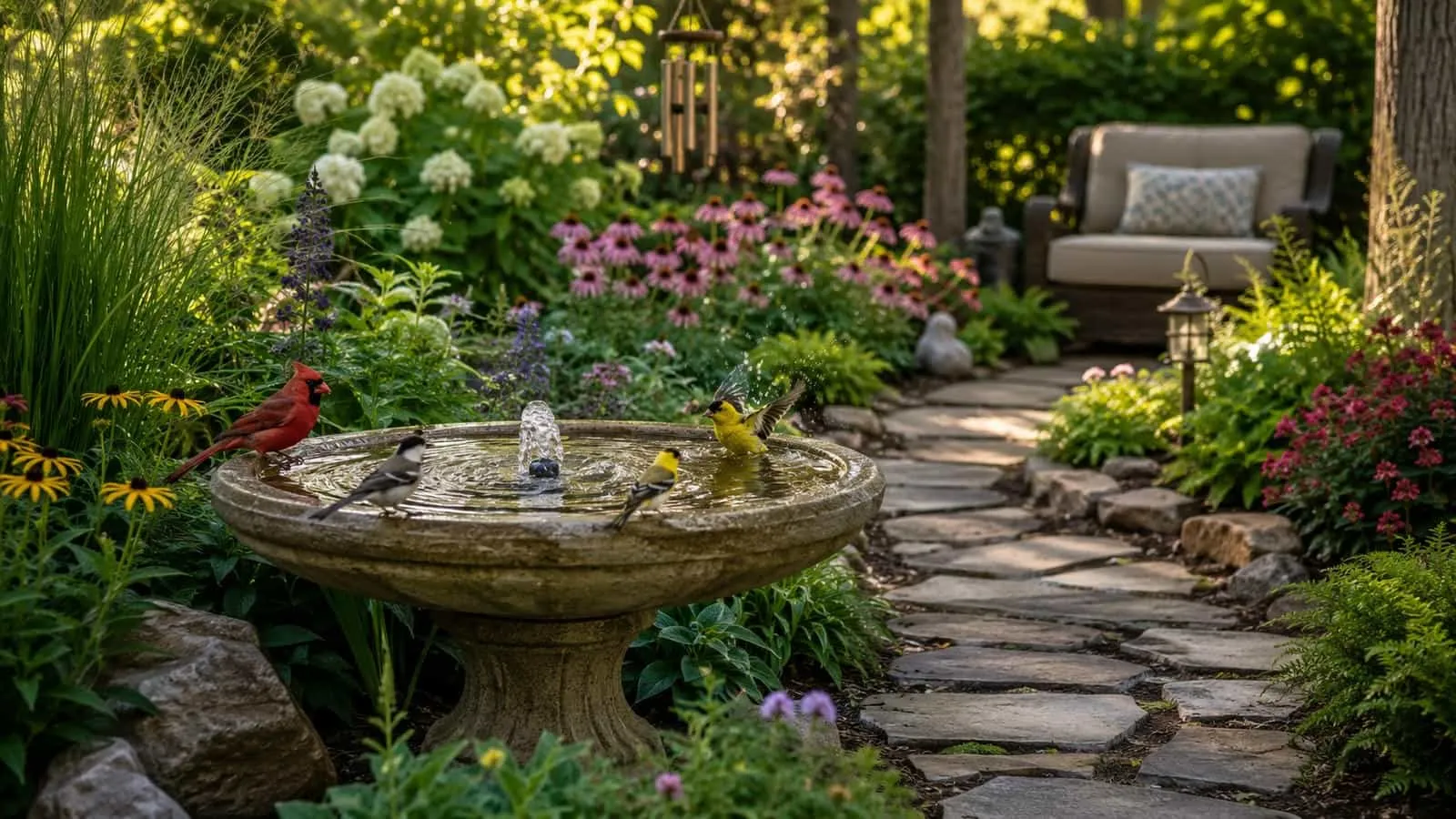
🐦💧 A birdbath fountain works best when clean water, bird safety and the surrounding garden are planned as one connected habitat. A shallow bubbling basin can help chickadees, finches and robins drink and bathe, while fine droplets or a gentle mister may appeal to hummingbirds. Use this guide to compare basin depth, water movement, placement, protective cover, native plants, materials, pumps, sunlight, water quality, cleaning, summer evaporation and winter freezing before creating a dependable wildlife destination.
📌 Birdbath Water Fountain Ideas for Backyard Birds, Wildlife Gardens, Safe Water, Placement and Care
Explore birdbath water fountain ideas for backyard birds, wildlife gardens, native plant borders, pollinator landscapes and peaceful outdoor spaces. Compare fountain styles, shallow basin depth, moving water, landscaping, materials, cleaning and practical buying decisions before creating a dependable garden water source. Select any image below to visit that exact section of the guide.


🏆 Best Birdbath Water Fountains for Backyard Birds, Wildlife Gardens and Peaceful Outdoor Spaces
A birdbath water fountain works best when it is planned as part of the backyard habitat rather than treated as a simple garden decoration. Basin depth, gentle water movement, secure footing, nearby cover, predator visibility, sunlight and cleaning access all affect whether birds feel comfortable using it. The strongest designs support wildlife while adding natural beauty, relaxing sound and everyday garden enjoyment.
Start with the birds that already visit the property. Chickadees, goldfinches, house finches, bluebirds and sparrows often benefit from shallow water and textured footing, while robins, cardinals, blue jays and mourning doves need more open bathing space. Hummingbirds may prefer fine mist, gentle droplets or a low bubbling surface instead of a deeper pedestal basin.
Water should move enough to create visible ripples without making the basin difficult to use. Gentle bubbling, soft dripping and a low trickle can help birds notice the fountain, while strong spray may waste water and discourage cautious visitors. Shallow edges, gradual depth and a stable surface are more important than choosing the largest basin.
Placement should provide clear views of approaching danger with shrubs or branches a short flight away. Partial shade can keep water cooler, slow evaporation and reduce algae, although solar birdbath fountains still need dependable sunlight. Use our guide to choosing the best water fountain location when comparing shade, protective cover, drainage, power and cleaning access.
Choose a fountain material and pump system that fit the climate and maintenance routine. Cast stone and concrete provide weight and stability, while resin and fiberglass are easier to move. Ceramic, copper, bronze and natural stone create distinctive garden styles but may need additional protection from frost, heat or mineral deposits. An open basin and removable pump usually make cleaning easier.
A birdbath fountain works best as one part of a complete wildlife garden with native trees, shrubs, flowering perennials, seeds and shelter. Explore our garden water fountain ideas for landscaped spaces or compare solar water fountains for flexible garden placement when outdoor electrical access is limited.
Compare shallow bubbling fountains, pedestal birdbaths, solar fountains and recirculating wildlife water features.
Choose safe basin depth, gentle water movement, dependable power and easy cleaning access.
🛒 Shop Birdbath Water Fountains on Amazon
🐦 What Makes a Birdbath Water Fountain Work Well?
A successful birdbath fountain does more than circulate water. It creates a safe place where birds can approach, land, drink, bathe, cool themselves and preen while maintaining clear views of the surrounding garden.
Use these practical wildlife and homeowner principles to choose a bird fountain that remains safe, attractive and manageable through changing weather and seasonal bird activity.
- 💧 Provide Shallow Water: Choose a basin with a gradual slope and shallow standing areas. Small birds should be able to place both feet securely on the bottom while drinking or bathing without being pushed by strong water flow.
- 🪨 Choose Secure Footing: Textured stone, concrete and lightly rough surfaces provide better grip than smooth glazed finishes. A small stable stone can create an additional shallow landing area, but too many loose stones can trap dirt and interfere with circulation.
- 🌊 Keep Water Movement Gentle: Use soft bubbling, quiet ripples, low droplets or a light trickle. Forceful spray may frighten cautious birds, increase splash loss and leave too little water in the basin during hot or windy weather.
- 👁️ Preserve Open Sightlines: Birds often pause before approaching water. Keep the immediate area open enough for them to watch for cats, hawks and other threats. Nearby cover should be available without creating a hiding place directly beside the basin.
- 🌳 Provide Nearby Escape Cover: Place shrubs, small trees or sturdy branches within a short flight of the fountain. Birds often retreat to a perch after bathing so they can preen, dry their feathers and watch the surrounding area.
- ☀️ Balance Sunlight and Shade: Partial shade can slow evaporation, reduce hot water and help control algae. Solar fountain models need reliable sunlight, so a separate panel may be more practical than a floating solar pump in a shaded wildlife garden.
- 🐤 Match the Fountain to Local Birds: Robins and larger songbirds need more open bathing space. Chickadees and finches benefit from shallow edges. Hummingbirds may prefer fine mist, dripping water or gently wet surfaces instead of a deeper basin.
- 🧽 Make Cleaning Easy: Choose a basin that can be emptied, scrubbed and rinsed without moving a heavy structure. The pump intake, tubing and fountain head should remain accessible so organic debris does not collect in hidden areas.
- 🚰 Refresh the Water Regularly: Moving water can remain more noticeable and less stagnant, but circulation does not replace cleaning. Replace dirty water, remove leaves and inspect the basin more often during hot weather and periods of heavy bird activity.
- 🦟 Prevent Mosquito Breeding: Keep the pump operating correctly and remove stagnant water from hidden pockets, planter saucers or decorative channels. Regular water replacement is still necessary even when the main surface appears to be moving.
- 🌿 Build a Complete Wildlife Garden: Surround the fountain with native flowers, seed producing plants, shrubs and trees that provide food and shelter. Keep tall vegetation far enough away to preserve visibility and leave a clear path for routine maintenance.
- 🦋 Support Pollinators Safely: Butterflies and bees may use damp stone or very shallow edges. Avoid deep open water intended for insects. A few stable pebbles at one edge can provide access while leaving the main basin open for birds.
- 🔌 Use Protected Outdoor Power: Follow the fountain manufacturer instructions and use equipment rated for outdoor conditions. Keep electrical connections away from standing water, irrigation spray and areas where cords could become a tripping hazard.
- 🧱 Build a Level, Stable Base: A leaning fountain can produce uneven flow, dry out one side of the basin and become unstable. Prepare a level surface that supports the complete filled weight without settling after heavy rain or freezing weather.
- 🍂 Plan for Seasonal Changes: Spring nesting, summer heat, autumn migration and winter freezing all change how the fountain is used. Expect more refilling during heat, more debris during autumn and complete draining when the material cannot safely hold freezing water.
When basin depth, water movement, footing, placement, cover, cleaning and seasonal care are planned together, a birdbath fountain becomes a living part of the backyard ecosystem. It provides dependable water for wildlife while creating a peaceful place for families to watch birds, enjoy natural sound and experience the garden more closely.

✅ Best For: Birdbath water fountains are especially well suited to backyard bird habitats, native plant gardens, pollinator borders, cottage gardens, woodland edges, courtyard gardens, front yard wildlife spaces, family nature gardens, outdoor reading areas and bird watching retreats where clean moving water can support wildlife without overwhelming the landscape.
Best Birdbath Water Fountains Summary
The best birdbath fountain combines shallow water, gentle circulation, secure footing, open visibility and easy cleaning. Match the basin, pump, material and placement with local birds, available sunlight, garden conditions and seasonal weather. The goal is to create a reliable wildlife water source that remains safe for birds, manageable for homeowners and naturally integrated into the landscape.
Compare cast stone, concrete, ceramic, resin and solar birdbath fountains for backyard habitats and pollinator gardens.
Choose a fountain with shallow water, stable edges, adjustable flow and practical seasonal care.
🛒 Browse Bird Friendly Water Fountains on Amazon
🔎 Birdbath Water Fountain Scenario Engine: Find the Best Fountain for Your Birds, Garden, Climate and Lifestyle
Every garden has a different combination of backyard birds, native plants, protective cover, sunlight, wind, climate, available space and homeowner expectations. A shallow fountain that works well for chickadees in a shaded woodland garden may not suit hummingbirds, a sunny patio or a freezing winter climate. If wildlife is only one part of the overall landscape goal, our guide to outdoor fountain choices for wildlife friendly yards compares fountain forms, size, sound, power, materials, installation, weather exposure and long term outdoor ownership across different residential settings. Open each scenario to find the most practical birdbath water fountain for your property.
Open each scenario to compare birdbath fountain styles, safe basin depths, water flow, materials, solar and electric pumps, placement, plants, bird behavior, cleaning needs and seasonal care. Each recommendation is designed to help you create a dependable wildlife water source rather than simply adding another garden ornament.
🐦 Everyday Backyard Songbirds and Mixed Bird Activity
Best choice: Shallow pedestal or low bubbling birdbath fountain with textured footing and gentle circulating water
Chickadees, goldfinches, house finches, sparrows, nuthatches, bluebirds and other common songbirds benefit from a birdbath fountain with shallow standing areas and a stable rim. Gentle water movement can help birds notice the fountain while preserving calm bathing space around the edges.
Place the fountain where birds can watch the surrounding garden while remaining within a short flight of a shrub or small tree. Open visibility helps them watch for cats and hawks, while nearby branches provide a place to dry, preen and wait when another bird is using the basin.
Choose this when you want a dependable everyday birdbath fountain for the widest range of backyard songbirds.
- 🐤 Best birds: Chickadees, finches, sparrows, nuthatches and bluebirds
- 📏 Basin design: Shallow edges with gradual depth toward the centre
- 🌊 Water movement: Low bubbling or gentle surface ripples
- 🪨 Material: Textured cast stone, concrete or durable resin
- 🌿 Placement: Open views with protective shrubs a short flight away
- 🧽 Maintenance: Refresh water and remove feathers, seeds and leaves often
- ❄️ Seasonal care: Drain before freezing or use a separate heated birdbath
Micro Recommendations: Add one stable textured stone near the shallow edge when the basin is too smooth. Keep most of the water surface open so birds have room to bathe and the basin remains easy to clean.
⚠️ Common Mistake: Filling the basin with too many decorative stones can trap debris and reduce the usable bathing area.
🌺 Hummingbird Garden with Nectar Flowers and Fine Moving Water
Best choice: Fine misting, slow dripping or very low bubbling birdbath fountain near hummingbird friendly flowers
Hummingbirds often respond better to mist, droplets, wet leaves and shallow moving surfaces than to a traditional deep basin. A small mister, fountain bubbler or gentle drip can create water that hummingbirds can fly through, brush against or use from a secure edge.
Position the water near salvia, bee balm, cardinal flower, trumpet honeysuckle or other nectar rich plants without hiding the fountain inside dense growth. Hummingbirds need clear flying space and nearby perches where they can rest, preen and watch the garden.
Choose this when attracting hummingbirds is more important than providing a large bathing basin for heavier birds.
- 🐦 Best birds: Hummingbirds and other small agile species
- 💧 Water style: Fine mist, slow drip or shallow bubbling surface
- 📏 Basin design: Very shallow water or wet textured stone
- 🌺 Plants: Salvia, bee balm, cardinal flower and honeysuckle
- 🌿 Placement: Open flight space with thin branches nearby
- 🧽 Maintenance: Keep misting openings, tubing and pump intakes clear
- 🌡️ Summer care: Refill frequently during heat and dry weather
Micro Recommendations: Begin with the lowest pump setting and watch whether hummingbirds prefer the mist, wet leaves or basin edge. Adjust the flow to match the behaviour you observe.
⚠️ Common Mistake: A tall forceful spray may waste water and create conditions that are too rough for hummingbirds.
🟥 Cardinals, Robins, Blue Jays and Larger Backyard Birds
Best choice: Wide shallow stone or concrete birdbath fountain with an open bathing area and low centre bubbler
Northern cardinals, American robins, blue jays, mourning doves and other larger birds need enough room to land, turn and bathe. A wider basin with a stable rim and gently sloped floor gives them usable space without forcing them close to the pump or fountain nozzle.
Keep the centre of the basin open and avoid filling it with ornaments. A low bubbler can provide visible moving water while leaving calm shallow areas around the outer edge. Heavy stone or concrete also provides better stability when several birds arrive at once.
Choose this when your garden regularly attracts robins, cardinals, blue jays, mourning doves or mixed flocks.
- 🐦 Best birds: Cardinals, robins, blue jays and mourning doves
- 📏 Basin size: Broad open bowl with room for turning and bathing
- 💧 Water depth: Shallow outer edge with gradual centre depth
- 🌊 Water movement: Low centre bubbler or gentle fountain dome
- 🪨 Material: Cast stone, concrete or natural stone
- 🌿 Placement: Open garden area with larger shrubs or trees nearby
- 🧽 Maintenance: Remove feathers, waste and windblown debris regularly
Micro Recommendations: Choose a basin that is wider rather than unusually deep. Larger birds need bathing room more than extra water depth.
⚠️ Common Mistake: A narrow decorative basin may look attractive but can prevent larger birds from landing and bathing comfortably.
☀️ Solar Birdbath Water Fountain for a Sunny Yard
Best choice: Solar birdbath fountain with a separate adjustable panel, low flow pump and optional battery backup
A sunny garden can support a solar birdbath water fountain without requiring a long outdoor electrical cord. Many of the same power, panel positioning and battery considerations explained in our solar water fountain buying guide also apply here. A model with a separate solar panel is often more flexible than a floating pump because the panel can face direct sunlight while the basin remains in the safest bird friendly location.
Direct solar models may slow or stop when clouds block the panel. Battery assisted fountains can provide steadier circulation, but operating time depends on battery size, sunlight and pump strength. Use a low fountain head so wind does not carry water beyond the basin.
Choose this when electrical access is limited and the garden receives several hours of dependable sunlight.
- ☀️ Power source: Separate solar panel with adjustable positioning
- 🔋 Battery option: Helpful for clouds and late afternoon operation
- 🌊 Water movement: Low bubbling flow instead of a tall spray
- 📏 Basin design: Shallow bird access with enough pump depth
- 💨 Wind care: Use a low nozzle to reduce splash and water loss
- 🧽 Maintenance: Clean the pump intake and solar panel surface
- 🌡️ Summer care: Check water levels daily during hot weather
Micro Recommendations: Choose a fountain with a separate solar panel whenever shrubs or afternoon shade make a floating solar pump unreliable.
⚠️ Common Mistake: A tall spray attachment can empty a shallow birdbath quickly when wind carries water outside the basin.
🌳 Woodland or Shaded Garden Beneath Mature Trees
Best choice: Electric low bubbling stone birdbath fountain with a simple open basin and accessible pump
A shaded woodland garden provides cooler water and natural bird cover, but it can also create heavy leaf litter, pollen, seeds and small twigs. A simple natural stone or cast stone birdbath is easier to maintain than a complex fountain with narrow channels and hidden reservoirs.
Solar pumps may perform poorly beneath a dense tree canopy. Use protected outdoor electrical power or position a separate solar panel beyond the shade when the cable length allows it. Keep the basin away from the heaviest overhead branches to reduce repeated pump blockages.
Choose this when birds already use a shaded woodland edge and you need dependable circulation under mature trees.
- 🌳 Setting: Woodland edge, shade garden or mature tree canopy
- 🔌 Power source: Outdoor electric pump or separate solar panel
- 🪨 Material: Natural stone or weathered cast stone
- 🌊 Water movement: Gentle bubbling with minimal splash
- 🌿 Plants: Ferns, native groundcovers and woodland shrubs
- 🍂 Debris care: Remove leaves, seeds and pollen frequently
- 🐈 Safety: Keep dense groundcover away from the immediate basin
Micro Recommendations: Watch the garden during windy weather before choosing the final location. Moving the basin several feet from an overhanging branch may reduce daily cleaning.
⚠️ Common Mistake: Placing the fountain directly beneath a tree can lead to constant debris and repeated pump blockages.
🦋 Pollinator Garden for Birds, Butterflies and Native Bees
Best choice: Shallow natural stone birdbath fountain with open bird bathing space and a separate damp pollinator edge
A pollinator garden can support birds, butterflies, native bees, bumble bees and dragonflies when the fountain offers several safe access points. Birds need shallow open water, while insects benefit from damp textured stone or a very shallow edge where they can land without entering deep water.
Surround the fountain with native flowers that provide nectar, pollen, seeds and seasonal shelter. Coneflowers, bee balm, asters, goldenrod, milkweed and native grasses can support wildlife through the growing season while creating a colourful natural garden.
Choose this when the fountain will support a complete pollinator and backyard wildlife habitat.
- 🦋 Best wildlife: Birds, butterflies, native bees and dragonflies
- 💧 Water access: Open bird basin with a separate damp stone edge
- 🪨 Material: Natural stone, cast stone or textured concrete
- 🌸 Plants: Coneflowers, bee balm, asters, goldenrod and milkweed
- 🌊 Water movement: Low bubbling centre with calm outer edges
- 🧽 Maintenance: Keep pollinator stones removable for cleaning
- 🚫 Chemical care: Avoid treatments that may harm birds or insects
Micro Recommendations: Create one small insect access area instead of filling the entire basin with pebbles. This protects bird bathing space and keeps cleaning manageable.
⚠️ Common Mistake: Covering the whole basin with small stones can trap debris and reduce safe bathing space for birds.
🏡 Small Patio, Balcony or Courtyard Birdbath Fountain
Best choice: Compact tabletop or low pedestal recirculating birdbath fountain with controlled splash
A small patio, balcony or courtyard needs a fountain with a compact basin, quiet pump and limited splash. A sturdy tabletop bowl or low pedestal birdbath can provide moving water without blocking circulation, wetting nearby furniture or overwhelming the outdoor space.
Birds may need time to discover a fountain close to the home. Place it where they have an open approach and a railing, branch or trellis nearby for waiting. Confirm that the surface can support the complete filled weight and that overflow will not damage decking.
Choose this when outdoor space is limited but you still want moving water for visiting birds.
- 📏 Fountain size: Compact bowl or low pedestal design
- 🌊 Water movement: Quiet bubbler with controlled splash
- 🪨 Material: Resin, ceramic or lightweight composite
- 🧱 Support: Stable surface rated for the filled fountain weight
- 🌿 Placement: Open approach near a railing or safe perch
- 💨 Wind care: Avoid tall spray on exposed balconies
- 🚰 Overflow care: Protect flooring and nearby drainage routes
Micro Recommendations: Use a shallow bowl with a low bubbler rather than a vertical spray. This keeps more water inside the fountain and reduces wet surfaces.
⚠️ Common Mistake: Placing the fountain beside cushions, doors or narrow walking routes can create splash, stains and daily inconvenience.
👨👩👧 Backyard Nature Retreat for Families, Bird Watching and Photography
Best choice: Stable natural looking birdbath fountain visible from a window, patio or quiet seating area
A backyard nature retreat should make bird activity easy to observe without placing people directly beside the water. A low stable fountain viewed from a kitchen window, porch or garden bench allows families to watch birds drink, bathe, compete for space and preen afterward.
Position the fountain so the main viewing direction has a soft background of shrubs, flowers or distant foliage. Keep active play areas, pets and busy walking routes farther away so birds feel comfortable approaching the basin.
Choose this when wildlife observation, family enjoyment, bird photography and outdoor relaxation are important goals.
- 👀 Viewing area: Kitchen window, porch or shaded garden seating
- 🪨 Material: Stable cast stone, concrete or weighted resin
- 🌊 Water movement: Visible gentle bubbling and soft reflections
- 🌿 Background: Flowers or shrubs beyond the main bird view
- 🐦 Perches: Natural branches near the fountain for waiting birds
- ⚽ Placement: Away from pets, balls, bikes and active play routes
- 📷 Lifestyle use: Bird watching, journaling and nature photography
Micro Recommendations: Test the view from indoors before choosing the final position. A window often provides better bird observation than a bench placed too close to the basin.
⚠️ Common Mistake: Installing the fountain beside a busy family area may keep birds away and expose the fountain to accidental damage.
❄️ Four Season Garden with Freezing Winters and Hot Summers
Best choice: Freeze resistant seasonal fountain paired with a separate outdoor rated heated birdbath for winter
A four season garden must handle spring nesting, summer evaporation, autumn migration and winter freezing. Repeated freezing and thawing can damage porous stone, concrete, ceramic, pumps and hidden tubing when water remains trapped inside the fountain.
Drain decorative fountains before sustained freezing unless the manufacturer approves winter operation. A separate heated birdbath can provide open winter water for chickadees, nuthatches, woodpeckers and other resident birds without placing the fountain pump at risk.
Choose this when year round bird support matters and local weather includes both summer heat and extended winter freezing.
- 🌱 Spring care: Clean the basin before nesting activity increases
- 🌡️ Summer care: Refill often during heat and high bird activity
- 🍂 Autumn care: Remove leaves, seeds and migration season debris
- ❄️ Winter care: Drain the basin, pump, tubing and hidden channels
- 🔥 Winter option: Use a separate outdoor rated heated birdbath
- 🪨 Material: Freeze resistant resin, metal or approved outdoor stone
- 🚫 Safety: Never add salt, antifreeze or unsafe chemicals
Micro Recommendations: Treat the decorative fountain and winter heated birdbath as separate systems unless the fountain is specifically rated for heated winter operation.
⚠️ Common Mistake: Leaving small amounts of water inside a basin, pump or tube can cause cracking when the water freezes and expands.
🧽 Easy Care Birdbath Fountain for a Busy Homeowner
Best choice: Simple one bowl recirculating birdbath fountain with an open basin, removable pump and minimal decorative channels
An easy care birdbath fountain should have a simple water path, open surfaces and accessible pump parts. Complex statues, narrow spillways and hidden reservoirs can trap algae, feathers and organic debris, making regular cleaning take longer than expected.
Place the fountain away from heavy leaf drop, lawn clippings and irrigation overspray. Partial shade can slow evaporation and intense algae growth, but the water will still need regular replacement. No wildlife fountain is maintenance free when birds use it frequently.
Choose this when you want reliable bird activity without a complicated fountain cleaning routine.
- 💧 Fountain style: Open single basin with a low centre bubbler
- 🧽 Cleaning access: Removable pump and exposed water surfaces
- 🪨 Material: Scrubbable surface with enough texture for footing
- 🌿 Placement: Away from trees, mowing debris and sprinklers
- ☀️ Sunlight: Partial shade to reduce heat and evaporation
- 🚰 Refilling: Easy access with a hose or watering can
- 🦟 Mosquito care: Maintain circulation and replace water regularly
Micro Recommendations: Choose the fountain you can clean easily rather than the model with the most decorative details. Simple construction usually supports better long term water quality.
⚠️ Common Mistake: Assuming moving water eliminates the need to empty, scrub and refresh the basin can lead to poor water quality.
✅ How to Choose Between These Birdbath Fountain Scenarios
Begin with the birds and wildlife you want to support, then compare basin depth, footing, water movement, sunlight, power and local climate. After those needs are satisfied, compare the different types of water fountains, then choose the material, fountain style and surrounding plants that best fit your garden.
- 🐦 Choose for Bird Behaviour First: Small birds need shallow secure footing, larger birds need open bathing room, and hummingbirds often prefer mist or droplets.
- 💧 Keep Water Movement Gentle: Ripples and low bubbling can attract birds without creating strong spray, rapid evaporation or unstable bathing water.
- 👁️ Protect Bird Visibility: Give birds open views around the basin and place safe shrubs or branches within a short flight.
- 🧽 Match Maintenance to Your Routine: Open basins and removable pumps are easier to clean than fountains with hidden channels.
- ☀️ Match Power to the Location: Use solar power in dependable sunlight and electric power when shade makes solar circulation unreliable.
- ❄️ Plan for the Climate: Protect pumps and porous materials from freezing, refill more often during heat and control splash in windy locations.
The strongest choice is not always the largest, most expensive or most decorative fountain. It is the birdbath water fountain that local wildlife will actually use, that homeowners can keep clean and that continues working safely within the real conditions of the garden.
✅ Scenario Engine Recommendation: When two scenarios match your property, combine their practical requirements. A shaded pollinator garden, for example, may need the wildlife access of the pollinator scenario and the dependable electric pump recommended for a woodland garden.
📊 Birdbath Water Fountain Comparison by Bird Species, Basin Depth, Water Movement, Power and Garden Goal

| 🐦 Wildlife or Garden Goal | ⛲ Recommended Birdbath Fountain | 💧 Water Movement and Basin Design | 🌿 Placement, Power and Maintenance Fit | Buyer Guidance and Planning Insight |
|---|---|---|---|---|
| 🐤 Everyday Songbirds and Mixed Backyard Birds | A shallow pedestal or low bubbling cast stone, concrete or resin birdbath fountain with textured footing. | Gentle ripples and low bubbling make the water noticeable while preserving calm shallow edges for chickadees, finches, sparrows, nuthatches and bluebirds. | Place it in partial shade with open views and shrubs or branches a short flight away. Choose an accessible pump and open basin for frequent cleaning. | This is the strongest general purpose choice for homeowners who want to attract several common backyard bird species. |
| 🌺 Hummingbird Garden | A compact misting, dripping or very low bubbling fountain near hummingbird friendly flowers and safe perches. | Fine mist, slow droplets, wet textured stone or a shallow bubbling surface often suits hummingbirds better than a deep open bowl. | Use near salvia, bee balm, cardinal flower or trumpet honeysuckle with a clear flight path. Keep small nozzles and tubing free of mineral deposits. | Choose this when hummingbirds are the main goal and gentle water contact is more important than a large bathing basin. |
| 🟥 Robins, Cardinals, Blue Jays and Mourning Doves | A wide shallow cast stone, concrete or natural stone birdbath with an open basin and low centre bubbler. | A broad bowl provides room for larger birds to land, turn and bathe. Shallow outer areas should remain calmer than the centre water flow. | Use a stable level foundation in an open garden area with larger shrubs or trees nearby. Remove feathers and debris often during heavy use. | Choose width over excessive depth because larger birds need open bathing room rather than a deep water basin. |
| ☀️ Sunny Yard without Nearby Electrical Power | A solar birdbath fountain with a separate adjustable panel, low flow pump and optional battery storage. | A low bubbler or fountain dome reduces wind loss and helps keep the shallow basin filled. Tall spray attachments are less practical. | Position the fountain for bird safety while placing the panel in direct sunlight. Clean the pump intake and solar panel regularly. | Best for flexible garden placement, although direct solar models may slow or stop during cloudy weather. |
| 🌳 Woodland, Shade or Native Plant Garden | A simple natural stone or weathered cast stone fountain powered by a protected outdoor electrical pump. | Gentle bubbling works well beneath a tree canopy because it limits splash while keeping the surface active and visible. | Place it away from the heaviest leaf drop and avoid dense groundcover directly beside the basin. Expect regular pollen, seed and leaf removal. | Choose this for cooler shaded habitats where solar power may be unreliable and natural materials fit the landscape. |
| 🦋 Pollinator and Wildlife Garden | A shallow natural stone or textured concrete birdbath with open bathing space and a separate damp pollinator edge. | Low bubbling water serves birds, while a few stable damp stones can provide safer access for butterflies, native bees and beneficial insects. | Surround it with native flowers, seed plants and shrubs while keeping the immediate basin area open. Avoid wildlife unsafe water treatments. | Best for homeowners building a complete backyard habitat that supports birds, pollinators and garden biodiversity. |
| 🏡 Small Patio, Balcony or Courtyard | A compact tabletop or low pedestal resin, ceramic or lightweight composite birdbath fountain. | A quiet low bubbler provides visible movement without creating strong spray, wet furniture or excessive sound near seating. | Confirm the surface can hold the filled weight and protect decking from overflow. Provide an open bird approach and nearby railing or perch. | Choose this when space is limited and controlled splash, portability and easy cleaning are important. |
| ❄️ Four Season Garden with Freezing Winters | A freeze resistant seasonal fountain combined with a separate outdoor rated heated birdbath for winter. | Use gentle moving water during spring, summer and autumn. Drain the decorative fountain before freezing unless it is approved for winter operation. | Remove or protect pumps, tubing and vulnerable materials. Continue replacing dirty water in any heated winter birdbath. | Best for year round bird support where freezing weather makes one permanent fountain system impractical. |
| Birdbath fountain summary: The best birdbath water fountain should match local bird behaviour, safe basin depth, water movement, sunlight, power access, garden conditions and cleaning commitment. Shallow bubbling fountains serve many songbirds, mist and droplets may appeal to hummingbirds, wide basins suit larger birds, and solar, shaded or heated systems should be chosen according to the actual environment. | ||||
Compare pedestal, bubbling, solar, stone, concrete, ceramic and resin birdbath fountains for different birds and garden settings.
Choose a bird friendly fountain with shallow water, stable footing, gentle movement and practical cleaning access.
🛒 Discover Top Rated Birdbath Fountains on Amazon
Advantages and Disadvantages of Birdbath Water Fountains
Birdbath water fountains can provide fresh moving water, attract backyard birds, support wildlife observation and add relaxing sound to the garden. They also require frequent water checks, regular cleaning, safe placement and seasonal protection. Comparing the benefits and tradeoffs can help determine whether a bird fountain fits your wildlife goals, climate and maintenance routine.
| Benefits of Birdbath Water Fountains | Limitations and Practical Tradeoffs |
|---|---|
|
|
| Birdbath Fountain Tip: Choose bird safety and cleaning access before decorative style. Confirm shallow standing areas, stable footing, gentle water movement, open visibility, nearby escape cover and practical pump access before buying. | |
💡 Comparison Tip: Observe which birds already visit the property before choosing a fountain. Small songbirds, hummingbirds and larger birds do not always use water in the same way, so basin width, depth, footing and water movement should match the wildlife you hope to attract.
Section Summary Snapshot: Comparing birdbath water fountains by bird species, basin depth, water movement, power source, material, climate and maintenance needs reveals which design will work best over time. Shallow bubbling basins suit many songbirds, mist and droplets may attract hummingbirds, wider bowls serve larger birds, and solar or heated systems should match the actual garden conditions.
🏡 Birdbath Water Fountain Styles for Cottage, Woodland, Pollinator, Traditional and Contemporary Gardens
🏛️ Traditional Pedestal Birdbath Fountains for Classic Garden Design
🏛️ Traditional Pedestal Birdbath Fountains for Front Yards, Formal Beds and Established Landscapes
Traditional pedestal birdbath fountains use raised bowls, cast stone, concrete or resin finishes to create a clear garden focal point. They work best when the basin remains shallow, the pedestal is stable and birds have open visibility around the water with shrubs or branches nearby for safe escape.
Problem Some decorative pedestal fountains have bowls that are too deep, smooth or narrow for safe bird bathing.
Why it happens Many traditional birdbaths are designed mainly for appearance rather than shallow wildlife access.
Solution Choose a broad textured basin with gradual depth, a stable rim and gentle bubbling water.
🏛️ Best Traditional Pedestal Birdbath Fountain Ideas
A cast stone pedestal fountain can create a strong focal point near a front walkway, rose garden or structured perennial bed. The raised basin also makes the water easier to see from windows, patios and nearby garden seating.
Keep the surrounding planting low enough to preserve open visibility. Boxwood, compact roses, lavender and low seasonal flowers can frame the pedestal without hiding cats or blocking maintenance access.
- 📏 Choose a Broad Shallow Bowl A wide basin gives birds more landing and bathing room than a narrow decorative cup.
- 🪨 Use Stable Materials Cast stone and concrete resist tipping, while weighted resin is easier to move.
- 👁️ Protect Open Visibility Keep tall shrubs and dense groundcover away from the immediate basin.
- 🌊 Use Gentle Water Movement A low bubbler or fountain dome creates ripples without excessive splash.
🏛️ Traditional Birdbath Tip: Check the pedestal for level before filling the basin. Even a slight lean can create uneven water depth and unstable footing.
🌸 Cottage Birdbath Fountains for Roses, Curved Paths and Layered Flowers
🌸 Cottage Birdbath Water Fountains for Weathered Stone, Romantic Flowers and Informal Garden Beauty
Cottage birdbath fountains use weathered stone, aged finishes, softened shapes and relaxed planting to create a natural wildlife destination. Small pedestal, bubbling bowl and low stone fountains work well beside curved paths, roses and mixed perennial borders when the basin remains visible and easy to clean.
Problem Dense cottage planting can hide the basin, trap debris and create predator cover beside the fountain.
Why it happens Cottage gardens often use layered flowers and shrubs that spread beyond their original planting space.
Solution Keep low flowers near the fountain and place taller plants several feet behind it.
🌸 Best Cottage Birdbath Fountain Ideas
A weathered stone fountain can sit naturally beside a gravel path surrounded by lavender, catmint, hardy geraniums and compact roses. Taller foxgloves, delphiniums and flowering shrubs should remain farther back so birds retain clear views.
Slightly irregular planting often feels more natural than formal symmetry. Leave one stable route to the basin and pump so fallen petals, leaves and mineral deposits can be removed without stepping through the flower bed.
- 🪨 Choose a Weathered Finish Aged stone and antique surfaces blend naturally with established cottage planting.
- 🌸 Layer Plant Heights Use thyme, lavender and low perennials near the basin with taller flowers behind.
- 🧱 Use Informal Edging Gravel, reclaimed brick and natural stone support relaxed garden character.
- 🧽 Preserve Cleaning Access Leave an open route for refilling, scrubbing and pump removal.
🌸 Cottage Birdbath Tip: Plan for mature plant size. Flowers should soften the fountain without covering the basin or creating hidden ground level approaches.
🌳 Woodland and Natural Stone Birdbath Fountains for Shaded Wildlife Gardens
🌳 Woodland Birdbath Water Fountains for Native Shrubs, Ferns and Natural Backyard Habitats
Woodland birdbath fountains use natural stone, low bubbling water and weathered finishes to blend into shaded wildlife gardens. They suit chickadees, nuthatches, woodpeckers, robins and migratory birds when placed near tree cover without sitting directly beneath heavy leaf drop or dense predator hiding areas.
Problem A fountain beneath mature trees can fill quickly with leaves, pollen, seeds and small branches.
Why it happens Tree canopies provide valuable bird habitat but also create frequent organic debris.
Solution Move the fountain beyond the heaviest overhead branches and choose an open basin with an accessible pump.
🌳 Best Woodland Birdbath Fountain Ideas
A low natural stone bowl with a gentle centre bubbler can look like part of the landscape rather than a separate decoration. Ferns, woodland groundcovers, serviceberry, dogwood and native shrubs can create nearby habitat while preserving an open approach.
Solar power may be unreliable beneath a dense canopy. Use protected outdoor electrical power or a separate solar panel positioned beyond the shade when practical.
- 🌳 Use Natural Materials Granite, sandstone and weathered cast stone blend well with woodland gardens.
- 🍂 Reduce Overhead Debris Avoid placing the basin directly under heavy seed, flower or leaf drop.
- 🔌 Plan Dependable Power Electric pumps often work more reliably than direct solar pumps in deep shade.
- 🐈 Keep Ground Cover Open Ferns and shrubs should not create a hidden approach beside the basin.
🌳 Woodland Birdbath Tip: Watch how debris moves during wind and rain before choosing the final position. A small location change can reduce cleaning significantly.
🦋 Pollinator and Native Garden Birdbath Fountains for Backyard Biodiversity
🦋 Pollinator Birdbath Water Fountains for Birds, Butterflies, Native Bees and Wildlife Gardens
Pollinator birdbath fountains combine shallow bird bathing water with damp textured landing areas for butterflies, native bees and beneficial insects. Natural stone, textured concrete and low bubbling basins work well among native flowers, seed plants and shrubs when the fountain remains free from harmful chemicals.
Problem Filling the entire basin with pebbles can reduce bird bathing space and trap organic debris.
Why it happens Homeowners often try to make every part of the fountain accessible to insects.
Solution Create one removable damp stone edge while leaving most of the basin open for birds.
🦋 Best Pollinator Birdbath Fountain Ideas
A shallow textured basin surrounded by coneflowers, bee balm, asters, goldenrod, milkweed and native grasses can support wildlife through the growing season. Seed heads left in autumn may also attract finches and other seed eating birds.
Keep the immediate fountain area open and pesticide free. Butterflies and bees may use damp stones, but clean bird bathing space should remain the primary function of the fountain.
- 🦋 Create Separate Wildlife Access Use one damp stone zone for insects while keeping the main basin open.
- 🌸 Plant for Continuous Bloom Combine spring, summer and autumn native flowers to support pollinators longer.
- 🌊 Use Low Bubbling Water Gentle movement attracts birds while preserving calm edges for smaller wildlife.
- 🚫 Avoid Harmful Treatments Do not use water additives that may be unsafe for birds, bees or butterflies.
🦋 Pollinator Fountain Tip: Keep insect landing stones removable so the basin can be emptied and scrubbed without trapping debris underneath.
🎨 Ceramic, Copper and Decorative Birdbath Fountains for Colourful Garden Style
🎨 Decorative Birdbath Water Fountains for Ceramic Colour, Copper Patina and Artistic Garden Design
Decorative birdbath fountains use glazed ceramic, copper, bronze and sculptural forms to add colour and craftsmanship to patios, cottage gardens and courtyard spaces. If your goal is creating a relaxing outdoor living area, these ideas pair naturally with our patio water fountain ideas. The best designs still provide shallow water, secure footing, controlled flow and easy cleaning instead of allowing decoration to reduce wildlife safety.
Problem Smooth glazed bowls and narrow decorative basins can be slippery or too deep for small birds.
Why it happens Decorative fountains are often designed for visual impact before wildlife access.
Solution Choose a broad shallow bowl or add one stable textured landing stone near the edge.
🎨 Best Decorative Birdbath Fountain Ideas
A blue glazed ceramic fountain can brighten a cottage patio or flower garden, while aged copper and bronze create a changing patina that suits traditional and artistic landscapes. Keep metal fountains out of intense afternoon sun when surface heat becomes a concern.
Protect ceramic fountains from impact and freezing conditions. Copper, bronze and glazed surfaces may need material specific cleaning so mineral deposits are removed without damaging the finish.
- 🎨 Use Colour as a Garden Accent Ceramic glazes can repeat flower, door or outdoor furniture colours.
- 🟤 Allow Natural Metal Patina Copper and bronze change over time and develop deeper outdoor character.
- 📏 Check Basin Safety First Decorative colour should not replace shallow depth and stable footing.
- ❄️ Protect Vulnerable Materials Ceramic components may need indoor storage during freezing weather.
🎨 Decorative Birdbath Tip: Select the basin shape before the colour or ornament. Birds will not use a beautiful fountain comfortably when the water is too deep or slippery.
◻️ Contemporary Birdbath Fountains for Patios, Courtyards and Modern Landscapes
◻️ Contemporary Birdbath Water Fountains for Clean Lines, Compact Spaces and Simple Outdoor Living
Contemporary birdbath fountains use simple bowls, smooth profiles, neutral finishes and restrained water movement to suit modern patios, courtyards and updated landscapes. Low bubbling resin, concrete and metal fountains work best when their clean appearance is balanced with textured footing and practical wildlife access.
Problem A smooth modern basin can become slippery and difficult for birds to use.
Why it happens Contemporary design often favours polished surfaces and minimal detailing.
Solution Choose a lightly textured basin or add one stable natural stone landing area.
◻️ Best Contemporary Birdbath Fountain Ideas
A low charcoal concrete bowl or simple pale stone pedestal can provide clean water movement without competing with modern paving, ornamental grasses and structured shrubs. Controlled bubbling is usually more practical than tall spray near outdoor seating.
Repeat the fountain finish in planters, paving or retaining walls so the water feature feels connected to the landscape. Keep cords, tubing and pump components hidden from the main viewing direction.
- ◻️ Choose Simple Basin Shapes Broad circles, shallow squares and low bowls support clean modern design.
- ⚪ Use Neutral Finishes Warm grey, pale stone, charcoal and natural concrete suit updated landscapes.
- 🌾 Pair with Structured Planting Ornamental grasses, clipped shrubs and repeated perennial groups maintain order.
- 💧 Control Splash Near Seating Low bubbling water remains comfortable on patios and in small courtyards.
◻️ Contemporary Birdbath Tip: A simple fountain still needs wildlife friendly texture. Add one secure landing area without cluttering the clean basin design.
Section Summary Snapshot: Choosing a birdbath water fountain style begins with the garden design, local birds, basin safety and maintenance routine. Traditional pedestal fountains suit structured landscapes, weathered stone fits cottage and woodland gardens, native fountains support pollinators and biodiversity, ceramic and copper provide decorative character, and contemporary fountains work well in compact modern spaces.
Compare traditional pedestal fountains, cottage stone birdbaths, woodland fountains, pollinator designs, ceramic bowls and modern bubbling fountains.
Choose a bird friendly fountain with shallow water, secure footing, gentle movement and a style that fits your landscape.
🛒 Explore Birdbath Water Fountain Styles on Amazon
💧 Pedestal, Bowl, Bubbler, Mister and Solar Birdbath Fountains: Choosing the Best Form for Your Garden

Choosing a birdbath water fountain is not simply a matter of selecting the most decorative bowl. Each fountain form changes the water depth, landing space, pump access, visibility, sound and type of wildlife that can use it. A raised pedestal may suit cardinals and robins, while a low stone bubbler can blend naturally into a woodland or native plant garden.
Begin with the birds that already visit the property. Small songbirds often benefit from shallow textured edges, larger birds need more open bathing room, and hummingbirds may prefer mist, droplets or wet stone instead of a deeper basin. The fountain should support natural drinking, bathing and preening without forcing birds into strong spray or slippery water.
Power and placement also influence the best design. Solar birdbath fountains work well in dependable sunlight, but shaded gardens may need a protected electric pump. Simple open basins are easier to clean, while sculptural fountains with hidden channels can collect algae, feathers, seeds and mineral deposits.
Material affects stability, climate performance and long term care. Our water fountain materials guide compares the strengths, maintenance requirements and climate performance of today's most popular materials. Cast stone and concrete provide weight, natural texture and strong garden presence. Resin and fiberglass are easier to move. Ceramic, copper and bronze add decorative character but may require more protection from heat, frost or mineral buildup.
Use the comparisons below to evaluate fountain form, bird access, water movement, garden setting and ownership needs. The strongest birdbath fountain should attract wildlife, remain easy to clean and fit naturally into the complete backyard habitat.
Compare raised birdbaths, shallow bubbling bowls, hummingbird misters and solar fountains for different gardens and bird species.
Choose a wildlife fountain with safe water depth, secure footing, gentle movement and practical cleaning access.
🛒 Compare Birdbath Water Fountains on Amazon
🐦 Choosing the Best Birdbath Fountain Form for Your Wildlife Goal
Birdbath fountain form affects more than appearance. It changes safe water depth, landing space, visibility, splash, pump access and the species most likely to use the water. Some homeowners need a general backyard birdbath, while others want to attract hummingbirds, support pollinators or add a compact water feature to a patio.
| 🐦 Wildlife or Garden Priority | 💧 Recommended Birdbath Fountain Form | 🌊 Why It Performs Well | 🌿 Best for Homeowners Who... |
|---|---|---|---|
| Attract common backyard songbirds | Shallow Pedestal Birdbath with a Low Bubbler | A raised basin provides visibility while gentle ripples help chickadees, finches, sparrows and bluebirds notice the water. | Want a dependable bird friendly fountain that works in front yards, perennial gardens and traditional landscapes. |
| Provide bathing room for larger birds | Wide Open Bowl Fountain | A broad shallow basin gives robins, cardinals, blue jays and mourning doves enough room to land, turn and bathe. | Regularly see larger birds and need more open water surface instead of a narrow decorative bowl. |
| Attract hummingbirds | Fine Mister or Gentle Dripping Fountain | Mist, droplets and wet textured surfaces allow hummingbirds to brush through water or bathe without entering a deep basin. | Grow salvia, bee balm, cardinal flower or honeysuckle and want to support hummingbird activity. |
| Create a natural woodland water source | Low Natural Stone Bubbler | A weathered stone bowl or bubbling rock blends into shaded planting while providing shallow moving water and natural footing. | Want a subtle wildlife fountain among ferns, native shrubs, trees and woodland groundcovers. |
| Support birds and pollinators together | Textured Basin with a Separate Damp Stone Edge | Birds retain an open bathing area while butterflies and native bees can approach a very shallow damp landing zone. | Are building a pollinator garden with native flowers, continuous bloom and broader biodiversity goals. |
| Add moving water without electrical wiring | Solar Birdbath Water Fountain | A separate solar panel can power a low bubbler while allowing the basin to remain in a safe and attractive wildlife location. | Have dependable sunlight and want flexible fountain placement away from an outdoor outlet. |
| Create a compact patio or courtyard feature | Tabletop or Low Bowl Recirculating Fountain | A small self contained basin adds gentle movement without taking over the patio or producing excessive splash near seating. | Have limited space and need portability, quiet sound and easy cleaning. |
| Provide open water during freezing weather | Outdoor Rated Heated Birdbath | A heated basin can keep water available for resident winter birds when decorative pumps and fountains must be drained. | Live in a cold climate and want to support chickadees, nuthatches and woodpeckers through winter. |
| 💧 The best birdbath fountain form depends on bird behaviour, basin safety, water movement, power and climate. Pedestal bubblers serve many backyard birds, wide bowls support larger species, misting fountains may attract hummingbirds, natural stone fits woodland habitats, solar fountains provide flexible placement and heated birdbaths support winter wildlife. | |||

Compare compact bowls, raised pedestal fountains, natural stone bubblers and larger wildlife basins for different landscape sizes.
Create safe water access without overwhelming pathways, flower beds, patios or available garden space.
🛒 Find the Right Birdbath Fountain on Amazon
📏 Birdbath Fountain Size and Basin Depth by Bird Species, Garden Space and Wildlife Safety
Choosing the right birdbath fountain size requires comparing the basin with the birds, surrounding garden and maintenance routine. Basin width, shallow standing areas, edge texture, pedestal height, pump position and nearby cover all affect wildlife use. Before buying, mark the full basin footprint and confirm that birds will have open visibility, safe footing and enough room to drink or bathe.
| 🐦 Bird or Garden Scale | 💧 Recommended Basin Size and Fountain Form | 🎯 Placement and Buyer Guidance |
|---|---|---|
| Small songbirds and compact gardens | Small to medium shallow basin with gradual depth, textured footing and a low bubbler | Ideal for chickadees, finches, sparrows and bluebirds in townhouse gardens, patios, side yards and smaller flower beds. |
| Hummingbird gardens | Fine mist, dripping feature or very shallow wet stone rather than a deep basin | Position near nectar plants and thin perches while preserving open flying space and easy nozzle cleaning. |
| Robins, cardinals, blue jays and doves | Wider open basin with shallow outer edges and a low centre bubbler | Choose a stable pedestal or low stone bowl that gives larger birds enough room to land, turn and bathe. |
| Mixed backyard bird populations | Broad basin with several shallow access areas and gentle adjustable water movement | Best for homeowners who see both small and larger birds and want one general purpose wildlife fountain. |
| Pollinator and native plant gardens | Open bird basin with one separate removable damp stone or very shallow insect edge | Preserve the main bathing area for birds while allowing butterflies and native bees safer access to moisture. |
| Patios, balconies and courtyards | Compact self contained bowl with controlled bubbling and limited splash | Confirm the surface supports the filled weight and keep the fountain away from cushions, doors and narrow walking routes. |
| 📏 The best birdbath fountain size balances bird species, basin width, shallow depth, secure footing and garden space. Small songbirds need shallow stable access, hummingbirds often prefer mist or droplets, larger birds need wider bathing room and mixed wildlife gardens benefit from several safe access points. | ||
📏 Basin Size Tip: Mark the proposed basin with a garden hose or rope, then view the space from the home, patio and nearby paths. Confirm that the fountain leaves room for birds to approach, people to walk past and homeowners to clean the basin without stepping through dense planting.
🏡 Choosing a Birdbath Fountain for Everyday Outdoor Living and Wildlife Observation
The most successful birdbath fountain supports the way the garden is actually used. Consider whether you want stronger bird activity, hummingbird visits, family nature observation, pollinator support, garden photography, relaxing sound or an easy care water feature. Daily viewing and maintenance often matter more than the initial product photograph.
| 🏡 Your Wildlife or Lifestyle Goal | 💧 Birdbath Fountain Recommendation |
|---|---|
| 🐦 Want more everyday backyard bird activity | Choose a shallow pedestal or bubbling bowl visible from the home, with open sightlines and shrubs or branches a short flight away. |
| 🌺 Want hummingbirds to visit the water | Use a fine mister, gentle drip or wet textured stone near nectar flowers and open perches. |
| ☕ Want a quiet place for morning coffee or reading | Place a low bubbling fountain near a patio or bench while leaving enough distance that birds still feel comfortable approaching. |
| 👨👩👧 Want children to observe wildlife | Position a stable fountain where it can be viewed from a window or porch, away from active play routes and unsupervised pets. |
| 📷 Want a bird photography garden | Choose a natural looking low basin with a soft plant background, predictable morning light and hidden pump equipment. |
| 🦋 Want birds and pollinators together | Use an open shallow basin with one removable damp landing area and surround it with native flowers and seed plants. |
| ☀️ Need a fountain far from electrical power | Choose a solar birdbath fountain with a separate panel and low bubbling flow in a location that receives dependable sunlight. |
| 🧽 Prefer easier cleaning and care | Select a one bowl recirculating fountain with an exposed removable pump and minimal decorative channels. |
| ❄️ Want to support birds during winter | Drain the decorative fountain before freezing and use a separate outdoor rated heated birdbath for winter water. |
| 🐦 The best birdbath fountain supports the real purpose of the wildlife garden. Pedestal and bowl fountains serve many backyard birds, misting systems may attract hummingbirds, solar models improve placement flexibility and simple open basins reduce cleaning time. The right choice should remain safe, visible and manageable during normal outdoor living. | |

🌿 Long Term Birdbath Fountain Planning for a Healthy Wildlife Garden
A birdbath water fountain should remain safe and serviceable after shrubs widen, trees mature and bird activity increases. Plant growth, falling debris, mineral buildup, predator cover, electrical access and freezing weather can all affect whether the original design remains practical.
Use these planning principles to create a fountain that continues supporting birds, pollinators and everyday garden enjoyment.
- 🐦 Plan for Changing Bird Activity Spring nesting, summer heat, autumn migration and winter survival can change how often the fountain is used.
- 📏 Protect Shallow Water Access Keep the basin level and preserve gradual depth as stones, pumps and decorative features are added.
- 👁️ Maintain Open Sightlines Trim mature plants so birds can watch for predators while using the water.
- 🌳 Provide Nearby Escape Cover Keep shrubs or branches within a short flight without allowing dense cover directly beside the basin.
- 🧱 Prepare a Stable Foundation Match the base to the filled fountain weight, soil, drainage and local frost movement.
- 🧽 Preserve Cleaning Access Maintain a stable route to the basin, pump, tubing and electrical connection.
- 🌊 Use Adjustable Water Flow Lower the flow when wind, evaporation or cautious birds make stronger spray impractical.
- ☀️ Recheck Sun and Shade Growing trees may reduce solar performance or change water temperature over time.
- 🍂 Prepare for Seasonal Debris Leaves, blossoms, pollen and seeds can increase as nearby plants mature.
- 🪨 Expect Natural Material Aging Stone, concrete, copper, bronze, ceramic and resin develop different weathering and mineral patterns.
- 🚰 Plan Convenient Refilling Keep a hose, watering can route or nearby water source available during hot weather.
- 🦟 Prevent Hidden Stagnant Water Inspect decorative pockets, stones and disconnected channels where mosquito larvae could develop.
- 🚫 Avoid Unsafe Water Treatments Use cleaning methods and products appropriate for birds, pollinators and other garden wildlife.
- ❄️ Prepare for Winter Shutdown Confirm that the basin, pump and tubing can be drained before freezing weather.
Long term birdbath fountain planning brings wildlife needs, landscape design and everyday ownership together. When basin safety, plant growth, visibility, power, cleaning and seasonal care are addressed before installation, the fountain can remain a dependable water source and peaceful garden destination for years.
Section Summary Snapshot: Choosing among pedestal, bowl, bubbler, misting, solar and heated birdbath fountains means matching water movement and basin design to local birds and garden conditions. Pedestal bubblers serve many songbirds, wide bowls support larger species, mist may attract hummingbirds, solar fountains improve placement flexibility and heated birdbaths support winter wildlife. The best form also remains safe, visible and easy to maintain.
Compare durable pedestal fountains, bubbling bowls, solar birdbaths, natural stone designs and easy care wildlife fountains.
Create a backyard water source that remains safe, accessible and attractive as the garden matures.
🛒 Shop Durable Birdbath Water Fountains on Amazon
🌿 Birdbath Fountain Landscaping with Native Plants, Pollinator Flowers and Wildlife Garden Design
A birdbath fountain provides more wildlife value when the surrounding garden offers food, shelter, perches and open visibility. For more inspiration on designing a complete outdoor living space around moving water, explore these backyard water fountain ideas. Keep the immediate water zone clear instead of burying the basin inside dense planting where birds cannot watch for cats or other predators.
Build the planting in layers. Use groundcovers and low flowers closest to the fountain, medium perennials behind them and shrubs or small trees at the outer edge. This arrangement protects the view of birds drinking and bathing while supporting insects, seeds, shelter and safe waiting perches.
Plan for normal fountain care as well as garden beauty. Leave one clear route for refilling, cleaning and pump removal, and protect the water from mulch, fertilizer, irrigation spray, fallen leaves and dirty runoff.
🌿 Best Plants and Garden Features Around Birdbath Water Fountains
Use this birdbath fountain landscaping guide to combine native plants, pollinator flowers, shrubs and practical garden access while preserving shallow water, bird visibility, clean circulation and long term maintenance.
| 🏡 Wildlife Garden Area | 🌿 Best Landscaping to Use | 🐦 Wildlife and Garden Value | 💧 Placement and Care Guidance |
|---|---|---|---|
| 🌱 Low Planting Near the Basin | Creeping thyme, low sedges, compact salvia and short native flowers. | Low growth softens the fountain without hiding birds or blocking views of approaching predators. | Keep soil, mulch and spreading roots away from the water and leave one side open for cleaning. |
| 🌸 Native Pollinator Border | Coneflowers, bee balm, asters, goldenrod, milkweed and native grasses. | Flowers provide nectar, pollen, insects and seeds for birds, butterflies and native bees. | Place taller plants behind the fountain and remove stems that begin falling into the basin. |
| 🌳 Shrubs and Small Trees | Serviceberry, dogwood, viburnum, elderberry and regionally suitable native shrubs. | Branches provide shelter, berries, insects, waiting perches and a quick retreat after bathing. | Keep cover within a short flight but far enough away that cats cannot approach unseen. |
| 🦋 Pollinator Water Access | One removable textured stone, damp edge or very shallow landing area. | Butterflies, bees and beneficial insects can reach moisture without reducing the main bird bathing area. | Keep the pollinator zone small and removable so debris does not collect underneath it. |
| 🌳 Woodland Birdbath Garden | Ferns, sedges, woodland flowers, serviceberry and natural stone edging. | Shade and native cover may attract chickadees, nuthatches, woodpeckers, robins and migratory birds. | Keep the basin beyond heavy leaf drop and use dependable power where deep shade limits solar performance. |
| 🌸 Cottage Birdbath Garden | Lavender, catmint, hardy geraniums, compact roses and informal stone or gravel edging. | Layered flowers create colour, insect activity and a natural setting for a weathered stone fountain. | Keep taller flowers behind the basin and preserve open access on the main viewing side. |
| ☀️ Sunny Native Garden | Coneflowers, black eyed Susans, asters, drought tolerant flowers and native grasses. | Seed plants and insects support finches, sparrows, butterflies and other summer wildlife. | Provide partial afternoon shade when possible and check shallow water more often during hot weather. |
| 🌿 The best birdbath fountain landscaping uses low plants near the basin, taller native flowers behind it and protective shrubs at the outer edge. Pollinator access should remain separate from the main bathing area, while a clear maintenance route protects clean water and dependable pump access. | |||
🌱 Birdbath Landscaping Tip: View the fountain from ground level before planting. Remove anything that could hide a predator, block the basin or prevent easy cleaning.
🪴 How to Layer Plants Around a Birdbath Fountain
Begin with an open basin zone, then add low groundcovers and compact flowers without surrounding every side. Place medium native perennials behind this layer and position shrubs or small trees farther out where they provide shelter without creating hidden ground level approaches.
Use a few coordinated materials rather than many small decorations. Natural stone and gravel fit woodland gardens, reclaimed brick suits cottage landscapes and simple paving complements contemporary birdbath fountains. Keep runoff, irrigation and fertilizer away from the basin.
Plan for mature plant size. Shrubs widen, grasses lean and tree canopies create more shade and debris over time. Pruning and spacing should preserve bird visibility, water quality and access to the pump.
🐦 Integrating a Birdbath Fountain with a Wildlife Garden
A successful birdbath garden supports birds and pollinators without making the fountain difficult to maintain. Use these principles to protect habitat value as the landscape matures.
- 👁️ Preserve Open Visibility Keep the main water zone clear so birds can watch for cats and other threats.
- 🌿 Layer Plants by Mature Height Place low flowers near the basin, medium perennials behind them and shrubs farther out.
- 🌳 Provide Safe Nearby Cover Use branches and shrubs as waiting perches without allowing dense growth against the basin.
- 🦋 Support Pollinators Carefully Add native flowers and one damp landing area while keeping the bird basin open.
- 🚶 Preserve Maintenance Access Leave a stable route for refilling, scrubbing, pump removal and seasonal shutdown.
- 🧽 Protect Water Quality Prevent mulch, fertilizer, soil, lawn clippings and irrigation runoff from entering the water.
- 🍂 Limit Falling Debris Avoid placing the fountain directly beneath trees that release heavy leaves, blossoms or seeds.
- ☀️ Balance Sunlight and Shade Partial shade can reduce heat and evaporation, while solar pumps need dependable light.
When native plants, pollinator flowers, bird cover and maintenance access are planned together, the birdbath fountain becomes a healthier and more useful part of the backyard ecosystem. If your goal is creating a formal landscape centerpiece instead of a dedicated wildlife habitat, tiered water fountains for traditional landscape focal points provide greater architectural impact while birdbath fountains remain the better choice for attracting backyard birds and supporting everyday wildlife.
Section Summary Snapshot: Landscaping around a birdbath water fountain should combine native plants, layered planting, pollinator support and practical maintenance. Keep low flowers near the basin, place taller plants farther back and provide safe cover within a short flight. The completed wildlife garden should protect bird visibility, clean water and easy pump access.
Compare pedestal, stone, solar and bubbling birdbath fountains for native flowers, pollinator borders and backyard bird habitats.
Create a wildlife friendly garden with shallow moving water, safe visibility and practical cleaning access.
🛒 Explore Decorative Birdbath Fountains on Amazon
👀 Birdbath Fountain Placement, Viewing Angles, Pathways, Seating and Safe Wildlife Access

Placement affects whether birds notice a fountain, feel safe approaching it and return regularly. Keep open visibility around the basin with shrubs, small trees or branches a short flight away. Birds can inspect the area before landing and retreat quickly after bathing when their feathers are wet.
Position the fountain where it can be enjoyed from a kitchen window, porch, patio or garden bench without placing people inside the main bird approach route. Partial shade can keep water cooler and slow evaporation, although solar birdbath fountains still need dependable sunlight.
Avoid dense groundcover, heavy leaf drop, strong wind, active play areas and narrow pathways. The location should also provide a stable route for refilling, basin cleaning, pump removal and winter preparation.
👁️ Best Birdbath Fountain Locations for Backyard Birds, Patios and Wildlife Gardens
| 🏡 Garden or Viewing Location | 💧 Best Birdbath Fountain Placement | 🐦 Bird and Homeowner Experience | 🌿 Planning and Safety Guidance |
|---|---|---|---|
| Window or Porch View | Align the fountain with a frequently used window or porch while keeping the basin several feet from the home. | Birds can be watched while drinking, bathing and preening without constant outdoor movement nearby. | Check future plant growth, reflections and screens so the complete basin remains visible. |
| Backyard Wildlife Garden | Place the fountain in an open garden pocket with native shrubs or branches a short flight away. | Birds gain clear predator visibility along with nearby food plants, shelter and natural perches. | Keep tall grasses and dense groundcover away from the immediate basin where cats could hide. |
| Patio, Pergola or Garden Bench | Position the fountain across a planting bed or path rather than directly beside chairs and dining furniture. | People can enjoy bird activity and gentle water sound while wildlife retains enough distance to approach. | Test wind, splash and normal conversation levels before setting the final location. |
| Shaded Woodland Edge | Use a low stone or cast stone fountain beyond the heaviest overhead branches. | Cooler water and nearby tree cover may attract chickadees, nuthatches, woodpeckers, robins and migratory birds. | Expect more pollen, leaves and seeds, and avoid relying on direct solar power in deep shade. |
| Sunny Pollinator Garden | Place a shallow bubbling fountain among native flowers with partial afternoon shade when possible. | Birds, butterflies, bees and dragonflies gain water near nectar, pollen and seed producing plants. | Keep the bird basin open and use only one removable damp landing area for insects. |
| Front Yard Garden | Position a raised pedestal fountain inside a defined bed with open views from the home and street. | The fountain adds curb appeal while supporting cardinals, robins, finches and other neighbourhood birds. | Keep it away from sidewalks, busy driveways, delivery routes, road salt and lawn equipment. |
| Small Patio, Balcony or Courtyard | Use a compact bowl or tabletop birdbath near a railing, trellis or safe waiting perch. | A controlled bubbler provides moving water without requiring a large garden or permanent installation. | Confirm filled weight, drainage, wind exposure and separation from doors and narrow walking routes. |
| 👀 The strongest birdbath fountain location combines open visibility, nearby escape cover, comfortable viewing and practical maintenance access. Partial shade, low wind and separation from busy routes improve water quality and bird confidence. | |||
A birdbath fountain placed in the front garden also becomes part of the home's public-facing landscape. House scale, walkway clearance, street visibility, driveway activity, foundation planting and curb appeal all influence whether the fountain feels naturally connected to the entrance. For broader planning beyond wildlife needs, explore our front yard water feature design and placement guide for choosing fountain size, location, landscaping, sound and seasonal conditions around the front of the home.
📐 Choosing Birdbath Fountain Viewing Distance and Seating
The best viewing distance depends on bird confidence, garden size and household activity. A fountain viewed through a window can sit closer to the home, while outdoor seating usually needs more separation so conversation and movement do not interrupt bathing.
Keep the full basin, landing edge and nearby perches visible from the main viewpoint. Place benches and chairs outside the birds' normal flight path, with low planting between the seating and water when possible.
Before preparing the base, outline the basin with a garden hose or rope. View it from the kitchen, patio, pathways and seating areas, then confirm that mature plants will not block bird activity or predator visibility.
👁️ Bird Watching Distance Tip: Begin with seating farther from the fountain. Once birds use the water regularly, test a slightly closer chair without moving the fountain.
🚶 Planning Paths and Maintenance Access Around a Birdbath Fountain
A clear path makes refilling and cleaning easier without damaging native plants. Gravel, brick, stepping stones and compacted natural surfaces provide stable access while allowing rainwater to drain.
Keep the fountain outside major household routes and protect pump cords, solar cables and electrical connections from irrigation, standing water and garden tools. Cords should never cross an open path.
Leave enough working space to empty the basin, remove the pump and scrub the surface without stepping through flowers or moving heavy planters.
👣 Walk the Route Before Installation: Carry a watering can, brush and small bucket to the proposed location. An awkward route before installation will make routine birdbath maintenance harder later.
👁️ Check Bird Sight Lines: View the basin from ground level and remove anything that could hide a cat or block the surrounding view.
🌳 Check Escape Cover: Keep shrubs or branches close enough for a quick retreat but far enough away that predators cannot approach unseen.
💨 Observe Wind and Splash: Confirm that moving water does not reach pathways, seating, house walls or delicate plants.
🧽 Test Maintenance Access: Make sure the basin, pump, tubing, solar panel and power connection remain easy to reach.
Section Summary Snapshot: Thoughtful birdbath fountain placement balances wildlife safety, clear viewing and practical maintenance. Birds need open sightlines, nearby escape cover and separation from busy routes. Homeowners need comfortable views from windows, patios or benches, plus stable access for refilling, cleaning, pump care and seasonal protection.
Compare pedestal, bubbling, solar and natural stone birdbath fountains for window views, patios, garden paths and wildlife observation areas.
Create safe bird access, comfortable viewing and a peaceful backyard nature destination.
🛒 Shop Birdbath Water Fountains on Amazon
🎧 Birdbath Fountain Sound, Moving Water, Bird Attraction and Outdoor Comfort
Birdbath fountain sound begins where moving water meets the basin. A low bubbler creates soft surface movement, a dripping feature produces clear repeating notes and a misting fountain creates very little splash sound. Pump speed, water depth and fountain shape determine whether the result feels calm, sharp, mechanical or distracting.
Birds usually benefit from visible movement more than loud sound. Gentle ripples can make the water easier to notice while preserving shallow standing areas for drinking and bathing. Strong vertical spray may empty the basin quickly, frighten cautious birds and leave the pump exposed during hot or windy weather.
The garden changes how the water sounds. Stone patios, brick walls and enclosed courtyards reflect higher splash notes. Lawns, mulch, shrubs, native flowers and ornamental grasses soften reflected sound. A compact fountain may sound surprisingly strong beside a wall but much quieter in an open backyard.
Judge the fountain from the places people and birds actually use. Listen from the kitchen window, porch, garden bench and patio. The best setting provides enough movement to attract birds while remaining comfortable for reading, conversation and quiet wildlife observation.
🎧 Birdbath Fountain Sound Comparison for Songbirds, Hummingbirds, Patios and Wildlife Gardens
Birdbath fountain sound changes with the type of water movement, pump setting, basin depth, fountain material and surrounding landscape. Comparing soft bubbling, dripping, misting and stronger spray helps homeowners choose water movement that supports local birds, limits splash and creates the right outdoor atmosphere.
| 💧 Water Movement | 🎧 Sound and Splash Character | 🐦 Birds Most Likely to Use It | 🏡 Best Placement | 👤 Best Homeowner Fit |
|---|---|---|---|---|
| Gentle centre bubbler | Soft close range bubbling creates visible ripples with low splash and quiet sound. | Chickadees, finches, sparrows, bluebirds, cardinals and many mixed backyard birds. | Works well in front gardens, perennial beds, wildlife gardens and near quiet seating. | Ideal for homeowners who want a dependable general purpose birdbath fountain with manageable water loss. |
| Low fountain dome | A smooth rounded flow creates steady movement and a slightly fuller sound than a small bubbler. | Songbirds, robins, cardinals and other birds that use open shallow basins. | Suits pedestal birdbaths, broad stone bowls and medium backyard gardens. | Best for homeowners who want visible moving water without a tall spray. |
| Slow dripping water | Repeating droplets create a light rhythmic sound with limited splash when the drop height remains low. | Hummingbirds, warblers, chickadees and cautious small birds may investigate the droplets. | Fits nectar gardens, shaded branches, cottage gardens and small observation areas. | Ideal for bird lovers who want subtle sound and more natural water movement. |
| Fine mist | Very quiet water movement creates moisture, wet leaves and almost no basin impact sound. | Hummingbirds may fly through the mist or brush against damp leaves and textured surfaces. | Best near hummingbird flowers, thin perches and clear flying space. | Suits homeowners focused on hummingbirds rather than larger bathing birds. |
| Broad bubbling rock | Water spreading across textured stone creates a soft natural stream sound with several small notes. | Chickadees, nuthatches, robins, bluebirds and woodland birds may use wet edges and shallow pockets. | Works well in woodland gardens, shade gardens and natural native landscapes. | Best for homeowners who want a natural looking bird friendly water feature. |
| Moderate vertical spray | Stronger splash creates more sound, faster evaporation and greater wind exposure. | Some birds may approach the calmer basin edges, but cautious species may avoid the centre. | Use only in broad basins with enough depth and space to contain the spray. | Better for homeowners who value decorative movement and can monitor water levels often. |
| Solar fountain with changing flow | Sound and movement increase in direct sunlight and may slow or stop under clouds. | Mixed backyard birds may use the basin whether the pump is active or temporarily still. | Best in sunny gardens with a separate adjustable solar panel. | Suits homeowners who need flexible placement without permanent electrical service. |
| 🎧 The best birdbath fountain sound comes from gentle movement rather than maximum pump power. Bubblers and low fountain domes serve many backyard birds, dripping water and mist may attract hummingbirds, natural stone creates softer organic sound and strong spray requires more water, space and maintenance. | ||||
Compare shallow bubbling fountains, solar birdbaths, dripping water features and hummingbird misters for backyard wildlife.
Choose adjustable flow, low splash, safe basin depth and easy pump access.
🛒 Explore Birdbath Water Fountains on Amazon

🌿 How Walls, Paving, Lawns and Plants Change Birdbath Fountain Sound
Hard garden surfaces reflect birdbath fountain sound. Brick walls, stone patios, concrete, stucco and enclosed courtyards can make dripping and splashing notes more noticeable. A small fountain may sound louder than expected when several hard surfaces surround it.
Soft landscape materials reduce part of that reflection. Lawns, mulch, gravel, shrubs, perennial borders and ornamental grasses can soften sharp sound while preserving the view of moving water.
Fountain material also affects the tone. Glazed ceramic and metal create cleaner, brighter water notes. Natural stone and textured concrete break the flow into smaller channels that sound softer and less uniform.
Mineral buildup can change the sound over time. Deposits along a nozzle or basin edge may divide smooth water into narrow streams, create uneven dripping or increase splash. Regular cleaning helps preserve both sound and water movement.
Nearby walls may direct the sound toward seating, windows or neighbouring properties. Test the fountain at several pump settings before choosing the permanent flow rate.
Wind separates falling water and changes where it lands. Exposed patios, balconies and front yards usually need lower flow than sheltered gardens.
⚙️ How to Adjust Birdbath Fountain Sound and Water Movement
Birdbath fountain sound can often be improved through small adjustments to pump flow, water level, fountain height, basin depth, tubing and nozzle position. The goal is gentle visible movement that attracts birds without producing strong splash, mechanical noise or rapid evaporation.
- 💧 Lower the Pump Flow Reduce the setting when spray leaves the basin, birds remain cautious or the fountain sounds too sharp near seating.
- 📏 Maintain the Correct Water Level Low water increases splash, pump strain and noise. Keep the pump fully submerged without making the bird access areas too deep.
- 📐 Confirm the Basin Is Level An uneven basin creates deeper water on one side and may direct the fountain flow beyond the edge.
- 🚿 Clean the Nozzle and Water Path Algae and mineral deposits can change a smooth bubbler into uneven jets or narrow streams.
- ↕️ Reduce Drop Height Lowering the distance between a drip and the water surface can soften impact sound and reduce splash.
- 🔧 Control Pump Vibration Keep the pump from pressing against the basin wall and use only supports approved for the fountain.
- 🧵 Secure Loose Tubing Tubing that taps the pedestal or basin can create clicking or rattling that birds and homeowners may notice.
- 🪨 Add One Stable Textured Stone A secure stone may soften a strong stream and create shallow footing when it does not block circulation.
- 💨 Reduce Flow During Wind Lower pump power when breezes carry water beyond the basin or create irregular spray.
- 🐦 Watch Bird Behaviour If birds use only the quiet edge or wait for the pump to stop, the current flow may be too strong.
- 🧽 Keep the Pump Intake Clear Feathers, leaves, seeds and algae can restrict circulation and create sputtering or uneven bubbling.
The best setting keeps the water active enough to attract attention while preserving calm shallow areas where birds can stand, drink and bathe. Judge each adjustment from the birds' landing edge and the main seating area, not only from directly above the pump.

🔊 Common Causes of Unwanted Birdbath Fountain Noise
Not every birdbath fountain sound comes from moving water. Humming, clicking, rattling, sputtering and uneven splashing may indicate low water, trapped debris, pump vibration, loose tubing or mineral buildup.
A humming pump may be drawing air, touching the basin wall or operating with a blocked intake. The noise can become stronger when the fountain sits on concrete or stone.
Rattling may develop when tubing taps inside a pedestal, a solar pump moves around the basin or decorative stones shift against the pump housing.
Sputtering often indicates low water, trapped air, debris or a partly blocked nozzle. Refill the basin and clean the pump intake before increasing power.
Uneven splashing may result from excessive flow, wind, an unlevel basin or mineral deposits that redirect water toward one side.
Clicking or buzzing from a solar model may occur when changing sunlight repeatedly starts and stops the pump. A battery assisted model may provide steadier operation.
🐦 Does Moving Water Attract More Birds to a Birdbath Fountain?
Moving water can help birds notice a birdbath because ripples, droplets and gentle sound stand out from the surrounding garden. A fountain may attract birds that overlook a completely still basin, especially during hot weather, migration and dry periods.
Movement does not guarantee immediate bird activity. Birds may need several days or weeks to trust a new water source. Open visibility, shallow depth, clean water and nearby escape cover remain as important as the fountain pump.
Small songbirds often use low bubbling water and quiet outer edges. Larger birds need more open bathing space. Hummingbirds may respond to fine mist, slow droplets or wet leaves rather than a traditional deep basin.
Birds may avoid water that sprays strongly, changes suddenly or creates unstable footing. Adjustable flow allows homeowners to begin gently and increase movement only when birds continue using the fountain comfortably.
Clean water matters more than constant movement. A circulating fountain still collects feathers, pollen, seeds, waste and algae. Regular water replacement and basin cleaning are necessary for a healthy backyard bird habitat.
🎵 Birdbath Fountain Sound Tip: Choose water movement for the birds first and outdoor sound second. A quiet bubbling fountain that birds use every day provides more value than a dramatic spray that empties the basin or keeps wildlife away.
Section Summary Snapshot: Birdbath fountain sound is shaped by pump flow, water drop height, basin depth, nozzle style, material, wind and nearby garden surfaces. Gentle bubbling and soft ripples suit many backyard birds, mist and droplets may attract hummingbirds and strong spray increases splash and evaporation. Correct water level, nozzle cleaning, pump care and adjustable flow help maintain safe movement and quiet operation.
📏 Birdbath Fountain Size, Basin Depth, Surface Texture and Wildlife Safety
Birdbath fountain size should be judged by usable water space rather than product height alone. A tall pedestal may look substantial while providing only a narrow bowl, and a low natural stone fountain may offer much more room for birds to drink and bathe.
Basin depth should change gradually from the edge toward the centre. Small birds need shallow areas where both feet can remain secure, while robins, cardinals, blue jays and mourning doves need more width so they can turn and splash without crowding the pump.
Surface texture matters as much as depth. Lightly rough stone, concrete and textured resin usually provide better grip than polished metal or smooth glazed ceramic. A stable flat stone can improve footing, but too many loose stones trap waste and reduce cleaning access.
The complete fountain must also fit the garden. A broad pedestal birdbath may suit an open front yard, while a compact bowl or tabletop fountain works better on a patio. Confirm that the basin remains visible, level and accessible without blocking paths or creating a tipping risk.
Stability, filled weight and wind exposure should be checked before installation. Water, pump parts, decorative stones and the fountain itself may create more weight than expected. A level base protects the basin, keeps water depth even and reduces overflow on one side.
Use these birdbath fountain sizing principles to balance bird species, basin width, shallow depth, footing, stability, garden scale and long term care.
- 📏 Measure the Usable Basin Width Compare the open water area after allowing for the pump, nozzle, stones and decorative features.
- 💧 Provide Shallow Standing Areas Small birds should be able to stand securely near the outer edge without entering deep water.
- ↘️ Choose Gradual Depth Sloped sides allow birds of different sizes to select a comfortable water level.
- 🪨 Use Secure Surface Texture Lightly rough stone, concrete or textured resin helps birds grip the basin while bathing.
- 🐦 Match Width to Bird Size Larger birds need more room to land, turn and spread their wings than finches or chickadees.
- 🌺 Use Mist for Hummingbirds Hummingbirds often prefer fine mist, droplets or wet stone rather than a deep open basin.
- ⚖️ Confirm Fountain Stability Check the pedestal, base and filled weight so the fountain does not wobble or tip.
- 📐 Keep the Basin Level An uneven bowl creates deeper water on one side and may allow water to spill over the opposite edge.
- 🌬️ Consider Wind Exposure Lightweight fountains and tall spray attachments may lose water quickly in exposed gardens.
- 🧽 Preserve Cleaning Access Leave enough open basin space to scrub surfaces, remove debris and reach the pump.
- ❄️ Plan for Seasonal Care Confirm that the basin, pump and tubing can be drained before freezing weather.
📊 Birdbath Fountain Size and Depth Comparison by Bird Species and Garden Setting
Choosing the correct birdbath fountain size means matching the basin with the birds most likely to visit, the amount of garden space available and the homeowner's cleaning routine. The safest design usually provides several shallow access points rather than one uniform deep bowl.
| 🐦 Bird or Garden Need | 📏 Recommended Basin Size and Depth | 💧 Best Fountain Form | 🌿 Safety and Placement Guidance |
|---|---|---|---|
| Chickadees, finches, sparrows and nuthatches | Small or medium basin with very shallow outer areas and gradual depth | Low bubbler, shallow pedestal bowl or textured stone basin | Provide secure footing, calm edges and shrubs or branches a short flight away. |
| Bluebirds and mixed small songbirds | Medium shallow basin with several open landing points | Broad bowl fountain with gentle bubbling water | Keep the basin visible from open ground and avoid dense cover directly beside it. |
| Cardinals, robins and blue jays | Wide basin with shallow outer edges and enough central space for bathing | Cast stone, concrete or natural stone fountain with a low centre bubbler | Choose width rather than extra depth and keep decorative objects away from the main bathing area. |
| Mourning doves and larger birds | Broad stable basin with an open rim and gradual depth | Heavy pedestal or low stone bowl on a level foundation | Confirm that several birds can land without tipping the fountain or crowding the pump. |
| Hummingbirds | Very shallow wet surface, fine mist or droplets rather than a deep bowl | Mister, dripping feature or low bubbling stone | Place near nectar flowers and thin perches with clear flying space. |
| Birds and pollinators together | Open shallow bird basin with one separate damp landing area | Natural stone or textured concrete fountain with low bubbling water | Keep insect access stones removable and preserve most of the basin for birds. |
| Small patio, balcony or courtyard | Compact shallow bowl with controlled water movement | Tabletop, low pedestal or lightweight recirculating fountain | Confirm filled weight, drainage, wind exposure and protection from busy walking routes. |
| Medium backyard wildlife garden | Broad general purpose basin with several shallow access zones | Pedestal bubbler, cast stone bowl or natural stone fountain | Provide open visibility, nearby escape cover and a clear maintenance path. |
| Front yard birdbath garden | Medium raised basin that remains visible from the home and street | Stable pedestal fountain with a broad shallow bowl | Keep it away from sidewalks, driveways, road salt and lawn equipment. |
| 📏 Safe birdbath fountain size depends on bird species, usable basin width, gradual water depth, surface grip and garden space. Small birds need shallow secure edges, larger birds need more open bathing room, hummingbirds often prefer mist or wet stone and mixed wildlife gardens benefit from several safe access areas. | |||
↔️ Small Versus Medium Versus Large Birdbath Water Fountains
| 📐 Birdbath Fountain Scale | 🏡 Best Locations | 🐦 Wildlife Experience | 🧽 Ownership Considerations |
|---|---|---|---|
| Small Birdbath Fountain | Balcony, patio, courtyard, side garden or compact flower bed | Best for small songbirds, hummingbird droplets and close range bird watching. | Easier to move and clean, but may evaporate quickly and need frequent refilling. |
| Medium Birdbath Fountain | Front yard, cottage garden, wildlife border or medium backyard | Supports mixed songbirds and provides enough open water for cardinals, bluebirds and robins. | Offers a good balance between basin width, stability, cleaning and garden presence. |
| Large Birdbath Fountain | Open backyard, broad pollinator garden, large front bed or community wildlife space | Provides greater bathing room for larger birds and may support several visitors at once. | Requires a stronger base, more water, wider maintenance access and careful winter planning. |
| 🐦 Small birdbath fountains fit compact gardens and close observation, medium fountains suit most residential wildlife gardens and large basins provide more bathing room for larger birds. Water use, filled weight, cleaning time and foundation needs usually increase with basin size. | |||
💧 How Deep Should a Birdbath Fountain Be?
A birdbath fountain should provide shallow standing areas where birds can place both feet securely. The water does not need to be the same depth across the entire basin. Gradual depth gives birds more control and allows several species to use different parts of the bowl.
Small birds often remain near the edge or on a shallow textured stone. Larger birds may move farther toward the centre when enough open space is available. The deepest point should not remove the calm shallow areas around the outside.
Pump placement can affect the usable water depth. A pump may need deeper water to remain submerged, so a fountain with a lower pump pocket and shallower outer basin can work better than a uniformly deep bowl.
Strong spray and low water levels can create sudden depth changes. Check the fountain during normal operation, because a basin that appears shallow when still may behave differently when the pump pushes water toward one side.
Young birds and cautious species may need more time to trust unfamiliar water. Shallow edges, secure footing and gentle movement help reduce hesitation.
💧 Birdbath Depth Tip: Observe where birds stand when they first visit. When every bird stays on the rim and avoids entering the water, the basin may be too deep, too slippery or too active.
🪨 Choosing Safe Birdbath Fountain Texture and Footing
| 🪨 Basin Surface | 🐦 Bird Footing | 🧽 Cleaning and Maintenance | 💡 Best Use |
|---|---|---|---|
| Lightly Textured Cast Stone | Provides natural grip for small and large birds | Requires regular brushing to remove algae and mineral buildup | Traditional pedestal fountains and permanent wildlife gardens |
| Natural Stone | Irregular texture creates secure landing and standing areas | Crevices may collect debris and need careful cleaning | Woodland gardens, native landscapes and natural bubbling fountains |
| Textured Resin | Molded surface can provide good grip when it is not overly smooth | Lightweight and easy to clean, but may fade or move in wind | Patios, seasonal gardens and homeowners who need portability |
| Smooth Glazed Ceramic | May be slippery unless the bowl includes texture or a stable landing stone | Easy to wipe but vulnerable to impact and freezing | Decorative patio and cottage garden fountains |
| Copper or Bronze | Smooth metal may need a textured edge or approved landing surface | Develops patina and may show mineral deposits | Artistic gardens, courtyards and decorative wildlife features |
| Polished Concrete or Smooth Composite | Can become slippery when algae develops | Needs frequent cleaning and may benefit from one secure textured stone | Contemporary gardens where clean design is important |
| 🪨 The safest birdbath fountain surfaces provide enough texture for secure footing without becoming difficult to clean. Cast stone and natural stone offer strong grip, textured resin adds portability, and smooth ceramic, metal or polished concrete may need a stable textured landing area. | |||
📐 How to Measure a Garden Before Buying a Birdbath Water Fountain
Measure the available garden width after accounting for paths, patios, flower beds, lawn equipment, seating and nearby shrubs. The remaining space is the practical birdbath fountain zone.
Outline the full basin with a garden hose or rope. Include the pedestal or base, open landing space, splash area and the route needed for refilling and cleaning.
Check the view from the home, patio and paths. The basin should remain visible enough for bird watching without becoming exposed to busy foot traffic or household pets.
Confirm that nearby shrubs or branches provide escape cover without touching the fountain or dropping constant debris into the water.
Test sunlight and wind during different parts of the day. Partial shade may reduce evaporation, while solar pumps need dependable sunlight and exposed locations may lose water quickly.
Verify the base requirements before purchasing a heavy stone or concrete fountain. The completed installation must remain level after rain, soil movement and winter freezing.
📏 Birdbath Fountain Size Tip: Place a temporary bowl or marked circle in the proposed location for several days. Watch bird traffic, sunlight, wind, pets and household movement before installing the permanent fountain.
⚖️ Birdbath Fountain Weight, Stability and Foundation Safety
Fountain weight affects stability, wind resistance and installation. Lightweight resin and fiberglass models are easier to move, but they may shift or tip unless the base is broad and secure.
Concrete, cast stone and natural stone fountains provide greater stability, although they are harder to relocate and may require a prepared foundation. Check the manufacturer's empty weight and add the expected water volume.
Water weighs about 8.34 pounds per U.S. gallon. A wide basin can add significant weight once filled, especially when stones, pumps and decorative parts are included.
The load should rest on a level surface that drains well. Uneven settling can tilt the bowl, create unsafe depth, spill water and place stress on the pedestal.
Freezing climates require extra care. Water trapped inside the basin, pump or hollow pedestal can expand and damage the fountain. Confirm that every section can be drained before winter.
Section Summary Snapshot: Safe birdbath fountain sizing begins with usable basin width, shallow access, gradual depth and secure footing. Small songbirds need calm edges, larger birds need open bathing room and hummingbirds often prefer mist or droplets. Match the fountain with the garden space, wind, filled weight, foundation, cleaning access and seasonal climate before buying.
Compare compact bowls, medium pedestal fountains and wide wildlife basins for songbirds, hummingbirds, cardinals and robins.
Choose shallow water, textured footing, stable construction and practical cleaning access.
🛒 Compare Birdbath Fountain Sizes on Amazon
🪨 Birdbath Fountain Materials for Bird Safety, Durability, Climate and Garden Style
Birdbath fountain material affects bird footing, basin temperature, total weight, wind stability, cleaning, winter care and garden appearance. A textured stone basin may provide excellent grip and permanence, while a resin fountain may be easier to move, clean and store before freezing weather.
| 🪨 Birdbath Fountain Material | ✅ Main Strengths | ⚠️ Main Weaknesses | 🐦 Bird and Climate Suitability |
|---|---|---|---|
| Concrete | Heavy, stable and resistant to tipping during wind or active bird bathing. Textured surfaces often provide secure footing. | Porous concrete can absorb moisture, develop mineral deposits and crack when trapped water freezes. | Well suited to open backyards, native gardens and permanent wildlife areas. Drain completely before freezing. |
| Cast Stone | Provides substantial weight, detailed finishes and natural texture that works well in pedestal and traditional birdbath designs. | Heavy construction makes delivery and relocation difficult. Moisture inside cracks or hollow sections may cause winter damage. | Bird friendly when the basin is shallow and textured. Best for front gardens, cottage landscapes and permanent installations. |
| Natural Stone | Granite, limestone and sandstone provide natural colour, irregular texture, strong garden character and secure bird footing. | Weight, porosity and weather resistance vary by stone. Softer stone may stain, erode or crack during freezing weather. | Ideal for woodland gardens, native landscapes and naturalistic settings. Confirm winter durability for the specific stone. |
| Glazed Ceramic | Adds colour, reflective water movement and decorative character to patios, cottage gardens and courtyards. | Smooth glaze may become slippery, while impact and freezing temperatures can crack or chip the basin. | Best for sheltered locations and seasonal use. Add one stable textured landing area when the glaze is very smooth. |
| Resin and Fiberglass | Lightweight, easier to clean and available in finishes that imitate stone, concrete and metal without the same weight. | Lightweight fountains may move in wind, fade in strong sunlight or feel less stable when larger birds land. | Good for patios, balconies, small gardens and seasonal storage. Choose textured, UV resistant construction with a broad base. |
| Copper | Creates warm reflective colour, artistic character and a changing natural patina that becomes more distinctive over time. | Smooth surfaces may need added footing, and exposed copper can become warm in strong afternoon sunlight. | Suitable for artistic gardens and shallow decorative bowls. Partial shade helps control water and surface temperature. |
| Bronze | Durable, substantial and well suited to sculptural or permanent birdbath fountain designs. | Higher cost, material specific cleaning and natural patina changes may not suit every homeowner. | Best for formal gardens and long term installations. Choose a shallow basin with textured footing for safer bird use. |
| 🪨 The best birdbath fountain material balances secure footing, stability, water temperature, climate performance and cleaning. Concrete and cast stone provide weight, natural stone creates realistic texture, resin improves portability, ceramic adds colour and copper or bronze offer distinctive decorative finishes. | |||
🐦 How Birdbath Fountain Materials Affect Birds and Water
Birds need secure footing when they land, drink and bathe. Lightly textured concrete, cast stone and natural stone usually provide more grip than polished metal or smooth ceramic. Smooth basins can still work when they include a shallow textured edge or one stable landing stone.
Basin colour, material, depth and sunlight influence water temperature. Dark stone, resin, copper and bronze may warm faster in direct sun, while pale stone and ceramic may reflect more light. Partial afternoon shade, fresh water and gentle circulation help keep shallow water comfortable during summer.
Cleaning needs also vary. Resin, fiberglass and glazed ceramic are often easier to wipe clean, while textured stone and concrete may hold more algae and mineral deposits. Avoid filling the basin with loose gravel because it traps waste and reduces usable bathing space.
Coatings, sealers and cleaning products should be suitable for outdoor wildlife water features. Do not apply unknown finishes where birds drink or bathe.
❄️ Choosing Birdbath Fountain Materials for Climate and Seasonal Care
Climate should influence material choice before colour or decoration. Freezing weather can damage porous stone and ceramic, hot sunlight can warm dark surfaces and strong wind can move lightweight fountains. Match the material with the real exposure and maintenance routine of the garden.
| 🌦️ Climate Condition | 🪨 Practical Material Choice | ⚠️ Main Risk | 💡 Seasonal Guidance |
|---|---|---|---|
| Freezing Winter Climate | Freeze resistant resin, metal or stone approved for outdoor exposure | Water trapped inside porous bowls, cracks, pumps and tubing may freeze and expand. | Drain the fountain fully and remove the pump unless the complete system is rated for winter use. |
| Hot Sunny Climate | Pale stone, concrete, ceramic or UV resistant resin | Shallow water may become hot, evaporate quickly and leave concentrated mineral deposits. | Use partial afternoon shade, gentle circulation and frequent refilling. |
| Windy Open Garden | Heavy concrete, cast stone, granite or weighted metal | Lightweight fountains may move or tip, while strong spray may leave the basin. | Use a broad stable base and low bubbling water rather than a tall spray attachment. |
| Humid or Rainy Climate | Durable stone, concrete, resin or metal with good drainage | Algae, organic staining and constant moisture may increase. | Empty and clean the basin regularly even when rainfall keeps it filled. |
| Seasonal Garden | Resin, fiberglass or lightweight ceramic | Lightweight materials may shift in wind or become damaged during storage. | Move the fountain indoors before freezing and store it where impact is unlikely. |
| 🌦️ Heavy materials suit permanent and windy locations, while resin and fiberglass are easier to move and store. Pale materials can reduce summer heat, and every porous fountain should be drained completely before freezing weather. | |||
This section provides a birdbath fountain focused overview. For a broader comparison of durability, cleaning, weather resistance and long term ownership, visit the complete water fountain materials comparison.
🪨 Birdbath Fountain Material Tip: Choose the basin surface for bird safety first, then compare colour and decoration. A beautiful fountain provides little wildlife value when the basin is slippery, unstable, too hot or difficult to clean.
Section Summary Snapshot: Birdbath fountain materials affect bird footing, water temperature, stability, weather resistance and maintenance. Concrete and cast stone provide weight, natural stone offers secure texture, resin and fiberglass improve portability, ceramic adds colour and copper or bronze create distinctive patina. Match the material with the climate, garden style and seasonal care routine.
Compare cast stone, concrete, natural stone, resin, fiberglass, ceramic, copper and bronze birdbath fountains.
Choose secure footing, stable construction, manageable cleaning and climate appropriate durability.
🛒 Explore Birdbath Fountain Materials on Amazon
⚙️ Birdbath Fountain Installation, Stable Bases, Pumps, Solar Power and Maintenance Access
Birdbath fountain performance begins beneath the basin. A decorative bird fountain can become difficult to use when the pedestal leans, the water collects on one side or the pump cannot be reached without moving plants and garden edging. Plan the base, drainage, power and cleaning route before placing the fountain.
The base should support the complete filled weight and keep the basin level. Even water depth matters because birds need shallow standing areas around the edge. A tilted bowl may become too deep on one side while allowing water to spill or expose the pump on the other.
Most backyard birdbath fountains use a small recirculating pump. They do not need permanent plumbing, but they do need regular refilling as birds bathe and water evaporates. Solar models require reliable sunlight, while electric models need outdoor rated connections protected from water, irrigation and foot traffic.
Installation should also protect the surrounding habitat. Keep the fountain away from pesticide drift, fertilizer runoff, road salt, roof drainage and irrigation that can carry soil or chemicals into the basin.
🧱 Birdbath Fountain Base Options, Leveling, Drainage and Stability
The best birdbath fountain base depends on the empty weight, filled water weight, pedestal footprint, soil, wind exposure, drainage and climate. Lightweight resin fountains may work on compacted gravel or level pavers when the manufacturer allows it. Heavy cast stone, concrete, granite and bronze birdbaths may need a concrete pad or a professionally prepared foundation.
| 🧱 Base or Foundation Type | ⚠️ Main Stability Risk | ✅ Best Installation Guidance |
|---|---|---|
| Compacted Gravel Base | Loose gravel, soft soil or poor compaction can allow the birdbath to lean after rain, frost movement or repeated refilling. | Best for smaller fountains when approved by the manufacturer. Excavate to firm soil, compact the gravel in layers and check the complete basin with a level. |
| Concrete Paver Base | Individual pavers may settle unevenly or separate beneath a narrow pedestal. | Use a fully compacted gravel layer beneath the pavers and support the complete base rather than only the centre of the pedestal. |
| Existing Patio or Walkway | An existing surface may slope for drainage, contain cracks or direct overflow toward the home. | Check the surface condition, slope, load capacity and drainage before placing a filled stone or concrete birdbath. |
| Reinforced Concrete Pad | A pad that is too small, thin or poorly supported may crack or allow uneven pressure beneath the fountain. | Best for heavy cast stone, concrete, granite, bronze or large pedestal birdbath fountains intended as permanent installations. |
| Deck or Balcony Surface | Filled weight, drainage and repeated moisture may exceed the surface capacity or damage decking. | Confirm structural capacity, protect the surface from overflow and choose a compact lightweight fountain with controlled bubbling. |
| Raised Garden Bed | Loose soil and decorative retaining walls may not support concentrated weight without settlement. | Extend the fountain base to stable structural support and preserve a clear route for cleaning and pump removal. |
| 🧱 A stable birdbath fountain base supports the complete footprint, keeps the basin level and allows water to drain away. Small resin fountains may use an approved compacted base, while heavy cast stone, concrete and natural stone birdbaths often need stronger permanent support. | ||
📐 Leveling Tip: Check the basin in several directions before filling it. Recheck the level after the first heavy rain and again after winter because soil movement can change the water depth.
Compare solar and electric birdbath fountains with shallow basins, removable pumps and controlled water movement.
Choose a fountain that remains stable, easy to refill and practical to clean.
🛒 Browse Easy Care Birdbath Fountains on Amazon
🔌 Birdbath Fountain Solar Power, Electric Pumps and Safe Outdoor Connections
Choose the power source after selecting the safest fountain location for birds. A direct solar pump may not work well beneath trees or beside a shaded fence, while an electric fountain may require an outlet that is too far from the preferred wildlife area. When sunlight, shade, battery backup, pump consistency or outlet distance could change the decision, compare solar vs electric birdbath fountain power before choosing the final setup.
Solar birdbath fountains work best in locations with several hours of direct sunlight. Models with a separate adjustable panel provide more placement flexibility because the basin can remain in partial shade while the panel faces the sun.
Direct solar pumps may slow or stop under clouds. Battery assisted models can provide steadier circulation, but battery size, sunlight and pump strength determine how long they operate.
Electric birdbath fountains provide more dependable flow in shade and changing weather. Use outdoor rated equipment and follow local electrical requirements. Connections should remain away from standing water, irrigation spray and places where cords create a tripping hazard.
Never bury a temporary extension cord beneath mulch, soil or paving. Permanent underground wiring, conduit or new outlets should be completed by a qualified professional when required.
| ☀️ Power Option | ✅ Main Advantage | ⚠️ Main Limitation | 🏡 Best Use |
|---|---|---|---|
| Direct Solar Pump | Provides simple operation without an outdoor electrical connection. | Flow may weaken or stop under clouds, shade or low seasonal sunlight. | Sunny gardens where changing fountain flow is acceptable. |
| Separate Solar Panel | Allows the panel and birdbath basin to use different locations. | Panel cables still need protection from garden tools, pets and foot traffic. | Partial shade gardens where the basin needs cooler water but the panel can reach direct sun. |
| Battery Assisted Solar Fountain | Provides steadier flow during clouds and later in the day. | Battery life, replacement needs and operating time vary by model. | Homeowners who want solar flexibility with more dependable circulation. |
| Plug In Electric Fountain | Provides consistent adjustable water movement in sun or shade. | Requires safe outdoor power and careful cord planning. | Woodland gardens, shaded yards and permanent bird watching areas. |
| Heated Winter Birdbath | Helps keep water available during freezing weather. | Requires outdoor rated heating equipment and dependable winter power. | Cold climates with chickadees, nuthatches, woodpeckers and other resident winter birds. |
| 🔌 Solar birdbath fountains provide flexible placement in sunny gardens, while electric pumps offer dependable circulation in shade and changing weather. Choose the power system according to sunlight, bird safe placement, cord access, seasonal use and the desired water movement. | |||
💧 Birdbath Fountain Pump, Intake, Tubing and Basin Access
The pump and intake should remain easy to reach after plants, edging and pathways are installed. Small birdbath pumps can become blocked by feathers, leaves, seeds, algae and mineral deposits, especially during periods of heavy bird activity.
Pumps may sit directly inside the basin, beneath a decorative cover or inside the pedestal. Confirm how the pump is removed before buying. A beautiful fountain with a hidden pump compartment may require more work than a simple open bowl.
Keep the pump fully submerged while preserving shallow bird access. Some fountains solve this problem with a deeper pump pocket and shallower edges around the basin.
The flow control should remain reachable so the water can be reduced during wind, hot weather or cautious bird activity. Birds may avoid a fountain when the pump creates strong spray or unstable water.
| ⚙️ Maintenance Task | 🐦 Why It Matters | 📅 Suggested Timing | ✅ Practical Birdbath Fountain Tip |
|---|---|---|---|
| Check the Water Level | Low water can expose the pump, increase noise and leave birds without safe bathing depth. | Check frequently and daily during heat, wind or heavy bird activity. | Learn the normal operating level and refill before the pump begins drawing air. |
| Inspect the Basin Level | A tilted bowl creates uneven depth and may spill water beyond one edge. | Check after installation, heavy rain and seasonal ground movement. | Correct the base rather than adding extra water to compensate for an uneven basin. |
| Clean the Pump Intake | Feathers, seeds, algae and leaves can reduce flow and make the pump sputter. | Inspect every few weeks or whenever circulation becomes weak. | Disconnect power before removing the pump and follow the manufacturer care instructions. |
| Replace Dirty Water | Bird waste, dust, pollen and organic debris can reduce water quality. | Replace whenever water becomes dirty, cloudy or coated with algae. | Moving water still requires regular emptying, rinsing and refilling. |
| Scrub the Basin | Regular cleaning limits algae, mineral buildup and slippery surfaces. | Clean as needed, with more frequent care during hot weather. | Use material safe methods and rinse thoroughly before birds return. |
| Inspect Power Components | Damaged cords or wet connections create serious safety concerns. | Check during cleaning, seasonal setup and whenever the fountain is moved. | Stop using the fountain when electrical parts are damaged or repeatedly trip protection. |
| Prepare for Winter | Freezing water can damage pumps, tubing, ceramic, concrete and porous stone. | Complete before sustained freezing weather arrives. | Drain the basin, remove the pump when required and prevent hidden water from collecting. |
| ⚙️ An easy care birdbath fountain combines a level base, accessible pump, protected power and open cleaning route. Frequent water checks, basin cleaning, pump inspection and winter drainage help maintain safe water for birds and reliable fountain performance. | |||

🧽 Birdbath Fountain Cleaning, Fresh Water, Algae and Mineral Care
Regular birdbath fountain cleaning protects water quality, bird health and dependable pump circulation. These practical steps help control feathers, waste, pollen, leaves, algae and mineral deposits without damaging stone, concrete, resin, ceramic, copper or bronze finishes.
- 💦 Maintain the Correct Water Level: Refill the basin before the pump becomes exposed or the shallow bird access areas disappear.
- 🚰 Replace Dirty Water: Empty and refresh the basin whenever the water becomes cloudy, dirty or coated with algae.
- 🧽 Use Material Safe Cleaning: Follow the care instructions for cast stone, concrete, resin, ceramic, copper, bronze or natural stone.
- 🚿 Control Mineral Deposits: Hard water may leave white rings around the basin and nozzle. Regular wiping is easier than removing thick hardened buildup.
- 🌿 Limit Algae Growth: Use partial shade, steady circulation, fresh water and frequent debris removal rather than relying on harsh chemicals.
- 🍂 Remove Leaves Before They Sink: Wet leaves break down, block the pump and add nutrients that support algae.
- 🐦 Clean More Often During Heavy Bird Activity: Feathers, seeds and waste may collect quickly when several birds use the fountain each day.
- 🦟 Inspect Hidden Water Pockets: Check stones, decorative channels and disconnected areas where stagnant water may support mosquito larvae.
- 🚫 Avoid Unsafe Water Treatments: Do not add chemicals unless the product is specifically suitable for birds, pollinators and wildlife water sources.
A short regular cleaning routine is easier than restoring a neglected fountain with heavy algae, mineral coated surfaces and a blocked pump. Clean water should remain the main priority because the fountain serves wildlife as well as the landscape.
🔧 Plan Discreet Birdbath Fountain Maintenance Access
Leave a stable route to the basin, pump, solar panel, electrical connection and winter storage path. Low plants or stepping stones can keep the service route visually quiet while making refilling, scrubbing and pump removal easier.
Avoid placing thorny shrubs, heavy containers or permanent edging where they block one side of the fountain. The basin should be reachable without stepping through dense pollinator plants or disturbing nesting cover.
🧽 Maintenance Tip: The easiest birdbath fountain to maintain is usually a simple open basin with a removable pump and limited decorative channels. Choose practical access before adding more ornament.
This section provides a birdbath fountain focused overview of installation, pumps, power and routine care. For detailed cleaning schedules, algae control, pump troubleshooting, mineral removal and winter protection, visit the complete water fountain maintenance guide.
Section Summary Snapshot: Reliable birdbath fountain performance begins with a level stable base, protected outdoor power and practical pump access. Solar fountains need dependable sunlight, while electric pumps provide steadier flow in shade. Frequent water checks, basin cleaning, debris removal, pump inspection and winter drainage protect healthy water, bird safety and long term fountain operation.
Compare birdbath fountains with adjustable pumps, accessible basins, solar power and simple cleaning requirements.
Choose shallow moving water, dependable circulation and practical seasonal care.
🛒 Shop Easy Maintenance Birdbath Fountains on Amazon
🍂 Birdbath Fountain Seasonal Care, Weather Exposure and Wildlife Conditions

A birdbath water fountain changes with the garden throughout the year. Spring brings nesting activity and returning migratory birds. Summer increases bathing, drinking and evaporation. Autumn adds leaves, seeds and new migration activity, while winter creates freezing risks and greater demand for dependable open water.
The surrounding environment affects how much care the fountain needs. Full sun warms shallow water and increases evaporation, while deep shade may add pollen, leaves and organic debris. Wind can carry water beyond the basin, and heavy rain may introduce soil, mulch or fertilizer runoff.
The strongest seasonal plan protects both wildlife and the fountain. Clean shallow water, gentle circulation, safe footing, nearby bird cover and easy maintenance access should remain available even as weather and plant growth change.
Compare solar, stone, resin, ceramic and heated birdbath fountains for sunny yards, shaded gardens and cold climates.
Choose a fountain that supports clean moving water, shallow bird access and practical seasonal care.
🛒 Explore Outdoor Birdbath Fountains on Amazon
🌦️ Birdbath Fountain Climate, Wildlife Activity and Maintenance Comparison
Birdbath fountains may use similar pumps and basins, but their care needs change with sunlight, wind, rainfall, temperature, water quality and nearby vegetation. Comparing realistic garden settings helps homeowners choose the safest fountain, power source and maintenance routine before installation.
| 🏡 Garden Environment | 🐦 Wildlife Activity | ⚠️ Main Water and Maintenance Concerns | ✅ Best Birdbath Fountain Choice |
|---|---|---|---|
| Sunny Backyard Garden | High summer drinking and bathing activity from finches, robins, cardinals, bluebirds and pollinators. | Faster evaporation, warmer water, algae, mineral rings and strong sunlight on the basin. | Use a shallow pale stone, concrete or UV resistant resin fountain with low bubbling flow and partial afternoon shade. |
| Shaded Woodland Garden | Chickadees, nuthatches, woodpeckers, robins and migratory birds may use the water near tree cover. | Leaves, pollen, seeds, moss, pump blockage and unreliable solar performance. | Choose a simple natural stone basin with an accessible electric pump and open cleaning access. |
| Native Pollinator Garden | Songbirds, butterflies, bees and dragonflies may gather near flowers, seeds and shallow water. | Falling petals, plant debris, insect access stones and increased summer water demand. | Use an open textured basin with low bubbling water and one removable damp pollinator landing area. |
| Small Patio or Courtyard | Close range bird activity may include hummingbirds, chickadees, finches and sparrows. | Reflected heat, stronger sound, splash near furniture and limited drainage. | Choose a compact ceramic, resin or composite bowl with controlled flow and easy cleaning. |
| Open Windy Yard | Birds may approach during calmer morning and evening periods. | Rapid water loss, spray outside the basin, pump exposure and tipping risk for lightweight fountains. | Use a heavy cast stone or concrete basin with a broad base and low centre bubbler. |
| Front Yard Birdbath Garden | Cardinals, robins, doves and neighbourhood songbirds may use the fountain throughout the day. | Lawn clippings, road dust, salt, pets, busy sidewalks and irrigation overspray. | Choose a stable raised pedestal fountain with open visibility and separation from traffic and lawn equipment. |
| Cold Winter Climate | Chickadees, nuthatches, woodpeckers and other resident birds may depend on available winter water. | Frozen pumps, cracked basins, ice, snow buildup and damaged electrical components. | Drain the decorative fountain and use a separate outdoor rated heated birdbath when winter water is needed. |
| 🌦️ Birdbath fountain care should match the actual garden environment. Sunny yards need frequent refilling, woodland gardens require debris control, windy locations need stable low flow designs and cold climates need complete drainage or a separate heated birdbath. | |||
🌦️ Birdbath Fountain Weather, Water Quality and Seasonal Wildlife Guide
Seasonal conditions influence bird behaviour, water temperature, algae, evaporation, pump performance and cleaning needs. The guides below explain how to keep a birdbath fountain safe, useful and attractive throughout changing weather.
☀️ Sunlight, Shade and Water Temperature
☀️ Birdbath Fountain Sunlight, Shade, Heat and Summer Water Loss
Full sunlight warms shallow birdbath water, increases evaporation and may encourage algae. Partial shade can keep water cooler and reduce daily refilling, but solar pumps still need dependable sunlight. Morning sun with afternoon shade often provides the best balance for bird comfort, pump operation and water quality.
Birds often use water heavily during warm mornings and hot afternoons. Chickadees, finches, robins and cardinals may drink, bathe and preen more often when natural water sources become dry.
Dark stone, copper, bronze and dark resin can absorb more heat than pale concrete or light coloured stone. Every shallow basin should still be checked during extreme summer temperatures.
When a solar fountain needs strong sunlight, use a separate adjustable panel so the basin can remain in partial shade while the panel faces the sun.
- ☀️ Observe Daily Sun Patterns: Check morning, afternoon and evening exposure before choosing the final location.
- 💧 Check Water More Often During Heat: Shallow basins may require daily refilling during hot, dry weather.
- 🌳 Use Partial Shade When Possible: Shade can slow evaporation and reduce unusually warm water.
- 🧽 Remove Algae Early: Warm water, sunlight and organic debris can create rapid summer growth.
☀️ Summer Birdbath Tip: Check the basin during the hottest part of the day. Comfortable morning water may become much warmer by late afternoon.
🌬️ Wind, Splash and Bird Comfort
🌬️ Birdbath Fountain Wind, Splash, Evaporation and Water Loss
Wind can carry spray beyond a shallow birdbath basin, expose the pump and make moving water less comfortable for birds. Low bubbling flow, a broad basin, stable construction and sheltered placement help reduce water loss while preserving open visibility around the fountain.
Birds may visit exposed fountains during calm morning or evening periods and avoid them when strong wind creates unpredictable spray. Small birds need stable water and secure footing rather than a moving surface that changes constantly.
Lightweight resin and fiberglass fountains can shift in open yards. Use a broad base, secure placement and enough filled weight to prevent movement.
Shrubs and low fencing may filter wind, but they should not create hidden predator cover directly beside the basin.
- 🌬️ Observe Normal Wind Direction: Check the location during typical afternoon weather.
- 💦 Lower the Pump Flow: Reduce the setting when spray repeatedly leaves the basin.
- ⚖️ Protect Lightweight Fountains: Use a stable level base and avoid exposed edges of decks or patios.
- 🐦 Watch Bird Behaviour: Birds using only the quiet outer edge may be responding to excessive flow.
🌬️ Wind Tip: Test several pump settings before surrounding the fountain with permanent plants, seating or edging.
🌧️ Rain, Drainage and Water Quality
🌧️ Birdbath Fountain Rain, Runoff, Drainage and Storm Care
Heavy rain can overfill a birdbath fountain, dilute normal water conditions and carry soil, mulch, fertilizer or roof runoff into the basin. Stable edging, good drainage, protected electrical connections and post storm cleaning help preserve healthy water and a level fountain base.
Rainwater may refresh the basin, but runoff from roofs, lawns and flower beds can introduce dust, chemicals and organic material. Keep downspouts, irrigation and sloped soil away from the birdbath.
Storms may also add leaves, flowers and small branches that block the pump. Inspect the basin and intake before restarting a fountain after severe weather.
Standing water around the base can soften soil and cause a pedestal to lean. Surface drainage should direct excess water away from the fountain and electrical connection.
- 🌧️ Remove Dirty Overflow Water: Replace water when storms introduce soil, mulch or lawn runoff.
- 🧱 Protect the Base: Prevent repeated pooling and erosion around the pedestal or pavers.
- 🍂 Clear Storm Debris: Remove leaves and branches before they reach the pump intake.
- 🔌 Inspect Outdoor Power: Keep electrical connections away from standing water and damaged cords.
🌧️ Drainage Tip: Study roof runoff, sprinklers and the natural slope of the yard before installing the birdbath fountain.
🦟 Algae, Hard Water and Mosquito Prevention
🦟 How to Prevent Algae, Mineral Deposits and Mosquitoes in a Birdbath Fountain
Prevent birdbath algae and mosquitoes by replacing dirty water, maintaining gentle circulation, removing organic debris and cleaning the basin regularly. Hard water deposits should be wiped away before they harden. Moving water helps reduce stagnant conditions, but it does not replace routine cleaning or fresh water.
Algae grows faster when sunlight, warm water, pollen and decomposing leaves occur together. Partial shade and frequent debris removal can reduce the conditions that support rapid growth.
Hard water often leaves white rings around the basin, pump outlet and dry edges. Mineral marks are especially visible on dark stone, copper, bronze and glazed ceramic.
Mosquitoes need still water to develop. Keep the pump working, remove hidden stagnant pockets and refresh the water often enough that larvae cannot complete their development.
- 🚰 Replace Dirty Water Regularly: Empty and refill the basin when water becomes cloudy or coated with algae.
- 🍂 Remove Organic Debris: Clear leaves, pollen, seeds and feathers before they break down.
- 🔄 Maintain Gentle Circulation: Keep the pump intake clean so stagnant pockets do not develop.
- 🚫 Avoid Unsafe Chemicals: Do not use products unless they are suitable for birds, pollinators and wildlife water sources.
🧽 Water Quality Tip: A short regular cleaning routine protects bird health more effectively than waiting for thick algae and mineral buildup.
🍁 Autumn Migration, Leaves and Organic Debris
🍁 Birdbath Fountain Autumn Care for Migration, Leaves and Changing Wildlife Activity
Autumn birdbath care focuses on migration activity, falling leaves, seeds and cooler water. Remove debris before it sinks, keep the pump intake clear and continue providing clean shallow water for resident and migrating birds. Clean the basin thoroughly before winter shutdown.
Migrating birds may discover a backyard fountain while travelling through the area. Warblers, thrushes, sparrows and other seasonal visitors may use moving water when natural sources become difficult to find.
Falling leaves, pine needles, seeds and flower heads can collect quickly inside a shallow basin. Wet debris breaks down, clouds the water and may block a small pump.
Native seed heads can remain in the surrounding garden for birds, but collapsed stems should not fall directly into the water.
- 🍁 Remove Leaves Frequently: Clear floating debris before it sinks or covers the pump.
- 🐦 Expect New Bird Species: Migration can bring unfamiliar visitors to the fountain.
- 🌾 Preserve Useful Seed Heads: Leave wildlife food in the garden while keeping the basin open.
- 🧽 Clean Before Winter: Remove sediment and organic material before draining the fountain.
🍁 Autumn Tip: A location beneath colourful trees may create beautiful views, but it may also require daily leaf removal during peak fall.
❄️ Heated Birdbaths, Ice and Winter Protection
❄️ Birdbath Fountain Winter Care, Heated Water and Freeze Protection
Decorative birdbath fountains should usually be drained before sustained freezing weather. Water trapped inside pumps, tubing, concrete, stone or ceramic can freeze and cause damage. A separate outdoor rated heated birdbath can provide winter water for resident birds when operated according to the manufacturer instructions.
Chickadees, nuthatches, woodpeckers, cardinals and other winter birds may continue searching for open water when ponds and shallow natural sources freeze.
A heated birdbath should keep water available without making it hot. Use only equipment rated for outdoor birdbath use and protect cords from snow, ice and standing water.
Drain the decorative fountain, remove the pump when required and prevent rain or melting snow from collecting inside vulnerable basins.
- 💧 Drain the Decorative Fountain: Remove water from the basin, pump, tubing and hidden pockets.
- 🔥 Use an Approved Heated Birdbath: Choose outdoor rated equipment designed for winter bird water.
- 🔌 Protect Winter Power: Keep cords and connections away from snowmelt and standing water.
- 🧽 Continue Cleaning: Heated winter water still collects feathers, seeds and bird waste.
❄️ Winter Tip: Covering a fountain does not protect water left inside the pump or basin. Complete drainage remains the most important freeze protection step.

🪴 Plan Seasonal Landscaping Around a Birdbath Fountain
Use spring flowers, summer nectar plants, autumn seed heads and evergreen winter structure around the fountain while preserving open bird visibility. Keep low plants near the basin, taller native flowers behind it and protective shrubs a short flight away.
✅ Birdbath Fountain Four Season Wildlife Care Checklist
Use these checks to maintain healthy water, safe bird access, dependable circulation and practical seasonal care.
- 🌷 Clean and Restart in Spring: Inspect the basin, pump, tubing, base and power before nesting activity increases.
- 🐣 Watch Young Birds: Preserve shallow edges and secure footing for inexperienced birds learning to bathe.
- ☀️ Monitor Summer Water Levels: Refill more often during heat, wind and heavy bird activity.
- 🧽 Protect Water Quality: Remove algae, feathers, seeds and waste before buildup becomes severe.
- 🍁 Clear Autumn Debris: Remove leaves and sediment while continuing to support migrating birds.
- 🌧️ Inspect After Storms: Check runoff, overflow, base stability and pump blockage.
- ❄️ Drain Before Freezing: Empty the decorative fountain and prepare a heated winter birdbath when needed.
Seasonal birdbath care should follow real wildlife activity and weather exposure. Spring cleaning, summer refilling, autumn debris control and winter preparation help the fountain remain a safe water source without creating unnecessary maintenance.
🍂 Environmental Planning Tip: Evaluate the fountain location during different seasons. A sunny spring position may become extremely hot in summer, while an attractive tree canopy may create heavy autumn debris and weak solar performance.
Section Summary Snapshot: Birdbath fountain care changes with sunlight, shade, wind, rain, water quality, leaves and freezing weather. Spring supports nesting and returning birds, summer requires more refilling, autumn brings migration and debris, and winter may require complete drainage or a separate heated birdbath. Matching the fountain and care routine with the environment protects wildlife, water quality and long term performance.
⚠️ Common Birdbath Water Fountain Mistakes with Depth, Placement, Cleaning, Pumps and Wildlife Safety

Birdbath water fountains usually disappoint when they are chosen as garden ornaments instead of wildlife water sources. A fountain may look beautiful in a product photograph but remain unused when the bowl is too deep, the surface is slippery, the spray is too strong or birds cannot see approaching danger.
Maintenance mistakes can create larger problems over time. Dirty water, algae, feathers, leaves, seeds and mineral buildup may reduce water quality and block the pump. Moving water helps keep the basin noticeable, but it does not replace regular emptying, scrubbing and refilling.
The best birdbath fountain decisions bring bird behaviour, garden conditions and homeowner care together. Basin depth, surface grip, nearby cover, sunlight, pump power, material, seasonal weather and cleaning access should work as one complete wildlife garden system.
Compare shallow bubbling birdbaths, wide pedestal fountains, solar fountains and easy care wildlife water features.
Choose secure footing, gentle movement, open visibility and practical cleaning access.
🛒 Compare Bird Friendly Water Fountains on Amazon
| ⚠️ Common Birdbath Fountain Mistake | ❌ Why It Creates Problems | ✅ Better Bird Friendly Decision |
|---|---|---|
| Choosing by Appearance Alone | A decorative fountain may have deep water, slippery surfaces, strong spray, poor pump access or materials that do not suit the local climate. | Compare basin depth, surface texture, bird species, water movement, material, placement and cleaning needs before buying. |
| Using Water That Is Too Deep or Slippery | Small birds may remain on the rim and avoid bathing when they cannot stand securely or grip the wet basin surface. | Choose shallow outer areas, gradual depth and textured stone, concrete or resin that provides secure bird footing. |
| Creating Excessive Spray | Strong water movement can frighten cautious birds, empty the basin quickly and expose the pump during heat or wind. | Use low bubbling, gentle ripples, soft droplets or fine mist suited to the birds you want to attract. |
| Placing the Fountain Beside Predator Cover | Dense shrubs, tall grasses and containers may allow cats or other predators to approach while birds are drinking or bathing. | Keep open ground around the basin and provide shrubs, trees or branches a short flight away for safe escape. |
| Assuming Moving Water Stays Clean | Circulation does not remove bird waste, pollen, feathers, leaves, seeds, algae or mineral deposits from the basin. | Empty, scrub, rinse and refill the fountain whenever the water becomes dirty, cloudy or coated with algae. |
| Choosing the Wrong Pump or Power Source | Direct solar pumps may stop in shade, while oversized pumps can create excessive spray, water loss and unstable bathing conditions. | Match solar or electric power with the location and choose an accessible pump with adjustable water flow. |
| Blocking Cleaning and Pump Access | Dense planting, permanent edging, furniture and heavy containers may prevent refilling, basin cleaning and pump removal. | Preserve a stable maintenance route to the basin, pump, tubing, solar panel and electrical connection. |
| Ignoring Climate and Winter Care | Heat can increase evaporation, wind can empty the basin and freezing water can damage pumps, ceramic, concrete and porous stone. | Match the material with the climate, monitor summer water levels and drain the basin, pump and tubing before freezing. |
| ⚠️ Most birdbath fountain mistakes can be prevented before installation. Choose shallow water, secure footing, gentle movement, open visibility and easy maintenance access. Match the pump, power source, material and seasonal care with the real garden environment so birds can use the fountain safely. | ||
🔎 Birdbath Fountain Mistakes, Causes and Prevention Guide
These guides focus on the problems most likely to affect bird safety, water quality, wildlife activity and long term ownership. Each mistake can usually be corrected by planning around real bird behaviour and realistic homeowner maintenance.
📏 Choosing Unsafe Water Depth or Slippery Footing
📏 Birdbath Fountain Water Depth, Basin Shape and Footing Mistakes
Birdbath fountains become difficult for birds to use when water is too deep, basin sides drop suddenly or smooth surfaces provide poor grip. The safest design offers shallow standing areas, gradual depth, stable edges and lightly textured footing around gentle moving water.
Small songbirds often remain near the outer basin where they can stand securely. Robins, cardinals and blue jays need more width, but they still benefit from shallow water rather than a deep centre bowl.
Hummingbirds may avoid a traditional basin entirely and respond better to fine mist, droplets or wet stone. One fountain design will not serve every species equally.
When birds remain on the rim, lean down to drink and avoid entering the water, the basin may be too deep, too slippery or too active.
- 💧 Provide Shallow Outer Areas: Give small birds secure places where both feet can reach the basin floor.
- ↘️ Choose Gradual Depth: Sloped sides allow different birds to select comfortable water levels.
- 🪨 Use Textured Footing: Lightly rough stone, concrete or resin usually provides better grip than polished surfaces.
- 🧽 Control Slippery Algae: Clean the basin before algae creates unsafe footing.
📏 Depth Tip: Choose a wider shallow basin before choosing a deeper bowl. Most backyard birds need usable bathing space more than extra water volume.
🐈 Placing the Fountain Near Predator Cover or Busy Activity
🐈 Birdbath Fountain Placement, Predator Visibility and Escape Cover Mistakes
A birdbath fountain should provide open views around the basin with shrubs or branches a short flight away. Dense groundcover beside the water can hide cats, while a completely exposed lawn may leave wet birds without a safe place to retreat and preen.
Birds are more vulnerable while bathing because wet feathers can slow their first movement away from danger. The fountain should allow them to inspect the surrounding area before landing.
Household activity also matters. Dogs, children, lawn equipment and busy walking routes may keep birds away even when the basin itself is safe.
View the basin from ground level and look for tall grass, containers, shrubs or structures that could hide an approaching predator.
- 👁️ Preserve Open Visibility: Keep the immediate basin area clear enough for birds to watch the garden.
- 🌳 Provide Nearby Escape Cover: Place branches or shrubs within a short flight without touching the basin.
- 🐈 Reduce Cat Risk: Keep cats indoors or closely supervised whenever possible.
- 🚶 Avoid Busy Routes: Keep the fountain away from play areas, doors, bicycles and lawn equipment.
🐈 Placement Tip: Nearby cover should help birds escape, not help predators approach. The difference is open ground around the basin.
🧽 Ignoring Water Quality, Algae and Mosquitoes
🧽 Birdbath Fountain Cleaning, Algae, Mosquito and Water Quality Mistakes
A circulating birdbath fountain still collects feathers, waste, pollen, seeds, leaves and mineral deposits. Dirty water, algae and hidden stagnant pockets can reduce wildlife value and block the pump. Regular emptying, scrubbing, rinsing and refilling remain necessary.
Warm shallow water can change quickly during summer. Heavy bird activity may introduce more waste and feathers than homeowners expect, especially during nesting and migration seasons.
Mosquitoes are less likely to develop in moving water, but hidden still areas around stones, decorative channels and blocked pumps may remain suitable for larvae.
A pump can keep dirty water moving. It cannot replace regular cleaning or remove contaminants from the basin.
- 🚰 Replace Dirty Water: Empty the basin whenever the water becomes cloudy, dirty or coated with algae.
- 🍂 Remove Debris Early: Clear leaves, pollen, seeds and feathers before they sink.
- 🔄 Maintain Pump Circulation: Clean the intake whenever the flow weakens or sputters.
- 🦟 Inspect Hidden Pockets: Remove stagnant water from stones, channels and disconnected areas.
🧽 Cleaning Tip: A simple open basin is usually safer and easier to maintain than a highly decorative fountain with hidden water channels.
🔌 Choosing the Wrong Pump or Power Source
🔌 Birdbath Fountain Pump Flow, Solar Power and Electrical Planning Mistakes
Birdbath fountain pumps should create gentle visible movement without emptying the basin or frightening birds. Direct solar pumps may be unreliable in shade, while electric fountains need protected outdoor power. Adjustable flow and accessible pump parts make the fountain easier to manage.
A direct solar pump may work strongly at midday and stop under afternoon shade or passing clouds. Constant starting and stopping can change the sound and water movement throughout the day.
Strong electric pumps may create tall spray that looks decorative but wastes water. Begin with a low setting and increase flow only when birds continue using the basin comfortably. When choosing pump capacity for gentle circulation rather than maximum spray, use our birdbath fountain adjustable pump flow guide to compare GPH, delivered flow, head height, flow control and pump performance before selecting or replacing the pump.
Select the safest wildlife location first, then determine whether solar, battery assisted solar or outdoor electrical power can support it.
- 🎚️ Use Adjustable Flow: Lower pump output during wind, heat or cautious bird activity.
- ☀️ Check Real Solar Exposure: Observe the site during morning, midday and afternoon.
- 🔌 Protect Outdoor Power: Keep cords and connections away from standing water and foot traffic.
- 🔧 Preserve Pump Access: Confirm the pump can be removed after planting and edging are complete.
🔌 Power Tip: A separate solar panel often provides better placement flexibility than a floating solar pump that must remain in direct sun.
🌿 Overplanting and Treating the Fountain as the Whole Habitat
🌿 Birdbath Fountain Landscaping, Pollinator and Habitat Mistakes
A birdbath fountain works best inside a complete habitat with food, shelter, native plants and safe perches. Overplanting beside the basin can hide predators and block cleaning, while an isolated fountain on bare lawn provides water without enough nearby habitat value.
Native flowers, shrubs and seed plants can attract insects and support birds through the seasons. The planting should remain layered, with low growth near the basin and taller habitat plants farther away.
Pollinators may use damp stones or shallow edges, but the basin should not be filled with pebbles. Birds still need open water and enough room to bathe.
Use clean water, native flowers, seeds, shrubs, small trees and pesticide free care to create a stronger backyard ecosystem.
- 🌱 Keep Low Plants Near the Basin: Preserve visibility and cleaning access around the water.
- 🌸 Add Native Seasonal Flowers: Support nectar, pollen, insects and seed eating birds.
- 🌳 Provide Shrubs and Small Trees: Create shelter, food and safe waiting perches.
- 🦋 Limit Pollinator Stones: Use one removable damp area while keeping the main basin open.
🌿 Habitat Tip: The fountain becomes more valuable when the surrounding garden provides something birds need during every season.
❄️ Ignoring Climate, Material Limits and Winter Care
❄️ Birdbath Fountain Climate, Material and Winter Protection Mistakes
Birdbath fountains should be matched to sunlight, wind, rainfall, hard water and freezing temperatures. Water trapped inside pumps, tubing, ceramic, concrete and porous stone can freeze and cause damage. Material choice and seasonal shutdown should be considered before purchase.
Lightweight resin may move in wind, dark metal may heat quickly in full sun and ceramic may crack during freezing weather. Every material has practical strengths and limits.
A heated birdbath can provide winter water, but it should be a system rated for outdoor winter use. A decorative fountain should not be heated unless the manufacturer specifically allows it.
A fountain that performs well on a sheltered warm patio may need completely different care in an exposed Canadian garden.
- ☀️ Plan for Summer Heat: Expect faster evaporation and warmer shallow water in full sun.
- 🌬️ Plan for Wind: Use stable materials, low flow and broad basins in exposed gardens.
- 🍂 Plan for Seasonal Debris: Avoid heavy leaf drop and preserve pump cleaning access.
- ❄️ Drain Before Freezing: Empty the basin, pump, tubing and hidden water pockets.
❄️ Winter Tip: Covering a fountain does not protect water left inside it. Complete drainage remains the most important freeze protection step.
✅ Prevent Birdbath Fountain Mistakes Before Installation
Place a temporary shallow bowl or mark the proposed basin with a garden hose. Observe sunlight, wind, bird activity, pets, nearby cover, falling debris and household traffic for several days. Confirm the base, pump, power, refilling route and cleaning access before installing the permanent birdbath fountain.
⚠️ Most Important Birdbath Fountain Mistake: Do not choose the fountain only for garden appearance. Birds need shallow water, secure footing, open visibility, nearby escape cover and clean water. Homeowners need safe power, easy pump access and a realistic maintenance routine.
Section Summary Snapshot: Common birdbath fountain mistakes usually begin with choosing by appearance alone or overlooking real wildlife needs. Deep water, slippery surfaces, predator cover, excessive spray, dirty water, weak solar power, unstable bases and incomplete winter care can reduce safety and bird activity. Careful planning creates a cleaner, healthier and more dependable backyard wildlife water source.
Compare shallow bubbling fountains, wide pedestal birdbaths, solar models and easy care wildlife water features.
Choose secure footing, adjustable flow, accessible pumps and durable materials suited to the garden climate.
🛒 Shop Dependable Birdbath Water Fountains on Amazon
✅ Birdbath Water Fountain Buying Checklist for Birds, Gardens, Climate and Maintenance
A birdbath water fountain should be evaluated as a living part of the backyard habitat rather than as a decorative bowl placed wherever space remains. The birds, basin, water movement, plants, sunlight, nearby cover and maintenance route should work together as one complete wildlife garden.
Use this checklist before ordering the fountain or preparing the base. Confirming the practical details early can prevent unsafe depth, slippery footing, excessive spray, weak solar performance, poor predator visibility, blocked pump access, dirty water and winter damage.
After completing this checklist, our guide to choosing the best water fountain provides broader comparisons of outdoor fountain styles, materials, sizes, power sources and buying considerations.
| ✅ Buying Decision | 🔎 What to Confirm | 🐦 Best Birdbath Fountain Approach |
|---|---|---|
| Birds You Want to Attract | Identify whether the garden mainly attracts chickadees, finches, bluebirds, robins, cardinals, hummingbirds, doves or mixed backyard birds. | Match shallow water, basin width, mist, droplets or open bathing space with the birds most likely to visit. |
| Basin Width | Measure the open bathing area after allowing for the pump, nozzle, stones and decorative parts. | Choose a broad shallow basin for mixed birds and larger species rather than a narrow decorative bowl. |
| Water Depth | Confirm that the outer basin provides shallow standing areas with gradual depth toward the centre. | Small birds should be able to place both feet securely while drinking or bathing. |
| Surface Texture | Check whether the basin provides natural grip when wet. | Choose textured stone, concrete or resin, or provide one secure textured landing stone when the surface is smooth. |
| Water Movement | Decide whether the fountain uses bubbling, ripples, droplets, mist or decorative spray. | Gentle bubbling suits many backyard birds, while fine mist or droplets may be more attractive to hummingbirds. |
| Pump Flow | Confirm that the pump includes adjustable output and remains fully submerged during normal operation. | Begin with lower flow and increase movement only when birds continue using the fountain comfortably. |
| Solar or Electric Power | Compare direct sunlight, shade, outlet access, cord placement and desired operating consistency. | Use solar power in dependable sunlight and electric power where shade or steady circulation makes solar operation unreliable. |
| Solar Panel Design | Determine whether the pump uses a floating panel, attached panel or separate adjustable panel. | A separate panel provides better placement flexibility when the basin needs partial shade. |
| Birdbath Fountain Material | Compare cast stone, concrete, granite, ceramic, resin, fiberglass, copper and bronze. | Balance bird grip, basin temperature, weight, climate performance, cleaning and garden style. |
| Fountain Weight | Include the fountain, basin water, pump, stones and decorative parts. | Heavy stone provides stability, while lightweight resin offers portability but may need protection from wind. |
| Base and Leveling | Review the filled weight, soil, drainage, pedestal footprint and manufacturer instructions. | Use a level stable base that keeps the water depth even and prevents tipping or overflow. |
| Bird Safe Placement | Check open visibility, nearby shrubs, branches, pets, people, pathways and household activity. | Keep open ground around the basin with protective cover a short flight away. |
| Predator Visibility | Look for tall grass, containers, fences and dense shrubs that could hide cats. | Preserve clear sightlines around the water and avoid dense groundcover directly beside the basin. |
| Sunlight and Shade | Observe morning sun, afternoon heat, tree shade and seasonal changes. | Morning sun with partial afternoon shade often balances water temperature, evaporation and bird comfort. |
| Wind Exposure | Check normal wind direction, spray loss, pump exposure and fountain stability. | Use low bubbling flow and a broad stable base in open or windy gardens. |
| Nearby Plants | Review mature height, flowers, seeds, roots, leaf drop and predator cover. | Keep low plants near the basin and place taller native flowers, grasses and shrubs farther back. |
| Pollinator Access | Decide whether butterflies, native bees and other beneficial insects will use the fountain. | Provide one removable damp stone area while preserving most of the basin for birds. |
| Water Refilling | Consider summer heat, wind, bird activity, basin capacity and distance from a hose or water source. | Choose a fountain that can be checked and refilled quickly during normal garden routines. |
| Pump Access | Confirm how the pump, intake, flow control and tubing are removed. | Choose accessible parts and preserve a clear route after planting and edging are installed. |
| Cleaning Access | Check whether the basin can be emptied, scrubbed, rinsed and refilled without moving the complete fountain. | Simple open basins are usually easier to maintain than fountains with hidden channels and narrow openings. |
| Algae and Water Quality | Consider sunlight, heat, pollen, leaves, bird waste, hard water and mineral deposits. | Use partial shade, regular water replacement, debris removal and material safe cleaning. |
| Mosquito Prevention | Inspect hidden water pockets, stones, channels and pump circulation. | Maintain moving water and replace the basin water often enough to prevent stagnant conditions. |
| Children and Pets | Review fountain stability, cords, basin access, play areas and normal pet activity. | Use a stable installation and place the fountain away from active play, pets and busy household routes. |
| Viewing and Bird Watching | Check views from the kitchen, patio, porch, bench and main windows. | Position the fountain where wildlife can be observed without placing people inside the birds' approach route. |
| Climate and Winter Care | Evaluate summer heat, wind, rain, hard water, snow, frost and freeze thaw cycles. | Select climate suitable materials and confirm that the basin, pump and tubing can be drained before winter. |
| Winter Wildlife Water | Decide whether resident birds need open water during freezing weather. | Drain the decorative fountain and use a separate outdoor rated heated birdbath when winter water is needed. |
| Maintenance Commitment | Be realistic about refilling, cleaning, pump care, leaf removal and seasonal shutdown. | Choose a simple fountain when easier care is more important than complex ornament or several water channels. |
| Complete Project Cost | Include the fountain, delivery, base, pump, power, solar panel, plants, winter protection and replacement parts. | Compare the complete installed and maintained fountain rather than the product price alone. |
| ✅ The strongest birdbath fountain purchase balances local birds, shallow water, secure footing, gentle movement, material, power, placement, cleaning and climate. Confirming these details before ordering creates a safer wildlife water source that remains attractive and practical to own. | ||
📐 Test the Birdbath Fountain Location Before Buying
Place a temporary shallow bowl or outline the planned basin with a garden hose. Observe the location during morning and afternoon light, wind, rain, pet activity and normal household use. Check open visibility, nearby escape cover, leaf drop, solar exposure and the cleaning route before installing the permanent birdbath fountain.
✅ Final Buying Check: Do not purchase the fountain until you know which birds it will serve, where they can stand, how the water will move, where the power will come from and how the basin and pump will be cleaned.
🏆 Best Birdbath Water Fountain Types to Consider
The best birdbath fountain type depends on the birds, sunlight, garden size, preferred material and maintenance routine. The two categories below cover the strongest options for most residential wildlife gardens without making the final section feel overly commercial.
🐦 Best Shallow Bubbling Birdbath Fountains for Backyard Birds
Shallow bubbling birdbath fountains provide the most practical balance of bird safety, moving water and residential garden use. Wide pedestal bowls, low stone basins and gentle centre bubblers can attract chickadees, finches, bluebirds, cardinals, robins and other common backyard birds.
- ✔ Best For: Songbirds, robins, cardinals, mixed backyard birds, front yards and wildlife gardens.
- 👍 Pros: Shallow access • Gentle movement • Broad bird appeal • Easier cleaning.
- ⚠ Cons: Needs regular refilling • Requires cleaning • Must remain level • Needs winter drainage.
☀️ Best Solar Birdbath Water Fountains for Flexible Garden Placement
Solar birdbath fountains provide moving water without requiring an outlet near the wildlife garden. Models with separate adjustable panels and low bubbling pumps work especially well in sunny flower beds, pollinator gardens, front yards and locations where permanent electrical installation is not practical.
- ✔ Best For: Sunny gardens, pollinator borders, remote flower beds and flexible seasonal placement.
- 👍 Pros: No nearby outlet • Flexible placement • Visible movement • Lower installation demands.
- ⚠ Cons: Sun dependent • Changing flow • Small pumps clog easily • Frequent water checks.
Section Summary Snapshot: A complete birdbath water fountain buying checklist should confirm bird species, basin width, shallow depth, secure footing, water movement, material, power, placement, cleaning and climate. Shallow bubbling fountains provide the strongest general purpose choice, while solar birdbath fountains offer flexible placement in sunny gardens without nearby electrical power.
❓ Birdbath Water Fountain Questions and Answers
The best birdbath water fountain provides shallow water, secure footing, gentle movement, open visibility and easy cleaning. It should fit the birds in the area, available sunlight, garden size, power source, climate and maintenance routine. A wide basin with adjustable flow usually serves more birds than a deep decorative bowl.
- 🐦 Choose shallow access and enough basin width for the birds that already visit the property.
- 💧 Use gentle bubbling or ripples rather than strong spray that empties the basin.
- 🧽 Select an open basin and accessible pump that can be cleaned without moving the fountain.
Birdbath fountains can be good for birds when they provide clean shallow water, stable footing and safe placement. Gentle circulation makes the water easier to notice and may reduce stagnant conditions. The basin still needs regular cleaning because feathers, seeds, waste, pollen and leaves can collect even while the pump is operating.
- 🚰 Keep the water fresh and replace it whenever it becomes dirty or cloudy.
- 👁️ Provide open views around the basin with escape cover a short flight away.
- 🚫 Avoid unknown chemicals, cleaners and water treatments around wildlife drinking water.
Many birds are attracted to visible ripples, droplets and gentle water sound because movement makes the water easier to locate. Moving water may attract birds that overlook a completely still bowl. The flow should remain gentle so birds can stand, drink and bathe without being pushed by strong spray.
- 🌊 Low bubbling and soft ripples suit many common backyard songbirds.
- 💦 Strong spray may frighten cautious birds and increase evaporation.
- 🐦 Birds may need several days or weeks to trust a newly installed fountain.
A birdbath fountain should provide shallow standing areas with gradual depth rather than one deep bowl. Small birds need places where both feet reach the basin floor. Larger birds benefit from more width, but they do not need unusually deep water. Secure footing and calm edges are more important than maximum basin capacity.
- 📏 Provide shallow outer edges for chickadees, finches, sparrows and bluebirds.
- 🟥 Use a wider open basin for robins, cardinals, blue jays and mourning doves.
- 🪨 Add one stable textured stone only when the original basin is too smooth or deep.
Place a birdbath fountain where birds can see approaching danger and reach nearby shrubs or branches after bathing. Partial shade can slow evaporation and reduce hot water. Avoid dense cover directly beside the basin, heavy leaf drop, busy play areas and locations where wind repeatedly pushes water outside the bowl.
- 👁️ Preserve open ground around the fountain for predator visibility.
- 🌳 Provide shrubs or branches within a short flight for drying and preening.
- 🧽 Maintain a stable route for refilling, scrubbing and pump removal.
Hummingbirds may use birdbath fountains that create fine mist, gentle droplets, shallow bubbling water or lightly wet leaves and stones. A deep bowl or powerful spray is usually less suitable. Place the water near hummingbird friendly flowers and thin perches while preserving a clear flying route.
- 🌺 Place mist or droplets near salvia, bee balm, cardinal flower or honeysuckle.
- 💧 Begin with the lowest pump setting and observe how hummingbirds respond.
- 🧽 Keep misting nozzles and small pump openings free from mineral deposits.
Solar birdbath fountains work well when the panel receives enough direct sunlight. Direct solar models may slow or stop under clouds, while battery assisted models can provide steadier circulation. A separate adjustable panel offers more flexibility because the basin can remain in partial shade while the panel faces the sun.
- ☀️ Observe the location during morning, midday and afternoon before buying.
- 🔋 Consider battery assisted solar power when more consistent flow is important.
- 🧽 Clean the panel and pump intake regularly to maintain stronger circulation.
Inspect a birdbath fountain frequently and clean it whenever the water becomes dirty, cloudy, coated with algae or filled with debris. Hot weather, direct sunlight, heavy bird activity and falling leaves may require more frequent care. Empty the basin, scrub the surface, clean the pump intake and rinse thoroughly before refilling.
- 🚰 Replace dirty water rather than adding fresh water to a contaminated basin.
- 🍂 Remove leaves, seeds and feathers before they sink or block the pump.
- 🧽 Use cleaning methods suitable for the specific fountain material.
Reduce birdbath algae by replacing water regularly, removing organic debris, maintaining gentle circulation and placing the fountain in partial shade when possible. Scrub the basin before thick algae becomes established. Avoid harsh chemicals unless they are specifically suitable for birds, pollinators and wildlife water sources.
- 🌳 Partial shade can reduce hot water, evaporation and intense algae growth.
- 🍂 Remove pollen, leaves, seeds and waste that provide nutrients for algae.
- 🔄 Keep the pump intake clear so water movement remains consistent.
A neglected birdbath may support mosquito breeding when water remains still for long periods. A working fountain pump keeps the main surface moving, but hidden pockets around stones, decorative channels and blocked pumps may still become stagnant. Replace the water regularly and inspect every area where larvae could develop.
- 🔄 Maintain dependable circulation without creating excessive spray.
- 🦟 Remove stagnant water from decorative pockets and disconnected channels.
- 🚰 Refresh the basin often enough that mosquito larvae cannot complete development.
The best birdbath fountain material depends on climate, weight, bird footing, garden style and maintenance. Cast stone and concrete provide stability and natural texture. Resin and fiberglass are lighter and easier to move. Ceramic adds colour, while copper and bronze create distinctive finishes that change naturally outdoors.
- 🪨 Choose cast stone or concrete for weight, stability and secure footing.
- ⚖️ Choose resin or fiberglass when easier movement and seasonal storage matter.
- 🌦️ Match every material with local sunlight, wind, rainfall and freezing weather.
A birdbath fountain may remain outside as a decorative structure when its material is suitable for the climate, but it should not hold water through repeated freezing and thawing unless specifically designed for winter operation. Drain the basin, pump and tubing before sustained freezing. Use a separate heated birdbath when winter water is needed.
- 💧 Remove water from the basin, pump, tubing and hidden pockets.
- 🔧 Clean and store the pump when required by the manufacturer.
- 🔥 Use only outdoor rated heated birdbath equipment for winter wildlife water.
Birdbath Water Fountain Final Summary
The best birdbath water fountain becomes a living part of the backyard ecosystem. It provides clean moving water, safe bathing space, pollinator value, bird watching opportunities and relaxing outdoor sound while fitting naturally into the landscape. Choose the wildlife goal first, then match the basin, depth, material, pump, placement, plants, climate and maintenance routine with the real garden.