
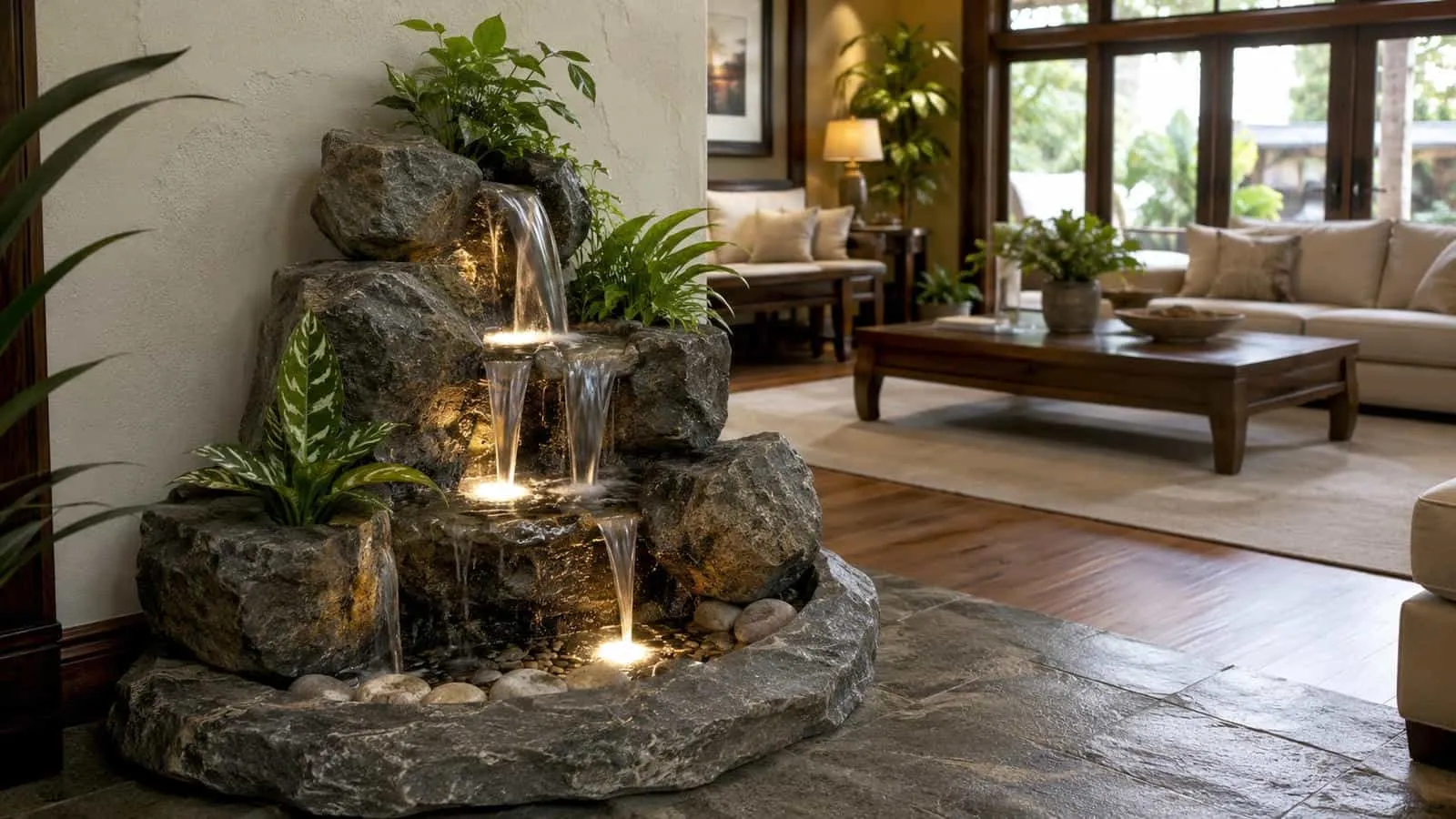
🏡⛲ An indoor water fountain feels most natural when its size, sound, material and water movement support the way a room is already used. A quiet tabletop fountain beside a reading chair creates a different experience from a tall slate wall fountain in an open entryway, while a compact Zen fountain on a home office desk can provide gentle sound without interrupting focused work. Use this guide to compare indoor fountain types, decorating styles, room placements, acoustics, materials, pumps and real household situations before choosing your interior water feature.
Explore indoor water fountain ideas for living rooms, bedrooms, offices, entryways, apartments, meditation areas and spa inspired interiors. Compare tabletop, wall mounted and freestanding fountains by decorating style, room size, water sound, furniture placement, materials, maintenance needs and buying priorities. Select any image below to explore that section of the guide.


An indoor water fountain works best when it is planned as part of the room rather than treated as an isolated decoration. Room dimensions, furniture height, walking paths, nearby seating, window light, electrical outlets, flooring and everyday cleaning habits all influence how the fountain looks, sounds and performs. The most successful designs become a natural part of daily living, creating a relaxing focal point that can be enjoyed from a favorite chair, sofa or workspace without interrupting conversation, narrowing walkways or placing water too close to electronics, valuable furniture or delicate finishes. When the fountain feels integrated into the way the room is actually used, its gentle water movement, reflected light and soothing sound become part of the home's everyday atmosphere instead of simply another decorative object.
Indoor water fountains combine moving water, interior design and sensory comfort within living rooms, bedrooms, home offices, entryways and meditation areas. Unlike garden water fountains designed for outdoor landscapes that must withstand soil, weather, sunlight and changing seasons, an interior fountain must work with furniture, wall finishes, area rugs, lighting, heating and air conditioning. A tabletop fountain may create soft bubbling beside a reading chair, while a slate wall fountain can bring reflected light and cascading water into a larger reception area or open living space.
Choosing the right indoor water fountain begins with understanding how the room is actually used. Before selecting a fountain style or size, consider the viewing angle, listening distance, floor surface, outlet location, pet access and amount of daily activity around the proposed location. Our guide to choosing the best water fountain location explains how sightlines, sound and access affect placement. A quiet bedroom may benefit from a compact fountain with adjustable flow, while an open entryway may need a taller freestanding design that remains visible beside larger furniture and higher ceilings.
Indoor conditions also change throughout the year. Winter heating can increase evaporation, summer air conditioning can affect airflow, and direct window light may encourage mineral marks or surface buildup. Dust, pet hair and decorative stones can also reach the reservoir or pump intake. Choosing a fountain that is easy to refill, wipe, disassemble and clean helps preserve steady water movement, quiet pump operation and a more attractive appearance over time.
A successful indoor water fountain supports the appearance, comfort and daily function of the room around it. The best interior fountains combine balanced scale, controlled water movement, quiet pump operation, suitable materials and practical maintenance access to create a peaceful focal point without introducing unwanted splash, vibration or clutter.
Use these design and performance principles to choose an indoor fountain that remains attractive, functional and comfortable within your home, apartment or office.
When fountain type, room placement, water sound, electrical access and maintenance needs work together, an indoor water fountain becomes more than a decorative accent. It can introduce gentle movement, natural texture, ambient sound and a calmer atmosphere into everyday spaces used for relaxing, reading, working, meditating and welcoming guests.

✅ Best For: Indoor water fountains are especially well suited to living rooms, bedrooms, entryways, home offices, apartments, condominium interiors, reading corners, yoga rooms, meditation spaces, spa inspired bathrooms and reception areas that need gentle movement, relaxing sound and a stronger natural focal point.
The best indoor fountain is not simply the most decorative design. It is the fountain that fits the room scale, produces comfortable sound, controls splash, protects nearby surfaces and remains easy to refill and clean. Begin with how the room is used, then compare tabletop, wall mounted and floor fountains by materials, size, water movement, pump access and decorating style.
Every home has different room proportions, furniture layouts, sound preferences, lighting conditions, flooring and maintenance routines. Use the scenarios below to compare indoor water fountain types, placement choices, water sounds and realistic household situations so you can select a fountain that works comfortably within your home, apartment, office or relaxation space.
Open each scenario to discover which indoor water fountain best matches your room size, decorating style, preferred water sound and everyday routine. The recommendations consider furniture spacing, viewing angles, room acoustics, electrical access, floor protection, children, pets, evaporation and realistic cleaning requirements.
Best choice: Compact tabletop fountain or low ceramic cascade
A small tabletop fountain can add gentle water movement without crowding a reading corner, side table or narrow living room area. A low ceramic or resin design usually creates a softer sound than a tall cascade, making it easier to read, relax or enjoy coffee nearby. Choose a stable fountain with controlled flow so droplets remain inside the basin and books, upholstery and wood furniture stay protected.
Choose this when you want soft background water sound within a quiet, close-range relaxation area.
Micro Recommendations: Place the fountain on a waterproof tray or protected surface slightly beyond arm’s reach, leaving enough room to refill the reservoir, remove the pump and wipe away occasional droplets.
⚠️ Common Mistake: Choosing a fountain with a tall water drop or strong pump can create more sound and splash than expected when it is positioned close to a chair, books or upholstered furniture.
Best choice: Stone-textured floor fountain or organic ceramic water feature
Living rooms with houseplants, warm wood, woven fabrics and earthy colors often benefit from a fountain with natural textures and restrained water movement. A slate-inspired cascade, ceramic vessel or stone-look freestanding fountain can support biophilic design without appearing overly formal. Soft reflections across nearby leaves and walls add visual depth, while a gentle recirculating flow introduces movement without distracting from conversation.
Choose this when you want an indoor fountain that feels connected to plants, natural materials and comfortable everyday living.
Micro Recommendations: Leave visual space around the fountain so surrounding plants do not hide the water surface, block refilling access or drop soil and leaves into the reservoir.
⚠️ Common Mistake: Crowding the fountain with too many plants, baskets and decorative objects can reduce airflow, complicate cleaning and make the water feature disappear within the room.
Best choice: Slim wall fountain or sculptural freestanding waterfall
A modern entryway benefits from an indoor fountain that supports clean geometry, open walking space and a clear arrival view. A glass, slate or stainless steel wall water fountain for modern entryways and architectural feature walls can create vertical movement without using valuable floor area, while a narrow freestanding waterfall can anchor an empty corner beside an entry console. Integrated lighting may enhance the water after dark, but the brightness should remain soft enough to complement rather than overpower the foyer.
Choose this when you want a polished interior focal point that creates movement without cluttering the entrance.
Micro Recommendations: Confirm wall structure, outlet location, fountain weight and basin access before installation. Keep the lowest water surface away from swinging doors, footwear storage and busy walking paths.
⚠️ Common Mistake: Installing a large wall fountain without checking structural support, cord routing or basin access can create expensive installation problems and make routine maintenance unnecessarily difficult.
Best choice: Stable enclosed fountain with controlled flow and secured decorative pieces
An indoor fountain in a family home should prioritize stability, protected wiring and limited access to small decorative stones. A broad-based floor fountain, enclosed wall design or sturdy tabletop model placed beyond easy reach can provide relaxing water movement without becoming a tipping or choking concern. Low splash and a covered or narrow reservoir also reduce the chance of pets drinking from the basin or children reaching the pump.
Choose this when household safety and practical supervision matter as much as appearance and sound.
Micro Recommendations: Anchor taller fountains when appropriate, conceal cords with approved cord management and avoid water treatments that could be harmful if pets gain access to the basin.
⚠️ Common Mistake: Assuming a lightweight tabletop fountain is safe because it is small can lead to spills if a child, cat or dog can easily pull the cord or reach the basin.
Best choice: Zen tabletop fountain or low natural stone cascade
Meditation and yoga spaces usually benefit from consistent, gentle water sound rather than dramatic splashing. A Zen fountain with pebbles, bamboo-inspired details or a low stone cascade can introduce soft movement and natural texture without visually overwhelming the room. Adjustable flow is especially useful because it allows the sound to be reduced during breathing exercises, quiet reflection or guided meditation.
Choose this when you want subtle water movement that supports mindfulness, slower breathing and a peaceful atmosphere.
Micro Recommendations: Position the fountain outside the main movement area and test it from the floor or meditation cushion. The pump should remain quieter than the water itself.
⚠️ Common Mistake: Selecting a fountain because it looks peaceful without listening to the pump can introduce vibration or mechanical hum that becomes distracting during quiet meditation.
Best choice: Quiet desktop fountain with adjustable recirculating flow
A home office fountain should provide enough ambient sound to soften nearby household noise without interfering with phone calls, concentration or online meetings. A compact desktop or console fountain with a short water drop usually produces a smoother sound than a tall waterfall. Place it away from computers, charging cables, paperwork and microphones, and choose a pump that remains quiet when the water level begins to fall.
Choose this when you want gentle sound masking that supports focused work without becoming another source of distraction.
Micro Recommendations: Test the fountain during a video call and position it outside the direct pickup range of your microphone. Use a waterproof base if it sits on wood or laminate furniture.
⚠️ Common Mistake: Placing a fountain directly beside a computer monitor, keyboard or power strip increases the consequences of an accidental spill and may amplify pump vibration through the desk.
Best choice: Tall wall waterfall or substantial freestanding fountain
A large interior needs enough fountain height, visible water movement and material contrast to hold attention from across the room. A tall slate wall fountain, glass waterfall or substantial freestanding design can anchor an open living room, reception desk, dining area or high-ceilinged foyer. Stronger circulation may provide broader acoustic reach, although rugs, curtains, furniture and open doorways will affect how the sound travels.
Choose this when you need an indoor water feature with enough scale and presence to balance a spacious room.
Micro Recommendations: Evaluate the fountain from the main doorway, seating area and nearby hallway before installation. Confirm that the room can support its visual weight, water sound and service requirements.
⚠️ Common Mistake: Choosing a fountain that is too small for a large room can make the feature look temporary or decorative rather than becoming the intended architectural focal point.
Best choice: Lightweight tabletop fountain or compact freestanding design
Renters and small-space homeowners often need a fountain that adds sound and visual interest without permanent wall installation. A lightweight tabletop fountain, narrow floor fountain or compact ceramic water feature can fit on a console, shelf or protected corner while remaining easy to move. Quiet operation, contained water flow and simple cord placement are especially important when furniture, neighbors and living areas are close together.
Choose this when portability, limited floor space and non-permanent installation are central to the decision.
Micro Recommendations: Use a waterproof mat beneath the fountain, preserve the landlord’s wall and flooring surfaces, and choose a location where the cord does not cross a doorway or shared walking path.
⚠️ Common Mistake: Buying a heavy floor fountain for a rental without considering stairs, elevator access, flooring limits or future relocation can make installation and moving far more difficult.
| 🏡 Interior Goal | ⛲ Recommended Fountain Type | 🎧 Water Sound and Flow | Room Placement and Performance | Buyer Guidance and Planning Insight |
|---|---|---|---|---|
| ✨ Architectural Living Room Focal Point | A slate wall fountain, glass waterfall or substantial freestanding fountain creates vertical movement and visual presence. | A smooth cascade produces layered sound that can travel across an open room without the sharper notes of exposed splashing. | Place it on an open wall or in a spacious corner where furniture, artwork and walking paths do not compete with the water feature. | Best for homeowners seeking a high-impact indoor fountain that supports modern, transitional or luxury interior design. |
| 🪴 Natural and Biophilic Living Space | A stone-textured cascade, ceramic vessel fountain or organic freestanding design blends with plants and warm natural materials. | Gentle bubbling or low cascading water creates soft movement that complements rustling leaves, quiet conversation and everyday relaxation. | Position it near houseplants, wood furniture or natural light while preserving refill access and preventing soil or leaves from entering the basin. | Well suited to people who want a home water feature that strengthens a connection to nature without making the room feel overly formal. |
| 🧘 Meditation, Yoga and Mindfulness | A Zen tabletop fountain, pebble basin or low natural stone cascade provides calm visual texture within a compact footprint. | Soft trickling or gentle bubbling supports quiet breathing and reflection without distracting from meditation or guided practice. | Place it beyond the main movement area where it remains visible from a cushion, yoga mat or comfortable floor chair. | Ideal for buyers seeking a meditation fountain with adjustable flow, quiet pump performance and a simple natural appearance. |
| 💻 Focused and Productive Home Office | A compact desktop fountain or small console fountain adds water movement without using valuable work space. | A low, continuous trickle can soften household noise while remaining controlled enough for calls, recordings and concentration. | Keep it away from computers, paperwork, microphones and power strips while using a protected surface beneath the basin. | Frequently chosen by remote workers who want light sound masking and a calmer work atmosphere without a large decorative feature. |
| 🌙 Quiet Bedroom Relaxation | A compact ceramic, resin or enclosed tabletop fountain with adjustable flow provides the greatest control over nighttime sound. | Short water drops and gentle bubbling create quieter tones that are less likely to interrupt sleep or become repetitive at close range. | Position it away from bedding, electronics and direct airflow from heating or air-conditioning vents. | Best for people who enjoy soft water sounds at night and are willing to test the fountain before making it part of their regular sleep environment. |
| 🏙️ Small Apartment or Rental Home | A lightweight tabletop fountain, narrow floor fountain or portable ceramic water feature adds interest without permanent installation. | Quiet bubbling or a contained trickle creates ambience without carrying excessive sound through smaller rooms or shared walls. | Use it on a stable waterproof surface near an outlet where cords do not cross doorways, rugs or narrow walking paths. | Ideal for renters seeking a compact indoor fountain that can be moved easily and does not require drilling or structural changes. |
| Indoor fountain summary: The best indoor water fountain should match the room size, decorating style, sound preference and maintenance routine. Wall fountains and substantial floor designs create stronger architectural presence, while tabletop, Zen and ceramic fountains provide gentler ambience for bedrooms, offices, apartments and meditation areas. Thoughtful placement protects flooring, limits splash, keeps cords safe and makes refilling and pump cleaning easier. | ||||
Indoor water fountains can introduce movement, reflected light, ambient sound and natural texture into homes, apartments and professional interiors. They can also require routine refilling, pump cleaning, electrical planning and careful placement around furniture, floors, children and pets. Comparing the main benefits and realistic tradeoffs can help you decide whether an indoor fountain suits your room, lifestyle and maintenance preferences.
| Benefits of Indoor Water Fountains | Limitations and Practical Tradeoffs |
|---|---|
|
|
| Indoor Fountain Tip: Position the fountain where it can be seen and heard from the intended seating or work area while preserving enough space for refilling, cleaning and pump removal. The strongest indoor fountain designs balance appearance, sound, splash control, electrical safety and convenient maintenance. | |
💡 Comparison Tip: Evaluate the fountain at actual room scale. A design that appears substantial in a product photograph may look undersized beside a large sectional, high ceiling or open wall, while the same fountain may overwhelm a narrow bedroom or apartment corner.
Section Summary Snapshot: Comparing indoor water fountains by room purpose, sound, placement and maintenance reveals which design will feel comfortable over time. Wall waterfalls and large floor fountains create stronger visual presence, while tabletop, Zen and ceramic fountains suit offices, bedrooms, apartments and smaller relaxation spaces. The best choice combines balanced scale, controlled water flow, quiet operation, safe electrical access and practical cleaning.
Modern indoor water fountains use simple geometry, smooth surfaces and controlled water flow to create movement without visual clutter. Glass waterfalls, stainless steel wall fountains, slate panels and narrow freestanding designs work especially well in contemporary living rooms, entryways, offices and open interiors with clean furniture lines.
Problem A decorative fountain can make a modern room feel busy, dated or disconnected from the surrounding furniture.
Why it happens Contemporary interiors depend on clean lines, restrained color palettes and uncluttered surfaces. Ornate shapes, artificial rock textures and excessive decoration can interrupt that visual order.
Solution Choose a slim fountain with simple geometry, concealed pump components, limited ornament and a finish that repeats nearby metal, glass, stone or wood accents.
Modern indoor fountains should appear intentional and architectural rather than ornamental. A wall mounted glass waterfall can turn an unused wall into a moving focal point, while a narrow slate or stainless steel fountain can add vertical interest beside a console, staircase or seating area. The water should flow in a smooth sheet, controlled cascade or restrained trickle that supports the room without creating excessive splash or noise.
Match the fountain finish to existing room details such as black window frames, brushed metal lighting, stone countertops, glass tables or warm wood cabinetry. Keep cords hidden, preserve open walking space and avoid surrounding the fountain with too many small accessories. One carefully selected plant, sculpture or floor light is often enough to complete a polished contemporary display.
🏙️ Modern Interior Tip: Repeat one fountain material elsewhere in the room. A stainless steel fountain feels more connected when the same finish appears in lighting, cabinet hardware, table legs or decorative accents.
Traditional indoor water fountains use familiar materials, balanced shapes and warm finishes to complement classic furniture and established room design. Stone-look fountains, carved basins, ceramic vessels, pedestal forms and bronze accents work well in formal living rooms, libraries, entryways and traditional home offices.
Problem A highly modern fountain can feel cold or misplaced in a room filled with carved wood, traditional upholstery and warm architectural details.
Why it happens Traditional interiors rely on visual continuity, familiar proportions and materials that appear substantial. Sharp glass panels and highly polished contemporary forms may conflict with that established character.
Solution Select a fountain with stone texture, ceramic surfaces, bronze details or a classic basin shape, then coordinate it with nearby wood tones, artwork, lamps and furniture.
Traditional indoor fountains should add graceful movement without making the room feel like an outdoor courtyard. Compact pedestal fountains, carved wall basins, aged bronze cascades and ceramic vessel fountains can introduce classical character while remaining appropriate for residential interiors. Warm stone colors, muted glazes and softly aged finishes often blend more naturally than bright chrome or highly reflective glass.
Place the fountain where it supports an existing focal point rather than competing with a fireplace, large artwork or formal furniture grouping. An entryway alcove, library corner or open area beside a console may provide enough visual breathing room. Use a waterproof surface beneath the fountain and leave one side accessible so the basin and pump can be cleaned without moving heavy furniture.
🏛️ Traditional Interior Tip: A fountain does not need ornate carving to feel traditional. Balanced proportions, warm materials and a gently aged finish usually create a more timeless result than excessive decorative detail.
Natural indoor water fountains combine flowing water with stone, ceramic, wood tones and houseplants to strengthen biophilic interior design. Low rock cascades, organic ceramic fountains and slate water features add movement and gentle sound while complementing living rooms, sunrooms, reading corners and nature inspired home offices.
Problem A fountain may look artificial when it uses shiny synthetic finishes or is placed among plants without considering scale and maintenance.
Why it happens Biophilic rooms depend on believable natural relationships between water, plants, stone, light and texture. A mismatched finish or crowded arrangement weakens that connection.
Solution Choose stone-textured, ceramic or slate fountains, repeat natural materials throughout the room and leave enough open space to see the water and maintain the reservoir.
Natural indoor fountains work especially well in rooms that already include houseplants, woven fabrics, wood furniture and soft earth tones. A low stone cascade can create a grounded focal point near a reading chair, while a ceramic bowl fountain may sit comfortably on a console beneath a botanical print. The water should appear to move through or across the material rather than shoot upward in an artificial spray.
Arrange plants around the fountain in layers, but do not allow leaves to hang directly over the basin. Soil, dry foliage and fertilizer residue can enter the water and restrict the pump. Use low plants beside the fountain, taller plants behind it and a waterproof tray beneath any tabletop design to protect wood, laminate and painted furniture.
🪴 Biophilic Design Tip: Combine three natural elements rather than many small decorations. Flowing water, one strong plant grouping and repeated wood or stone textures usually create a calmer and more believable nature inspired room.
Spa inspired indoor fountains use gentle water sound, restrained colors and easy-clean materials to create a calmer bathroom or wellness space. Compact ceramic cascades, smooth stone fountains and quiet wall features pair well with towels, candles, plants and natural textures when protected outlets, ventilation and splash control are carefully planned.
Problem A bathroom fountain can add unwanted clutter, moisture or electrical concerns when it is placed without considering the room’s wet zones.
Why it happens Bathrooms already contain water, humidity and limited counter space. An unsuitable fountain may compete with daily routines or sit too close to sinks, tubs and unprotected electrical connections.
Solution Choose a compact, low-splash fountain, place it outside direct wet areas and use only suitable protected electrical access that follows local safety requirements.
A spa fountain should create a soft sensory background rather than dominate the bathroom. Smooth ceramic, matte stone and pale resin finishes often coordinate with tile, towels and wood accents more naturally than bright decorative colors. Short water drops produce gentle sound and reduce airborne droplets, making them better suited to compact home bathrooms and wellness rooms.
Place the fountain on a stable shelf, vanity extension or protected floor area where it does not interfere with toiletries and daily movement. Avoid placing electrical components beside a bathtub, shower or sink splash zone. Good ventilation, regular cleaning and careful water-level checks help prevent odors, residue and excessive moisture around the fountain.
🛁 Spa Room Tip: Choose a fountain sound that remains pleasant with the bathroom door closed. Hard tile, mirrors and glass can amplify water more than soft living room surfaces.
Zen indoor water fountains use simple forms, natural textures and quiet recirculating water to support meditation and relaxation. Pebble basins, low stone cascades, bamboo-inspired spouts and minimalist ceramic fountains work best when paired with open space, restrained decor and a pump that remains quieter than the water.
Problem A meditation fountain can become distracting when it has bright lights, loud splashing, artificial decoration or noticeable pump vibration.
Why it happens Quiet rooms make mechanical sounds and repetitive water impacts easier to hear. Too many visual elements can also compete with the calm simplicity needed for focused breathing and reflection.
Solution Select a low fountain with adjustable flow, simple materials and a quiet pump, then place it beyond the main meditation or yoga movement area.
Zen fountains should support attention rather than demand it. A small ceramic basin with smooth pebbles, a low stacked-stone cascade or a bamboo-inspired trickle can provide enough movement to soften the room without creating a strong decorative display. Neutral colors, natural materials and limited ornament help preserve visual calm.
Listen to the fountain from the actual meditation position before deciding on its final location. Water that sounds soft while standing beside the fountain may become too repetitive from a floor cushion several feet away. Place the unit on a stable level surface, adjust the pump to its lowest useful flow and make sure decorative stones cannot shift into the pump intake.
🧘 Zen Fountain Tip: The pump should disappear beneath the sound of the water. If mechanical humming remains noticeable after the reservoir is full and the pump is positioned correctly, the fountain may not be suitable for a very quiet meditation space.
Luxury indoor water fountains use substantial scale, refined materials and integrated lighting to create architectural focal points. Large slate walls, glass waterfalls, metal panels and custom freestanding fountains suit spacious entryways, great rooms, reception areas and commercial interiors when structural support, drainage, electrical access and professional installation are planned in advance.
Problem A large indoor fountain can overwhelm the room, produce too much sound or create difficult maintenance when selected only for visual impact.
Why it happens Architectural fountains involve greater weight, water volume, sound projection and installation complexity than small residential designs.
Solution Compare room dimensions, wall support, floor loading, acoustic surfaces, service access and outlet placement before choosing the fountain size and material.
A luxury fountain should feel integrated into the architecture instead of added after the room is furnished. Floor-to-wall slate waterfalls, illuminated glass panels and custom metal fountains can create a memorable arrival experience in an entryway or reception area. Natural stone offers visual weight and texture, glass creates light and transparency, and metal can support contemporary or industrial interiors.
Large fountains need more than an attractive location. Confirm structural support, water containment, pump access, electrical routing and the path required for delivery. Hard floors and high ceilings may amplify water sound, while rugs, upholstered furniture and acoustic panels can soften it. A professional installer may be appropriate for heavy wall mounted or custom-built systems.
💎 Luxury Fountain Tip: Evaluate the fountain when the room is quiet. A large water wall may look perfectly scaled but produce more sound than expected across stone floors, glass walls and high ceilings.
Section Summary Snapshot: Choosing an indoor water fountain style begins with the room rather than the fountain alone. Modern interiors benefit from clean geometry and controlled cascades, traditional rooms suit warm stone and ceramic forms, natural spaces rely on organic texture, spa rooms need contained flow, Zen areas require quiet simplicity and luxury interiors demand careful scale, structural planning and service access.
Choosing an indoor water fountain can feel difficult because tabletop cascades, wall waterfalls, floor fountains and decorative Zen designs can all look appealing in product photographs. A more dependable approach is to begin with the room itself. A bedroom needs different sound and lighting than an entryway, while a home office has different placement concerns than a large living room or reception area.
Instead of selecting a fountain only by appearance, define the experience you want it to create. Consider whether the water will support reading, focused work, meditation, conversation or a strong decorative statement. Room acoustics, viewing distance, furniture arrangement, flooring, electrical access, pets, children and cleaning requirements all influence which fountain type will provide the greatest long-term satisfaction.
If you are still comparing designs, our complete guide to water fountain types and styles explains how popular fountain forms differ. The right interior fountain should continue fitting the room after furniture changes, plants grow and daily routines evolve. It should remain easy to refill, quiet enough for its purpose and safe around nearby surfaces and electrical equipment.
Use the comparisons below to narrow the choices through realistic household priorities rather than decorative style alone. This decision process helps match the fountain to the way the room is actually occupied, heard, cleaned and enjoyed every day.
Choosing the right indoor fountain means matching the water feature to your room proportions, furniture layout, sound preference and maintenance expectations. The strongest fountain types provide visible movement and comfortable ambience while preserving safe electrical access, protected surfaces and enough space to refill and clean the reservoir.
| 🏡 Interior Priority | ⛲ Recommended Fountain Type | 🎧 Why It Performs Well | 👤 Best For People Who... |
|---|---|---|---|
| Create a strong architectural focal point across a large room | Wall Mounted Fountain | A vertical panel creates visible cascading water while preserving floor space. Slate, glass and metal surfaces can also add reflected light, texture and stronger sound coverage across open interiors. | Want a statement water feature for a living room, entryway, reception area or high-ceilinged interior and are prepared to plan wall support and installation. |
| Add gentle sound to a desk, console or bedside surface | Tabletop Fountain | Compact dimensions, short water drops and self-contained reservoirs provide quiet movement without requiring permanent installation or substantial floor space. | Need a portable fountain for an apartment, bedroom, office, reading corner or small meditation area. |
| Create a peaceful meditation or relaxation setting | Zen or Pebble Fountain | Low cascading water, simple materials and adjustable flow can support mindfulness while avoiding the stronger sound and visual presence of a large waterfall. | Prefer restrained natural design, soft water sound and a fountain that works beside a yoga mat, meditation cushion or quiet chair. |
| Establish a decorative focal point without mounting hardware | Freestanding Floor Fountain | A vertical floor design offers more presence than a tabletop fountain while remaining movable. It can fill an empty corner, balance large furniture and create water movement at eye level. | Want a substantial living room or entryway feature but do not want to attach a heavy fountain permanently to the wall. |
| Complement natural materials and houseplants | Ceramic or Stone-Textured Fountain | Organic surfaces, earthy colors and gentle bubbling coordinate naturally with wood, plants, woven textiles and biophilic interior design. | Want an indoor fountain that feels warm, relaxed and connected to natural home decor rather than highly architectural. |
| Add refined movement and light to a modern interior | Glass Waterfall Fountain | Water moving across glass creates reflections and vertical motion while maintaining a light visual profile. Integrated lighting can make the water more visible in the evening. | Prefer contemporary styling and have enough room to manage cleaning, fingerprints, mineral deposits and installation requirements. |
| 🏡 The best indoor fountain type is rarely determined by appearance alone. Matching the design to room size, furniture, sound preferences, electrical access, surface protection and maintenance expectations creates a water feature that remains comfortable and useful. When scale, water movement and daily care work together, an indoor fountain feels integrated into the home rather than temporarily added to it. | |||

| 🏡 Room Size | ⛲ Recommended Indoor Fountain Types | 🎯 Why They Work Best |
|---|---|---|
| 🏙️ Small Rooms and Apartments | Tabletop fountains, desktop fountains, compact ceramic cascades and narrow freestanding fountains | These designs preserve floor and surface space while adding controlled water movement and softer sound. They can be moved easily and generally require no permanent wall installation. |
| 🛋️ Medium Living Rooms and Offices | Medium floor fountains, console fountains, stone-textured cascades and compact wall fountains | They create enough presence to balance sofas, desks and wall decor while maintaining comfortable listening distance and accessible maintenance. |
| 🏢 Large Rooms and Open Interiors | Tall wall fountains, glass waterfalls, substantial freestanding fountains and architectural water walls | Larger fountains provide stronger visual movement and broader sound coverage, helping the feature remain proportionate beside high ceilings, large furniture and open floor plans. |
| 🏡 Matching an indoor fountain to room scale creates better visual balance, more comfortable water sound and safer movement around furniture. A fountain should feel substantial enough to be noticed without narrowing pathways, crowding surfaces or becoming louder than the room’s purpose allows. | ||
| 🏡 Your Indoor Lifestyle | ⛲ Indoor Fountain Recommendation |
|---|---|
| ☕ Enjoy quiet mornings, reading or peaceful reflection | Choose a small tabletop or ceramic fountain with a short water drop and adjustable flow. Position it near a reading chair or breakfast area where the water remains audible without dominating the room. |
| 🎉 Frequently entertain family and guests | Select a medium floor or wall fountain that provides attractive background movement while keeping water sound below normal conversation level. |
| 💻 Work from a home office | Look for a quiet desktop fountain with controlled circulation and minimal pump vibration. Keep it away from computers, microphones, paperwork and electrical power strips. |
| 🧘 Practice meditation, yoga or mindfulness | Choose a Zen or low stone fountain with gentle, consistent water movement and adjustable pump flow. Test the sound from the actual meditation position before deciding on placement. |
| 🧹 Prefer simple maintenance | Select a self-contained fountain with a wide reservoir opening, removable pump and uncomplicated water path. Smooth ceramic, glass and sealed surfaces are generally easier to wipe than deeply textured designs. |
| 🐾 Share the home with pets or young children | Choose a stable fountain with enclosed water areas, secured decorative pieces and protected cords. Avoid lightweight designs that can be tipped or pulled from a surface. |
| 🌙 Want gentle water sound in a bedroom | Select a compact fountain with a quiet pump, low splash and adjustable flow. Test it during sleep before making overnight operation part of your regular routine. |
| 🏡 The best indoor fountain supports your daily routine as much as your decorating style. Matching water sound, placement, maintenance effort, household safety and room purpose creates a feature that continues to feel relaxing and practical rather than becoming an inconvenience. | |

A well-planned indoor fountain should continue improving the room long after installation day. Planning for furniture changes, evaporation, mineral buildup, pump access, household activity and electrical safety creates a water feature that remains attractive, quiet and manageable instead of becoming difficult to maintain.
Use these practical planning principles to choose an indoor fountain that continues working comfortably as your home and routines change.
Choosing an indoor fountain with long-term use in mind creates a room that feels peaceful, coordinated and easier to maintain. By balancing sound, placement, surface protection, electrical access and routine care, the fountain can remain a dependable part of everyday living rather than a decoration that becomes difficult to operate.
Section Summary Snapshot: Choosing the right indoor fountain is less about selecting the most decorative design and more about matching the fountain to room size, sound preferences, furniture, maintenance and everyday routines. Tabletop fountains suit compact areas, floor fountains create stronger focal points and wall fountains preserve floor space. The best choice remains quiet, accessible, safely powered and visually balanced over time.
If a compact indoor fountain is the best fit for your home, explore our complete tabletop water fountain room guide to compare furniture placement, room size, water sound, decorating ideas, materials, maintenance and everyday usability before choosing the right design.

A beautiful indoor fountain rarely succeeds because of the water feature alone. The surrounding furniture, plants, lighting, wall color and decorative materials determine whether it feels integrated with the room or simply placed on an available surface. Layering nearby decor by height, texture and function creates a stronger focal point while preserving open space around the moving water.
Interior fountain styling must also account for conditions that do not exist in an outdoor landscape. Leaves can fall into the reservoir, potting soil can reach the pump and wood furniture may show mineral marks or moisture rings. Thoughtful spacing, waterproof protection and restrained accessories help the fountain look natural without making daily care more difficult.
Use this indoor fountain decorating guide to compare houseplants, lighting, natural materials, artwork and furniture arrangements that frame moving water without hiding the fountain or interfering with maintenance.
| 🪴 Indoor Fountain Styling Area | ✨ Best Decor and Plants | ⛲ How the Combination Improves the Fountain | 💧 Placement and Maintenance Guidance |
|---|---|---|---|
| 🌱 Low Decor Beside a Tabletop Fountain | Small ferns, peperomia, fittonia, compact succulents, smooth stones and a simple waterproof tray. | Low accessories soften the fountain base without covering the basin, water path, lighting or decorative details. | Keep leaves below the water outlet and preserve enough open space to lift the fountain, refill the reservoir and remove the pump. |
| 🪴 Medium Plants Beside a Floor Fountain | Calathea, peace lily, medium snake plants, parlor palms and compact dracaena varieties. | Medium foliage adds height, movement and natural texture while helping a freestanding fountain feel connected to the room. | Position plant pots far enough away that soil, drainage water and falling leaves cannot enter the fountain basin. |
| 🌿 Tall Plants Behind an Indoor Fountain | Fiddle-leaf fig, kentia palm, tall snake plant, rubber plant or slender artificial greenery where live plants are unsuitable. | Taller plants create a background layer that frames the water feature and adds scale beside large furniture or open walls. | Check mature width as well as height so the plant does not hide the fountain, press against the wall or block access to the outlet. |
| 🪨 Natural Materials Around a Zen Fountain | River pebbles, bamboo-inspired accessories, ceramic trays, woven baskets and light wood accents. | Repeated natural textures create visual continuity and help a meditation fountain feel calm, simple and intentionally styled. | Avoid placing loose stones where they can fall into the pump intake or shift beneath a tabletop fountain and make it unstable. |
| 💡 Lighting for Wall and Floor Fountains | Warm floor lamps, concealed accent lighting, soft wall washers and low-glare integrated fountain lights. | Carefully placed lighting reveals moving water, emphasizes surface texture and creates reflected highlights during evening use. | Avoid direct glare on glass and keep electrical connections, lamp cords and power strips safely separated from the basin. |
| 🖼️ Artwork Behind a Tabletop Fountain | Botanical prints, abstract natural forms, muted landscapes and simple textured wall art. | Artwork creates a visual backdrop that helps a small fountain feel more substantial and connected to the overall room design. | Use moisture-resistant framing where needed and keep valuable paper artwork beyond the reach of fine droplets or accidental spills. |
| 🛋️ Furniture Beside a Living Room Fountain | Console tables, reading chairs, small benches, closed storage cabinets and narrow side tables. | Furniture establishes the fountain as part of a usable room arrangement rather than an isolated decorative object. | Keep upholstered furniture outside the splash range and preserve enough clearance to clean behind and beneath the fountain. |
| 🧘 Meditation Decor Around a Fountain | Floor cushions, yoga mats, a single candle holder, neutral textiles and one restrained plant grouping. | Limited decor supports visual calm while allowing the sound and movement of the water to remain the primary sensory feature. | Keep fabrics and open flames away from water, electrical cords and any area where the fountain may need to be moved. |
| 🪴 The best decor around an indoor fountain uses low accessories near the basin, medium plants beside the feature and taller foliage or artwork behind it. Coordinate materials with the room while preserving clear access, protected surfaces and open sightlines so the fountain remains attractive, visible and easy to maintain. | |||
🌱 Interior Styling Tip: Arrange surrounding decor according to its mature or finished size rather than how it looks on styling day. A houseplant may spread across the fountain, while books, baskets and accessories can slowly crowd pump access. Preserve one clear viewing side and one unobstructed maintenance side.
Section Summary Snapshot: Decorating around an indoor fountain works best when plants, lighting, furniture and natural materials support the water feature without crowding it. Layering decor by height keeps moving water visible while surface protection, cord safety and open pump access simplify maintenance. The strongest arrangement feels connected to the room and remains practical as plants grow and furnishings change.
Room layout shapes how an indoor fountain is discovered and experienced. A fountain placed directly within the first sightline creates an immediate focal point, while a feature positioned beyond a doorway, furniture grouping or interior corner can reveal its water movement gradually as someone enters the room.
This controlled reveal adds depth without using more furniture or decoration. Place the fountain where its movement can attract attention without narrowing a hallway, blocking a cabinet or forcing people to step around the basin.
Seating should be close enough for the water to sound relaxing but far enough to avoid fine droplets and repetitive noise. Tabletop fountains work well beside reading chairs and home office seating, while taller cascades often require greater distance because their water sound projects across a wider area.
Views from connected rooms also matter. A fountain visible from a kitchen, dining room, hallway or staircase can provide moving light and visual interest even when the main room is not occupied.
Check the proposed location with furniture in everyday positions, doors open and closed and normal lighting in place. The strongest fountain location remains visible, safely powered and easy to maintain from more than one direction.
| 🏡 Indoor Viewing Location | ⛲ Best Fountain Placement | 👀 Viewing and Sound Experience | 💡 Interior Planning Guidance |
|---|---|---|---|
| Living Room Seating Area | Position a floor or wall fountain beyond the edge of the main furniture grouping where it remains visible without sitting directly beside the sofa. | The water creates a relaxing background layer during reading, conversation and quiet evenings. | Test the sound from every primary seat and keep upholstery, area rugs and wood furniture outside the splash range. |
| Reading Chair or Quiet Corner | Place a compact tabletop or ceramic fountain on a stable side table or console slightly beyond arm’s reach. | Gentle close-range sound can support reading and relaxation without needing a large architectural feature. | Use a waterproof tray and keep books, lamps, charging cables and fabric furnishings away from the basin. |
| Entryway or Foyer | Use a narrow wall fountain or stable floor fountain beside an entry console or on an open wall visible from the door. | Moving water creates a memorable arrival view and can make the entrance feel calmer and more intentional. | Preserve enough room for doors, coats, footwear and visitor movement while preventing cords from crossing the entrance. |
| Hallway or Room Transition | Place a slim fountain at the end of a hallway or in a wider transition area where it creates a visual destination. | The fountain draws the eye through the home and creates changing sound as people move toward or away from it. | Confirm that the feature does not reduce required walking clearance or interfere with doorways and storage access. |
| Home Office | Position a quiet tabletop fountain on a separate console or protected shelf rather than directly beside the computer. | Controlled water sound may soften nearby household activity without interfering with concentrated work. | Test the fountain during calls and keep it away from microphones, documents, keyboards and power strips. |
| Bedroom | Place a compact low-flow fountain across the room or on a protected surface away from the bed and electronics. | Gentle water movement may create a calmer evening atmosphere when the sound remains soft and consistent. | Avoid direct airflow from vents, confirm overnight comfort and turn the fountain off when operation is not desired. |
| Dining Room | Position the fountain against a side wall or in an open corner where it can be viewed without competing with the table. | Water reflections and soft sound can add ambience during meals while creating interest between dining occasions. | Keep the water volume below conversation level and protect nearby wood cabinetry, linens and wall finishes. |
| View from an Adjoining Room | Align the fountain with an open doorway, archway or frequently used interior sightline. | Visible water movement can be enjoyed from more than one room and makes the feature feel more connected to the home. | Check the alignment while seated and standing because furniture and doorway angles can change the view significantly. |
| 🛋️ The strongest indoor fountain locations connect seating, entrances, hallways and adjoining room views into one comfortable interior experience. A well-positioned fountain remains visible without blocking movement, produces appropriate sound from occupied areas and preserves safe electrical access, protected surfaces and an open maintenance route. | |||
👣 Walk through the Room Before Installation: Follow the normal paths between doors, furniture, seating and storage. Sit in every chair and view the location from nearby rooms. The strongest position improves several views without creating a cord hazard or narrowing circulation.
👀 Plan for Changing Room Sightlines: Consider how future furniture arrangements, growing houseplants and seasonal decor may affect the fountain. Preserve one clear viewing opening and one practical service route so the feature stays visible and accessible.
🎧 Test the Sound at Real Listening Distance: A fountain that sounds gentle while standing beside it may be louder from a corner where sound reflects off walls. Evaluate it with the room quiet, during conversation and while normal household equipment is running.
💧 Check Splash Before Final Placement: Run the fountain at its intended flow for several hours and inspect nearby floors, furniture and walls for fine droplets. Adjust the pump or decorative stones before committing to the location.
Section Summary Snapshot: Thoughtful indoor fountain placement connects seating, entryways, hallways and adjoining rooms into one peaceful home experience. Clear sightlines, controlled water sound, protected surfaces and open walking space make the fountain easier to enjoy from several directions. Planning for furniture changes, splash distance, cord safety and maintenance access keeps the feature attractive and practical over time.
Indoor fountain sound strongly influences how a room feels. A soft tabletop bubbler can create a peaceful reading corner, while a broader wall cascade may fill a living room or reception area with more noticeable water movement. The strongest choice is not automatically the loudest fountain. Sound should remain appropriate for conversation, work, meditation, television, reading and sleep.
Water-drop height has a direct effect on acoustic character. Water moving a short distance across a smooth surface generally produces a rounded trickle, while water falling into a shallow basin creates brighter, sharper splash notes. A wide sheet of water produces a fuller sound because more water reaches the receiving surface at the same time.
The reservoir also affects the result. Low water can create hollow splashing and expose part of the pump, while the correct water depth supports smoother circulation and reduces mechanical noise. Decorative stones can soften the landing point, but loose pieces may also create rattling if they touch the pump or tubing.
Listening distance matters more indoors because walls and ceilings contain the sound. Gentle bubbling may feel barely noticeable from across a large living room but surprisingly prominent beside a bed or desk. A fountain should be evaluated from the position where people will actually sit, work, meditate or sleep.
Indoor water sounds change with pump output, water-drop distance, fountain material and the shape of the receiving basin. Comparing quiet bubbling, smooth trickling, layered cascading, vertical water-wall flow and stronger waterfall movement helps match the fountain to the room’s purpose. The best acoustic choice feels natural at the intended listening distance and remains comfortable during normal household activity.
| 💧 Water Movement | 🎧 Acoustic Character | 🏡 Best Indoor Placement | 🗣️ Conversation and Activity Comfort | 👤 Best For |
|---|---|---|---|---|
| Soft bubbling moves water gently at the surface with little drop height and limited airborne splash. | Quiet, rounded and close-range sound with minimal projection across the room. | Reading corners, small bedrooms, desks, meditation areas and compact apartment spaces. | Excellent near quiet conversation because it usually remains below normal speaking volume. | People seeking a subtle indoor fountain that adds movement without becoming the dominant sound in the room. |
| Gentle trickling follows a short channel, vessel edge or textured surface before returning to the basin. | Continuous flowing notes with a slightly brighter rhythm than bubbling but limited sharp splashing. | Home offices, console tables, living rooms, yoga spaces and quiet entryways. | Comfortable for reading, focused work and everyday conversation when the pump flow remains moderate. | Homeowners who want clearly audible water movement without the intensity of a larger cascade. |
| Layered cascading moves water through several bowls, ledges or spillways. | Multiple overlapping tones create depth, rhythm and a fuller indoor soundscape. | Medium living rooms, larger offices, reception areas and spacious relaxation rooms. | Best when the fountain sits beyond the immediate conversation zone so the layered sound remains atmospheric. | People comparing decorative indoor fountains that provide both visual movement and noticeable ambient sound. |
| Water-wall flow moves in a broad, controlled sheet across glass, slate or metal. | Smooth, continuous sound with broad coverage and less isolated splashing when water remains evenly distributed. | Entryways, open living rooms, professional interiors, dining rooms and large home offices. | Comfortable when the flow is balanced and the receiving basin prevents harsh impact noise. | Buyers seeking a modern indoor fountain that combines architectural presence with consistent background water sound. |
| Strong waterfall flow moves a larger volume of water across a greater vertical distance. | Full, energetic water sound with greater projection and stronger low and high frequencies. | Large foyers, great rooms, commercial reception areas and spacious interiors with substantial acoustic volume. | Requires greater distance from seating, dining and work areas to prevent the sound from competing with voices. | People who want immersive water sound and have enough room to manage its scale, moisture, installation and maintenance. |
| 🎧 Choosing the right indoor fountain sound requires matching water movement to room size, listening distance and everyday activities. Soft bubbling and gentle trickling suit bedrooms, offices and reading areas, while layered cascades and water walls create broader ambience in larger interiors. A balanced fountain should remain pleasant during conversation, concentration and relaxation without producing intrusive splashing or mechanical noise. | ||||

Rugs, curtains, upholstered furniture and fabric wall treatments absorb some higher-frequency splash notes, helping the fountain sound smoother and less reflective. A tabletop fountain may sound soft in a furnished bedroom but noticeably brighter in an empty room with hard flooring and bare walls.
Tile, stone, glass, mirrors and large uncovered walls reflect water sound back into the room. These surfaces can make a modest fountain seem more powerful than expected, especially in bathrooms, entryways and high-ceilinged interiors. Moving the fountain away from a corner or adding an area rug may improve the acoustic balance.
Wood furniture creates a mixed response. Solid wood may reflect some water sound, but hollow cabinets and lightweight tables can amplify pump vibration. A rubber pad, waterproof mat or stable tray beneath the fountain can isolate vibration while protecting the surface from moisture.
Houseplants can slightly diffuse reflected sound, particularly when grouped around a floor fountain. Their greatest acoustic value comes from breaking up large flat surfaces rather than acting as true soundproofing. Keep foliage and pots far enough from the reservoir to avoid debris and maintenance problems.
Room shape also matters. Corners may intensify both water and pump sound, while open doorways allow sound to travel into adjoining spaces. Test the fountain with doors open and closed to understand how it will behave during normal household use.
Indoor fountain sound can often be improved without replacing the water feature. Small changes to pump output, reservoir depth, landing surfaces, decorative stones and room placement can soften sharp splashing, reduce mechanical vibration and produce a smoother water rhythm.
Use these practical adjustments to fine-tune sound for reading, working, meditation, conversation and nighttime relaxation.
Fine-tuning indoor fountain sound improves more than volume. It creates a smoother sensory experience that feels appropriate for the room. A properly adjusted fountain should deliver consistent water movement while keeping pump vibration, splash and repetitive impact noise in the background.

Not every sound from an indoor fountain comes from moving water. Mechanical humming, vibration, rattling, gurgling and irregular sputtering may indicate low water, pump contact, mineral buildup, trapped air or uneven installation. Correcting the source can restore quieter operation without replacing the fountain.
A persistent hum often develops when the pump touches the basin wall or sits on a hard surface that transfers vibration through the fountain. Make sure the pump is fully submerged, correctly seated and separated from the reservoir sides.
Rattling may occur when decorative stones, tubing or removable panels vibrate against one another. Reposition loose pieces and verify that the fountain stands level on a solid, protected surface.
Intermittent sputtering can indicate insufficient water, trapped air or a clogged intake. Turn off and unplug the fountain before inspecting the pump, then clean the intake and refill the reservoir according to the manufacturer’s directions.
A hollow echo often means water is striking an empty or shallow area of the basin. Increasing the water level or changing the landing point can create a fuller and less repetitive sound.
Indoor water fountains can soften awareness of nearby traffic, hallway activity, heating systems, appliances and conversations by adding a more pleasant layer of continuous sound. This is acoustic masking rather than true noise cancellation. The fountain does not remove the unwanted sound, but it may make sudden or irregular noises feel less noticeable.
A quiet tabletop fountain may help in a small office, reading corner or bedroom where background noise is already moderate. Larger cascades and water walls create broader coverage in living rooms, reception areas and open interiors, but they must remain comfortable during conversation, television viewing and telephone calls.
Place the fountain between the main noise source and the listening area when practical. For example, a fountain near a window may help soften awareness of street activity, while a console fountain near an office doorway may reduce distraction from hallway movement.
Water sound should not be increased until it competes with the unwanted noise. Excessive volume simply replaces one distraction with another. A steady, moderate flow usually creates a more comfortable masking effect than sharp or unpredictable splashing. For a deeper comparison of fountain volume, flow strength, listening distance, background noise and acoustic masking, explore our water fountain noise masking and volume guide.
🎵 Indoor Sound Tip: Decide what type of water sound you want before selecting the fountain shape. A beautiful fountain that sounds too loud, too repetitive, too sharp or too mechanical in its intended room may become less enjoyable over time.
Section Summary Snapshot: Indoor fountain sound is shaped by water-drop height, pump flow, reservoir depth, room size, listening distance and surrounding materials. Soft bubbling suits bedrooms and reading corners, while layered cascades and water walls create broader ambience in larger rooms. Maintaining water levels, isolating pump vibration and adjusting landing surfaces can improve acoustic comfort and reduce unwanted humming or splash noise.

Choosing the right indoor fountain size involves more than measuring its overall height. Basin width, water-drop distance, furniture dimensions, ceiling height and surrounding open space all influence how large the fountain feels once it is operating. A highly detailed tabletop fountain may have strong visual presence at close range, while a narrow floor fountain can appear lighter than a broad design of the same height.
Scale also affects sound and maintenance. Taller cascades generally produce more audible water movement, while deeper or wider reservoirs may hold more water and require less frequent refilling. Larger fountains can create impressive focal points, but they also demand greater attention to floor protection, filled weight, delivery access and the distance needed to clean the pump and basin.
Use these practical interior planning ideas to match fountain dimensions with furniture, viewing distance and normal household movement.
Choosing the correct indoor fountain size means balancing visual proportion, room function and practical clearance instead of selecting the tallest feature that fits. Comparing common interior conditions helps match fountain height, width and acoustic presence with furniture, wall space, viewing distance and everyday circulation.
| 🏡 Interior Condition | 📏 Recommended Fountain Scale | ✨ Why It Works Best |
|---|---|---|
| Small Desk, Shelf or Side Table | Compact tabletop or desktop fountain | Adds visible water movement and gentle close-range sound without consuming excessive work surface or overpowering nearby lamps, books and accessories. |
| Apartment Living Room | Small tabletop fountain or narrow freestanding fountain | Preserves limited floor space and offers flexible placement without requiring a permanent installation or a large delivery route. |
| Medium Living Room | Medium floor fountain or compact wall fountain | Provides enough visual presence to balance sofas, consoles and wall decor while maintaining comfortable sound and clear circulation. |
| Bedroom or Quiet Reading Room | Low-profile tabletop or small ceramic fountain | Offers restrained water movement and softer sound that can be evaluated easily from the bed, chair or reading position. |
| Entryway or Foyer | Narrow floor fountain or vertical wall feature | Creates a memorable arrival focal point while preserving the walking route and using wall height more efficiently than broad floor designs. |
| Large Living Room or Great Room | Tall freestanding fountain, broad wall fountain or glass water wall | Greater height and width remain proportionate beside large furniture, high ceilings and longer sightlines while producing broader visual and acoustic impact. |
| Home Office | Compact tabletop fountain or small floor fountain | Creates controlled ambient sound without crowding the desk or placing water immediately beside computers, documents and power equipment. |
| Meditation or Yoga Space | Low Zen fountain or medium natural cascade | Maintains a grounded visual profile and preserves open floor area for cushions, stretching and mindful movement. |
| 📏 Correct indoor fountain scale comes from matching height, width, visible water movement and sound to the room’s dimensions and use. A properly proportioned fountain supports furniture, preserves circulation and remains easy to maintain. The goal is not to fill every available space, but to create a balanced focal point that feels intentional from normal viewing positions. | ||
📐 Room Scale Tip: Outline the fountain’s width and height with removable painter’s tape before buying. View the outline from the doorway, primary seating and adjoining room to see whether the proposed size feels balanced with furniture and wall space.
Section Summary Snapshot: Choosing the right indoor fountain size creates a room that feels balanced, comfortable and easy to navigate. Match fountain height, basin width and visual weight to furniture, ceiling height, viewing distance and available wall space. Thoughtful scale preserves circulation, supports appropriate water sound and leaves enough access for refilling, cleaning and pump maintenance.
Indoor fountain material affects far more than decorative style. It influences filled weight, water sound, pump vibration, mineral visibility, furniture protection and how easily the feature can be moved or cleaned. A heavy stone fountain may feel permanent and substantial, while lightweight resin provides greater flexibility for renters, apartments and frequently rearranged rooms.
Material also changes how water is heard. Rough stone textures break water into smaller streams and create layered trickling, while glass and metal can produce brighter reflected notes. Ceramic bowls often create a rounded resonant sound, and lightweight hollow structures may amplify pump vibration unless they are positioned on a stable padded surface.
| 🪨 Fountain Material | ✨ Main Indoor Strength | ⚠️ Main Limitation | 🏡 Best Interior Fit |
|---|---|---|---|
| Resin | Lightweight, affordable and available in stone-look, Zen, figurative and traditional fountain designs. | Surface realism and durability vary by quality, and hollow construction may transfer pump vibration. | Apartments, bedrooms, offices, tabletop displays and homes where the fountain may be moved or stored. |
| Ceramic | Provides rich glaze, smooth texture and rounded vessel forms that work well with gentle bubbling water. | Can chip or crack when dropped, and mineral deposits may become visible on dark or highly reflective glazes. | Living rooms, reading corners, spa-inspired bathrooms, bedrooms and natural or colorful interiors. |
| Natural Stone | Offers authentic texture, substantial visual weight and grounded water sound that suits biophilic and luxury interiors. | Expensive and heavy, requiring careful delivery, stable flooring and enough access for permanent placement. | Large living rooms, entryways, meditation rooms and permanent architectural focal points. |
| Cast Stone or Concrete | Creates a substantial traditional appearance and remains stable around normal household activity. | Filled weight can be significant, and porous or textured surfaces may require more detailed cleaning. | Spacious foyers, traditional interiors, enclosed courtyards and rooms with suitable structural support. |
| Glass | Creates a light, modern appearance with visible sheets of water, reflected light and architectural movement. | Shows fingerprints, water spots and mineral residue easily and may require frequent wiping for a polished appearance. | Contemporary living rooms, offices, dining rooms, reception areas and modern entryways. |
| Copper | Adds warmth, handcrafted character and changing surface patina that can make each fountain visually distinctive. | Natural oxidation changes the finish over time, and water chemistry may affect staining or patina development. | Rustic-modern interiors, artistic spaces, warm contemporary rooms and statement wall fountains. |
| Stainless Steel | Supports clean lines, reflective water movement and a polished architectural look in modern rooms. | Water marks, fingerprints and mineral deposits may remain visible, especially on highly polished surfaces. | Minimalist homes, modern offices, kitchens, entryways and commercial-style interiors. |
| Fiberglass | Allows larger fountain forms without the structural weight of natural stone, concrete or thick glass. | Finish quality, realism and resistance to scratches vary substantially between products. | Large floor fountains, apartments with weight limits and rooms where delivery access makes heavy materials impractical. |
| 🪨 The best indoor fountain material balances appearance, filled weight, sound, cleaning and surface protection. Resin and fiberglass offer flexible placement, ceramic adds color and rounded resonance, natural stone creates permanence, glass emphasizes moving water and metal supports contemporary design. Material quality matters as much as material type. | |||
The strongest material choice supports both the decorating style and the realities of operating water indoors. Consider the fountain’s empty and filled weight, the surface beneath it, the visibility of mineral deposits and the amount of cleaning required to keep the finish attractive.
This section provides an indoor-focused overview. For deeper comparisons of durability, structural weight, cleaning, mineral buildup and long-term fountain care, visit the complete water fountain materials comparison guide.
Section Summary Snapshot: Choosing the right indoor fountain material helps create an interior feature that looks balanced and remains manageable. Resin, ceramic, stone, concrete, glass, metal and fiberglass each provide different advantages for weight, sound, cleaning and style. Match the material to the room, support surface, water quality and maintenance routine for better long-term performance.

Indoor fountain maintenance begins with placement. A fountain may look attractive between furniture, plants and decorative accessories, but routine care becomes frustrating when the reservoir, pump or cord cannot be reached. Leaving one side open creates a practical service area for refilling water, removing decorative stones, cleaning the basin and checking the circulation system.
Electrical access should be evaluated before the fountain is filled. The cord should reach a suitable wall outlet without crossing a doorway, hallway or frequently used walking route. Plugs, power strips and adapters should remain away from the basin and any area where water could drip during refilling or cleaning.
Indoor fountains usually use small submersible electric pumps that recirculate water from a self-contained reservoir. Pump size, tubing diameter, water depth and flow adjustment all affect circulation, sound and splash. A pump that is too powerful may create excessive noise and droplets, while an undersized or restricted pump may produce weak, irregular flow.
Evaporation can lower the water level faster than expected in heated rooms, sunny windows, dry climates and air-conditioned interiors. Consistent water-level checks protect the pump from drawing air and help maintain smoother sound. Using distilled water may also reduce visible mineral residue in areas with hard tap water.
Indoor fountain cords should remain outside walking routes and away from areas where the reservoir is filled or cleaned. Avoid running a cord beneath rugs, through doorways or across spaces where furniture may press against it. Keep plugs and power strips dry, inspect the cord for damage and follow the fountain manufacturer’s electrical instructions.
Choose a location close enough to an outlet that the fountain can operate without a loosely stretched cable. When a more permanent wall fountain or architectural water feature requires new electrical work, use a qualified electrician and follow local building and electrical requirements.
🔌 Electrical Safety Tip: Create a downward loop in the cord before it reaches the outlet when the manufacturer’s setup allows it. This can help direct an accidental droplet away from the electrical connection rather than toward it.
The pump, intake screen, tubing and flow control should remain reachable after the fountain is placed and decorated. Houseplants, furniture and accessories should not prevent the pump from being removed. Easy access allows dust, mineral deposits and small debris to be cleared before they weaken circulation or cause the pump to hum.
A pump should remain fully submerged during operation unless the manufacturer specifies otherwise. Running a submersible pump with insufficient water may increase heat, noise and wear. If the water flow becomes weak, irregular or louder than normal, check the reservoir level and intake before assuming the pump needs replacement.
| ⚙️ Indoor Fountain Task | 💧 Why It Matters | 📅 Suggested Timing | ✅ Practical Home Tip |
|---|---|---|---|
| Check the Reservoir Level | Low water can expose the pump, interrupt circulation and create humming, sputtering or excessive heat. | Check two or three times each week and more often in warm, sunny or dry rooms. | Keep a dedicated refill container nearby and learn the fountain’s normal operating water level. |
| Remove Dust and Loose Debris | Dust, pet hair, plant material and decorative particles can reach the intake and restrict water flow. | Inspect weekly or whenever visible debris appears in the reservoir. | Keep plants from hanging over the basin and dust nearby shelves before cleaning the fountain. |
| Inspect the Pump Intake | A clean intake supports steady circulation, quieter operation and more consistent water sound. | Inspect every few weeks or immediately when the flow becomes weaker. | Unplug the fountain before touching the pump, tubing or submerged electrical components. |
| Clean the Basin and Water Channels | Regular cleaning removes film, dust, biofilm and mineral residue that can affect appearance and circulation. | Complete a light cleaning every few weeks and a deeper cleaning as buildup develops. | Follow material-specific instructions for resin, ceramic, glass, stone, copper and stainless steel surfaces. |
| Clean or Descale the Pump | Mineral deposits can restrict the impeller and create rattling, weak flow or startup problems. | Inspect during deeper cleaning or whenever performance changes. | Use only cleaning methods approved for the pump and rinse all parts thoroughly before reassembly. |
| Inspect the Cord and Plug | Damaged insulation, loose connections or moisture near the plug can create serious safety concerns. | Inspect during routine cleaning and after the fountain has been moved. | Stop using the fountain if the cord, plug or pump housing appears damaged. |
| Check for Splash and Moisture | Fine droplets can affect wood, laminate, drywall, upholstery and nearby electronics over time. | Check after installation, flow adjustments and every major cleaning. | Inspect beneath and behind the fountain, not only the visible area around the basin. |
| Replace the Water | Fresh water reduces odors, concentrated minerals and accumulated dust in a recirculating reservoir. | Replace periodically according to use, room conditions and manufacturer guidance. | Empty the basin completely during deeper cleaning instead of repeatedly topping up old water. |
| ⚙️ A low-maintenance indoor fountain combines accessible pump parts, a wide reservoir opening, safe electrical placement and surfaces that are easy to wipe. Frequent water checks and light cleaning prevent many common problems, while deeper pump and basin care protects circulation, sound quality and long-term performance. | |||

Regular indoor fountain cleaning protects water clarity, quiet circulation and the appearance of ceramic, resin, glass, stone and metal surfaces. Dust, pet hair, hard-water minerals and biological film can collect even when the fountain looks clean from across the room.
Use these maintenance practices to support reliable pump performance and a cleaner indoor water feature.
These indoor fountain maintenance steps support cleaner water, consistent sound and dependable circulation throughout the home. Whether the fountain sits on an office desk, living room console, bedroom table or entryway floor, frequent light care is usually easier than waiting for heavy mineral and debris buildup.
Plan the service area at the same time as the furniture layout. Leave enough room beside or behind the fountain to reach the plug, lift the pump and carry a refill container without moving heavy furniture. Nearby plants and decor can soften the visible sides, but they should not conceal the reservoir opening or trap the electrical cord.
Wall fountains require additional planning because the lower reservoir, access panel and mounting system may need periodic attention. Confirm that the feature can be drained and serviced without damaging the wall, flooring or surrounding furniture.
🧽 Maintenance Tip: The easiest indoor fountain to maintain is not always the smallest. A larger self-contained model with a wide reservoir, removable pump and simple water path may require less effort than a tiny decorative fountain with narrow channels and hidden internal parts.
This section provides an indoor-focused overview of fountain power, circulation and routine care. For detailed cleaning schedules, mineral removal, pump troubleshooting, algae prevention and long-term care, visit the complete water fountain maintenance and troubleshooting guide.
Section Summary Snapshot: Easy indoor fountain maintenance begins with safe electrical placement, steady water circulation and clear access to the reservoir and pump. Regular refilling, dust removal, surface cleaning and pump inspection help prevent sputtering, mineral buildup and mechanical noise. A practical service area and protected surrounding surfaces make tabletop, floor and wall fountains easier to operate over time.

An indoor fountain rarely operates under identical conditions throughout the year. Spring cleaning may increase airborne dust, summer sunlight can warm the reservoir and autumn heating changes how quickly water evaporates. During winter, closed windows and dry heated air may lower the basin faster than expected even though the room feels cool.
Indoor climate should influence placement before the fountain is filled. A sunny window may create attractive reflections but also increase water loss and mineral visibility. A nearby heating vent or ceiling fan can redirect fine spray, while an air conditioner may cool the water and carry dust toward the reservoir.
Household routines also change with the seasons. Open windows, indoor plants, holiday decor, humidifiers, fireplaces and rearranged furniture can affect airflow, maintenance access and fountain visibility. A location that works well in one season should remain safe and practical when the room is used differently.
Indoor fountains add only a limited amount of moisture to most rooms and should not be treated as a replacement for a properly sized humidifier. Their main benefits come from visible water movement, decorative appeal and ambient sound. Room humidity should still be monitored when condensation, dampness or moisture-sensitive materials are present.
Seasonal indoor fountain care involves more than changing the water on a fixed schedule. Heating systems, air conditioning, open windows, sunlight and household activity affect evaporation, mineral concentration, dust accumulation and pump performance. Comparing these seasonal patterns helps homeowners maintain cleaner water, quieter circulation and safer placement throughout the year.
| 🍃 Time of Year | 🏡 Common Indoor Conditions | ⛲ Fountain Care Priorities | ✅ Best Household Guidance |
|---|---|---|---|
| Spring | Open windows, deeper household cleaning, increased pollen and changing daylight can add airborne material to the reservoir. | Dust, pollen and loosened household debris may collect around the pump intake, water channels and decorative stones. | Complete a deeper cleaning, inspect the pump and reassess the fountain after furniture, plants or seasonal decor have been moved. |
| Summer | Longer daylight, warm windows, air conditioning and ceiling fans may change water temperature, airflow and evaporation. | Low water, redirected spray and visible residue may develop faster, especially near bright windows or cooling vents. | Check the reservoir frequently, protect the fountain from intense direct sun and observe whether fans carry droplets beyond the basin. |
| Autumn | Heating systems begin operating, windows close and indoor plants or seasonal decorations may be moved closer to the fountain. | Changing airflow can increase dust, reduce moisture around the reservoir and interfere with maintenance access. | Clean nearby vents, preserve open pump access and confirm that added decor does not crowd the basin or trap the cord. |
| Winter | Furnaces, fireplaces and low indoor humidity often increase evaporation while closed rooms may make water sound more noticeable. | The reservoir may need more frequent refilling, and concentrated minerals may leave white deposits on glass, ceramic and dark finishes. | Monitor water depth, consider distilled water where hard-water residue is severe and keep the fountain away from direct heat. |
| 🌡️ Year-round indoor fountain care changes with daylight, heating, cooling, airflow and household activity. Spring cleaning controls pollen and dust, summer checks manage evaporation and redirected spray, autumn planning protects access and winter monitoring prevents low water and concentrated mineral buildup. Responding to room conditions helps preserve dependable circulation and comfortable indoor ambience. | |||
Every indoor fountain responds differently to sunlight, heating, cooling, humidity, dust and room airflow. Understanding these environmental influences helps homeowners choose safer placement, protect floors and furniture, reduce pump strain and maintain a more consistent water sound.
Heating vents, ceiling fans, open windows and air conditioners can increase evaporation or carry fine fountain spray toward furniture and walls. Low water drops, broad reservoirs, adjustable pumps and sheltered placement usually provide better control than tall cascades exposed to continuous indoor airflow.
Air movement changes the path of falling water even inside the home. A fountain that remains completely contained in a still room may send fine droplets toward a wall, curtain or wood floor when a ceiling fan or nearby vent begins operating.
Tall streams and narrow catch basins are more sensitive to cross drafts than low bubbling bowls and wide reservoirs. Increasing the pump flow can make the fountain more visible, but it may also increase splash, water loss and the frequency of refilling.
Observe the fountain while the heating, cooling and ventilation systems are operating normally. The water should remain inside the basin when doors open, fans run and air moves through adjoining rooms.
🌬️ Airflow Tip: Test several pump settings before relocating the fountain. A modest reduction in flow may stop fine spray while preserving the desired water sound and visible movement.
Direct sunlight can create bright reflections but may also warm the reservoir, increase evaporation and make mineral residue or biological film more visible. Bright indirect light often provides an attractive balance without exposing the fountain to continuous heat beside a window.
Sunlight can make glass, metal and ceramic fountains sparkle, particularly in entryways and living rooms. However, several hours of direct sun may warm the water and concentrate minerals as evaporation increases.
Warm, brightly lit water may also make surface film more noticeable when dust, plant material or other organic debris enters the basin. Regular water replacement and pump cleaning remain more effective than relying on fountain additives that may not be suitable for the material or pump.
Window placement should also account for seasonal sun angles. A fountain that receives gentle morning light in summer may receive stronger direct light during another part of the year.
☀️ Window Placement Tip: Bright indirect light often provides the best balance between sparkling water, manageable evaporation and easier control of visible deposits.
A small indoor fountain usually adds limited moisture to a room, but splashing and poor ventilation can affect nearby wood, drywall, windows or fabrics. Monitor the surrounding area for droplets, condensation and dampness, especially in small bathrooms, bedrooms and enclosed rooms.
Indoor fountains are sometimes described as natural humidifiers, but their actual effect depends on reservoir size, water temperature, room volume and airflow. A compact tabletop fountain will not provide the controlled output of a dedicated humidifier.
Moisture concerns usually come from splash rather than the normal evaporation of a small fountain. Fine droplets can gradually mark wood furniture, laminate flooring, painted walls and nearby glass even when no obvious puddle forms.
Condensation on windows or cool exterior walls may indicate that the room already contains substantial moisture. In these conditions, adding more open water or operating a large fountain continuously may not be appropriate without better ventilation and humidity monitoring.
💧 Humidity Tip: Do not depend on an indoor fountain to correct dry air. Use a properly sized humidifier when controlled humidity is the actual goal.
Furnaces, fireplaces, baseboard heaters and heated floors can increase indoor fountain evaporation and concentrate minerals in the remaining water. Keep fountains away from direct heat, check the reservoir more frequently and prevent the pump from operating below its required water depth.
Heated winter air often contains less moisture than summer air. This can cause a small fountain reservoir to lose water surprisingly quickly, especially when positioned near a vent, radiator, fireplace or sunny window.
As water evaporates, dissolved minerals remain behind and become more concentrated. White residue may develop faster on glass, ceramic, metal and dark resin finishes even when the fountain is cleaned regularly.
Rooms may also sound different during winter because doors and windows remain closed. Water and pump noise can feel stronger in a contained space, making seasonal flow adjustments useful.
🔥 Heating-Season Tip: Do not wait for sputtering to reveal low water. Establish a regular refill schedule based on how quickly the fountain loses water in winter.

Surround the fountain with decor that can adapt as the room changes throughout the year. Keep low accessories near the reservoir, medium houseplants beside it and taller foliage or artwork behind it. Seasonal decorations should enhance the setting without covering the water path, restricting ventilation or blocking access to the pump and plug.
Check nearby plants as they grow and rotate toward windows. Leaves should not rest in the water or interfere with the fountain’s flow. During holidays or room rearrangements, preserve the same safe electrical route and maintenance clearance established during the original installation.
Follow these seasonal indoor fountain maintenance practices to protect water circulation, control mineral buildup and keep the fountain safely integrated with changing room conditions.
Indoor fountain care becomes easier when maintenance follows the changing rhythm of the home. Regular inspections, water replacement and small placement adjustments help preserve dependable pump operation, protected surfaces and relaxing water movement throughout the year.
🌡️ Room-Condition Tip: Evaluate the fountain location during normal household operation. Run the heating, air conditioning and ceiling fans, open nearby doors and observe direct sunlight before deciding that splash, sound and evaporation are fully controlled.
Year-round indoor fountain care should remain part of normal household maintenance rather than becoming a separate burden. For detailed pump cleaning, mineral removal, water replacement and troubleshooting instructions, visit the complete water fountain maintenance and troubleshooting guide.
Section Summary Snapshot: Indoor fountain performance changes with heating, cooling, sunlight, airflow, humidity, dust and seasonal household routines. Spring cleaning, summer evaporation checks, autumn airflow planning and winter refilling help preserve quiet circulation and clean surfaces. Monitoring room moisture, protecting furniture and adapting care to changing conditions keeps the fountain attractive, safe and dependable throughout the year.

Indoor fountains often create problems when they are selected as decorative objects without considering how moving water will behave inside a real room. A fountain that looks peaceful in a product photograph may sound too loud beside a bed, splash onto a wood console or feel out of proportion next to the surrounding furniture.
Placement mistakes can also make routine care unnecessarily difficult. A reservoir hidden behind a sofa, a pump blocked by decorative stones or a cord trapped beneath furniture can turn simple refilling and cleaning into frustrating work. Viewing the proposed location from seating areas, doorways and adjoining rooms helps reveal these concerns before the fountain is filled.
The strongest indoor fountain arrangement combines appearance with practical operation. Fountain size, water pattern, pump sound, electrical access, filled weight, room humidity, surface protection and cleaning clearance should work together so the feature remains relaxing, safe and easy to maintain.
| ⚠️ Common Indoor Fountain Mistake | ❌ Why It Creates Problems | ✅ Better Indoor Fountain Choice |
|---|---|---|
| Choosing the Fountain Only by Appearance | The fountain may look attractive but produce unwanted sound, require difficult cleaning or fail to fit the available room. | Compare dimensions, water movement, pump noise, filled weight, maintenance access and electrical needs before buying. |
| Selecting the Wrong Size | A tiny fountain may disappear beside large furniture, while an oversized floor or wall fountain can overwhelm a compact room. | Match fountain height, width and visual weight to room dimensions, ceiling height, furniture scale and viewing distance. |
| Placing Water Too Close to Electronics | Splash, condensation or accidental spills may affect televisions, computers, speakers, chargers and power equipment. | Maintain a dry separation zone and place the fountain where water cannot reach sensitive devices. |
| Blocking the Pump or Reservoir | Refilling, cleaning and pump inspection become difficult, causing routine maintenance to be delayed. | Leave one open service side and confirm that the pump can be removed without moving heavy furniture. |
| Using Excessive Water Flow | High flow may create splash, louder sound, faster evaporation and wet surfaces around the fountain. | Choose adjustable circulation, a wider reservoir or a lower bubbling and trickling water pattern. |
| Ignoring the Filled Weight | Shelves, wall mounts, consoles and lightweight tables may not safely support the fountain after water and decorative stones are added. | Calculate the complete operating weight and use a level, stable support rated for the full load. |
| Leaving the Cord in a Walking Route | Exposed cords can create trip hazards, become pinched by furniture or reach areas where water may collect. | Position the fountain near a suitable outlet and keep the cord visible enough to inspect but outside normal foot traffic. |
| Ignoring Mineral Buildup | Hard-water deposits may stain glass, ceramic and metal while restricting the pump and water channels. | Clean buildup early, replace reservoir water periodically and consider distilled water when residue is severe. |
| Assuming Every Water Sound Is Relaxing | Repetitive dripping, sharp splashing or mechanical humming can become distracting during work, conversation or sleep. | Listen from the intended seating or sleeping position and adjust the water level, flow and fountain location. |
| Treating the Fountain as a Humidifier | A decorative fountain does not provide controlled humidity output and may create moisture concerns in a poorly ventilated room. | Use the fountain for ambience and monitor room humidity separately when moisture control is important. |
| ⚠️ Most indoor fountain mistakes can be prevented before the reservoir is filled. Compare room scale, electrical access, water sound, splash containment, filled weight and maintenance clearance so the fountain remains attractive, safe and practical during everyday home use. | ||
Open each indoor fountain mistake below for focused planning advice. Every guide explains why the problem develops, what homeowners may notice and how to prevent common placement, moisture, sound, electrical and maintenance concerns.
Choosing an indoor fountain by appearance alone can lead to poor room scale, excessive sound, difficult maintenance or unsafe placement. Compare dimensions, water flow, fountain material, pump access, reservoir capacity, electrical needs and filled weight before deciding whether the design fits the home.
A decorative tabletop or floor fountain may look ideal in a styled product image but perform differently in an occupied room. Tall cascades can sound stronger than expected, narrow channels may collect mineral deposits and a heavy stone feature may require more structural support than a lightweight console can provide.
Product photography can also distort perceived size. Measure the fountain height, width and depth, then compare those dimensions with the available table, floor or wall space. Include the plug, cord, reservoir opening and maintenance clearance in the final footprint.
A successful indoor fountain should support the way the room functions. A bedroom may need subtle bubbling, while a large living room can accommodate stronger visual movement and broader water sound.
👀 Buying Tip: Choose the room experience first, then select the fountain design that provides the desired sound, scale, water movement and maintenance level.
The correct indoor fountain size depends on room dimensions, ceiling height, furniture scale, available wall area and viewing distance. Small fountains may disappear beside substantial furniture, while oversized wall or floor fountains can dominate narrow rooms and interrupt comfortable circulation.
Fountain scale should be judged against the complete interior. A compact tabletop fountain may suit a reading chair and side table, while an open great room may need a taller floor fountain or water wall to create enough visual presence.
Mark the proposed width and height with painter’s tape, cardboard or removable paper. Review the outline from the doorway, main seating and adjoining rooms before ordering or installing the fountain.
A fountain that appears substantial from two feet away may seem small across a living room. Longer sightlines usually require clearer contrast, greater height or more visible water movement.
📏 Scale Tip: Judge the fountain from the location where it will be viewed most often, not only from directly beside the reservoir.
Indoor fountains should remain a safe distance from televisions, computers, speakers, chargers, power bars and other electronics. Fine splash, accidental spills and moisture behind the fountain can cause damage even when the visible water flow appears contained.
Water can travel farther than expected through small droplets, vibration and refilling spills. A fountain that appears dry during normal operation may still release water when the pump flow changes, the reservoir becomes overfilled or decorative stones redirect the stream.
Keep sensitive electronics outside the likely splash zone and avoid sharing crowded surfaces with a tabletop fountain. Check behind the feature during testing because fine droplets may collect on walls, cords or equipment that cannot be seen from the front.
A dedicated fountain location creates safer electrical organization and makes spills easier to detect. Water, pumps, computers and chargers should not compete for the same small surface.
💻 Electronics Tip: Leave more separation than seems necessary. Fine spray and accidental spills are easier to prevent than electronic water damage.
Blocking indoor fountain pump access makes cleaning, refilling and troubleshooting more difficult. Leave a practical service area beside or behind the fountain so the pump, intake, tubing, flow control and plug can be reached without moving heavy furniture.
Decorative styling can make a fountain feel integrated with the room, but completely surrounding it with plants, books, candles and furniture often creates long-term inconvenience. Homeowners may delay maintenance when reaching the reservoir requires dismantling an entire display.
The fountain should have enough open space for a refill container, cleaning cloth and pump removal. Wall fountains also need access to the lower basin, drain point and any removable service panel.
A reachable pump is more likely to receive regular cleaning before dust and mineral deposits cause humming, sputtering or weak water flow.
🛠️ Access Tip: Design the surrounding decor after confirming that every removable fountain part can still be reached comfortably.
Excessive indoor fountain splash can mark walls, damage furniture, create slippery flooring and increase evaporation. Adjustable pump flow, wider reservoirs, shorter water drops and stable placement usually provide better control than high streams or narrow basins.
A fountain may appear contained at first but begin releasing droplets after the water level changes, the pump warms up or decorative stones shift. Airflow from vents, open doors and ceiling fans can also redirect fine spray beyond the basin.
Test several flow settings before assuming the fountain requires a different location. Lowering the pump output, adjusting the outlet or repositioning stones may contain the water while preserving visible movement and relaxing sound.
Run fans, heating and cooling systems during testing. Indoor airflow can affect water direction even when the fountain performs perfectly in a still room.
💦 Splash-Control Tip: Inspect the area beneath and behind the fountain, not only the visible floor in front of the reservoir.
An indoor fountain requires a level, stable surface that can support its complete filled weight. Lightweight shelves, uneven tables, flexible flooring and unsuitable wall anchors can cause leaning, vibration, overflow or structural failure after water and decorative materials are added.
Water adds significant weight. Decorative stones, metal panels, glass and natural stone can increase the load further. A table that safely supports an empty fountain may flex or become unstable after the reservoir is filled.
Check the supporting surface from several directions and verify that it does not rock. Wall fountains require mounting hardware appropriate for the wall structure and complete operating weight rather than decorative appearance alone.
Even a small tilt can cause one side of the reservoir to overflow or make a water sheet flow unevenly. Stable support also helps reduce pump vibration and rattling.
🧱 Support Tip: Never estimate fountain weight from appearance. Review the listed product weight and add the reservoir’s water capacity.
Indoor fountain power should be planned before choosing the final location. Cords should not cross walkways, run beneath rugs, become trapped behind furniture or rest where water may collect. Use suitable equipment and qualified electrical help when a permanent wall fountain requires new wiring.
An attractive location can become impractical when the nearest outlet is too far away. Tightly stretched cords, temporary adapters and crowded power bars may create hazards and make the fountain difficult to disconnect during cleaning.
Confirm the cord length, plug location and pump shutoff method before filling the fountain. Electrical connections should remain dry, visible enough to inspect and accessible without reaching across moving water.
A discreet cord route preserves the room’s appearance while reducing tripping risks, damaged insulation and moisture near electrical equipment.
🔌 Power Tip: Measure the supplied pump cord before installation rather than assuming it will reach the intended outlet safely.
Hard-water minerals can leave white deposits on glass, ceramic, metal and dark fountain surfaces while restricting pumps and narrow water channels. Periodic water replacement, early cleaning and distilled water can reduce visible buildup and support steadier circulation.
Topping up a fountain repeatedly replaces evaporated water but leaves the original minerals behind. Over time, the mineral concentration becomes stronger and deposits may develop more quickly around spillways, pump housings and water lines.
Buildup should be removed before it hardens or interferes with the pump impeller. Use only methods approved for the fountain material because strong cleaners can damage natural stone, metal finishes, seals and pump components.
Periodically emptying and refilling the reservoir is more effective than continually adding water to an increasingly concentrated supply.
🧽 Water-Quality Tip: A clean-looking basin may still contain concentrated minerals. Replace the water periodically even when no strong odor or discoloration is visible.
Indoor fountain sound should be evaluated from the bed, desk, sofa or chair where it will be heard most often. Sharp dripping, strong splashing, repetitive impact and pump vibration can become distracting even when the fountain looks peaceful.
Sound behaves differently in every room. Tile, glass and bare walls reflect higher-frequency water notes, while rugs, curtains and upholstered furniture soften them. A small fountain in a bathroom may sound stronger than a larger fountain in a furnished living room.
Mechanical noise should not be mistaken for normal fountain sound. Humming, rattling and sputtering may indicate low water, pump contact, trapped air or mineral restriction.
A fountain that sounds gentle from across a showroom may feel intrusive when placed beside a bed or workstation. Test sound at the actual intended distance.
🎧 Sound Tip: Choose the desired acoustic character before choosing the fountain shape. Appearance alone cannot reveal how the water will sound in your room.
A decorative indoor fountain may add a small amount of moisture, but it does not provide controlled humidity like a properly sized humidifier. Large fountains, poor ventilation and excessive splash can also create unwanted moisture near windows, walls, furniture and flooring.
The amount of moisture added depends on water surface area, room volume, temperature and airflow. A small tabletop fountain is unlikely to correct dry indoor air, while a larger feature may still provide uneven and unmeasured evaporation.
Moisture concerns are more likely to come from fine droplets, spills and poor placement than from normal evaporation. Monitor windows, exterior walls and absorbent materials when the fountain operates in a small enclosed room.
Indoor fountains are best treated as decorative water features that provide movement and sound. Use a hygrometer and suitable humidifier when controlled humidity is the actual goal.
💧 Humidity Tip: Do not buy a fountain primarily to solve dry-air problems. Select it for visual movement, relaxing sound and interior design value.
Mark the proposed fountain dimensions before installation and evaluate the location from the main doorway, seating, desk or bed. Confirm electrical access, stable support, splash clearance, pump access and the route needed for refilling. A temporary outline can reveal placement and scale problems before water is added.
⚠️ Most Important Indoor Fountain Mistake: Do not treat fountain style and room function as separate decisions. The fountain shares space with furniture, electrical outlets, flooring, electronics, household movement and daily activities. Plan the water feature as one connected part of the room.
Section Summary Snapshot: Common indoor fountain mistakes usually involve choosing by appearance alone, selecting the wrong scale, placing water near electronics or making pump access unnecessarily difficult. Excessive splash, unstable support, exposed cords, mineral buildup, unwanted sound and incorrect humidity expectations can also reduce satisfaction. Evaluating the complete room before installation helps the fountain remain balanced, safe and easier to maintain.
An indoor fountain should be evaluated as part of the complete room rather than as a single decorative accessory. Fountain dimensions, water movement, furniture placement, electrical access, flooring, room acoustics and normal household traffic all influence how well the feature performs after it is filled.
Use the checklist below before choosing a tabletop fountain, freestanding floor fountain, wall waterfall or decorative indoor water feature. Confirming these practical details early can prevent poor room scale, unwanted pump noise, difficult cleaning, excessive splash and unsafe cord placement.
Once you have worked through the planning checklist, our guide to choosing the best water fountains for every space and budget can help compare additional fountain styles, materials, sizes and buying priorities.
| ✅ Buying Decision | 🔎 What to Confirm | 🏡 Best Indoor Planning Approach |
|---|---|---|
| Available Space and Fountain Scale | Confirm the fountain height, width, depth, basin size, maintenance clearance and main viewing distance. | Mark the complete footprint and compare it with furniture, wall space, ceiling height and normal walking routes. |
| Room Purpose and Fountain Style | Decide whether the fountain is intended for a living room, bedroom, office, entryway, meditation room or reception area. | Match the fountain form, finish and water pattern with the room’s activity level, decorating style and desired atmosphere. |
| Water Sound and Pump Noise | Determine whether the goal is soft bubbling, gentle trickling, layered cascading or stronger sound masking. | Listen from the intended chair, desk, sofa or bed and choose adjustable flow whenever possible. |
| Fountain Material | Compare resin, ceramic, natural stone, glass, copper, stainless steel and fiberglass by weight, finish and cleaning needs. | Choose a material that fits the room style, support surface, water quality and preferred maintenance routine. |
| Filled Weight and Support | Calculate the combined weight of the fountain, water, decorative stones and internal components. | Use a stable, level table, floor or mounting system rated for the complete operating weight. |
| Electrical Outlet and Cord Route | Identify the outlet location, supplied cord length and safe method for unplugging the pump. | Keep the cord outside walkways, away from water handling and accessible enough for regular inspection. |
| Pump and Reservoir Access | Check whether the pump, intake, tubing, flow control and reservoir can be reached after installation. | Preserve one open maintenance side and avoid surrounding the fountain with furniture or dense decor. |
| Splash and Surface Protection | Review water-drop height, basin width, pump strength and the sensitivity of nearby walls, floors and furniture. | Use adjustable flow, contained water movement and a waterproof barrier where needed. |
| Sunlight, Heating and Airflow | Observe direct sun, furnace vents, air conditioning, ceiling fans and open-window airflow. | Choose a location with stable conditions that does not increase evaporation or redirect fine spray. |
| Water Quality and Mineral Buildup | Determine whether local tap water leaves visible deposits on glass, ceramic, stone or metal. | Plan regular water replacement and consider distilled water when hard-water residue is difficult to manage. |
| Children and Pets | Review stability, cord access, basin depth, small decorative pieces and the likelihood of tipping or drinking. | Choose a secure design and position it outside high-activity areas while following manufacturer safety guidance. |
| Cleaning and Long-Term Maintenance | Compare reservoir opening, pump removability, water-channel complexity and material-specific care. | Select a fountain that can be emptied, wiped, refilled and reassembled without excessive effort. |
| ✅ The strongest indoor fountain choice balances appearance with room scale, sound, material, filled weight, electrical access, splash control and maintenance. Confirming these details before purchase helps create a fountain that remains comfortable, dependable and easier to enjoy over the long term. | ||
Use painter’s tape, cardboard or removable paper to outline the fountain’s proposed height, width and depth. Review the outline from the doorway, primary seating, desk or bed. Include the cord route, refill space and pump-access area so the test reflects the complete operating footprint rather than only the visible decoration.
✅ Final Buying Check: Do not purchase the fountain until you know where it will plug in, what will support its filled weight, how the reservoir will be refilled and how the pump will be removed. These practical answers are as important as the fountain’s style.
The best indoor water fountain depends on room size, decorating style, preferred water sound and the amount of maintenance you are comfortable completing. The fountain types below cover practical choices for desks, bedrooms, living rooms, home offices, entryways, meditation spaces and larger architectural interiors.
Tabletop indoor fountains are useful for homeowners who want visible water movement without giving up significant floor space. Compact models can fit on desks, side tables, counters and sturdy shelves while creating close-range bubbling or trickling sound.
🛒 Shop Top-Rated Tabletop Indoor Water Fountains on Amazon →
Freestanding floor fountains create greater visual presence than tabletop designs and can anchor an empty corner, foyer or broad living-room wall. They are often available in stone-look, sculptural, contemporary and natural cascade styles.
Wall-mounted indoor fountains use vertical space to create moving-water artwork without occupying a broad floor area. Glass, mirror, slate and metal designs can work well in contemporary living rooms, dining areas, offices and reception spaces.
Zen and meditation fountains often use low bowls, stacked stones, Buddha-inspired forms, bamboo-style spouts or gentle bubbling water. Their smaller scale and controlled flow suit rooms where calm visual movement and softer sound are more important than dramatic projection.
Section Summary Snapshot: A useful indoor water fountain buying checklist should confirm room size, fountain scale, water sound, material, filled weight, electrical access, splash protection and maintenance. Tabletop fountains suit compact spaces, floor fountains create stronger focal points, wall fountains use vertical space and Zen fountains provide controlled movement for meditation, bedrooms and quiet relaxation areas.
The best indoor water fountain fits the room size, furniture scale, preferred sound and maintenance routine. Tabletop fountains work well in small rooms and offices, freestanding floor fountains suit living rooms and entryways and wall fountains create stronger architectural impact in larger interiors.
Place an indoor fountain where it can be seen, heard and maintained without blocking normal movement. Strong locations include living-room corners, entryway walls, office side tables, meditation spaces and reading areas with a nearby outlet and stable support.
An indoor fountain may be operated for extended periods when it is stable, properly filled and used according to its instructions. However, it should not run with low water, damaged electrical components or uncontrolled splash. Turn it off before cleaning and consider unplugging it during long absences.
Many small indoor fountains use compact submersible pumps with relatively modest power requirements, but actual electricity use depends on pump wattage and operating time. Check the product specifications and calculate consumption using the listed wattage rather than assuming every fountain uses the same amount.
An indoor fountain may add a limited amount of moisture through evaporation, but it does not provide controlled humidity like a properly sized humidifier. Its effect depends on water surface area, room size, temperature and airflow. Monitor humidity separately when moisture control is important.
Distilled water is often helpful when local tap water leaves heavy mineral deposits. It may reduce white residue on glass, ceramic, metal and dark fountain finishes. Follow the manufacturer’s instructions and replace the reservoir water periodically instead of only topping it up.
Check the water level and visible debris several times each week. Light surface cleaning may be needed every few weeks, while deeper pump and reservoir cleaning depends on fountain size, water quality, dust, pets and operating time. Clean sooner when flow becomes weak or noisy.
Maintain the correct water level, lower the adjustable pump flow and confirm that the pump is not touching the reservoir wall. Shortening the water-drop distance and placing the fountain on a stable padded surface can also reduce sharp splashing, humming and vibration.
A humming pump with weak or absent flow may have low water, trapped air, a blocked intake, mineral buildup or an obstructed impeller. Unplug the fountain before inspecting the pump and follow the manufacturer’s cleaning and restart instructions.
An indoor fountain can mark wood, laminate and furniture if splash, refilling spills or hidden moisture are not controlled. Use a stable waterproof barrier where appropriate, reduce excessive flow and inspect beneath and behind the fountain regularly.
Safety depends on fountain stability, basin depth, cord placement, decorative pieces and household behavior. Position the fountain outside active play routes, prevent access to electrical connections and avoid unapproved water additives that pets or children could contact.
A fountain can provide gentle background sound that makes traffic, hallway activity, appliances or nearby conversation less noticeable. It does not eliminate noise, and the most effective result comes from matching water volume and placement to the listening area.
The best indoor water fountain becomes a natural part of the room rather than an isolated decoration. It works with furniture, lighting, houseplants, flooring, acoustics and everyday household movement while remaining easy to refill, clean and operate. Choose the desired experience first, then match the fountain form, scale, material, sound and maintenance needs to the real interior.