
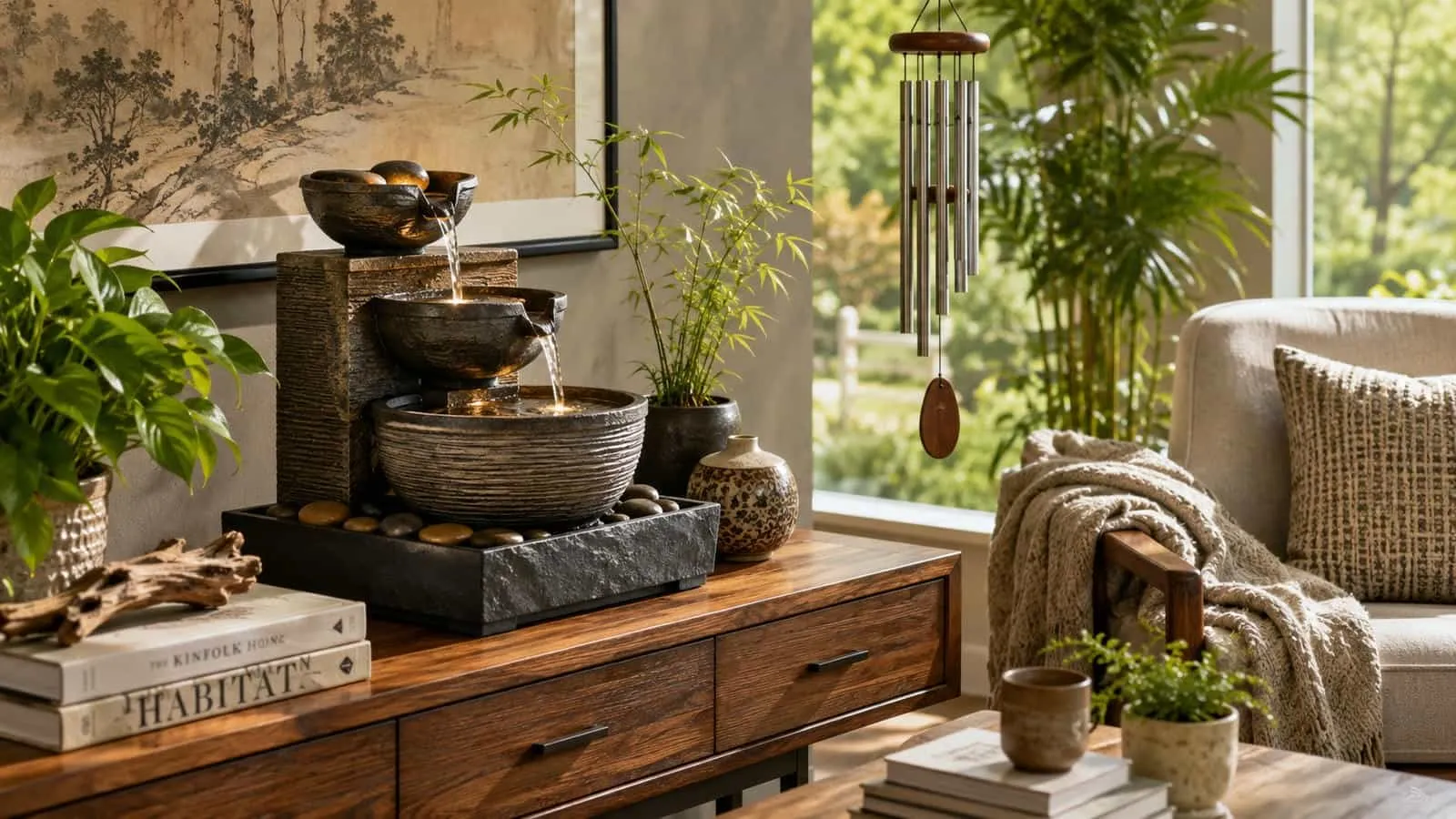
🪴⛲ A tabletop fountain works best when its sound, size, water movement and appearance support how the surrounding space is actually used. A quiet bubbling fountain beside a computer creates a different experience from a layered cascade on a living-room console, while a compact Zen fountain near a reading chair can become a calming visual and acoustic anchor without filling the room. Use this guide to compare tabletop fountain styles, forms, placements, sounds, materials, furniture surfaces, lighting conditions, water-care needs and realistic home or office situations before choosing your indoor water feature.
Explore tabletop water fountain ideas for desks, coffee tables, nightstands, consoles, shelves, home offices, bedrooms, meditation spaces and relaxing indoor rooms. Compare fountain styles, furniture placement, water sound, size, materials, common mistakes and essential buying decisions before choosing a decorative tabletop water feature. Select any image below to explore that section of the guide.


A tabletop water fountain works best when it is planned as part of the room rather than treated as a decoration placed on any open surface. Furniture strength, viewing height, listening distance, electrical outlets, cord routes, window light, nearby electronics and access for refilling all influence how the fountain looks, sounds and performs. The strongest choices improve daily comfort without making the surface harder to use.
Tabletop fountains bring moving water into personal spaces designed for morning coffee, remote work, reading, studying, meditation and relaxing after a long day. Unlike a larger floor fountain, a tabletop model usually shares space with lamps, books, computers, framed photos, plants and frequently used objects. When placed where it can be enjoyed from a favourite chair or work area, the fountain can improve the room without taking over the design. For broader indoor planning, our indoor water fountain ideas for peaceful home interiors explore tabletop, wall and floor fountains for many room sizes.
Begin by identifying the activity the fountain should support. A quiet bubbling bowl may suit a bedroom nightstand, while a gentle layered cascade can make a home office feel less silent. A reading corner normally benefits from soft, steady water that remains pleasant at close range. For a broader look at safe surfaces, viewing angles and listening distance, explore our guide to choosing the best water fountain location before deciding where the fountain will stand.
The furniture surface matters as much as the fountain style. A solid wood console or sturdy desk may support a heavier ceramic or stone fountain, while a narrow shelf, lightweight table or glass top requires closer attention to filled weight, vibration and water protection. Confirm that the surface is stable, level and suitable for moisture before placement. A level base supports even flow, quieter pump operation and better splash control.
Room conditions also change the ownership experience. Strong window sunlight can increase evaporation and encourage residue, while heating vents or air-conditioning airflow may carry moisture away from the basin. Hard walls, glass furniture and high ceilings can make water sound sharper, while rugs, curtains and upholstered furniture soften it. Testing the fountain before final placement helps reveal acoustic and practical issues that measurements alone may not show.
Indoor spaces often change through the year. Desks are reorganized, books accumulate, plants grow, seasonal decorations appear and heating or cooling systems affect evaporation. Many rooms also combine work, rest and decorative functions, making it worthwhile to coordinate the fountain with nearby furniture, lighting and indoor plants. For wider design inspiration, explore our guide to water fountain types, forms and design styles. Lightweight resin models are easy to reposition, while heavier ceramic and stone designs need a surface that will remain suitable over time.
Homes with children or pets should also consider stability, cord placement and water access. A top-heavy fountain should not sit near a furniture edge or where a pet, child or moving chair could bump it. Electrical cords should follow protected furniture edges instead of crossing open floor space, and the water should be kept clean. These practical decisions allow the fountain to support real daily life instead of forcing everyone to work around it.
A successful tabletop water fountain improves the surrounding space rather than simply filling an empty part of the furniture. The best designs combine comfortable sound, stable placement, controlled splash, suitable scale and easy maintenance so the fountain complements the room, nearby décor and everyday activity.
Use these practical design principles to choose a tabletop fountain that remains attractive, functional and easy to enjoy while working, reading, meditating or relaxing at home.
When fountain placement, furniture use, water sound and maintenance planning work together, a tabletop water feature becomes part of the daily indoor experience. It can make morning work feel calmer, soften silence while reading, add movement to a console display and give a small room a more welcoming visual identity.

✅ Best For: Tabletop water fountains are especially well suited to home offices, coffee tables, bedroom nightstands, reading corners, meditation rooms, apartment living areas, entryway consoles, bathroom counters, reception desks and quiet personal spaces that need movement, relaxing sound or a stronger decorative focal point.
The best tabletop fountain is not simply the most decorative model. It is the fountain that fits the furniture, preserves useful surface space, produces comfortable close-range sound, controls splash and remains easy to clean and refill. Begin with the activity or atmosphere you want to improve, then compare fountain form, size, material and water movement.
Every indoor space has a different combination of surface area, furniture, lighting, room acoustics, electrical access, household activity and maintenance needs. Use the scenarios below to compare tabletop water fountain styles, placement, sound and realistic daily situations so you can choose a fountain that fits your desk, nightstand, coffee table, bookshelf, meditation area or reception space.
Open each scenario to discover which tabletop water fountain best fits your available surface, room style, preferred sound and daily routine. Guidance includes fountain size, furniture protection, listening distance, splash control, electrical access, room conditions, surrounding décor and maintenance planning for realistic indoor use.
Best choice: Compact bubbling fountain with a quiet adjustable pump
A home office desk benefits from gentle background water sound rather than a tall or forceful cascade. A compact bubbling fountain can soften computer-fan noise, reduce an overly silent atmosphere and add movement without taking over the work surface. Choose a self-contained model with a small footprint, controlled flow and simple access for refilling.
Position the fountain beyond the main keyboard and writing area rather than directly beside the computer. Keep it away from laptops, monitors, power bars, documents and frequently used drinks. A protective tray beneath the fountain can help reduce vibration and protect the desk from moisture or mineral marks.
Choose this when you want a calmer workspace with quiet close-range water sound and minimal surface disruption.
Micro Recommendations: Leave enough space to reach the pump, refill the reservoir and move office equipment without lifting the fountain each time the desk arrangement changes.
⚠️ Common Mistake: Placing the fountain beside a laptop, power strip or stack of papers increases the risk of splash, cord clutter and avoidable damage to work materials.
Best choice: Slim vertical cascade or compact corner fountain
A small apartment or condo often has limited furniture space and rooms that serve several purposes. A slim vertical cascade or compact corner fountain uses height instead of a wide footprint and can fit on an entry console, side table or narrow shelf. Choose a design that adds visual interest without making the room feel crowded.
The fountain should not interfere with keys, mail, lamps, remote controls or other objects used every day. Position it where the moving water can be seen from the main seating area while keeping the cord close to a wall outlet. A lighter resin or polyresin fountain is easier to move when furniture is rearranged.
Choose this when saving surface space and maintaining visual simplicity are more important than a large decorative display.
Micro Recommendations: Measure the furniture surface and nearby wall clearance before buying because a fountain may require more room for its cord, pump access and water reservoir than its visible body suggests.
⚠️ Common Mistake: Choosing a wide fountain for a narrow console or small table can crowd everyday objects and leave too little room for safe refilling and cleaning.
Best choice: Small bubbling bowl or low-flow Zen fountain
A bedroom fountain should create soft water sound without disturbing sleep, conversation or nighttime routines. A small bubbling bowl or low-flow Zen fountain can support reading, journaling and relaxing before bed while preserving space for a lamp, book, glasses and phone. Avoid designs with tall drops or bright lighting that may feel distracting at close range.
Place the fountain on a stable nightstand beyond easy arm movement and away from bedding, chargers and electronics. Consider how the pump sounds when the room becomes quiet at night. Some people enjoy operating the fountain while reading and prefer to turn it off before sleeping.
Choose this when you want gentle evening ambience and controlled sound beside the bed.
Micro Recommendations: Test the fountain after the room becomes quiet because pump vibration and water drops often sound stronger at night than they do during daytime household activity.
⚠️ Common Mistake: Choosing a bright LED waterfall or strong cascade for a small nightstand can create unwanted light, repetitive sound and moisture near bedding or charging devices.
Best choice: Zen, bamboo, natural stone or layered cascade fountain
A meditation or yoga area benefits from steady water movement that supports the atmosphere without demanding attention. A Zen fountain, bamboo design, natural stone cascade or simple ceramic bowl can become a visual anchor for breathing, stretching or quiet reflection. Choose water sound that remains smooth and predictable at close range.
Position the fountain where it can be seen from a seated position without placing it in the path used for walking or yoga movement. Pair it with a small plant, simple artwork or natural textures while leaving enough open space for cleaning and refilling. Avoid crowding the fountain with too many symbolic or decorative objects.
Choose this when you want moving water to support a calm, uncluttered and intentional personal space.
Micro Recommendations: Listen from the cushion, mat or chair you normally use because the ideal sound level depends on the actual distance between the fountain and your meditation position.
⚠️ Common Mistake: Adding a loud pump, flashing lights or too many decorative accessories can make the space feel busy rather than calm and focused.
Best choice: Lightweight compact fountain with controlled splash
A bookshelf, floating shelf or mantel requires more attention to weight, depth and moisture than a wide table or console. A lightweight resin fountain with a compact reservoir can add movement to a display without placing excessive load on the surface. The fountain should fit fully within the shelf depth and remain stable when operating.
Consider the fountain’s filled weight rather than its empty shipping weight. Water, stones and decorative parts can add more load than expected. Keep books, framed photographs, wood trim and artwork outside the splash area, and confirm that the electrical cord can reach an outlet without hanging across the display.
Choose this when compact size, manageable weight and visual balance are important placement concerns.
Micro Recommendations: Measure shelf depth, height clearance and filled fountain weight before placement, and use a protective mat where moisture could affect painted wood or furniture finishes.
⚠️ Common Mistake: Choosing a fountain based only on its empty dimensions can overlook the space needed for the cord, water reservoir, pump access and safe distance from books.
Best choice: Decorative ceramic, slate or sculptural tabletop cascade
A living room fountain should support the room’s furniture and decorative style without competing with every other feature. A ceramic, slate or sculptural cascade can add movement and gentle sound to a coffee table, side table or reading corner. Choose a fountain with enough presence to feel intentional but not so large that it removes useful surface space.
Keep the fountain away from the main place used for drinks, remote controls, books or serving trays. On a coffee table, a low stable design is usually safer than a narrow top-heavy fountain. Beside a reading chair, position the water slightly beyond arm’s reach so the sound remains comfortable without creating splash near books or upholstery.
Choose this when you want the fountain to function as both a decorative accent and a relaxing close-range feature.
Micro Recommendations: View the fountain from the sofa or reading chair before finalizing its position so the water movement remains visible without blocking conversation, television views or table access.
⚠️ Common Mistake: Centering an oversized fountain on a frequently used coffee table can leave too little room for everyday objects and increase the risk of accidental bumps.
Best choice: Quiet layered cascade or professional vertical fountain
A reception area or therapist office needs water sound that creates a welcoming atmosphere without interfering with conversation, phone calls or concentration. A quiet layered cascade or compact vertical fountain can soften an overly silent room and add visual movement while maintaining a professional appearance.
Place the fountain away from paperwork, computers, payment terminals and areas where visitors place personal items. The water should be audible from the seating area but not so strong that staff must raise their voices. Materials such as slate, ceramic, dark resin or brushed metal often suit professional interiors.
Choose this when welcoming atmosphere, controlled sound and professional appearance are the main goals.
Micro Recommendations: Listen from both the reception desk and waiting chairs before choosing the final pump setting because the water may sound different across the room.
⚠️ Common Mistake: Buying a strong waterfall fountain can make phone calls, quiet conversations and focused office work more difficult instead of improving the atmosphere.
Best choice: Stable low fountain with an enclosed or shallow reservoir
A busy family home requires stability, protected cords and a location that keeps the fountain away from running paths and active furniture. A broad low fountain with a secure base is generally safer than a narrow top-heavy design. Place it on a sturdy console, wide sideboard or protected counter rather than near the edge of a small table.
Consider water access if cats, dogs or young children may touch or drink from the basin. Regular cleaning becomes more important when pet hair, dust, toys or household activity introduce debris. Avoid oils, cleaners or water treatments that could be unsafe if the fountain is accessible to pets.
Choose this when stability, protected cords and practical cleaning matter more than delicate decorative detail.
Micro Recommendations: Observe how children, pets and adults move through the room before choosing the location. A protected surface against a wall is often safer than a central coffee table.
⚠️ Common Mistake: Placing a narrow fountain near a furniture edge or exposed cord increases the chance of tipping, pulled plugs, spilled water and repeated maintenance problems.

| 🏡 Room or Lifestyle Goal | ⛲ Recommended Fountain Style | 🔊 Water Sound and Flow | Furniture Placement and Performance | Buyer Guidance and Planning Insight |
|---|---|---|---|---|
| 💻 Home Office Work and Studying | A compact bubbling bowl, desktop fountain or small Zen cascade provides movement without using substantial desk space. | Soft bubbling or a restrained trickle creates background sound without interfering with concentration, phone calls or video meetings. | Place it beyond the keyboard and writing area while keeping safe distance from computers, documents, power strips and frequently used drinks. | Best for buyers seeking a tabletop fountain for an office or desk that adds calm sound without crowding the workspace or creating distracting pump noise. |
| 🛏️ Bedroom Reading and Evening Relaxation | A low bubbling fountain, compact ceramic bowl or small Zen design fits a nightstand, dresser or nearby bedroom console. | Gentle water flow supports reading and winding down while remaining quiet enough for close-range listening in a peaceful room. | Keep the fountain away from bedding, lamps, phones and chargers while leaving room for normal nightstand objects and safe refilling. | Ideal for people who want a tabletop fountain for a bedroom without strong LED light, tall water drops or repetitive sound near the bed. |
| 🎧 Quiet Background Sound and Office Noise Masking | A layered cascade, multi-stream fountain or compact tabletop waterfall provides broader acoustic coverage than a low bubbler. | Steady trickling water can soften computer fans, hallway activity, mechanical sounds and an office that feels uncomfortably silent. | Position the fountain between the listener and the main distraction while directing the visible water face toward the desk or seating area. | Best for buyers who want a quiet tabletop fountain with adjustable flow that creates ambient sound without overpowering conversation or concentration. |
| 🏢 Small Apartment, Condo or Dorm Room | A slim vertical fountain, narrow resin cascade or compact corner design preserves limited surface space and reduces visual clutter. | A gentle vertical flow provides noticeable ambience without creating excessive volume in a small or partially open living space. | Use an entry console, side table, sturdy shelf or unused furniture corner while keeping outlets, walking areas and everyday objects clear. | Suitable for buyers looking for a space-saving tabletop water fountain that brings movement and relaxing sound to a small apartment or condo. |
| 🧘 Meditation, Yoga or Mindfulness Space | A Zen fountain, bamboo-style design, natural stone cascade or simple ceramic bowl supports an uncluttered personal retreat. | Steady bubbling or trickling creates a predictable sound that supports reflection without becoming the main focus of the room. | Place it where the water can be seen from a cushion, mat or chair while preserving open movement space and access for maintenance. | Ideal for creating a tabletop fountain meditation space with natural materials, soft sound, simple décor and limited visual distraction. |
| 🩺 Reception Desk, Waiting Room or Therapist Office | A professional slate, ceramic, dark resin or brushed-metal cascade creates a welcoming focal point without appearing overly decorative. | Moderate low-volume water flow softens silence while allowing staff, visitors and clients to speak comfortably across the room. | Keep the fountain away from paperwork, computers, payment terminals and surfaces where visitors place phones, bags or personal items. | Best for offices that want a decorative tabletop fountain for reception atmosphere, controlled sound and a more comfortable waiting experience. |
| Tabletop fountain summary: The best tabletop water fountain should match the room activity, available surface, furniture arrangement and preferred sound level. Compact bowls preserve space around desks and nightstands, while layered cascades and vertical fountains create stronger visual presence and broader background sound. Thoughtful placement protects electronics, controls splash, preserves electrical access and helps the fountain remain useful as furniture and daily routines change. | ||||
Tabletop water fountains can bring relaxing sound, reflected light, visible movement and a stronger decorative identity to desks, bedrooms, coffee tables, bookshelves and personal spaces. They also require refilling, cleaning, safe electrical planning and enough open room around electronics and daily objects. Comparing the benefits and practical tradeoffs can help you decide whether a tabletop fountain fits your room, routine and maintenance preferences.
| Benefits of Tabletop Water Fountains | Limitations and Practical Tradeoffs |
|---|---|
|
|
| Tabletop Fountain Tip: Position the fountain where it can be seen and heard from the main chair, desk or bed without interfering with electronics, books, lamps or maintenance access. The strongest indoor arrangements balance appearance, sound, furniture use and easy ownership. | |
💡 Comparison Tip: Evaluate the fountain from the position where you will normally sit, work or relax rather than only while standing. Water sound, pump vibration, visual scale and furniture clearance can feel very different once the room is being used normally.
Section Summary Snapshot: Comparing tabletop water fountains by room activity, furniture placement, water sound, surface requirements and maintenance reveals which design will perform comfortably over time. Small bubbling bowls preserve desk and nightstand space, while layered cascades and vertical designs create stronger focal points and broader ambient sound. The best choice combines suitable scale, controlled flow, stable support and realistic indoor care.
Modern tabletop water fountains use simple geometry, restrained colour and controlled water movement to complement contemporary furniture and uncluttered rooms. Rectangular slate fountains, smooth ceramic bowls, stainless steel waterfalls and narrow vertical cascades work especially well with neutral upholstery, black metal accents, glass tables and modern home offices.
Problem A tabletop fountain can make a modern room feel cluttered when it has excessive ornament, multiple figures or an overly traditional profile.
Why it happens Contemporary interiors depend on clean lines, repeated geometry, open surfaces and a limited material palette. Decorative fountain details can compete with the furniture and architecture.
Solution Choose a rectangular slate fountain, smooth bowl or vertical water panel with a neutral finish, then coordinate it with furniture frames, lighting and architectural lines.
Modern tabletop fountains should feel visually quiet even when the water is moving. Smooth ceramic basins, black or charcoal cascades, stainless steel panels and simple geometric bowls create movement without unnecessary decoration. These designs pair naturally with streamlined desks, modular sofas, glass coffee tables, matte-black lamps and minimalist planters.
Placement should reinforce the structure of the room. Align a narrow fountain with the centre of a console, position a vertical cascade at the end of a desk or use a round bowl to soften an angular furniture arrangement. Leave enough negative space around the fountain so its form remains clear and the surface does not feel crowded.
🏙️ Modern Tabletop Fountain Tip: Repeat one fountain material elsewhere in the room. A charcoal fountain paired with black lamp bases or a ceramic bowl coordinated with neutral décor makes the entire space feel more unified.
Rustic tabletop water fountains look most natural when stone, aged metal, wood tones and gentle water movement work together. Weathered bowls, stacked-stone cascades, copper fountains and natural-looking resin designs complement farmhouse furniture, wood consoles, woven baskets, brick fireplaces and comfortable reading spaces.
Problem A rustic room can feel artificial when the fountain finish looks too glossy, lightweight or newly manufactured compared with the surrounding wood and stone.
Why it happens Rustic and farmhouse interiors rely on texture, warmth, visible grain and materials that appear aged, handmade or naturally weathered.
Solution Choose weathered stone, copper, dark ceramic or realistic cast finishes and repeat those colours through furniture, baskets, frames or fireplace materials.
Rustic tabletop fountains should add to the comfortable, lived-in quality of the room. A weathered bowl on a wood console, a stacked-stone fountain beside a reading chair or an aged copper design on a sideboard can provide relaxing movement without making the space feel formal. Soft bubbling and short cascades usually suit the atmosphere better than polished water walls.
Place the fountain where it can be seen from the main chair or seating area while leaving natural materials enough room to breathe. Avoid pushing it into a crowded collection of books, lanterns, baskets and accessories. A simpler arrangement allows the fountain texture, surrounding wood and moving water to create the character.
🪵 Rustic Tabletop Fountain Tip: Match the fountain finish to permanent furniture and room materials rather than seasonal accessories. Wood, brick, stone and aged metal create a stronger year-round connection.
Japanese-inspired tabletop water fountains combine bamboo details, natural stone, simple ceramic and restrained shapes. Bamboo spouts, low stone bowls, dark slate cascades and quiet water basins complement light wood furniture, rice-paper textures, neutral walls, indoor plants and uncluttered meditation or reading areas.
Problem A Japanese-inspired fountain can feel disconnected when it becomes the only natural or culturally influenced element in the room.
Why it happens Japanese-inspired design depends on repeated natural materials, restrained colour, careful balance and simplicity rather than one isolated decorative object.
Solution Repeat bamboo, light wood, stone or dark ceramic through a small number of furnishings and accessories while preserving open space around the fountain.
Bamboo and stone fountains are especially effective in Japanese-inspired interiors because they combine natural texture, water movement and sculptural form in one feature. Dark slate, smooth river stones, pale ceramic and bamboo-style spouts stand out against neutral walls while maintaining a calm and grounded appearance.
Position the fountain on a low console, side table or meditation shelf near one simple plant, a framed print or a small arrangement of books. Keep the display layered but controlled so the fountain remains easy to view, refill and clean without surrounding clutter.
🎋 Japanese-Inspired Fountain Tip: A single bamboo or stone fountain becomes more convincing when surrounded by neutral materials and open space. Let the water and natural texture provide the strongest visual detail.
Spa-style tabletop water fountains should provide contained flow, gentle sound and soothing visual movement around towels, candles, toiletries and soft furnishings. Ceramic bowls, illuminated cascades, smooth stone fountains and compact slate designs work well in bathrooms, bedrooms and relaxation areas because they create atmosphere without producing broad splash.
Problem Fountain sound, lighting and moisture can become stronger than expected inside a quiet bathroom, bedroom or enclosed relaxation space.
Why it happens Tile, mirrors, glass and hard counters reflect water sound, while bright LED lighting and repeated splash can make the fountain feel less restful.
Solution Choose an adjustable fountain with contained flow, begin at a lower pump setting and keep it away from towels, cosmetics, bedding and electrical appliances.
A spa-inspired room often combines soft towels, candles, natural textures, gentle lighting and uncluttered surfaces. The fountain should support this comfort rather than introduce constant moisture or overwhelming sound. Ceramic bowls, narrow cascades and smooth stone fountains provide visible movement while keeping the water contained.
Bathroom counters and bedroom consoles can work well when the fountain remains visible and there is enough room to reach the pump. Keep cords away from sinks and wet areas, avoid placing the fountain beside hair tools or chargers and confirm that built-in lighting is soft enough for evening use.
🕯️ Spa-Style Fountain Tip: Test the fountain with the room lights at their normal evening level. Water reflections and built-in LEDs can feel much brighter after the main lighting is lowered.
Small tabletop water fountains use vertical height, narrow profiles and contained water flow to add ambience without crowding furniture or work surfaces. Slim cascades, compact bowls, corner fountains and lightweight desktop models are practical choices for apartments, condos, dorm rooms, retirement suites and small home offices.
Problem A fountain can make a small room difficult to use when its basin occupies valuable desk, shelf or table space needed for everyday objects.
Why it happens Compact interiors have limited surfaces, and even a modest fountain can become inconvenient when lamps, electronics, books and maintenance access are not measured together.
Solution Choose a narrow vertical, compact bowl or slim desktop fountain and measure the complete furniture arrangement before deciding on the fountain footprint.
The best small tabletop fountains create a noticeable experience without physically dominating the room. A narrow vertical fountain on a console can provide visual height and gentle sound. A compact desktop fountain adds close-range movement without using the floor, while a small corner bowl can soften an unused part of a side table.
Measure the fountain against lamps, computers, books and daily surface use rather than relying only on listed product dimensions. Include the room needed to refill the basin, remove the pump and clean around the fountain. A model that technically fits may still be impractical if every maintenance task requires clearing the furniture.
🏢 Small-Space Fountain Tip: Mark the proposed fountain footprint with paper or painter's tape, then place every normal desk or table object around it. This simple test reveals surface conflicts before buying.
Zen tabletop water fountains use restrained forms, natural materials and gentle water movement to create a calm personal space. Stone bowls, bamboo-style spouts, bubbling rocks and low ceramic basins complement simple furniture, neutral walls, soft lighting, indoor plants and carefully placed books or meditation accessories.
Problem A peaceful room can become visually busy when too many plants, statues, candles and decorative objects surround the tabletop fountain.
Why it happens Zen and minimalist design depend on restraint, negative space, balanced asymmetry and a limited selection of natural materials.
Solution Choose one simple fountain, use a small number of coordinated plants and accessories, and preserve open space around the water feature.
A Zen tabletop fountain should encourage people to pause rather than demand attention. Low stone bowls, bubbling rocks and simple bamboo-inspired spouts provide enough movement to support meditation, reading and quiet reflection without introducing strong decorative detail. Neutral furniture and uncluttered surfaces allow the water and natural texture to remain central.
Place the fountain where it can be appreciated from one main chair, meditation cushion or work position. Use one indoor plant, a small stack of books or a limited number of smooth stones to frame the feature. Avoid filling every open area because the unused space is part of the calming composition.
🧘 Zen Tabletop Fountain Tip: Remove one decorative element after you believe the arrangement is finished. A slightly simpler display often feels more peaceful and allows the water sound to become the main sensory detail.
Section Summary Snapshot: Choosing the right tabletop water fountain begins with matching the design to the furniture, colours and activity of the room. Modern interiors favour clean geometry, rustic spaces benefit from weathered texture, Japanese-inspired rooms support bamboo and stone, spa settings require contained flow, small spaces need compact vertical designs and Zen retreats depend on natural simplicity and open space.

Choosing a tabletop fountain is less about finding the most decorative model and more about how the surrounding surface is used every day. A tall layered cascade may create a strong focal point, while a ceramic bowl or gentle bubbler provides quieter sound for reading, working or relaxing. A narrow vertical fountain saves space on a console or reception desk, while a sculptural fountain can anchor a coffee table, sideboard or meditation display. The best form improves the room without taking over the furniture.
Before choosing a design, evaluate surface width, furniture strength and maintenance access. Leave room for lamps, books, computers, drinks and other objects used nearby. Sound is equally important, with bubbling fountains creating soft close-range ambience and multi-level waterfalls producing brighter water movement that carries farther across the room. If you are still comparing structures, our complete guide to water fountain types and designs explains how different fountain forms vary in water movement, sound, materials and ideal placement.
Room conditions, furniture materials and fountain construction also influence long-term performance. Solid wood consoles and sturdy desks can often support heavier ceramic, slate or stone fountains, while floating shelves, narrow tables and glass surfaces usually benefit from lighter resin or polyresin models. Window sunlight, heating vents, air conditioning, hard water and nearby electronics can affect evaporation, mineral buildup, pump sound and safe placement, so choose a fountain that performs well during normal daily use.
Use the comparison below to focus on practical priorities instead of appearance alone. The right tabletop fountain should preserve useful surface space, complement the furniture, produce comfortable water sound, protect nearby valuables and remain easy to clean. Choosing with these daily considerations in mind creates an indoor water feature that continues improving the room instead of becoming difficult to manage.
Choosing the right tabletop water fountain means matching the fountain form to the available surface, nearby furniture, listening distance, room activity and maintenance expectations. The most successful designs create a visible indoor focal point while preserving everyday function, limiting splash and supporting how the space is used for working, reading, sleeping, meditation, conversation or welcoming visitors.
| 🏡 Indoor Priority | ⛲ Recommended Fountain Form | 🎧 Why It Performs Well | 🪑 Best For People Who... |
|---|---|---|---|
| Preserve space on a desk, nightstand or narrow shelf | Compact Bubbling Bowl | The low rounded form uses limited height and surface area, keeps water close to the basin and creates soft bubbling sound suitable for close-range listening. | Ideal for buyers seeking a small tabletop fountain that improves a home office, bedroom or reading corner without crowding books, lamps, computers or daily objects. |
| Create visible water movement on a console or sideboard | Layered Cascade Fountain | Several short water drops create noticeable movement, reflected light and richer sound while the self-contained structure fits naturally on a broad console, buffet or reception counter. | Often chosen by people who want a decorative tabletop waterfall fountain with stronger visual presence and more audible water than a simple bubbler. |
| Support meditation, mindfulness or a quiet reading space | Zen or Bamboo-Style Fountain | Natural textures, restrained shapes and gentle water flow create a calm focal point that coordinates with plants, books, meditation cushions and uncluttered interior décor. | Well suited to people who want a tabletop Zen fountain for meditation, yoga, journaling, stress relief or a peaceful personal retreat. |
| Add movement and reflected light to a modern room | Rolling-Ball or Illuminated Fountain | A rotating sphere, focused water stream or built-in LED light creates visual interest without requiring a wide basin, making the fountain effective on modern desks, consoles and entry tables. | Frequently selected by buyers who want a contemporary tabletop fountain with lighting, sculptural movement and a stronger decorative effect. |
| Create stronger background sound in an office or waiting room | Vertical Waterfall Fountain | A longer water path or several narrow streams provide broader acoustic coverage than a low bowl, helping soften computer fans, hallway activity and uncomfortable silence. | Best for home offices, executive desks, reception areas and therapist waiting rooms that need controlled ambient sound without using floor space. |
| Add natural texture to rustic, farmhouse or spa-style décor | Stacked-Stone or Sculptural Fountain | Textured resin, slate, ceramic or stone-like surfaces create an organic appearance while short water drops provide relaxed movement suitable for wood furniture and natural interior materials. | Ideal for people who prefer a decorative tabletop water feature that blends with farmhouse, rustic, natural or spa-inspired room design. |
| 🏡 The best tabletop fountain form is rarely determined by appearance alone. Matching the design to the furniture surface, room activity, listening distance and maintenance routine creates a feature that remains comfortable and useful. Bubbling bowls preserve space, layered cascades add movement, Zen fountains support quiet routines, rolling-ball designs create visual interest and vertical fountains provide broader background sound. | |||

Tabletop fountain size should be judged against the complete furniture arrangement rather than the fountain footprint alone. Surface width, furniture height, nearby lamps, books, electronics, artwork and room scale all affect how large a fountain feels. For broader indoor design guidance, our indoor water fountain ideas for every room and living space explain how tabletop, wall and floor fountains can be coordinated throughout the home. Measuring these elements together helps prevent a beautiful water feature from becoming an obstacle.
| 🪑 Furniture or Room Size | ⛲ Recommended Fountain Forms | 🎯 Why They Work Best |
|---|---|---|
| 💻 Small Desks, Nightstands and Narrow Shelves | Compact bubbling bowls, miniature Zen fountains, slim vertical fountains and lightweight desktop water features | These space-saving tabletop fountain designs use a narrow footprint or low profile to create gentle sound while preserving room for lamps, computers, books, chargers and everyday surface use. |
| 🪑 Medium Coffee Tables, Consoles and Sideboards | Layered ceramic cascades, rolling-ball fountains, stacked-stone designs, medium Zen fountains and illuminated water features | These forms provide enough visual presence to balance furniture and surrounding décor while maintaining controlled splash, comfortable listening distance and practical access for cleaning and refilling. |
| 🏡 Large Buffets, Reception Counters and Broad Entry Consoles | Taller vertical waterfalls, wide sculptural fountains, multi-stream cascades and substantial slate or ceramic designs | Larger tabletop fountains deliver stronger visual scale, broader acoustic reach and enough height to remain noticeable across living rooms, offices, waiting areas and open entry spaces. |
| 🪑 Matching a tabletop fountain to the complete scale of the furniture creates better visual balance, safer placement and more comfortable water sound. Small surfaces benefit from compact bowls and narrow designs, medium furniture supports layered cascades and decorative fountains, and broad consoles can accommodate taller statement features when splash and maintenance clearance remain. | ||
📏 Tabletop Fountain Size Tip: Mark the proposed fountain footprint with paper or painter's tape before buying. Place the lamp, computer, books, drinks and other daily objects around it, then confirm that you can still reach the pump and reservoir. This simple test reveals surface conflicts that product measurements alone may not show.
The most useful tabletop water feature fits the routines that already happen in the room. Consider when you use the space, how close you will sit, whether you prefer quiet background sound or stronger water movement and how often you are willing to clean and refill the fountain. Lifestyle alignment often matters more than decorative style.
| 🏡 Your Indoor Lifestyle | ⛲ Tabletop Fountain Recommendation |
|---|---|
| ☕ Enjoy morning coffee, reading or peaceful reflection | Choose a compact bubbling bowl, small ceramic cascade or Zen fountain placed within comfortable listening distance of a chair or coffee table. Soft bubbling creates relaxing ambience without overwhelming reading, conversation or quiet household sound. |
| 💻 Work from home, study or attend video meetings | Select a quiet desktop fountain with adjustable flow and a compact footprint. Position it beyond the keyboard and computer while keeping the water sound low enough for concentration, phone calls and online meetings. |
| 🎧 Want to soften computer fans, hallway noise or office silence | Choose a layered tabletop waterfall or vertical cascade with adjustable pump flow. Place it between the listener and the main distraction so consistent moving water creates a comfortable acoustic layer around the work or seating area. |
| 🧹 Prefer uncomplicated cleaning and water care | Look for self-contained tabletop fountains with accessible pumps, removable stones, wide basin openings and smooth surfaces. Compact resin and ceramic models are often easier to lift, drain and clean than complex multi-piece designs. |
| 👨👩👧👦 Share the room with children, cats or active pets | Choose a stable low-profile fountain with a broad base and enclosed or shallow reservoir. Place it against a wall, protect the cord and avoid narrow top-heavy forms near furniture edges or active walking routes. |
| 🧘 Use the room for meditation, yoga or journaling | Use a Zen fountain, bamboo-style design or natural stone cascade with gentle predictable flow. Keep the arrangement simple and position it where the water can be seen and heard from the meditation cushion, chair or yoga mat. |
| 🛏️ Want a calmer bedroom or evening reading space | Select a low bubbling bowl or quiet ceramic fountain without bright colour-changing lights. Keep it away from bedding, chargers and phones, and choose a pump that remains comfortable when the room becomes quiet. |
| 🩺 Want to improve a reception desk or waiting room | Choose a professional slate, ceramic or dark resin cascade with controlled sound. Position it away from paperwork and electronics while ensuring visitors can see the moving water from the main seating area. |
| 🏡 The best tabletop fountain supports your daily routine as much as your decorating style. Matching water sound, fountain form, furniture placement, room activity, maintenance expectations and household conditions creates an indoor feature that remains relaxing and practical instead of becoming difficult to manage. | |

A tabletop water fountain should continue supporting the room long after the first day of use. Furniture changes, growing plants, new electronics, seasonal decorating and changing household routines can all affect whether the original location remains practical. Planning for these changes creates a water feature that continues adding sound, movement and relaxation without limiting how the surface or room can be used.
Use these practical tabletop fountain planning tips to choose a design that remains functional, attractive and comfortable through furniture rearrangements, changing room conditions and regular maintenance.
Long-term tabletop fountain planning creates an indoor space that feels natural, relaxing and easy to use. When fountain form, furniture scale, acoustic comfort, room conditions and maintenance access are considered together, moving water becomes part of everyday life rather than a decorative object that complicates the room.
Section Summary Snapshot: Choosing the right tabletop fountain is less about finding the most decorative design and more about matching the fountain form to the furniture and room. Bubbling bowls preserve surface space, layered cascades add visible movement, Zen fountains support quiet routines, vertical waterfalls provide stronger background sound and sculptural designs create larger focal points. The best choice also protects nearby objects, controls splash, supports safe power access and remains practical as the room changes.

A tabletop fountain rarely feels complete because of the fountain alone. The surrounding plant, books, lamp, artwork and furniture determine whether the water feature feels naturally connected to the room or simply placed on an open surface. Small decorative groupings are especially useful because they can soften the fountain shape, repeat room colours and help the display feel intentional without requiring a large amount of space.
Tabletop fountain décor should support the way the surface is used. A compact plant can soften the fountain base without hiding moving water. A small stack of books can raise a lightweight accessory and connect the display with a reading area. A lamp or framed print can add height behind a console arrangement. The strongest design balances decoration with open surface space so the desk, table, shelf or nightstand remains useful every day.
Room acoustics can also change when soft and hard materials are arranged around the fountain. Plants, curtains, books and upholstered furniture may soften sharp reflections from glass, tile and bare walls. These objects will not remove pump vibration or correct an overly loud waterfall, but they can help gentle trickling water feel warmer and less echoing in a small room.
Every accessory should be selected according to actual room conditions. A sunny windowsill may increase fountain evaporation and dry plant soil quickly, while a bathroom vanity may expose décor to higher humidity. Heating vents, air conditioning, dust, pets and frequent surface use can all affect placement. Matching plants and accessories to these conditions reduces clutter, moisture problems and ongoing maintenance.
Use this tabletop fountain decorating guide to choose indoor plants, books, lighting, artwork and accessories that frame moving water without crowding furniture, blocking the view or interfering with the pump, cord and reservoir.
| 🌿 Tabletop Decorating Area | 🪴 Best Décor to Use | ⛲ How It Improves the Fountain | 💧 Placement and Maintenance Tips |
|---|---|---|---|
| 🌱 Compact Plants Beside the Fountain | Small ferns, pothos, peperomia, fittonia, compact succulents, air plants and low foliage in stable indoor containers. | A compact plant softens the fountain base, adds natural colour and strengthens the connection between moving water and a calm indoor setting. | Keep foliage outside the basin and leave one side open for refilling, pump removal, cord inspection and routine cleaning. |
| 📚 Books on Consoles, Coffee Tables and Shelves | Small stacks of design books, gardening books, journals, meditation guides and neutral decorative books. | Books add horizontal structure, connect the fountain with reading or study routines and help balance taller lamps, artwork or plants. | Keep paper covers beyond the splash area and avoid stacking books where they make the fountain unstable or difficult to lift. |
| 💡 Lamps and Soft Room Lighting | Small table lamps, warm LED lamps, shaded reading lights and indirect lighting positioned behind or beside the fountain. | Soft light reflects across moving water, improves evening visibility and helps a decorative tabletop fountain create a calmer room atmosphere. | Protect electrical connections, keep lamp cords separate from the fountain cord and avoid placing bulbs or switches inside the splash range. |
| 🖼️ Artwork, Mirrors and Framed Photographs | Simple framed prints, landscape artwork, small mirrors, neutral photography and restrained wall décor behind the furniture. | Background artwork gives the fountain a visual setting, while mirrors can reflect water movement and make a small arrangement appear deeper. | Avoid hanging valuable paper artwork where repeated moisture or direct splash could affect the frame, backing or wall surface. |
| 💻 Home Office Desk Accessories | A compact plant, pen holder, small clock, closed notebook and simple desk lamp arranged beyond the fountain basin. | Practical accessories connect a desktop water fountain with the working environment while preserving a professional and organized appearance. | Keep computers, documents, power strips and charging devices outside the wet zone, and preserve enough space for normal desk tasks. |
| 🛏️ Bedroom Nightstand and Dresser Décor | A small lamp, one book, ceramic dish, framed photograph or compact plant with limited leaves. | Restrained bedroom décor allows the fountain to add gentle sound and movement without making the nightstand feel crowded or visually busy. | Keep bedding, phones, glasses and chargers away from the basin and choose accessories that are easy to move when the fountain needs refilling. |
| 🕯️ Meditation and Spa-Style Accessories | Unlit candles, smooth stones, a small plant, folded towel, simple statue or natural wood accessory. | Natural textures support Zen, yoga and spa-inspired tabletop fountain décor while creating a calm focal point for reflection and relaxation. | Keep burning candles away from the cord and fountain body, limit the number of accessories and preserve open space around moving water. |
| 🩺 Reception Desk and Waiting Room Décor | A compact plant, professional framed sign, small lamp and restrained decorative object beside a slate or ceramic fountain. | Coordinated décor helps a tabletop fountain create a welcoming reception atmosphere without making the counter look informal or crowded. | Keep paperwork, payment terminals, phones and visitor belongings outside the splash zone and maintain easy access for daily water checks. |
| 🪵 Rustic and Farmhouse Fountain Décor | Natural wood trays, woven baskets, aged metal accents, neutral books, dried stems and simple pottery. | Warm textures reinforce stacked-stone, copper and weathered tabletop fountains while connecting them with wood furniture and farmhouse interiors. | Avoid placing absorbent baskets, paper or unfinished wood directly beside the basin where repeated moisture could cause staining or damage. |
| 🧘 Modern and Minimalist Fountain Décor | One sculptural object, a compact plant, a simple lamp or a small group of neutral books with clean lines. | Limited accessories preserve negative space and allow a modern slate, ceramic or stainless steel fountain to remain the main decorative feature. | Use fewer objects, keep cords hidden along the back of the furniture and leave part of the surface intentionally open. |
| 🌿 The best décor around a tabletop fountain includes one compact plant, a small group of books or accessories and a taller background element such as a lamp or framed print. Match every item to the furniture size, room activity, splash range, electrical access and maintenance needs so the fountain remains visible and the surface remains comfortable to use. | |||
🌱 Tabletop Decorating Tip: Arrange the display around the filled fountain rather than decorating the surface first. Leave open space for refilling, cleaning and lifting the pump so plants, books and accessories do not gradually turn routine maintenance into a complete furniture rearrangement.
Begin with the fountain and the main viewing position before adding décor. The moving water should remain visible from the chair, desk, sofa or bed used most often, while surrounding objects should frame the fountain rather than form a wall around it. On many consoles and coffee tables, an asymmetrical arrangement feels more natural than placing matching objects on both sides.
Use one taller item to create structure, then add smaller accessories only where they serve a purpose. A lamp may balance a vertical fountain. A compact plant can soften a ceramic bowl. A small stack of books can connect the display with a reading corner. Avoid filling every open part of the surface simply because space remains available.
Accessory materials can strengthen the room style. Glass, black metal and smooth ceramic support modern tabletop fountains, while wood, woven textures and aged metal reinforce rustic designs. Bamboo, stone and simple pottery suit Zen and Japanese-inspired arrangements. Repeating one finish or colour helps the fountain and surrounding décor appear planned together.
Maintain a practical separation between wet and dry objects. Keep books, electronics, paper artwork and unfinished wood outside the strongest splash area. Position plants where drainage cannot reach the fountain cord, and avoid placing valuable or frequently handled objects where they must be moved every time the reservoir needs water.
Section Summary Snapshot: Indoor plants, books, lighting and accessories help tabletop fountains feel connected to furniture, room style and everyday routines. Compact plants add natural texture, books create structure, lamps reflect across moving water and artwork provides a visual background. The strongest arrangements respect surface size, splash control, cord safety and maintenance access while preserving clear views of the fountain.
Furniture determines how a tabletop fountain is experienced. A fountain placed at one end of a console can create a balanced focal point, while a compact bubbling design beside a reading chair provides close-range sound. A desktop fountain should add atmosphere without occupying the area needed for a keyboard, notebook, phone or other work equipment.
Begin by identifying the room's main activity positions. These may include a work desk, reading chair, sofa, bedside area, meditation cushion, bathroom vanity, entry console, reception counter or waiting-room seating. The fountain should strengthen one or more of these locations without interrupting the normal use of the furniture.
Sightlines matter as much as surface space. A fountain may fit neatly behind a lamp or plant but provide little value if the moving water cannot be seen from the main chair. Turn the active water face toward the listener rather than allowing the back, pump housing or electrical cord to become the dominant view.
Sound should be evaluated from every important position. Small bubbling bowls work well within close listening distance, while vertical tabletop waterfalls can carry sound across a larger room. Bare walls, glass tables, tile floors and high ceilings may reflect water sound, while books, rugs, curtains and upholstered furniture can soften it.
A clear view from more than one position increases the fountain's daily value. A console fountain may be visible from the sofa, dining area and entryway, while a desktop water fountain can be enjoyed during work and from a nearby reading chair. Soft room lighting can make reflected water movement especially attractive during the evening.
The strongest tabletop fountain location works from several perspectives. It should remain attractive from the main seat, visible without blocking furniture use and positioned away from frequent spills, pets and exposed electronics. It should also remain easy to refill, clean and unplug when maintenance is needed.
| 🛋️ Furniture or Viewing Location | ⛲ Best Fountain Placement | 👀 Viewing and Sound Experience | 💡 Design Planning Tip |
|---|---|---|---|
| Home Office Desk or Workstation | Position a compact desktop fountain beyond the keyboard and main writing area, preferably near the back corner of a stable desk. | Gentle bubbling or trickling creates quiet background sound that may soften computer fans and make long work sessions feel less sterile. | Keep the fountain away from the monitor, laptop, documents and power strip while leaving enough room to reach the pump and reservoir. |
| Living Room Console or Sideboard | Place a ceramic cascade, slate fountain or sculptural water feature near one end of the furniture rather than crowding the centre. | The fountain creates visible movement and balanced ambient sound that can be enjoyed from the sofa, reading chair and nearby dining area. | Face the moving water toward the room and preserve space for lamps, framed artwork, books and normal console-table use. |
| Reading Chair or Journaling Corner | Use a small bubbling bowl, Zen fountain or short cascade on a sturdy side table slightly beyond easy arm movement. | Close-range water sound creates a calm personal setting suited to reading, journaling, morning coffee and quiet reflection. | Test the fountain while seated and keep books, drinks, blankets and upholstered furniture beyond the splash area. |
| Bedroom Nightstand or Dresser | Place a low-flow fountain on a broad nightstand, dresser or bedroom console away from bedding, phones and charging equipment. | Soft trickling water can support evening relaxation and reading without filling the room with a strong or distracting cascade. | Choose a quiet pump, limited lighting and enough open space for a lamp, glasses, book and normal bedtime items. |
| Coffee Table or Living Room Centrepiece | Select a low, stable fountain and position it off-centre where it does not interfere with drinks, remotes, books or conversation. | Moving water becomes part of the main seating experience and creates a visible decorative accent from several chairs. | Avoid tall or top-heavy forms on frequently used coffee tables, especially in homes with children, pets or active guests. |
| Entryway Console or Foyer Table | Position a decorative tabletop fountain where it creates a welcoming first view without occupying the area used for keys, mail or bags. | Reflected water and gentle sound create a calmer transition between the entrance and the main living space. | Protect the cord along the back of the console and keep the fountain away from coat movement, swinging bags and frequently handled objects. |
| Bookshelf, Mantel or Floating Shelf | Use a lightweight compact fountain centred on a stable section with enough depth for the complete base and electrical connection. | A small water feature adds movement among books, framed objects and decorative displays without requiring floor space. | Confirm the filled weight, protect paper and wood from moisture and preserve one clear side for pump access and lifting. |
| Meditation, Yoga or Mindfulness Area | Place a Zen, bamboo-style or natural stone fountain where it can be seen from the cushion, chair or mat without entering the movement area. | Predictable water movement provides a gentle sensory focus during breathing, meditation, stretching and quiet reflection. | Keep the arrangement simple and avoid surrounding the fountain with so many plants, candles or statues that it becomes visually busy. |
| Reception Counter or Therapist Waiting Room | Use a controlled slate, ceramic or vertical fountain away from computers, paperwork, payment equipment and visitor belongings. | Quiet water movement can soften an overly silent room and create a more welcoming experience for clients and visitors. | Listen from both the staff position and waiting chairs to confirm that the pump and water flow do not interfere with conversation. |
| Open-Plan Room with Several Activity Areas | Position a medium tabletop waterfall on a console, buffet or sideboard visible from the living, dining and work areas. | A well-placed fountain can connect several room zones through repeated views, reflected light and shared ambient sound. | Avoid placing it where water noise competes with television, dining conversation, phone calls or focused work. |
| 🛋️ The strongest tabletop fountain locations connect furniture, viewing positions and daily routines into one comfortable indoor experience. A well-positioned fountain remains visible from important seats, creates proportionate sound, protects electronics and supports normal furniture use without blocking books, lamps, work surfaces or maintenance access. | |||
A tabletop fountain should never force people to work around exposed cords, reach across moving water or clear the furniture every time they need a book or drink. Observe how the desk, table, shelf or counter is used before choosing the final location. These everyday patterns matter more than creating a perfectly symmetrical display.
Furniture use changes throughout the day. A coffee table may hold drinks and remotes in the evening. A desk may need space for papers, a laptop and video meetings. A nightstand may hold medication, glasses and charging devices. Include these changing needs when measuring the open area around the fountain.
Electrical cords should follow the back edge of furniture whenever possible. Avoid routing them across the floor, beneath movable chairs or beside frequently handled plugs. A cord may look safely hidden during setup but become exposed when a desk, table or decorative object is moved.
Fountain maintenance also requires a temporary working area. You may need to lift the basin, remove the pump, carry water or wipe behind the fountain. Leave one practical access side even when the remaining surface is decorated with plants, books, lamps or artwork.
👣 Use the Furniture Before Final Placement: Sit at the desk, reach for the lamp, place a drink on the table and move through the room normally. The strongest tabletop fountain location improves the view and sound without changing these natural routines or making the surface difficult to use.
👀 Check Every Important Sightline: Sit in the chair, sofa, bed or work position used most often before deciding on placement. A fountain should provide a clear view of moving water from real daily positions rather than looking attractive from only one standing angle.
🎧 Listen Before Finalizing the Location: Run the fountain at several pump settings and listen from the desk, reading chair, bed and nearby room areas. Hard flooring and bare walls can amplify sound, while rugs, curtains, books and upholstery may soften it.
💦 Observe Splash and Vibration: Test the fountain at its highest practical flow before arranging nearby objects. A location that appears safe at low flow may send droplets toward books, electronics or furniture finishes when the reservoir is full or the pump is increased.
Section Summary Snapshot: Thoughtful tabletop fountain placement connects desks, consoles, coffee tables, nightstands, shelves and room seating into one comfortable indoor experience. Clear sightlines, balanced water sound and protected furniture use make the fountain easier to enjoy from several positions. Planning around electronics, daily objects, splash, cord access and maintenance keeps the water feature attractive and practical.
Tabletop fountain sound is created by the water feature and the room around it. Pump flow, water depth, furniture material, wall surfaces and listening distance work together to shape the experience. A soft bubbling bowl may suit a bedroom or reading corner, while a layered tabletop waterfall can provide more noticeable background sound in a home office or waiting room.
Fountain form has the greatest influence on tone. Water sliding across a smooth surface sounds quieter than water falling into an open basin. Short drops create gentle trickling, while several spillways produce richer overlapping notes. Adjustable pumps help match the flow to focused work, meditation, conversation or evening relaxation. For a deeper explanation of how water movement, pump settings, drop height, landing surfaces and listening distance shape perceived volume and tone, explore our fountain sound, pump flow and acoustic comfort guide.
The room can strengthen or soften these sounds. Tile, glass, bare walls and hardwood reflect higher notes, while rugs, curtains, books, plants and upholstered furniture reduce sharp echoes. A fountain that sounds quiet in a furnished living room may feel much louder on a glass desk in a small office.
Always listen from the position where the fountain will be used. Sit at the desk, lie on the bed, relax in the reading chair or stand behind the reception counter. The best tabletop water fountain produces enough sound to be noticed without competing with conversation, sleep, study, television or video meetings.
Tabletop water fountain sound changes with fountain form, drop height, pump speed, receiving surface and room acoustics. Comparing soft bubbling, narrow trickling, layered cascades, rolling water and vertical waterfall flow helps buyers choose a sound that suits their furniture, room size and daily routine.
| 💧 Water Movement | 🎧 Acoustic Character | 🪑 Best Indoor Placement | 💬 Conversation Comfort | 🏡 Best Everyday Use |
|---|---|---|---|---|
| Soft bubbling from a compact bowl, sphere or miniature fountain | Rounded, quiet water notes remain close to the fountain and provide gentle movement without filling the entire room. | Best on a nightstand, small desk, side table, reading shelf or meditation surface. | Excellent for close conversation, studying and sleep because the sound usually remains below normal speaking volume. | Ideal for people seeking a quiet tabletop fountain for bedrooms, offices, apartments and personal relaxation. |
| Gentle trickling through short channels or narrow spillways | Continuous flowing notes create wider coverage while maintaining a smooth and predictable rhythm. | Well suited to home offices, consoles, coffee tables, therapy rooms and quiet reception areas. | Comfortable during conversation and video meetings when the fountain remains several feet from the listener. | Often chosen by people who want clear water sound without the sharper splash of a tall cascade. |
| Layered cascades with several short water drops | Overlapping tones create richer sound, greater depth and more noticeable acoustic coverage across a medium room. | Effective on broad consoles, sideboards, reception counters and living room tables. | Most comfortable when the flow is adjustable and the fountain is not placed directly beside a chair or microphone. | Best for buyers wanting a decorative tabletop waterfall with stronger ambience and moderate background-noise masking. |
| Water rolling across a sphere, stone or smooth sculptural surface | Soft contact creates a low, steady sound with reflected light and limited splashing. | Best on modern desks, entry consoles, bathroom counters and minimalist furniture. | Comfortable for conversation because the water remains close to the fountain body. | Ideal for people who prefer visual movement and subtle sound rather than a lively cascade. |
| Vertical tabletop waterfall or multi-stream flow | Continuous high and low notes provide the broadest sound coverage among compact indoor fountains. | Effective in home offices, waiting rooms, open living spaces and areas affected by computer or hallway noise. | Comfortable when the pump is adjustable and the fountain stands beyond the immediate conversation area. | Best for people prioritizing office ambience, white-noise effect and stronger indoor acoustic presence. |
| 🎧 Choosing the right tabletop fountain sound means matching water movement to room size, listening distance and daily activity. Soft bubbling supports bedrooms and close relaxation, gentle trickling suits work and conversation, layered cascades create richer ambience and vertical waterfalls provide broader background sound in larger or noisier rooms. | ||||

Indoor materials affect how fountain sound travels. Glass desks, tile floors, mirrors, bare walls and hardwood reflect higher-frequency trickling and splash notes. This can make a small tabletop fountain sound much louder in a bathroom, minimalist office or sparsely furnished apartment.
Soft furnishings absorb part of this reflection. Rugs, curtains, upholstered chairs, bedding and fabric wall panels reduce harsh echoes and make moving water feel warmer. Keep absorbent materials beyond the splash range so acoustic comfort does not create moisture or staining.
Books and plants also influence the room. Filled bookshelves break up flat reflections, while leaves scatter some higher notes and add natural movement. These objects will not correct a loud pump, but they can help a quiet tabletop fountain blend more comfortably into the space.
Furniture material can transmit vibration. A hollow desk, thin shelf or glass table may amplify pump humming through the surface. Solid wood and heavy furniture usually sound more stable, while a rubber pad or protective mat can reduce vibration on lighter furniture.
Open-plan rooms allow water sound to spread farther but may also include television, conversation and kitchen noise. A compact bubbler may disappear in this environment, while a layered cascade can remain noticeable without requiring a full-size indoor fountain.
Small bedrooms and offices contain sound more closely. Begin with a lower flow than expected, especially when the fountain stands near a bed, desk microphone or reading chair. Increase it only after listening during the quietest part of the day.
Adjusting tabletop fountain sound is usually easier than replacing the fountain. Small changes to pump flow, water level, landing surfaces, tubing and furniture support can create softer water rhythm, reduce vibration or provide stronger background sound.
Use these adjustments to fine-tune a desktop fountain, bedroom fountain, Zen fountain or decorative tabletop waterfall.
Fine-tuning tabletop fountain sound improves focus, reading, meditation, sleep and conversation. The best setting provides enough water movement to be enjoyed without producing excessive splash, mechanical humming or distracting volume.

Not every sound comes from moving water. Humming, rattling, clicking, sputtering and hollow echoes may indicate low water, debris, pump vibration, loose tubing or uneven furniture. Finding the source can prevent replacing a fountain that only needs cleaning or adjustment.
A humming pump may be touching the basin, operating with too little water or sending vibration through a hollow fountain body. The sound can become stronger on glass, metal, floating shelves and lightweight desks.
Rattling often develops when the fountain is not level, decorative stones shift against the pump or tubing taps the shell. Check the base and internal parts before increasing the water flow.
Sputtering usually points to a clogged intake, trapped air, low water or restricted tubing. Clean the pump, refill the reservoir and confirm that the unit remains submerged.
Harsh splashing can result from excessive flow, an empty receiving bowl or a tilted fountain. Reduce the pump setting and observe where each stream lands before moving the entire water feature.
Hollow or metallic echoes may occur when water strikes thin resin, metal or an empty cavity. Correct water depth and an approved landing material can create a fuller and softer tone.
Tabletop water fountains can make computer fans, hallway activity, heating systems and uncomfortable office silence feel less distracting by adding a steady layer of natural sound. They do not soundproof a room, but they can redirect attention toward gentle trickling or bubbling water.
A small bubbling fountain works best when the listener is nearby and the unwanted noise is moderate. It will not cover loud television, construction or heavy traffic. Layered cascades and vertical tabletop waterfalls provide broader acoustic coverage because they move more water and create overlapping tones.
Placement matters. Position the fountain between the listener and the main distraction when practical. A desktop fountain may soften a nearby computer fan, while a console fountain can create a sound layer between a home office and a busy hallway.
Avoid replacing one distraction with another. Water that masks office equipment may still interfere with phone calls or Zoom meetings if the fountain is too close to the microphone. Adjustable flow allows a stronger setting during focused work and a quieter setting during calls, reading or sleep.
🎵 Tabletop Fountain Sound Tip: Choose the desired water tone before choosing the decorative shape. A beautiful tabletop fountain that sounds too loud, too weak, too sharp or too mechanical at close range may become less enjoyable over time.
Section Summary Snapshot: Tabletop fountain sound is shaped by water-drop height, pump flow, reservoir depth, materials, furniture, walls, flooring and listening distance. Soft bubbling supports bedrooms and close seating, while layered cascades and vertical waterfalls provide broader background sound. Adjusting water level, pump speed, vibration and landing surfaces helps the fountain support work, sleep, reading, conversation and relaxation.
Choosing the right tabletop fountain size involves more than comparing product height and width. Scale is influenced by the complete furniture arrangement, including lamps, books, computers, artwork, plants and everyday objects. A fountain that looks compact online may feel large on a nightstand, while the same design can disappear on a broad sideboard.
Base width often affects usable surface space more than height. A tall narrow fountain may fit comfortably at the back of a desk, while a short fountain with a wide reservoir can interfere with writing, drinks or décor. Compare the widest measurement with the open area needed for regular furniture use.
Visible water movement also changes visual scale. A narrow bubbling stream feels light and restrained, while several spillways or an illuminated waterfall can appear larger than the listed dimensions. Sound, reflected light and the moving water path extend the fountain's presence beyond its physical base.
Furniture height should guide the choice. A low fountain may disappear behind books, monitors or decorative objects, while a tall fountain can block artwork, mirrors or room sightlines. The most balanced design keeps moving water visible from the main seated position without becoming an oversized barrier.
Viewing distance affects how much detail can be appreciated. Small tabletop Zen fountains and textured ceramic bowls work well beside a reading chair or computer. Taller silhouettes and brighter cascades are easier to notice across living rooms, reception areas and open-plan spaces.
Furniture construction determines how large and heavy a fountain can safely be. Solid consoles and desks commonly support substantial ceramic or stone designs when level and stable. Floating shelves, glass tables and narrow bookcases require closer attention to filled weight, vibration, depth and moisture protection.
Use these tabletop fountain sizing tips to balance water-feature scale with furniture, viewing distance, weight and everyday indoor use.
Choosing the correct tabletop fountain size means balancing furniture proportion, useful surface space, filled weight, viewing distance and water sound instead of selecting the tallest design available. Comparing common indoor locations helps buyers choose a fountain that looks intentional and remains practical.
| 🪑 Furniture or Room Condition | 📏 Recommended Fountain Scale | 🏡 Why It Works Best |
|---|---|---|
| Small Office Desk or Study Surface | Miniature bubbler, compact desktop fountain or narrow Zen design | Preserves working space and creates close-range sound without crowding the keyboard, monitor, notebook or charging area. |
| Bedroom Nightstand | Low bubbling bowl or small quiet cascade | Fits beside a lamp and book while producing gentle water sound without dominating a quiet sleeping area. |
| Narrow Bookshelf or Floating Shelf | Lightweight miniature fountain with a shallow base | Uses limited depth and weight while adding movement among books and décor without requiring floor space. |
| Coffee Table or End Table | Low stable bowl, rolling-ball fountain or compact sculptural design | Provides visible water movement without blocking conversation, views or the practical use of the surrounding table surface. |
| Medium Console or Sideboard | Medium ceramic cascade, slate fountain or Zen waterfall | Balances lamps, artwork and decorative objects while creating enough visual and acoustic presence for a living room or entryway. |
| Bathroom Vanity or Spa Counter | Compact contained fountain with limited splash | Adds water movement and spa-style atmosphere without occupying the space needed for toiletries, towels and daily routines. |
| Broad Dining Buffet or Entry Console | Medium or tall vertical tabletop waterfall | Creates enough height to remain visible across the room while leaving space for lamps, serving items and seasonal décor. |
| Reception Counter or Waiting Room | Medium professional fountain with adjustable flow | Provides a noticeable focal point and comfortable background sound without requiring a floor fountain or major installation. |
| Large Living Room or Open-Plan Space | Taller cascade, broad sculptural fountain or multi-stream design | Creates enough visual weight and acoustic reach to remain noticeable from several seating and activity areas. |
| Dorm Room, Apartment or Small Condo | Lightweight compact self-contained fountain | Supports flexible placement, simple cleaning and easy relocation without overwhelming limited furniture or storage space. |
| 📏 Correct tabletop fountain size balances height, base width, furniture strength, viewing distance, surface use and water sound. Compact fountains suit desks, nightstands and shelves, medium cascades balance consoles and sideboards, and larger tabletop waterfalls need broad stable furniture and longer sightlines. | ||
Begin by measuring the usable furniture surface at its narrowest point. Record the available width and depth after accounting for lamps, books, electronics and objects that must remain. Do not rely on total furniture dimensions because only part of the surface may be available.
Mark the listed fountain footprint with paper, cardboard or painter's tape. Include the reservoir at its widest point rather than measuring only the upper fountain structure. Use the furniture normally for a day or two with the outline in place.
Sit at the desk, reach for the lamp, place a drink on the table and open nearby drawers or cabinet doors. These tests show whether the fountain will interfere with realistic use.
Add maintenance clearance on at least one side. You should be able to refill the reservoir, remove the pump and wipe the furniture without moving every surrounding object.
Estimate the practical splash area. Fountain shape, water level and pump setting all affect how far droplets travel. Protect electronics, paper, unfinished wood and frequently handled objects by leaving more separation than the listed dimensions suggest.
Confirm the total filled weight before using a shelf, glass table or lightweight desk. Include water, decorative stones and every fountain component. When furniture strength is uncertain, choose a lighter design or a more stable location.
📏 Tabletop Scale Tip: Photograph the marked fountain outline from the main chair and room entrance. This makes it easier to judge whether the proposed design feels too small, balanced or visually dominant before buying.
Section Summary Snapshot: Choosing the right tabletop fountain size creates a furniture arrangement that feels balanced, comfortable and easy to use. Match fountain height and base width with surface dimensions, seated views, filled weight, splash distance and room scale. Compact fountains work best on desks and nightstands, while larger cascades need broad stable consoles and longer viewing distances.
Tabletop fountain material affects far more than appearance. It influences filled weight, pump vibration, water tone, cleaning difficulty, mineral visibility and how naturally the fountain fits with furniture and room décor. Heavy ceramic, slate and stone provide a grounded presence, while resin and polyresin offer easier placement on desks, shelves, nightstands and lightweight furniture.
| 🪨 Material | 🪑 Main Indoor Strength | ⚠️ Main Limitation | 🏡 Best Tabletop Fit |
|---|---|---|---|
| Resin or Polyresin | Lightweight, affordable and available in realistic stone, Zen, sculptural and contemporary tabletop fountain designs. | Thin construction may transmit pump vibration or appear less substantial beside high-quality furniture and décor. | Ideal for desks, apartments, dorm rooms, nightstands, lightweight shelves and people who move décor frequently. |
| Glazed Ceramic | Provides rich colour, smooth reflective surfaces and a handcrafted appearance that suits many interior styles. | Can chip or crack when dropped and may become heavy once the reservoir is filled with water and stones. | Best for living room consoles, bedroom dressers, spa bathrooms, dining buffets and colourful decorative displays. |
| Natural Stone | Offers authentic texture, colour variation and a stable grounded form with fuller water sound. | Usually heavier and more expensive, requiring sturdy furniture and careful handling during cleaning. | Well suited to meditation rooms, rustic interiors, natural décor, executive offices and spa-inspired spaces. |
| Slate | Creates layered texture, visible water movement and a refined natural look that fits modern and Zen interiors. | Uneven surfaces can collect mineral residue and may require more detailed cleaning than smooth ceramic or resin. | Ideal for office consoles, reception counters, contemporary living rooms and vertical tabletop waterfall designs. |
| Glass | Reflects light, highlights moving water and creates an open modern appearance in smaller rooms. | Shows fingerprints, mineral marks and water spots easily and requires careful handling around children and pets. | Best for modern condos, minimalist desks, bathroom counters and decorative illuminated fountains. |
| Bamboo or Wood Accents | Adds warmth, natural character and a strong connection with Japanese, Zen and meditation décor. | Natural materials may require careful moisture control and can change appearance with repeated water exposure. | Ideal for meditation rooms, yoga spaces, reading corners and Asian-inspired tabletop fountain displays. |
| Copper | Creates warm metallic contrast, reflected water movement and a changing surface patina with decorative character. | May show water spots, oxidation and mineral deposits and can require more frequent surface care. | Best for modern rustic homes, executive offices, entry consoles and artistic tabletop water features. |
| Stainless Steel | Provides clean lines, modern reflection and a professional appearance that coordinates with office and contemporary furniture. | Can show fingerprints, water marks and sharp reflections, and thin metal may amplify water or pump noise. | Well suited to minimalist homes, office reception areas, modern desks and structured interior designs. |
| 🪨 The best tabletop fountain material balances indoor style, filled weight, furniture strength, water sound and cleaning needs. Resin and polyresin provide flexible placement, ceramic adds colour, stone and slate create natural visual weight, glass reflects light, bamboo supports Zen décor, and copper or stainless steel suits modern rooms. | |||
This section provides a tabletop-focused overview. For detailed comparisons covering material weight, water sound, durability, mineral deposits, cleaning and long-term ownership, visit the complete water fountain materials comparison.
Section Summary Snapshot: Choosing the right tabletop fountain material creates an indoor feature that fits the furniture, room style and daily maintenance routine. Resin, ceramic, glass, slate, natural stone, bamboo and metal each provide different advantages for weight, sound, appearance and cleaning. Matching the material to the surface and room supports safer placement and lasting enjoyment.

Easy tabletop fountain maintenance begins with placement. A fountain may look attractive beside books, plants or a desk lamp, but routine care becomes inconvenient when surrounding objects block the reservoir or pump. Leaving one side open makes it easier to add water, wipe the basin and inspect circulation without rebuilding the entire display.
Power access should also be planned before final placement. Route the cord along the back of the furniture and away from walking areas, drawers, chair wheels and frequently handled plugs. Keep computers, phones, chargers, power strips and paper outside the splash zone, especially when using a tabletop fountain on a desk or nightstand.
Most tabletop water fountains use a small electric submersible pump. Some compact models may include USB power or LED lighting, but the same safety principles apply. The connection should remain dry, the cord should not be pinched and the fountain should be unplugged before cleaning, moving or servicing the pump.
Tabletop fountain cords should not cross walking routes, hang loosely from furniture or rest near spilled drinks. Route the cord behind the desk, console, dresser or shelf and keep the plug accessible. Avoid overloading power strips, using damaged adapters or placing electrical connections where fountain splash, plant drainage or routine cleaning could reach them.
The pump, tubing and intake screen should remain reachable after books, plants, lamps and decorative objects are arranged. Easy access encourages regular cleaning and helps small problems get corrected before low water, mineral buildup or debris causes weak flow, sputtering or pump damage.
| ⚙️ Maintenance Task | 🪑 Why It Matters | 📅 Suggested Timing | ✅ Practical Indoor Tip |
|---|---|---|---|
| Check the Water Level | Low water can cause the pump to draw air, weaken circulation, create sputtering and increase mechanical noise. | Check several times each week and more often near sunny windows, heating vents or dry indoor airflow. | Keep a small water container nearby and refill before the pump becomes exposed or noticeably louder. |
| Remove Dust and Small Debris | Dust, pet hair, plant material and small particles can collect in the reservoir and restrict the pump intake. | Inspect weekly or whenever the water appears cloudy, dusty or uneven. | Keep trailing plants, loose paper and shedding decorative materials away from the open water. |
| Inspect the Pump and Intake | A clean pump supports steady circulation, comfortable water sound and longer operating life. | Check every few weeks or whenever the flow becomes weak, noisy, uneven or interrupted. | Preserve one open access side so the pump can be removed without moving lamps, books or electronics. |
| Clean the Reservoir and Water Channels | Cleaning removes dust, biofilm, algae and mineral deposits that can dull surfaces and change the water path. | Perform deeper cleaning every few weeks or as water hardness and daily use require. | Follow material-safe care instructions for resin, ceramic, slate, glass, bamboo, copper or stainless steel. |
| Inspect Cords and Connections | Damaged or poorly positioned electrical parts can create safety concerns near water, furniture and electronics. | Inspect during routine cleaning and after moving the fountain or rearranging furniture. | Keep plugs and adapters dry and protect cords from drawers, chair wheels, pets and sharp furniture edges. |
| Refresh or Replace the Water | Old water can develop odour, cloudiness, mineral concentration and residue as evaporation continues. | Replace periodically based on reservoir size, water quality and how often the fountain operates. | Empty the reservoir completely during deeper cleaning instead of repeatedly topping up old water. |
| ⚙️ A low-maintenance tabletop fountain combines accessible pump parts, safe cord placement, regular water checks and protection from dust and hard-water residue. Simple refilling, cleaning and inspection preserve quiet circulation, clear surfaces and dependable indoor performance. | |||

Regular tabletop fountain cleaning protects steady water movement, quiet pump operation and the appearance of nearby furniture. These practical steps help control dust, pet hair, mineral residue, algae and small debris without turning routine care into a major project.
Use these simple maintenance steps to protect water flow, pump performance and the fountain's decorative finish.
These tabletop fountain maintenance steps support clear water, quiet sound and dependable pump performance in bedrooms, offices, living rooms and meditation spaces. Regular light care keeps the fountain attractive without disrupting daily use of the desk, table or shelf.
Plan maintenance access at the same time as furniture placement. Leave one open side for reaching the reservoir, pump and plug. Plants, books and decorative objects can frame the visible sides, but they should not prevent the fountain from being unplugged, lifted or cleaned safely.
🧽 Maintenance Tip: The easiest tabletop fountain to maintain is not always the smallest. A simple model with an accessible pump, open reservoir and removable water channels may require less effort than a miniature design with narrow passages, hidden parts and tightly packed decorative stones.
This section provides a tabletop-focused overview of fountain power, circulation and routine care. For detailed cleaning schedules, mineral-deposit removal, algae control and pump troubleshooting, visit the complete water fountain maintenance guide.
Section Summary Snapshot: Easy tabletop fountain maintenance begins with safe indoor power, dependable circulation and clear access to the pump and reservoir. Positioning the fountain away from electronics and leaving one open service side makes routine care easier. Regular refilling, light cleaning, mineral removal and pump inspection preserve steady water flow, quiet sound and attractive indoor performance.

Indoor tabletop water fountains are protected from rain, wind and freezing weather, but the room still affects how they perform. Heating vents, air conditioners, ceiling fans and dry household air can increase evaporation and lower the reservoir faster than expected. Strong airflow may also disturb a narrow stream and send small droplets toward books, electronics or unfinished furniture.
Window sunlight can make moving water sparkle, but several hours of direct heat may warm the reservoir, increase water loss and make algae or mineral residue more visible. Filtered morning light is usually easier to manage than strong afternoon sun, especially on a desk, nightstand, bookshelf or console near a window.
Humid bathrooms and spa-style rooms may slow evaporation, but surrounding moisture can still affect wood, paper and enclosed shelving. In every room, use a stable protected surface, maintain airflow around the fountain and leave enough access to check the water without moving the complete display.
A tabletop fountain can add a small amount of moisture to nearby indoor air as water continuously evaporates from the basin and moving water surfaces. The effect is usually localized and depends on fountain size, exposed water area, room size, temperature and ventilation. In a dry heated room, this gentle evaporation may slightly increase moisture around the fountain, but a small tabletop fountain should not be expected to humidify an entire room or replace a dedicated humidifier.
Tabletop fountains should not be considered air purifiers either. Moving water does not provide the filtration needed to remove smoke, fine particles, allergens or other common indoor air pollutants. The more realistic indoor benefits are the sound and visual movement of water, along with limited local evaporation that may feel pleasant in dry indoor conditions.
Water quality also matters when operating a fountain indoors. Keep the reservoir, decorative stones and pump clean so dust, mineral buildup and biofilm do not accumulate in standing or circulating water. Regular cleaning and normal room ventilation help keep the fountain fresh, while already humid rooms may require more attention to moisture around nearby furniture, walls and fabrics.
| 🌡️ Indoor Condition | 💧 Possible Fountain Effect | ✅ Best Placement Response |
|---|---|---|
| Heating Vent, Radiator or Portable Heater | Dry warm airflow can increase evaporation, lower the water level and make the pump louder or more likely to draw air. | Move the fountain beyond the strongest airflow and check the reservoir more often during the heating season. |
| Air Conditioner, Ceiling Fan or Open Window | Moving air may cool the water, increase evaporation and redirect fine spray beyond the receiving basin. | Choose a contained bubbling fountain or rotate the water path away from the main airflow. |
| Direct Window Sunlight | Heat and bright light can increase water loss and make algae, water spots or mineral deposits more noticeable. | Use filtered light, partial shade or a location that receives gentler morning sun instead of prolonged afternoon exposure. |
| Humid Bathroom or Spa Room | Slower evaporation may help maintain water levels, but moisture can affect wood, paper, towels and enclosed furniture. | Use a waterproof tray, keep absorbent items clear and provide ventilation around the fountain. |
| Dust, Pet Hair or Busy Household Airflow | Fine debris can settle in the reservoir, collect around decorative stones and restrict the pump intake. | Keep the fountain away from floor vents, pet beds and heavily travelled areas, and inspect the water regularly. |
| Long Vacation or Extended Absence | A small reservoir may evaporate below the safe pump level when no one is available to refill it. | Turn the fountain off, unplug it and follow the manufacturer's storage or shutdown guidance before leaving. |
| 🌡️ Stable room temperature, filtered light, moderate airflow and regular water checks help a tabletop fountain operate quietly and consistently. Avoid strong vents, prolonged direct sun, unprotected furniture and unattended operation during long absences. | ||
🌡️ Indoor Placement Tip: Check the proposed fountain location at different times of day. A calm morning corner may receive strong afternoon sun, dry furnace airflow or air-conditioning movement later, changing evaporation, splash and water sound.
Section Summary Snapshot: Indoor tabletop fountain performance is influenced by heating, air conditioning, sunlight, humidity, dust and household airflow. Stable placement away from strong vents and prolonged direct sun helps control evaporation, debris and splash. Protected furniture, regular water checks and proper shutdown during extended absences support quiet circulation and dependable daily enjoyment.
Tabletop water fountains create disappointing results when they are treated as decorations instead of working indoor water features. A fountain that looks compact online may crowd a nightstand, interfere with a computer desk or feel too loud beside a reading chair. Exact dimensions, water movement, pump sound and filled weight matter as much as colour or style.
Poor placement can also create unnecessary risk and maintenance. Fine spray may reach books or electronics, a cord may hang across a walkway and surrounding décor may block access to the pump. Evaluating the fountain from the normal seated position and using the furniture as usual can reveal these problems before water is added.
The best tabletop fountain supports the room's purpose. A quiet bedroom fountain should not disturb sleep, a desktop water fountain should preserve working space and an office or reception fountain should provide relaxing background sound without interfering with conversation, phone calls or daily cleaning.
| ⚠️ Common Mistake | ❌ Why It Creates Problems | ✅ Better Tabletop Fountain Decision |
|---|---|---|
| Choosing the Fountain Only by Appearance | An attractive design may produce the wrong sound, occupy too much surface space or require more cleaning than expected. | Compare dimensions, water pattern, pump access, material, sound level and maintenance needs before buying. |
| Selecting the Wrong Size | A wide fountain can crowd a desk or nightstand, while a miniature fountain may disappear on a large console or reception counter. | Match the fountain height and base width with furniture dimensions, viewing distance and surrounding décor. |
| Ignoring Filled Weight | Water and decorative stones can make a fountain much heavier than its empty product weight suggests. | Confirm that the desk, shelf, glass table, mantel or floating shelf can safely support the complete operating weight. |
| Placing Water Too Close to Electronics | Fine spray, refilling spills or an overflowing reservoir can reach computers, phones, chargers, power strips and office equipment. | Maintain clear separation and position electronics beyond the fountain's practical splash and maintenance area. |
| Overlooking Pump and Water Sound | A fountain that sounds relaxing in a showroom may feel loud beside a bed, desk microphone or quiet reading chair. | Choose adjustable flow and evaluate both water tone and mechanical pump noise at the intended listening distance. |
| Allowing Excessive Splash | Escaping droplets can damage books, paper, unfinished wood and electronics while leaving mineral marks on nearby surfaces. | Use a contained water path, correct reservoir level, stable base and lower pump setting when needed. |
| Blocking the Pump and Reservoir | Books, plants, lamps and decorative objects may make refilling, cleaning and troubleshooting unnecessarily difficult. | Preserve one open service side for reaching the pump, water reservoir, cord and surrounding furniture surface. |
| Using an Unsafe Cord Route | Loose cords can hang from furniture, cross walking areas or become damaged by drawers, chair wheels, children or pets. | Route the cord discreetly behind stable furniture while keeping the dry plug and shutoff point accessible. |
| Forgetting Children and Pets | An exposed basin, loose stones, reachable cord or unstable fountain can attract hands, paws and curious movement. | Choose a secure location beyond easy reach and avoid small removable pieces where they may create a hazard. |
| ⚠️ Most tabletop fountain mistakes can be prevented before setup. Compare the fountain with furniture size, filled weight, listening distance, splash, electronics, cord placement, cleaning access and household activity so it remains attractive, quiet and practical. | ||
These focused guides explain the mistakes most likely to affect the comfort, safety and long-term enjoyment of an indoor tabletop fountain.
Choosing a tabletop fountain by appearance alone can lead to poor scale, distracting sound, difficult cleaning or unsuitable weight. Compare its exact measurements, water pattern, pump volume, reservoir access, cord length, material and intended listening distance before deciding whether it fits the desk, shelf, nightstand or room.
Product photographs may make a decorative tabletop fountain appear smaller or quieter than it is. A tall cascade can create stronger sound and more splash, while a compact design with narrow channels may require frequent cleaning. Ceramic, stone and slate fountains may also become surprisingly heavy after water and decorative stones are added.
Mark the stated footprint on the furniture and recreate the height with a box or household object. Review it from the desk chair, bed, sofa or room entrance to judge whether the fountain will support the desired atmosphere without dominating the space.
👀 Buying Tip: Define the desired room experience first. Decide whether you want soft bedroom sound, desk ambience, meditation focus or a decorative living-room focal point before choosing the fountain style.
The correct tabletop fountain size depends on usable surface area, furniture strength, viewing distance and surrounding objects. A wide fountain may crowd a nightstand or office desk, while a heavy stone or ceramic fountain may be unsuitable for thin shelving, glass furniture or an unreinforced floating shelf.
Furniture must support more than the empty fountain. Water, pebbles and internal components add operating weight, and a narrow base may concentrate that load on a small area. Weak or uneven furniture can increase vibration, pump noise and the risk of tipping or overflow.
Test the surface for movement before setup and confirm that every part of the fountain base rests securely. Keep it away from table edges, unstable stacks of books and furniture that shifts when drawers or doors are opened.
📏 Support Tip: A slightly smaller fountain on stable furniture usually provides a better long-term experience than a larger design placed on a surface that flexes, vibrates or feels crowded.
A tabletop fountain should produce comfortable water sound without sharp splashing, loud humming or distracting vibration. Low water, excessive pump flow, an uneven base and contact between the pump and fountain wall can make a quiet fountain sound much louder in bedrooms, offices and small rooms.
Close-range listening makes small sound problems more noticeable. A fountain placed beside a desk microphone, bed or reading chair may interfere with calls, sleep or concentration even when it sounds pleasant from across the room.
Test several flow settings and watch where every stream lands. Correcting the water level, pump position or landing surface can often reduce both noise and splash without replacing the fountain.
🎧 Sound Tip: Listen during the quietest part of the day. A fountain that seems gentle while the television or household equipment is running may feel much louder at bedtime.
A tabletop water fountain should remain separated from computers, chargers, power strips, paper and other moisture-sensitive objects. The cord, plug, pump and reservoir must also remain accessible so the fountain can be unplugged, refilled and cleaned without moving heavy furniture or disturbing the complete room arrangement.
A desktop water fountain may appear to fit beside a monitor, yet routine refilling can bring water much closer to electronics than expected. The practical moisture area includes the fountain, minor splash, wet hands and the space needed to lift or clean internal parts.
Plants, books and décor can frame the fountain, but one side should remain open. Cords should run behind stable furniture without crossing walking routes, becoming trapped in drawers or attracting pets and young children.
🔌 Placement Tip: Before filling the fountain, practise unplugging it, opening the reservoir and removing the pump. Any difficulty will become more inconvenient after water and décor are in place.
Mark the fountain footprint and use the desk, nightstand, console or shelf normally before installation. Sit in the main listening position, check the outlet route, open nearby drawers and identify the cleaning side. This simple test can reveal problems with scale, sound distance, electronics, furniture stability and daily surface use before the reservoir is filled.
⚠️ Most Important Mistake: Do not treat the tabletop fountain and furniture arrangement as separate decisions. They share the same surface space, sightlines, electrical access, splash area and maintenance clearance. Plan the fountain, electronics, lighting, books, plants and everyday objects as one connected display.
Section Summary Snapshot: Common tabletop fountain mistakes usually begin with choosing by appearance alone, using the wrong scale or overlooking furniture strength. Excessive sound, water splash, nearby electronics, unsafe cords and blocked pump access can also reduce comfort and reliability. Measuring the surface and testing daily use before setup creates a safer, quieter and easier-to-maintain indoor fountain.
A tabletop fountain should be evaluated as part of the complete furniture surface and room experience. Its size, sound, water path, weight and finish must work with lamps, books, plants, electronics, artwork and the daily activities that take place around the desk, nightstand, coffee table, console or reception counter.
Use the checklist below before ordering. Confirming practical details early can prevent poor scale, distracting pump noise, water near electronics, unstable furniture, blocked cleaning access and a fountain that does not suit the room's purpose.
After narrowing the tabletop options, our guide to choosing the best water fountain provides broader comparisons of fountain forms, materials, water movement and ownership considerations.
| ✅ Buying Decision | 🔎 What to Confirm | 🏠 Best Indoor Planning Approach |
|---|---|---|
| Available Surface Space and Fountain Scale | Confirm the fountain height, base width, depth and open space needed for refilling and cleaning. | Mark the full footprint and compare it with lamps, books, electronics, plants and objects that must remain. |
| Room Purpose and Placement | Decide whether the fountain will support working, studying, reading, meditation, sleep, reception or decorative display. | Match the fountain's size, sound and visual presence with the activity performed closest to it. |
| Water Sound and Pump Noise | Decide whether the goal is soft bubbling, gentle trickling, layered cascading or stronger background sound. | Evaluate the sound at the intended distance from the bed, desk chair, sofa, microphone or waiting-room seating. |
| Splash and Water Containment | Review the water-drop height, receiving basin, pump setting and distance from books, paper and electronics. | Choose adjustable flow or a contained bubbling design when dry surrounding surfaces are important. |
| Fountain Material and Interior Style | Compare resin, ceramic, slate, natural stone, glass, bamboo and metal by weight, sound and cleaning needs. | Select a material that complements modern, rustic, farmhouse, Zen, spa-style or traditional décor. |
| Filled Weight and Furniture Strength | Calculate the combined weight of the fountain, water, decorative stones and removable components. | Confirm that the desk, table, shelf, mantel, vanity or console can support the complete operating weight. |
| Power Source and Cord Route | Identify the outlet, supplied cord length, adapter location and safe route behind the furniture. | Keep cords away from walking areas, drawers, chair wheels, spilled drinks, children and pets. |
| Pump and Reservoir Access | Confirm that the pump, intake, tubing and water reservoir can be reached after the display is decorated. | Preserve one open service side so routine care does not require moving every book, plant or lamp. |
| Water Capacity and Refill Frequency | Review reservoir size, pump-submersion requirements and expected evaporation near windows, heaters or HVAC vents. | Choose a capacity that fits how often the water level can realistically be checked and replenished. |
| Cleaning and Hard-Water Care | Determine whether the reservoir, stones, spillways and pump can be removed and cleaned easily. | Prefer accessible surfaces and simple water channels when low-maintenance ownership is important. |
| Children, Pets and Household Activity | Review fountain stability, loose stones, open water, electrical access and normal movement through the room. | Use a stable location beyond easy reach and avoid narrow table edges or active household pathways. |
| ✅ The strongest tabletop fountain purchase balances appearance with usable surface space, furniture strength, water sound, splash control, material, power, maintenance and household activity. Confirming these details before ordering creates an indoor water feature that remains attractive, quiet and practical. | ||
Use cardboard, paper or painter's tape to recreate the proposed fountain base on the furniture. Leave the outline in place while working, reading, reaching for the lamp or using the room normally. This simple test reveals whether the fountain will crowd the surface, interfere with daily objects or appear too small from the primary viewing position.
✅ Final Buying Check: Do not purchase the fountain until you know where it will stand, how much it weighs when filled, how it will sound at close range, where the cord will travel, how the water will be added and how the pump will be reached.
The best tabletop water fountain depends on the furniture surface, room purpose, desired water sound and amount of maintenance the owner prefers. The fountain types below cover quiet desks, relaxing bedrooms, meditation spaces, modern living rooms, reception areas and decorative indoor displays.
Bubbling tabletop fountains suit readers who want gentle water movement, limited splash and soft close-range sound. Compact bowls, spheres and ceramic bubblers work especially well on desks, bedroom furniture, side tables and reading-room consoles.
Tabletop waterfall fountains create more visible movement and a fuller trickling sound than low bubbling bowls. Slate, stone-look and multi-level cascades work well on consoles, sideboards, reception counters and larger office furniture.
Tabletop Zen fountains often combine gentle water, stacked stones, bamboo, Buddha-inspired forms or simple Japanese-style lines. They suit meditation rooms, yoga spaces, journaling corners and calm home-office displays where visual simplicity matters.
LED tabletop fountains combine moving water with soft accent lighting that highlights streams, glass, stones or decorative forms. They work well in modern bedrooms, living rooms, reception areas and low-light relaxation spaces when the lighting is subtle rather than overly bright.
Section Summary Snapshot: A complete tabletop water fountain buying checklist should confirm surface space, furniture strength, desired sound, water containment, material, power, maintenance access and household safety. Bubbling fountains provide gentle sound, waterfall designs create stronger movement, Zen fountains support meditation and LED fountains add evening ambience.
The best tabletop water fountain fits the furniture surface, room purpose, preferred sound and maintenance routine. Compact bubbling fountains suit bedrooms and desks, Zen fountains support meditation, decorative cascades work well on consoles, and LED fountains add visual interest in modern living spaces.
Place a tabletop fountain on a level, stable surface where it can be seen and heard without crowding daily objects. Desks, console tables, sideboards, end tables and bathroom counters can work well when the fountain remains separated from electronics, books, table edges and strong heating or cooling vents.
A desktop water fountain should be compact enough to preserve space for the monitor, keyboard, notebook and other work items. Measure the usable desk area rather than the complete desktop and choose a contained fountain that remains stable and quiet at close listening distance.
A tabletop fountain can add gentle background sound and visual movement to a home office, executive office, reception desk or waiting room. Choose a quiet pump and moderate flow so the water does not interfere with phone calls, meetings, recordings or concentration.
A tabletop fountain can work in a bedroom when it produces soft bubbling or gentle trickling rather than sharp splashing or mechanical humming. Sound that feels quiet during the day may seem louder at bedtime, so test the fountain from the bed and use an adjustable pump when possible.
Reduce tabletop fountain noise by checking the water level, lowering the pump setting, repositioning the pump and confirming that the fountain sits level. A protective mat may reduce vibration transmitted through glass, metal or hollow furniture, while decorative stones can soften where the water lands.
Most tabletop water fountains use small recirculating pumps designed to move a limited amount of water. Actual electricity use depends on the pump wattage, lighting and operating schedule. Check the product specifications and use a suitable timer or switch when continuous operation is unnecessary.
Refill frequency depends on the reservoir size, room temperature, airflow, pump setting and water-drop height. Small tabletop fountains may need checks several times each week, especially near heating vents, air conditioners or sunny windows. Add water before the pump intake becomes exposed.
Unplug the fountain, empty the reservoir and remove the pump and decorative stones when the design allows. Wipe the basin and water channels using material-safe methods, rinse loose components and clean debris from the pump intake. Follow the manufacturer's instructions before reassembly.
Distilled or demineralized water can reduce visible mineral deposits in areas with hard tap water. This may be especially helpful for dark slate, glass, ceramic and metal fountains that show white residue easily. Follow the fountain manufacturer's water-care instructions and avoid adding harsh household chemicals.
Tabletop fountains require careful placement around children and pets. Use a stable surface beyond easy reach, secure loose cords and avoid small removable stones where they may create a choking risk. Do not rely on a lightweight table or narrow shelf that could tip when touched or pulled.
Smooth resin, polyresin, glazed ceramic and stainless-steel surfaces are often easier to wipe than deeply textured stone or slate. However, overall maintenance depends on the reservoir shape, number of channels, pump access and whether decorative stones must be removed during cleaning.
The best tabletop water fountain improves a personal indoor space without making the desk, table, shelf or room harder to use. It works with furniture strength, lighting, décor, sound, electronics and daily routines while remaining easy to see, hear, refill and clean. Choose the experience first, then match the fountain size, form, material, water movement and placement with the real room.