
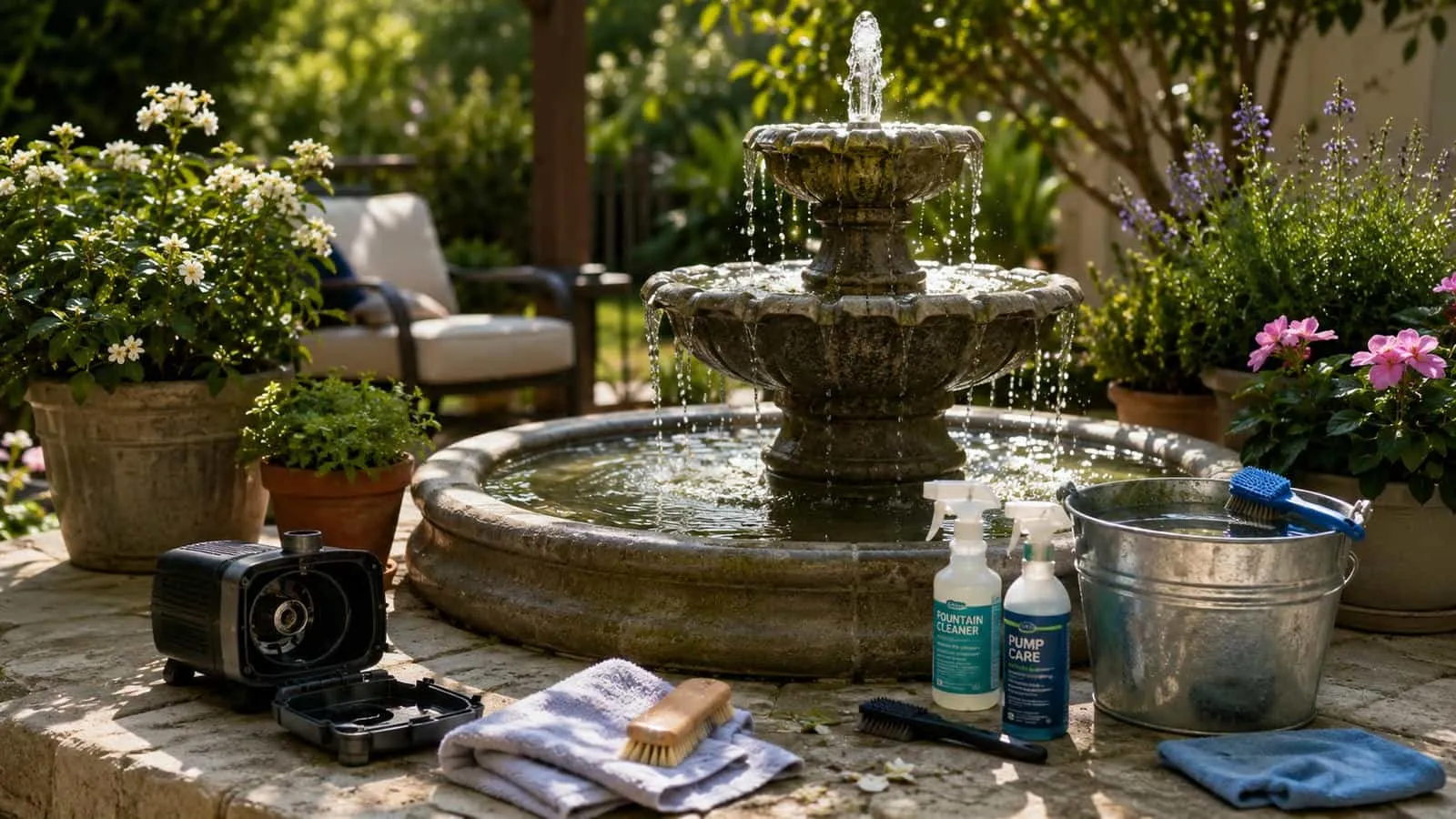
💧 What Is the Best Water Fountain Maintenance Routine?
The best water fountain maintenance routine keeps the basin clean, the pump protected, the water level steady and the water flow clear. Most fountains need quick weekly checks, deeper monthly cleaning, algae prevention, hard water care and seasonal protection. The right routine depends on sunlight, wind, leaves, fountain material, pump access, climate and how often the fountain runs.

Water fountain maintenance is not just about making the fountain look clean. It protects the pump, tubing, basin, finish, water flow and relaxing sound that make the fountain enjoyable in the first place. A fountain with low water can make the pump hum, rattle or burn out. A basin full of leaves can feed algae. Hard water can leave white mineral stains around spillways, bowls and splash zones.
The best routine depends on the setting. A fountain on a sunny patio may need more algae control and water level checks because heat increases evaporation. A garden fountain under trees may need more debris removal because leaves, seeds, pollen and insects collect in the basin. An indoor tabletop fountain stays protected from rain, leaves and freezing weather, but it still needs regular water changes, pump cleaning, mineral control and careful surface protection. Explore our tabletop water fountain ideas for indoor spaces to compare fountain placement, water sound, materials, furniture support, splash control and everyday maintenance.
Good maintenance also protects the experience of the space. Clear water, smooth water movement and a quiet pump make a patio, courtyard or garden seating area feel cared for. When a fountain starts to smell, splash, grow green water or lose flow, it quickly becomes another chore instead of a calming outdoor feature. A simple routine prevents most of those problems before they become difficult. If you are planning a complete outdoor water feature, our garden water fountain ideas guide explores fountain styles for flower beds, garden pathways, backyard landscapes and relaxing outdoor living spaces.
A well maintained water fountain usually becomes easier to care for over time because small problems are corrected before they grow into expensive repairs. Homeowners who regularly check the water level, clean the pump, remove leaves and control mineral buildup often spend less time replacing pumps, restoring stained finishes or troubleshooting poor water flow. Consistent maintenance is usually faster, less expensive and far more enjoyable than waiting until several problems appear at the same time.
If you are still planning your fountain setup, maintenance should connect with placement, type and material. You may want to compare the best water fountains for outdoor living spaces, explore the different water fountain types and designs, review the best water fountain materials for long term care, or use the water fountain placement guide for easier cleaning access.
💧 Quick Water Fountain Maintenance Comparison
Every fountain needs water, cleaning and pump care, but not every fountain needs the same routine. Use these quick maintenance comparisons to understand what matters most before choosing cleaners, pump tools, algae treatments, fountain covers or seasonal storage supplies.
Quick comparisons help you match the maintenance routine to the real fountain location.
- 🧽 Clean Water Priority Check the basin weekly so leaves, pollen, insects and dust do not settle into sludge or feed algae.
- ⚙️ Pump Protection Priority Keep the pump fully covered with water and rinse the intake screen before weak flow or humming starts.
- 🌿 Algae Control Priority Fountains in full sun, warm patios and garden beds need closer algae prevention than shaded indoor fountains.
- 🪨 Hard Water Priority White mineral stains appear faster where water splashes, evaporates and leaves calcium around edges or spillways.
- ❄️ Winter Care Priority Outdoor fountains in freezing climates need draining, drying, pump removal and protection before freeze thaw damage begins.
- 💦 Sound Quality Priority A steady water level and clean pump help the fountain keep a soft bubbling, gentle trickling or smooth cascading sound.
These quick maintenance signals help you avoid the biggest fountain care mistakes. The goal is not to overclean the fountain. The goal is to build a simple routine that keeps water moving, protects the pump and makes the fountain easy to enjoy through daily outdoor living.
Compare fountain cleaners, pump brushes, algae control products, water treatments, protective covers and small maintenance tools for outdoor and indoor fountains.
Choose simple supplies that help keep water clear, pump flow steady and fountain care easier through the season.
🛒 Shop Water Fountain Maintenance Supplies on Amazon
Section Summary Snapshot: The best water fountain maintenance routine is simple, but it must match the fountain location. Sun, wind, leaves, hard water, basin shape, pump access and climate all change how often the fountain needs cleaning, refilling and protection. A good routine keeps water clear, pump sound smoother and the fountain easier to enjoy.
📅 Water Fountain Maintenance Schedule for Weekly, Monthly and Seasonal Fountain Care
A water fountain maintenance schedule helps homeowners know what to check weekly, clean monthly and protect seasonally. Most fountains need water level checks, debris removal, basin cleaning, pump rinsing, algae prevention, mineral control and winter care. The exact schedule changes with sun exposure, wind, hard water, nearby plants, fountain size and how often the pump runs.

💧 Best Water Fountain Maintenance Schedule for Clean Water, Pump Care and Seasonal Protection
A maintenance schedule helps you avoid guessing. Instead of waiting until the water turns green, the pump gets loud or white mineral stains appear, you check small things on a predictable rhythm. This is especially helpful for patio fountains, garden fountains, courtyard fountains, balcony fountains, tabletop fountains and outdoor water features that run for long hours during warm weather. If you're planning a larger residential landscape, explore our backyard water fountain layouts for easier long-term maintenance to see how thoughtful property planning can simplify cleaning, pump access and seasonal care for years to come.
| 💧 Maintenance Task | 📅 Best Timing | 🌿 Why It Matters | 🔍 Homeowner Guidance |
|---|---|---|---|
| Check Water Level | Weekly, or more often in hot, sunny or windy weather. | Low water can expose the pump, create humming, reduce flow and shorten pump life. | Top off the basin before the pump begins pulling air or making a sharper sound. |
| Remove Leaves and Debris | Weekly, and every few days during heavy leaf drop or pollen season. | Organic debris feeds algae, clogs pump screens and makes the water smell stale. | Use a small net or gloved hand before debris sinks and breaks down in the basin. |
| Wipe Splash Areas | Weekly or every 2 weeks where hard water stains appear. | Evaporation leaves mineral rings, white stains and rough buildup on spillways and edges. | Wipe early before calcium deposits become harder to remove. |
| Clean the Basin | Every 2 to 4 weeks depending on sunlight, debris and water quality. | A clean basin reduces algae, bacteria, cloudy water and pump strain. | Use a soft brush and fountain safe cleaner based on the fountain material. |
| Rinse the Pump Intake | Monthly, or sooner if water flow weakens. | Clogged intake screens reduce circulation and can make the pump run hotter or louder. | Unplug the pump first, then rinse screens, covers and visible debris. |
| Clean Pump Impeller Area | Monthly to seasonally depending on use and debris. | The impeller controls water movement and can jam with grit, algae, hair or plant debris. | Use a small brush and follow the pump instructions so small parts are not lost. |
| Refresh or Replace Water | Every 2 to 4 weeks, or sooner if water smells, clouds or turns green. | Fresh water reduces algae pressure, odor, mineral concentration and organic buildup. | More frequent water changes may be needed in small basins and hot locations. |
| Seasonal Deep Cleaning | Spring opening, midseason refresh and fall shutdown. | Deep cleaning resets the fountain before heavy use, summer heat or winter storage. | Clean the basin, pump, tubing, spillways and surrounding splash areas together. |
| Winterize Outdoor Fountain | Before freezing temperatures arrive. | Standing water can freeze, expand and damage basins, tubing, pumps and fountain finishes. | Drain, dry, remove the pump and cover or store the fountain when possible. |
| 💧 The best water fountain maintenance schedule combines quick weekly checks, monthly cleaning and seasonal protection. Water level, debris, pump care, algae prevention, hard water control and winter preparation work together to keep the fountain clean, quiet and easier to maintain. | |||
💡 Pro Tip: Let the fountain tell you when the schedule needs to change. Louder pump noise, weak water flow, green water, white mineral rings, stale smell or faster evaporation all mean the fountain needs more frequent care than a basic schedule.
Compare fountain brushes, small pump cleaning tools, algae control products, water treatments, hard water stain removers and outdoor fountain covers.
Build a simple maintenance kit so weekly checks and monthly cleaning take less time.
🛒 Compare Fountain Maintenance Tools on Amazon
Section Summary Snapshot: A water fountain maintenance schedule prevents most common fountain problems before they become difficult. Weekly checks protect the pump and water level, monthly cleaning controls algae and debris, and seasonal care protects the fountain from heavy use, hard water and freezing weather. The best schedule changes with climate, location and fountain design.
🧽 How to Clean a Water Fountain for Clear Water, Better Flow and Easier Maintenance
To clean a water fountain, unplug the pump, remove loose debris, drain the basin, scrub the surface with a soft brush, rinse the pump intake, clear the tubing and refill with fresh water. Outdoor fountains in sun, wind, leaf drop or hard water need cleaning more often than protected indoor fountains or shaded patio fountains.

Cleaning a water fountain is one of the most important parts of fountain ownership because the basin, pump, tubing and water flow all work together. When leaves, pollen, dust, insects, algae and hard water deposits collect in the basin, the fountain may still look fine from a distance, but the pump can start working harder. That extra strain often shows up as weak water flow, louder humming or uneven splashing.
Outdoor fountain cleaning depends heavily on the environment. A patio fountain in full afternoon sun may grow algae faster because warm water and light encourage green buildup. A garden fountain under trees may collect leaves, seeds and flower petals after every windy day. A courtyard fountain near outdoor dining may need a quick wipe before guests arrive so the water looks clean and the sound feels calm beside seating. If you're creating an outdoor entertaining space, explore our patio water fountain ideas for decks, pergolas and outdoor seating to choose layouts that are both beautiful and easy to maintain.
Indoor water fountains are usually protected from rain, leaves and freezing weather, but they still need regular care. Tap water can leave mineral rings, dust can settle on the water surface and small pumps can clog if the basin is not cleaned. Whether your fountain sits in a living room, home office, bedroom, entryway or meditation space, the best cleaning routine is gentle, consistent and matched to the material, pump access, basin depth and water quality. For more advice on choosing, placing and caring for indoor fountains, explore our complete guide to choosing and caring for indoor water fountains.
🧽 Step by Step Water Fountain Cleaning Guide for Outdoor, Patio, Garden and Indoor Fountains
A good cleaning process protects the fountain while keeping the job simple. The safest routine is to unplug the pump first, remove debris before it breaks down, clean the basin gently, rinse pump parts carefully and refill with clean water before restarting the fountain.
🧽 Best Way to Clean a Water Fountain
🧽 Best Water Fountain Cleaning Method for Clear Water and Steady Pump Flow
The best way to clean a water fountain is to unplug it, remove debris, drain the basin, scrub gently with a soft brush, rinse the pump intake, check tubing and refill with fresh water. Avoid harsh cleaners unless they are safe for the fountain material, pump, birds, pets and nearby plants.
Start by unplugging the fountain before touching the pump or water. This protects you and helps prevent pump damage while the basin is empty. Remove leaves, twigs, insects and floating debris before draining the water because loose organic matter can clog drains, tubing or small pump openings.
Once the basin is empty, use a soft brush, sponge or cloth to clean the surface. Smooth resin, fiberglass, glazed ceramic and stainless steel usually clean faster than rough concrete, cast stone or natural stone. Textured materials may need more careful brushing because algae and mineral deposits can settle into small pores and grooves.
After cleaning, rinse the basin and refill it before turning the pump back on. Listen to the sound during restart. A clean fountain should return to a steady bubbling, gentle trickling or smooth cascading flow. If the pump hums, pulls air or sounds rough, the water level, intake screen or tubing may still need attention.
- 🔌 Unplug First Always disconnect power before cleaning the pump, basin or tubing.
- 🍂 Remove Debris Early Leaves, pollen and insects are easier to remove before they sink and break down.
- 🧽 Use Gentle Tools Soft brushes and cloths protect finishes better than metal scrapers or rough pads.
- 💧 Refill Before Restarting Keep the pump fully covered with water before turning the fountain back on.
- 👂 Listen After Cleaning Pump noise, weak flow or sputtering can reveal trapped air, low water or a remaining clog.
🧽 Cleaning Tip: Clean the fountain before the water looks bad. Once algae, sludge or mineral crust builds up, the job takes longer and the pump has already been working harder than it should.
🧴 Safe Water Fountain Cleaners, Vinegar, Brushes and Material Care
🧴 Safe Water Fountain Cleaning Products for Algae, Hard Water and Basin Care
Safe water fountain cleaners depend on the fountain material, nearby plants, birds, pets and pump parts. Mild soap, diluted vinegar, soft brushes and fountain safe cleaners can help with general cleaning, algae film and mineral buildup. Avoid bleach, harsh chemicals and abrasive tools unless the fountain manufacturer clearly says they are safe.
Many homeowners want to know if vinegar is safe for cleaning a fountain. Diluted white vinegar can help loosen light hard water stains and mineral buildup on many surfaces, but it should be used carefully. Natural stone, concrete, cast stone, copper finishes and sealed surfaces may react differently, so it is smart to test a small hidden area first.
Mild dish soap can help remove dirt and greasy film, but it must be rinsed well because soap residue can foam when the pump runs. Foam looks messy, changes the water surface and can make the fountain feel less natural. For fountains visited by birds, pets or wildlife, use products labeled for fountain use and avoid anything that could leave harmful residue.
The right tool matters as much as the cleaner. A soft brush can clean algae from textured basins without scratching. A small pump brush or bottle brush can reach tubing and narrow openings. A microfiber cloth works well on glazed ceramic, stainless steel and indoor fountains where fingerprints, dust or water spots are easier to see.
- 🧴 Use Mild Cleaners First Start gentle before moving to stronger products.
- 🪨 Protect Porous Materials Concrete, cast stone and natural stone can absorb cleaners if they are too harsh.
- 🐦 Think About Wildlife Birds, pets and pollinators may visit outdoor fountains, so avoid unsafe residue.
- 🧽 Match Tool to Surface Use soft brushes for textured basins and cloths for smooth decorative finishes.
- 💦 Rinse Completely Cleaner residue can cause foam, smell or cloudy water after the pump restarts.
🧴 Cleaner Tip: The safest cleaner is the one that fits the fountain material and the setting. A backyard fountain visited by birds needs a different cleaning mindset than a small indoor tabletop fountain on a desk.
⚙️ Cleaning the Fountain Pump, Basin, Tubing and Water Path
⚙️ How to Clean a Water Fountain Pump, Basin, Tubing and Spillway
Clean the fountain pump by unplugging it, removing the cover, rinsing the intake screen and gently clearing debris from the impeller area. Clean the basin and tubing at the same time so algae, grit, mineral buildup and plant debris do not return to the pump after the fountain restarts.
The pump is the heart of the fountain. Even when the basin looks clean, small debris can collect around the intake screen or impeller. A pump that is partly clogged may still run, but the water flow can become weaker, sharper or uneven. Over time, the sound may shift from a soft trickle to a strained hum.
Tubing also affects cleaning results. If the basin is scrubbed but the tubing stays dirty, algae film, grit or mineral flakes can move back into the fresh water. Small flexible brushes are useful for narrow tubing, especially on tiered fountains, wall fountains and tabletop fountains where the water path is partly hidden.
Spillways, bowls and edges need attention because they are where water evaporates and leaves minerals behind. Hard water stains often show up as white rings or rough crust around the places where water splashes. Cleaning these early helps protect the look of the fountain and keeps the water path smoother.
- ⚙️ Clean Pump Intake Rinse screens and covers so the pump can pull water without strain.
- 🌀 Check the Impeller Grit, algae and hair can stop the small moving part that pushes water.
- 💧 Flush the Tubing Dirty tubing can return algae and debris to fresh water.
- 🪨 Wipe Spillways Edges and bowls collect mineral buildup where water evaporates.
- 🎧 Test the Sound Smooth flow usually sounds steady, while clogs create sputtering or sharper pump noise.
⚙️ Pump Cleaning Tip: Never let the pump run while the basin is empty. A dry pump can overheat quickly and may fail even if the fountain itself looks clean.
⚠️ Common Water Fountain Cleaning Mistakes
⚠️ Water Fountain Cleaning Mistakes With Harsh Cleaners, Low Water, Pump Damage and Algae
Common water fountain cleaning mistakes include using harsh chemicals, scrubbing with abrasive tools, forgetting the pump, ignoring tubing, restarting with low water and waiting until algae becomes thick. These mistakes can damage finishes, strain the pump, leave cloudy water and make future cleaning harder.
The biggest cleaning mistake is treating every fountain material the same. A glazed ceramic fountain, stainless steel wall fountain, resin patio fountain and natural stone garden fountain all need different surface care. A cleaner that works on one finish may dull, stain or weaken another if used too often or left on too long.
Another common mistake is cleaning only what is visible. The fountain may look fresh after the basin is scrubbed, but the pump intake, tubing and hidden corners may still hold algae film and debris. When the pump restarts, that buildup can move back through the water and make the fountain cloudy again.
Waiting too long between cleanings also creates more work. A quick weekly check may take only a few minutes, but thick algae, mineral crust, stale water and clogged pump parts can turn fountain care into a longer weekend job. Regular cleaning keeps the fountain easier to manage and more enjoyable for everyday outdoor living.
- ⚠️ Avoid Harsh Chemicals Strong cleaners can harm finishes, pumps, plants, pets or visiting birds.
- 🧽 Do Not Scrape Aggressively Rough tools can scratch resin, ceramic, metal and sealed surfaces.
- ⚙️ Do Not Forget the Pump A clean basin still needs clean pump intake and impeller access.
- 💧 Do Not Restart Low Refill fully before turning the pump back on.
- 🌿 Do Not Wait for Green Water Early cleaning prevents algae from becoming thick and stubborn.
⚠️ Cleaning Mistake Tip: If the same problem keeps returning, do not only clean harder. Look at the cause. Sunlight, low water, hard water, nearby trees, poor pump access or shallow basin design may be creating the repeat problem.
Best choice A gentle weekly cleaning habit is best for homeowners who want clear water, a quieter pump and less weekend maintenance.
Common mistake Cleaning only the visible basin while leaving the pump intake, impeller area and tubing dirty.
Consider another option Use a deeper monthly cleaning routine when the fountain sits in full sun, under trees, near flower beds or in hard water areas.
Ideal homeowner Someone who wants a patio, garden, balcony or indoor fountain to look clean, sound calm and stay easy to maintain through regular use.
Browse soft brushes, pump cleaning tools, fountain safe cleaners, algae control products and hard water stain removers for outdoor and indoor fountains.
Choose gentle cleaning supplies that protect the basin, improve pump flow and make routine fountain care easier.
🛒 Browse Water Fountain Cleaning Supplies on Amazon
Section Summary Snapshot: Cleaning a water fountain protects the basin, pump, tubing, water flow and sound quality. The best routine starts with unplugging the pump, removing debris, scrubbing gently, rinsing pump parts and refilling with fresh water. Outdoor fountains may need more cleaning when sunlight, wind, leaves, pollen, insects, algae and hard water increase buildup.
⚙️ Water Fountain Pump Maintenance for Better Flow, Quieter Sound and Longer Pump Life
Water fountain pump maintenance keeps water moving clearly and helps prevent humming, weak flow, clogs and pump failure. The most important steps are keeping the basin filled, cleaning the intake screen, checking the impeller, clearing tubing and removing algae, grit, leaves and mineral buildup before they block water circulation.

The pump is the part of the fountain that turns still water into movement, sound and life. When the pump is clean and fully covered with water, the fountain usually runs with a smooth rhythm. When the pump is low, clogged or pulling air, the sound can change quickly from soft background water to a rough hum, sputter or uneven splash. To understand the difference between normal water sound, pump noise, flow-related changes and unwanted mechanical sound, explore our water fountain pump noise and sound troubleshooting guide.
Outdoor fountain pumps work in real garden conditions. Leaves fall into the basin, pollen floats on the surface, dust blows across patios, algae grows faster in warm sun and hard water can leave mineral deposits inside the water path. Even a good pump can struggle if the intake screen, impeller or tubing is blocked by buildup. If you are using a solar-powered fountain, keeping the solar panel clean, maintaining proper water levels and choosing the right pump system are equally important for reliable performance. Learn more in our complete solar water fountains guide covering solar pumps, battery backup, panel placement and long-term maintenance.
Pump maintenance also protects the homeowner experience. A quiet fountain near a patio chair feels relaxing after work, but a buzzing or rattling pump can make the space feel neglected. A few minutes of pump care each month can keep the fountain cleaner, calmer and easier to enjoy during outdoor meals, family visits or quiet evenings in the garden. For a complete maintenance schedule covering cleaning, algae prevention, pump care, hard water removal and seasonal protection, see our wall water fountains guide.
⚙️ How to Clean a Water Fountain Pump, Intake Screen, Impeller and Tubing
Pump cleaning should be gentle, careful and consistent. Most pump problems begin with low water, clogged screens, trapped air, algae film, grit or mineral buildup. Cleaning the pump while also checking the basin and tubing helps prevent the same debris from returning after the fountain restarts.
⚙️ How to Clean a Water Fountain Pump Safely
⚙️ Safe Water Fountain Pump Cleaning for Outdoor and Indoor Fountains
Clean a water fountain pump by unplugging it, removing the pump cover, rinsing the intake screen, brushing away debris and checking the impeller area. Never clean a pump while it is plugged in, and never restart the pump until the basin is refilled enough to fully cover it.
Always unplug the pump first. This protects both the homeowner and the pump. Once the power is disconnected, remove the pump from the basin if the fountain design allows it. Some tiered fountains, wall fountains and small tabletop fountains have pumps tucked into tight spaces, so take your time and avoid pulling hard on tubing or cords.
Rinse the pump cover and intake screen under clean water. Use a small soft brush to loosen algae, grit, plant debris and mineral buildup. If the pump has an impeller cover, open it carefully and clean the small moving part inside. The impeller is what helps push water through the tubing, so even a small amount of grit can reduce flow or create noise.
After cleaning, reconnect the tubing, place the pump flat in the basin and refill the fountain before turning it on. Listen for a smooth water rhythm. If the pump still hums, sputters or pushes weak water, check for trapped air, pinched tubing, low water level or buildup deeper in the water path.
- 🔌 Unplug Before Touching Never clean the pump while it is connected to power.
- ⚙️ Clean the Intake Screen This is where leaves, algae, insects and grit often collect first.
- 🌀 Check the Impeller A dirty impeller can cause weak flow, rattling or pump failure.
- 💧 Refill Before Restarting The pump should be fully underwater before power is restored.
- 👂 Listen After Cleaning A smooth pump should sound steady, not dry, sharp or strained.
⚙️ Pump Cleaning Tip: Take a quick photo before removing pump parts. It makes reassembly easier, especially with small pumps, tubing clips or covers that fit only one way.
💧 Why Is My Water Fountain Pump Flow Weak?
💧 Weak Water Fountain Flow Causes, Low Water, Clogged Pump, Tubing and Splash Problems
Weak water fountain flow is usually caused by low water level, clogged pump intake, dirty impeller, blocked tubing, trapped air, mineral buildup or a pump that is too small for the fountain. Cleaning the pump and restoring the right water level often fixes the problem before replacement is needed.
Low water is the first thing to check. Heat, wind and splashing can lower the basin level faster than many homeowners expect. When the pump starts pulling air, the fountain may sputter, lose height or make a sharper sound. A shallow basin on a hot patio may need refilling more often than a deeper garden fountain in light shade.
Clogs are another common cause. Algae, grit, pollen, insects and small leaves can reduce flow through the intake screen or tubing. Hard water can also narrow the water path over time, especially around spillways, nozzles and small tubing. When the opening gets smaller, the pump has to work harder to move the same amount of water.
Sometimes the pump is not broken, it is mismatched to the fountain. A tall tiered fountain, wall fountain or wide spillway may need a stronger pump than a small tabletop fountain. The right pump should create a steady water rhythm without splashing furniture, soaking walkways or overpowering conversation near seating. If cleaning and normal maintenance do not restore the intended flow, use our water fountain pump sizing and replacement guide to compare GPH, head height, delivered flow, tubing resistance and replacement pump requirements.
- 💧 Check Water Level First Low water is one of the simplest causes of weak fountain flow.
- 🍂 Look for Debris Leaves, pollen and insects can block the pump intake quickly.
- 🪨 Watch Mineral Buildup Hard water deposits can reduce flow through tubing and spillways.
- 🌀 Release Trapped Air Air pockets can make a pump sputter after cleaning or refilling.
- ⚙️ Compare Pump Size A pump that is too small may never create the flow the fountain needs.
💧 Flow Tip: Before buying a replacement pump, clean the intake screen, impeller and tubing. Many weak flow problems are caused by buildup, not pump failure.
🔊 Why Is My Water Fountain Pump Loud, Humming or Rattling?
🔊 Noisy Water Fountain Pump Causes, Humming, Vibration, Low Water and Impeller Problems
A noisy water fountain pump is often caused by low water, trapped air, vibration against the basin, clogged intake screens, dirty impeller parts or blocked tubing. The sound may be a hum, buzz, rattle or sputter depending on whether the pump is dry, clogged, loose or struggling to move water.
A fountain should usually sound like moving water, not like a motor. If the pump becomes the loudest part of the fountain, check the water level first. Pumps can hum or buzz when they are not fully submerged. This happens often during hot weather when evaporation lowers the basin or when splash sends water outside the fountain.
Vibration can also make a pump sound worse than it is. A pump resting directly against a hard basin wall may rattle, especially in ceramic, metal or fiberglass fountains where sound can echo. A small pump pad, better placement or stable leveling may reduce the noise and bring back a more conversation friendly water sound.
If the pump rattles after cleaning, the impeller cover may not be seated correctly, or grit may still be inside the pump. If the pump sputters, trapped air or low water may be the issue. If it hums but does not move water, the pump may be jammed, blocked or worn out.
- 🔊 Hum Means Check Water Low water often makes the pump sound louder than normal.
- 🌀 Rattle Means Check Placement The pump may be vibrating against the basin or sitting unevenly.
- ⚙️ Buzz Means Check the Impeller Debris or a stuck impeller can create a strained motor sound.
- 💦 Sputter Means Check Air Trapped air or low water can break the steady water flow.
- 🧽 Repeat Noise Means Clean Deeper Tubing, screens and hidden corners may still hold buildup.
🔊 Noise Tip: Do not turn up the pump to hide poor flow. Stronger flow can create more splash, faster evaporation and more water marks if the real problem is low water, clogging or poor leveling.
⚠️ Common Water Fountain Pump Maintenance Mistakes
⚠️ Water Fountain Pump Maintenance Mistakes With Low Water, Dry Running, Clogs and Wrong Pump Size
Common water fountain pump maintenance mistakes include running the pump with low water, ignoring the intake screen, forgetting the impeller, using harsh cleaners, leaving tubing blocked and replacing the pump before checking for simple clogs. These mistakes can shorten pump life and make the fountain louder.
The most damaging mistake is letting the pump run dry or partly exposed. A pump uses water for cooling and circulation. When the basin level drops too low, the pump can overheat, pull air and wear out faster. This is especially common in shallow fountains, full sun patios and windy spaces where evaporation and splash happen quickly.
Another mistake is only cleaning the basin. The water may look clear after scrubbing, but the pump intake and impeller can still hold grit, algae and hair. Once the fountain restarts, the same dirty water path creates weak flow or noise again. Pump care has to be part of the cleaning routine, not an afterthought.
Some homeowners replace pumps too quickly. A pump that hums, sputters or pushes weak water may only need cleaning, air release or a better water level. Replacement makes sense when the pump is cracked, worn out, badly noisy after cleaning or no longer strong enough for the fountain design.
- ⚠️ Do Not Run Low Keep the pump fully covered so it does not overheat or pull air.
- 🧽 Do Not Skip the Intake The screen collects debris before the rest of the pump does.
- 🌀 Do Not Ignore the Impeller A small jam can stop water movement or cause rattling.
- 💧 Do Not Forget Tubing Blocked tubing can make a good pump look weak.
- 🔍 Do Not Replace Too Soon Clean and test before assuming the pump is dead.
⚠️ Pump Mistake Tip: If a fountain pump fails repeatedly, look beyond the pump. Poor water level, hard water, full sun, blocked tubing, shallow basin depth or too much debris may be causing the repeat failure.
Best choice Monthly pump cleaning is best for most outdoor, patio, garden and indoor fountains that run regularly.
Common mistake Waiting until the pump hums, rattles or loses flow before checking the water level, intake screen and impeller.
Consider another option Replace the pump when cleaning, water level correction and tubing checks do not restore steady flow or quiet operation.
Ideal homeowner Someone who wants a fountain that sounds peaceful, runs reliably and does not turn into a constant repair project.
Compare replacement fountain pumps, pump brushes, tubing cleaners, intake screens and small maintenance tools for outdoor and indoor water fountains.
Keep water moving smoothly with the right pump care supplies for quiet flow and easier maintenance.
🛒 Browse Water Fountain Pumps on Amazon
Section Summary Snapshot: Water fountain pump maintenance protects water flow, sound quality and pump life. Most pump problems begin with low water, clogged intake screens, dirty impellers, blocked tubing, hard water buildup or trapped air. Regular pump care helps the fountain run with smoother movement, quieter sound and fewer frustrating maintenance problems.
🌿 Water Fountain Algae Prevention for Clear Water, Cleaner Basins and Healthier Pump Flow
Water fountain algae prevention starts with sunlight control, regular debris removal, clean water, steady circulation and gentle basin cleaning. Algae grows faster in warm sun, shallow water, still areas, leaf buildup and fountains with organic debris. A good routine protects the basin, pump, tubing, water flow and outdoor fountain appearance.

Algae is one of the most common water fountain maintenance problems because fountains create the conditions algae likes. Water, sunlight, warmth and organic debris all work together. A fountain beside flower beds, under trees or near a windy patio can collect pollen, leaves, insects and dust that break down in the basin and feed green water.
Algae prevention is easier than algae removal. A light green film on the basin can usually be cleaned quickly, but thick algae, slippery surfaces and cloudy green water take more effort. Once algae reaches the pump intake or tubing, it can reduce circulation, change the water sound and make the pump work harder.
The best algae control plan is not one single product. It is a routine. Keep water moving, remove debris early, control harsh sun when possible, clean the basin before buildup thickens and use fountain safe algae treatments only when they fit the fountain, plants, pets, birds and outdoor setting.
🌿 Why Algae Grows in Water Fountains, Outdoor Basins and Patio Water Features
Algae grows when light, warmth, water and nutrients come together. Outdoor fountains often collect natural nutrients from leaves, pollen, soil, insects and bird activity. Understanding the cause helps you fix the problem instead of only scrubbing green water again and again.
🌿 Common Causes of Algae in Water Fountains
🌿 Water Fountain Algae Causes From Sunlight, Debris, Warm Water and Weak Circulation
Algae grows in water fountains because of sunlight, warm water, organic debris, low circulation and dirty basins. Fountains in full sun, shallow bowls, leafy gardens or slow moving water usually develop algae faster than shaded fountains with clean basins and steady pump flow.
Full sun is one of the biggest algae triggers. A fountain on a hot patio may warm quickly during the afternoon, especially if the basin is shallow or dark colored. Warm water and bright light can turn a small algae film into cloudy green water faster than many homeowners expect.
Organic debris also matters. Leaves, pollen, flower petals, grass clippings and insects break down in the water. That debris feeds algae and can create stale smells. A fountain under a maple tree, near a flower bed or beside a windy pathway will usually need more frequent debris removal than a protected courtyard fountain.
Weak circulation can make the problem worse. When the pump intake is clogged, tubing is blocked or the water level is low, water may not move evenly through the fountain. Still corners, shallow edges and hidden basin pockets become easy places for algae to settle.
- ☀️ Full Sun Speeds Growth Warm bright water encourages algae faster than cool shaded water.
- 🍂 Leaves Feed Algae Organic debris breaks down and adds nutrients to the basin.
- 💧 Low Flow Creates Still Areas Weak circulation allows green film to settle in corners and tubing.
- 🧽 Dirty Basins Restart the Problem Algae left behind can return quickly after refilling.
- ⚙️ Clogged Pumps Reduce Circulation A dirty intake screen can make algae problems worse.
🌿 Algae Cause Tip: If algae returns quickly after cleaning, look at sunlight, debris and water movement. The problem is usually environmental, not just a dirty basin.
💧 How to Prevent Green Water in a Fountain
💧 How to Prevent Green Water in Outdoor Fountains, Garden Fountains and Patio Water Features
Prevent green water in a fountain by removing debris weekly, keeping the pump clean, refreshing water, reducing harsh sun when possible and cleaning algae film before it spreads. A fountain with steady circulation, clean surfaces and fewer nutrients is much less likely to turn green.
Start with the water level and pump flow. A fountain that runs low can lose circulation and create warmer, slower water. Keep the pump fully covered and listen for sound changes. A steady bubbling or gentle trickling sound usually means water is moving well, while sputtering or humming can mean low water, air or pump blockage.
Remove debris before it sinks. A few floating leaves may not look serious, but once they soften and break apart, they feed algae and can clog the pump screen. During windy days, pollen season or autumn leaf drop, a quick basin check every few days can prevent a larger cleaning job later.
Shade can help, but it needs balance. A fountain does not have to be hidden in deep shade, but afternoon protection, nearby plants, a pergola or filtered light can reduce heat and slow algae growth. Just avoid placing the fountain where too many leaves or seeds fall into the water.
- 💧 Keep Water Moving Steady circulation helps reduce stagnant spots where algae settles.
- 🧺 Skim Debris Often Remove leaves, insects and pollen before they sink.
- 🌤️ Use Light Shade Reducing harsh afternoon sun can slow green water.
- ⚙️ Clean Pump Screens Better flow supports cleaner water and quieter operation.
- 🧽 Scrub Early Film Light algae is easier to remove before it thickens.
💧 Green Water Tip: Do not wait until the whole basin turns green. Cleaning early algae film along edges and spillways keeps the water clearer and protects the pump from extra strain.
🧴 Safe Water Fountain Algae Control Products and Natural Care
🧴 Safe Algae Control for Water Fountains, Birds, Pets, Plants and Pump Parts
Safe fountain algae control depends on the fountain use, surrounding plants, pets, birds and water feature design. Fountain safe algae treatments, regular cleaning, fresh water, shade and pump maintenance can help. Avoid harsh chemicals if birds, pets or wildlife may drink from the fountain.
Some fountains are decorative only, while others attract birds, bees, butterflies, pets or wildlife. That difference matters. A backyard fountain near a garden bed should be treated more carefully than a closed indoor fountain. Any algae control product should match the setting and should not leave unsafe residue in water that animals may visit.
Fountain safe treatments can be useful when sunlight and heat make algae difficult to control, but they should support maintenance, not replace it. If the basin is full of leaves or the pump is clogged, algae treatment alone will not solve the cause. Clean water, clear tubing and steady circulation still matter.
Natural care methods can also help. More frequent debris removal, partial shade, fresh water changes, pump cleaning and gentle brushing reduce the conditions algae needs. This is often enough for small patio fountains, indoor fountains and shaded garden fountains with light algae pressure.
- 🧴 Read Product Labels Use treatments made for fountains, not random household chemicals.
- 🐦 Protect Birds and Pets Avoid unsafe residue if animals may drink or bathe.
- 🌿 Support With Cleaning Algae control works better when debris and sludge are removed first.
- ⚙️ Protect the Pump Products should not damage pump parts, tubing or seals.
- 💧 Refresh Water When Needed Old water can hold nutrients that encourage algae growth.
Algae prevention products can be helpful, but they should not be used as a substitute for basic fountain care. A clean basin, correct water level, steady pump flow and fewer leaves in the water usually do more for long term algae control than relying on treatments alone.
🧴 Algae Treatment Tip: When in doubt, choose the gentlest fountain safe method first. This is especially important for bird friendly fountains, pet areas, garden beds and fountains near edible plants.
⚠️ Common Water Fountain Algae Prevention Mistakes
⚠️ Water Fountain Algae Mistakes With Sunlight, Debris, Chemicals, Pump Flow and Green Water
Common algae prevention mistakes include placing fountains in harsh sun without a care plan, letting leaves decay in the basin, ignoring weak pump flow, using harsh chemicals and waiting until water turns fully green. These mistakes make algae harder to control and can shorten pump life.
One common mistake is thinking algae is only a cleaning issue. Algae is also a placement, water quality and circulation issue. A fountain in full sun with a shallow basin and falling leaves will need more care than a shaded fountain with deep water and strong pump flow.
Another mistake is using harsh cleaners too quickly. Strong chemicals may clear algae, but they can also harm finishes, pumps, plants, birds or pets if used incorrectly. They may also fail to fix the real cause if sunlight, debris and poor flow stay the same.
Many homeowners also wait too long. Light green film is simple to remove. Thick green water, slippery stone, clogged tubing and a weak pump are harder. The best approach is prevention, not rescue cleaning every few weeks.
- ⚠️ Do Not Ignore Sunlight Harsh sun can make algae return quickly after cleaning.
- 🍂 Do Not Leave Debris Decaying leaves and pollen feed green water.
- ⚙️ Do Not Ignore Weak Flow Poor circulation creates algae friendly still spots.
- 🧴 Do Not Overuse Chemicals Strong treatments can create risks if birds, pets or plants are nearby.
- 🧽 Do Not Wait Too Long Early cleaning keeps algae from spreading into tubing and pump parts.
Best choice Regular algae prevention for outdoor fountains in sun, warm patios, leafy gardens, courtyards and backyard water features.
Common mistake Treating green water without fixing the sunlight, debris, low flow or dirty basin that caused it.
Consider another option Use more shade, better pump cleaning or a deeper basin routine if algae keeps returning quickly.
Ideal homeowner Someone who wants clear fountain water, easier cleaning, quiet pump flow and a backyard feature that feels fresh instead of neglected.
⚠️ Algae Mistake Tip: If the same green water returns after every cleaning, stop treating the symptom only. Check light exposure, basin depth, pump strength, debris sources and hard water buildup.
Compare fountain safe algae treatments, soft basin brushes, small nets, pump cleaning tools and water care supplies for outdoor and indoor fountains.
Keep fountain water clearer with gentle products that support regular cleaning and healthy pump flow.
🛒 Browse Fountain Algae Control Supplies on Amazon
Section Summary Snapshot: Water fountain algae prevention works best when sunlight, debris, water level, pump flow and basin cleaning are managed together. Green water usually develops faster in warm sun, shallow basins, leafy gardens and fountains with weak circulation. Regular debris removal, fresh water, pump cleaning and safe algae control keep fountains clearer and easier to maintain.
🪨 Hard Water Stains and Mineral Buildup on Water Fountains
Hard water stains on water fountains happen when water evaporates and leaves calcium, lime and mineral deposits behind. White rings, rough crust, cloudy edges and stained spillways usually appear near splash zones, basin rims and water paths. Early cleaning, better water habits and gentle mineral removal help protect the fountain finish.

Hard water stains are one of the most common water fountain maintenance problems because moving water constantly splashes, dries and leaves minerals behind. Calcium and lime deposits often appear as white marks around the basin rim, rough buildup on spillways, cloudy spots on glazed surfaces or crusty edges where water flows and evaporates.
Outdoor fountains can show mineral buildup faster during hot, dry or windy weather. Evaporation removes water but leaves minerals behind. A patio fountain in full sun may develop white rings sooner than a shaded garden fountain. A fountain with brighter splash, shallow basins or narrow spillways may also collect mineral marks where droplets land and dry repeatedly.
Hard water care is partly about cleaning and partly about prevention. Scrubbing too hard can damage resin, ceramic, metal, natural stone or sealed concrete. Waiting too long can make mineral crust harder to remove. The best routine uses gentle cleaners, soft tools, regular wiping and water habits that reduce buildup before it becomes stubborn.
🪨 Why Water Fountains Get White Stains, Calcium Rings and Mineral Deposits
White stains usually come from dissolved minerals in tap water. When fountain water splashes or evaporates, minerals stay on the surface. Over time, those deposits can build into visible rings, rough edges and cloudy marks that make the fountain look older than it is.
🪨 Why Does My Water Fountain Have White Stains?
🪨 Why Water Fountains Get White Mineral Stains From Hard Water and Evaporation
Water fountains get white stains when hard water evaporates and leaves calcium, lime and other minerals on the basin, spillway and splash areas. The stains appear faster in full sun, windy patios, shallow basins and fountains with frequent splash.
Hard water contains dissolved minerals. Those minerals are not always obvious when the fountain is freshly filled, but they become visible as water evaporates. The more often water splashes onto a surface and dries, the faster mineral buildup appears.
Splash zones are the first places to check. Basin rims, tier edges, bowls, spillways, wall fountain tracks and decorative rocks often collect the most buildup. If the pump is too strong or the fountain is not level, water may splash more than it should and leave stains on nearby pavers, walls or furniture.
Materials also matter. Glazed ceramic and stainless steel may show spots clearly because the surface is smooth and reflective. Natural stone, concrete and cast stone may hide stains at first but hold minerals in textured pores. Resin and fiberglass may be easier to wipe, but harsh scrubbing can still damage the finish.
- 💧 Evaporation Leaves Minerals Water disappears, but calcium and lime remain on the fountain surface.
- ☀️ Heat Speeds Buildup Full sun and dry air make water evaporate faster.
- 🌬️ Wind Increases Splash Blown water can leave spots on pavers, walls and patio furniture.
- 🪨 Texture Holds Deposits Rough stone and concrete can trap minerals in small pores.
- ⚙️ Narrow Water Paths Can Clog Heavy buildup can reduce flow through small openings and spillways.
🪨 Hard Water Tip: If white stains keep forming in the same spot, check the water flow. The issue may be splash, pump strength, leveling or evaporation instead of cleaning alone.
🧽 How to Remove Mineral Buildup From a Water Fountain
🧽 How to Remove Calcium Buildup, Lime Deposits and White Stains From a Water Fountain
Remove mineral buildup from a water fountain by unplugging the pump, draining the basin, softening the deposits, scrubbing gently with a non abrasive brush and rinsing well. Use material safe cleaners because vinegar or stronger removers may not be right for natural stone, concrete, copper or sealed finishes.
Start gently. Many light water marks can be removed with a damp cloth, soft brush and patient wiping. If the deposit is thicker, it may need time to soften before scrubbing. Avoid metal brushes, sharp tools and rough pads because they can scratch glaze, resin, metal coatings and sealed surfaces.
Diluted vinegar is often used for mineral stains, but it is not ideal for every fountain. Acidic cleaners can affect natural stone, concrete, cast stone, limestone, copper finishes and some sealers. Test a hidden spot first and rinse fully before refilling the fountain.
For stubborn deposits, a fountain safe mineral remover may be better than guessing with household products. This is especially true for decorative fountains with special finishes, indoor fountains near furniture or outdoor fountains visited by birds and pets.
- 🔌 Unplug First Disconnect power before draining, scrubbing or cleaning near the pump.
- 🧽 Use Soft Tools Soft brushes and cloths protect glaze, resin, metal and sealed surfaces.
- 🧴 Test Cleaners First Vinegar and mineral removers can affect some stone, concrete and metal finishes.
- 💧 Rinse Completely Cleaner residue can cloud water, foam or affect wildlife safety.
- ⚙️ Check Small Openings Mineral buildup can hide inside spillways, tubing and pump screens.
🧽 Cleaning Tip: Do not scrape mineral crust with a screwdriver, knife or wire brush. It may remove the stain, but it can also leave permanent surface damage.
💧 How to Prevent Hard Water Stains on Water Fountains
💧 How to Prevent Hard Water Stains, Calcium Rings and Mineral Buildup on Fountains
Prevent hard water stains by wiping splash areas early, keeping the fountain level, reducing unnecessary splash, refreshing water, cleaning basin edges and using better water when needed. Fountains in hot sun, windy patios or hard water areas need closer mineral stain prevention.
The easiest prevention habit is wiping visible splash areas before the marks harden. A quick wipe around basin rims, tier edges and spillways can prevent light mineral spots from becoming rough buildup. This is especially helpful before guests visit or before a weekend patio meal.
Water flow also affects stains. If the pump is too strong, droplets may land outside the basin and dry on patio pavers, walls or furniture. If the fountain is not level, water may run heavily down one side and leave a thick mineral trail. Adjusting the pump or leveling the basin can reduce repeat staining.
Water choice can help in some homes. Distilled water or filtered water may reduce mineral buildup in small indoor fountains and tabletop fountains. For large outdoor fountains, that may not be practical, so regular wiping, fresh water changes and splash control usually matter more.
- 🧽 Wipe Early Fresh spots are easier to remove than hardened mineral crust.
- ⚙️ Adjust Pump Flow Less splash can mean fewer white marks around the fountain.
- 📏 Level the Fountain Uneven water paths create repeat mineral trails.
- 💦 Refresh Water Old water can become more mineral concentrated as evaporation continues.
- 🏡 Use Better Water When Practical Filtered or distilled water can help small indoor fountains.
💧 Prevention Tip: Watch where water lands after the fountain runs for an hour. The dry spots around that splash pattern are where mineral stains will likely form first.
⚠️ Common Hard Water Cleaning Mistakes
⚠️ Hard Water Fountain Mistakes With Vinegar, Scrubbing, Stone, Metal, Pumps and Sealers
Common hard water fountain mistakes include using vinegar on sensitive stone, scrubbing with abrasive tools, ignoring splash causes, letting mineral crust harden and forgetting the pump screen. These mistakes can damage finishes, worsen staining and allow buildup to affect water flow.
The biggest mistake is treating every fountain surface the same. Glazed ceramic, stainless steel, resin, copper, concrete, cast stone and natural stone all react differently to cleaners. A cleaner that works well on one surface may dull, stain or etch another.
Another mistake is scrubbing harder instead of solving the cause. If one spillway keeps turning white, the fountain may be splashing too much, running unevenly or sitting in full sun. Cleaning helps, but flow adjustment and better water habits prevent the same stain from returning.
Homeowners also forget that mineral buildup can affect the pump and tubing. Small flakes can move into the water path, clog screens and reduce flow. If the fountain sounds weaker after heavy mineral buildup, clean the pump intake and tubing along with the visible basin stains.
- ⚠️ Do Not Guess With Cleaners Test products before using them on stone, metal, sealed or glazed surfaces.
- 🧽 Do Not Scrub Too Hard Harsh tools can scratch or strip the fountain finish.
- 💦 Do Not Ignore Splash Repeat stains often come from pump strength, wind or uneven leveling.
- ⚙️ Do Not Forget the Pump Mineral flakes can clog intake screens and tubing.
- ☀️ Do Not Wait Too Long Heat and evaporation can turn light spots into hard crust.
Best choice Gentle hard water care for fountains with white stains, calcium rings, lime deposits, cloudy edges or mineral buildup around spillways.
Common mistake Scrubbing hard water stains aggressively without checking whether the cleaner is safe for the fountain material.
Consider another option Improve splash control, pump flow, leveling or water choice if mineral stains return quickly after cleaning.
Ideal homeowner Someone who wants a cleaner looking fountain, smoother water flow and less white buildup around patios, courtyards, gardens or indoor water features.
⚠️ Hard Water Mistake Tip: If a cleaner removes the stain but dulls the finish, it solved one problem and created another. Always match the cleaner to the fountain material.
Compare fountain safe mineral removers, calcium buildup cleaners, soft brushes, microfiber cloths and pump cleaning tools for indoor and outdoor water fountains.
Remove white stains gently while protecting the basin, finish, pump and water flow.
🛒 Browse Fountain Hard Water Cleaning Supplies on Amazon
Section Summary Snapshot: Hard water stains and mineral buildup form when fountain water evaporates and leaves calcium, lime and other deposits behind. White rings usually appear around basin rims, splash zones, spillways and textured surfaces. Early wiping, safe cleaners, pump care, better water habits and splash control help protect the fountain finish and keep water moving clearly.
❄️ Outdoor Fountain Winter Care for Freezing Weather, Pump Protection and Seasonal Storage
Outdoor fountain winter care protects the basin, pump, tubing, finish and water path before freezing weather arrives. The safest routine is to unplug the pump, drain the fountain, remove debris, dry the basin, protect or store the pump and cover the fountain so trapped water does not freeze, expand and cause damage.

Winter is one of the hardest seasons on outdoor water fountains because water expands when it freezes. A small amount of trapped water inside a basin, pump housing, tubing, decorative opening or stone pocket can create pressure as temperatures drop. That pressure can crack surfaces, stress seals, damage pumps and make spring startup much harder.
Good winter fountain care is not only for very large fountains. Small patio fountains, ceramic urn fountains, resin fountains, concrete fountains, cast stone fountains and natural stone fountains can all be damaged when water is left inside them. Multi level designs require closer attention because water can remain inside stacked bowls, spillways, tubing and pedestal compartments. Explore our tiered water fountains for gardens and landscapes to compare two tier, three tier and four tier designs by materials, pump access, seasonal maintenance, winter drainage and long term outdoor care. The risk of freeze damage is higher in cold climates, shaded yards, north facing patios and garden corners where snow and ice remain longer.
The best winter routine is simple. Clean the fountain before cold weather, remove leaves and sludge, drain all standing water, protect the pump and cover the fountain if it cannot be moved indoors. This keeps the fountain easier to restart in spring and helps protect the calm water sound, steady pump flow and garden beauty you enjoyed through the warm season.
| ❄️ Winter Task | 🏡 Why It Matters | 🔍 Best Timing | 💧 Homeowner Guidance |
|---|---|---|---|
| Drain the Basin | Standing water can freeze, expand and stress the fountain surface. | Before the first hard freeze. | Remove as much water as possible from bowls, tiers, pockets and low spots. |
| Remove the Pump | Pumps can crack, seize or fail if water freezes inside them. | During fall shutdown. | Clean, dry and store the pump indoors when the fountain design allows it. |
| Clear the Tubing | Water trapped in tubing can freeze and block spring water flow. | After draining the fountain. | Disconnect tubing if possible and let it drain fully before covering. |
| Clean Leaves and Sludge | Organic debris can stain surfaces and clog the pump in spring. | Before storage or covering. | Brush the basin gently and rinse away algae film, leaves and sediment. |
| Cover the Fountain | A cover helps reduce snow, ice, rain and debris collecting inside the basin. | After the fountain is dry. | Use a breathable outdoor fountain cover instead of sealing moisture inside. |
❄️ How to Winterize an Outdoor Water Fountain Before Freezing Weather
Winterizing an outdoor fountain means removing water from the parts most likely to freeze. The basin, pump, tubing, tiers, bowls and small decorative openings all need attention. A dry fountain is much safer than a fountain that looks drained but still holds hidden water. Homeowners choosing a fountain for a street-facing entrance can also use our front yard fountain planning for seasonal exposure guide to consider winter appearance, snow clearance, placement, house scale, walkways, landscaping and year round curb appeal before installation.
❄️ How Do You Winterize an Outdoor Water Fountain?
❄️ Winterize Outdoor Fountain Steps for Draining, Drying, Covering and Pump Storage
Winterize an outdoor fountain by unplugging the pump, draining the basin, removing debris, cleaning algae film, clearing tubing, drying low spots and covering or storing the fountain. In freezing climates, remove the pump and store it indoors whenever possible.
Start by unplugging the fountain and turning off the pump. Remove leaves, twigs, insects, algae film and soil before draining the water. Cleaning first keeps debris from settling into small corners and helps prevent stains during winter.
Drain every bowl, tier, basin pocket and water path. Some fountains look empty but still hold water in small grooves, pump chambers or tubing. Use a towel, sponge or wet dry vacuum if needed. The goal is to remove water from any place where freezing expansion could create pressure.
After draining, let the fountain dry. A fountain cover should protect from snow and debris, but it should not trap moisture against the surface. Breathable protection is often better than sealing damp surfaces under plastic for the entire winter.
- 🔌 Unplug First Disconnect power before draining or handling the pump.
- 🍂 Remove Organic Debris Leaves and sludge can stain the basin over winter.
- 💧 Drain Hidden Water Check bowls, tubing, pump chambers and decorative pockets.
- 🌬️ Let It Dry Dry surfaces are safer before covering.
- 🛡️ Cover After Drying Use protection that reduces snow, ice and debris buildup.
❄️ Winterizing Tip: Do not rely on the fountain simply being turned off. A turned off fountain with water still inside can freeze and crack.
⚙️ How to Protect a Fountain Pump During Winter
⚙️ Winter Fountain Pump Protection, Cleaning, Drying and Indoor Storage
Protect a fountain pump during winter by unplugging it, removing it from the fountain, cleaning the intake screen, clearing the impeller, drying the housing and storing it indoors. If the pump cannot be removed, drain and protect the pump area as much as possible.
The pump is one of the most vulnerable parts of a winter fountain system. Water can remain inside the pump housing, around the impeller or inside the tubing. When that water freezes, it can crack small parts or leave the pump stuck when spring arrives.
Clean the pump before storing it. Rinse the intake screen, remove algae film and check the impeller area for grit or plant debris. Let the pump dry before storage unless the pump instructions recommend a different method. Keep the cord loosely wrapped and avoid storing it where it may be crushed.
If the pump is built into a larger fountain and cannot be removed easily, focus on draining the pump chamber and clearing the tubing. A protected pump area is still better than leaving standing water around the motor through freeze thaw cycles.
- ⚙️ Remove the Pump When Possible Indoor storage gives the best freeze protection.
- 🧽 Clean Before Storage Algae and grit are easier to remove before they dry in place.
- 🌀 Check the Impeller Clear small debris before spring startup.
- 💧 Drain Tubing Water trapped in tubing can freeze and block flow.
- 📦 Store Carefully Keep cords loose and avoid crushing pump parts.
⚙️ Pump Storage Tip: Label the pump or place it in a small bin with its tubing and fittings. Spring setup is much easier when all parts stay together.
🪨 Winter Care by Fountain Material, Resin, Ceramic, Stone, Concrete and Metal
🪨 Winter Fountain Care by Material for Resin, Ceramic, Concrete, Cast Stone, Natural Stone and Metal Fountains
Winter fountain care depends on the material. Resin and fiberglass are easier to move, ceramic needs strong freeze protection, concrete and cast stone need full drainage, natural stone needs water pockets cleared and metal fountains need pump, tubing and finish care.
Resin and fiberglass fountains are often easier to store because they are lighter than concrete or stone. If space allows, draining, cleaning and moving them into a garage, shed or protected area can reduce winter stress. They should still be cleaned and dried before storage.
Ceramic fountains need extra care in freezing climates. Trapped water can crack ceramic, especially in small openings, glazed bowls or decorative pockets. A ceramic fountain is often best treated as a seasonal patio fountain that gets stored dry before winter.
Concrete, cast stone and natural stone fountains feel durable, but they are not safe when water freezes inside them. Drain all bowls, tiers and low spots. Natural stone can also hold water in textured pockets, so careful drying and covering matter.
Metal fountains need finish awareness. Copper patina and stainless steel water marks may not be the main winter danger, but trapped water in pumps, tubing and basin seams still matters. Clean the surface, drain the system and protect the fountain from repeated ice buildup.
- 🌿 Resin and Fiberglass Drain, clean and store if possible for easier seasonal protection.
- 🏺 Ceramic Protect carefully from trapped water and hard freezes.
- 🪨 Concrete and Cast Stone Drain bowls, tiers and low spots before freeze thaw cycles.
- 🏔️ Natural Stone Clear water pockets and protect porous textured areas.
- 🔩 Metal Manage pump, tubing, finish care and ice exposure.
🪨 Material Tip: The heavier the fountain, the more important it is to winterize it in place correctly. Once snow and ice arrive, moving or drying a large fountain becomes much harder.
⚠️ Common Outdoor Fountain Winter Care Mistakes
⚠️ Outdoor Fountain Winter Care Mistakes With Freezing Water, Pumps, Covers, Tubing and Spring Damage
Common outdoor fountain winter care mistakes include leaving water in the basin, forgetting the pump, using a cover over a wet fountain, ignoring tubing, waiting until after a freeze and assuming durable materials are freeze proof. These mistakes can cause cracks, pump failure and spring startup problems.
The biggest mistake is leaving water inside the fountain. Even a small amount can freeze and expand. This is especially risky in bowls, tiers, pump pockets and narrow tubing. A fountain does not need to be full of water to suffer freeze damage.
Another mistake is covering the fountain while it is still wet or full of debris. A cover is helpful, but trapped moisture, leaves and sludge can stain surfaces and create odor. Clean and dry the fountain first so the cover protects instead of trapping problems inside.
Many homeowners also wait too long. Once the first hard freeze hits, pump removal, tubing checks and basin drying become more difficult. Fall is usually the best time to shut down, clean and protect the fountain before winter weather settles in.
- ⚠️ Do Not Leave Water Inside Trapped water is the main winter risk.
- ⚙️ Do Not Forget the Pump Pump parts can crack, seize or fail after freezing.
- 🛡️ Do Not Cover a Wet Fountain Dry the basin first to reduce trapped moisture.
- 💧 Do Not Ignore Tubing Small lines can hold enough water to freeze and block flow.
- ❄️ Do Not Wait Too Long Winterizing is easier before the first hard freeze.
Best choice Full winter fountain care for outdoor fountains in cold climates, freezing regions, shaded yards and patios where snow or ice may collect.
Common mistake Turning the fountain off but leaving water inside the basin, pump chamber or tubing.
Consider another option Store lightweight resin, fiberglass or ceramic fountains indoors when practical instead of leaving them exposed.
Ideal homeowner Someone who wants their fountain to survive winter and restart smoothly in spring without cracks, leaks or pump problems.
⚠️ Winter Mistake Tip: If you only have time for one winter task, remove the water. Most serious winter fountain damage starts with trapped water freezing where it should not be.
Compare outdoor fountain covers, pump storage supplies, soft cleaning brushes, tubing tools and seasonal maintenance products for winter fountain protection.
Protect your fountain from freezing water, snow, ice, debris and spring startup problems.
🛒 Browse Outdoor Fountain Winter Covers on Amazon
Section Summary Snapshot: Outdoor fountain winter care protects the basin, pump, tubing, finish and water path from freezing weather. The safest routine is to unplug, clean, drain, dry, remove or protect the pump and cover the fountain after it is dry. Winter care matters for resin, ceramic, concrete, cast stone, natural stone and metal fountains because trapped water can damage more than the visible surface.
🍂 Seasonal Fountain Maintenance for Spring Startup, Summer Care, Fall Cleaning and Winter Protection
Seasonal fountain maintenance keeps a water fountain easier to clean and safer to run through changing weather. Spring focuses on startup, summer needs water level checks and algae control, fall requires debris removal and winter preparation protects the pump, basin and tubing from freezing damage.

Seasonal fountain maintenance helps homeowners stay ahead of problems instead of reacting after the water turns green, the pump gets loud or winter damage appears. A fountain sits in a real outdoor setting, so the maintenance routine should change as the garden changes. Spring pollen, summer heat, fall leaves and winter freezes all create different needs.
In spring, the goal is to restart the fountain cleanly. That means checking the pump, tubing, basin, water path and power connection before letting the fountain run every day. In summer, the main concerns are evaporation, algae, warm water and pump strain. In fall, leaves and debris become the biggest challenge. In winter, the priority is removing trapped water and protecting the fountain from freeze thaw stress.
A seasonal routine also makes ownership feel easier. Instead of doing one large cleaning job when the fountain already looks neglected, small seasonal steps keep the water clear, the pump smoother and the patio or garden space more inviting for everyday use.
| 🍂 Season | 💧 Main Fountain Task | 🌿 Biggest Maintenance Risk | 🔍 Best Homeowner Action |
|---|---|---|---|
| Spring | Restart the fountain, inspect pump parts, clean the basin and refill with fresh water. | Hidden winter debris, dried algae, cracked tubing or pump issues after storage. | Test the pump before full seasonal use and listen for smooth water flow. |
| Summer | Check water level, control algae, remove insects and clean splash areas. | Evaporation, green water, warm basin temperatures and hard water rings. | Top off water often and clean algae film before it thickens. |
| Fall | Remove leaves, clean the basin, rinse the pump and prepare for shutdown. | Leaf decay, clogged pump screens, sludge and staining from organic debris. | Skim leaves often and plan winter care before the first hard freeze. |
| Winter | Drain, dry, cover or store the fountain and protect the pump and tubing. | Freezing water, cracked basins, damaged pumps and trapped moisture. | Remove water from bowls, pockets, tubing and pump areas before freezing weather. |
🌱 Spring Fountain Startup for Clean Water, Pump Testing and Fresh Seasonal Flow
Spring is the best time to inspect the fountain before daily use begins. Even if the fountain was covered or stored, the pump, basin, tubing, water path and finish should be checked before the first long run of the season.
🌱 Spring Water Fountain Startup Checklist
🌱 Spring Fountain Startup Checklist for Outdoor Water Fountains, Pumps and Basins
Start a fountain in spring by removing the cover, cleaning the basin, checking the pump, reconnecting tubing, inspecting cracks, filling with fresh water and testing flow. Listen for humming, sputtering or weak movement before running the fountain for long periods.
Begin by removing any cover, leaves, dust or stored parts. Look inside the basin for winter debris, old algae film, mineral residue or small cracks. A quick inspection before filling the fountain can prevent water leaks, pump strain or messy spring cleanup later.
Next, check the pump and tubing. A pump stored indoors may only need a rinse and reconnection. A pump left in place may need extra cleaning around the intake screen and impeller. Tubing should be checked for cracks, stiffness, blockage or loose fittings.
Once the fountain is clean and filled, turn it on briefly and watch the water path. The flow should look steady and sound smooth. A dry hum, weak trickle or sputtering sound usually means low water, trapped air, dirty pump parts or blocked tubing.
- 🌱 Inspect Before Filling Look for cracks, debris, stains, loose parts and winter damage.
- ⚙️ Test the Pump Clean the intake screen and check water flow before long use.
- 💧 Use Fresh Water Start the season with clean water instead of old stored water.
- 🧽 Clean the Basin Remove dried algae, dust and mineral marks before daily running.
- 👂 Listen Closely Humming, rattling or sputtering can reveal early pump issues.
🌱 Spring Tip: Let the fountain run for a short test period before leaving it on all day. This helps you catch leaks, pump noise and uneven flow early.
☀️ Summer Fountain Care for Heat, Evaporation, Algae and Pump Protection
☀️ Summer Water Fountain Maintenance for Full Sun, Hot Patios, Algae and Low Water
Summer fountain care focuses on water level, algae prevention, pump protection and hard water control. Heat, full sun, wind and splash can lower water quickly, warm the basin, encourage green water and leave mineral rings around spillways and edges.
Summer heat changes fountain maintenance quickly. Water evaporates faster, especially from shallow basins and fountains in full sun. A pump that was fully covered in the morning can start pulling air by late afternoon if the fountain is small, splashy or exposed to wind.
Algae also grows faster in warm sunlight. A fountain near a sunny patio, flower bed or vegetable garden may need closer attention because pollen, dust, insects and plant debris collect in the water. Removing debris early keeps the basin cleaner and reduces nutrients that feed algae.
Hard water marks often become more visible in summer because evaporation leaves minerals behind. Wiping basin rims, spillways and splash zones once or twice a week can keep white stains from turning into thick buildup.
- ☀️ Check Water Often Hot sun and wind can lower the basin faster than expected.
- 🌿 Clean Algae Early Light green film is easier to remove than thick summer buildup.
- ⚙️ Protect the Pump Keep the pump underwater so it does not hum, overheat or pull air.
- 🪨 Wipe Mineral Rings Summer evaporation can leave white hard water marks.
- 🌤️ Add Light Shade Afternoon shade can reduce heat, algae pressure and water loss.
☀️ Summer Tip: During very hot weather, check the fountain at the same time you water patio plants. It turns water level checks into a simple outdoor habit.
🍂 Fall Fountain Cleaning for Leaves, Debris, Sludge and Winter Prep
🍂 Fall Water Fountain Cleaning for Leaf Drop, Pump Screens, Basin Sludge and Seasonal Shutdown
Fall fountain cleaning focuses on removing leaves, seeds, sludge and organic debris before they clog the pump or stain the basin. Fall is also the best time to clean the fountain deeply and prepare for winter shutdown before freezing weather arrives.
Fall leaf drop can change fountain care overnight. A fountain that stayed clean in August may collect leaves every day in October. Leaves that float for a few hours are easy to remove. Leaves that sink and decay can stain the basin, feed algae and clog the pump intake.
Fall is also the right time to check whether the fountain should keep running or begin shutdown. In mild climates, some fountains may run longer with regular care. In colder climates, it is smarter to clean, drain and winterize before freezing temperatures make the job harder.
If the fountain is near trees, shrubs or garden beds, use fall cleaning as a reset. Scrub the basin, rinse the pump, clear tubing and remove mineral deposits before the fountain is covered or stored. This makes spring startup cleaner and less stressful.
- 🍂 Skim Leaves Often Remove leaves before they sink and decay.
- 🧽 Deep Clean Before Shutdown A clean basin stores better than one full of sludge.
- ⚙️ Rinse the Pump Clean intake screens and impeller areas before winter storage.
- 💧 Clear Tubing Remove debris and trapped water before freezes.
- ❄️ Prepare Early Winterizing is easier before cold weather arrives.
🍂 Fall Tip: If nearby trees are dropping heavily, do not wait for the weekend. A two minute leaf skim can prevent a much bigger basin cleaning job later.
⚠️ Common Seasonal Fountain Maintenance Mistakes
⚠️ Seasonal Fountain Maintenance Mistakes With Spring Startup, Summer Heat, Fall Leaves and Winter Freezes
Common seasonal fountain maintenance mistakes include starting the fountain without checking the pump, ignoring summer evaporation, letting fall leaves decay, waiting too long to winterize and using the same routine all year. Seasonal care should change with weather, sunlight, debris and freezing risk.
One mistake is assuming the fountain is ready in spring just because it worked last year. Pumps, tubing, cords, basins and seals can change during storage or winter exposure. A quick startup check helps avoid leaks, weak flow and pump noise.
Another mistake is underestimating summer evaporation. Low water can make the pump run louder, pull air or overheat. If the fountain sounds sharper than usual, the basin may simply need more water.
Fall and winter mistakes are often connected. Leaves left in the basin become sludge, then cold weather makes cleanup harder. If water is left behind after that, freezing can turn a neglected fall fountain into a damaged spring fountain.
- ⚠️ Do Not Skip Spring Testing Test pump flow before full seasonal use.
- ☀️ Do Not Ignore Summer Water Loss Heat and wind can expose the pump quickly.
- 🍂 Do Not Let Leaves Sit Decaying leaves create sludge, stains and pump clogs.
- ❄️ Do Not Delay Winter Care Freezing weather can arrive before the fountain is ready.
- 📅 Do Not Use One Routine All Year Fountain care should change with each season.
Best choice Seasonal maintenance for homeowners who want their outdoor fountain to stay clean, quiet and easier to care for from spring through winter.
Common mistake Treating spring pollen, summer algae, fall leaves and winter freezes as if they require the same maintenance routine.
Consider another option Use a more frequent weekly routine during hot summer weather, heavy leaf drop or full sun exposure.
Ideal homeowner Someone who wants a fountain that feels beautiful during the active season and survives the off season without surprise repairs.
⚠️ Seasonal Mistake Tip: The fountain should not be maintained by the calendar only. Watch the weather, water level, leaves, pump sound and algae growth because those signs tell you when care needs to increase.
Compare fountain covers, pump cleaning brushes, small debris nets, algae control products, mineral removers and outdoor fountain care tools.
Keep your fountain easier to clean from spring startup through summer heat, fall leaf drop and winter shutdown.
🛒 Browse Seasonal Fountain Care Supplies on Amazon
Section Summary Snapshot: Seasonal fountain maintenance changes through the year. Spring focuses on startup and pump testing, summer needs water level checks, algae prevention and mineral control, fall requires leaf removal and deep cleaning, and winter care protects the pump, basin and tubing from freezing damage. Adjusting care by season keeps the fountain cleaner, quieter and easier to own. Homeowners still choosing a fountain can also compare low maintenance outdoor fountain design choices by basin style, water movement, pump access, material, weather exposure, installation and seasonal ownership before committing to a permanent outdoor water feature.
🏺 Water Fountain Maintenance by Material, Resin, Concrete, Stone, Ceramic, Metal and Fiberglass
Water fountain maintenance changes by material because each surface handles cleaning, algae, hard water, sun, freezing weather and mineral buildup differently. Resin and fiberglass need finish protection, concrete and stone need deeper cleaning, ceramic needs impact and freeze care, and metal fountains need water mark and finish maintenance.
Maintenance by fountain material helps homeowners avoid treating every fountain the same. A smooth ceramic fountain may wipe clean quickly, while rough natural stone may hold algae in textured areas. Homeowners considering natural stone bubbling rock fountain designs should also consider textured stone cleaning, hidden pump access, mineral buildup, reservoir maintenance and long term water flow before choosing a location. Stainless steel may show hard water spots faster than concrete, while resin may fade if it sits in harsh sun all season. The best care routine should match the fountain material, surface texture, basin shape, pump access, water quality and outdoor location.
Maintenance changes again when the water storage and circulation system is concealed below the landscape. Pondless designs need clear access to the pump vault, reservoir, intake areas and recirculating water path so debris, reduced flow and seasonal problems can be corrected without disturbing surrounding stone or planting. For a deeper look at these systems, explore our pondless fountain maintenance and hidden pump access guide.
| 🏺 Fountain Material | 🧽 Main Maintenance Need | ⚠️ Common Problem | 💧 Best Care Tip |
|---|---|---|---|
| Resin and Polyresin Fountains | Gentle basin cleaning, water level checks, UV protection and winter storage when possible. | Fading, tipping, algae film, shallow basin evaporation and finish wear from harsh scrubbing. | Use soft brushes, partial shade and regular refilling to protect the pump and finish. |
| Concrete and Cast Stone Fountains | Deep basin cleaning, algae control, mineral buildup removal and freeze protection. | Porous surfaces can hold algae, white stains, organic staining and freeze thaw stress. | Clean textured areas early and drain fully before freezing weather. |
| Natural Stone Fountains | Soft brushing, debris removal, mineral control and careful winter drainage. | Algae can settle into rough stone, mossy edges, water pockets and natural grooves. | Keep water moving and clean the stone without harsh acidic cleaners unless safe for that stone. |
| Ceramic and Glazed Fountains | Wiping water spots, protecting glaze, gentle cleaning and winter storage in cold climates. | Freeze cracks, chips, tipping risk, glaze damage and visible hard water marks. | Place on a stable protected surface and drain before hard freezes. |
| Copper Water Fountains | Patina awareness, water mark control, pump care and gentle surface cleaning. | Uneven patina, mineral marks, water stains and finish changes over time. | Choose copper if you like natural aging and avoid harsh cleaners that strip the finish. |
| Stainless Steel Fountains | Water spot wiping, mineral control, fingerprint cleaning and smooth flow maintenance. | Hard water marks, streaks, fingerprints and visible splash stains. | Use soft cloths, reduce splash and wipe dried water before spots become stubborn. |
| Fiberglass Fountains | Finish care, UV protection, pump access, basin cleaning and winter protection. | Fading, surface wear, artificial looking finish, algae buildup and water marks. | Use covered or partial shade placement and clean with gentle tools. |
| 💧 The best water fountain maintenance routine depends on the material. Smooth surfaces usually clean faster, textured surfaces need more brushing, decorative finishes need gentler care and outdoor fountains in cold climates need drainage, pump protection and winter planning. | |||
💡 Material Care Tip: Before using vinegar, mineral remover or algae cleaner, check the fountain material first. A cleaner that works on glazed ceramic may be too harsh for natural stone, concrete, copper or sealed finishes.
Material care becomes especially important when a fountain combines natural surfaces with exposed water paths. Japanese stone and bamboo water fountain designs may use granite basins, natural stone, bamboo spouts and restrained flowing water, so cleaning methods should protect the material while keeping mineral buildup, algae and debris from affecting the water path. Bamboo components may also need closer inspection for weathering, while stone basins require care around textured surfaces and freezing water.

Compare soft brushes, fountain safe cleaners, hard water stain removers, algae control products and pump cleaning tools for different fountain materials.
Choose gentle maintenance supplies that protect resin, stone, ceramic, metal, concrete and fiberglass surfaces.
🛒 Shop Fountain Maintenance Supplies on Amazon
Section Summary Snapshot: Water fountain maintenance should match the material. Resin and fiberglass need gentle cleaning and sun protection, concrete and cast stone need algae and mineral care, natural stone needs textured surface cleaning, ceramic needs glaze and freeze protection, copper needs patina awareness and stainless steel needs water spot control. Matching care to material keeps the fountain cleaner, safer and easier to maintain.
🔍 Water Fountain Troubleshooting for Pump Noise, Weak Flow, Leaks, Odors and Cloudy Water
Water fountain troubleshooting starts by checking the water level, pump intake, tubing, basin, algae, mineral buildup and power connection. Most common fountain problems, including weak flow, humming pumps, cloudy water, odors and splash issues, come from low water, debris, clogged parts, hard water or poor leveling.

Troubleshooting a water fountain is easier when you start with the basics instead of assuming the pump is broken. A fountain can lose flow, sound louder, smell stale or splash outside the basin because of simple problems like low water, leaves, algae, trapped air, mineral buildup or a pump screen packed with debris.
Outdoor fountains deal with real conditions every day. Wind can push water out of the basin. Sun can lower the water level and grow algae. Leaves and pollen can clog the pump. Hard water can leave mineral crust around spillways and narrow tubing. A small issue in one part of the fountain can change the sound, water movement and appearance of the whole feature.
Good troubleshooting protects the fountain and saves money. Before buying a replacement pump or giving up on the fountain, check the water level, intake screen, tubing, basin, power cord, level surface and water path. Many problems can be fixed with cleaning, refilling, leveling or adjusting the pump flow.
If a water fountain suddenly changes its sound, appearance or water flow, compare what changed in the environment before assuming the pump has failed. A windy week may blow more debris into the basin, a heat wave can increase evaporation, heavy pollen can clog the intake screen and falling leaves may partially block the water path. Looking at recent weather, nearby trees and changing outdoor conditions often solves the problem before replacement parts are needed.
💧 Water Fountain Weak Flow Problems, Low Water, Clogs and Blocked Tubing
Weak water flow is one of the most common fountain problems. It can make a cascading fountain look flat, a bubbling fountain sound uneven and a wall fountain lose its smooth sheet of water. Most weak flow problems begin with water level, pump intake, tubing or mineral buildup.
💧 Why Is My Water Fountain Flow Weak?
💧 Weak Water Fountain Flow Troubleshooting for Low Water, Dirty Pumps and Blocked Tubing
Weak water fountain flow is usually caused by low water, a clogged pump intake, dirty impeller, blocked tubing, trapped air, mineral buildup or a pump that is too small. Check water level and clean the pump before replacing parts.
Start with the water level. Heat, wind and splash can lower the basin enough for the pump to pull air. When that happens, the fountain may sputter, trickle weakly or sound sharper than normal. Refilling the basin often restores flow quickly.
Next, check the intake screen and tubing. Leaves, algae, insects, grit and hard water deposits can restrict the water path. A fountain may still run with a partial clog, but the flow becomes thin, uneven or too quiet.
If the fountain still has weak flow after cleaning, check whether the pump size fits the fountain. A tall tiered fountain, wide wall fountain or long tubing run may need stronger pump output than a small tabletop fountain.
- 💧 Check Water Level Low water can make the pump pull air and weaken flow.
- ⚙️ Clean the Intake Debris often blocks the pump screen before the pump fails.
- 🌀 Inspect the Impeller Grit or algae can stop smooth water movement.
- 🧽 Flush the Tubing Tubing can hold algae film, mineral flakes and hidden clogs.
- 🔍 Compare Pump Size A small pump may not support a larger fountain design.
💧 Flow Tip: If the fountain flow improves after cleaning but weakens again quickly, the basin may be collecting debris faster than the maintenance routine can handle.
🔊 Why Is My Fountain Pump Humming, Buzzing or Rattling?
🔊 Noisy Fountain Pump Troubleshooting for Humming, Buzzing, Rattling and Sputtering
A noisy fountain pump is often caused by low water, trapped air, vibration, clogged intake screens, dirty impeller parts or blocked tubing. Humming, buzzing, rattling and sputtering usually point to pump strain, poor water level or uneven placement.
A fountain should sound more like moving water than a motor. If the pump becomes the loudest sound, check whether it is fully covered with water. A pump that is partly exposed may hum, buzz or overheat.
Rattling often comes from vibration. The pump may be touching the basin wall or sitting unevenly. This can be especially noticeable in ceramic, fiberglass or metal fountains where the basin can echo the motor sound.
Sputtering usually means air, low water or a clog. Clean the intake screen, release trapped air and make sure the tubing is connected without kinks. A clean pump should return to a steadier bubbling, trickling or cascading sound.
- 🔊 Hum Means Check Water Low water is one of the fastest fixes.
- 🪨 Rattle Means Check Contact The pump may be vibrating against the basin.
- 💦 Sputter Means Check Air Air pockets can break the water rhythm.
- ⚙️ Buzz Means Check the Impeller Debris can jam the moving part inside the pump.
- 📏 Level the Fountain Uneven placement can change flow and sound.
🔊 Noise Tip: Do not ignore a new pump sound. A small change in sound is often the first sign of low water, clogging or pump strain.
💦 Is My Fountain Leaking or Just Splashing?
💦 Water Fountain Leak and Splash Troubleshooting for Patios, Basins, Seals and Water Loss
A fountain that loses water may be leaking, splashing, evaporating or sitting unevenly. Check splash marks, pump flow, basin level, tubing connections, cracks and wet areas around the fountain before assuming the basin has a leak.
Many fountains look like they are leaking when they are actually splashing. Wind, strong pump flow, shallow basins and uneven placement can push water outside the fountain. Look for wet pavers, damp walls, water trails or one side of the basin losing more water than the rest.
Evaporation can also look like a leak during hot weather. A small patio fountain in full sun may lose water quickly, especially if the pump creates bright splash or the basin is shallow. If the water level drops mostly on hot or windy days, evaporation and splash may be the cause.
True leaks often show up as steady wet spots, cracks, loose tubing, damaged seals or water appearing where splash cannot reach. If the fountain is leaking, turn it off, drain it and inspect the basin, tubing and fittings before running the pump again.
- 💦 Check Splash First Wet pavers or furniture may come from water blown out of the basin.
- ☀️ Consider Evaporation Heat and wind can lower water without a leak.
- 📏 Check Leveling An uneven fountain can overflow on one side.
- 🔌 Inspect Tubing Loose tubing can send water into hidden areas.
- 🧱 Look for Cracks True leaks often come from cracked basins or damaged seals.
💦 Leak Tip: Turn off the fountain and mark the water level. If the water drops while the pump is off, look for a leak. If it drops only while running, splash or tubing may be the problem.
🌿 Why Is My Fountain Water Cloudy, Green, Slimy or Smelly?
🌿 Cloudy, Green, Slimy or Smelly Fountain Water Troubleshooting
Cloudy, green, slimy or smelly fountain water is usually caused by algae, bacteria, leaves, pollen, insects, low circulation or old water. Clean the basin, refresh the water, remove debris, rinse the pump and improve circulation to restore clearer fountain water.
Cloudy water often means debris, minerals or organic matter are suspended in the basin. Green water usually points toward algae. Slimy surfaces mean algae film or bacteria are building on the basin, tubing or pump cover. A stale odor often means leaves or debris are breaking down in the water.
Outdoor fountains near trees, flower beds, lawns or bird activity may need more water quality care. Pollen, soil, insects and plant matter can enter the fountain every day. If the pump is weak or the water level is low, the fountain may not circulate enough to keep water fresh.
The best fix is a full reset. Drain the fountain, clean the basin, rinse the pump, clear tubing and refill with fresh water. Then adjust the maintenance routine based on the cause, more debris removal for leafy areas, more shade for algae, or more mineral care for hard water.
Best choice Troubleshoot water quality early when the water first turns cloudy, green, slimy or stale smelling.
Common mistake Adding treatments without cleaning the basin, pump intake and tubing first.
Consider another option Increase debris removal, shade, pump cleaning or water changes if the same problem returns quickly.
Ideal homeowner Someone who wants a clean fountain that looks inviting, sounds calm and does not smell stale near outdoor seating.
🌿 Water Quality Tip: If the water smells bad, do not only top it off. Drain, clean and refill because the problem is usually organic buildup, not just low water.
Compare replacement pumps, pump brushes, tubing, algae control products, mineral cleaners, small debris nets and fountain maintenance tools.
Fix common fountain problems before they become expensive repairs or complete pump failures.
🛒 Browse Fountain Troubleshooting Supplies on Amazon
Section Summary Snapshot: Most water fountain troubleshooting starts with water level, pump intake, tubing, basin condition, leveling and water quality. Weak flow, noisy pumps, leaks, splash issues, cloudy water, green water and odors often come from simple maintenance problems. Checking the easiest causes first helps protect the pump, reduce repairs and keep the fountain enjoyable.
🧭 Water Fountain Maintenance Scenario Engine for Real Homes, Patios and Gardens
A water fountain maintenance scenario engine helps match the right care routine to real problems, locations and homeowner habits. Use these scenarios to troubleshoot algae, pump noise, hard water stains, winter care, cloudy water, splash issues, low water and cleaning needs for outdoor, patio, garden and indoor fountains.

Every fountain maintenance problem has a pattern. A sunny patio fountain may struggle with algae and fast evaporation, while a shaded garden fountain may collect leaves, pollen and stale organic debris. An indoor fountain may need quieter pump care, less splash and better mineral control. Use these real life fountain care scenarios to decide what to check first, what to clean and when a simple maintenance change is better than buying a replacement part.
Open each maintenance scenario to match common fountain problems with the right care routine. Each guide connects water level, pump care, algae prevention, hard water control, cleaning access, weather exposure, sound changes and seasonal care so the fountain stays easier to own.
🌿 My Fountain Water Keeps Turning Green
Best first move, reduce algae pressure with debris removal, better circulation and earlier cleaning
Green fountain water usually comes from sunlight, warm water, leaves, pollen, insects and weak circulation. A fountain in full afternoon sun or near garden beds often needs more algae prevention than a shaded indoor fountain. Clean the basin, rinse the pump intake, remove organic debris and keep the water moving before adding treatments.
Choose this routine when your outdoor fountain turns green quickly after cleaning or looks cloudy during hot weather.
- 🌿 Clean algae film before it thickens
- ☀️ Reduce harsh afternoon sun when possible
- 🍂 Remove leaves, pollen and insects early
- ⚙️ Rinse pump screens to improve circulation
- 💧 Refresh water before it becomes stale
Micro Recommendation: If green water returns quickly, treat the cause, not just the color. Check sunlight, basin debris, pump flow and water level before relying on algae products.
🔊 My Fountain Pump Is Humming or Rattling
Best first move, check water level, vibration, intake screen and impeller before replacing the pump
A humming fountain pump often means low water, trapped air or pump strain. A rattling sound may mean the pump is touching the basin wall or sitting unevenly. A buzzing sound can point toward debris around the impeller. Before buying a new pump, unplug it, refill the basin, clean the intake and check the water path.
Choose this routine when the fountain still runs but the pump sound is louder than the water sound.
- 💧 Refill the basin until the pump is fully covered
- ⚙️ Clean the intake screen and impeller area
- 🪨 Move the pump away from hard basin walls
- 🌀 Release trapped air from tubing
- 👂 Listen for smoother bubbling or trickling after cleaning
Micro Recommendation: If the sound changes suddenly, do not ignore it. Pump noise is often the first warning sign of low water, clogging or vibration.
🪨 My Fountain Has White Hard Water Stains
Best first move, clean mineral deposits gently and reduce repeat splash marks
White fountain stains usually come from hard water minerals left behind after evaporation. They often appear around basin rims, spillways, tier edges and splash zones. Do not scrape aggressively. Use a soft brush, test cleaners first and match the cleaning method to the material.
Choose this routine when you see white rings, calcium buildup, lime deposits or rough mineral crust on the fountain surface.
- 🧽 Wipe fresh water spots before they harden
- 🧴 Test mineral cleaners on a hidden area first
- 💧 Reduce splash by adjusting pump flow
- 📏 Level the fountain to prevent one sided staining
- ⚙️ Check pump screens for mineral flakes
Micro Recommendation: If stains return in the same place, the real issue may be splash pattern, pump strength, hard water or uneven leveling.
🍂 My Garden Fountain Fills With Leaves and Debris
Best first move, remove organic debris before it sinks, breaks down and feeds algae
Garden fountains near trees, shrubs, flower beds or lawn areas collect leaves, seeds, pollen, grass clippings and insects. This debris can clog the pump, stain the basin and create stale water. A quick debris check is easier than deep cleaning sludge from the bottom later.
Choose this routine when your fountain sits under trees, near flower beds or in a windy backyard.
- 🍂 Skim leaves before they sink
- 🌬️ Check the basin after windy days
- ⚙️ Rinse the pump intake more often in fall
- 🧽 Clean sludge before it stains the basin
- 🌿 Trim nearby plants when they drop too much debris
Micro Recommendation: If leaf debris is constant, shift the fountain slightly, add light cover from above or build a more frequent fall cleaning routine.
☀️ My Patio Fountain Loses Water Too Fast
Best first move, separate evaporation, splash and leaks before assuming the basin is damaged
Fast water loss can come from hot sun, wind, splash, shallow basin design, uneven placement or a true leak. A sunny patio fountain may need refilling more often in summer because heat and moving water increase evaporation. Strong pump flow can also splash water onto pavers, cushions or nearby walls.
Choose this routine when the water level drops quickly, especially during hot, dry or windy weather.
- ☀️ Check evaporation during hot afternoons
- 💦 Look for splash marks around the fountain
- 📏 Level the basin so water does not spill on one side
- ⚙️ Lower pump flow if the fountain splashes too much
- 🔍 Turn the pump off to test for a true leak
Micro Recommendation: Mark the water level with the pump off. If it only drops while running, splash or tubing is more likely than a basin leak.
❄️ I Live Where Outdoor Fountains Freeze
Best first move, drain hidden water and protect the pump before the first hard freeze
Winter fountain damage usually starts with trapped water. Water left in bowls, tiers, tubing, pump chambers or small decorative pockets can freeze, expand and crack parts of the fountain. Even durable concrete, stone and metal fountains need winter care because the pump and tubing are still vulnerable.
Choose this routine when your fountain stays outside in cold weather or your area gets freeze thaw cycles.
- ❄️ Drain the basin before freezing weather
- ⚙️ Remove and store the pump indoors when possible
- 💧 Clear tubing and hidden water pockets
- 🧽 Clean leaves and sludge before covering
- 🛡️ Cover the fountain after it is dry
Micro Recommendation: A cover helps, but it does not replace draining. The most important winter care step is removing trapped water.
🏠 My Indoor Fountain Needs Quiet, Clean Care
Best first move, focus on quiet pump sound, splash control, dust, mineral spots and easy refilling
Indoor fountains usually avoid leaves, rain and freezing weather, but they still need maintenance. Dust settles on the water, minerals leave rings, small pumps can hum and splash can affect furniture or flooring. Indoor fountain care should be gentle, quiet and easy to repeat.
Choose this routine when your fountain sits on a table, desk, shelf, entry console or indoor floor area.
- 🏠 Use controlled water flow to prevent splash
- 🔊 Keep the pump fully covered for quieter sound
- 🧽 Wipe mineral spots before they build up
- 💧 Use better water when practical for small fountains
- 🪑 Protect nearby furniture, floors and walls
Micro Recommendation: For small indoor fountains, filtered or distilled water can reduce mineral rings and make cleaning easier.
🐦 Birds, Pets or Wildlife Visit My Fountain
Best first move, use safer cleaning habits and avoid harsh residue in the water
A fountain that attracts birds, pets, bees or other wildlife needs extra care with cleaners and algae products. Outdoor fountains can become drinking or bathing spots, so the maintenance routine should keep the basin clean without leaving harmful residue behind.
Choose this routine when your fountain is used by birds, pets, pollinators or backyard wildlife.
- 🐦 Use fountain safe cleaning products
- 💧 Refresh water before it smells stale
- 🧽 Rinse cleaners fully before refilling
- 🌿 Remove algae and debris without harsh shortcuts
- 🐾 Watch basin depth if pets have access
Micro Recommendation: When wildlife uses the fountain, choose cleaning methods that protect water quality first, even if they require a little more routine care.
Compare fountain cleaners, algae control products, pump brushes, debris nets, mineral removers, replacement pumps and outdoor fountain covers.
Build a simple care kit for the fountain problems that happen most often in your own space.
🛒 Browse Fountain Maintenance Tools on Amazon
Section Summary Snapshot: Water fountain maintenance works best when the care routine matches the real scenario. Green water needs algae prevention, pump noise needs water level and intake checks, hard water stains need gentle mineral care, leafy gardens need debris removal, sunny patios need evaporation control, cold climates need winter protection and wildlife friendly fountains need safer cleaning habits.
❓ Water Fountain Maintenance Questions
Most water fountains need a quick weekly check and a deeper cleaning every two to four weeks. Fountains in full sun, windy patios, leafy gardens or hard water areas may need more frequent care because algae, pollen, insects, leaves and mineral buildup collect faster.
- 🧽 Weekly check: Remove leaves, check water level and listen for pump changes.
- 💧 Monthly cleaning: Scrub the basin, rinse the pump and refresh the water.
- 🌿 High maintenance spots: Sunny patios and tree covered gardens usually need closer care.
Keep fountain water clear by removing debris early, keeping the pump clean, maintaining the right water level, refreshing the water and reducing algae pressure from sun, leaves and organic buildup. Clear water depends on circulation, cleaning and the environment around the fountain.
- 🌿 Control algae: Limit debris, warm stagnant water and harsh sun when possible.
- ⚙️ Protect circulation: Clean the pump intake, impeller and tubing.
- 🍂 Remove debris: Leaves, pollen and insects should not sit in the basin.
A water fountain pump usually hums when the water level is low, the pump is pulling air, the intake screen is clogged, the impeller is dirty or the pump is vibrating against the basin. Check water level and clean the pump before replacing it.
- 💧 Check water first: The pump should be fully covered before running.
- ⚙️ Clean the pump: Rinse intake screens, impeller areas and tubing.
- 🔊 Reduce vibration: Make sure the pump is level and not touching the basin wall.
Prevent algae by keeping water moving, removing leaves and pollen, cleaning the basin, refreshing the water and reducing harsh sunlight when possible. Outdoor fountains in warm sunny locations usually need closer algae prevention than shaded or indoor fountains.
- ☀️ Watch sunlight: Full sun can increase algae growth and evaporation.
- 🍂 Remove nutrients: Leaves, pollen and insects feed algae as they break down.
- 🧽 Clean early: Light green film is easier to remove than thick algae buildup.
Remove hard water stains by unplugging the fountain, draining the basin, softening the mineral buildup, scrubbing gently with a non abrasive brush and rinsing well. Always match the cleaner to the fountain material because vinegar or mineral removers may be too harsh for some stone, concrete, copper or sealed finishes.
- 🪨 Clean mineral rings early: Fresh marks are easier to remove than hard crust.
- 🧴 Test cleaners first: Check a hidden spot before cleaning visible areas.
- 💦 Reduce splash: Better pump flow and leveling can prevent repeat stains.
Outdoor fountains should be winterized in freezing climates. Drain the basin, remove or protect the pump, clear tubing, dry hidden water pockets and cover or store the fountain before hard freezes. Trapped water can expand and damage pumps, basins, tubing and fountain finishes.
- ❄️ Drain before freezing: Do not leave water inside bowls, tiers or tubing.
- ⚙️ Store the pump: Clean and protect the pump indoors when possible.
- 🛡️ Cover after drying: A cover works best when the fountain is already dry.
Compare fountain cleaners, pump brushes, algae control products, hard water stain removers, debris nets, replacement pumps and winter fountain covers.
Build a simple care kit that keeps your fountain clean, quiet and easier to maintain through every season.
🛒 Shop Water Fountain Maintenance Supplies on Amazon
Final Summary Snapshot: A good water fountain maintenance routine protects the basin, pump, tubing, water flow, sound quality and finish. Clean the fountain regularly, remove leaves before they decay, control algae early, wipe hard water stains, keep the pump underwater and winterize outdoor fountains before freezing weather. The easiest fountains to own are the ones matched to the real location, climate and maintenance routine.


