
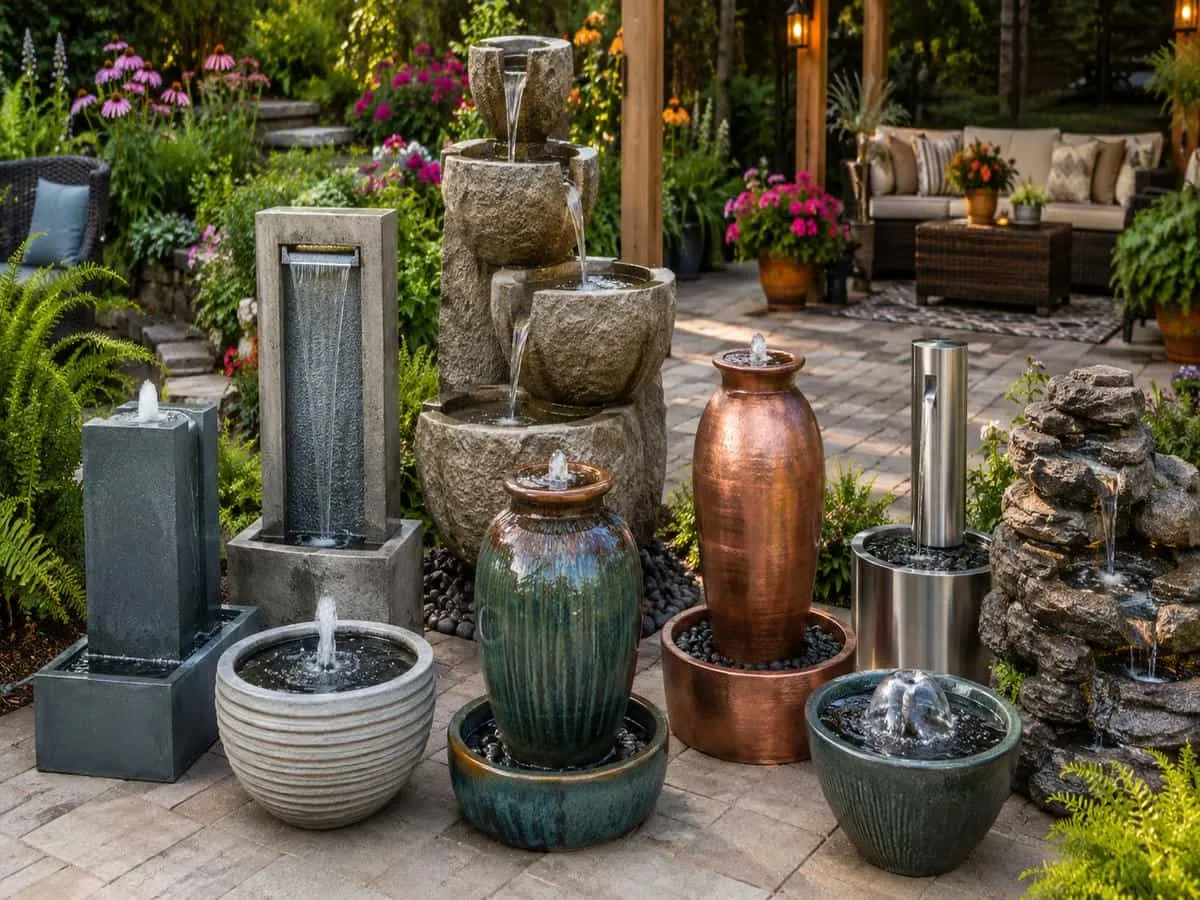
💧 What Are the Best Water Fountain Materials?
The best water fountain material depends on where the fountain will be used, your local climate, the amount of maintenance you want and the style you hope to create. Popular choices include resin, cast stone, concrete, natural stone, ceramic, copper, stainless steel and fiberglass, each offering different advantages for durability, sound, weather resistance and outdoor living.

Water fountain materials shape far more than appearance. They influence durability, water fountain sound quality, weather resistance, maintenance, weight and how naturally a fountain fits into a patio, garden, backyard or indoor space. Resin, concrete, cast stone, natural stone, ceramic, copper, stainless steel and fiberglass all offer different advantages depending on your climate, landscape design, budget and the way you plan to enjoy the fountain. Rather than asking which material is best, the better question is which material is best for your location and lifestyle.
Before choosing a fountain, think about where it will spend most of its life. A heavy concrete or cast stone fountain creates a permanent garden focal point but needs stable ground and thoughtful placement. A lightweight resin or fiberglass fountain is easier to move and works well on patios, balconies and smaller outdoor spaces. If you are considering a solar-powered model, understanding sunlight, panel placement and battery backup is just as important as choosing the right material. Explore our complete solar water fountains guide covering sunlight requirements, battery backup systems, panel placement and buying advice before making your final decision. Ceramic, copper and stainless steel fountains each bring their own character, maintenance needs and visual style, making them better suited to certain environments than others. If you are choosing a fountain for a desk, console table, shelf or meditation room, explore our tabletop water fountain ideas for stylish indoor rooms to compare materials, sound, placement, furniture protection and everyday maintenance.
Material also changes the overall experience of owning a fountain. It affects the sound of moving water, how easily the basin can be cleaned, resistance to algae and mineral deposits, winter care, sun exposure and long term durability. Understanding these differences helps you choose a fountain that not only looks beautiful on the day it is installed but continues to perform well for many years of outdoor living.
Not sure if material is the first decision? You may want to compare the best water fountains for different gardens and outdoor living spaces, explore the different types of water fountains for every style and location, or learn how placement affects sound, maintenance and enjoyment with our complete water fountain placement guide.
💧 Quick Water Fountain Material Comparison
Every water fountain material offers different advantages depending on where the fountain will be placed, how it will sound, the amount of maintenance you want and the style of outdoor living you hope to create. Whether you are choosing an outdoor feature or comparing materials for a home, these quick comparisons will help you match the right fountain to your garden, patio, backyard or indoor space. If you are furnishing a living room, office, bedroom or entryway, explore our complete indoor water fountains guide for homes, offices and interior spaces before exploring each material in more detail below.
Quick comparisons help you narrow the best material before diving into each detailed section.
- 🪨 Permanent Garden Focal Point Choose cast stone, concrete or natural stone for a durable outdoor water fountain that feels stable and grounded. These materials create a calm flowing presence beside garden beds, patios and landscape pathways.
- 🌿 Easy To Move Resin and fiberglass water fountains work well when flexibility matters and the fountain may be moved between patios or seasonal seating areas. Their lighter weight makes placement easier while maintaining gentle water movement.
- 🏺 Decorative Color Glazed ceramic fountains add bright color, reflective finishes and artistic character to patios, courtyards and entry gardens. They create a welcoming atmosphere where people gather and relax.
- 🏡 Modern Outdoor Style Stainless steel, slate and smooth fiberglass complement contemporary landscape design with clean lines and steady flowing water. These materials blend naturally with modern patios and architectural gardens.
- 🍂 Natural Character Copper fountains gradually develop a rich patina that gives every water feature a unique appearance over time. The changing finish creates warmth in cottage gardens, rustic landscapes and outdoor sitting areas.
- 💦 Simple Maintenance Smooth fountain materials with accessible basins are easier to clean and refill throughout the year. Choosing the right material reduces algae buildup, mineral deposits and routine maintenance in busy outdoor spaces.
These quick recommendations provide an easy starting point, but every landscape is different. The following sections compare each water fountain material in greater detail so you can choose the best option for your climate, maintenance routine, outdoor design and the relaxing experience you want to create.
Before making a final decision, it is also worth understanding how each material affects long term care. Some fountains resist algae and mineral buildup more easily, while others need additional cleaning, sealing or winter protection. Our Water Fountain Maintenance Guide explains how different fountain materials influence cleaning routines, pump care, hard water removal, seasonal maintenance and long term ownership.
Compare resin, fiberglass, concrete, cast stone, ceramic, copper and metal fountains for different outdoor placement needs.
Choose a durable fountain material that feels peaceful, practical and right for your space.
🛒 Shop Durable Water Fountain Materials on Amazon
Section Summary Snapshot: Water fountain materials affect beauty, durability, sound, weight, weather resistance and daily maintenance. Resin and fiberglass are practical for lighter placement, while concrete, cast stone and natural stone feel more permanent. Ceramic, copper and stainless steel add stronger style character, but they need the right location, finish care and climate planning.
📊 Water Fountain Material Comparison Table
A water fountain material comparison helps homeowners choose the best water fountain material for durability, sound, weight, maintenance, weather resistance and design style. Resin and fiberglass are easier to move, concrete and cast stone feel permanent, ceramic adds color, copper brings patina, stainless steel feels modern and natural stone creates a grounded garden presence.

💧 Best Water Fountain Material Comparison for Outdoor Fountains, Patio Fountains and Garden Fountain Design
This water fountain material comparison helps match outdoor fountain materials to real garden, patio, balcony, courtyard and indoor spaces. The best water fountain material depends on durability, material resonance, water flow sound, basin cleaning, weather resistance, freeze thaw risk, UV exposure, pump access and how the fountain feels in daily outdoor living. Use this table to compare resin water fountains, concrete water fountains, cast stone fountains, ceramic fountains, copper fountains, stainless steel fountains, fiberglass fountains and natural stone water features before choosing the material that fits your space.
| 💧 Material | 🏡 Best For | 🌿 Main Strength | 🔍 Buyer Guidance |
|---|---|---|---|
| Resin and Polyresin Water Fountains | Patios, balconies, decks, small gardens and budget friendly outdoor spaces where easy movement matters. | Lightweight design makes placement simple while still offering soft bubbling water sound and decorative stone look styles. | Ideal for homeowners looking for the best lightweight water fountain for a patio, balcony or seasonal seating area. |
| Concrete Water Fountains | Backyards, courtyards, large gardens, formal landscapes and outdoor spaces that need a heavy garden focal point. | Concrete offers strong fountain durability, steady placement and a deeper water tone with grounded material resonance. | Often chosen by buyers who want a durable outdoor water fountain that feels permanent and stable in the landscape. |
| Cast Stone Water Fountains | Classic patios, tiered fountains, courtyard gardens, traditional landscapes and elegant outdoor living areas. | Cast stone gives a stone like appearance with timeless garden character, strong visual weight and calm water movement. | Perfect for homeowners comparing cast stone vs concrete fountains for beauty, lifespan and classic garden style. |
| Natural Stone Water Fountains | Rustic gardens, Zen gardens, Japanese garden designs, rock gardens, pathways and natural landscape beds. | Natural stone adds texture contrast, earthy sound, organic beauty and a grounded feeling near plants and garden pathways. | Frequently used in gardens where people want a natural stone water fountain that looks real up close and feels peaceful. |
| Ceramic and Glazed Ceramic Fountains | Courtyards, covered patios, entryway gardens, small spaces and decorative outdoor rooms with close seating. | Glazed ceramic creates bright color, smooth texture, reflective shine and a clean trickling fountain sound. | Often chosen by homeowners who want a decorative water fountain that adds color, charm and a gentle welcome near seating. |
| Copper Water Fountains | Cottage gardens, rustic patios, artistic garden corners, entry areas and warm outdoor sitting spaces. | Copper develops patina over time, giving the water feature a warm aged surface and natural garden character. | Ideal for buyers who like copper water fountains that change beautifully with weather, water flow and seasonal exposure. |
| Stainless Steel Water Fountains | Modern patios, indoor fountains, contemporary courtyards, minimalist gardens and architectural outdoor spaces. | Stainless steel offers clean lines, modern reflection, smooth water movement and strong visual clarity near patio pavers. | Best for people seeking a modern water fountain material for indoor spaces, sleek patios or contemporary landscape design. |
| Fiberglass Water Fountains | Large looking fountains, wall fountains, covered patios, indoor spaces and areas where lower weight is useful. | Fiberglass can mimic stone or concrete while reducing weight, making larger fountain styles easier to place and maintain. | Commonly researched by homeowners comparing fiberglass vs resin fountains for size, movement, maintenance and realistic appearance. |
| Slate, Basalt, Granite and Limestone Fountains | Landscape fountains, meditation gardens, water walls, natural pathways and high texture outdoor design settings. | These stone materials create strong surface texture, deeper resonance, durable visual rhythm and a natural outdoor water feature feel. | Perfect for those seeking a long lasting stone water fountain for garden pathways, Zen spaces or permanent landscape design. |
| 💧 The best water fountain materials balance durability, weight, sound, weather resistance, maintenance and placement. Resin and fiberglass support easy movement, concrete and cast stone create permanence, ceramic adds color, copper brings patina, stainless steel suits modern spaces and natural stone creates grounded garden beauty for long term outdoor living. | |||
💡 Pro Tip: Choose the fountain location before choosing the material. A heavy cast stone, concrete or natural stone fountain can create a permanent garden focal point, but it may be wrong for a balcony, deck or small patio where weight, access and easy movement matter more.
Compare resin, fiberglass, cast stone, concrete, ceramic, copper, stainless steel and natural stone fountain styles.
Find a fountain material that fits your space, climate, sound and long term style.
🛒 Compare Outdoor Fountain Materials on Amazon
Section Summary Snapshot: Every water fountain material has a tradeoff. Resin and fiberglass are easier to place, while concrete, cast stone and natural stone offer stronger permanence. Ceramic, copper and stainless steel add style, color and personality. The best material depends on the fountain location, climate, maintenance comfort and desired outdoor feeling.
🪴 Resin Water Fountains for Patios, Balconies, Decks and Easy Outdoor Placement
Resin water fountains are popular because they are lightweight, affordable and easy to place on patios, balconies, decks, small gardens and front entry areas. They can mimic stone, ceramic, concrete or stacked rock, but they need realistic care with strong sun, hard impact, fading, tipping risk and freeze related stress.

Resin is one of the most common water fountain materials for homeowners who want a fountain without dealing with the weight of stone, concrete or cast stone. A resin water fountain can create the look of carved stone, stacked rock, aged pottery, rustic slate or textured concrete while staying light enough for easier setup. This makes resin useful for patio fountains, apartment balcony fountains, deck fountains, rental friendly spaces, front entry areas and seasonal garden decorating.
The biggest advantage of resin is flexibility. You can reposition it more easily as your patio layout changes, your plants grow or your seating area moves. If you are testing fountain sound near chairs, a resin fountain is far easier to adjust than a heavy concrete fountain or natural stone water feature. For more inspiration on designing comfortable outdoor spaces around decks, pergolas and conversation areas, explore our patio water fountain ideas for beautiful outdoor living spaces. That flexibility matters in small outdoor living spaces where sound, splash control, walking room, refill access and visual balance all need to work together.
Resin is not the same as real stone, and that is where buyers need to be honest. It is lighter, easier to move and often more affordable, but it may not have the same long term fountain durability, deep material resonance or permanent garden presence as cast stone, concrete or natural stone. The best resin fountain is chosen for the right reason. It should solve a placement problem, fit the space safely and offer relaxing water sound without pretending to be the most durable fountain material in every climate.
🪴 Resin Water Fountain Placement Guide for Patios, Balconies, Decks and Small Gardens
Resin fountains work best in spaces where easy movement, lighter weight and flexible placement matter. They are especially useful on patios, balconies, decks, small gardens, covered porches and front entry spaces where a heavy stone or concrete fountain may be difficult to move, level or protect.
🪴 Best Places to Use Resin Water Fountains
🪴 Best Resin Fountain Placement for Small Patios, Balconies and Outdoor Living Spaces
Resin water fountains work best on patios, balconies, decks, front entry areas and small gardens where a lightweight fountain is easier to place, move and refill. They are strongest when used near seating, container plants, covered outdoor rooms and stable surfaces where wind, tipping and harsh exposure can be managed.
A resin fountain is a smart choice when the space needs water movement but cannot easily support a very heavy fountain. Apartment balconies, upper decks, small patios and rental friendly outdoor areas often benefit from resin because the fountain can be moved for cleaning, winter storage or layout changes. It can also help homeowners test where soft bubbling water sound feels best before committing to a heavier fountain material.
Resin works especially well near container gardens, outdoor chairs, small bistro sets, privacy screens and covered seating areas. These spaces usually need a fountain that feels charming without overpowering the area. A resin fountain with a deeper basin, steady base and soft water flow can create a peaceful patio focal point while still keeping the space easy to use.
- 🪴 Use It Where Weight Matters Resin is helpful for patios, balconies, decks and small spaces where concrete or stone may feel too heavy.
- 💧 Place It Near Seating Carefully A soft bubbling water sound can feel relaxing, but the fountain should not splash chairs, cushions or walking paths.
- 🏡 Check the Surface Place resin fountains on flat, stable surfaces so the basin stays level and the water flow stays even.
- 🌿 Pair It With Plants Potted plants, ornamental grasses and container flowers help a resin fountain feel more natural in the space.
- ⏳ Typical Lifespan A quality resin fountain often lasts 5 to 10 years or longer with proper placement, seasonal care and protection from harsh sun and freezing weather.
🪴 Placement Tip: Resin is best when the lighter weight is treated as a placement advantage, not a reason to ignore stability. Choose a level surface, keep the fountain easy to refill and avoid corners where strong wind can push the water flow or make the fountain feel unstable.
☀️ How Resin Fountains Handle Sun, Wind, Rain and Winter Weather
☀️ Resin Water Fountain Weather Resistance, UV Exposure and Winter Care
Resin fountains can work outdoors, but they need realistic weather care. Strong sun may fade finishes, hard freezes can create stress, and wind can affect splash control. The best resin fountain placement uses partial protection, easy water level checks and winter storage in cold climates.
Resin is often described as weather resistant, but that does not mean it should be ignored in every climate. Strong UV exposure can slowly fade some finishes, especially darker stone look colors and painted details. Hot patios can also increase evaporation, which means the basin may need more frequent water checks during summer. A resin fountain placed in morning sun with light afternoon protection often performs better than one sitting in harsh reflected heat all day.
Wind is another real factor. Because resin is lighter than concrete, cast stone or natural stone, it should be placed where the base feels secure and the water flow is not blown onto furniture, walls or walkways. A sheltered patio corner, covered porch, balcony wall or planted garden edge can help reduce splash and improve daily comfort.
In cold weather areas, resin fountains should usually be drained, cleaned, dried and stored or covered before freezing conditions. Water expands when it freezes, and that stress can damage basins, pumps, tubing and decorative surfaces. Even if the resin shell is lightweight, the pump and basin still need winter fountain care.
- ☀️ Protect From Harsh Sun Partial shade can reduce fading, hot water and faster evaporation.
- 🌬️ Watch Wind Exposure Lighter fountains need stable placement and good splash control.
- ❄️ Plan Winter Storage Drain and protect resin fountains before freezing weather whenever possible.
- 💧 Check Water Levels Shallow resin basins may need more frequent refilling in hot or windy weather.
- ⏳ Expected Outdoor Life Good quality resin fountains can provide many years of dependable outdoor use when protected from prolonged UV exposure, freezing water and repeated impact.
☀️ Weather Tip: Resin is a practical outdoor fountain material when it is placed with care. Use shade, wind protection, stable footing and winter storage to help extend fountain lifespan and protect the pump, basin and finish.
💧 Resin Fountain Style, Stone Look Finishes and Water Sound Quality
💧 Resin Fountain Sound Quality, Stone Look Style and Small Space Comfort
Resin fountains can create soft bubbling water sound, gentle trickling flow and decorative stone look style in small outdoor spaces. They usually sound lighter than heavy stone or concrete fountains, but the basin shape, water height, pump strength and splash control can still make them peaceful near seating.
Many resin water fountains are designed to look like stacked rock, carved stone, weathered pottery, slate, concrete or aged garden sculpture. The best designs use natural colors, deeper texture and balanced proportions so the fountain looks believable from a normal viewing distance. Up close, finish quality matters. Some resin fountains look realistic, while others look too shiny, flat or lightweight.
Sound depends less on the word resin and more on the fountain design. A deeper basin can create a fuller bubbling water sound. A taller drop can create brighter trickling fountain sound. A wide shallow basin may feel more decorative but can splash more if the pump is too strong. For patios and balconies, the best resin fountain sound is usually gentle, steady and close enough to enjoy without overpowering conversation.
Resin also works well with container plants, small seating corners and decorative outdoor rooms because it can add the feeling of a water element without making the space feel too heavy. In Feng Shui inspired placement, the moving water can suggest calm energy flow, reflection and renewal, especially near an entryway, patio garden or relaxation area.
- 💧 Listen for Soft Flow Resin fountains are often best when the water sound is gentle, steady and close to seating.
- 🪨 Choose Better Texture Stone look resin fountains appear more natural when the surface has depth and varied color.
- 🪴 Use Plants for Realism Ferns, grasses and container flowers help the fountain blend into the patio or balcony.
- 🧘 Create a Calm Corner A resin fountain can support relaxation, mindfulness and peaceful outdoor living in small spaces.
- ⏳ Typical Lifespan Resin fountains usually provide years of enjoyable performance when the finish is protected and the pump receives regular maintenance.
💧 Sound Tip: Before judging a resin fountain by material alone, look at the water path. Basin depth, pump strength, water height and splash control usually decide whether the fountain sounds peaceful or too sharp for a small patio.
⚠️ Common Resin Fountain Buying Mistakes
⚠️ Resin Water Fountain Mistakes With Weight, Weather, Realism and Maintenance
The biggest resin fountain mistake is expecting it to behave like real stone. Resin is lightweight and easy to place, but it still needs stable footing, weather protection, careful cleaning, realistic finish expectations and winter care in cold climates.
Resin is often chosen because it is easier to move, but that advantage can become a problem if the fountain is placed where it can tip, wobble or catch wind. A lightweight fountain should still feel stable when filled with water. Check the base size, basin depth and surface level before placing it near a walkway, railing, doorway or seating area.
Another mistake is buying only for the stone look finish. A resin fountain may look strong in product photos, but finish quality, pump access, basin cleaning and tubing layout matter more over time. If the basin is hard to clean, the pump is difficult to reach or the water level is hard to see, the fountain may become frustrating even if it looks attractive.
Resin also needs realistic climate expectations. It can be a good low maintenance fountain material for protected patios and small gardens, but it is not always the best choice for intense sun, harsh freeze thaw cycles or exposed locations where a heavier weather resistant fountain material would perform better.
- ⚠️ Do Not Treat It Like Stone Resin is lighter and easier to move, but it does not have the same mass as concrete or natural stone.
- 🧽 Check Cleaning Access The pump, basin and tubing should be easy to reach for regular fountain care.
- 🌞 Avoid Harsh Exposure Strong sun, reflected heat and freezing water can shorten the life of some resin fountains.
- 🏡 Match It to the Space Resin is strongest for patios, balconies, decks, small gardens and seasonal placement, not every heavy duty landscape setting.
- ⏳ Think Long Term Buying a better quality resin fountain and protecting it from harsh weather can significantly extend its useful life.
⚠️ Buying Tip: Choose resin when you want flexibility, easy movement and affordable water sound. Choose concrete, cast stone or natural stone when you want a more permanent garden focal point with stronger weight, deeper presence and longer material life.
Best choice Resin and fiberglass water fountains are ideal for patios, balconies, decks, apartment living, rental homes and homeowners who want lightweight outdoor water features that are easy to place and move.
Common mistake Expecting resin or fiberglass to perform like concrete or natural stone in harsh weather, strong wind or permanent landscape installations without additional planning.
Consider another option Choose concrete, cast stone or natural stone when creating a permanent backyard focal point where greater weight, deeper water sound and long term landscape presence are more important than portability.
Ideal homeowner Someone who enjoys flexible outdoor living, seasonal decorating, container gardening and an affordable fountain that fits comfortably into patios, balconies, small gardens and outdoor seating areas.
Browse lightweight resin fountains designed for patios, balconies, decks, apartment living and compact garden retreats where easy placement matters.
Compare realistic stone look finishes, relaxing water flow and sizes that fit comfortably beside outdoor seating and container gardens.
🛒 Browse Resin Water Fountains on Amazon
Section Summary Snapshot: Resin water fountains are best for homeowners who want an affordable, lightweight and flexible fountain material for patios, balconies, decks, small gardens and front entry areas. They are easy to move, easy to place and useful for soft bubbling water sound near seating. The tradeoff is that resin may not feel as permanent as concrete, cast stone or natural stone and should be protected from harsh sun, wind, impact and freezing weather.
🪨 Concrete and Cast Stone Water Fountains for Permanent Garden Design, Courtyards and Backyard Focal Points
Concrete and cast stone water fountains are best for homeowners who want a heavy, durable and permanent outdoor fountain material. They work well in gardens, courtyards, large patios, front yards and formal landscapes because they feel stable, sound grounded and create a lasting garden focal point.

Concrete and cast stone fountains are some of the strongest water fountain materials for homeowners who want a fountain that feels permanent, grounded and built into the landscape. They are often used for tiered fountains, courtyard fountains, formal garden fountains, front yard fountains and large backyard focal points because the weight gives the water feature a serious and lasting presence.
These materials also change the way a fountain feels in daily use. A concrete or cast stone fountain can create a deeper water tone, steadier water flow sound and stronger visual anchor than lightweight resin, polyresin or fiberglass fountains. When the basin depth, pump strength and splash control are planned well, the sound can feel calm, full and relaxing near patios, garden pathways and outdoor seating. For more inspiration on matching fountain styles to different landscapes, explore our garden water fountain ideas guide.
The tradeoff is placement. Concrete and cast stone are not easy to move once installed. They need stable ground, level footing, good pump access, basin cleaning access and winter care in cold climates. If you are planning a complete residential landscape instead of a single fountain installation, explore our backyard water fountain planning guide for complete outdoor living spaces to learn how fountain placement, property layout, patios, lawns, pathways, privacy, viewing distance and long-term maintenance work together. Concrete and cast stone remain excellent choices when you are confident about the location and want a durable outdoor fountain material that matches garden beds, patio pavers, stone pathways and classic landscape design.
🪨 Concrete and Cast Stone Fountain Placement Guide for Gardens, Courtyards, Patios and Front Yards
Concrete and cast stone fountains work best where weight, permanence and visual balance are part of the design plan. They are strong choices for formal gardens, courtyards, large patios, front yards, backyard retreats and landscape beds where the fountain can stay in one well planned location for many years.
🪨 Best Places to Use Concrete and Cast Stone Water Fountains
🪨 Best Concrete and Cast Stone Fountain Placement for Permanent Outdoor Fountain Design
Concrete and cast stone water fountains work best in gardens, courtyards, large patios, front yards and backyard focal point areas where the ground is stable and the fountain can stay in place. They are ideal when the goal is a durable outdoor water feature with classic style, deeper sound and strong landscape presence.
A concrete or cast stone fountain should be placed where it can become part of the landscape instead of feeling like a temporary accent. These fountains work beautifully near stone pathways, clipped shrubs, perennial borders, patio seating, courtyard walls and entry gardens. Their weight helps them feel secure and intentional, especially in spaces where lighter fountains may look too small or too casual.
They are also strong choices for large outdoor rooms. A cast stone tiered fountain can anchor a courtyard, while a concrete fountain can create a quiet focal point at the end of a garden path. Homeowners comparing multi level designs can explore our cast stone tiered fountain ideas for courtyards and formal gardens to compare two tier, three tier and four tier fountains by size, cascading sound, material, landscape scale, foundation needs and long term care. In a backyard retreat, the fountain should be visible from seating areas, windows or walkways so the sound and movement become part of daily outdoor living.
- 🏡 Use Them Where Permanence Matters Concrete and cast stone are best when the fountain is meant to stay in one planned location.
- 🪨 Check the Base First Heavy fountains need stable ground, level footing and strong support under the basin.
- 🌿 Match the Landscape These materials pair well with patio pavers, garden beds, stone paths, courtyards and formal planting designs.
- 💧 Plan Refill Access A permanent fountain still needs easy water checks, pump access and basin cleaning.
🪨 Placement Tip: Decide the final location before installation. Concrete and cast stone fountains can be difficult to move after landscaping, gravel, plants, wiring and seating areas are finished.
❄️ How Concrete and Cast Stone Fountains Handle Sun, Rain, Freeze Thaw and Winter
❄️ Concrete and Cast Stone Fountain Weather Resistance, Freeze Thaw Risk and Seasonal Fountain Care
Concrete and cast stone fountains are durable outdoor fountain materials, but they still need weather planning. Freeze thaw cycles, standing water, hard water stains, algae, mineral buildup and winter exposure can affect the basin, surface finish, pump and tubing if the fountain is not drained, cleaned and protected.
Concrete and cast stone are often chosen because they feel strong in outdoor spaces. They can handle sun, rain and normal garden use better than many lightweight fountain materials, but durability does not mean no care. Water sitting inside the basin during freezing weather can expand and create pressure. In cold climates, winter fountain care matters as much as the material itself.
Sun exposure can also change maintenance needs. A concrete or cast stone fountain in full sun may grow algae faster, lose water through evaporation and show mineral deposits more clearly if the home has hard water. Partial sun or light afternoon shade can make the fountain easier to manage while still keeping the water feature bright and visible.
Rain and splash can leave water marks on surrounding patio pavers, stone edging or nearby walls. A good location gives water room to move without constantly wetting seating areas, cushions, doors or walkways. The best weather resistant fountain material still needs thoughtful placement, stable drainage and easy seasonal care.
- ❄️ Plan for Freeze Thaw Drain and protect the basin, pump and tubing before freezing weather.
- ☀️ Watch Full Sun Strong sun can increase evaporation, algae growth and hard water marks.
- 🧽 Clean the Basin Concrete and cast stone can collect algae, mineral deposits and surface staining over time.
- 💧 Control Splash Match the water flow, basin depth and pump strength to the surrounding patio or garden space.
❄️ Weather Tip: In cold climates, concrete and cast stone fountains should be drained before freezing weather. Protecting the pump, basin and tubing helps reduce freeze damage and supports a longer outdoor fountain lifespan.
💧 Concrete and Cast Stone Fountain Style, Tiered Designs and Deeper Water Sound
💧 Concrete and Cast Stone Fountain Sound Quality, Material Resonance and Classic Garden Style
Concrete and cast stone fountains often create a deeper water tone than lighter materials because their weight, basin depth and solid surfaces support fuller material resonance. They are excellent for tiered fountains, courtyard fountains, traditional garden fountains and relaxing outdoor spaces where water sound should feel steady and grounded.
The style of concrete and cast stone is one of their biggest strengths. These fountains work well in traditional gardens, Mediterranean patios, courtyard spaces, farmhouse landscapes, formal front yards and classic backyard retreats. A tiered cast stone fountain can feel elegant and historic, while a simpler concrete fountain can feel calm, minimal and architectural.
Sound quality depends on the design, but solid materials often create a more grounded water flow sound than lightweight resin or fiberglass. Water falling from tier to tier can create layered movement, soft splash and a deeper tone when the basin is wide enough to catch the flow cleanly. This makes concrete and cast stone good choices for relaxation gardens, sound masking near traffic and peaceful seating areas.
These fountains can also support symbolic garden design. In a courtyard or front yard, moving water can suggest welcome, abundance, balance and calm energy flow. In a backyard retreat, the steady water sound can create a peaceful outdoor sanctuary for reflection, conversation and stress relief.
- 💧 Choose Basin Depth Carefully A deeper basin can support fuller sound and better splash control.
- 🏛️ Use Classic Shapes Tiered, urn and pedestal designs often suit cast stone and concrete fountains well.
- 🌿 Soften With Planting Flowering perennials, trimmed shrubs and ornamental grasses help the heavy material blend naturally.
- 🧘 Think About Sound Comfort The water should feel calming near seating and should not overpower conversation.
💧 Sound Tip: For a relaxing fountain sound, compare the basin depth, water drop height and pump strength. Concrete and cast stone can sound beautiful, but poor splash control can make even a high quality fountain feel too loud near seating.
⚠️ Common Concrete and Cast Stone Fountain Buying Mistakes
⚠️ Concrete and Cast Stone Fountain Mistakes With Weight, Installation, Cleaning and Winter Care
The biggest mistake with concrete and cast stone fountains is buying for beauty before planning weight, base support, pump access, basin cleaning, splash control and winter care. These materials are durable, but they need a confident location and stronger installation planning than resin, polyresin or fiberglass fountains.
A heavy fountain can be a beautiful investment, but it is not forgiving if the location is wrong. Concrete and cast stone can be too heavy to move easily after delivery, especially once the basin is filled, the pump is connected and the surrounding landscape is finished. Before buying, measure the space, plan the pathway for delivery and make sure the base can support the weight.
Another mistake is ignoring maintenance access. A fountain that feels permanent still needs basin cleaning, pump checks, tubing access and water level checks. If the pump is buried too deep, the basin is hard to reach or the fountain sits too far from a hose, regular care becomes harder than it needs to be.
Some buyers also confuse cast stone and concrete. They are closely related, but not always identical in finish, density, mold detail or price. Cast stone is often used when a more refined stone like appearance is desired, while concrete may be chosen for strength, simplicity or larger landscape designs. The best choice depends on the look, budget, climate and use case.
- ⚠️ Do Not Skip Base Planning Heavy fountains need stable ground, level support and safe placement.
- 🧽 Check Cleaning Access The basin, pump and tubing should be reachable without dismantling the whole fountain.
- ❄️ Respect Winter Care Durable does not mean freeze proof when water is left inside the basin.
- 🏡 Choose the Right Scale A large fountain should fit the patio, garden or courtyard without blocking movement or conversation.
⚠️ Buying Tip: Choose concrete or cast stone when you want a permanent garden focal point, classic beauty and deeper water sound. Choose resin or fiberglass when easy movement, lower weight or seasonal flexibility matters more.
Best choice Concrete and cast stone fountains for permanent gardens, formal landscapes, courtyards, front yards and backyard focal points where durability and classic design are priorities.
Common mistake Installing a heavy fountain before planning delivery access, stable footing, pump maintenance, winter care and the long term landscape layout.
Consider another option Choose resin or fiberglass when you expect to move the fountain often, redesign your patio regularly or need a lighter fountain for balconies, decks or smaller outdoor spaces.
Ideal homeowner Someone creating a long term landscape who wants a durable outdoor water fountain with classic architecture, deeper water sound and a permanent garden focal point that complements patios, pathways and mature planting beds.
Discover durable outdoor fountains built for permanent placement in gardens, courtyards, front entrances and backyard landscape designs.
Compare classic tiered fountains, traditional styles and long lasting focal points designed for years of outdoor enjoyment.
🛒 Shop Concrete and Cast Stone Fountains on Amazon
Section Summary Snapshot: Concrete and cast stone water fountains are strong choices for permanent outdoor design. They offer durability, classic beauty, stable placement, deeper water sound and strong visual impact in gardens, courtyards, patios, front yards and backyard retreats. The tradeoff is that they need careful installation, stable footing, pump access, basin cleaning and winter care before they become a lasting part of the landscape.
🏔️ Natural Stone Water Fountains for Zen Gardens, Rock Gardens and Organic Backyard Texture
Natural stone water fountains are best for rustic gardens, Zen spaces, Japanese garden designs, rock gardens, landscape beds and peaceful backyard retreats. They offer real texture, earthy color, solid water sound and timeless garden character, but they can be heavy, porous and more expensive than resin or fiberglass fountains.

Natural stone is one of the strongest water fountain materials for gardens that need real texture, organic beauty and a grounded outdoor water feature. A bubbling rock fountain, carved basalt fountain, slate wall fountain, granite basin, limestone bowl or natural stone waterfall can blend into planting beds, gravel paths, mossy edges, ornamental grasses, ferns and Japanese maple without looking forced.
Natural stone fountains are often chosen when the goal is calm, not just decoration. Water moving over rough stone breaks into smaller streams, soft trickles and bubbling notes. That natural water sound can feel quieter, earthier and more meditative than water moving over glossy ceramic, smooth metal or lightweight resin. This makes stone a strong choice for Zen gardens, meditation gardens, woodland edges and backyard retreats. For a deeper look at how stone, bamboo and traditional water features work together, explore our Japanese water fountains with stone and bamboo.
The tradeoff is weight, cost and maintenance. Natural stone can be heavy, porous and harder to move than resin, polyresin or fiberglass fountains. It may hold algae, mineral deposits and organic staining more than smooth glazed ceramic or stainless steel. The best natural stone fountain is chosen for a garden setting where texture, sound, permanence and plant harmony matter more than easy movement.
🏔️ Natural Stone Fountain Placement Guide for Rock Gardens, Zen Spaces, Pathways and Landscape Beds
Natural stone fountains work best where the fountain can connect with real landscape materials. They fit beautifully near garden pathways, river rock, gravel beds, shaded planting areas, moss, ferns, ornamental grasses, Japanese maples, woodland edges and quiet seating spaces.
🏔️ Best Places to Use Natural Stone Water Fountains
🏔️ Best Natural Stone Fountain Placement for Garden Paths, Rock Gardens and Zen Retreats
Natural stone water fountains work best in rock gardens, Zen gardens, Japanese inspired gardens, shaded beds, landscape borders and garden path focal points. They look strongest when surrounded by plants, gravel, river rock and organic textures that make the stone feel natural.
A natural stone fountain should feel discovered, not dropped into the yard. Place it where the surrounding materials support the fountain. River rock, stepping stones, mulch, moss, ferns, hostas, ornamental grasses and low shrubs help the fountain blend into the landscape. This is especially important with bubbling rock fountains, basalt column fountains and stone basin water features. For a larger landscape system where stone, gravel and moving water work together above concealed water storage, explore our pondless waterfalls with natural stone landscaping for waterfall, stream, reservoir, pump and garden-design planning.
Natural stone also works well near quiet seating areas. A stone fountain beside a bench, garden path or meditation corner can create a peaceful retreat where gentle water flow supports reflection, stress relief and calm outdoor living. The fountain does not need to be large if the surrounding garden feels balanced.
- 🏔️ Use Natural Surroundings Pair stone fountains with gravel, river rock, moss, ferns, grasses and garden beds.
- 🌿 Place Near Pathways A bubbling rock or stone basin can become a quiet focal point along a garden path.
- 🧘 Support Calm Spaces Natural stone works beautifully in Zen gardens, meditation gardens and shaded retreats.
- 💧 Plan Water Access Even a natural looking fountain still needs easy refill, pump and basin access.
🏔️ Placement Tip: Natural stone looks best when the planting and hardscape feel connected to the fountain. Use nearby rocks, grasses, groundcovers and pathway materials to make the water feature feel like part of the garden.
🌦️ How Natural Stone Fountains Handle Weather, Porous Surfaces and Seasonal Care
🌦️ Natural Stone Fountain Weather Resistance, Porous Stone, Algae and Winter Care
Natural stone fountains are durable outdoor fountain materials, but porous surfaces can hold algae, mineral deposits and organic staining. In cold climates, freeze thaw cycles and standing water need attention, so draining, cleaning and protecting the pump, basin and tubing is important.
Stone can feel permanent and weather resistant, but each type behaves differently. Basalt, granite, slate and limestone do not all absorb water the same way. Rougher surfaces can collect algae, leaves, pollen and hard water marks more easily than smooth glazed ceramic or stainless steel. That does not make stone a poor choice, but it does mean cleaning should be part of the plan.
Sun, shade and moisture also affect maintenance. A shaded stone fountain may feel calm and mossy, but it may also collect more organic staining. A sunny stone fountain may dry faster and stay brighter, but it can lose more water through evaporation. The best placement balances natural beauty with easy cleaning, refill access and pump protection.
In cold climates, natural stone fountains should be drained before freezing weather. Standing water can freeze, expand and stress the basin, pump, tubing and stone surface. A winter safe water fountain plan usually includes cleaning the basin, removing or protecting the pump and covering the fountain if it cannot be stored.
- 🌦️ Know the Stone Type Basalt, slate, granite and limestone can differ in texture, porosity and cleaning needs.
- 🧽 Watch Algae and Minerals Rough stone can hold algae, hard water stains and mineral deposits.
- ❄️ Protect From Freeze Thaw Drain and protect the basin, pump and tubing before winter freezes.
- 💧 Keep Water Moving Good circulation helps reduce stagnant water and keeps the fountain more enjoyable.
🌦️ Weather Tip: Natural stone is durable, but porous surfaces need care. Choose a location where you can reach the basin, clean the stone, check the pump and manage winter protection without fighting the landscape.
💧 Natural Stone Fountain Style, Bubbling Rock Designs and Earthy Water Sound
💧 Natural Stone Fountain Sound Quality, Bubbling Rock Flow and Organic Garden Style
Natural stone fountains often create soft, earthy water sound because rough surfaces break the flow into small trickles, bubbling notes and gentle movement. Bubbling rock fountains, basalt columns, slate walls and carved stone basins work well for relaxing garden sound and organic outdoor style.
Natural stone fountain styles can feel rustic, Zen, Japanese inspired, woodland, modern organic or timeless depending on the stone and placement. Bubbling rock fountains feel natural and low profile. Homeowners who want to explore this style in greater depth can compare natural stone bubbling rock fountain ideas for gardens, patios and backyard landscapes. Basalt column fountains feel sculptural and grounded. Slate wall fountains can feel calm and architectural. Granite and limestone basins can feel simple, solid and peaceful.
The sound quality comes from the water path. Water bubbling from a rock opening creates a soft, steady sound. Water sliding over slate creates a smoother trickling fountain sound. Water falling into a stone basin can create a deeper water tone if the basin has enough depth. In outdoor water acoustics, natural stone is strong because the texture makes the sound feel less sharp and more organic.
Natural stone also carries symbolic meaning in garden design. Stone suggests grounding, stability, endurance and reflection. Moving water adds renewal, balance, positive energy flow and calm. Together, stone and water can make a garden feel like a peaceful outdoor sanctuary.
- 💧 Choose the Right Flow Bubbling rock sounds soft, slate flow feels smooth and deeper basins create fuller water tone.
- 🪨 Use Texture for Realism Rough stone, river rock and planted edges help the fountain look natural up close.
- 🌿 Match the Garden Style Natural stone suits Zen gardens, rock gardens, rustic beds and Japanese inspired landscapes.
- 🧘 Create a Peaceful Retreat Stone and water together support mindfulness, relaxation and quiet outdoor living.
While all natural stone fountains share a similar organic appearance, different stones create slightly different experiences. Basalt is often chosen for modern bubbling rock fountains because of its dark color and dense texture. Slate creates gentle sheets of flowing water that work well for wall fountains, while granite and limestone often suit carved basins and traditional garden designs where lasting durability and natural character are equally important.
💧 Sound Tip: For the most relaxing natural stone fountain sound, avoid overly strong pumps in small spaces. A gentle bubbling water sound often feels better near seating than a loud splash.
⚠️ Common Natural Stone Fountain Buying Mistakes
⚠️ Natural Stone Fountain Mistakes With Weight, Cost, Cleaning, Porosity and Placement
The biggest natural stone fountain mistake is buying for beauty without planning weight, delivery, stable footing, pump access, basin cleaning and seasonal care. Stone can be durable and beautiful, but it needs the right setting and realistic maintenance expectations.
Natural stone can be too heavy to move easily after placement. Before choosing one, think about delivery access, base support, slope, garden pathway width and final viewing angle. A fountain that looks perfect online can become difficult if it is too heavy for the chosen area or blocks a walkway.
Another mistake is ignoring cleaning. Stone surfaces can hold algae, mineral buildup, hard water stains, leaves and soil marks. A stone fountain can still be low stress, but only if the basin, pump and water path are easy to reach. If cleaning access is poor, the fountain may become frustrating over time.
Buyers should also avoid forcing natural stone into the wrong design style. A bubbling rock may look beautiful in a garden bed but feel out of place on a sleek modern patio without matching stone, gravel or planting nearby. Natural stone works best when the whole setting supports the material.
- ⚠️ Plan the Weight Natural stone can be heavy, so delivery access and stable footing matter.
- 🧽 Check Cleaning Access Make sure the pump, basin and water path can be reached easily.
- 🌿 Do Not Force the Style Stone looks best when nearby plants, gravel, rocks and pathways support the design.
- ❄️ Think About Winter Drain and protect stone fountains before freezing weather when needed.
Best choice Bubbling rock fountains, basalt columns, slate walls and natural stone basins for homeowners creating Zen gardens, woodland landscapes, rock gardens and permanent backyard retreats.
Common mistake Buying natural stone without planning delivery access, stable footing, cleaning access or winter protection for porous stone surfaces.
Consider another option Choose resin or fiberglass if you expect to move the fountain regularly, redesign your patio often or want a lighter fountain for balconies, decks or smaller outdoor spaces.
Ideal homeowner Someone who enjoys authentic landscape materials, peaceful water sound, natural garden design and a fountain that feels like a permanent part of the landscape instead of seasonal outdoor decor.
⚠️ Buying Tip: Choose natural stone when you want organic texture, grounded beauty and peaceful water sound. Choose resin or fiberglass when easy movement and lower weight matter more.
Explore bubbling rock fountains, carved stone basins, basalt columns and natural water features that blend beautifully with gardens and landscape pathways.
Choose timeless fountain designs that deliver organic texture, peaceful water sound and lasting outdoor character.
🛒 Browse Natural Stone Water Fountains on Amazon
Section Summary Snapshot: Natural stone water fountains are excellent for organic gardens, Zen spaces, rock gardens, Japanese inspired landscapes and peaceful backyard retreats. They create real texture, earthy beauty, grounded water sound and strong garden character. The main tradeoffs are weight, cost, porous surfaces, algae, mineral buildup, cleaning access and winter fountain care.
🏺 Ceramic Water Fountains for Color, Glaze, Patio Style and Decorative Outdoor Rooms
Ceramic water fountains are best for patios, courtyards, entry gardens, balconies and decorative outdoor rooms where color, glaze and artistic style matter. They offer bright visual charm, smooth surfaces and clean trickling water sound, but they need protection from impact, hard freezes, tipping risk and harsh exposed placement.

Ceramic is one of the most expressive water fountain materials because it brings color, glaze, shine and artistic character into a patio, courtyard or entry garden. A blue ceramic urn fountain can brighten a quiet seating area, while a green glazed ceramic fountain can blend with garden beds, potted plants and leafy outdoor rooms. Warm earth tone ceramic fountains often suit Mediterranean patios, cottage gardens, courtyard planters and welcoming front entry designs.
Glazed ceramic fountains feel different from natural stone, concrete or cast stone because the surface is smoother and more decorative. Water moving over ceramic can create a bright trickling fountain sound, especially when the basin is shallow and the water flow is close to seating. This makes ceramic a good choice when the fountain is meant to be seen up close, heard gently and used as part of the patio style.
The tradeoff is protection. Ceramic can be easier to wipe clean than rough stone or porous concrete, but it can also be more vulnerable to impact, tipping and freeze stress. The best ceramic water fountain is placed where the glaze can be enjoyed without exposing the fountain to heavy tools, rough pets, tight walkways, strong wind or trapped winter water.
🏺 Ceramic Fountain Placement Guide for Patios, Courtyards, Balconies and Entry Gardens
Ceramic fountains work best where color, glaze and decorative detail can be appreciated up close. They are strong choices for patios, courtyards, balconies, covered porches, entry gardens, small outdoor rooms and seating areas where the fountain adds personality without needing the heavy presence of concrete or stone.
🏺 Best Places to Use Ceramic Water Fountains
🏺 Best Ceramic Fountain Placement for Patios, Courtyards and Decorative Outdoor Rooms
Ceramic water fountains work best on patios, courtyards, balconies, covered entryways and small garden spaces where the fountain can be seen up close. They are strongest near seating, potted flowers, stone pavers and protected outdoor rooms where color, glaze and gentle water movement become part of the design.
A ceramic fountain should usually be placed where people can enjoy the finish. Unlike a large concrete fountain that may anchor a distant lawn or formal garden, ceramic often works better near a chair, bistro table, courtyard wall, front entry planter or patio container garden. The color and glaze are part of the value, so the fountain should not be hidden too far from view.
Ceramic also works well in smaller outdoor spaces because it can add strong style without needing a large footprint. A glazed ceramic bowl fountain, urn fountain or pottery style water feature can brighten a balcony, soften a courtyard corner or make a front entry feel more welcoming. The key is choosing a stable location where the basin is easy to refill and the water does not splash walkways or cushions.
- 🏺 Use It Where Color Matters Ceramic fountains shine on patios, courtyards, balconies and entry gardens where the glaze can be seen up close.
- 🌿 Pair With Planters Potted flowers, container plants and leafy patio corners help ceramic fountains feel styled and intentional.
- 💧 Protect Walkways Keep the water flow gentle so splash does not reach chairs, cushions, doors or patio paths.
- 🪴 Choose Stable Placement Place ceramic fountains on flat pavers, level patios or protected corners where tipping risk is lower.
🏺 Placement Tip: Ceramic fountains are often best close to the living space. Use them beside seating, planters or entryways where the glaze, water movement and color can be enjoyed every day.
🌦️ How Ceramic Fountains Handle Sun, Rain, Freeze Risk and Glaze Care
🌦️ Ceramic Fountain Weather Resistance, Glaze Protection, Freeze Risk and Seasonal Care
Ceramic fountains can work outdoors, but they need protected placement and seasonal care. Glazed ceramic can handle normal patio use, but impact, trapped freezing water, harsh weather and poor drainage can damage the finish, basin, pump or tubing.
Ceramic is often easy to wipe clean because the glazed surface is smoother than rough natural stone or porous concrete. That can make basin cleaning easier and reduce the amount of grime that clings to the surface. However, hard water stains and mineral deposits can still appear on glazed ceramic if water is allowed to dry on the finish.
Sun exposure can make ceramic look bright and beautiful, but full sun can also increase evaporation and make water level checks more important. A ceramic patio fountain often performs well with morning light, light afternoon shade or a covered outdoor room where the color stays visible without being exposed to the harshest weather all day.
Freeze risk is one of the biggest concerns. Ceramic can crack if water freezes inside the basin, tubing or small decorative openings. In cold climates, the safest approach is to drain the fountain, remove or protect the pump and store the fountain somewhere dry before freezing weather arrives.
- 🌦️ Protect the Glaze Avoid tight spaces where chairs, tools, pets or garden equipment can strike the ceramic surface.
- ❄️ Plan for Freezing Weather Drain and store ceramic fountains before hard freezes whenever possible.
- 🧽 Wipe Mineral Marks Early Glazed ceramic is easier to clean when hard water spots are handled before they build up.
- 💧 Watch Water Levels Full sun and shallow basins can increase evaporation and stress the pump.
🌦️ Weather Tip: Ceramic is beautiful outdoors when it is placed wisely. Give it stable footing, gentle water flow, protection from impact and a clear winter care plan before freezing weather arrives.
💧 Ceramic Fountain Style, Glazed Color and Bright Trickling Water Sound
💧 Ceramic Fountain Sound Quality, Glazed Pottery Style and Decorative Patio Design
Ceramic fountains often create a bright, clean trickling water sound because water moves over smooth glazed surfaces. They are excellent for decorative patio fountains, courtyard fountains, entryway fountains and small outdoor rooms where color, shine and gentle water movement matter.
Ceramic fountain styles can feel Mediterranean, cottage, artistic, contemporary, traditional or modern depending on the shape and glaze. A blue ceramic urn fountain can feel fresh and peaceful, while a turquoise glazed bowl can feel coastal or courtyard inspired and a warm terracotta or earth tone fountain can feel rustic, Mediterranean or farmhouse friendly. Urn designs are especially useful because the vessel shape, shoulder width, surface finish and glaze all influence how water moves across the fountain and how the piece fits into the surrounding landscape. For a deeper comparison of ceramic, cast stone and other vessel choices, explore our urn water fountain materials and finishes guide.
Water fountain sound quality depends on the fountain design, not only the material. A small ceramic bubbler may create soft bubbling water sound near a chair, while a taller urn can create brighter trickling water. A shallow ceramic basin may sound lively but can splash if the pump is too strong. The best ceramic fountain for a patio usually has controlled water flow, a stable basin and a sound level that does not overpower conversation.
Ceramic also has symbolic value in outdoor design. The water element can suggest welcome, renewal, prosperity and calm energy flow, while the color of the glaze can change the mood of the space. Blue ceramic often feels peaceful and cooling, green feels garden connected and earth tones feel warm, grounded and relaxed.
- 💧 Choose the Right Sound Ceramic can create bright trickling water, soft bubbling flow or a clean patio fountain sound depending on the basin and pump.
- 🎨 Use Color With Purpose Blue, green, turquoise and earth tone glazes can shape the mood of patios, courtyards and entry gardens.
- 🏺 Match the Outdoor Style Ceramic suits Mediterranean, cottage, courtyard, artistic, traditional and contemporary fountain designs.
- 🧘 Keep It Calm Near Seating The water should feel pleasant and relaxing, not sharp, splashy or too loud for conversation.
💧 Sound Tip: If the ceramic fountain will sit near seating, choose controlled water movement over height. A gentle trickling fountain sound usually feels better in small patios and courtyards than a loud splash.
⚠️ Common Ceramic Fountain Buying Mistakes
⚠️ Ceramic Fountain Mistakes With Glaze, Impact, Freeze Stress, Cleaning and Placement
The biggest ceramic fountain mistake is buying for color before planning placement, stability, impact protection, basin cleaning and winter care. Ceramic can be beautiful and easy to wipe clean, but it should not be treated like concrete, cast stone or natural stone.
Many buyers fall in love with the glaze first. That makes sense because color is one of the main reasons to choose ceramic. The problem happens when the fountain is placed where chairs, hoses, pets, tools or narrow walkways can damage the finish. Ceramic should be close enough to enjoy but protected enough to avoid daily bumps.
Another mistake is assuming ceramic is the best water fountain material for every outdoor climate. It can work beautifully in mild climates, covered patios and protected courtyards, but hard freeze conditions can create serious risk if water remains inside the basin or tubing. In cold areas, ceramic often works best as a seasonal fountain that can be drained, dried and stored.
Buyers should also check the pump, basin and cleaning access before choosing a ceramic fountain. Smooth glaze can make cleaning easier, but mineral buildup, algae, hard water stains and pump issues still happen. A fountain that is easy to wipe but hard to reach can still become frustrating over time.
- ⚠️ Do Not Buy Color Only A beautiful glaze still needs stable placement, easy cleaning and smart water flow.
- 🧽 Check Cleaning Access Make sure the basin, pump and tubing are easy to reach before placing the fountain.
- ❄️ Respect Freeze Risk Ceramic should usually be drained and protected before hard winter weather.
- 🏡 Protect From Impact Avoid tight walkways, busy corners and areas where furniture or tools may hit the fountain.
Best choice Glazed ceramic fountains for patios, courtyards, balconies, entry gardens and decorative outdoor rooms where color, shine and gentle water movement matter.
Common mistake Choosing ceramic for an exposed location without planning impact protection, winter storage, basin cleaning or stable footing.
Consider another option Choose concrete, cast stone or natural stone for a permanent landscape fountain, or resin and fiberglass when lighter weight and easier movement matter more.
Ideal homeowner Someone who enjoys colorful patio decor, potted flowers, courtyard styling, welcoming entry spaces and a decorative fountain that can be protected and enjoyed up close.
⚠️ Buying Tip: Choose ceramic when you want color, glaze and patio personality. Choose concrete, cast stone or natural stone when permanence and heavy outdoor durability matter more.
Discover colorful glazed ceramic fountains that add charm, gentle water sound and artistic style to patios, balconies and entry gardens.
Create a welcoming outdoor retreat with beautiful color and relaxing water movement.
🛒 Shop Glazed Ceramic Water Fountains on Amazon
Section Summary Snapshot: Ceramic water fountains are ideal for homeowners who want color, glaze, shine and decorative outdoor style. They work beautifully on patios, courtyards, balconies, entry gardens and small outdoor rooms where the fountain can be enjoyed up close. Their main tradeoffs are impact risk, freeze stress, tipping concerns and the need for protected placement and seasonal care.
🔩 Metal Water Fountains, Copper, Stainless Steel, Patina and Modern Outdoor Style
Metal water fountains include copper, stainless steel and other finished metals used for modern patios, artistic garden spaces, courtyards, entryways and indoor water features. Copper adds warmth, patina and natural aging, while stainless steel offers clean lines, reflection and contemporary style. Both need smart placement, water mark control, finish care and weather awareness.

Metal water fountains are chosen when the fountain needs to bring stronger design character into the space. Copper water fountains feel warm, artistic and naturally aged as the surface develops patina over time. Stainless steel water fountains feel cleaner, brighter and more architectural, which makes them useful for modern patios, courtyard walls, indoor fountains, contemporary gardens and minimalist outdoor rooms.
Copper and stainless steel are both metal fountain materials, but they create very different moods. Copper feels softer, warmer and more rustic as it changes color with air, water and weather exposure. Stainless steel feels cooler, smoother and more structured, especially beside patio pavers, black planters, concrete walls, modern seating and clean landscape lines.
The tradeoff is finish care. Metal fountains can show water marks, fingerprints, mineral deposits, hard water stains and weather changes more clearly than textured stone or resin. The best metal water fountain is placed where the material fits the style of the home, where the basin is easy to clean and where the water flow does not create constant splash marks on the finish.
| 🔩 Metal Material | 🏡 Best Style | 🌿 Main Benefit | 📍 Best Location |
|---|---|---|---|
| Copper Water Fountains | Warm, artistic, rustic, cottage, Mediterranean and natural garden style. | Copper develops patina, aged color and a living finish that changes with water, air and weather. | Patios, garden corners, entry areas, courtyard planters and decorative seating spaces. |
| Stainless Steel Water Fountains | Modern, contemporary, minimalist, architectural and indoor outdoor design. | Stainless steel offers clean lines, reflective surface, smooth water movement and modern visual clarity. | Modern patios, indoor spaces, wall fountains, courtyard walls and sleek outdoor rooms. |
🔩 Metal Water Fountain Placement Guide for Modern Patios, Courtyards, Entryways and Indoor Spaces
Metal fountains work best where the finish, shape and reflection are part of the design. Copper and stainless steel can both create strong visual impact, but they should be placed where water marks, splash patterns, sun glare, seating distance and surrounding materials are planned carefully.
🔩 Best Places to Use Metal Water Fountains
🔩 Best Metal Fountain Placement for Copper, Stainless Steel and Modern Water Feature Design
Metal water fountains work best on modern patios, courtyard walls, entry gardens, indoor spaces and decorative outdoor rooms where the finish can be seen clearly. Copper suits warm garden corners and artistic patios, while stainless steel fits contemporary spaces, wall fountains and clean architectural layouts.
A copper fountain usually works best where warmth and garden character matter. It can look beautiful near clay planters, rustic seating, cottage flowers, Mediterranean tile, natural stone edging and entry gardens. As the copper darkens and develops patina, the fountain becomes part of the landscape story instead of staying perfectly new.
A stainless steel fountain usually works best where clean lines and reflection matter. It can look sharp beside concrete walls, black planters, modern patio furniture, smooth pavers, glass railings or minimalist garden beds. Stainless steel is especially useful for wall fountains, indoor fountains and modern courtyard features because it feels structured and controlled.
- 🔩 Match the Finish to the Space Copper feels warm and aged, while stainless steel feels modern and reflective.
- 🏡 Use Metal Where It Can Be Seen Metal fountains work well near seating, entryways, courtyard walls and outdoor living spaces.
- 💧 Watch Splash Patterns Splash marks can show more on metal than on rough stone or textured resin.
- 🌿 Balance With Plants Greenery, planters and garden beds soften the shine and help metal feel more natural.
🔩 Placement Tip: Use copper when you want warmth and patina. Use stainless steel when you want reflection, clean lines and modern structure. Both look better when the surrounding materials are chosen on purpose.
🌦️ How Metal Fountains Handle Sun, Rain, Water Marks and Finish Changes
🌦️ Metal Fountain Weather Resistance, Copper Patina, Stainless Steel Marks and Finish Care
Metal fountains can work outdoors, but they need finish awareness. Copper changes color and develops patina, while stainless steel can show water spots, mineral deposits, fingerprints and streaks. Sun, rain, evaporation, hard water and splash control all affect how clean or aged the fountain looks.
Copper is a living finish. It may darken, soften, turn brown, develop green blue patina or change unevenly depending on water quality, weather exposure and cleaning habits. Many homeowners love this aging process because it gives the fountain more natural charm. Others may prefer a more controlled finish, which means copper should be chosen with realistic expectations.
Stainless steel behaves differently. It does not develop the same warm patina, but polished or brushed stainless surfaces can show mineral spots, hard water marks, fingerprints and streaking. If the fountain is placed in full sun, dried water marks may become more visible. Good water quality, gentle cleaning and controlled water flow help preserve the sleek look.
Metal fountains also need winter care in cold climates. Trapped water can still damage the pump, tubing, basin and internal fittings. Even if the metal shell is durable, the fountain system should be drained, cleaned and protected before freezing weather.
- 🟠 Expect Copper Patina Copper can darken and change color as it reacts with air, water and weather.
- ✨ Wipe Stainless Steel Gently Stainless steel can show water spots, mineral marks and fingerprints.
- 💧 Control Water Flow Gentle flow and good splash control reduce staining around the basin and surface.
- ❄️ Protect in Winter Drain the basin, pump and tubing before hard freezes in cold climates.
🌦️ Finish Care Tip: Choose copper if you enjoy natural aging and patina. Choose stainless steel if you want a cleaner modern look and are comfortable with regular wiping to manage water marks.
💧 Metal Fountain Style, Copper Patina, Stainless Steel Reflection and Water Sound
💧 Metal Fountain Sound Quality, Copper Warmth, Stainless Steel Reflection and Modern Garden Style
Metal fountains often create a brighter water sound than heavy stone or concrete because water moves over smooth surfaces. Copper adds warmth, patina and artistic charm, while stainless steel creates clean reflection, modern structure and controlled water movement for contemporary patios and indoor fountains.
Copper fountains can feel artistic, rustic, cottage inspired or Mediterranean depending on the shape and surrounding landscape. A copper bowl fountain can warm up a patio corner, while a copper wall fountain can create aged character near stone, brick, flowers and entry planters. The changing patina gives the fountain a sense of time and natural movement.
Stainless steel fountains feel more modern and architectural. They suit minimalist patios, contemporary courtyards, indoor water walls, clean garden rooms and sleek outdoor seating areas. A stainless steel wall fountain can create a calm sheet of water, while a column or basin fountain can reflect nearby plants, sky and patio surfaces.
Sound depends on the water path, basin depth and pump strength. Smooth metal can create a clean trickling fountain sound, a brighter water note or a soft sheet flow. In small spaces, controlled water movement usually works better than a loud splash, especially near conversation areas, balconies, indoor rooms or covered patios.
- 🟠 Use Copper for Warmth Copper fountains suit rustic patios, cottage gardens, Mediterranean spaces and artistic entry areas.
- ✨ Use Stainless Steel for Modern Style Stainless steel suits contemporary patios, wall fountains, indoor spaces and minimalist gardens.
- 💧 Control the Water Note Smooth metal can sound bright, so choose gentle flow near seating.
- 🧘 Keep the Space Comfortable The fountain should add calm water movement without overpowering conversation.
💧 Sound Tip: Metal fountains can sound crisp and clean. For patios, balconies and indoor rooms, choose a design with controlled water flow and enough basin depth to keep the sound relaxing.
⚠️ Common Metal Fountain Buying Mistakes
⚠️ Metal Fountain Mistakes With Copper Patina, Stainless Steel Marks, Water Quality and Placement
The biggest metal fountain mistake is choosing copper or stainless steel for the look without planning finish changes, water marks, cleaning access, splash control, winter care and surrounding design style. Metal fountains can be beautiful, but they need the right expectations.
One common mistake is expecting copper to stay the same color. Copper is usually chosen because it changes. It may darken, patina and develop more character with time. If you want a fountain that keeps the same clean finish for years, stainless steel or glazed ceramic may be a better fit than copper.
Another mistake is expecting stainless steel to stay spotless with no care. Stainless steel can look sleek and clean, but polished surfaces may show water spots, mineral deposits and fingerprints. This is especially true near hard water, full sun and shallow splash zones where evaporation leaves marks behind.
Buyers should also match metal to the style of the space. A shiny stainless steel fountain may look out of place in a rustic cottage bed, while a warm copper fountain may not suit a strict minimalist patio. Metal is powerful visually, so it should support the landscape design instead of fighting it.
- ⚠️ Do Not Ignore Finish Changes Copper patina is normal, while stainless steel may show marks if not cleaned.
- 🧽 Check Cleaning Access The basin, pump, tubing and visible surface should be easy to reach.
- 💧 Watch Hard Water Mineral deposits and water spots can show clearly on metal surfaces.
- 🏡 Match the Home Style Metal fountains should fit the patio, courtyard, entryway or indoor design around them.
Best choice Copper fountains for warm patios, rustic garden corners and artistic entryways, or stainless steel fountains for modern patios, courtyard walls, indoor spaces and contemporary water feature design.
Common mistake Choosing metal for style without planning patina, water spots, mineral marks, finish care, splash control and winter protection.
Consider another option Choose ceramic for colorful patio style, natural stone for organic garden texture, or resin and fiberglass when lighter weight and easy movement matter more.
Ideal homeowner Someone who enjoys strong design choices, copper patina, clean modern lines, artistic garden features and a fountain that adds visual character as much as water sound.
⚠️ Buying Tip: Choose copper if you enjoy natural aging and warm patina. Choose stainless steel if you want modern structure and are comfortable managing water marks.
Compare copper and stainless steel water fountains for patios, courtyards, entryways and stylish indoor outdoor living spaces.
Transform your landscape with elegant water movement and distinctive designer appeal.
🛒 Explore Metal Water Fountains on Amazon
Section Summary Snapshot: Metal water fountains are style driven water feature materials. Copper adds warmth, patina, artistic aging and rustic charm, while stainless steel supports sleek modern patios, courtyard walls, indoor fountains and contemporary outdoor rooms. Both materials can be beautiful, but they need smart placement, splash control, finish care, water quality awareness and winter protection in cold climates.
🌿 Fiberglass Water Fountains for Large Looks, Lower Weight and Flexible Placement
Fiberglass water fountains are useful when homeowners want the look of a larger stone, concrete or modern fountain without the same heavy weight. They can work well for patios, covered porches, indoor spaces, wall fountains and decorative garden designs, but finish quality, UV exposure, weather care and close viewing distance should be considered before buying.

Fiberglass is one of the most useful water fountain materials when size and weight need to work together. A large concrete, cast stone or natural stone fountain can be difficult to ship, move and place. A fiberglass water fountain can create a larger visual presence while staying easier to handle, which makes it helpful for patios, covered porches, indoor water walls, courtyard spaces and decorative garden corners.
Fiberglass is often compared with resin because both materials can create lighter fountain designs. The difference is that fiberglass is often used for larger looking fountains, wall fountain panels and modern decorative forms where a full stone or concrete version would be too heavy. That makes fiberglass useful when a homeowner wants scale, but does not want the installation challenge of a very heavy outdoor fountain. For a closer comparison of vertical fountain designs, materials, structural support, mounting systems and indoor or outdoor placement, explore our complete wall water fountains guide.
The tradeoff is finish quality. High quality fiberglass can look attractive from a normal viewing distance, especially when it mimics stone, concrete, slate or modern textured surfaces. Lower quality finishes may look thin, shiny or artificial up close. If the fountain will sit beside seating, finish detail matters more. If it will sit across a garden bed or against a wall, size, shape and water movement may matter more than close surface realism.
🌿 Fiberglass Fountain Placement Guide for Patios, Wall Fountains, Indoor Spaces and Covered Outdoor Rooms
Fiberglass fountains work best where homeowners want a larger looking water feature without the extreme weight of concrete, cast stone or natural stone. They are useful for patios, covered porches, indoor spaces, wall fountains, courtyards, apartment patios and garden corners where easier placement matters.
🌿 Best Places to Use Fiberglass Water Fountains
🌿 Best Fiberglass Fountain Placement for Patios, Wall Fountains and Indoor Outdoor Spaces
Fiberglass water fountains work best on patios, covered porches, indoor rooms, courtyard walls, apartment patios and decorative garden areas where a larger fountain look is wanted without heavy installation. They are strongest when placed near stable surfaces, easy refill access and comfortable viewing distance.
A fiberglass fountain is a smart choice when the space needs visual size but not extreme weight. Homeowners often use fiberglass for wall fountains, tall patio fountains, larger basin fountains and indoor water features because the material can create scale without feeling as difficult to move as concrete or natural stone.
Fiberglass can also work well in covered outdoor rooms where the finish is protected from the harshest sun and weather. A covered patio, pergola seating area, courtyard wall or screened porch can give a fiberglass fountain the chance to look substantial while still staying easier to maintain than many heavy stone like materials.
- 🌿 Use It Where Size Matters Fiberglass can create a larger fountain look without the same weight as stone or concrete.
- 🏡 Place It on Stable Surfaces Patios, covered porches, courtyard floors and indoor spaces give fiberglass better support.
- 💧 Plan Refill Access Larger looking fountains still need easy water checks, pump access and basin cleaning.
- 🪴 Soften With Plants Container plants, grasses and garden beds help fiberglass finishes feel more natural.
🌿 Placement Tip: Use fiberglass when you want the look of a larger patio fountain, wall fountain or indoor water feature without committing to the full weight of concrete, cast stone or natural stone.
☀️ How Fiberglass Fountains Handle Sun, Rain, Wind and Seasonal Care
☀️ Fiberglass Fountain Weather Resistance, UV Exposure, Finish Care and Seasonal Maintenance
Fiberglass fountains can work outdoors, but they need smart weather placement. Strong UV exposure, harsh sun, wind, water loss, freeze stress and finish wear can affect long term appearance. Covered patios, partial shade, good splash control and winter fountain care help protect the basin, pump, tubing and surface finish.
Fiberglass is often used outdoors because it can be lighter than stone or concrete while still offering a larger fountain shape. However, sunlight and weather can affect the finish over time. A fiberglass fountain in harsh full sun may fade, warm up, lose water faster through evaporation or show surface wear sooner than one placed in partial shade or a covered outdoor room.
Wind can also matter. Because fiberglass is lighter than concrete, cast stone or natural stone, a tall or narrow fountain should be placed where it feels stable. The base, water volume and surface under the fountain should all support safe placement. A lightweight fountain material still needs a steady location, especially near seating, doors, deck edges or balcony railings.
In cold climates, fiberglass fountains should be drained and protected before freezing weather. Water left in the basin, pump or tubing can expand and create damage. Even if the shell is lighter and easier to move than stone, winter fountain care still matters for the full system.
- ☀️ Watch UV Exposure Strong sun can affect finish color, surface wear and water temperature.
- 🌬️ Check Wind and Stability Taller fiberglass fountains need a steady base and protected placement.
- ❄️ Plan Winter Care Drain and protect the basin, pump and tubing before freezing weather.
- 💧 Manage Evaporation Larger basins still need regular water checks during hot or windy weather.
☀️ Weather Tip: Fiberglass is practical outdoors when the finish is protected. If the fountain sits in full sun all day, choose a higher quality finish and keep water levels easy to check.
💧 Fiberglass Fountain Style, Stone Look Finishes and Water Sound Quality
💧 Fiberglass Fountain Sound Quality, Wall Fountain Style and Large Water Feature Design
Fiberglass fountains can create soft bubbling water sound, smooth wall fountain flow or gentle trickling water depending on the basin, pump and water path. They are often used for large looking patio fountains, indoor water walls and modern decorative water features where lower weight and visual scale matter.
Fiberglass can imitate stone, concrete, slate, modern panels, carved basins or smooth architectural shapes. Higher quality finishes use better texture, deeper color and more natural surface variation. Lower quality finishes may look thin, flat or artificial when viewed up close, especially beside seating.
Water sound depends on the fountain design more than the word fiberglass. A fiberglass wall fountain can create a smooth sheet of water. A stacked stone look design can create gentle trickling sound. A deeper basin can make the water tone feel fuller, while a shallow basin may sound brighter and splash more if the pump is too strong.
Fiberglass is often strongest when the fountain needs to look substantial without becoming visually too heavy. In modern patios, indoor spaces and covered outdoor rooms, it can create a clean water feature that feels polished, decorative and easier to place than a comparable stone or concrete design.
- 💧 Choose the Right Water Path Wall flow, bubbling flow and trickling flow each create a different sound.
- 🪨 Check Finish Realism Stone look fiberglass should have texture, depth and natural color variation.
- 🏡 Use It for Larger Designs Fiberglass works well for tall patio fountains, wall fountains and indoor water features.
- 🧘 Keep Sound Comfortable The water should feel relaxing near seating and should not overpower conversation.
💧 Sound Tip: When comparing fiberglass fountains, look at basin depth, pump access and water drop height. Those details usually decide whether the sound feels gentle, bright, smooth or too splashy.
⚠️ Common Fiberglass Fountain Buying Mistakes
⚠️ Fiberglass Fountain Mistakes With Finish Quality, Weight, Weather, Realism and Maintenance
The biggest fiberglass fountain mistake is buying for size without checking finish quality, stability, pump access, basin cleaning, weather exposure and viewing distance. Fiberglass can offer a large fountain look with lower weight, but cheap finishes may look artificial up close.
Many buyers choose fiberglass because they want a larger fountain without heavy installation. That can be a smart choice, but size alone should not decide the purchase. A tall fountain still needs stability, safe placement, easy refill access and a basin that can be cleaned without frustration.
Another mistake is assuming all fiberglass finishes look the same. A higher quality fiberglass fountain can look attractive from normal patio distance, while a cheaper finish may appear shiny, thin or plastic like when placed near seating. Before choosing fiberglass, think about whether the fountain will be viewed up close or from across a patio, wall or garden bed.
Buyers should also compare fiberglass with resin, concrete, cast stone and natural stone. Fiberglass is often better than heavy materials when easier placement matters. It may not be the best choice when the homeowner wants a permanent garden focal point with deep material resonance, true stone texture or maximum long term landscape presence.
- ⚠️ Do Not Buy Size Only Large visual scale still needs good finish quality, stability and pump access.
- 🧽 Check Cleaning Access The basin, pump and tubing should be easy to reach before installation.
- ☀️ Watch Long Term Exposure Sun, wind, hard water and freeze stress can affect appearance and performance.
- 🏡 Match Viewing Distance A fountain near seating needs better finish realism than one placed across a garden bed.
Best choice Fiberglass fountains for patios, covered porches, indoor spaces, wall fountains and homeowners who want a larger water feature look without the weight of stone or concrete.
Common mistake Choosing fiberglass only for size without checking finish quality, close up realism, pump access, basin cleaning, weather exposure and long term stability.
Consider another option Choose concrete, cast stone or natural stone if you want a permanent garden focal point with stronger weight, deeper material presence and more authentic surface texture.
Ideal homeowner Someone who wants easier placement, flexible outdoor living, large fountain style, indoor outdoor water feature options and a lower weight alternative to heavy stone like materials.
⚠️ Buying Tip: Choose fiberglass when you want scale, lower weight and easier placement. Choose concrete, cast stone or natural stone when permanence, deeper presence and authentic texture matter more.
Compare lightweight fiberglass fountains with realistic stone look finishes for patios, covered porches, wall fountains and indoor spaces.
Enjoy impressive fountain style with easier placement and relaxing water movement throughout your outdoor living areas.
🛒 Discover Fiberglass Water Fountains on Amazon
Section Summary Snapshot: Fiberglass water fountains are useful when homeowners want a larger water feature look without the heavy weight of concrete, cast stone or natural stone. They can suit patios, covered porches, indoor spaces, courtyard walls and modern decorative fountains. The main things to watch are finish realism, UV exposure, stability, pump access, basin cleaning, water marks and winter fountain care.
☀️ Best Water Fountain Materials by Climate, Weather Resistance and Outdoor Placement Comfort
The best fountain material by climate depends on freeze risk, heat, sun exposure, wind, humidity, shade, storm debris and seasonal care. Heavy stone like materials suit permanent landscapes, resin and fiberglass suit flexible placement, ceramic needs protection from hard freeze stress and metals need finish care in wet or mineral heavy conditions.
Choosing water fountain materials by climate helps homeowners compare durability, weather resistance, water flow sound, evaporation, freeze risk, sun exposure, wind protection and seasonal care before buying. The right outdoor fountain material should match the location, support relaxing water sound, protect the pump and basin and reduce maintenance stress through changing seasons. Material is only one part of the decision, so our guide to choosing outdoor fountains for weather conditions also compares fountain size, water movement, sound, power, installation and long term outdoor ownership for patios, gardens, backyards and other exposed spaces.
| 🌦️ Climate Condition | 💧 Better Material Choices | 🛠️ Why It Helps | 🏡 Buyer Guidance |
|---|---|---|---|
| ❄️ Cold winter areas with freeze thaw risk | Concrete, cast stone, natural stone, protected resin, fiberglass and stored ceramic fountains. | Heavier garden fountain materials can handle permanent placement better when drained, cleaned and protected before water freezes inside the basin, pump or tubing. | Ideal for homeowners looking for a winter safe water fountain material that feels durable outdoors but still allows proper seasonal fountain maintenance. |
| ☀️ Hot sunny patios with strong UV exposure | Concrete, cast stone, ceramic, stone look resin, fiberglass and lighter colored natural stone fountains. | Material color, basin depth, UV exposure and water volume affect evaporation, algae growth, pump stress and outdoor fountain lifespan during hot weather. | Often chosen by buyers who want the best water fountain material for hot climates, sunny patios and outdoor living spaces with easy refill access. |
| 🌬️ Windy backyards with splash drift | Low profile concrete, cast stone, natural stone, deep basin fountains and heavier landscape fountain designs. | More weight, lower water height and better splash control help reduce tipping risk, water loss and uneven water flow in exposed garden areas. | Perfect for homeowners comparing heavy outdoor fountains for backyards, open patios and wind exposed garden focal points. |
| 🌤️ Covered patios and protected outdoor rooms | Ceramic, resin, fiberglass, copper, stainless steel and decorative patio fountain materials. | Covered placement reduces harsh weather exposure, protects decorative finishes and allows more style driven water feature materials to perform well near seating. | Frequently used by homeowners who want patio fountain materials that add color, style, gentle sound and outdoor ambience without heavy landscape installation. |
| 🏠 Indoor spaces and enclosed rooms | Ceramic, stainless steel, resin, fiberglass and small tabletop stone fountains. | Smoother surfaces, controlled water flow, quieter pumps and easier basin cleaning help manage splash, floor protection and indoor water fountain comfort. | Best for people seeking an indoor fountain material that feels calming, easy to clean and safe near furniture, flooring and everyday living areas. |
| 🌧️ Humid gardens and shaded planting beds | Natural stone, cast stone, concrete, ceramic and well finished fiberglass fountains. | Shade and moisture can increase algae, mineral buildup and organic staining, so cleaning access and steady water circulation matter more than appearance alone. | Commonly researched by homeowners who want low maintenance water fountains for shaded gardens, woodland edges and peaceful backyard retreats. |
| 🏜️ Dry climates with fast evaporation | Deep basin concrete, cast stone, ceramic, fiberglass and covered patio fountain designs. | Deeper basins, lower splash patterns and protected placement help reduce water loss, pump strain and frequent refilling during dry weather. | Ideal for buyers looking for outdoor water fountain ideas that stay easier to refill and manage in dry sunny garden spaces. |
| 💧 The best water fountain material by climate is the one that balances durability, placement, water sound, basin depth, cleaning access and seasonal care. Cold regions need freeze protection, sunny patios need evaporation control, windy yards need splash stability and protected spaces allow more decorative materials like ceramic, copper, stainless steel, resin and fiberglass. | |||
💧 Quick Sound Guide: Natural stone, cast stone and concrete usually create the deepest and fullest water sound because of their weight and solid construction. Ceramic and stainless steel often produce brighter trickling notes, while resin and fiberglass depend more on basin shape and water flow than the material itself.

Compare durable outdoor fountains for sunny patios, windy backyards, shaded gardens, covered porches and seasonal weather conditions.
Choose a reliable fountain that feels peaceful through heat, wind, shade and changing seasons.
🛒 Shop Weather Resistant Fountains on Amazon
Section Summary Snapshot: Climate and location should guide every water fountain material choice. Cold areas need drainage, pump protection and winter care. Hot sunny patios need evaporation control and easy refilling. Windy spaces need stable shapes, heavier materials and splash control. Covered patios and indoor spaces allow more decorative choices like ceramic, resin, fiberglass, copper and stainless steel, but cleaning access and water flow still matter.
⚠️ Common Water Fountain Material Mistakes That Affect Durability, Sound and Placement
Common water fountain material mistakes include choosing by appearance alone, ignoring weight, overlooking winter care, using fragile finishes in harsh spots, placing lightweight fountains in windy areas and forgetting that material affects sound, cleaning, water marks, pump access and long term durability.

Many water fountain material problems begin before the fountain is installed. A homeowner may choose a beautiful ceramic, concrete, resin, fiberglass, natural stone, copper or stainless steel fountain and only later realize it is too heavy, too light, too hard to clean, too exposed to winter weather or too loud for a small patio. The best water fountain material should match the real location, not just the product photo.
A smarter material choice considers climate, sun exposure, wind, freeze thaw risk, basin depth, pump access, water flow sound, splash control, patio safety, garden style and long term maintenance. This is where a water fountain material guide becomes more useful than a simple design list because the right material affects comfort, durability and how often the fountain is actually enjoyed.
⚠️ Water Fountain Material Mistake Guide for Patios, Gardens, Backyards and Indoor Spaces
These common water fountain material mistakes show why material choice should connect with climate, placement, sound quality, cleaning access and daily use. A fountain that fits the location usually feels easier to maintain, safer to enjoy and more natural in the landscape.
👀 Choosing a Fountain Material by Looks Only
👀 Choosing Water Fountain Materials by Appearance Instead of Location and Lifestyle
Choosing a water fountain material by looks alone is one of the most common mistakes. A fountain may look beautiful online but still be too heavy, too fragile, too hard to clean, too loud or too exposed for the patio, garden, balcony or indoor space where it will be used.
Appearance matters, but it should not be the only reason to choose a fountain. A glazed ceramic fountain may look perfect for a patio until it sits in a tight walkway where chairs and tools can hit the finish. A natural stone fountain may feel peaceful until the homeowner realizes it needs delivery planning, stable footing and more cleaning around rough surfaces.
The better question is not only which fountain looks best, but which material fits the location. Resin and fiberglass are useful when lighter weight and flexible placement matter. Concrete and cast stone are better when permanence and visual weight matter. Copper, stainless steel and ceramic are stronger when style, finish care and protected placement are part of the plan.
- 👀 Look Beyond the Photo The best water fountain material must fit the real patio, garden or indoor space.
- 🏡 Match Daily Use Choose a material that works with seating, pathways, pets, doors and refill access.
- 💧 Listen Before Committing Material, basin depth and water flow all shape the final fountain sound.
- 🌦️ Think About the Worst Season Sun, wind, rain and freezing weather should influence the material choice.
👀 Material Tip: Before choosing by appearance, picture the fountain after one full year of sun, rain, cleaning, refilling and seasonal care. If the material still fits that reality, it is a stronger choice.
🪨 Ignoring Fountain Weight, Stability and Placement
🪨 Fountain Weight Mistakes With Concrete, Cast Stone, Natural Stone, Resin and Fiberglass
Fountain weight affects installation, safety, movement, deck use and long term placement. Concrete, cast stone and natural stone need stable support, while resin and fiberglass need wind protection, level footing and careful placement so the fountain does not tip, wobble or feel out of scale.
Heavy fountains create strong presence, but they can be difficult to move after installation. Concrete, cast stone and natural stone should be placed where the ground, patio pavers or base can support the weight. A heavy outdoor fountain can become a lasting garden focal point, but the location needs to be right before it is delivered.
Lightweight fountains create a different risk. Resin, polyresin and fiberglass fountains are easier to move, but tall designs can feel unstable in windy locations or on uneven surfaces. This matters on balconies, decks, open patios and exposed backyard corners where wind and splash drift can affect comfort.
- 🪨 Plan Heavy Fountains Early Concrete, cast stone and natural stone need stable footing and delivery access.
- 🌬️ Protect Lightweight Fountains Resin and fiberglass should be placed where wind and tipping risk are managed.
- 🏡 Check Patio Safety Make sure the fountain does not block walkways, doors, chairs or garden paths.
- 💧 Keep Refill Access Easy A fountain that is hard to reach often becomes harder to maintain.
🪨 Placement Tip: Choose heavy materials when the fountain should feel permanent. Choose lighter materials when the space changes often, but never ignore stability, wind exposure or the surface under the basin.
🌦️ Overlooking Weather, Sun, Freeze Risk and Winter Care
🌦️ Water Fountain Weather Mistakes With Sun Exposure, Freeze Thaw, Evaporation and Finish Care
Weather mistakes happen when homeowners forget that sun, wind, freeze thaw cycles, evaporation and water quality affect every fountain material. Cold climates need winter care, hot patios need refill planning, ceramic needs freeze protection and metal fountains need attention to water marks and finish changes.
A fountain that works well in spring may need different care in summer or winter. Hot sun can increase evaporation, algae growth and pump stress. Strong wind can push water onto patio furniture or empty a shallow basin faster. Freezing weather can damage pumps, tubing and basins when water is left trapped inside.
Different materials react in different ways. Ceramic can crack when trapped water freezes. Copper can darken and develop patina. Stainless steel can show hard water spots and streaks. Resin and fiberglass can fade with harsh UV exposure. Concrete, cast stone and natural stone are durable, but they still need drainage, cleaning and winter protection.
- ❄️ Drain Before Freezing Do not let water freeze inside the basin, pump or tubing.
- ☀️ Watch Hot Sun Strong sun can increase evaporation, algae, fading and refill needs.
- 🌬️ Plan for Wind Wind can create splash drift, water loss and unstable water flow.
- 🧽 Respect Finish Care Ceramic, copper, stainless steel, resin and fiberglass all need realistic surface care.
🌦️ Climate Tip: Choose the material for the hardest condition in your yard, not just the prettiest season. Winter, wind, heat and hard water often reveal whether the fountain material was chosen well.
💧 Forgetting Cleaning Access, Water Marks and Sound Quality
💧 Fountain Cleaning and Sound Mistakes With Basin Access, Water Marks and Material Resonance
Cleaning and sound mistakes happen when homeowners ignore basin access, pump access, water marks, algae, mineral deposits, splash control and material resonance. A fountain should be easy to clean, comfortable to hear and practical to maintain in the real space where it sits.
A fountain that looks beautiful can become frustrating if the basin is hard to reach or the pump is difficult to remove. Rough stone, concrete and cast stone can hold algae and mineral buildup. Smooth ceramic and stainless steel may be easier to wipe, but water marks can show more clearly. Resin and fiberglass may be easier to move, but finish quality and basin shape still matter.
Sound quality is another overlooked issue. Heavy materials often support a deeper water tone and fuller resonance, while smooth metal or ceramic can create a brighter trickling fountain sound. Lightweight materials can still sound peaceful when basin depth, water height and pump strength are well matched to the space.
The best fountain material does not overpower conversation, splash seating or make maintenance feel like a chore. It should support relaxation, outdoor ambience, sound masking and daily comfort without creating more work than the homeowner expected.
- 🧽 Check Basin Cleaning Make sure the basin can be reached without moving furniture or climbing into garden beds.
- 🔌 Plan Pump Access The pump and tubing should be easy to inspect, remove and clean.
- 💧 Match the Sound Goal Deeper water tone, soft bubbling sound or bright trickling sound should fit the seating area.
- 🏡 Avoid Daily Frustration A beautiful fountain should still be easy to refill, wipe, listen to and enjoy.
Best choice Choose a fountain material that matches the real location, climate, weight needs, cleaning access, sound goal and long term outdoor living plan.
Common mistake Buying the prettiest fountain without checking wind exposure, freeze risk, basin depth, pump access, water marks, patio safety or seasonal care.
Consider another option Choose resin or fiberglass for flexible placement, concrete or cast stone for permanence, natural stone for organic texture, ceramic for color or metal for strong style.
Ideal homeowner Someone who wants a water fountain material guide that helps prevent costly mistakes before choosing a patio, garden, backyard, balcony or indoor fountain.
💧 Maintenance Tip: Before buying, imagine cleaning the basin, removing the pump, refilling the water and protecting the fountain in bad weather. If that feels difficult, the material or location may not be the right fit.
Compare durable water fountains with easy maintenance, stable designs and dependable performance for patios, gardens and backyards.
Enjoy a relaxing fountain that's simple to own, maintain and appreciate for years.
🛒 Compare Top Rated Water Fountains on Amazon
Section Summary Snapshot: The wrong water fountain material can create problems with weight, cleaning, weather, sound and long term placement. Avoid choosing by appearance alone. Match the material to the real space, including climate, wind, sun, freeze risk, patio surface, basin depth, pump access, water marks, sound goal and how often the fountain may need to move.
🧭 Water Fountain Material Recommendation Engine for Real Homes, Patios and Gardens
A water fountain material recommendation engine helps match the right fountain material to real spaces, climate conditions, sound goals, cleaning needs and homeowner habits. Use these scenarios to compare resin, fiberglass, concrete, cast stone, natural stone, ceramic, copper, stainless steel and other water feature materials before choosing.

Every home asks something different from a fountain material. A balcony needs lower weight and safe placement, while a formal garden may need cast stone, concrete or natural stone that feels permanent. A sunny patio needs evaporation planning, a cold climate needs winter care and an indoor space needs quiet pump sound, splash control and easy basin cleaning. Use the scenarios below to choose the material that fits the way the fountain will actually be used.
Open each material scenario to compare the best fountain material for real placement needs. Each guide blends weight, weather resistance, water sound, cleaning access, surface finish, pump care, outdoor style and homeowner comfort so the fountain fits the space instead of creating problems later.
🪴 Small Patios, Balconies and Decks With Weight Limits
Best choice Resin or fiberglass water fountains for lightweight placement and flexible outdoor living
Small patios, balconies and decks usually need a fountain material that is easier to move, safer to place and simple to refill. Resin and fiberglass water fountains are strong choices because they add soft bubbling water sound without the heavy weight of concrete, cast stone or natural stone. They work well near container plants, compact seating, privacy screens and seasonal patio layouts.
Choose this when you want a lightweight water fountain for a balcony, deck or small patio that can be moved, cleaned and protected more easily.
- 🪴 Resin and fiberglass are easier to reposition
- 🏙️ Helpful for balconies, decks and rental friendly spaces
- 💧 Works best with gentle water flow and splash control
- 🌿 Pairs well with potted plants and compact seating
- ❄️ Easier to drain, move or store before winter
Micro Recommendations: Choose a low profile resin or fiberglass fountain with a stable base, easy pump access and a basin that can be refilled without moving patio furniture.
🪨 Permanent Gardens, Courtyards and Backyard Focal Points
Best choice Concrete, cast stone or natural stone fountains for lasting outdoor presence
Permanent garden spaces need a fountain material with weight, visual strength and long term landscape presence. Concrete, cast stone and natural stone water fountains work well in courtyards, formal gardens, front yards and backyard focal point areas because they feel grounded. Homeowners planning a street-facing water feature can explore our front entrance fountain design and placement ideas for deeper guidance on house scale, architecture, walkways, landscaping, curb appeal, sound and seasonal exposure. Their heavier surfaces can also support a deeper water tone when basin depth and water flow are planned well.
Choose this when you want a durable outdoor water fountain that feels built into the garden rather than placed there for one season.
- 🪨 Concrete and cast stone feel stable and permanent
- 🏡 Strong for courtyards, front yards and garden paths
- 💧 Often creates fuller water sound and deeper resonance
- 🌿 Blends well with patio pavers, shrubs and planting beds
- 🛠️ Needs stable footing, pump access and winter planning
Micro Recommendations: Choose the final location before delivery because heavy concrete, cast stone and natural stone fountains are difficult to move once the basin, pump and surrounding landscape are finished.
☀️ Hot Sunny Patios With Strong Afternoon Light
Best choice Concrete, cast stone, ceramic, natural stone or quality fiberglass with partial shade planning
Hot sunny patios need water fountain materials that handle heat, UV exposure, evaporation and regular refilling. Concrete, cast stone and natural stone can feel durable in bright outdoor spaces, while ceramic and fiberglass can work well when the finish is protected. Full afternoon sun can warm the basin, increase algae pressure, fade some finishes and make the pump work harder if water levels drop.
Choose this when your patio gets strong sun and you need a fountain material that can handle heat while staying easy to check and refill.
- ☀️ Morning sun with afternoon shade is often easier to manage
- 💧 Deeper basins help slow water loss and protect the pump
- 🧽 Sun can increase algae, mineral marks and refill needs
- 🏺 Ceramic looks beautiful when protected from harsh exposure
- 🌿 Plants, pergolas and umbrellas can reduce reflected heat
Micro Recommendations: Place sunny patio fountains where water levels are easy to see, the hose can reach and the basin is not sitting all day beside heat holding brick, dark stone or hot concrete.
❄️ Cold Winter Areas With Freeze Risk
Best choice Concrete, cast stone or natural stone with winter care, or resin, fiberglass and ceramic when storage is possible
Cold climates need fountain materials that can be drained, protected and maintained before freezing weather. Concrete, cast stone and natural stone can work well in permanent landscapes when water is not trapped in the basin, pump or tubing. Resin and fiberglass are easier to move or store. Ceramic should be treated carefully because trapped frozen water can crack the basin or stress the glaze.
Choose this when you need a winter safe water fountain plan that protects the material, pump, tubing and basin before freeze thaw cycles begin.
- ❄️ Drain all basins, pumps and tubing before hard freezes
- 🪨 Heavy fountains can stay outside when properly protected
- 🏺 Ceramic usually needs safer seasonal storage
- 🌿 Resin and fiberglass are easier to move before winter
- 🛠️ Covers help, but trapped water is the real danger
Micro Recommendations: Choose the fountain material based on your winter routine. If you do not want to move the fountain, plan for drainage and protection. If you prefer storage, resin, fiberglass or smaller ceramic designs may be easier.
💧 Relaxing Sound Near Seating and Conversation Areas
Best choice Natural stone, cast stone, concrete or ceramic for fuller sound, resin and fiberglass when the design has good basin depth
A fountain near seating should sound relaxing without overpowering conversation. Concrete, cast stone and natural stone often create deeper water tone and stronger material resonance because their surfaces feel solid. Ceramic can create a bright, clean trickling sound. Resin and fiberglass can still sound peaceful when the pump strength, basin depth and water drop are balanced.
Choose this when your main goal is relaxing fountain sound for a patio, garden bench, courtyard seating area or indoor room.
- 💧 Stone like materials often create fuller water tone
- 🏺 Ceramic can add bright trickling sound near patios
- 🌿 Resin and fiberglass need good basin design for comfort
- 🧘 Gentle sound works better than loud splash near seating
- 🏡 Sound should not overpower conversation or quiet routines
Micro Recommendations: For close seating, choose controlled water movement, a deeper basin and adjustable pump flow so the fountain sound can be softened if it feels too sharp.
🎨 Decorative Patios, Entry Gardens and Color Focused Spaces
Best choice Glazed ceramic, copper or stainless steel fountains for color, shine, patina and style
Decorative patios and entry gardens often need a fountain material with personality. Glazed ceramic fountains add color, shine and artistic character. Copper fountains bring warmth and patina that changes with water and weather. Stainless steel fountains feel clean, reflective and modern. These materials work best where the finish can be seen up close and protected from unnecessary impact.
Choose this when you want a decorative water fountain that supports patio style, entryway beauty, modern design or colorful courtyard decor.
- 🏺 Ceramic adds color, glaze and close up beauty
- 🟠 Copper develops warm patina and aged character
- ✨ Stainless steel suits modern patios and indoor spaces
- 🌿 Planters and flowers make decorative finishes feel intentional
- 🧽 Smooth finishes still need water mark and mineral care
Micro Recommendations: Place decorative fountains near seating, entry planters or courtyard walls where the finish can be enjoyed without blocking walkways or getting bumped by chairs, hoses or tools.
🧽 Low Maintenance Homes That Need Easy Cleaning
Best choice Smooth resin, fiberglass, glazed ceramic or stainless steel with simple basin access
Low maintenance fountain choices depend on more than material. Smooth resin, fiberglass, glazed ceramic and stainless steel can be easier to wipe than rough stone or porous concrete, but the basin shape, pump access, water quality and placement matter just as much. A simple fountain in a clean location is usually easier to maintain than a detailed fountain under messy trees.
Choose this when you want an easy to clean water fountain that fits a busy patio, indoor space, covered porch or low maintenance garden.
- 🧽 Smooth surfaces are usually easier to wipe clean
- 🔌 Pump access matters as much as material choice
- 💧 Hard water can leave mineral marks on smooth finishes
- 🌳 Avoid messy tree cover when easy cleaning matters
- 🏡 Simple basins reduce daily maintenance frustration
Micro Recommendations: Before buying, picture yourself removing the pump, wiping the basin and refilling the water. If that feels hard, choose a simpler fountain material or a better location.
🏠 Indoor Fountains, Covered Patios and Protected Outdoor Rooms
Best choice Ceramic, stainless steel, resin or fiberglass for controlled indoor outdoor placement
Indoor spaces and covered patios allow more decorative water fountain materials because the fountain is protected from harsh weather. Ceramic, stainless steel, resin and fiberglass can work well when splash control, pump noise, floor protection and cleaning access are planned. Natural stone can also work in smaller tabletop designs when weight and water marks are manageable.
Choose this when you want an indoor fountain material or protected patio fountain that feels calm, clean and safe near furniture.
- 🏠 Indoor fountains need quiet pumps and splash control
- 🏺 Ceramic and stainless steel offer clean decorative style
- 🌿 Resin and fiberglass provide lighter placement options
- 💧 Floor protection matters around every indoor water feature
- 🧽 Smooth surfaces can simplify regular cleaning
Micro Recommendations: For indoor fountains, choose quiet water flow, a protected floor surface and an easy access basin so cleaning and refilling stay simple.
Compare outdoor water fountains for small patios, permanent gardens, sunny spaces, quiet retreats and stylish entryways.
Find the perfect fountain that matches your space, lifestyle and outdoor living goals.
🛒 Find Your Ideal Water Fountain on Amazon
Section Summary Snapshot: The best water fountain material depends on the real situation, not just the style. Resin and fiberglass help with lightweight placement, concrete and cast stone support permanent gardens, natural stone creates organic texture, ceramic adds color, copper brings patina and stainless steel gives modern structure. Match the material to climate, sound, cleaning, weight, winter care and the way your patio, garden, balcony or indoor space is actually used.
❓ Water Fountain Materials Questions
The best material for an outdoor water fountain depends on climate, placement, budget, sound preference and maintenance comfort. Cast stone, concrete and natural stone are strong choices for permanent garden fountains, while resin and fiberglass work better when lower weight and easier movement matter. Ceramic, copper and stainless steel are best when style and protected placement are important.
- 🪨 Best for permanence: Concrete, cast stone and natural stone work well for lasting garden focal points.
- 🌿 Best for easy placement: Resin and fiberglass are useful for patios, balconies, decks and flexible outdoor spaces.
- 🏺 Best for style: Ceramic, copper and stainless steel add color, patina, shine and modern design character.
Resin fountains are better for lightweight placement, smaller patios, balconies, rental spaces and easier seasonal movement. Concrete fountains are better for permanent garden focal points, deeper outdoor presence and classic landscape design. The better choice depends on whether flexibility or permanence matters more for your space.
- 🪴 Choose resin: Use resin when you want a lighter fountain that is easier to move, clean and reposition.
- 🪨 Choose concrete: Use concrete when you want a heavy outdoor fountain that feels stable and permanent.
- 🏡 Compare the location: Resin suits flexible patios, while concrete suits long term gardens and courtyards.
Smooth resin, glazed ceramic, fiberglass and stainless steel are often easier to wipe clean than rough natural stone or porous concrete. However, basin shape, pump access, water quality and placement matter just as much as the material. A simple fountain in a clean location is usually easier to maintain than a detailed fountain placed under messy trees.
- 🧽 Easier surfaces: Glazed ceramic, stainless steel, resin and fiberglass can be easier to wipe clean.
- 💧 Watch water marks: Stainless steel, ceramic and metal fountains may show mineral deposits or hard water spots.
- 🌿 Plan the setting: Avoid placing detailed fountains under trees where leaves and debris collect quickly.
Stone, cast stone, concrete and ceramic often create a fuller and more grounded water sound because the surfaces feel solid and stable. Resin and fiberglass can still sound relaxing when the fountain has good basin depth, steady water flow and splash control. Sound quality depends on both the material and the fountain design.
- 💧 Deeper sound: Concrete, cast stone and natural stone often create fuller water tone and stronger resonance.
- 🏺 Brighter sound: Ceramic and metal fountains can create a cleaner trickling water sound near seating.
- 🪴 Gentle sound: Resin and fiberglass can work well when the pump, basin and water drop are well balanced.
Ceramic water fountains should be protected in freezing climates. If water freezes inside the basin, tubing, pump area or small surface openings, cracking or finish damage can happen. In cold areas, ceramic fountains are usually safest when drained, dried and stored before hard winter weather arrives.
- ❄️ Drain before freezing: Do not leave trapped water inside ceramic basins, tubing or pump spaces.
- 🏺 Protect the glaze: Avoid impact, ice pressure and moisture that can stress the ceramic finish.
- 🛠️ Store the pump safely: Remove, clean and protect the pump during winter fountain care.
Compare outdoor water fountains for patios, gardens, courtyards, balconies, backyards and relaxing indoor living spaces.
Choose a fountain that matches your style, climate and long term outdoor enjoyment.
🛒 Shop Top Rated Water Fountains on Amazon
Final Summary Snapshot: The best water fountain material depends on more than style. Choose resin or fiberglass when easy placement and lower weight matter. Choose concrete, cast stone or natural stone for a permanent garden focal point. Choose ceramic for color and glaze, copper for warm patina and stainless steel for modern design. Match the material to climate, sound, maintenance, weight, cleaning access and location before buying.


