
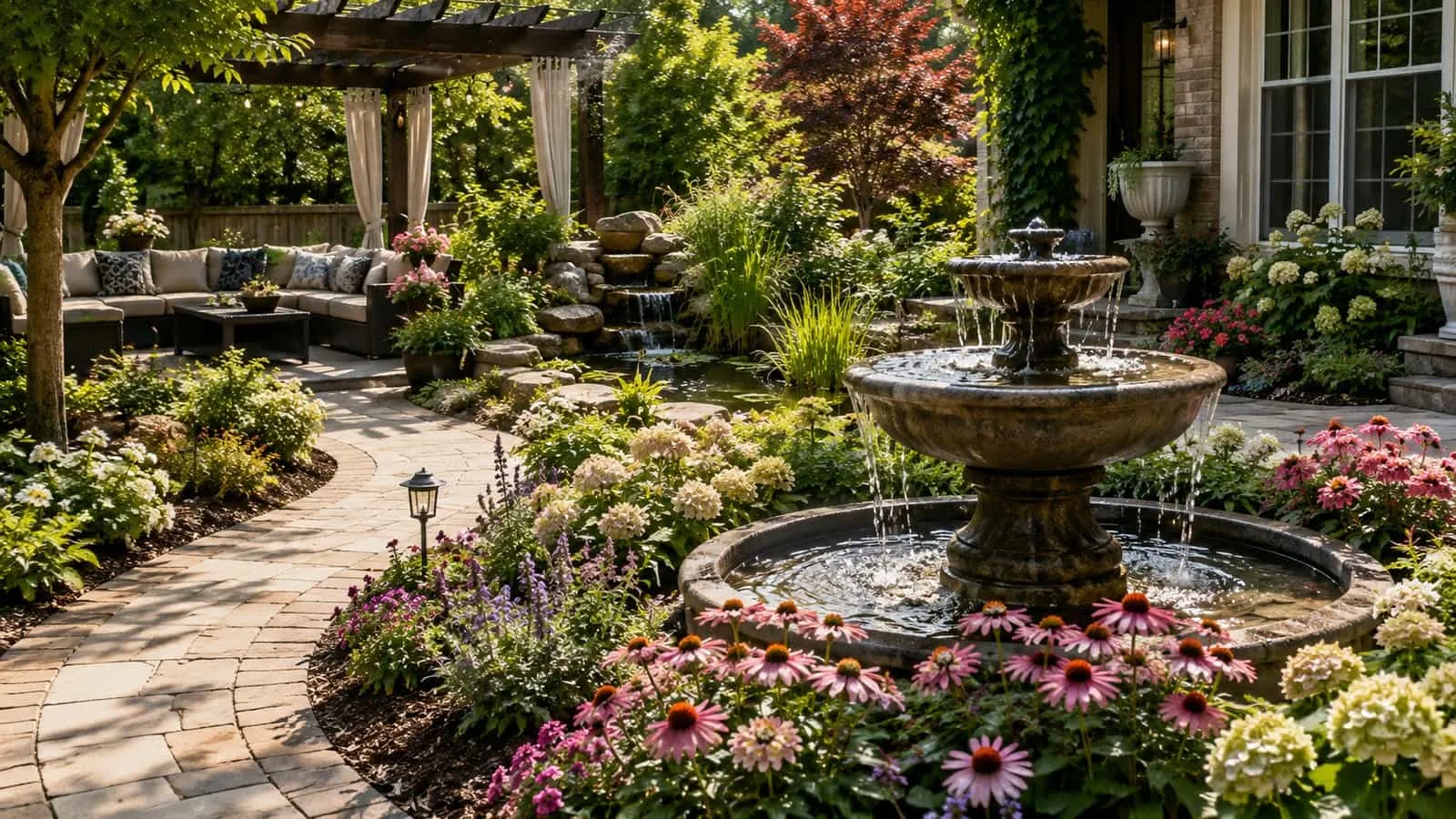
🌿⛲ A garden fountain is most successful when water, stone, planting, sound and movement feel like parts of the same landscape. A bubbling basin beside ornamental grasses creates a different experience from a formal tiered fountain surrounded by clipped hedges, while a shallow wildlife fountain near flowering shrubs invites birds into a more natural setting. Use this guide to compare garden styles, fountain forms, plants, sounds, sizes, materials and real homeowner situations before choosing your design.
Explore garden water fountain ideas for landscaped yards, cottage gardens, formal gardens, flower beds, curved pathways, peaceful seating areas and four season outdoor spaces. Compare fountain style, shape, planting, sound, scale and seasonal care before planning your garden water feature. Select any image below to explore that section of the guide.


A garden water fountain works best when it is planned as part of the living landscape rather than added after the garden is complete. Mature plant height, viewing distance, walking paths, nearby seating, sunlight, prevailing wind, irrigation access and seasonal maintenance all influence how the fountain looks, sounds and performs over time. The most successful garden fountains become natural focal points that continue fitting the landscape as flowers, shrubs and ornamental grasses grow and change throughout the seasons.
Garden water fountains combine moving water, landscape design and outdoor enjoyment within flower beds, garden paths and planted backyards. Unlike patio fountains surrounded mainly by furniture and hard surfaces, a garden fountain must work with plants that change in height, colour and density throughout the growing season. If you're designing a calming space inside your home instead of the landscape, discover creative indoor water fountain ideas for peaceful rooms and modern home décor, where you'll find room-by-room inspiration, decorating ideas and practical buying guidance for interior spaces. A garden fountain may become a peaceful destination beside a reading bench, a focal point along a curved pathway or a central feature viewed from the house.
Choosing the right garden water fountain begins with understanding how the space will actually be used. Before selecting a style or size, consider how sunlight, prevailing wind, mature plant growth and viewing angles will affect the fountain throughout the year. Our guide to choosing the best water fountain location explains how to evaluate these factors before installation. A quiet reading corner may benefit from a small bubbling bowl, while an open landscape viewed from the house often needs a larger urn, tiered or bubbling rock fountain that remains visible beyond mature plant growth. Sound, viewing distance, maintenance access, wildlife goals and available space should work together so the fountain complements both the landscape and everyday outdoor living.
Gardens naturally evolve over time, and a well-planned fountain should evolve with them. Spring planting, summer growth, autumn leaf drop and winter protection all influence long-term performance. Homeowners often discover that surrounding plants become taller, shade patterns shift and nearby trees create seasonal maintenance needs that were not obvious during installation. Choosing a fountain that remains attractive, accessible and easy to maintain throughout every season creates a landscape feature that continues to add beauty and enjoyment for years. If your goal is creating a relaxing outdoor seating area around furniture, pergolas or decks, explore our patio water fountain design and placement guide.
A successful garden water fountain becomes part of the landscape rather than a feature placed beside it. The best outdoor garden fountains combine balanced placement, gentle water movement, natural materials and practical maintenance to create a peaceful focal point that complements flower beds, pathways and surrounding plants throughout every season.
Use these design principles to choose a garden fountain that remains beautiful, functional and easy to enjoy as your landscape grows and changes.
When placement, fountain style, water sound and seasonal planning work together, a garden water fountain becomes more than a decorative feature. It creates lasting outdoor ambience, supports relaxing garden experiences and remains a beautiful focal point for everyday enjoyment, entertaining guests and peaceful moments throughout the seasons.

✅ Best For: Garden water fountains are especially well suited to flower beds, cottage gardens, formal landscapes, raised beds, pollinator gardens, stepping stone paths, shrub borders, wildlife gardens, rock gardens and peaceful planting areas that need movement, relaxing sound and a stronger natural focal point.
The best garden fountain is not simply the most decorative option. It is the fountain that fits the landscape scale, remains visible among mature plants, produces comfortable sound and can be cleaned, refilled and protected through changing seasons. Begin with the garden experience, then compare fountain forms, materials, sizes and water movement.
Every garden has unique planting, sunlight, viewing distances, wildlife activity and maintenance needs. When the decision extends beyond plants and garden style, our guide to outdoor fountain selection for garden landscapes helps compare fountain size, water movement, sound, power, materials, installation, weather exposure and long-term outdoor ownership across different residential settings. Use the scenarios below to compare garden water fountain styles, placement, water sound and real-world landscape situations so you can confidently choose the best fountain for your garden, outdoor living space and long-term enjoyment.
Open each scenario to discover which garden water fountain best fits your landscape size, planting style, sound preference and everyday use. Guidance includes fountain placement, mature plant growth, viewing angles, acoustic reach, wildlife access, seasonal exposure and maintenance planning for realistic garden conditions.
Best choice: Compact bubbling bowl or low garden urn fountain
A compact bubbling fountain creates gentle water movement without overwhelming a small flower bed, narrow garden corner or nearby seating area. Its low profile works well among herbs, groundcovers and shorter perennials while producing soft sound that can be enjoyed from a close bench. A self-contained bowl or urn also requires less visual space than a large tiered fountain and can become a peaceful destination for reading, reflection or morning coffee. If you are considering this vessel style for a planted landscape, our urn water fountains for garden landscapes guide explains bubbling and overflowing designs, size, materials, pumps, hidden reservoirs, placement and long-term garden care in greater detail.
Choose this when you want soft water sound and a calming focal point within a compact planted space.
Micro Recommendations: Position the basin slightly beyond the bench rather than directly beside it, leaving enough room to refill the fountain, clean the pump and reach surrounding plants.
⚠️ Common Mistake: Choosing a fountain that is too tall or produces excessive splashing can overpower a small seating area and make quiet conversations or peaceful reading less enjoyable.
Best choice: Weathered stone, ceramic urn or birdbath garden fountain
Cottage gardens usually look most natural with fountain forms that feel established rather than formal or highly polished. A weathered stone basin, glazed ceramic urn or traditional birdbath fountain can blend with roses, lavender, foxgloves, flowering shrubs and curved garden paths. Gentle bubbling or trickling water supports the relaxed character of informal planting while giving the eye a clear focal point among layered flowers and changing seasonal colour.
Choose this when you want a romantic garden fountain that feels softened by flowers and naturally aged materials.
Micro Recommendations: Place the fountain where it remains visible after summer perennials mature, and keep spreading plants far enough away to protect pump access and basin cleanliness.
⚠️ Common Mistake: Allowing fast-growing perennials and spreading groundcovers to surround the basin often hides the fountain by midsummer and makes routine cleaning much more difficult.
Best choice: Tiered or pedestal fountain with balanced proportions
Formal landscapes benefit from a fountain that reinforces symmetry, central sightlines and structured planting. A tiered or pedestal garden fountain can anchor intersecting paths, clipped hedges, geometric flower beds or an open lawn viewed from the house. Cascading water provides stronger visual movement and broader acoustic reach than a small bubbler, making it suitable for larger gardens where the fountain must hold attention from a greater viewing distance. For help choosing the ideal height, proportions and water flow, explore our complete guide to two tier, three tier and four tier water fountains before selecting a centerpiece for your landscape.
Choose this when you want a commanding centrepiece that supports order, proportion and long-distance garden views.
Micro Recommendations: Measure the fountain against the width of surrounding beds and the main viewing distance so it feels substantial without overpowering nearby architecture or planting.
⚠️ Common Mistake: Selecting a fountain that is too small or placing it slightly off-centre can weaken the balanced symmetry that gives formal gardens their structured appearance.
Best choice: Shallow birdbath fountain or gently bubbling basin
A wildlife-friendly garden fountain should provide clean moving water, shallow access and stable footing for visiting birds. A birdbath fountain or low bubbling basin can attract wildlife while adding natural sound near pollinator beds, native plants and protective shrubs. Gentle water movement is usually more suitable than forceful spray because it reduces splash, preserves usable basin depth and creates a calmer drinking and bathing area.
Choose this when you want moving water that supports garden wildlife without sacrificing landscape beauty.
Micro Recommendations: Keep the basin visible from multiple directions, provide nearby shelter without dense concealment and clean the water frequently during warm weather or heavy wildlife activity.
⚠️ Common Mistake: Positioning the fountain inside dense shrubs may make birds hesitant to visit because nearby cover can hide predators and reduce safe escape routes.
Best choice: Bubbling rock fountain or low natural stone water feature
Bubbling rock fountains integrate naturally with gravel beds, boulders, alpine plants, creeping groundcovers and drought-conscious landscapes. Water appears to rise directly from the stone, creating restrained movement without the decorative formality of an urn or tiered fountain. This style works especially well when the surrounding materials repeat similar colours, textures and shapes, allowing the fountain to become part of the terrain rather than a separate garden ornament. Explore our bubbling rock water fountain ideas and designs for natural stone styles, landscaping ideas, water flow, placement, installation and hidden reservoir planning.
Choose this when you want natural water movement that appears built into the rock garden itself.
Micro Recommendations: Create a stable level base and use edging or larger stones to prevent loose gravel, soil and plant debris from entering the hidden reservoir or pump intake.
⚠️ Common Mistake: Allowing decorative gravel, loose soil or mulch to wash into the hidden reservoir can clog the pump over time and increase maintenance requirements.
Best choice: Narrow urn, compact pedestal or low bowl fountain
A fountain beside a garden path should create interest without narrowing the route or placing splash, cords and basin edges where people walk. Where a pathway follows a fence, retaining wall or garden wall, wall water fountains create a beautiful vertical focal point without using valuable planting or walking space. Otherwise, a slim urn, compact pedestal or low bowl can become a discovery point along a curved pathway, stepping-stone route or planted border. The fountain should be angled toward the approach so visitors see the water movement before reaching it and continue hearing the sound as they move through the garden.
Choose this when you want the fountain to create a visual destination and changing sound experience along a garden walk.
Micro Recommendations: Set the fountain beyond the path edge, direct splash away from walking surfaces and confirm that mature foliage will not conceal the basin or restrict maintenance access.
⚠️ Common Mistake: Installing the fountain too close to the walking path can reduce comfortable clearance, create splash on paving surfaces and make routine maintenance more awkward.
Best choice: Tall urn, multi-tiered or substantial pedestal fountain
A fountain viewed from a window, deck or distant seating area needs enough height, contrast and water movement to remain visible across the landscape. Tall urn fountains, tiered designs and substantial pedestal fountains can anchor deeper flower beds, broad lawns and large shrub borders. Stronger cascading water also produces more acoustic coverage, although wind, nearby traffic and the distance from the house will influence how clearly the fountain can be heard. If your project extends beyond the garden into entertaining spaces, pools, pergolas, outdoor kitchens and larger landscape planning, explore our backyard water fountain ideas for complete outdoor living to see how fountains can unify an entire backyard design.
Choose this when you need a garden focal point with enough scale and sound to be appreciated from farther away.
Micro Recommendations: Test the proposed location from the main indoor and outdoor viewing areas before installation, and avoid placing the fountain where tall shrubs will eventually hide it.
⚠️ Common Mistake: Underestimating mature tree and shrub growth often results in a fountain that gradually disappears from important viewing areas inside the home and across the garden.
Best choice: Durable resin, fiberglass, metal or protected cast stone fountain
Gardens exposed to strong sunlight, falling leaves, wind, frost and freeze-thaw cycles need a fountain selected for year-round environmental realism. Resin and fiberglass fountains are lighter and easier to move or store, while cast stone and concrete offer visual weight but may require careful draining and winter protection. The best placement also provides pump access, practical water refilling and enough open space to manage autumn debris without damaging surrounding plants.
Choose this when seasonal durability, winter preparation and manageable maintenance are central to the buying decision.
Micro Recommendations: Drain the fountain before freezing weather, remove or protect the pump and follow the manufacturer’s winter-care instructions for the specific fountain material.
⚠️ Common Mistake: Waiting until the first hard freeze to prepare the fountain can increase the risk of pump damage, trapped water expansion and unnecessary repairs in spring.

| 🌿 Garden Goal | ⛲ Recommended Fountain Style | 🔊 Water Sound and Flow | Landscape Placement and Performance | Buyer Guidance and Planning Insight |
|---|---|---|---|---|
| 🏛️ Elegant Formal Garden Focal Point | A tiered fountain or pedestal fountain creates height, symmetry and a strong architectural centerpiece. | A layered cascade produces brighter splash notes and broader acoustic projection across open garden areas. | Place it along a central sightline between clipped hedges, symmetrical flower beds or straight garden pathways. | Ideal for homeowners looking for an elegant outdoor fountain that creates visual order and can be enjoyed from several areas of the property. |
| 🌸 Romantic Cottage Garden Charm | A weathered stone fountain, ceramic urn or traditional birdbath fountain blends naturally with informal planting. | Soft bubbling or light trickling adds gentle movement without overpowering birds, breezes or surrounding garden sounds. | Position it beside curved paths, flowering borders or climbing plants while leaving enough open space to keep the basin visible. | Often chosen by gardeners who want a romantic water feature that feels established and naturally connected to the surrounding flowers. |
| 🐦 Wildlife Friendly Garden Retreat | A shallow birdbath fountain with a textured edge provides safer access for songbirds and smaller garden visitors. | Gentle circulation keeps the water moving while limiting deep splashing and sudden changes in water pressure. | Place it near shrubs or native plants that provide nearby shelter without allowing branches and leaves to crowd the basin. | Perfect for those seeking a wildlife friendly garden fountain that combines decorative beauty with accessible moving water. |
| 📖 Peaceful Garden Bench Escape | A bubbling urn, low bowl fountain or compact basin fountain creates a calm and intimate seating destination. | Low bubbling provides soothing close range sound with controlled resonance and limited water spray. | Position the fountain within comfortable listening distance of a reading chair, garden bench or shaded relaxation area. | Frequently selected by homeowners who want relaxing water sounds for reading, reflection or quiet outdoor conversations. |
| 🪨 Natural Rock Garden Integration | A bubbling rock fountain or natural stone basin adds water movement without looking overly formal or decorative. | Water rises gently over the stone surface and creates grounded bubbling with minimal echo or airborne splash. | Blend the fountain among gravel, boulders, alpine plants and low groundcovers while keeping the pump access point clear. | Commonly chosen by people who want a natural looking water feature that blends into an established rock garden landscape. |
| 🏡 Space Saving Small Garden Interest | A compact urn, wall fountain or low bubbling bowl adds movement without using valuable walking or planting space. | A quiet trickle or gentle bubbling pattern creates noticeable ambience without excessive volume in a confined area. | Use it beside a narrow garden bed, side yard, fence or small pathway where splash remains contained within the basin. | Ideal for buyers seeking a small garden water fountain that provides visible movement, calming sound and practical placement flexibility. |
| Garden fountain summary: The best garden water fountain should match the scale, planting style and purpose of the landscape. Tiered fountains create formal structure and stronger water sound, while bubbling urns, shallow birdbath fountains and natural stone designs provide gentler ambience for cottage gardens, wildlife areas and quiet seating spaces. Thoughtful placement improves visibility, controls splash, protects maintenance access and helps the fountain remain balanced as surrounding plants mature. | ||||
Garden water fountains can bring movement, relaxing sound, structure and visual interest into flower beds, landscaped pathways and backyard garden spaces. They also require regular cleaning, seasonal preparation and thoughtful placement. Comparing the biggest benefits and practical tradeoffs can help you decide whether a garden water fountain fits your landscape, maintenance preferences, available space and local climate.
| Benefits of Garden Water Fountains | Limitations and Practical Tradeoffs |
|---|---|
|
|
| Garden Fountain Tip: Position your fountain where it can be enjoyed from a patio, garden bench or nearby window while leaving enough room for cleaning, pruning and seasonal maintenance. The best garden fountains balance beauty, sound and easy access throughout the year. | |
💡 Comparison Tip: Compare the fountain at mature garden scale. A design that looks large in a showroom may appear small when surrounded by shrubs, trees and deep planting beds.
Section Summary Snapshot: Comparing garden water fountains by landscape style, water sound, placement and maintenance helps reveal which design will feel balanced and perform well over time. Tiered fountains create formal structure, while bubbling urns, birdbath fountains and natural stone features support quieter gardens, wildlife areas and small spaces. The best choice combines proper scale, relaxing water movement, clear maintenance access and thoughtful seasonal planning.
Cottage garden water fountains look best when weathered materials, gentle bubbling water and informal planting blend naturally together. Stone fountains, glazed ceramic urns, birdbath fountains and small bubbling basins create peaceful focal points among roses, lavender, foxglove and flowering perennials while remaining easy to clean and maintain.
Problem A fountain can disappear behind dense flowers or feel out of place when surrounded by an informal cottage garden.
Why it happens Tall perennials often reach their full height in summer, while modern fountain styles can contrast sharply with the relaxed character of traditional cottage planting.
Solution Choose weathered stone, glazed ceramic or birdbath fountains, surround the basin with lower-growing plants and leave one side open for easy maintenance and year-round visibility.
Cottage garden water fountains should feel as though they have always belonged in the landscape. Weathered stone, glazed ceramic urns, rustic birdbath fountains and small bubbling basins complement winding pathways, flowering borders and traditional cottage gardens far better than polished contemporary designs. Soft bubbling water adds movement without overwhelming the peaceful atmosphere created by layered flowers and informal planting.
Position the fountain where it can be enjoyed from a pathway, porch, patio or nearby window while keeping enough space for cleaning and refilling. Surround the basin with lavender, catmint, creeping thyme and other low-growing plants, then place taller roses, foxglove, salvia and hollyhocks behind the fountain to preserve both the water view and easy access throughout the growing season.
🌷 Cottage Garden Tip: Repeat the same natural materials throughout the garden. Matching stone edging, gravel paths, aged containers and weathered fountain finishes creates a relaxed, established look that feels authentic rather than newly installed.
Formal garden water fountains create elegant focal points through symmetry, proportion and precise placement. Tiered fountains, pedestal basins and classical stone fountains work best when centred on straight pathways, framed by clipped hedges and aligned with doors, windows, garden axes or geometric flower beds to reinforce the structured beauty of a formal landscape.
Problem A formal garden fountain can look awkward or unbalanced when it is positioned even slightly off centre or surrounded by uneven planting.
Why it happens Formal landscapes depend on symmetry, repeated shapes and carefully aligned sightlines. Small placement errors become much more noticeable because every element is designed to mirror the overall layout.
Solution Install the fountain on a perfectly level foundation and align it with pathways, entrances, windows or the garden's central axis while surrounding it with balanced planting and matching landscape materials.
Formal garden water fountains should strengthen the overall symmetry of the landscape rather than compete with it. Tiered fountains, classical pedestal basins, carved stone bowls and traditional European-inspired designs naturally complement clipped boxwood hedges, yew borders, geometric flower beds and straight garden paths. Their balanced proportions help create a refined focal point that anchors the entire garden design.
Careful positioning is just as important as selecting the fountain itself. Place the fountain at the end of a straight pathway, within the centre of a courtyard or where major sightlines intersect. A level foundation, equal spacing and repeated landscape elements help maintain visual order, while regular pruning keeps hedges and topiary from disrupting the fountain's symmetrical appearance throughout the growing season.
🏛️ Formal Garden Tip: Before installing the fountain, stand at the main entrance, patio and key viewing areas to confirm it appears perfectly centred from every important perspective. Even small alignment adjustments can dramatically improve the overall balance of a formal garden.
Wildlife garden water fountains provide a reliable source of fresh water for birds, butterflies, bees and other beneficial wildlife. Birdbath fountains, shallow bubbling basins and low-profile water features offer safe drinking and bathing areas while encouraging biodiversity, especially when placed near shrubs, native plants and natural habitat edges.
Problem Wildlife may avoid a fountain that has deep water, slippery sides or an exposed location without nearby shelter.
Why it happens Birds and other small wildlife need shallow water, secure footing and clear sightlines so they can watch for predators while still having quick access to nearby cover.
Solution Choose a shallow birdbath fountain or gently bubbling basin with textured surfaces, place it near shrubs or native planting and keep the water clean and free from chemicals that could harm wildlife.
Wildlife garden water fountains should provide safe, accessible water while blending naturally into the surrounding landscape. Birdbath fountains, shallow bubbling basins and natural stone water features are excellent choices because they allow birds, butterflies, bees and other beneficial wildlife to drink and bathe comfortably without deep or fast-moving water. Gentle water movement also helps attract wildlife while reducing stagnant water.
Position the fountain near shrubs, native plants or small trees that provide shelter, but keep the basin itself visible so birds can watch for danger before landing. Add textured stones or shallow ledges to improve footing, clean the basin regularly and avoid harsh chemicals whenever pets, birds or other wildlife may use the water source throughout the season.
🐦 Wildlife Garden Tip: Native flowers, flowering shrubs and a shallow bubbling fountain create one of the most effective combinations for attracting birds, butterflies, bees and other beneficial wildlife while supporting a healthier backyard ecosystem.
Shade garden water fountains add movement, reflected light and gentle sound to woodland landscapes where dense foliage can make garden spaces feel darker. Glazed ceramic, light-coloured stone, stainless steel accents and softly bubbling water brighten hostas, ferns, heuchera and other shade-loving plants while creating a peaceful woodland retreat.
Problem Shade garden fountains can quickly collect leaves, pollen and tree debris while becoming hidden beneath dense woodland planting.
Why it happens Mature trees provide valuable shade but also increase seasonal leaf drop, while lush foliage can block both the fountain and its reflected light if plants become overcrowded.
Solution Choose a fountain with easy pump access, position it outside the heaviest leaf drop and surround it with layered shade plants that frame the feature without hiding the basin.
Shade garden water fountains should brighten darker areas while blending naturally with woodland planting. Glazed ceramic fountains, pale natural stone, bubbling urns and fountains with stainless steel accents reflect available light and create visual contrast against hostas, ferns, heuchera, astilbe and other shade-loving perennials. Gentle water movement also adds sound and interest where colourful flowers may be less abundant.
Position the fountain where it can be viewed from a shaded patio, woodland path or nearby seating area while avoiding locations directly beneath heavy tree canopies. Leave enough space around the basin for routine cleaning and choose a design that provides easy access to the pump, making seasonal maintenance much simpler as leaves, pollen and seeds accumulate throughout the year.
🌿 Shade Garden Tip: Pair a softly bubbling fountain with layered woodland plants and light-coloured materials to create a brighter, more inviting shade garden that feels cool, relaxing and full of natural character throughout the season.
Rock garden water fountains look most natural when they blend seamlessly with surrounding boulders, gravel and alpine planting. Bubbling boulders, stone bowls, natural rock fountains and small recirculating streams create the appearance of a natural spring while adding gentle sound, movement and texture to the landscape.
Problem A fountain can look artificial when it appears to sit on top of the rocks instead of becoming part of the landscape.
Why it happens Mismatched stone colours, oversized fountain designs and strong water flow often compete with the natural simplicity that makes rock gardens attractive.
Solution Select natural stone or bubbling boulder fountains that match nearby rock, integrate them into the landscape and use gentle water movement that resembles a spring, seep or wet rock surface.
Rock garden water fountains should appear as though they have always been part of the landscape. Bubbling boulders, carved stone bowls, natural rock fountains and shallow recirculating streams blend beautifully with gravel pathways, decorative stone, alpine plants, creeping groundcovers and drought-tolerant gardens. Their understated appearance creates a peaceful focal point without overpowering the surrounding landscape.
Position the fountain where it naturally follows the contours of the garden instead of placing it on a raised pedestal. Match the colour, texture and scale of the surrounding stone so the water feature blends into the existing rockwork. Gentle bubbling or slow-flowing water creates the realistic appearance of a natural spring while reducing splash and ongoing maintenance.
🪨 Rock Garden Tip: Slightly bury the fountain base within surrounding gravel or natural stone instead of placing it fully above ground. This simple technique helps the water feature appear naturally formed and creates a much more realistic rock garden design.
Japanese inspired and Zen garden water fountains emphasize simplicity, balance and quiet reflection. Stone basins, bamboo spouts, low bubbling fountains and traditional tsukubai-style water features create gentle sound while blending naturally with moss, gravel, stepping stones and carefully pruned evergreen planting to produce a peaceful, uncluttered landscape.
Problem A Zen garden can quickly lose its peaceful atmosphere when the fountain is too decorative, too large or surrounded by excessive ornaments.
Why it happens Japanese-inspired gardens rely on simplicity, negative space, natural materials and carefully balanced proportions. Too many decorative elements compete with the quiet character that defines this style.
Solution Choose a simple stone basin, bamboo spout or low bubbling fountain, surround it with restrained planting and natural materials, and allow open space to become part of the overall design.
Japanese inspired and Zen garden water fountains should encourage relaxation rather than attract attention. Stone basins, bamboo fountains, bubbling rocks and traditional tsukubai water features complement moss gardens, smooth gravel, natural boulders and carefully positioned stepping stones. Explore our Japanese garden fountain styles and designs for a deeper look at how traditional water features, natural materials and gentle water movement create the simplicity and balance associated with Japanese garden design.
Place the fountain where it can be appreciated from a garden path, meditation area or quiet seating space without becoming the dominant feature. Frame the water with moss, ferns, dwarf evergreens and natural stone while avoiding excessive flowers, ornaments or bright decorative accents. The goal is to create harmony through balance, texture and carefully controlled sound.
💡 Garden Fountain Tip: If the fountain looks like it naturally belongs in the landscape throughout every season, you've chosen the right style. Match the fountain to the garden's structure, surrounding plants, materials and scale first, then let gentle water movement become part of the overall landscape rather than its only focal point.
Section Summary Snapshot: Choosing the right garden water fountain begins with matching the fountain to your landscape style rather than simply choosing a design you like. Cottage gardens favour weathered materials and gentle bubbling water, formal gardens depend on symmetry, wildlife gardens need safe access, shade gardens benefit from reflected light, while rock and Japanese inspired gardens rely on natural integration, balanced placement and restrained water movement.
Choosing a garden fountain often feels overwhelming because many fountain styles look beautiful in photographs. The better approach is to think about how the fountain will actually be used throughout the year. A quiet reading corner needs a very different water feature than a large landscaped yard viewed from the house, while a wildlife garden has different priorities than a formal entertaining space.
Rather than selecting a fountain based only on appearance, think about the experience you want to create. Water sound, viewing distance, mature plant growth, maintenance requirements, available space and seasonal conditions all influence which fountain will provide the greatest long-term enjoyment. If you're still comparing fountain designs, our complete guide to outdoor water fountain types and styles explains how popular fountain forms differ before you make your final choice. The right fountain should continue fitting the landscape years after surrounding shrubs, trees and flower beds have reached their full size.
Use the comparison below to narrow your choices based on real homeowner priorities instead of simply comparing fountain styles. This approach often leads to better long-term satisfaction because the fountain matches the way the garden is actually enjoyed every day.
Choosing the right garden water fountain means matching the fountain to your landscape, mature plant growth, viewing distance and maintenance expectations. The best fountain forms create natural focal points that complement flower beds, garden pathways and outdoor living spaces while providing lasting beauty, relaxing water sound and long-term enjoyment.
| 🌿 Landscape Priority | ⛲ Recommended Fountain Form | 🎧 Why It Performs Well | 🏡 Best For Homeowners Who... |
|---|---|---|---|
| Create a striking focal point visible across the landscape | Tiered Fountain | The elevated design produces layered cascading water, excellent acoustic projection and strong visual presence from patios, windows and longer viewing distances, making it ideal for formal landscapes and larger garden settings. | Ideal for homeowners looking for a statement fountain that anchors the landscape while creating impressive water movement and relaxing outdoor ambience throughout the year. |
| Blend naturally into flower beds and cottage gardens | Urn Fountain | Gentle bubbling water, soft visual rhythm and rounded forms integrate naturally with flowering perennials, shrubs and curved planting beds while maintaining comfortable maintenance access. | Often chosen by buyers who want a peaceful garden water feature that complements colourful planting without becoming the dominant landscape element. |
| Encourage birds, butterflies and pollinator activity | Birdbath Fountain | Shallow moving water creates a welcoming wildlife habitat while subtle bubbling improves water freshness and provides gentle outdoor ambience without overwhelming nearby seating. | Perfect for those seeking a garden fountain that supports birds and pollinators while adding natural movement to backyard landscapes. |
| Create a natural low-maintenance landscape | Bubbling Rock Fountain | Natural stone textures, concealed reservoirs and restrained water movement provide visual harmony while reducing exposed splash areas and simplifying seasonal maintenance. | Frequently selected by homeowners who prefer a realistic landscape feature that blends into rock gardens, ornamental grasses and natural planting schemes. |
| Maximize smaller gardens and narrow planting areas | Wall Fountain | Vertical installation preserves valuable planting space while directing water downward for controlled sound, efficient placement and comfortable movement along nearby garden pathways. | Commonly researched by people comparing compact garden fountain ideas for courtyards, side gardens and smaller outdoor living spaces. |
| Create immersive water sound across larger landscapes | Pondless Fountain | Multiple cascading water levels increase acoustic reach while hidden reservoirs improve safety and allow the feature to integrate naturally within expansive landscape designs. | Frequently chosen by homeowners wanting stronger water sound, larger visual impact and an impressive landscape feature for entertaining and everyday relaxation. |
| 🌿 The best garden fountain is rarely determined by appearance alone. Matching the fountain form to your landscape size, outdoor lifestyle, mature planting, maintenance expectations and desired water sound creates a feature that remains beautiful, functional and enjoyable for many years. When placement, acoustic character and long-term landscape growth work together, a garden water fountain becomes a natural extension of the landscape rather than simply another decorative element. | |||
Pondless fountains work especially well in larger gardens where homeowners want stronger cascading water sound, natural landscape integration and the appearance of flowing water without maintaining an exposed pond. For detailed planning around waterfalls, streams, concealed storage and recirculating systems, explore our landscape pondless fountain and waterfall designs.

| 🌿 Garden Size | ⛲ Recommended Fountain Forms | 🎯 Why They Work Best |
|---|---|---|
| 🏡 Small Gardens | Wall fountains, compact urn fountains, birdbath fountains and small bubbling rock fountains | Preserve valuable planting space while creating gentle acoustic ambience, balanced visual scale and relaxing water movement for patios, courtyards, narrow pathways and intimate garden seating. |
| 🌸 Medium Gardens | Urn fountains, birdbath fountains, bubbling rock fountains and compact tiered fountains | Provide a balanced focal point that complements flower beds, ornamental shrubs and outdoor living spaces while maintaining comfortable viewing distance and natural landscape harmony. |
| 🌳 Large Gardens | Tiered fountains, pondless waterfalls, larger bubbling rock fountains and statement garden fountains | Deliver stronger acoustic projection, greater visual presence and wider landscape coverage, creating impressive focal points that remain proportionate within expansive gardens and mature planting designs. |
| 🌿 Matching a garden fountain to the scale of your landscape creates better visual balance, more natural water sound and long-term enjoyment. Choosing a fountain that complements mature plant growth, outdoor living spaces and viewing distance helps the feature remain a beautiful focal point as your garden continues to evolve. | ||
| 🌿 Your Outdoor Lifestyle | ⛲ Garden Fountain Recommendation |
|---|---|
| ☕ Enjoy quiet mornings with coffee, reading or peaceful reflection outdoors | Choose gentle bubbling fountains placed near benches, patios or garden seating where soft water movement creates relaxing ambience without overwhelming conversation or quiet surroundings. |
| 🎉 Frequently entertain family and friends in the garden | Select fountains that provide pleasant background water sound while allowing conversations to remain comfortable across patios, outdoor dining spaces and gathering areas. |
| 🧹 Prefer simple maintenance throughout the year | Look for self-contained garden fountains with accessible pumps, durable materials and uncomplicated designs that make seasonal cleaning and routine care quick and convenient. |
| ❄️ Live in regions with freezing winters | Choose fountain styles and weather-resistant materials that are easier to drain, protect or store, helping extend pump life and reduce winter maintenance. |
| 🌱 Plan to expand your landscaping over time | Position a fountain where it will remain visible after shrubs, ornamental grasses and flowering perennials reach mature height, preserving both visual balance and relaxing water sound. |
| 🌿 The best garden fountain complements your daily routine as much as your landscape design. Matching water sound, maintenance expectations, seasonal conditions and future garden growth creates an outdoor feature that continues to feel natural, relaxing and enjoyable for years to come. | |

A beautiful garden water fountain should continue enhancing your landscape long after installation day. Planning for mature plant growth, gentle water movement, seasonal weather and comfortable maintenance helps create a balanced outdoor retreat where natural sound, visual harmony and relaxing outdoor living work together throughout the year.
Use these practical planning tips to choose a fountain that remains functional, attractive and enjoyable as your landscape naturally changes over time.
Choosing a garden fountain with long-term planning in mind creates a landscape that feels natural, relaxing and easy to enjoy throughout every season. By balancing placement, maintenance, water sound and future garden growth, your fountain becomes a lasting feature that supports both everyday outdoor living and the evolving beauty of your landscape.
Section Summary Snapshot: Choosing the right garden fountain is less about finding the most decorative style and more about matching the fountain to your landscape, lifestyle and long-term expectations. By considering garden size, maintenance, wildlife goals, water sound and everyday use before buying, you'll create an outdoor feature that continues to feel natural, functional and enjoyable as your garden matures.
A beautiful fountain rarely succeeds because of the fountain alone. The surrounding planting determines whether the water feature feels naturally integrated into the landscape or simply placed in the middle of a flower bed. Layering plants by mature height, seasonal interest, texture and maintenance needs helps create a balanced garden that remains attractive throughout the year.
Use this garden fountain planting guide to choose groundcovers, flowers, grasses and shrubs that frame the water without hiding it or blocking maintenance.
| 🌿 Garden Fountain Planting Area | 🌸 Best Plants to Use | ⛲ How the Plants Improve the Fountain | 💧 Placement and Maintenance Tips |
|---|---|---|---|
| 🌱 Low-Growing Plants Near the Fountain Basin | Creeping thyme, ajuga, sedum, moss, dwarf mondo grass and other compact groundcovers. | Low plants soften the fountain base while keeping the basin, flowing water and decorative details easy to see. | Keep groundcovers below the basin edge and leave one side open for cleaning, refilling and reaching the pump. |
| 🌼 Flowers Beside a Garden Fountain | Lavender, salvia, catmint, heuchera, hostas, coneflowers and compact ornamental grasses. | These medium-height plants add colour, texture and gentle movement without overpowering a garden fountain or flower-bed focal point. | Allow enough space for mature growth so leaves and flowers do not lean into the water or narrow nearby garden paths. |
| 🌳 Shrubs Behind a Garden Fountain | Hydrangeas, boxwood, evergreen shrubs, roses and taller ornamental grasses. | Background shrubs frame the water feature and help stone, resin, ceramic or metal fountains stand out within the landscape. | Choose shrubs by mature height so they do not hide the fountain from patios, benches, windows or garden entrances. |
| 🌷 Seasonal Flowers Around a Fountain | Tulips, daffodils, summer annuals, chrysanthemums and other spring, summer and fall flowers. | Seasonal planting adds changing colour without replacing the permanent shrubs, grasses and groundcovers that give the fountain structure. | Plant seasonal flowers in accessible spaces where they can be changed without disturbing cords, tubing or the fountain foundation. |
| ☀️ Best Plants for Sunny Garden Fountains | Lavender, salvia, catmint, coneflowers, yarrow, sedum, compact roses and drought-tolerant ornamental grasses. | Sun-loving fountain plants create colourful flower beds, attract pollinators and tolerate the brighter conditions surrounding exposed water features. | Preserve airflow around the basin because strong sun can increase evaporation, warm the water and encourage algae growth. |
| 🌿 Best Plants for Shade Garden Fountains | Hostas, ferns, heuchera, astilbe, brunnera and woodland groundcovers. | Shade plants create soft texture and a calm woodland feeling around fountains beneath trees or beside north-facing walls. | Keep nearby plants low because shaded areas often collect pollen, seeds and leaves that can clog the fountain pump. |
| 🐦 Best Plants for Wildlife Garden Fountains | Native flowers, berry-producing shrubs, small trees, pollinator plants and protective evergreen cover. | Wildlife-friendly plants provide food, shelter and safer approach routes for birds, bees and butterflies using the fountain. Landscapes designed around birdbath water fountains combine these natural planting layers with shallow moving water to create one of the most inviting habitats for backyard songbirds. | Keep the water visible from above and leave open space around the basin so birds can watch for danger before landing. |
| 🦋 Pollinator Plants Around a Water Fountain | Coneflowers, salvia, catmint, yarrow, native asters, bee balm and other nectar-rich flowers. | Long-blooming flowers combine moving water with reliable nectar sources that attract butterflies, bees and other beneficial pollinators. | Place flowering plants beside the basin rather than over it so petals and insects do not collect near the pump intake. |
| 🌿 The best plants around a garden fountain include low groundcovers near the basin, colourful flowers through the middle and taller shrubs behind the water feature. Match each planting layer to sunlight, mature height, wildlife goals and maintenance access so the fountain remains visible, balanced and easy to care for. | |||
🌱 Landscape Design Tip: Design your planting around the mature size of every shrub, flower and ornamental grass rather than how they look on planting day. A garden fountain should remain visible from patios, garden paths and seating areas while still allowing easy access for cleaning, pump maintenance and seasonal care.
Section Summary Snapshot: Choosing the right plants around a garden fountain creates a landscape that feels balanced, colorful and easy to maintain. Layering groundcovers, flowering perennials, ornamental grasses and shrubs by mature height keeps the fountain visible while supporting wildlife, simplifying maintenance and preserving open views from patios, pathways and seating areas throughout every growing season.
Garden paths shape how a fountain is discovered. A straight path creates an immediate focal point, while a curved pathway can reveal part of the basin between flowers, shrubs or ornamental grasses before the full fountain comes into view.
This gradual reveal adds depth and movement to the landscape. Place the fountain slightly beyond a path turn or planting opening so the water attracts attention without narrowing the walking route.
Garden benches should sit close enough for comfortable water sound but far enough to avoid constant spray. Small bubbling bowls and urn fountains work well near quiet seating, while tiered fountains may need more distance because cascading water produces brighter sound.
Views from the house also matter. A fountain aligned with a kitchen, living room or frequently used window can provide reflected light, visible water movement and year round garden structure. When that landscape extends toward the front of the property, the fountain also needs to work with the entrance, walkway, house architecture and street-facing view. Explore our front garden fountain ideas for home entrances for deeper guidance on creating a welcoming front landscape with balanced fountain scale, placement and curb appeal.
Check how the fountain will appear after plants mature, during autumn leaf drop and through winter. The strongest location remains visible, easy to reach and enjoyable from more than one direction.
| 🌿 Garden Viewing Location | ⛲ Best Fountain Placement | 👀 Viewing and Sound Experience | 💡 Design Planning Tip |
|---|---|---|---|
| Curved Garden Path | Place the fountain beyond a gentle bend where flowers, grasses or shrubs reveal part of the water before the complete feature appears. | Gradual discovery creates visual interest and allows visitors to hear moving water before reaching the fountain. | Keep enough of the basin visible to attract attention while preserving comfortable walking width and dry pathway surfaces. |
| Garden Bench or Reading Area | Position a bubbling bowl, urn fountain or compact cascade within comfortable listening distance but outside the main splash zone. | Gentle water sound supports reading, reflection, quiet conversation and stress relief. | Test water volume, sun glare, shade, wind direction and evening comfort before final installation. |
| House Window | Align the fountain with a kitchen, dining room, living room or another frequently used indoor view. | Visible water movement and reflected light allow the fountain to be enjoyed even when no one is outside. | Make sure mature shrubs, tall flowers and winter branches will not hide the fountain. |
| Path Intersection | Use the fountain as a directional focal point where two garden paths meet. | A central water feature creates orientation and encourages visitors to explore different areas of the garden. | Preserve clear walking space and keep cords, pumps and maintenance equipment away from foot traffic. |
| Garden Entrance or Gate | Position the fountain where it creates an inviting first glimpse without blocking the entrance or pathway. | Flowing water creates a welcoming transition and makes the garden entrance feel calmer and more memorable. | Leave room for gates, hoses, garden carts and seasonal maintenance. |
| Patio or Outdoor Seating Area | Place the fountain near the edge of the seating area where it can be heard without reducing furniture space. | Gentle trickling water can soften distant traffic and create acoustic comfort during meals and relaxation. | Choose a water flow that adds ambience without competing with conversation. |
| 🪴 The strongest garden fountain viewing areas connect paths, benches, patios, entrances and house windows into one landscape experience. A well-positioned fountain remains visible through mature planting, produces comfortable sound from seating areas and guides visitors through the garden without creating splash, blocked paths or difficult maintenance access. | |||
👣 Walk the Garden Before Installation: Follow every path, sit on each bench and look outside from the windows you use most often. The strongest fountain location usually improves several views and sound experiences instead of looking attractive from only one direction.
👀 Plan for Changing Sightlines: Consider the mature height of nearby flowers, shrubs and ornamental grasses. Leave one clear viewing opening and one practical maintenance route so the fountain remains visible, accessible and enjoyable through every season.
Section Summary Snapshot: Thoughtful garden fountain placement connects curved paths, comfortable benches, outdoor seating and house windows into one peaceful landscape experience. Clear sightlines, relaxing water sound and dry walking surfaces make the fountain easier to enjoy from several directions. Planning around mature plants, seasonal changes, splash distance and maintenance access helps the water feature remain visible, welcoming and practical throughout the year.
Garden fountain sound shapes how an outdoor space feels. A quiet bubbler can create a peaceful reading area beside a bench, while a tiered fountain can fill a larger landscape with brighter, more noticeable water movement. The best sound is not always the loudest. It should feel balanced with nearby conversations, birds, wind, traffic and other natural garden sounds. For a deeper comparison of bubbling, trickling, cascading and falling water, flow strength, listening distance and environmental sound, explore our garden water fountain sound and acoustics guide.
Water drop height has a major effect on volume and rhythm. Water falling a short distance into a deep basin usually creates a rounded trickle, while water striking a shallow basin or hard surface produces sharper splash notes. A wider cascade creates a fuller sound because more water contacts the receiving surface at the same time.
Listening distance also matters. Soft bubbling may feel calming from a nearby chair but disappear across a large yard. Stronger cascading water can be heard from a patio, window or distant garden path, although it may become distracting when placed too close to dining or conversation areas.
Garden fountain sound changes with water movement, flow rate and fountain design, creating a unique outdoor listening experience. Comparing soft bubbling, gentle trickling, layered cascades, tiered splashing and waterfall flow helps homeowners choose the best garden fountain for relaxing patios, peaceful seating areas and natural background noise. Matching harmonic sustain, acoustic projection and the surrounding airflow corridor creates balanced outdoor ambience and a more inviting landscape.
| 💧 Water Movement | 🎧 Acoustic Character | 🌿 Best Landscape Placement | 🪑 Conversation Comfort | 🏡 Best For Homeowners |
|---|---|---|---|---|
| Soft bubbling creates gentle water movement with excellent harmonic sustain and a soothing rhythm that stays close to the fountain. | Quiet, rounded water notes with minimal acoustic projection create a peaceful atmosphere for relaxation and mindful outdoor living. | Perfect beside garden benches, meditation spaces, compact courtyards and intimate flower beds where calm sound is the priority. | Ideal for close conversations because the sound remains subtle without competing with normal speaking voices. | Perfect for homeowners looking for a quiet garden fountain that creates a relaxing retreat near seating areas without overwhelming peaceful conversation. |
| Gentle trickling produces a continuous flowing rhythm that blends naturally with surrounding plants and moving air. | Soft flowing notes create balanced acoustic projection while maintaining comfortable material resonance throughout the landscape. | Excellent beside cottage gardens, winding pathways, shade gardens and natural airflow corridors where visitors experience the fountain gradually. | Comfortable around patios, pathways and outdoor seating while allowing conversations to remain clear and effortless. | Often chosen by buyers who want a calming garden fountain for walking paths, cozy patios and everyday outdoor enjoyment. |
| Layered cascades combine several water levels to create richer sound with impressive acoustic sustain and natural depth. | Multiple overlapping water tones develop harmonic overtones that feel lively without becoming overly dominant. | Well suited for medium sized gardens, landscape focal points, island beds and central gathering spaces where balanced sound is appreciated. | Most enjoyable when seating is positioned a comfortable distance from the fountain, creating a pleasant listening experience. | Commonly researched by people comparing garden fountains that add relaxing sound while becoming an attractive centerpiece in the landscape. |
| Tiered splashing increases water movement between multiple levels to create energetic sound across larger outdoor spaces. | Bright, lively water notes project farther while maintaining strong tone stability in open landscapes. | Ideal for formal gardens, courtyards, entrance landscapes and spacious lawns where the fountain serves as a visual and acoustic focal point. | Best when dining tables and conversation areas are positioned slightly farther away from the fountain. | Frequently used in gardens where homeowners want an elegant tiered fountain that fills larger spaces with welcoming outdoor ambience. |
| Waterfall flow delivers continuous moving water with broad sound coverage and powerful natural energy. | Strong low and high water tones create impressive acoustic projection that naturally masks nearby traffic and neighborhood noise. | Excellent for large landscapes, pondless waterfalls, backyard retreats and expansive outdoor living areas that benefit from immersive water sound. | Creates the best experience when seating is planned at an appropriate distance to balance conversation with flowing water. | Ideal for homeowners seeking a large garden water feature that creates dramatic ambience while helping reduce unwanted background noise. |
| 🎧 Choosing the right garden fountain sound creates a more comfortable outdoor living space by matching water movement with landscape size, seating distance and everyday activities. Soft bubbling and gentle trickling enhance intimate gardens, while layered cascades, tiered fountains and waterfall designs provide stronger acoustic projection for larger landscapes, helping homeowners create peaceful ambience, natural sound masking and a balanced backyard retreat. | ||||

Dense foliage, hedges and layered planting can absorb sharper splash notes and make fountain sound feel softer. Ornamental grasses, broad leaves and flowering shrubs may reduce the distance that higher water sounds travel, especially after the plants reach their mature summer height.
Stone walls, fences, house siding and enclosed courtyards can reflect sound toward a bench, path or patio. This reflection may make a small fountain sound stronger than expected. Gravel, mulch and open planting usually create a softer acoustic environment than concrete, brick or closely spaced hard surfaces.
Wind changes both water direction and sound projection. A fountain that sounds balanced on a still morning may become quieter when wind carries the sound away from the seating area. Strong wind may also increase splash and create irregular water rhythm, so test the proposed location during normal garden conditions whenever possible.
Adjusting garden fountain sound is often easier than replacing the entire water feature. Small changes to water flow, splash movement and fountain placement can create a softer, calmer outdoor ambience while improving acoustic projection around natural stone landscapes, patios and peaceful garden seating areas.
These simple adjustments help fine tune fountain sound for better comfort, smoother water movement and a more relaxing outdoor listening experience.
Fine tuning garden fountain sound improves more than water flow because it creates a calmer outdoor environment that feels balanced and inviting. Whether you are designing a peaceful meditation garden, relaxing patio or backyard retreat, these simple adjustments help match fountain sound to the space while creating comfortable outdoor ambience every day.

Not every fountain sound comes from moving water. Mechanical humming, rattling, sputtering and hollow basin echoes may indicate low water, trapped debris, pump vibration or uneven installation. Correcting these problems can restore a smoother sound without changing the fountain itself.
A humming pump may be touching the basin wall or operating with too little water. Rattling often develops when the fountain is not level, decorative stones shift against the pump or tubing vibrates against a hard surface.
Irregular sputtering may indicate a clogged pump intake, trapped air or insufficient water depth. Harsh splashing can often be reduced by lowering the flow rate, adjusting the water outlet or increasing the basin water level.
Garden fountains can soften nearby traffic, air conditioners and neighbourhood activity by adding a more pleasant layer of continuous sound. However, a small bubbling fountain will not fully cover loud road noise across a large yard. Layered cascades, tiered fountains and waterfall-style features provide stronger sound masking, but they should remain far enough from seating that conversation still feels comfortable.
🎵 Sound Tip: Choose the desired water sound before choosing the fountain shape. A beautiful fountain that feels too loud, too quiet, too sharp or too mechanical for its location may become less enjoyable over time.
Section Summary Snapshot: Garden fountain sound is shaped by water drop height, pump flow, basin depth, nearby surfaces, plants, wind and listening distance. Soft bubbling supports quiet seating, while layered cascades and tiered fountains carry sound across larger gardens. Adjusting water level, pump speed, splash surfaces and vibration can improve acoustic comfort while helping the fountain complement conversation, relaxation and surrounding outdoor sounds.
Choosing the right garden fountain size is about more than overall height because proportion, placement and visual balance all shape the finished landscape. Basin width, water movement, natural stone textures and surrounding planting influence how large a fountain feels, helping create a calm focal point that remains attractive as flower beds and ornamental shrubs mature.
Use these simple placement tips to match fountain size with viewing distance, surrounding landscaping and everyday garden use.
Choosing the right garden fountain size means balancing visual proportion, mature plant growth and viewing distance instead of simply selecting the tallest water feature. Comparing common landscape conditions helps homeowners match fountain scale with landscape sightlines, visual weight, garden circulation and natural water movement, creating a peaceful focal point that remains attractive as the landscape evolves.
| 🌿 Garden Condition | 📏 Recommended Fountain Scale | 🏡 Why It Works Best |
|---|---|---|
| Narrow Side Garden | Compact fountain or wall fountain | Ideal for homeowners who want to preserve walkway space while adding gentle water movement and a welcoming garden feature. |
| Mixed Perennial Bed | Medium fountain with visible upper water movement | Often chosen by gardeners who want the fountain to remain visible above mature flowering perennials throughout the growing season. |
| Formal Central Bed | Medium or large tiered fountain | Perfect for homeowners seeking balanced visual rhythm, strong symmetry and a striking focal point along longer garden sightlines. |
| Large Shrub Border | Large urn, tiered fountain or pondless feature | Frequently selected for mature landscapes where greater fountain height and basin width balance deep planting beds and textured evergreen shrubs. |
| Small Wildlife Garden | Low fountain with a shallow basin | Well suited to homeowners creating peaceful bird friendly gardens where accessible water supports wildlife without overpowering habitat planting. |
| 📏 Choosing the correct garden fountain size creates lasting visual balance by matching fountain height, basin width, mature planting, viewing distance and overall landscape proportion. A properly scaled water feature preserves garden circulation, complements mature planting and remains a natural focal point that enhances outdoor living for many years. | ||
Section Summary Snapshot: Choosing the right garden fountain size creates a landscape that feels balanced, welcoming and easy to enjoy. Matching fountain height, basin width, viewing distance and mature plant growth helps the water feature remain a natural focal point for years. Thoughtful placement preserves garden circulation, complements surrounding flower beds and ornamental grasses, and creates lasting visual harmony throughout the outdoor space.

Fountain material affects more than appearance. It influences visual weight, water sound, weather resistance, installation needs and how naturally the fountain fits into the surrounding landscape. Heavy stone and concrete feel permanent, while lighter resin and fiberglass provide greater placement flexibility in patios, flower beds and seasonal garden designs.
| 🪨 Material | 🌿 Main Garden Strength | ⚠️ Main Limitation | 🏡 Best Landscape Fit |
|---|---|---|---|
| Resin | Lightweight, affordable and available in many realistic stone and traditional fountain styles. | May need wind protection and can feel less permanent in exposed garden locations. | Ideal for small gardens, patios, seasonal displays and homeowners who may move the fountain. |
| Concrete or Cast Stone | Provides substantial visual weight, strong stability and a permanent architectural appearance. | Requires a stable foundation and is difficult to reposition after installation. | Best for formal gardens, courtyards, central flower beds and permanent landscape focal points. |
| Natural Stone | Offers authentic texture, lasting visual strength and natural integration with mature landscaping. | Costs more and may require professional handling because of its structural weight. | Well suited to rock gardens, woodland settings, bubbling water features and naturalistic landscapes. |
| Ceramic | Adds rich color, glazed texture and decorative character to intimate garden spaces. | Can crack during freezing weather and often needs protected winter storage. | Ideal for cottage gardens, covered patios, courtyard plantings and colorful flower beds. |
| Copper or Stainless Steel | Creates clean lines, reflective water movement and a strong modern architectural presence. | May show water marks, become warm in direct sun or contrast with rustic surroundings. | Best for contemporary gardens, modern patios, front entrances and structured outdoor living spaces. |
| Fiberglass | Supports larger fountain forms without the structural weight of concrete or natural stone. | Surface realism, weather resistance and long term durability can vary by construction quality. | Useful for rooftops, large patios and landscapes with foundation or access limitations. |
| 🪨 The best garden fountain material balances appearance, structural weight, climate exposure and long term care. Resin and fiberglass allow flexible placement, concrete and natural stone provide permanent visual strength, ceramic adds color, while copper and stainless steel create a modern outdoor focal point. | |||
This section provides a garden focused overview. For detailed comparisons of durability, fountain sound, structural weight, winter weather, cleaning and long term care, visit the complete water fountain materials comparison.
Section Summary Snapshot: Choosing the right garden fountain material helps create a landscape that feels beautiful, balanced and built to last. Resin, concrete, cast stone, natural stone, ceramic, metal and fiberglass each offer different advantages for weight, weather resistance, maintenance and style. Matching the material to your climate, garden design and long term care needs creates a fountain that remains attractive for years.

Garden fountain maintenance begins with placement. A fountain may look beautifully settled among flowers and ornamental grasses, but routine care becomes frustrating when dense growth blocks the basin, pump or refill area. Leaving one side open creates a practical route for removing debris, checking the water level and reaching the circulation system without stepping through the surrounding flower bed.
Power and water access should also be considered before installation. Electric fountain pumps need a safe outdoor-rated connection positioned away from standing water, garden tools and walking routes. If the best garden location is far from an outlet, heavily shaded or intended for evening use, compare solar or electric garden fountain power before deciding how the fountain will be powered. A nearby hose or watering source makes refilling easier during hot, dry or windy weather when evaporation and splashing can lower the basin more quickly.
Solar garden fountains can reduce visible cord concerns while creating a cleaner, more natural appearance within flower beds and landscaped gardens. However, the solar panel still needs dependable direct sunlight to maintain steady water circulation, and shade from buildings, trees and mature plants may reduce performance throughout the day. Choosing the right solar panel location, battery backup system, pump size and fountain design can make a significant difference in long-term reliability. For a complete explanation of solar power systems, panel placement, battery options and choosing the right model, explore our complete solar water fountains guide with battery backup, separate solar panels and expert buying advice.
Electrical cords should never cross pathways, rest where water collects or remain exposed to lawn equipment, pruning tools and foot traffic. Use outdoor-rated equipment and connections, protect the cord from damage and follow local electrical requirements. When permanent electrical work is needed, use a qualified professional rather than relying on unsuitable indoor extension cords or temporary connections.
The pump, tubing and intake screen should remain reachable after nearby plants reach mature size. A concealed maintenance route made from stepping stones, gravel or a narrow mulch path can preserve the finished garden appearance while providing dependable access behind the fountain. Easy access encourages regular care and allows small circulation problems to be corrected before the pump becomes blocked or damaged. When the pump itself needs to be selected, resized or replaced, use our garden fountain pump sizing and selection guide to compare GPH, head height, delivered flow, tubing resistance and adjustable flow requirements.
| ⚙️ Maintenance Task | 🌿 Why It Matters | 📅 Suggested Timing | ✅ Practical Garden Tip |
|---|---|---|---|
| Check the Water Level | Low water can cause the pump to draw air, lose circulation and operate under unnecessary strain. | Check weekly and more often during hot, sunny or windy weather. | Keep the fountain within convenient reach of a hose, watering can or outdoor water source. |
| Remove Leaves and Plant Debris | Leaves, petals, pollen, seeds and insects can block the pump intake and reduce water flow. | Inspect weekly and after storms, strong wind or heavy seasonal leaf drop. | Trim plants that lean over the basin and avoid placing the fountain beneath the densest tree canopy. |
| Inspect the Pump and Intake | A clean intake supports dependable circulation, consistent water sound and longer pump life. | Check every few weeks or whenever the water flow becomes weaker. | Preserve one open maintenance side so the pump can be reached without moving plants or garden decorations. |
| Clean the Basin and Water Channels | Cleaning helps control algae, mineral deposits, dirt and slippery buildup on fountain surfaces. | Perform a deeper cleaning every few weeks as water and weather conditions require. | Follow care instructions for resin, concrete, stone, ceramic or metal fountain surfaces. |
| Inspect Cords and Connections | Damaged or poorly positioned electrical components can create safety and reliability concerns. | Inspect during routine cleaning and after moving or restarting the fountain. | Keep outdoor-rated connections protected from standing water, tools and walking routes. |
| Prepare for Winter | Trapped water and freezing conditions can damage pumps, tubing, bowls and porous fountain materials. | Complete before the first sustained freezing temperatures. | Drain the fountain and remove, store or protect the pump according to the material and manufacturer guidance. |
| ⚙️ A low-maintenance garden fountain combines easy pump access, safe outdoor power, nearby water and protection from heavy debris. Regular water checks, light cleaning and seasonal preparation help preserve reliable circulation while reducing the chance of pump blockage, surface buildup and avoidable repairs. | |||

Regular garden fountain cleaning protects smooth water movement, quiet pump circulation and the calm visual appeal of a stone or ceramic basin. These practical steps help control leaves, pollen, algae and seasonal debris while keeping the fountain clear, accessible and pleasant within a flower bed or shaded garden.
Use these simple maintenance steps to protect water flow, pump performance and the fountain’s clean garden appearance.
These garden fountain maintenance steps support clean water, gentle sound and dependable pump movement through changing weather and plant growth. Whether the fountain sits beside a peaceful reading bench, within a cottage flower bed or beneath partial tree shade, regular debris removal creates a calm, well-cared-for garden feature.
Design the maintenance route at the same time as the fountain placement and planting plan. A few stepping stones, a narrow gravel strip or an open space behind the fountain can provide discreet access to the pump, basin and power connection. This keeps routine care comfortable while allowing flowers, shrubs and ornamental grasses to soften the visible sides of the fountain.
🧽 Maintenance Tip: The easiest garden fountain to maintain is not always the smallest one. A simple design with an accessible pump, broad basin, adjustable water flow and open cleaning route may require less effort than a compact fountain with narrow channels and hidden internal parts.
This section provides a garden-focused overview of fountain power, circulation and routine care. For detailed cleaning schedules, algae prevention, mineral deposit removal, pump troubleshooting and winter protection, visit the complete water fountain maintenance guide.
Section Summary Snapshot: Easy garden fountain maintenance begins with safe outdoor power, dependable water circulation and clear access to the pump and basin. Positioning the fountain near a water source and away from heavy leaf drop makes weekly care more manageable. Regular refilling, debris removal, pump checks and seasonal protection help preserve steady water flow, cleaner surfaces and reliable performance without disturbing the surrounding landscape.
A garden fountain rarely looks or performs exactly the same throughout the year. Spring bulbs and young perennials may leave the fountain fully exposed, while mature summer foliage can soften the basin, change important viewing lines and restrict access. Autumn leaves and seed heads increase debris, and winter temperatures may determine whether the fountain can remain outdoors or needs additional protection.
Local climate should influence the fountain material, water movement and placement before installation. Hot sunny gardens may need more frequent refilling, windy locations may lose water through airborne spray and shaded areas may collect leaves or organic debris. In colder regions, freeze-and-thaw cycles can place additional stress on pumps, tubing, ceramic finishes and porous materials.
Seasonal planting also affects the visual balance of the fountain. Low spring growth may make a substantial fountain appear dominant, while tall summer grasses and flowering shrubs can cause the same design to disappear. Planning with mature plant height, dormant-season structure and year-round maintenance access helps the fountain remain connected to the landscape during every season.
This seasonal garden fountain care comparison explains how spring growth, summer heat, autumn debris and winter freezing affect water levels, pump circulation, fountain placement and outdoor ambience. Comparing seasonal maintenance needs helps homeowners protect stone, ceramic, resin and metal fountains while preserving gentle water movement, clean reflections and a peaceful garden focal point throughout the year.
| 🍃 Season | 🌿 Landscape and Weather Conditions | ⛲ Fountain Care Priorities | ✅ Best Seasonal Guidance |
|---|---|---|---|
| Spring | Dormant plants begin growing, spring bulbs emerge and heavier rainfall changes soil conditions around the fountain foundation. Open garden views also make fountain scale, placement and winter damage easier to evaluate. | The basin may contain leaves, dirt or mineral residue from winter storage. The pump, tubing, electrical connection and level foundation should be inspected before steady water circulation begins. | Ideal for homeowners restarting an outdoor garden fountain after winter. Clean the basin, test the pump and confirm that changing soil conditions have not caused leaning or uneven water flow. |
| Summer | Mature flowers, shrubs and ornamental grasses create fuller planting while direct sunlight, dry air and wind increase evaporation. Dense growth may also change viewing lines and reduce access to the basin. | Falling water levels can strain the pump and alter the fountain sound. Warm water, strong sunlight and slow circulation may also encourage algae growth on stone, resin or ceramic surfaces. | Perfect for those seeking clear water and gentle fountain sound near a patio or garden bench. Refill frequently, adjust the flow and trim plants that restrict circulation or maintenance access. |
| Autumn | Falling leaves, flower petals, seeds and drying plant material increase organic debris around the garden. Cooler nights and changing wind patterns also signal that winter preparation should begin. | Organic debris can block the pump intake, reduce water movement and stain the basin. Continued circulation may become unreliable as temperatures fall and overnight freezing becomes more likely. | Often chosen by homeowners preparing a garden fountain for cold weather. Remove debris regularly, reduce plant overhang and begin draining or storage plans before the first sustained freeze. |
| Winter | Dormant planting exposes more of the fountain while freezing temperatures and repeated thaw cycles place stress on bowls, seams, tubing and porous materials such as concrete or natural stone. | Trapped water can expand inside the basin, pump or decorative channels and cause cracking or surface damage. Unprotected components may also deteriorate through repeated freezing and moisture exposure. | Best for homeowners comparing winter fountain protection in cold climates. Drain all water, protect or store the pump and follow material-specific care for concrete, stone, ceramic, resin or metal fountains. |
| 🍂 Seasonal garden fountain maintenance protects water circulation, pump reliability, material durability and peaceful outdoor ambience throughout the year. Spring inspection supports a dependable restart, summer water checks control evaporation and algae, autumn cleaning prevents debris blockage and winter protection reduces freeze-and-thaw damage. Matching fountain care with seasonal weather and plant growth helps preserve clear water, balanced placement and a beautiful garden focal point. | |||
Every garden fountain responds differently to weather, sunlight, wind and seasonal changes. Understanding how evaporation, algae, heavy rain and freezing temperatures affect water circulation, pump performance and fountain materials helps homeowners improve placement, simplify maintenance and protect their fountain year-round. The guides below explain how to manage these environmental challenges while preserving clear water and a beautiful garden focal point.
Wind can carry fountain spray beyond the basin, increase evaporation and wet nearby paths, walls or plants. Low bubbling fountains, broad catch basins, adjustable pumps and sheltered placement usually provide better splash control than tall jets or exposed tiered fountains in windy gardens.
Wind affects garden fountain placement because it changes the direction of falling water. A fountain that remains contained during calm weather may send fine spray toward a walkway, seating area or delicate flower bed when stronger airflow moves across the landscape.
Tall jets and exposed tiered fountains usually lose more water than low bubbling bowls or wide basins. The increased movement can create stronger sound and visual energy, but it may also require more frequent refilling during hot or windy weather.
Watch the fountain during normal local wind conditions before finalizing surrounding plants, furniture or decorative features. Lowering the pump flow, repositioning the nozzle or widening the catch area can often reduce splash without moving the entire fountain.
🌬️ Splash-Control Tip: Test the fountain at several pump settings before changing its location. A small flow adjustment may protect surrounding paths and plants while preserving the relaxing water sound.
Garden fountains in full sun often have brighter reflections but may experience faster evaporation, warmer water and more visible algae. Partial shade can reduce heat and water loss, although deep tree shade may increase leaf debris and hide the fountain behind dense seasonal growth.
Full sunlight can make moving water sparkle and help a fountain remain visible within deep flower beds. Strong light also warms the basin, increases evaporation and may encourage algae when pollen, leaves and other organic material remain in the water.
Partial shade often provides a useful balance between visual brightness and easier water care. Morning sun with afternoon protection can preserve attractive reflections while reducing the strongest heat of the day.
Deep shade beneath mature trees may create different maintenance concerns. Falling leaves, seeds, blossoms and pollen can enter the basin, while dense overhead growth may reduce visibility and limit solar fountain performance.
☀️ Sunlight Tip: A fountain receiving morning light and some afternoon shade often provides a practical balance between sparkling water, manageable evaporation and reduced heat exposure.
Heavy rain can overflow fountain basins, carry soil and mulch into the water and weaken poorly prepared foundations. Effective drainage, stable edging, protected power connections and routine storm inspections help preserve safe circulation, level placement and dependable fountain performance.
Heavy rainfall can raise the water level quickly in shallow basins and carry loose soil, mulch or plant debris toward the fountain. This material may collect around the pump intake, cloud the water or interfere with hidden reservoirs.
The surrounding ground should direct runoff away from electrical connections and the fountain foundation. Gravel, stone edging or a narrow maintenance border can help prevent soil erosion while creating a cleaner transition between the fountain and nearby planting.
Severe storms may also move lightweight decorations, branches or tall plant stems into the basin. Saturated soil can allow an improperly prepared base to settle, causing the fountain to lean or circulate water unevenly.
🌧️ Drainage Tip: Check where rainwater naturally travels before preparing the fountain base. Redirecting runoff during installation is easier than correcting erosion or foundation movement later.
Garden fountains should be drained before sustained freezing weather because trapped water can expand inside bowls, tubing, pumps and porous surfaces. Winter protection depends on the fountain material, construction and local climate, with pumps often removed and exposed basins covered or stored.
Water expands as it freezes and can create pressure inside bowls, channels, tubing and pump housings. Repeated freezing and thawing may cause cracks, surface flaking, weakened seams or damage to internal fountain components.
Concrete, cast stone and natural stone may absorb moisture through porous surfaces. Glazed ceramic can crack or flake when water enters small openings, while metal fountains may need drainage and finish protection depending on their construction.
Lightweight resin and fiberglass fountains are often easier to move into protected storage. Heavy fountains usually remain outdoors and require complete drainage, protected openings and a fitted breathable cover that does not trap moisture.
❄️ Winter-Care Tip: Do not rely on a cover alone if water remains trapped inside the fountain. Complete drainage provides the strongest protection against freeze-and-thaw damage.

Surround the fountain with a combination of spring bulbs, summer perennials, ornamental grasses, evergreen structure and plants with attractive seed heads or winter form. Keep low plants near the basin, medium-height flowers beside it and taller shrubs behind it. This layered approach helps preserve visibility while allowing the fountain to feel connected to the garden throughout the year.
Follow these seasonal garden fountain maintenance tips to protect water circulation, preserve clear water and keep your fountain looking beautiful through changing weather and plant growth.
These simple seasonal checks help prevent common maintenance problems while keeping the fountain operating smoothly in every part of the garden.
Seasonal garden fountain care becomes much easier when maintenance follows the natural rhythm of the landscape. Regular inspections, gentle cleaning and timely seasonal preparation help preserve clear water, reliable pump performance and a relaxing focal point whether the fountain sits beside a flower bed, garden path or quiet seating area.
🍂 Seasonal Planning Tip: Evaluate a proposed fountain location during more than one season whenever possible. A sunny open spot in spring may become deeply shaded in summer, while a peaceful autumn corner may sit beneath heavy leaf drop that creates unnecessary maintenance.
Seasonal fountain care should support the entire landscape rather than becoming a separate maintenance burden. For detailed cleaning schedules, pump protection, winter shutdown procedures and material-specific care, visit the complete water fountain maintenance guide.
Section Summary Snapshot: Garden fountain performance changes with seasonal planting, sunlight, wind, rainfall, leaf drop and freezing weather. Spring cleaning, summer refilling, autumn debris removal and winter protection help preserve clear water and dependable circulation. Choosing climate-appropriate materials, controlling splash and planning around mature plant growth keeps the fountain visible, accessible and naturally connected to the landscape throughout the year.

Garden fountains often create problems when they are selected as isolated decorations rather than parts of a changing landscape. A fountain that looks balanced in an empty spring flower bed may become hidden by midsummer growth, while a dramatic cascade that sounds pleasant in a showroom may feel too loud beside a quiet garden bench.
Placement mistakes can also increase maintenance. Falling leaves, spreading plants, unstable soil, distant water access and concealed pumps may turn simple weekly care into an awkward chore. Evaluating the fountain from nearby paths, seating areas, windows and maintenance routes helps identify these problems before the base is installed and planting is completed.
Most mistakes can be prevented by considering the complete garden experience. Fountain form, water flow, mature plant size, viewing distance, seasonal exposure and cleaning access should work together so the feature remains visible, comfortable and practical throughout the year.
| ⚠️ Common Mistake | ❌ Why It Creates Problems | ✅ Better Garden Fountain Choice |
|---|---|---|
| Choosing the Fountain Only by Appearance | The fountain may look attractive but produce the wrong sound, require excessive maintenance or fail to fit the available space. | Compare size, flow, sound, pump access, material and seasonal care before choosing the design. |
| Ignoring Mature Plant Height | Flowers, grasses and shrubs may hide the basin, restrict airflow and block important views by midsummer. | Arrange plants by mature height and preserve an open viewing and maintenance side. |
| Choosing the Wrong Fountain Scale | A small fountain may disappear within deep beds, while an oversized fountain can overwhelm a compact garden. | Compare fountain height and width with bed depth, mature shrubs and the main viewing distance. |
| Blocking the Pump and Basin | Cleaning, refilling and pump inspection become difficult, causing routine care to be delayed. | Leave one side open or create a hidden route using gravel, mulch or stepping stones. |
| Placing the Fountain Under Heavy Leaf Drop | Leaves, pollen, seeds and flowers can dirty the water, clog the pump intake and increase cleaning. | Position the fountain outside the densest canopy while preserving partial shade when helpful. |
| Using Excessive Water Flow or Splash | Water may leave the basin, wet paths and plants, increase evaporation and create an uncomfortable sound level. | Choose adjustable flow, a wider catch basin or a lower bubbling water pattern. |
| Installing on an Unstable Foundation | The fountain may lean, settle unevenly, spill water or place stress on bowls and connections. | Prepare a level, compacted base that can support the full fountain weight when filled with water. |
| Ignoring Power and Cord Placement | Exposed cords may cross walking routes, interfere with garden tools or sit near collected water. | Plan a safe outdoor-rated power route before installation and keep connections protected. |
| Forgetting Winter and Seasonal Weather | Trapped water, frost and freeze-and-thaw cycles may damage pumps, tubing and porous materials. | Confirm drainage, pump storage, covering and material-specific winter care before purchase. |
| ⚠️ Most garden fountain mistakes can be prevented before installation. Compare the fountain with mature planting, viewing distance, water sound, maintenance access, foundation strength and seasonal weather so it remains balanced and dependable as the landscape changes. | ||
Open each garden fountain mistake below for focused planning advice. Every guide explains why the problem happens, what homeowners usually notice and how to prevent costly placement, maintenance, drainage, power and seasonal-care problems.
Choosing a garden fountain by appearance alone can lead to poor scale, excessive sound, difficult maintenance or unsuitable placement. Compare the fountain size, water flow, material, pump access, basin depth, power needs and viewing distance before deciding whether the design fits the garden.
A decorative garden fountain may look ideal in a photograph but perform very differently in a real landscape. Tall jets may create stronger splash and sound, narrow channels may collect algae and a heavy stone fountain may require a reinforced level foundation.
Product images can also make a small fountain appear larger than it is. Measure the fountain height and footprint, then compare those dimensions with mature plants, nearby seating, fences, pathways and the main viewing location.
The best garden fountain should support the way the outdoor space feels and functions. A quiet patio may need gentle bubbling water, while a large flower bed may need greater height and stronger visual presence.
👀 Buying Tip: Choose the garden experience first, then select the fountain style that supports the desired sound, scale, placement and maintenance level.
Garden fountain planting should be planned using the mature height and width of flowers, ornamental grasses, shrubs and groundcovers. Young plants may look balanced in spring but later hide the basin, lean into the water, restrict airflow and block the maintenance route.
Nursery plants are often small when installed, which can make the landscape appear open around the fountain. By midsummer, tall perennials and spreading grasses may conceal water movement, drop debris into the basin or make the fountain difficult to reach.
Keep low plants close to the basin, medium-height flowers beside it and taller shrubs behind it. Leave one open side for refilling, pump removal, cleaning and seasonal inspection even when the remaining sides are softened with foliage.
Planning for full summer growth helps the fountain remain a calm visual anchor throughout the growing season. Layered planting can soften hard edges without hiding the water or restricting maintenance.
🌿 Planting Tip: Photograph the fountain location during peak summer growth before adding more plants. The image can reveal blocked views and crowded maintenance access.
The correct garden fountain size depends on the flower-bed depth, viewing distance, nearby structures and mature plant height. Small fountains may disappear in deep landscapes, while oversized tiered or pedestal fountains can dominate narrow gardens, pathways and intimate seating areas.
Fountain scale should be judged against the complete landscape rather than the product alone. A compact bubbling bowl can work beside a small bench, while a distant focal point may need more height, contrast and visible water movement.
Measure the proposed footprint and review the fountain from the main window, patio, pathway or garden entrance. Cardboard, stakes or a temporary outdoor object can help homeowners visualize the final height and width before installation.
A fountain that feels substantial when viewed closely may appear small from across the yard. Greater distance usually requires stronger scale, clearer contrast or a more visible water pattern.
📏 Scale Tip: Judge the fountain from the location where it will be viewed most often, not only from directly beside the basin.
Blocking garden fountain pump access makes cleaning, refilling and troubleshooting more difficult. Leave a concealed maintenance route beside or behind the basin so the pump, intake screen, tubing and electrical connection can be reached without stepping on flowers or moving heavy decorations.
Dense planting can make a fountain appear established and natural, but completely enclosing the basin often creates long-term maintenance problems. Homeowners may delay cleaning when reaching the pump requires bending through shrubs or damaging nearby plants.
A narrow route made from stepping stones, compacted gravel or an open mulch strip can remain hidden from the main garden view. The space should provide enough room to refill the basin, remove the pump and inspect tubing safely.
A clear maintenance path encourages regular care before small problems become pump failures. Routine access helps preserve smooth water movement, quiet operation and cleaner fountain surfaces.
🛠️ Access Tip: Stand beside the empty fountain and practise reaching the pump before surrounding it with permanent planting or decorative stone.
Placing a garden fountain directly beneath heavy tree branches can increase leaves, pollen, seeds, blossoms and twigs in the basin. Positioning the fountain near the canopy edge can provide partial shade while reducing clogged pump intakes, stained water and frequent debris removal.
Tree shade can lower afternoon water temperature and reduce evaporation, but dense overhead growth often creates more maintenance than expected. Organic debris can settle in narrow channels, restrict circulation and feed algae as it breaks down.
Observe seasonal leaf drop before installing the fountain permanently. A simple open basin with accessible pump parts is usually easier to maintain than a detailed tiered fountain in a garden with unavoidable overhead debris.
Morning light with light afternoon shade can create bright reflections without placing the fountain beneath the heaviest branches. This supports cooler water and a cleaner, calmer garden feature.
🍂 Debris Tip: Visit the proposed fountain location after wind or rain. The amount of material on the ground often predicts what will collect in the basin.
Excessive garden fountain splash can wet paths, walls, furniture and delicate plants while increasing evaporation and pump strain. Adjustable flow, wider catch basins, lower water patterns and sheltered placement usually provide better splash control than tall jets in exposed or windy gardens.
A fountain may keep water inside its basin during calm weather but send spray outward when wind moves across the garden. Repeated water loss can lower the basin below the safe pump level and create damp or slippery paving.
Test several pump settings before relocating the fountain. Reducing flow, adjusting the nozzle or repositioning decorative stones may control splash while preserving gentle sound and visible water movement.
Outdoor water patterns change with airflow and distance. Testing the fountain during typical local breezes helps protect nearby seating, pathways, walls and flowering plants.
💦 Splash-Control Tip: Place dry paper or cardboard around the fountain during testing. Wet areas will quickly reveal where spray is leaving the basin.
A garden fountain requires a compacted, level foundation that can support its filled weight. Loose soil, uneven pavers and poorly prepared bases may cause leaning, basin overflow, irregular water flow and structural stress after rain, irrigation or freeze-and-thaw movement.
Garden soil can settle as moisture conditions change. Heavy concrete, cast stone and natural stone fountains place more pressure on the ground than lightweight resin or fiberglass designs and may require a stronger permanent base.
Check the fountain level from several directions during installation and again after major seasonal weather. Correcting slight movement early is easier than repairing a severely leaning fountain or damaged bowl.
Even small foundation errors can make one side overflow while another appears low. A stable base keeps the water pattern smooth and the fountain visually balanced.
🧱 Foundation Tip: Include the weight of the water when evaluating the base. A filled fountain can be much heavier than the empty product.
Garden fountain power should be planned before preparing the foundation. Cords should not cross walkways, sit in standing water or remain exposed to mowers and garden tools. Use suitable outdoor-rated equipment and qualified electrical help when permanent wiring or a new outlet is required.
An attractive fountain location may become unsafe or inconvenient when the nearest power source is too far away. Visible cords can interrupt the landscape, create trip hazards and limit where pathways, furniture or planting can be placed.
Identify the electrical route, outlet location and pump cord length during the planning stage. Connections should remain protected from runoff, irrigation and physical damage while staying accessible for safe pump shutdown and maintenance.
A discreet electrical route preserves the calm appearance of the landscape. It also reduces tripping risks and protects the fountain pump from unreliable temporary connections.
🔌 Power Tip: Measure the actual pump cord before installation. Do not assume the supplied cord will reach the intended outdoor outlet safely.
Garden fountain winter care should be completed before sustained freezing temperatures arrive. Drain bowls and tubing, remove or protect the pump and follow material-specific instructions because trapped water can expand inside concrete, stone, ceramic, resin and metal fountain components.
Water remaining inside pumps, channels, tubing and porous surfaces may freeze and expand. Repeated freeze-and-thaw cycles can contribute to cracked bowls, surface flaking, weakened seams and damaged pump housings.
Winter protection should be considered before buying the fountain. Lightweight resin and fiberglass fountains may be moved into storage, while heavy concrete or stone fountains usually require complete drainage and a fitted breathable cover.
Draining and cleaning the fountain before the first hard freeze is safer and easier. Pumps and tubing can be stored before icy surfaces make maintenance difficult.
❄️ Winter-Care Tip: Set a seasonal reminder several weeks before the usual first hard freeze so drainage and pump removal are never delayed.
Mark the proposed fountain footprint before installation and evaluate it from the main path, garden bench, patio and nearby windows. Consider mature plant growth, normal wind direction, electrical access and the route needed for cleaning. A temporary marker or cardboard outline can reveal scale and placement problems before a permanent foundation is built.
⚠️ Most Important Mistake: Do not treat the fountain and planting plan as separate decisions. They share the same space, views, sunlight, weather, maintenance route and seasonal changes. Plan the fountain, surrounding plants and access route as one connected garden design.
Section Summary Snapshot: Common garden fountain mistakes usually involve choosing by appearance alone, using the wrong scale, ignoring mature plant growth or making cleaning and pump access unnecessarily difficult. Excessive splash, unstable foundations, poor cord placement, heavy leaf drop and missed winter preparation can also reduce performance. Evaluating the complete landscape before installation helps the fountain remain visible, balanced, safe and easier to maintain.

A garden fountain should be evaluated as part of the complete landscape rather than as a single decorative object. Fountain size, water movement, viewing distance, surrounding plants, outdoor power and seasonal weather all influence how well the feature performs after installation.
Use the checklist below before choosing a fountain or preparing its foundation. Confirming these practical details early can prevent poor scale, difficult pump access, excessive splash, unsafe power routes and unexpected winter damage.
Once you've worked through the planning checklist, our guide to the best water fountains for every landscape and budget compares top fountain styles, sizes and buying considerations to help narrow your final choice with confidence.
| ✅ Buying Decision | 🔎 What to Confirm | 🌿 Best Planning Approach |
|---|---|---|
| Available Space and Fountain Scale | Confirm the fountain height, width, basin size, required clearance and main viewing distance. | Mark the footprint and compare the fountain with mature shrubs, flower beds, paths and nearby seating. |
| Garden Style and Fountain Design | Decide whether the landscape is cottage, formal, natural, modern, woodland, rock or wildlife focused. | Match the fountain shape, finish and material with surrounding plants, stone, paving and architecture. |
| Mature Plant Height | Check how tall and wide nearby flowers, ornamental grasses, shrubs and groundcovers will become. | Keep low plants near the basin, medium plants beside it and taller planting behind the fountain. |
| Water Sound and Flow | Decide whether the goal is soft bubbling, gentle trickling, layered cascading or stronger sound projection. | Match the water pattern to the listening distance and choose an adjustable pump when possible. |
| Fountain Material | Compare resin, fiberglass, ceramic, metal, concrete, cast stone and natural stone by weight and climate suitability. | Choose a material that fits the local weather, desired appearance, foundation and winter-care plan. |
| Power and Water Access | Identify the outdoor power source, pump cord route and method used to refill the basin. | Keep outdoor-rated electrical connections away from paths, standing water, irrigation and garden tools. |
| Foundation Strength | Confirm the total filled weight and installation requirements for the selected fountain. | Prepare a compacted, level base that can support the fountain without settling or leaning. |
| Maintenance Access | Check whether the pump, tubing, intake screen and basin can be reached after surrounding plants mature. | Preserve one open side or create a concealed gravel or stepping-stone maintenance route. |
| Sun, Wind and Falling Debris | Review direct sunlight, prevailing wind, tree cover, leaf drop, pollen and storm runoff. | Use partial shelter where practical without placing the basin beneath the heaviest branches. |
| Winter and Seasonal Care | Determine whether the fountain must be drained, covered, protected or moved into storage. | Plan pump removal and material-specific winter protection before freezing temperatures arrive. |
| Children, Pets and Wildlife | Review basin depth, stability, footing, water treatments and access around the fountain. | Choose a secure design with appropriate water depth and safe positioning for the household. |
| ✅ The strongest garden fountain choice balances appearance with size, mature planting, water sound, material, power, foundation strength, maintenance access and seasonal weather. Confirming these details before purchase helps create a fountain that remains attractive, dependable and easier to enjoy over the long term. | ||
Use cardboard, garden stakes, marking paint or an outdoor object with similar dimensions to outline the proposed fountain. Review the size from nearby paths, windows, patios and seating areas. This simple test can reveal whether the fountain will feel too small, too dominant or poorly positioned before a permanent foundation is prepared.
✅ Final Buying Check: Do not buy the fountain until you know where the power cord will go, how the basin will be refilled, how the pump will be reached and what will happen during winter. These practical answers are just as important as the fountain style.
The best garden water fountain depends on the landscape size, planting style, preferred water sound and amount of seasonal maintenance you are comfortable managing. The fountain types below cover the most useful choices for flower beds, cottage gardens, formal landscapes, wildlife areas, rock gardens and peaceful garden seating.
Bubbling garden fountains are perfect for homeowners who want peaceful water movement with minimal splash. They work beautifully beside flower beds, patios, garden benches and quiet seating areas where gentle ambience is the goal.
🛒 Shop Top-Rated Bubbling Garden Water Fountains on Amazon →
Tiered fountains create dramatic visual impact with beautiful cascading water, making them ideal for formal gardens, larger landscapes and prominent outdoor focal points.
Birdbath fountains provide shallow moving water that attracts songbirds while creating a beautiful focal point in wildlife, cottage and pollinator gardens.
🛒 Shop Top-Rated Birdbath Garden Water Fountains on Amazon →
Bubbling rock fountains create a natural-looking water feature that blends beautifully into rock gardens, woodland landscapes and low-maintenance outdoor spaces.
Section Summary Snapshot: A useful garden water fountain buying checklist should confirm space, scale, mature planting, water sound, material, power, foundation strength, maintenance access and winter care. Bubbling fountains suit quiet seating, tiered fountains create stronger focal points, birdbath fountains support wildlife, bubbling rocks blend with natural landscapes and lightweight resin fountains simplify placement and seasonal storage.
The best garden water fountain matches the landscape style, mature plant scale, preferred water sound, wildlife goals and maintenance comfort. Small bubbling fountains work well near benches and narrow paths, while urn, birdbath, tiered and bubbling rock fountains create stronger focal points in larger planting beds.
Place a garden fountain where it can be seen, heard and maintained without blocking paths or becoming hidden by mature plants. Strong locations include path endings, flower bed openings, bench views, garden intersections and areas naturally framed by shrubs or ornamental grasses.
Use low groundcovers near the fountain basin, medium flowers and ornamental grasses beside it and taller shrubs behind it. Good choices include ferns, hostas, lavender, salvia, catmint, coneflowers, hydrangeas, boxwood and soft textured grasses.
Garden fountains can attract birds when the water is shallow, clean and gently moving. Place the fountain near protective shrubs or small trees while keeping the immediate basin area open enough for birds to watch for predators and approach safely.
A garden fountain should be loud enough to reach the intended path, patio or bench without overpowering conversation. Bubbling fountains create quiet rounded tones, cascades provide layered water sound and tiered fountains produce brighter splash notes with greater acoustic projection.
Plan the planting design using mature plant height and spread rather than nursery size. Keep low groundcovers at the front, medium plants beside the fountain and taller plants behind it. Preserve at least one open side for cleaning, refilling and pump maintenance.
Whether a garden fountain can remain outside during winter depends on its material, construction and local climate. Drain the fountain completely, remove or protect the pump and prevent water from freezing inside bowls, tubing, cracks or porous surfaces.
Garden fountains are usually manageable when they have easy pump access, a nearby water source, limited leaf drop and a simple basin design. Weekly water checks and deeper cleaning every few weeks help maintain steady flow, clearer water and quieter pump operation.
The best garden fountain becomes part of the living landscape. It works with flowers, shrubs, paths, benches, wildlife and seasonal change while remaining easy to see, hear and maintain. Choose the experience first, then match the fountain form, size, sound, material and planting plan to the real garden.